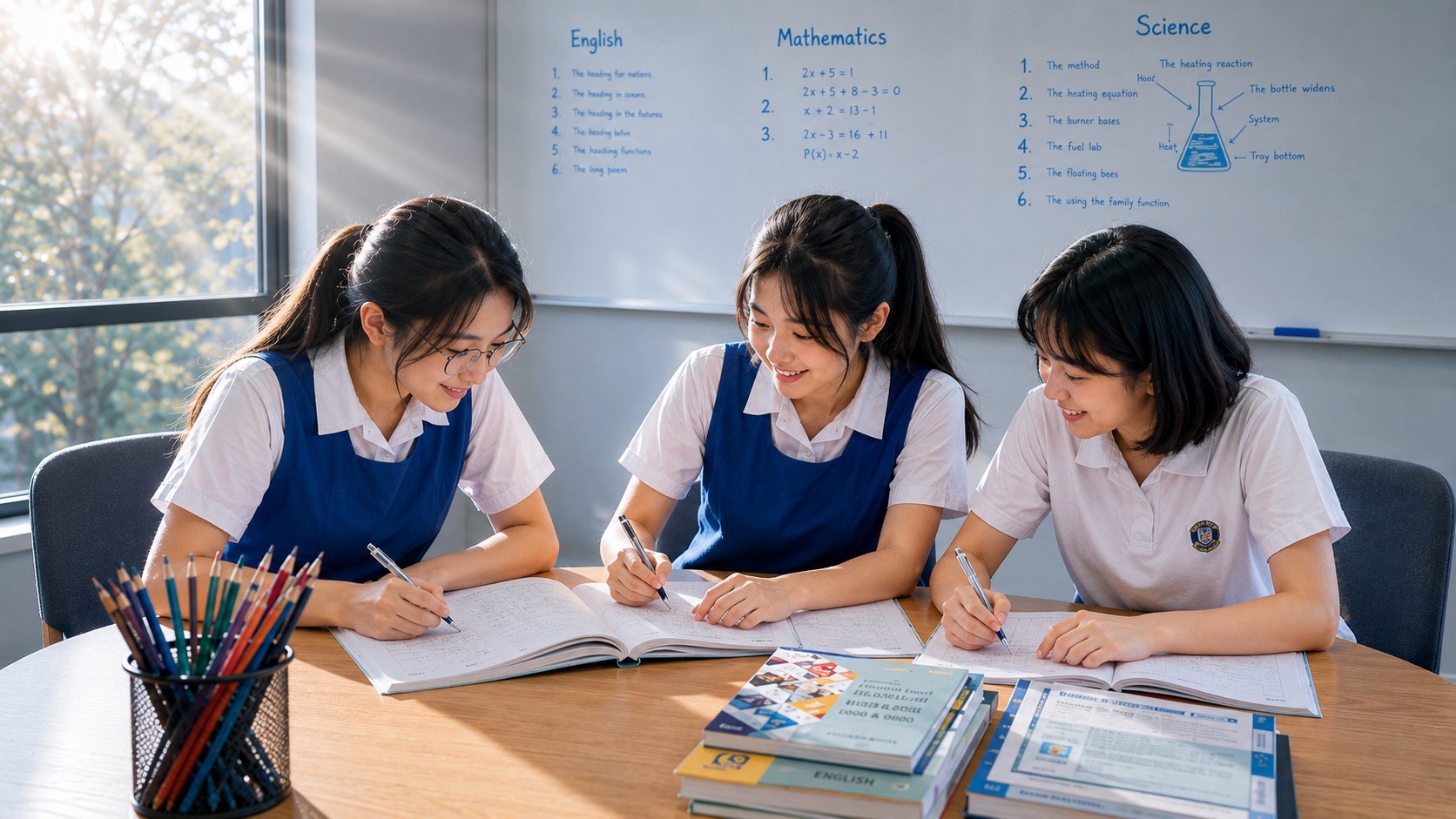
AI can help a child learn Science by turning an everyday observation into a clearer question, offering an explanation to examine and helping the learner organise evidence. The useful outcome is that the child understands what happened, why a proposed explanation makes sense and what remains uncertain. Parents can look for these abilities in a conversation, a labelled drawing or a small investigation. A fluent answer on a screen becomes educationally valuable when the student can connect it to the actual phenomenon.
A good starting point is something ordinary: droplets on a chilled bottle or the changing size of a shadow. Begin with established concepts, then let the child investigate a question whose answer they do not yet know. AI can suggest possibilities and challenge a conclusion while the student observes, measures, checks and decides. This guide offers original teaching examples and optional family activities, with links to scientific and curriculum sources. They are not official examination questions, a prescribed MOE programme or a promise of higher marks.
- Choose one learning goal: identify the concept or reasoning step your child needs to understand.
- Separate observation from explanation: record what happened before deciding why.
- Use AI for a defined task: ask for a question, a comparison or a critique that the learner can inspect.
- Keep evidence honest: distinguish real measurements, supplied information, model predictions and invented examples.
- Investigate proportionately: choose manageable observations, clear variables and appropriate adult supervision.
- Connect with school learning: use the relevant syllabus, classroom topic and teacher’s instructions.
- Review capability: listen for a clearer explanation and see whether the child can apply it to a different situation.
eduKateSingapore · AI and Education
Choose a useful reading route
Start with the question closest to your family, or read the guide in order.
Full chapter index · Read from chapter 1 · Sources and further reading
Contents
Chapters 1–3: Observe and question
Chapters 4–6: Plan and measure
Chapters 7–9: Explain and check
Chapters 10–12: Investigate and review
CHAPTER 1 OF 12 · Observe and question
1. Choose the scientific thinking you want to develop
“Help my child with Science” can mean several different things. A student might need to understand a concept, read a question accurately, interpret a table, plan a comparison or explain a conclusion. These needs can appear together, but they benefit from being made visible.
Ask the child to show one recent task and point to the moment where the work became difficult. Suppose they know that condensation involves water but write an explanation that never identifies where the water came from. More practice naming the process may leave the missing relationship untouched. A conversation about the source and change of state would be a better starting point.
Another child may explain the concept clearly but miss the instruction to compare two results. That learner needs to connect the scientific knowledge with the particular evidence in the question. A third may understand both and want to investigate which conditions change the result. Each case gives AI a different supporting job.
Write a small, observable goal: “Explain where the droplets outside the bottle came from” or “Describe how the shadow changed using the measurements.” This makes it possible to judge the next explanation. Does it help the student make the missing connection? Can the child now explain that connection in their own words?
Keep the goal connected to something the learner can examine. A parent could ask AI to suggest two questions about a drawing the family has already discussed. The parent can then choose the question that addresses the difficulty. Asking for an entire course at this stage may create more material than anyone needs.
Singapore’s Primary Science syllabus connects scientific learning with inquiry and authentic contexts. The approach here is a family teaching suggestion consistent with that broad purpose; it does not replace the school’s sequence of learning.
End the first conversation with one agreed target. The target should be understandable to the child and narrow enough that both of you can recognise progress. Curiosity can expand later. A clear first question gives that curiosity somewhere useful to begin.
CHAPTER 2 OF 12 · Observe and question
2. Separate what you observe from what you infer
Consider this original teaching scenario. A child notices droplets on the outside of a capped bottle taken from the refrigerator. The bottle was dry on the outside when placed on a tray. The child says, “Water came through the bottle.” That is a possible explanation offered by the learner, rather than a description of what was directly seen.
Begin with a simpler record: “Small drops appeared on the outside.” Ask what else was actually observed. Was the cap secure? Was there a visible crack? Was the bottle wet before it was moved? These questions help the child distinguish the evidence available from details they have assumed.
The relevant scientific explanation is condensation: water vapour in the surrounding air can change into liquid water on a sufficiently cool surface. The droplets are liquid; the water vapour was not visible as droplets beforehand. The US Geological Survey’s explanation of condensation describes this familiar cold-container example.
Invite the child to produce three short statements: what they saw, the explanation they currently favour and something they still need to check. “I saw drops outside” belongs in the first category. “The water came from the surrounding air” belongs in the second. “I did not check whether the cap was leaking” identifies an unresolved feature of this particular observation.
AI can help organise those statements. A useful request is: “Sort these sentences into observation, proposed explanation and unanswered question. Explain any sentence that mixes the categories.” Read the response together. If it treats an unobserved event as something the child measured, correct the record.
There is no need to turn every drink into an experiment. A careful discussion can be enough. If the family chooses to observe a chilled container, use an unbreakable one on a tray, keep water away from electrical equipment and let an adult manage the setup. The scientific goal is careful description.
The parent does not have to pretend that every explanation is equally likely. Established scientific knowledge matters. The teaching opportunity is to show how a known concept relates to a specific observation while keeping the limits of that observation clear.
CHAPTER 3 OF 12 · Observe and question
3. Give AI a useful question about a visible phenomenon
Shadows offer another accessible starting point. A child can compare an object, its shadow and the arrangement producing that shadow. The basic relationship is that an opaque object blocks light from reaching part of a surface. A simple drawing can represent straight paths of light around the object’s edges. NASA’s Space Place explanation of light provides background on straight-line travel and interactions with materials.
For an original family activity, place a small card between a battery-powered torch and a white screen. Keep the setup stable and point the torch at the screen, away from faces. Ask the child what they notice before moving anything. They might mention size, position, darkness or the softness of an edge.
Choose one observation to investigate. “What happens to the shadow’s width when the card moves?” is a beginning, but it leaves several details unclear. Does the screen stay still? Does the torch move? Is the card kept facing the same way? Specifying these details turns a broad curiosity into a question that can guide a comparison.
A more precise question is: “With the torch and screen fixed, how does moving the same card towards the torch affect the width of its shadow on the screen?” The child can draw the arrangement and predict a change before observing it.
AI might contribute by asking what must stay unchanged. Give it the question and request three clarifying questions, without a conclusion. The learner then decides which clarification is useful. The family remains responsible for the actual arrangement and for judging whether the suggestions match it.
NASA also shares a family shadow activity using a torch and an object. That resource provides a related observation opportunity. The measurement sequence in this article is our own teaching example.
Let the child’s first prediction remain visible. A prediction that later needs revision is useful evidence of thinking. Ask for a reason, then compare that reason with the observation. The goal is to improve the explanation, so there is no benefit in quietly replacing the original prediction with the expected answer.
CHAPTER 4 OF 12 · Plan and measure
4. Plan a comparison that can answer the question
An investigation becomes easier to discuss when the family can explain three things: what will change, what will be observed and what needs to stay consistent. For the shadow example, the changing feature is the card’s distance from the torch. The observed quantity is the shadow’s width on the screen.
Keeping the torch and screen fixed makes the comparison more interpretable. Use the same card, maintain its orientation and use the same measurement method. If the card turns sideways during one reading, the family has changed another feature that could affect the shadow.
Decide on the positions before beginning. A family might mark three places along a line on the table. The exact positions should suit the available space and allow a clear shadow. There is no requirement to reproduce the illustrative distances used later in this guide.
Ask the child to explain why each unchanged feature matters. “Keep it the same to make the test fair” is a useful opening, but a fuller answer names the possible confusion: “If we move the screen as well, we will not know which movement caused the shadow to change.”
AI can review a written plan for missing information. Try: “Read this plan as someone who must repeat it. Which instructions are unclear? Do not invent the missing details.” If the response adds equipment or changes the question, decide whether that addition is needed. A short workable plan is more useful than a complicated procedure the child cannot follow.
Consider whether the comparison is practical. Can the card stand steadily? Can the child reach the ruler without blocking the light? Can the screen remain still? These ordinary details affect whether the evidence will answer the intended question.
Put the plan into the child’s own words and make a labelled sketch. Another person should be able to identify the positions and the quantity being measured. That is a helpful check of clarity, even if the family decides to discuss the investigation without carrying it out.
Use adult judgement about the setting and materials. Keep the activity small, use stable objects and stop if the arrangement becomes awkward. Planning well includes choosing a manageable question.
CHAPTER 5 OF 12 · Plan and measure
5. Measure carefully and preserve the original record
A shadow may have a blurred edge. Before measuring, agree which visible boundary the family will use. If one person measures the darkest part and another measures the outer faint region, their readings describe different things. The first task is to define the measurement well enough to compare it consistently.
Record the card position and the shadow width together, with units. A number such as “12” is incomplete without knowing whether it refers to centimetres, millimetres or something else. A labelled drawing can show exactly where the ruler was placed.
Write readings as they are taken. If a value seems surprising, retain it and add a note about what happened. Perhaps the card slipped or the screen moved. The note allows someone to decide whether that reading should be repeated or interpreted separately.
A repeat reading is an opportunity to examine consistency. Return the card to the same marked position and measure again using the agreed method. If readings differ, discuss possible reasons. Repetition does not automatically correct a ruler placed at the wrong starting point every time.
Keep the student’s level in mind. A younger learner can compare “wider”, “narrower” and “about the same” using a careful drawing. Another child may be ready to record lengths. An older learner can discuss the spread of repeated readings. Choose a representation that preserves the scientific question without overwhelming the child.
If AI helps turn the record into a table, keep the handwritten original beside it. Check every entry, heading and unit. Tell the tool to leave missing readings blank. A neat table is useful only when it faithfully represents what the family recorded.
For example, a missing third measurement is a missing measurement. It should not be filled with a plausible value because the pattern seems obvious. A predicted value can be written in a separate, clearly labelled place if prediction is part of the task.
Give the child responsibility for explaining the record. Ask them to point to one reading, describe how it was obtained and identify any difficulty. That short explanation often reveals more about their understanding than the appearance of the final table.
The following table contains entirely invented measurements for teaching. No experiment was carried out to obtain these values. It illustrates the kind of record a student might discuss when the same card moves between a fixed torch and screen.
| Card distance from torch | Shadow width, reading 1 | Shadow width, reading 2 | Shadow width, reading 3 |
|---|---|---|---|
| 10 | 24 | 23 | 24 |
| 20 | 12 | 12 | 13 |
| 30 | 8 | 8 | 9 |
Begin by reading one row correctly. At a card distance of 20 centimetres, the three invented shadow widths are 12, 12 and 13 centimetres. Then compare rows. In this example, the recorded shadow widths are smaller at the greater card distances.
A precise conclusion stays close to those entries: “Across the three positions in this example, increasing the card’s distance from the torch was associated with a smaller shadow width.” The statement identifies the changing quantity and the observed quantity. It also limits the conclusion to the information supplied.
A stronger claim needs more support. “Every shadow always gets smaller when an object moves” leaves out the light source, screen and direction of movement. The table cannot justify it. Ask the child which words make that claim too broad.
For a learner ready to calculate means, the row totals are 71, 37 and 25 centimetres. Dividing each by three gives approximately 23.7, 12.3 and 8.3 centimetres. These calculations summarise the invented readings; the extra decimal place does not make the original measurements more precise.
A graph offers another way to inspect the pattern. Label the horizontal axis with card distance from the torch and the vertical axis with shadow width, both in centimetres. Decide whether to plot individual readings or the means. Make that decision visible in the title or key.
AI can suggest a graph or describe a pattern, but the student should check the axes and values. If the tool calls the relationship a straight-line decrease, compare the actual changes. Equal increases in card distance do not produce equal decreases in these widths.
Ask one final question: “What can we say, and what would we need another observation to decide?” This keeps interpretation connected to evidence.
CHAPTER 7 OF 12 · Explain and check
7. Build explanations that connect evidence and concepts
An explanation needs more than a scientific word. “It is condensation” identifies a process, but a reader may still need to know what changed and where it happened. Similarly, “Light travels in straight lines” names a relevant idea without necessarily connecting it to the particular shadow arrangement.
A useful teaching sequence is to state the answer, identify relevant evidence and explain the connection. Treat this as a writing aid, not a compulsory sentence formula. Some questions call for a short comparison; others need a fuller account. The teacher’s task instructions remain the guide.
For the bottle scenario, ask the child to identify the source of the water and the change taking place. A suitable explanation might say that water vapour from the surrounding air cooled at the bottle’s outer surface and condensed into liquid droplets. The USGS source supports that scientific account. The particular bottle observation still needs to be described honestly.
Then ask the learner to improve a deliberately incomplete sentence: “The outside became wet because it was cold.” Which substance is involved? Where did it come from? What change explains the droplets? Each question addresses a missing relationship rather than asking for longer writing merely for its own sake.
In the shadow case, the student can combine a labelled sketch with the table. The drawing should show the torch, card and screen in the correct order. The written explanation should connect the changed card position with the observed width, using a model appropriate to what has been taught.
AI can inspect a draft for missing connections. Ask it to identify one unclear statement and pose a question about it. Avoid automatically accepting a complete rewrite. The child should decide whether the suggested change makes the explanation more accurate.
Read the revised explanation aloud or discuss the drawing. If the learner cannot explain a new term, return to an example they understand. A shorter accurate account is a stronger learning outcome than an impressive paragraph whose meaning belongs entirely to the tool.
Finally, change one feature of the scenario and ask what would need reconsideration. This tests whether the child understands the relationship well enough to use it.
A generated response may mix a helpful idea, an assumption and an unsupported statement in the same paragraph. Give the child permission to take it apart. The task is to decide which parts are usable and what each part requires before it can be trusted.
Use this invented response as a teaching example: “The shadow became smaller because the torch was moved farther away. Your results prove that doubling any distance halves every shadow.” It sounds connected to the investigation, but the first sentence changes the recorded method. The torch was meant to stay fixed. The second makes a sweeping claim beyond the supplied data.
Ask the learner to mark the mismatch, then write a correction using the actual plan and measurements. A useful correction can be modest: “We moved the card while the torch and screen stayed fixed. Our table shows smaller widths at the greater card distances we considered.”
Next, identify the kind of claim being made. A claim about what the family did should be checked against its record. A calculation should be checked against the numbers. A scientific concept should be compared with an appropriate textbook, teacher explanation or authoritative scientific source.
If AI supplies a citation, open the source and look for the relevant information. Check whether it discusses the same phenomenon and whether the stated conclusion appears there. A real source can still be attached to a claim it does not support.
Requesting a second generated answer can produce another idea to inspect, but agreement between answers is not a measurement. Give the child a way to resolve the issue: return to the setup, inspect the calculation, consult a reliable explanation or bring the exact question to the teacher.
A useful prompt is: “List the assumptions in this explanation. Separate those stated in our method from those you added.” The family should still check the list. The purpose is to make the reasoning easier to examine.
Respond calmly when an error appears. The child has found a reason to revise the work, which is useful. Keep the original claim and correction together so that the change in understanding remains visible.
CHAPTER 9 OF 12 · Explain and check
9. Distinguish a model, a simulation and a measurement
A model helps someone represent a relationship. The shadow sketch uses lines to show possible paths of light and a shape to stand for the card. The actual torch, card and screen have details that a simple drawing leaves out. Discussing those omissions helps a child use the drawing thoughtfully.
A simulation applies chosen rules to produce an output. If a digital tool changes a shadow on screen when a slider moves, ask what the slider represents and which parts of the setup the model assumes remain fixed. An attractive animation still needs an explanation of its rules.
A measurement records something observed using a stated method. The distinction matters when AI produces a table. The values might be copied from supplied measurements, calculated from a model or invented to illustrate a pattern. Each can have a legitimate teaching purpose when its origin is clear.
Ask the child to label the origin before interpreting the numbers. “These are my measurements” should mean the learner actually obtained them. “These are model predictions” means a rule generated them. “These are invented examples” means they were created for demonstration, as the table in this guide was.
For a learner ready for a mathematical extension, consider an idealised point light source, a flat card parallel to a screen and straight light paths. Similar triangles can relate the object’s width and distances to the shadow’s width. This is a model under stated assumptions, not a formula to impose on every household torch observation.
The child’s next question might be why an observed edge looks less sharp than the model suggests. That is an opportunity to inspect what the simplified drawing leaves out, including the size and arrangement of the light source. A teacher can help decide how far to take the explanation.
AI can compare the assumptions of two models or translate a technical account into plainer language. Ask it to keep the assumptions visible. If it removes every qualification while simplifying, the student should restore the detail that affects the conclusion.
Parents can use one dependable question across subjects: “Where did this number or picture come from?” The answer determines what kind of checking makes sense.
CHAPTER 10 OF 12 · Investigate and review
10. Move from a known concept to a worthwhile investigation
The centre of learning contains ideas and methods the child can already use dependably. The edge is a question whose answer still needs to be found. For a school learner, that question may be new to them even when scientists or engineers already understand the underlying principles.
A shadow investigation can lead to a small design question: “How can we make a cardboard figure’s shadow recognisable during a short family performance?” This asks the learner to use established knowledge in a situation with several possible solutions.
Agree on criteria before choosing a design. Perhaps the figure must fit on the available screen, its outline should remain recognisable and the setup must be easy to operate. These are proposed family criteria, not an official assessment rubric. The child can suggest which matters most.
AI can generate alternatives: change the card’s position, simplify the outline or adjust the spacing. Ask the learner to explain what each suggestion is intended to improve. Reject a suggestion if it changes the agreed task or requires unsuitable equipment.
Try one manageable change and keep the comparison clear. A larger shadow may be helpful until it no longer fits the screen. A more elaborate figure may look appealing as a card while producing an unclear outline. The student has to judge the result against the purpose.
Record the decision in ordinary language: “We chose this position because the whole figure fitted and we could recognise its shape.” Include what the family did not establish. One successful arrangement does not show that it is the best arrangement for every screen or light source.
This is a practical form of coexistence with AI. The tool can widen the set of ideas and help compare them. The child supplies the observations, explains the trade-offs and takes responsibility for the choice.
The investigation can stop at a useful point. The family does not need to optimise every detail. Returning to the school concept afterwards helps the student see what the original knowledge made possible and which new question they would investigate next.
CHAPTER 11 OF 12 · Investigate and review
11. Connect inquiry with the child's school requirements
Begin with the child’s current topic and the instructions attached to the work. A rich investigation can be worthwhile, but it may not address the skill a particular assignment is asking the student to demonstrate. Parents can help connect the two purposes.
The MOE Primary Science syllabus presents learning through concepts, practices and attitudes, with opportunities to investigate and explain phenomena. Use the relevant document and school guidance to understand the expected scope. The examples in this article are illustrations; they do not assign a topic to a particular year or establish national marking rules.
For a school question, ask the child what information has already been supplied. If a table is given, the task may require interpreting that table. Introducing imagined observations from a different experiment could weaken the answer even when the added science sounds plausible.
Read the instruction closely. “Describe” may call for stating a pattern, while an explanation needs the relationship that accounts for it. The exact demand depends on the whole question and the school’s teaching. Ask the teacher when the expected form of an answer remains unclear.
AI can help generate a related practice example after the original task is understood. Check that the new example preserves the intended concept and introduces no unsupported conditions. Clearly label generated practice as practice; it is not evidence about what will appear in an examination.
Follow the school’s rules about assistance and the access conditions of the chosen tool. A parent-led conversation, a teacher-provided resource or a paper activity may be sufficient. Direct use of a general chatbot is not a necessary condition for the child to develop the reasoning discussed here.
When reviewing learning, keep the child’s usual accessibility supports. The question is whether they understand the science with the support normally available to them. Removing a needed reading aid or communication method would test a different difficulty.
If the child repeatedly explains an idea well in conversation but struggles to show it in schoolwork, bring a concrete example to the teacher. Ask whether the difficulty lies in scientific understanding, interpreting the question, selecting evidence or communicating the connection. That distinction guides the next useful support.
CHAPTER 12 OF 12 · Investigate and review
12. Decide what useful progress looks like at home
Choose a modest review rather than a large monitoring system. After a learning conversation, ask the child to explain the central idea using a fresh example or a changed condition. Let them use a drawing, spoken explanation or another suitable format.
For the bottle discussion, ask where the droplets outside came from and what evidence was actually available in the scenario. For the shadow work, ask the learner to identify what changed, describe the result and explain why the comparison had to keep other features consistent.
Look for specific improvements. The child may now distinguish a measurement from a prediction, include units, notice an unsupported assumption or revise a conclusion that was too broad. These are useful observations of capability. A single good conversation does not establish lasting mastery.
Return to the idea during a later lesson or ordinary discussion. Does the learner still recognise the relationship? Can they use it when the picture or wording changes? If the connection has become unclear, revisit the smallest part they can explain and rebuild from there.
An optional family routine is to keep one page with the question, a sketch or result, the child’s explanation and the next uncertainty. AI can help organise the page, but the learner should be able to account for every statement included. There is no need for a lengthy transcript.
Change the support when the evidence suggests it. If generated explanations keep introducing unfamiliar terms, use a simpler resource or ask the teacher for a suitable representation. If the child can explain confidently, widen the question or let them make more of the decisions.
Some children enjoy the observation but find the recording tiring. Reduce the amount of writing while retaining the reasoning. Others produce a polished report but cannot explain the setup; return to the objects, diagram and evidence. The next move should respond to what the child can actually do.
Parents do not need to become a second Science department. A useful contribution is to make room for a careful question, listen to the explanation and help the child find reliable support. AI earns a place when it helps that process and leaves the learner better able to understand and investigate the world around them.
Contents · Previous chapter · Next: sources and further reading
Sources and further reading
- Ministry of Education: Primary Science Teaching and Learning Syllabus 2023 — curriculum context.
- US Geological Survey: Condensation and the Water Cycle — scientific background.
- NASA Space Place: Why Is the Sky Blue? — background on light travelling and interacting with materials.
- NASA Science: Exploring Earth — Bear’s Shadow — related family observation resource.
Continue learning with AI
Choose the guide that addresses your family’s next question.