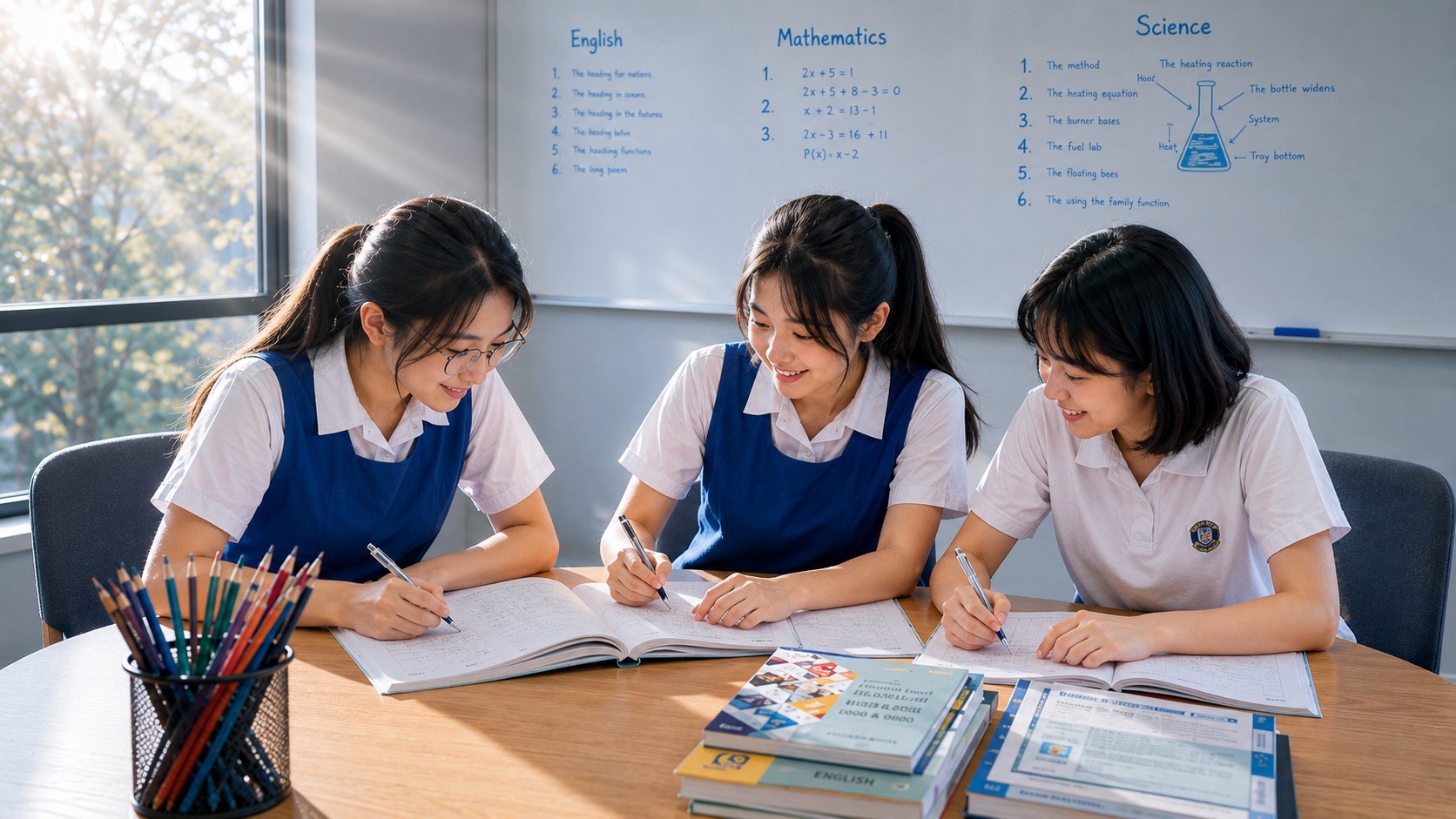
Parents can tell whether AI is helping a child learn by looking at what the child can explain, remember, question and use after the interaction. A more polished assignment is one piece of evidence, but it does not show how much understanding belongs to the learner. Start with one specific learning goal, notice the help provided, and ask the child to apply the idea to a slightly different task. Useful AI support should make some part of the child’s thinking clearer, more capable or more adventurous.
The opportunity is larger than faster homework. Used within the school’s instructions and an appropriate supervised setting, AI can help a student compare explanations, explore unfamiliar connections and investigate questions that would otherwise be difficult to approach. Parents do not need to become AI experts to judge this sensibly. They need a manageable way to see the starting point, the assistance, the child’s decisions and the next independent step. The observation plan below offers that structure without turning every evening into another examination.
- Choose the learning goal: name the idea or skill the child is trying to improve before choosing an AI feature.
- Separate the outcomes: distinguish a finished product, understanding retained by the child, and thoughtful use of tools.
- Look for ownership: ask what the child changed, rejected, checked or discovered.
- Keep foundations visible: established knowledge gives children something reliable to use when exploring unfamiliar questions.
- Check again gently: revisit one idea later and try one changed example, keeping any normal access arrangements in place.
- Make a practical decision: continue, adjust the assistance, or ask the teacher about the specific difficulty.
eduKateSingapore · AI and Education
Choose a useful reading route
Start with the question closest to your family, or read the guide in order.
Full chapter index · Read from chapter 1 · Sources and further reading
Contents
Chapters 1–3: Set a fair goal
Chapters 4–6: See the thinking
Chapters 7–9: Try a useful routine
Chapters 10–12: Choose the next step
A family may start with a broad question: “Should we use AI for schoolwork?” A more useful starting point is smaller: “What is my child trying to become able to do?” This changes the conversation from choosing a fashionable tool to choosing help for an identifiable need.
Consider three children studying English. One struggles to understand the passage. Another understands it but cannot select evidence. A third can answer accurately and wants to compare how two writers create different effects. All three could type the same request into a chatbot. Their learning needs, however, are different, so a response that helps one may distract another.
Write a goal that can be observed
“Improve comprehension” is difficult to inspect during a short conversation. “Explain why this character changed her mind and identify the sentence supporting that explanation” gives the family something concrete to notice. In Mathematics, a goal might be explaining why two fractions need a common basis for comparison. In Science, it might be distinguishing an observation from an explanation of that observation.
Choose a goal from current schoolwork or a teacher’s comment. The family does not need to design a second curriculum. A child who is already comfortable with the school topic can choose an extension question, provided everyone understands which part is required work and which part is exploration.
Next, name the job being assigned to AI. Is it offering another explanation, suggesting questions, providing feedback on an attempt, organising verified notes, or introducing an alternative interpretation? “Help me” leaves too much unspecified. A clearer job makes it easier to decide whether the response was useful.
Keep the original learning goal visible throughout the session. If the child began by trying to understand a paragraph and finishes with a beautifully designed presentation, ask whether the paragraph is now understood. The presentation might be enjoyable and worthwhile, but it answers a different question. Parents can acknowledge that achievement while returning to the original need.
AI-supported work can produce several valuable outcomes. Confusion arises when a family uses evidence of one outcome to claim another. A finished product shows what the child and the available resources produced together. An explanation or fresh attempt gives some evidence of what the child understands. Thoughtful decisions about the tool show a further kind of capability.
| Outcome | A useful observation | What remains to be checked |
|---|---|---|
| Quality of the work | The report is clearer, better organised or more accurate. | Which improvements can the child explain and reproduce? |
| Learning by the child | The child explains the idea and applies it to a new example. | Does the understanding remain available later? |
| Judgement when using AI | The child checks a claim, rejects a poor suggestion or changes the question. | Can the child explain why that decision was appropriate? |
There is research support for treating assisted performance and learning separately. In a randomised study involving nearly 1,000 high-school Mathematics students in Turkey, AI assistance improved practice performance. Students using a standard GPT-4-based interface without the study’s learning-focused safeguards subsequently performed worse on unassisted tests than the control group. A tutor incorporating teacher-designed support largely removed that negative effect; its unassisted results were statistically indistinguishable from the control group’s. The study examined short-term outcomes in one school and a particular Mathematics setting, so it does not establish what every child or AI tool will achieve. See Bastani and colleagues’ original study.
For a family, the practical question is therefore wider than whether the homework score increased. A child may produce an excellent poster while still needing help with its central idea. Another may produce a modest-looking page containing a new, carefully justified insight. The second page could represent substantial learning even though it looks less impressive.
Tool judgement also deserves recognition. A student who notices that an AI explanation contradicts the textbook and asks the teacher a precise question has done useful intellectual work. The family can value that decision without assuming the whole topic has been mastered. Keep these observations beside one another rather than compressing them into a single “AI is working” score.
CHAPTER 3 OF 12 · Set a fair goal
3. Keep the centre strong while exploring the edge
One way to understand the educational opportunity is to distinguish the centre of learning from its edge. The centre contains established knowledge, accepted methods, familiar exercises and questions with known answers. The edge contains questions the learner cannot yet answer, investigations, connections across subjects and possibilities that need testing. This is a way of organising learning, not a scientific scale of intelligence.
A child learning fractions needs dependable knowledge about equal parts and the whole being considered. That is centre work. The same child might investigate whether two differently shaped snack portions contain an equal amount, decide what measurements are needed, and discover why a quick visual judgement can be misleading. The investigation stretches outward from the foundation.
AI can contribute by suggesting alternative representations, asking what has been assumed, or helping the student compare several ways of approaching the problem. The learner then has to decide which suggestions fit the actual situation. The educational value lies partly in that movement: using something understood to reach something not yet understood.
Be precise about what “discovery” means
A result can be new to a child while already well known to teachers and researchers. That is still a meaningful discovery for the learner. It differs from generating new knowledge for humanity, which requires much stronger evidence and scrutiny. Parents can celebrate the child’s discovery without overstating its originality.
A helpful question is: “What can you now investigate because you understand this?” A student who has learnt percentage can compare changes across differently sized groups. A student who understands a historical source can ask whose experience is missing. A student with stronger vocabulary can distinguish two explanations that previously sounded identical.
The aim is to preserve both directions of travel. Children can return to a foundation when an investigation exposes a gap, and then use the repaired understanding to continue. MOE’s guidance on generative AI similarly connects useful support with students’ mastery of basic concepts and thinking skills. Foundations remain part of the journey even as the questions become more ambitious.
Parents do not need a spreadsheet of every AI interaction. Start with one ordinary piece of learning and a small comparison. Before assistance, ask the child to try a question or explain an idea. Keep that attempt, including incomplete reasoning. After the interaction, invite a fresh explanation or a comparable question. The purpose is to see what changed, not to catch the child out.
Suppose a student is learning to compare three quarters with two thirds. Before using support, the student says that two thirds is larger because thirds are bigger pieces. That reveals a useful starting point: the child is considering the size of individual pieces without accounting fully for how many pieces are taken.
With suitable guidance, the student compares nine twelfths with eight twelfths and connects the fractions to a diagram. Afterwards, ask why the equal-sized parts matter. A fresh task might compare two fifths with three eighths. These are illustrative examples, not a prescribed school sequence. The parent should use examples suitable for the child’s current learning.
Keep the conditions understandable
A harder question, an unfamiliar vocabulary load or a hurried evening can make a comparison misleading. Choose tasks with a similar demand, and note any obvious difference. If the child usually uses a reading aid, adapted format or another agreed access arrangement, keep that support in place. The comparison concerns the particular AI assistance being evaluated, not whether every form of help can be withdrawn.
Afterwards, ask the child what made the difference. The answer might be the diagram, a clearer explanation, a teacher’s earlier example becoming understandable, or simply another chance to think. More than one influence may be involved. A family observation cannot prove that AI alone caused improvement.
This modest conclusion is useful enough: “That way of explaining the whole and the equal parts helped today. Let us see whether it is still clear later.” It gives the parent a next step and gives the child permission to show partial understanding honestly.
“Do you understand?” often produces a quick yes, especially when everyone wants to finish. A more informative invitation is: “Show me the part that became clearer.” This directs attention towards the learner’s thinking and gives the child room to describe something specific.
Ownership can appear in several forms. A child may draw a diagram, explain an example aloud, identify an error in an earlier attempt, or describe why one suggestion was rejected. A fluent speech is unnecessary. Some children explain more clearly through drawing, objects, short written steps or a mixture of these.
Use one follow-up question
Choose a follow-up that belongs to the task. For a calculation: “Why does that operation fit?” For a reading answer: “Which words support your interpretation?” For a research claim: “Where could we check that?” For a design: “What would make this less useful for the person using it?” These questions reveal different kinds of understanding.
Consider an illustrative writing session. The AI suggests replacing “the room was scary” with a paragraph full of dramatic adjectives. The child chooses instead to describe a familiar sound stopping suddenly, and explains that the silence helps the reader infer unease. That decision provides evidence of understanding a writing effect. Simply accepting the longer paragraph would provide less information about the child’s judgement.
Parents should also listen for what remains uncertain. “I can follow the first step, but I do not know why the next line changes” is a useful report. It identifies the place where help is still needed. Treating such honesty as failure encourages polished answers; treating it as information makes the next explanation more precise.
Keep the conversation short enough that the child is still explaining rather than defending. A parent can say, “I am trying to see which kind of help works for you.” There is no need to inspect every sentence of every interaction. Select a meaningful moment, ask about it, and use the answer to decide the next step together.
An idea can feel clear while the explanation is open on the screen. A later attempt asks a different question: can the student bring the idea back and use it? Parents can check this gently during normal study, without adding a separate daily test.
At the next suitable session, revisit one earlier idea before opening the previous explanation. Ask for the key relationship, a small example or the reason behind a method. If the child cannot recall it, provide a cue and observe what the cue unlocks. This tells the family more than a simple right-or-wrong label.
Change one thing at a time
To explore transfer, change the surface of a task while retaining the idea. If the child practised percentages with test scores, try a fictional library example: 45 of 60 borrowed books were fiction. The percentage is 75%. Ask the student to explain which quantity represents the whole. The story has changed, but the relationship remains available for inspection.
For English, use a different short passage with a similar inference demand. For Science, ask whether an explanation fits a second situation and what additional information would be needed. For a project, ask the child to apply a source-checking question to a new claim.
Do not interpret one unsuccessful transfer as proof that nothing was learnt. The new task may introduce an additional difficulty. Perhaps the percentage idea is understood but the student misread the fictional data. Perhaps the inference is sensible but a crucial word is unfamiliar. Return to the point where the reasoning changed and decide which part needs attention.
It is also reasonable to assess tool use with the tool available. If the learning goal is comparing sources using AI assistance, observe how the student directs and checks that assistance. Keep this separate from a goal requiring the child to recall a fact or calculate independently. A fair evaluation matches the check to the capability being taught.
Across several small observations, the family can ask a grounded question: is the child needing less help with this particular idea, or using help more intelligently to do something more demanding? Both can represent worthwhile progress.
When the support does too much, change the job assigned to it. A parent or teacher can ask for a comparison, a hint, a question or feedback on an attempt. These are design choices for a learning activity, not guarantees that a chatbot will respond appropriately.
One possible instruction is: “Here is the student’s attempt. Identify the first step that needs reconsidering. Ask one question that helps the student examine that step. Wait for a response before explaining further.” Another is: “Offer two short explanations using different examples. Ask the learner which makes more sense and why.” Adults still need to inspect the output.
Choose assistance that leaves meaningful work
A useful hint leaves something worthwhile for the child to decide. In a fraction task, directing attention to the whole may preserve more thinking than supplying every converted fraction. In a composition, asking what the character wants may leave more authorship than rewriting the entire scene.
However, a hint is not always the right response. A learner who has not encountered a concept may need a clear explanation and a worked example. Repeated questioning can become frustrating when the necessary knowledge is missing. Parents should be willing to stop a question sequence and seek direct teaching.
AI can also help deepen work that is already secure. Ask for a counterexample to an overbroad claim, an alternative interpretation, or a new situation where a familiar method needs adjustment. The child then checks the suggestion against the subject knowledge and available evidence. This makes AI part of an inquiry rather than a final authority.
Keep the input limited to what the learning task needs. Use an invented example where identifying information is unnecessary. Follow the school’s rules, the service’s age and account requirements, and the supervision arrangements appropriate to the activity. If the tool is unsuitable for direct child use, an adult can prepare and check materials separately.
Finally, allow a non-AI option. A teacher’s explanation, a classmate’s diagram, a textbook example or a physical model may fit the difficulty better. The goal is to choose useful support and observe its effect, not to make every piece of learning pass through the same technology.
CHAPTER 8 OF 12 · Try a useful routine
8. Try a manageable two-week observation plan
The following plan is a suggested family routine. It is not a validated assessment, a timetable imposed by MOE, or a test of a child’s intelligence. Adapt it to ordinary study time, and choose a period that is reasonably representative of the child’s usual work.
Select one narrow learning goal and a permitted form of AI assistance. Agree with the child that the purpose is to discover what helps. Keep two or three examples of work, with a short note about the support used. There is no need to record whole conversations or add work every day.
| When | What to do | What to keep |
|---|---|---|
| First suitable session | Agree on the goal; invite one starting attempt. | The attempt and one sentence describing the difficulty. |
| One or two sessions in week one | Use the chosen support; invite an explanation or fresh example. | One change the child can explain. |
| Later in week one | Revisit the idea briefly without opening the earlier answer. | The cue needed, if any. |
| One session in week two | Try a slightly different application and one extension question. | What transfers and what remains uncertain. |
| End of week two | Discuss the evidence together and choose the next adjustment. | A short decision: continue, modify, or ask for help. |
For example, a family might choose explaining evidence in comprehension. The first attempt contains a plausible answer without supporting words. After a guided comparison, the child learns to distinguish a quotation from an explanation of why it matters. Later, the parent offers a different passage and asks for one supported inference.
The extension could be comparing two reasonable interpretations and deciding which has stronger support. That moves the activity beyond completing a familiar answer format. The child is learning to weigh alternatives while staying accountable to the text.
At the end, ask what the child would keep and what they would change. Their answer belongs in the record. A process that produces clearer reasoning but feels confusing to use may need a simpler interface or a smaller task. Two weeks offers an initial view, not a final verdict on the learner or the technology.
CHAPTER 9 OF 12 · Try a useful routine
9. Read the signs without labelling the child
Some observations suggest that the activity is worth continuing: the child starts with a clearer question, explains a relationship more accurately, notices an unsupported claim, or manages a changed example with less prompting. These are specific descriptions. They are more useful than declaring the child “good at AI” or “dependent on AI”.
A mixed pattern calls for a more careful reading. The child might explain well immediately but struggle later. They might retain the method but fail to recognise when it applies. They might use the tool confidently while misunderstanding the subject vocabulary. Each pattern points towards a different adjustment.
Notice confidence and willingness to think
Ask whether the child feels more able to begin, ask for clarification and admit uncertainty. These are worthwhile observations, but confidence alone is not evidence of accuracy. Pair the child’s impression with one small example of reasoning. “I feel better about fractions” and “I can explain why these parts must be equal” tell a fuller story together.
Pay attention to the interaction as well. Does the child increasingly ask for another question, a different explanation or a challenge to their idea? Can they say when the response missed the point? These decisions show the learner taking a more active role in shaping assistance.
By contrast, repeated acceptance of unexplained answers is a reason to redesign the task. It need not become an accusation. The activity may make finishing too easy and thinking too invisible. Ask for a choice between explanations, a reason for a change, or a comparison with a trusted source.
Where a child repeatedly feels overwhelmed, reduce the number of moving parts. Use one source, one question and a clearly defined stopping point. If the difficulty continues across ordinary learning tasks, bring examples to the teacher. Describe what happens rather than assigning a label. “She can retell the explanation but cannot choose the first step in a new question” gives an educator something concrete to investigate.
The observation process should lead to an action. If the child is gaining understanding and using the support thoughtfully, keep the helpful part and gradually make the next task more interesting. Progress does not require changing tools every time a new feature appears.
If the product improves but understanding remains unclear, reduce how much finished work the AI supplies. Ask for feedback on the child’s attempt or compare two examples before asking the child to produce a new one. Keep the task small enough that the learner can account for the choices made.
If explanations are clear immediately but unavailable later, build a brief return to the idea into normal study. Ask the child to reconstruct a key step, then check it. Avoid turning this into repeated testing of everything covered. Select the idea most important for the next piece of learning.
Repair the first missing connection
If the student cannot follow any explanation, inspect the prerequisite. A child struggling with percentage may need to clarify the whole being compared. A student struggling with an inference may need to understand the literal sequence of events. A learner struggling with a Science explanation may need to separate what was measured from what was inferred.
A change of tool will not necessarily address that missing connection. A teacher, tutor or knowledgeable adult may need to demonstrate it directly, observe an attempt and adjust the explanation. AI can support the materials, but the family should choose the form of help that reveals the difficulty clearly.
If the foundation is secure, move outward. Ask the child to investigate a question that has several defensible answers, compare assumptions, or connect two subjects. For instance, a reading activity can become a discussion of how a museum label balances accuracy, brevity and audience. The student brings established language knowledge into a new design problem.
The decision is local: “This approach helps with this goal under these conditions.” That is more credible than declaring a tool universally suitable. It also leaves room for the child to grow and for the support to change as the work becomes more demanding.
CHAPTER 11 OF 12 · Choose the next step
11. Make the home-school conversation specific
Parents can bring a small amount of evidence to a teacher without asking for a judgement on every AI product. Share the learning goal, one starting attempt, a later example and the kind of assistance used. Explain what the child could do independently and where help was still needed.
A useful question might be: “We tried a second explanation of equivalent fractions. He can now draw the equal parts, but he still chooses the wrong whole in a word problem. Is identifying the whole the next thing we should practise?” This connects the conversation to the subject rather than to the brand of tool.
Ask which resources and forms of assistance fit the current task. Learning activities, assessed assignments and examinations can have different rules. A general interest in AI does not settle what is permitted for a particular piece of schoolwork. Follow the instructions attached to the task and clarify uncertainty with the school.
Give the child a voice in the decision
Invite the student to identify what helped and what did not. An older child may explain that the AI’s vocabulary was too advanced, that a diagram was useful, or that a teacher’s example answered the real question more directly. A younger child may point to the moment when the task began making sense.
This conversation also teaches that responsible tool use includes judgement. UNESCO’s student AI framework includes human-centred thinking and ethical judgement alongside technical understanding. A family can put that broad idea into practice by asking the learner to explain choices and remain responsible for checking claims.
Respect differences in access. A child should be able to discuss an idea through a book, conversation or teacher-provided activity even when a commercial AI subscription is unavailable. If a proposed activity relies on a paid feature, ask what equivalent route exists. The educational goal should remain understandable independently of the purchasing decision.
At the next conversation, return to the same question: what has become easier to understand, what can the child now do, and what is the next useful challenge? This keeps the partnership focused on learning that can be seen.
Do better marks prove that AI is helping?
Better marks are useful information, but inspect what was assessed and how the work was completed. A single score cannot show every influence on progress. Add a brief explanation, a later return to the idea and a changed example. Together, these give a more informative picture of the child’s learning.
Should my child always try alone first?
A first attempt can reveal the starting point when the task is within reach. A child encountering a new concept may need teaching before attempting it. Match the sequence to the learning need. Keep agreed access arrangements, and avoid withholding necessary support merely to create an “independent” score.
What if I do not know the correct answer?
You can still ask what the child thinks the question means, which source supports a claim and where uncertainty remains. Use school materials or ask the teacher to resolve a subject question. Another AI response is not, by itself, a reliable answer key for the first response.
Can enjoyment count as progress?
Enjoyment matters to the family’s experience and may make the child willing to continue an activity. Record it honestly, then look for a related capability: a clearer question, a better explanation or a more thoughtful decision. An enjoyable activity and a useful learning activity can overlap without being identical.
How much evidence should we collect?
Usually, a small selection is enough to begin a useful conversation: an initial attempt, a later example and the child’s account of what helped. Collecting everything can overwhelm the purpose. Add more evidence only when a specific uncertainty remains or an educator asks for particular examples.
What should a successful AI learning session leave behind?
It should leave something the learner can claim and explain: a clearer idea, a corrected misconception, a question worth investigating, a justified choice or a method that works in another situation. Keep that achievement visible. Then let the next session build from it towards a more demanding question.
Contents · Previous chapter · Next: sources and further reading
Sources and further reading
Research and guidance checked on 15 November 2026: Bastani et al., Generative AI without guardrails can harm learning; MOE SLS guidance on generative AI; and UNESCO’s AI competency framework for students. The family routines and examples in this article are practical proposals, not official assessment requirements.
Continue the wider discussion with AI and the Paradigm Shift in Education and From the Centre to the Edge: Teaching Discovery with AI.