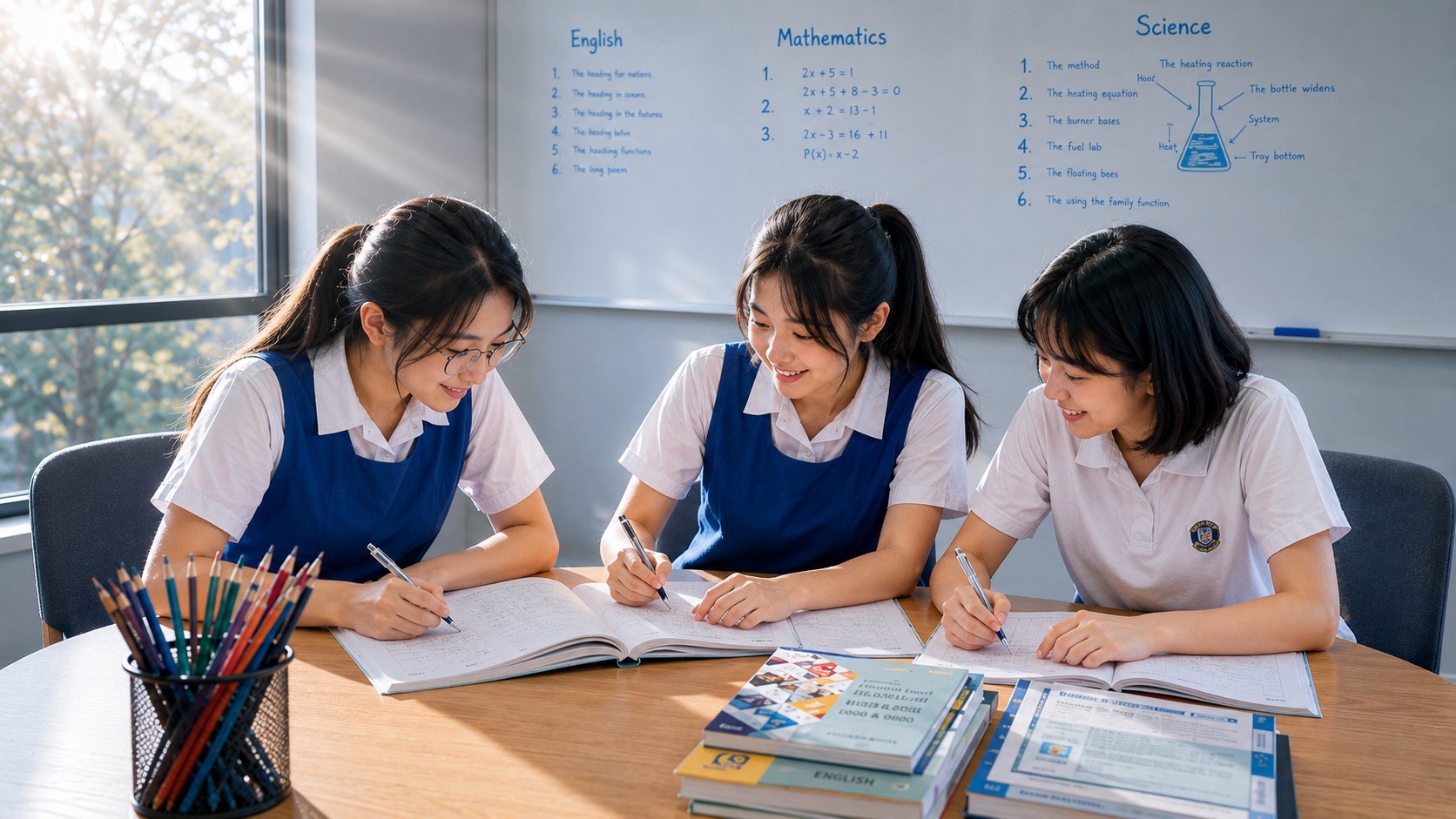
AI can help students investigate a real question by widening the questions they consider, suggesting alternative explanations, organising evidence and helping them communicate a useful conclusion. The student still needs to understand the subject, gather or locate reliable information, decide what the evidence supports and explain the result. For parents, a worthwhile AI research project should leave the child able to notice more, ask more precise questions and make better decisions about something beyond the screen.
A manageable starting point is a question close to the child’s experience: how could a classroom reading corner become easier to use? This guide works through that project from first question to a small, reversible trial, with a variation for a museum visit. Every school, pupil response and numerical result in the worked example is invented for teaching purposes. Families and teachers can adapt the method to their own circumstances, use an approved tool where appropriate, or complete the same investigation with books, conversation and paper. The aim is to make research understandable and give children a supported route from established knowledge into questions whose answers they must discover.
- Start with a real question: choose something small enough to investigate and meaningful enough to improve.
- Build the foundation: learn the relevant concepts and find trustworthy starting sources.
- Use AI to extend thinking: request alternatives, questions, comparisons and challenges.
- Keep evidence visible: distinguish observations, sources, suggestions and invented examples.
- Include people respectfully: seek the relevant permissions and avoid collecting personal information unnecessarily.
- Make a proportionate decision: explain uncertainty, test a small change and review it.
- Look for capability: the child should be able to explain and adapt the investigation independently.
eduKateSingapore · AI and Education
Choose a useful reading route
Start with the question closest to your family, or read the guide in order.
Full chapter index · Read from chapter 1 · Sources and further reading
Contents
Chapters 1–3: Frame an investigation
Chapters 4–6: Generate and gather evidence
Chapters 7–9: Test and propose
Chapters 10–12: Extend the inquiry
CHAPTER 1 OF 12 · Frame an investigation
1. What research adds to a child's education
A child can know the definition of a habitat and still wonder why two nearby patches of ground support different plants. A student can calculate an average and still need to decide whether an average is useful for describing a particular group. Research begins when knowledge becomes something to use in a question that has not already been settled for the learner.
In this guide, the centre means established knowledge, accepted methods and foundations that students need to understand. The edge means unanswered questions, original investigations, connections across subjects and experiments that may change what the student thinks. The educational movement is between them: use what is known, explore a question, then return to the foundations when an explanation needs checking or a skill needs strengthening.
There are different kinds of edge. A question may be unfamiliar to one child although its answer is well established. A classroom may face a local question that nobody there has investigated carefully. A scientist may work on something unresolved in the wider discipline. All three can involve real thinking, but a child’s classroom project should not be presented as a discovery new to humanity.
AI can help a learner cross subject boundaries. A reading-corner question can connect vocabulary, classification, measurement, visual communication and consideration for other people. The child may begin by wanting a prettier shelf and end by recognising that different readers need different routes into the same collection.
That broader participation fits the direction of UNESCO’s AI competency framework for students, which includes human-centred thinking, ethics, technical understanding and creation. The framework is international guidance, not a Singapore examination syllabus. Here, its relevance is the idea that students should develop judgement and creative agency while working with AI.
CHAPTER 2 OF 12 · Frame an investigation
2. Choose a question the child can actually investigate
“How can we improve education?” is interesting but too large for a first project. “How can we make our classroom reading corner easier to use?” gives the child a place, a group of users and something observable. It still needs narrowing. Easier to use could mean finding a book, reaching a shelf, choosing between genres or returning a borrowed title correctly.
In our fictional example, a teacher invites a small group to consider the question: Would clearer shelf labels help classmates find a suitable book while keeping different kinds of books visible? The group can inspect the labels, try alternative wording and propose a temporary change. They do not need a budget, a new app or permission to redesign the whole room.
Before collecting information, the students write what they are trying to improve and what must remain protected. Their proposal should preserve a clear walkway, avoid moving heavy furniture and allow pupils to browse freely. The teacher decides which activities and changes are suitable. The project should not become an excuse for children to inspect classmates’ reading difficulties.
A parent can help by asking, “What decision could your investigation change?” If the answer is unclear, narrow the question further. An investigation into clearer labels can support a decision about labels. It cannot, by itself, establish that a redesigned corner raises reading attainment.
The child also needs a stopping point. A useful first project might end with a one-page recommendation and a discussion, whether or not a change is adopted. Completion means answering the agreed question as honestly as the evidence allows. It does not require persuading every adult or making the original idea succeed.
CHAPTER 3 OF 12 · Frame an investigation
3. Build the centre before exploring the edge
The students begin by understanding the current arrangement. Which books are available? How are they grouped? Are the labels meant to identify topics, authors or reading formats? Does a picture book necessarily belong in only one category? These questions require observation and conversation before any AI-generated redesign.
They need a small vocabulary: category, preference, observation, evidence, inference and constraint. The adult can explain each term using the actual task. An observation might be that a label says “Stories”. An inference might be that the label gives too little information. The second statement is a possible interpretation of the first and still needs investigation.
For online information, Singapore’s National Library Board offers the S.U.R.E. Research Guide. Its four elements are Source, Understand, Research and Evaluate. Applied here, the students identify where a claim came from, understand what it actually says, investigate beyond the first result and consider competing interpretations. The guide is aimed at secondary and post-secondary research; younger pupils can practise a simplified version with an adult.
A source record need not be elaborate. Write the title, organisation or author, link or book details, the specific information used and the date checked. For a school rule, the teacher or school’s current instructions are more relevant than a generic website. For what a book contains, examining the book is more useful than guessing from its cover.
The students can ask AI to explain unfamiliar vocabulary, but they should compare important definitions with their lesson materials. When the explanation remains confusing, the adult can offer an example or demonstration. The project becomes stronger when children understand the small set of ideas they need to use.
CHAPTER 4 OF 12 · Generate and gather evidence
4. Give AI a job that expands the investigation
The first useful AI task is to widen the field of possible questions. A vague request for “the best reading corner” invites a polished answer detached from this classroom. A more productive request supplies the question, constraints and desired kind of help.
We are planning a classroom investigation about shelf labels. Our question is whether clearer labels could help pupils find books without narrowing their choices. Suggest five different explanations for why someone might struggle to find a book. For each explanation, suggest information we could collect with our teacher’s permission. Separate suggestions from facts. Do not invent pupil responses or research results.
The students might receive possibilities involving unclear words, crowded displays, unfamiliar categories, limited selection or uncertainty about their own preferences. They choose which possibilities fit their situation. A suggestion that requires recording every pupil’s behaviour can be rejected in favour of a simpler, less intrusive activity.
Next, AI can help create alternative labels. “Adventure”, “Animals” and “True Stories” might be compared with author names or broader fiction and non-fiction categories. The students examine actual books to see where each system becomes awkward. A true account involving animals may fit more than one group. That difficulty is useful: classification is a choice made for a purpose.
A third task is constructive challenge. Ask, “What might our proposal make harder?” The group may notice that bigger labels occupy display space, pictures may be interpreted differently, or one popular category could hide less familiar subjects. They can modify the design before presenting it.
The AI’s contribution should be recorded as suggestions generated during planning. It has not visited the room or spoken to classmates. Even a convincing description of what children “usually prefer” is not evidence about this class. The students gain something valuable when they can say, “This idea helped us see a possibility, and this is how we decided whether it belonged in our project.”
CHAPTER 5 OF 12 · Generate and gather evidence
5. Gather information with care for the people involved
A school project needs the teacher’s agreement before pupils recruit classmates, rearrange shared resources or collect responses. The adult can choose a short activity appropriate to the group, explain that participation is optional where relevant and provide another way to contribute. Children should not be pressured to reveal preferences or difficulties in front of friends.
For the reading-corner example, much of the useful information concerns the space and books. The students can make a simple shelf sketch, count visible labels and note whether the same word appears in several places. They can describe these features without photographing classmates, recording conversations or collecting names.
If the teacher chooses a voluntary book-finding activity, it should be presented as a test of the arrangement. It should not rank children’s reading ability. Instructions can be read aloud or clarified, and a pupil can stop without explaining why. The adult should consider whether the task itself creates barriers unrelated to the labels.
Feedback can be collected in broad categories, with an option to disagree or say “not sure”. Ask, “Which label helped you find this type of book?” rather than, “Do you agree our new labels are better?” The first question gives the student room to report their experience. The second pushes toward the researchers’ preferred result.
Keep the information needed for the project and avoid uploading personal details to an AI service. A teacher-approved anonymous summary is usually enough for discussing patterns. Where a school has specific rules about records, photographs or external tools, follow those rules.
Representation also matters. Friends who already love the corner may see it differently from occasional users. A small voluntary group cannot speak for everyone. The students should identify whose views are missing and consider how to invite useful feedback respectfully. Sometimes the right next step is to ask a teacher about access needs without asking individual children to disclose them.
CHAPTER 6 OF 12 · Generate and gather evidence
6. Work through an illustrative evidence set
The following results are entirely fictional. They show how a student might organise information; they are not findings from an eduKate class, a school or an actual trial. No conclusion about real pupils should be drawn from them.
| Illustrative evidence | What it could support | What it cannot establish |
|---|---|---|
| A shelf contains 24 books. Eight front covers are visible; the remaining books show their spines. | A description of the current display and a question about how titles are noticed. | Whether visible covers cause more reading. |
| In a teacher-led optional activity, 7 of 12 volunteers find a requested type of book within one minute. | A baseline for this task with this small group. | A measure of reading ability or the experience of every classmate. |
| Six volunteers prefer topic labels, three prefer author labels and three are unsure. | A mixed set of preferences worth exploring. | Proof that one system is best for the whole class. |
| Two existing labels use words the group finds difficult to explain. | A reason to investigate simpler wording or supporting examples. | Proof that the labels caused every unsuccessful search. |
The students first write literal descriptions. “Six of twelve volunteers preferred topic labels” is supported by the fictional record. “Children prefer topic labels” removes the limits. “Topic labels make children better readers” introduces an outcome that was never measured.
They can calculate that six out of twelve is one half, while keeping the count beside the proportion. A percentage alone can make a tiny sample look more impressive than it is. For younger pupils, the count may communicate the result more clearly than a chart.
AI can help organise an approved, non-identifying summary under headings such as observations, possible explanations and unanswered questions. The students compare every sentence with the original record. If the tool turns “unsure” into “disliked both options”, they correct it: uncertainty and dislike are different responses.
The most interesting result may be the disagreement. Three pupils preferred author labels. Perhaps they search for familiar writers; perhaps the task influenced their choice. The group now has a stronger design question: can topic labels coexist with a simple author guide? Research has opened a possibility more useful than choosing a single winning category.
A source note should stay attached to the evidence. In a real project, that note could identify the date, activity and adult who supervised it without naming participants. In a practice project using invented data, keep “fictional teaching example” on the table and any slide that reuses it.
Leave missing information visible too. If a response was not recorded, do not ask AI to complete the table with a plausible answer. Mark it as missing and explain how that limits the comparison. If two students counted differently, return to the agreed definition: were they counting books, titles or copies? Resolving that small disagreement teaches why a method needs clear terms before its numbers can be trusted.
CHAPTER 7 OF 12 · Test and propose
7. Compare explanations before choosing a conclusion
Suppose several volunteers did not find a suitable book quickly. Unclear labels are one explanation. An unfamiliar book collection, a confusing instruction, an empty category or the pressure of being watched are others. The students do not need to investigate every possibility, but they should notice that one observation can fit several explanations.
A useful family question is, “What else could have produced the same result?” This is an invitation to think further. It does not mean every explanation deserves equal confidence. If a requested category contains no books, that observation matters more than a vague theory that children dislike reading.
The group can ask AI for alternative explanations, then rank them by the evidence available and the effort required to investigate. A brief inspection may show whether a category is missing. Understanding how every child chooses books would require a much larger project. The students can acknowledge the second question without trying to solve it now.
They also need to separate disagreement about facts from disagreement about values. Two students may agree that large labels are easier to spot but differ over how much shelf space to devote to them. No additional count automatically settles the value question. The group must discuss whose needs the design should serve and explain its priorities.
Critical thinking includes changing an attractive idea when evidence points elsewhere. If the original labels turn out to be clear, the group can report that finding and investigate display height next. A parent can recognise the quality of the revision: “You found something that changed your first explanation.” That gives the child permission to treat correction as part of competent inquiry.
The resulting conclusion should match the scale of the work. “A temporary topic-label trial is worth considering” is a defensible recommendation from limited exploratory evidence. “We have discovered the ideal reading corner” is a much larger claim.
CHAPTER 8 OF 12 · Test and propose
8. Turn the findings into a useful, reversible proposal
The group now develops a modest proposal: add temporary topic labels and keep a small author guide beside the shelf. They suggest using existing materials and preserving the current arrangement of heavy furniture. The teacher can accept, revise or decline the suggestion. Student agency includes making a reasoned contribution within a shared space.
AI can support creative synthesis by generating several ways to explain the proposal. It might suggest a labelled sketch, a short spoken presentation or a comparison card. The students choose the form that best helps their audience assess the change. A sophisticated animation is unnecessary if it hides the actual decision.
Before settling on a proposal, compare a few feasible options. This table is a planning aid for the fictional project, with considerations to investigate rather than measured outcomes.
| Option | Possible advantage | Question before proceeding |
|---|---|---|
| Keep the current arrangement and explain it more clearly. | Requires little disruption and may resolve unfamiliarity. | Would users still need repeated adult help? |
| Add temporary topic labels and a small author guide. | Offers more than one route into the collection. | Can the guides stay understandable and current? |
| Show more front covers while keeping existing categories. | May make individual books easier to notice. | Would reduced shelf capacity create another problem? |
AI can suggest comparison criteria, but it cannot decide which classroom needs deserve priority. The students should explain their choice in ordinary language. They may prefer the label trial because it is easy to revise and directly addresses their question, while postponing the display change until they have understood its effect on space.
The presentation should connect the question, evidence and recommendation. A student might say: “Some volunteers found topic labels helpful, but others preferred author names. We suggest trying both on a small scale. We do not yet know whether this will help pupils find books more independently.” That explanation contains more useful reasoning than an enthusiastic claim that the new design will transform reading.
Before a trial, decide what would count as useful feedback. The teacher might ask whether pupils understand the labels, whether books are returned appropriately and whether less familiar categories remain visible. A complaint that one label is confusing is information to use, not a threat to the project.
If the activity is repeated, recognise that pupils may remember the earlier task. A quicker search could reflect familiarity, a different book, a quieter room or clearer labels. A small classroom trial can help improve the arrangement without establishing a clean causal effect.
The group should write when it will review the proposal and what can be reversed. Temporary labels make revision easy. If the change creates confusion, remove or alter them. If the results are mixed, keep the helpful element and reconsider the rest. The student learns to make decisions that remain open to correction.
CHAPTER 9 OF 12 · Test and propose
9. Show what the child has learned beyond the finished poster
A clear poster is useful, but parents need another view of the learning. Invite the child to explain the investigation without opening the AI conversation. Ask why the question was narrowed, which evidence mattered, what changed their mind and what remains uncertain. The conversation should feel like interest in their work.
A student who understands the project can distinguish a proposal from a result. They can explain why twelve volunteers do not represent every reader. They can say why a convenient AI summary needed correction. They can name a next question that follows from the evidence rather than introducing an unrelated impressive topic.
Transfer provides another window. Ask, “If we wanted to organise a shared games cupboard, which parts of your method would still work?” The child might reuse the idea of clear categories, different user needs and a reversible trial, while noticing that counting missing game pieces is a new requirement. They are adapting a method to a changed situation.
Keep a short record of three moments: the first question, an important revision and the final explanation. That record can reveal growth more clearly than a long transcript. It also lets the child see that their thinking developed through decisions.
For example, a child might initially say, “Everyone will like our labels.” Later they might explain, “Half of the volunteers preferred topic labels, but three wanted author labels. We chose a trial with both because people find books in different ways.” The improvement is visible in the reasoning: the child uses the count accurately, recognises different perspectives and connects the recommendation to the evidence. That is a more informative sign of progress than the number of slides produced.
When an explanation is weak, return to the particular gap. Perhaps the child can describe the labels but cannot interpret the table. Work with the table. Perhaps they understand the evidence but borrowed vocabulary they cannot explain. Replace those words together. The next lesson should fit the difficulty that became visible.
These observations are practical teaching prompts, not a formal assessment scale. A teacher’s criteria should guide a school assignment. At home, the purpose is to understand what support would help the child take the next step with greater independence.
CHAPTER 10 OF 12 · Extend the inquiry
10. Adapt the method to a museum visit or local place
A family can use the same method without surveying anyone. During a museum visit, the child might investigate: “How could we explain one object clearly to a younger visitor?” The starting evidence is the object, its label and information published by the museum. Follow the venue’s rules for photography, note-taking and sharing material.
The child separates what is visible from what the label explains. They may see a material, shape or decoration. The object’s date, origin or purpose usually needs a source. If the label expresses uncertainty, the student’s explanation should preserve it. A confident AI story should not silently fill a historical gap.
AI can propose questions that connect the object to geography, materials, trade or everyday life. The child chooses one connection and checks it against the museum’s information or another suitable source. An unanswered question can remain in the final presentation: “We could not establish who used this particular object.”
For the creative task, ask for three possible explanation structures for a younger reader. The child might choose a question-and-answer card, a short comparison or a labelled drawing they create themselves. They check that simplification has preserved the meaning and that any imagined scene is clearly described as imaginative.
A local-place version could compare what an official visitor page says with what the family can observe from a public area. Record the date, because signs, access and opening arrangements can change. Avoid turning a visit into an inspection of strangers or private property.
The underlying movement stays the same. Established sources supply a foundation; the child asks a fresh question about explanation or experience; AI offers possibilities; the learner checks, selects and creates something useful. No survey, purchase or public posting is required for that movement to be educationally worthwhile.
CHAPTER 11 OF 12 · Extend the inquiry
11. Adjust the support while preserving the child's decisions
A younger child can investigate one question, use two or three observations and explain a choice aloud. An adult can handle any approved AI interaction and present a small number of suggestions for discussion. The child can still decide which suggestion matches what they noticed.
An older student can compare sources, document uncertainty and examine the method more critically. They might consider how the wording of a question changes responses or why volunteers may differ from non-participants. More independence should bring more responsibility for explaining decisions, not simply a longer report.
Choose tools and access arrangements that fit the school’s instructions, the service’s current requirements and the child’s readiness. When direct use is unsuitable, a teacher can demonstrate an interaction or supply printed suggestions. A child without a personal account should still have a meaningful role in the investigation.
Parents can help most by keeping the work manageable. Ask the child to choose one next action: read a label, check a source, revise a question or explain a table. Avoid improving every sentence yourself. If the adult supplies all the decisions, the polished result gives little information about the child’s developing judgement.
In a group, share the thinking as well as the visible jobs. The confident speaker should also listen to evidence. The student making the diagram should help interpret it. Each member should be able to explain the question and at least one important decision, even when their contributions differ.
Interest may change during the project. A child drawn to design may discover a liking for categorisation; another may enjoy asking follow-up questions. Allow those discoveries to shape a small extension after the original task is complete. The project can become a route into further learning without expanding beyond what the family or class can reasonably support.
CHAPTER 12 OF 12 · Extend the inquiry
12. Questions parents often ask about AI research projects
Does the child need AI to do a worthwhile project?
No. Books, observation, discussion and teacher feedback can support the same inquiry. AI is useful when it helps the child consider possibilities, understand a difficult idea or communicate more clearly. Its presence is not the measure of the project’s quality.
What if AI produces an impressive answer immediately?
Treat it as material to examine. Ask which parts answer the actual question, which depend on evidence and which are suggestions. The student can use a helpful structure while replacing unsupported claims with findings they can explain.
Can invented data be used for practice?
Yes, when it is clearly labelled throughout as fictional. Practice data can help children learn how to read a table or compare explanations. It must not be presented as collected evidence, a real pupil response or a successful intervention.
What if the project finds no clear answer?
Explain what was learned, why the remaining evidence is insufficient and what a sensible next investigation would require. Recognising the limit of a conclusion is a useful outcome. A smaller, well-supported answer is often the appropriate result of a small project.
How should AI assistance be acknowledged?
Follow the school’s instructions. A simple record can say that AI suggested alternative explanations or helped organise a presentation, while the students checked sources and made the decisions. Name the actual assistance used rather than suggesting that the tool conducted the investigation.
What is a good first step this week?
Choose one shared object or space and ask one question about how it works for people. Write what is already known, what remains uncertain and what information could help. Then decide together whether AI would add a useful perspective to the next step.
Contents · Previous chapter · Next: sources and further reading
Sources and further reading
- UNESCO: AI competency framework for students — international guidance on student knowledge, judgement and participation in AI.
- National Library Board: S.U.R.E. Research Guide — research and information evaluation guidance.
- National Library Board: S.U.R.E. school courseware, advanced level — further activities on information sources, interpretation, research and evaluation.
The reading-corner project, sample prompts, fictional results and suggested family activities are illustrative teaching proposals. They are not official MOE assignments, reported research findings or promises of improved attainment.