This page is a historical archive of an eduKate Science programme page first published in 2017. It originally targeted families searching for Science tuition around Woodlands while describing an older eduKate teaching footprint. It is not a current Woodlands tuition-centre listing and should not be used for present schedules, staffing or locations.
The useful educational idea to preserve is larger than the locality: Science learning depends on models, but students also need to understand where a model works, where it stops working, and whether the underlying relationship transfers to a new situation.
A scientific model is a tool, not the world itself
School Science uses simplified models because reality is too complex to hold in one lesson. Diagrams of circuits, food chains, plant transport, forces or the water cycle help students see relationships clearly. But every model leaves things out.
A strong learner can answer two questions at once: What does this model help me explain? and What has the model simplified?
Why model limits matter
If students treat a classroom diagram as a literal picture of reality, misconceptions can grow. A food chain is not the whole ecosystem. A simple circuit symbol is not the physical wire. A particle diagram does not show every property of real matter. The model is useful because it isolates the relationship being studied.
Learning improves when students can move between the model and the real situation without confusing one for the other.
A model-learning routine
- Name the model: what representation are we using?
- Identify the relationship: what does the model make easier to see?
- Connect to evidence: what observation supports this relationship?
- State the limit: what has been simplified or omitted?
- Transfer: can the same relationship explain a different example?
Transfer is the real test
A student may reproduce a familiar diagram correctly and still struggle when the object, organism or experiment changes. That is a transfer failure. The surface changed, but the scientific relationship remained the same.
Good Science practice therefore changes the context deliberately. The student should have to recognise the underlying system without relying on a chapter heading or memorised picture.
Small groups can expose model confusion quickly
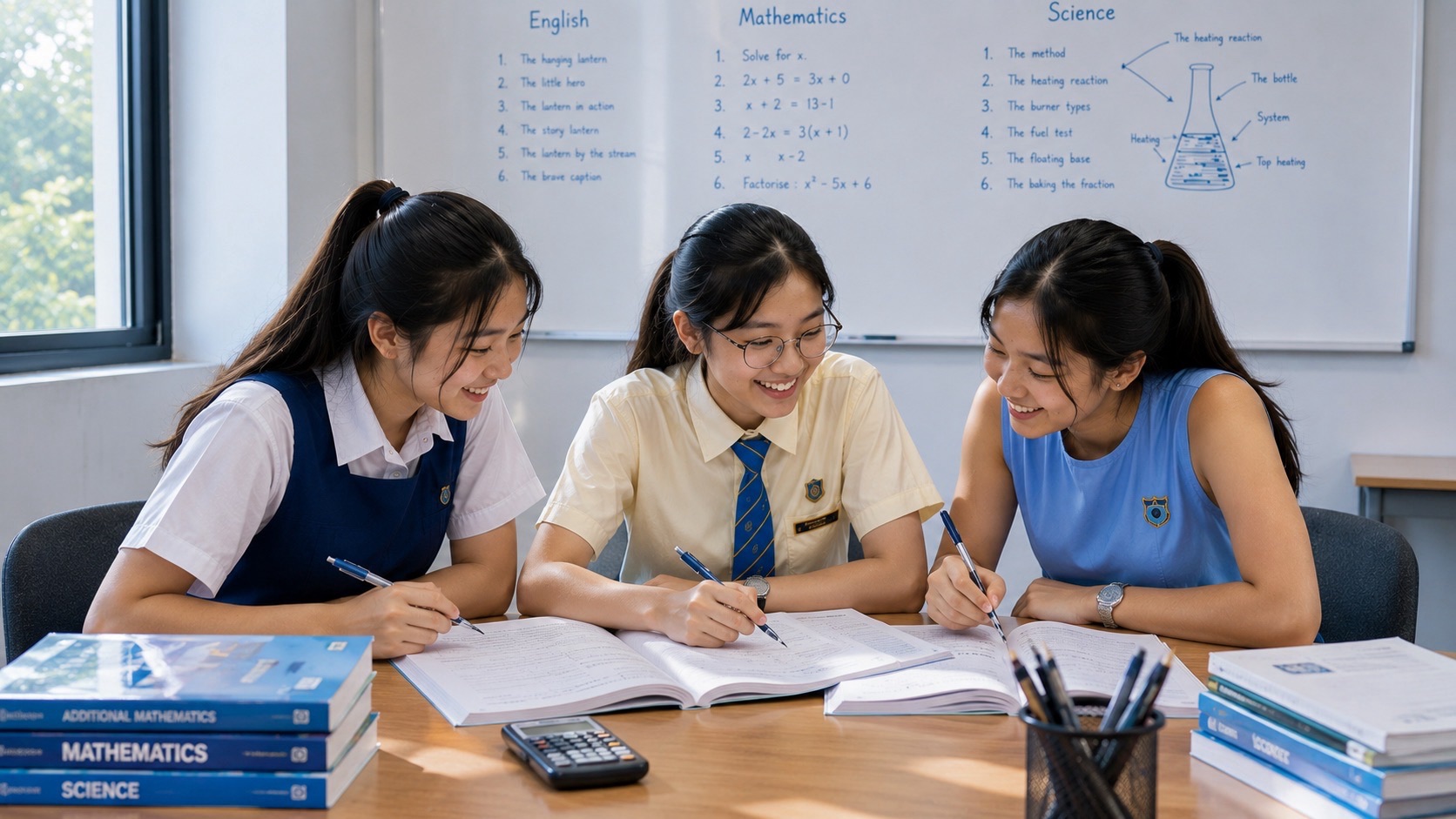
In eduKate’s current typical three-student class, students can explain the same diagram in different words. One may describe what is visible. Another may state a concept without evidence. Another may connect the model to the mechanism accurately.
The tutor can compare those explanations, locate the earliest weak link and ask the student to rebuild the relationship rather than simply copy a model answer.
Why this Woodlands page is now historical
The old page belonged to a locality-led publishing model. Rebuilding it as another current “Woodlands Science Tuition” sales page would compete with modern location and programme directories and could preserve outdated operational claims.
The cleaner architecture is to preserve the historical URL, remove stale commercial framing and let current directories own current information.
Current routes
For current Woodlands and north-Singapore tuition information, use the North Singapore Tuition Directory. For current Science learning resources, use the Science Article Directory and Learning Manuals Directory.
What progress looks like
- students can explain what a model represents;
- they can identify what the model leaves out;
- evidence is connected to the model rather than memorised separately;
- changed questions become easier to recognise structurally;
- students rely less on copied phrasing;
- the same scientific relationship survives new contexts.
This URL now preserves its 2017 Woodlands programme history while owning one durable Science lesson: models are powerful only when students understand both their explanatory value and their limits.