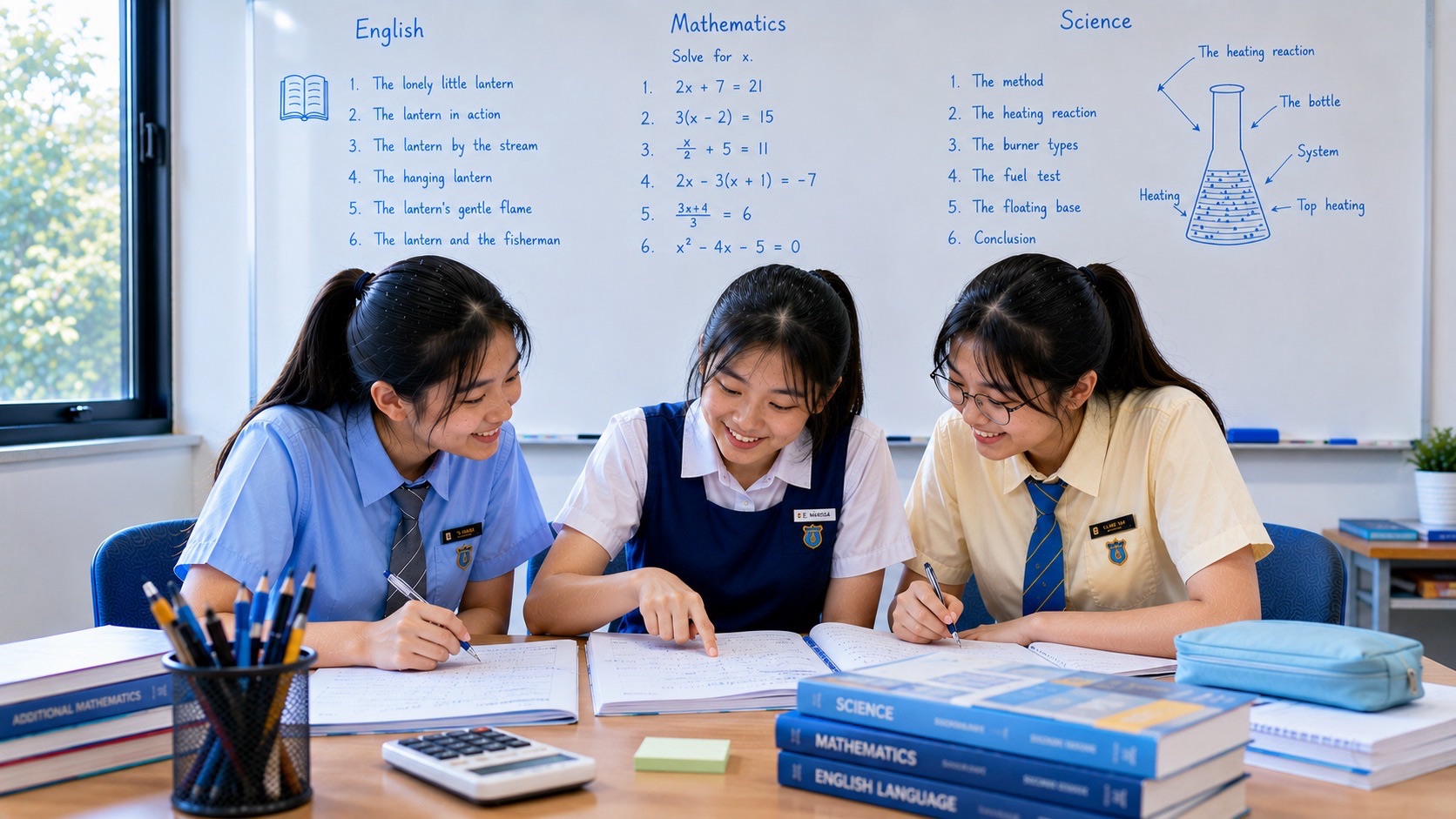
Quick answer: A school timetable is a conversion device. It takes many different human timelines and maps them onto shared institutional time: lesson periods, transitions, recess, assemblies, deadlines and examinations. That conversion is necessary for collective schooling, but human attention, understanding and emotion do not switch state as cleanly as the timetable does. Good schools therefore use the timetable to coordinate learning without assuming that the clock itself produces readiness.
This article follows How Schools Synchronise Different Human Lives Around a Common Goal, Why Schools Need a Common Clock, and When the School Clock and the Human Clock Do Not Match.
Bell → Move → Subject → Task → Transition → Repeat
The timetable turns continuous life into segments
A child’s life is continuous. School time is segmented.
At 9:00, the child is a Mathematics student. At 10:00, English. At 11:00, Science. The institution can change subject instantly because the schedule says so. The learner’s internal state may not change at the same speed.
A student may still be thinking about the previous problem. Another may need five minutes to settle after recess. Another may be most alert just as the period ends. The timetable creates clean edges that cognition does not naturally possess.
The timetable creates institutional transitions. The learner still has to perform the human transition.
Why periods exist
Periods solve several real problems. They allocate teachers and rooms, prevent clashes, coordinate specialist facilities, create predictable supervision and let schools fit many subjects into a finite day.
So periodisation is not merely control. It is resource allocation across time.
Teacher + Room + Students + Time Slot = Possible Learning Event
But every transition has a cost
Moving from one task to another is not free.
Students must stop one cognitive context, move physically or mentally, recall new rules, retrieve different knowledge and reorient attention. In a tightly segmented day, this occurs repeatedly.
That does not mean schools should abolish transitions. It means their cost should be recognised.
A timetable can protect learning too
Predictable timing has benefits.
- Students know when lessons begin.
- Teachers can prepare sequences.
- Families can plan.
- Deadlines become visible.
- Shared routines reduce unnecessary uncertainty.
- Repeated weekly structures can create habits.
A good timetable can therefore reduce chaos and preserve cognitive energy for the work itself.
Time blocks silently assign importance
A timetable does more than allocate time. It communicates priorities.
A subject receiving more periods has more institutional time to develop. A short period may privilege explanation and routine practice over long inquiry. A long laboratory period enables activities impossible in a fragmented slot.
So curriculum design and timetable design are connected.
What a school gives time to, it gives room to become real.
The timetable also trains external coordination
Adult life is full of external clocks: meetings, transport, shifts, deadlines, appointments and shared projects.
Learning to become ready for a shared event at a known time is a genuine capability. School time can therefore teach punctuality, preparation and coordination with others.
The goal should be more than obedience to bells. It should be increasing self-management.
External timetable → guided planning → self-planning → independent time ownership
The mistake is assuming period length equals learning time
A sixty-minute lesson does not produce sixty minutes of learning.
Some time is spent settling, distributing materials, clarifying instructions, recovering from interruption, moving between tasks and checking understanding. More importantly, different students may become productively engaged for different portions of the same lesson.
Institutional time is measurable. Productive learning time is partly hidden.
Timetables shape pedagogy
A twenty-five-minute period invites different teaching from a ninety-minute block.
- Short periods may favour focused explanation and practice.
- Longer blocks can support extended writing, laboratories, projects and discussion.
- Frequent meetings can support retrieval and continuity.
- Less frequent long meetings may permit deeper immersion but increase spacing between contacts.
There is no universally best timetable independent of the work being done.
The bell is not the learning objective
A lesson can end because time ended even when the educational problem did not.
Good teachers therefore create continuity across the boundary:
- summarise the unresolved question;
- record where the reasoning reached;
- identify the next action;
- return deliberately at the next lesson.
This prevents the timetable from repeatedly resetting learning to zero.
For parents
Do not assume a subject has been fully learned because enough school periods have passed. Ask what those periods produced.
For teachers
Use the timetable as infrastructure. Protect transitions, create continuity and avoid confusing elapsed lesson time with achieved understanding.
For students
The school timetable organises where you must be. Your growing responsibility is to organise what you need to carry between those periods: questions, unfinished problems, revision plans and priorities.
The deeper principle
The timetable should coordinate learning opportunities, not be mistaken for evidence that learning has happened.
Continue the series
- What Should Schools Standardise—and What Should Be Allowed to Vary?
- One Examination, Thousands of Lives
- A Grade Is a Compression: What Gets Lost When a Human Becomes a Score
Full series map: What eduKateSingapore Is Doing With All This: Building a Map From Questions to Independent Life.