This Sembawang English Tuition for Secondary page is a programme-fit guide. Its job is to help families decide whether additional English tuition is likely to add something useful to the student’s week, or merely duplicate support the learner already receives effectively at school. This legacy URL is not evidence of a current physical Sembawang, Yishun or Sengkang branch; present teaching location and availability should be confirmed directly.
Start with the student’s actual English environment. If school teaching, independent reading and ordinary feedback are already producing steady progress, another class may not be necessary. Tuition becomes more useful when a repeatable bottleneck remains unresolved—for example, weak inference, incomplete comprehension answers, paragraph development, grammar under writing load, timing or inability to apply feedback later.



Programme fit includes location truth. This legacy page contains historical material from older eduKate centres and teaching periods, but those references are not current service claims. Families should confirm the present teaching location, timetable, class size and suitable Secondary level directly before deciding whether the programme is practical.
A programme adds value when it can explain what it is doing differently from ordinary school practice. That may be closer diagnosis, more frequent writing feedback, foundation repair, deliberate transfer checks or a smaller environment in which the student’s reasoning is easier to observe. “More English” by itself is not a precise enough reason to add another weekly class.
Before adding tuition, look for evidence that the student needs more than ordinary practice. A capable learner may still need targeted support if school feedback is understood but not transferred, if writing repeatedly breaks under load, or if timed performance remains much weaker than untimed work. The programme should be able to name that job clearly.
Class size is only one part of fit. A smaller group can make individual error patterns easier to see, but the student should still produce independent work. The programme is adding value when close observation leads to a more precise repair and then to less dependence—not when the tutor simply provides more continuous help.
Good programme fit is also visible in transfer. A student should eventually use a comprehension repair in a new passage, a writing principle on a different topic and an editing habit without being told exactly when to apply it. If improvement exists only inside the tuition worksheet, the programme is not yet producing enough return.
Fit should also be reviewed against the student’s total week. Lesson time, travel, school work, CCA commitments, independent reading and sleep all compete for attention. A programme that is educationally sound can still be the wrong choice if the weekly load makes the learner less able to think, read or recover.
For current Secondary English programme information, contact eduKate with the student’s level, recent marked work and available times. Confirm the present teaching location and class fit directly before enrolment.
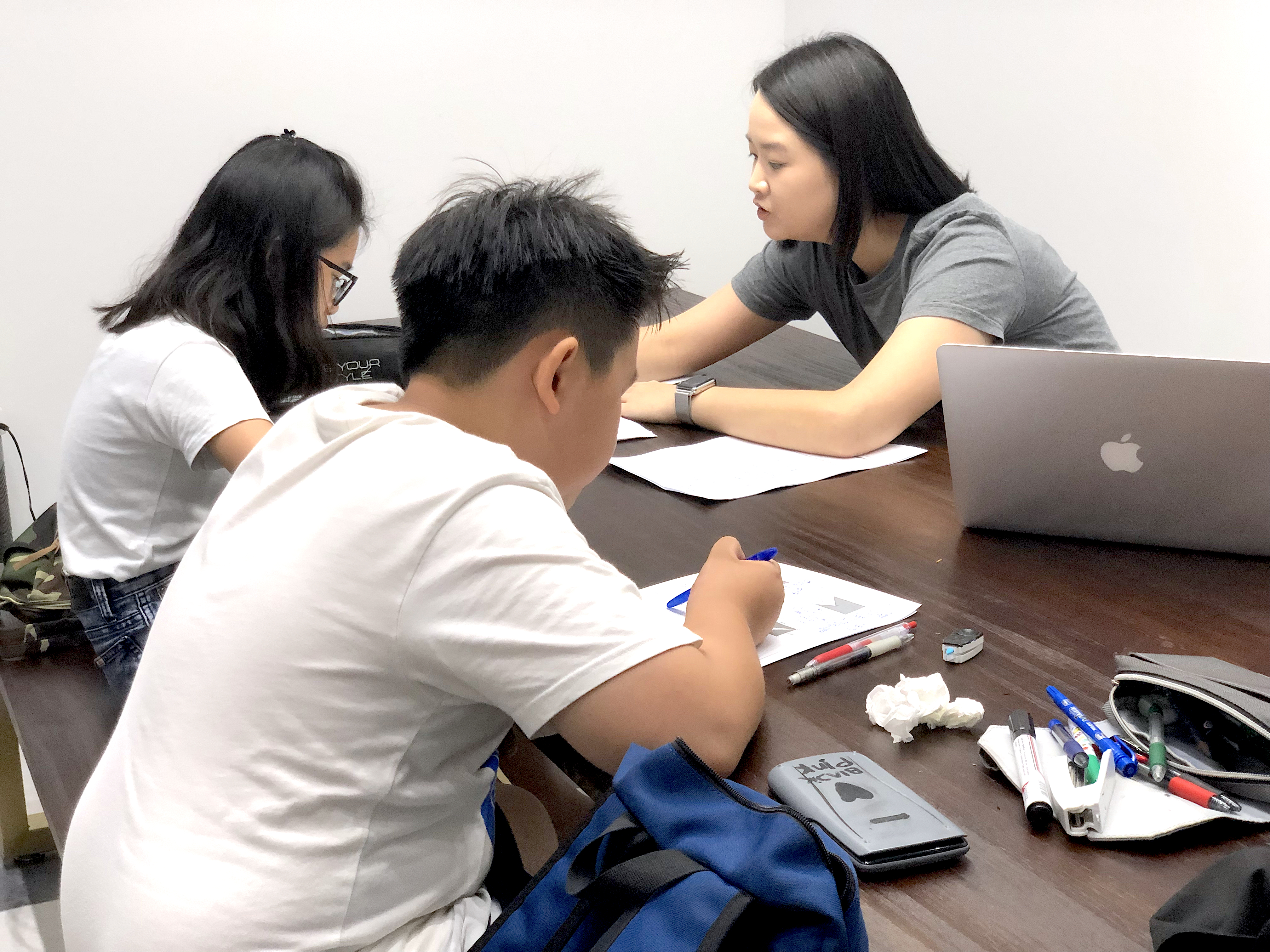














The photographs on this legacy programme page come from earlier eduKate teaching periods and locations. They are retained as part of the original visual archive; historical location or programme words attached to those images should not be treated as current Sembawang service information.
For current programme information, contact eduKate with the student’s school level, recent English work and available lesson times so present suitability can be checked directly.


Learn English and make it useful.
Parents can review fit by asking whether tuition is changing the learner’s capability: Are repeated errors shrinking? Is feedback appearing in later schoolwork? Does the student need fewer prompts? Is the weekly workload still sustainable? If the answer remains no, the teaching plan or the decision to continue tuition should be reconsidered.
Class Culture
A constructive small group should make individual work visible while preserving useful discussion. Students may compare approaches, but each learner should return to an independent task so programme fit is judged by what the student can now do without borrowing another person’s reasoning.