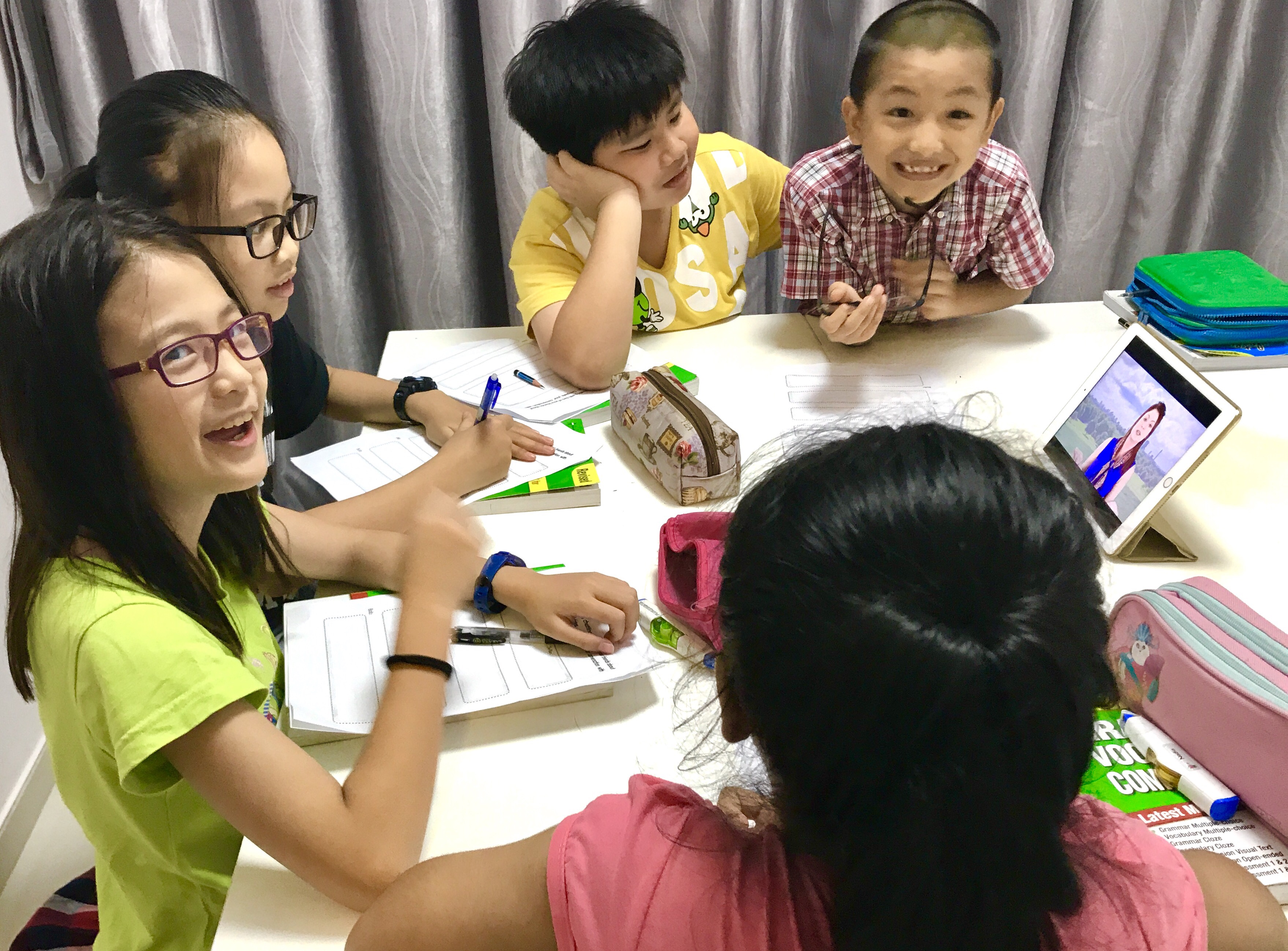
This English Tutor Sembawang page focuses on the teaching process after a weakness has been identified: explain the relationship, guide one reconstruction, reduce support, retest on changed material and check whether the improvement returns independently. The page is not a current physical-branch directory; families should confirm present teaching location and availability directly.
A strong teaching cycle begins from evidence rather than a generic worksheet sequence. The tutor observes the student’s actual reading or writing, identifies the earliest useful failure, teaches the smallest relevant principle, then asks the student to reconstruct the response instead of merely copying a correction.



Teaching process and location are separate questions. The photographs and old Yishun references on this legacy page are historical material, not current Sembawang service claims. Families should confirm the present teaching location, timetable and class fit directly before enrolment.
The teaching cycle should make the student’s own decisions visible. In comprehension, the learner should explain why evidence supports an answer. In writing, the learner should be able to state what each paragraph is trying to accomplish. This gives the tutor something precise to correct instead of replacing the student’s work with a polished model.
After the student understands the repair, support should reduce. A tutor may model once, guide a second attempt and then ask for an independent response. The learner’s capability is clearer when the tutor is no longer supplying the first move.
Correction is incomplete until it survives a changed task. The tutor should alter the passage, topic, audience or wording and check whether the student can still recognise and apply the principle. This distinguishes temporary recognition from real transfer.
Delayed retrieval matters as well. A skill that appears only in the lesson where it was taught is fragile. Bringing the same decision back after several days shows whether the learner has begun to own it rather than depend on the tutor’s immediate context.
The direction of good tutoring is therefore toward independence: fewer prompts, better self-checking, more accurate diagnosis of personal errors and greater ability to recover when a task looks unfamiliar. Continued tuition may still support extension, but dependence should not be treated as proof of value.
For current tutor or class information, contact eduKate with the student’s level, recent English work and available times. Confirm the present teaching location and suitable class arrangement directly.
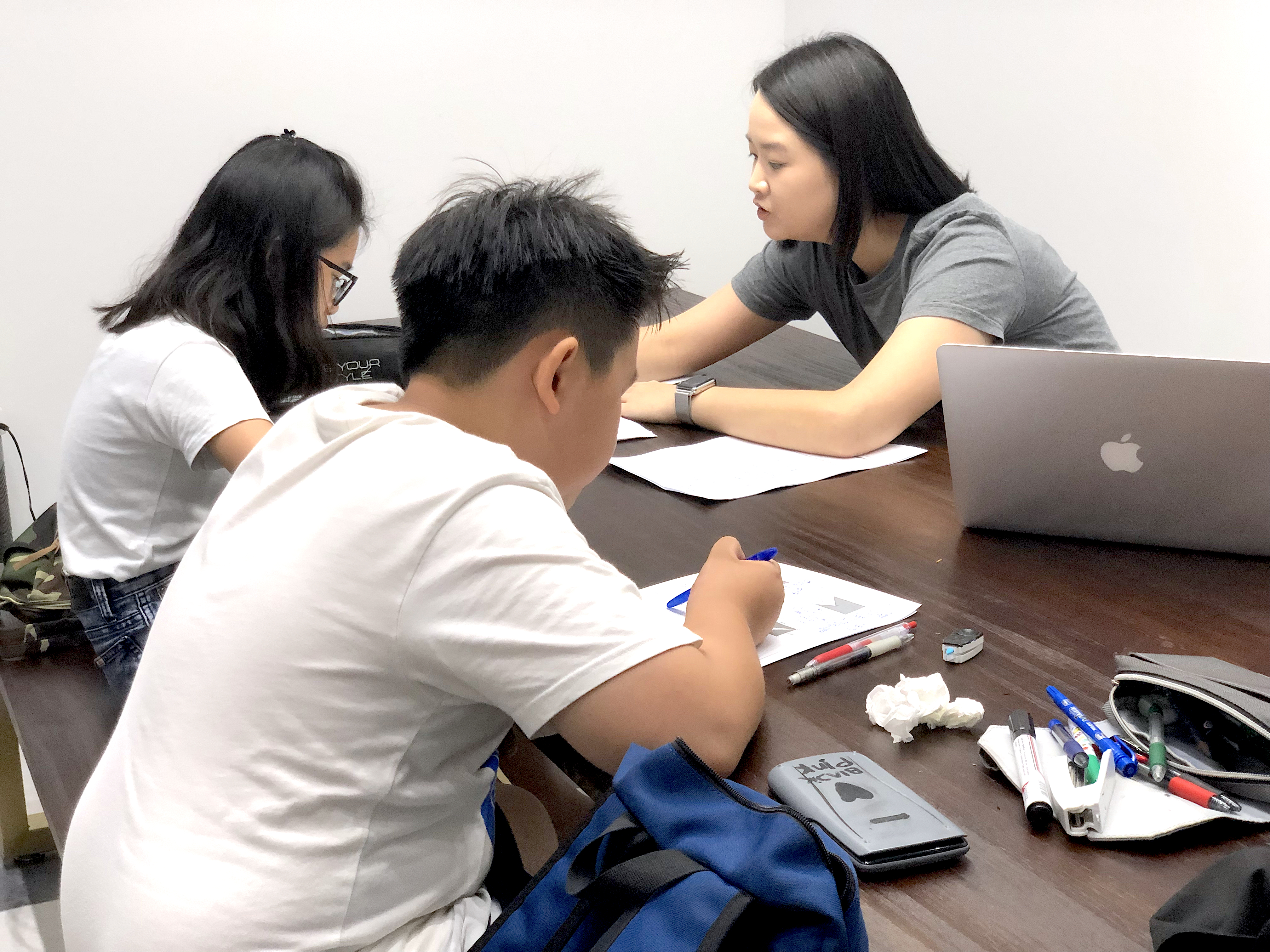












The photographs on this legacy tutor page come from earlier eduKate teaching periods and locations. They are retained as part of the original visual archive; historical location or programme words attached to those images should not be treated as current Sembawang tutor or class information.
For current tutor information, contact eduKate with the student’s school level, recent English work and available lesson times so the present teaching arrangement can be checked directly.


Learn English and make it useful.
Parents can ask for evidence of this process: What was the recurring error? What changed after teaching? Was the skill retested on a different task? Did the student still need the same amount of prompting? These questions make tutoring quality observable without relying on grade guarantees.
Class Culture
A constructive small group can help students compare interpretations and repair strategies, but every useful discussion should return to independent work. The final test is whether the learner can reproduce the improvement without the tutor or classmates supplying the reasoning.