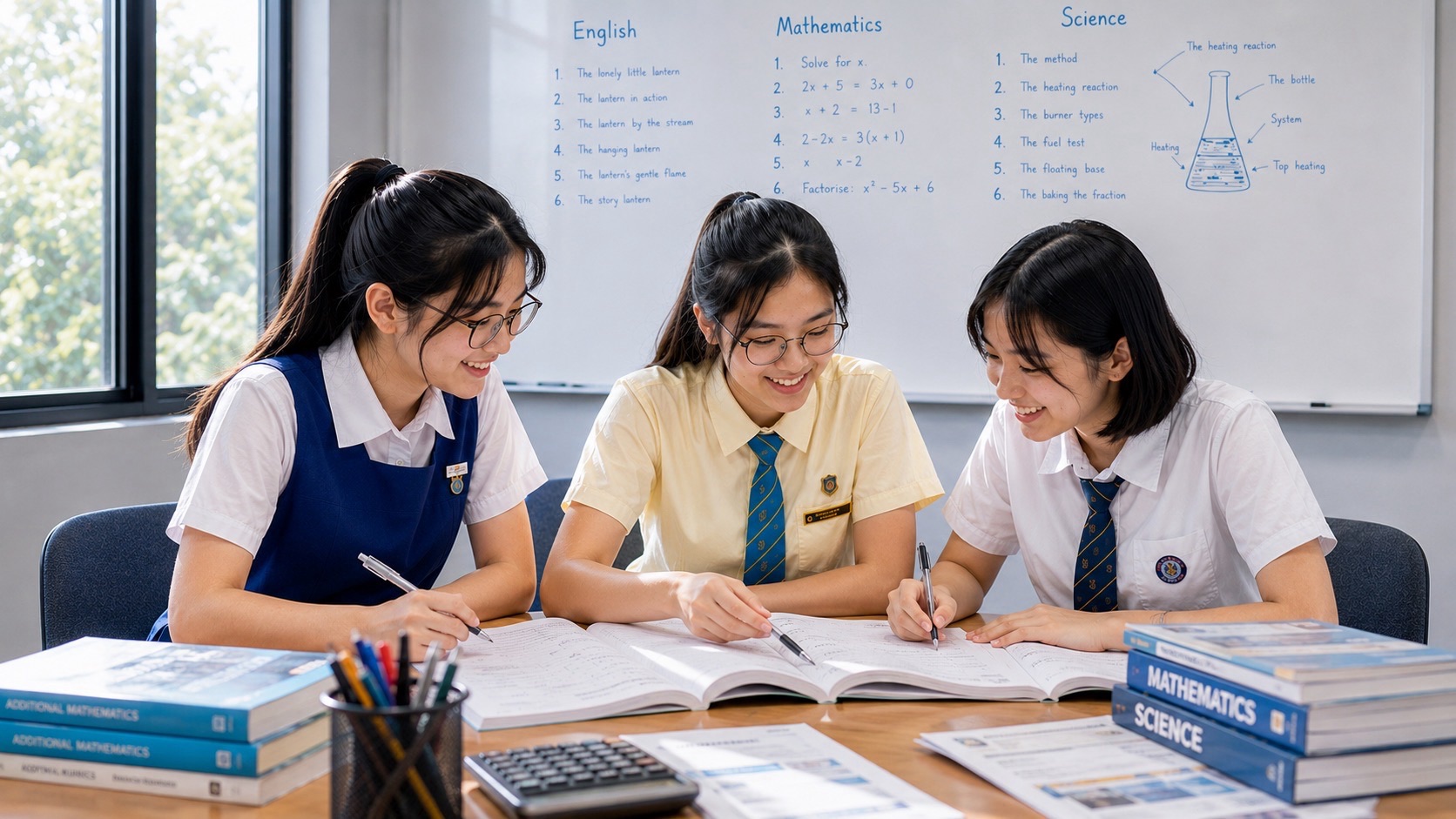
Quick Read. An animal is not simply a creature that moves, eats and reproduces. It is a living system built from cells, tissues and organs; shaped by ancestry; constrained by physics and chemistry; connected to other organisms; and continuously exchanging matter, energy and information with its environment.
This Animal World is a reader-facing branch of The Living World. It does not replace the Primary Science Learning Library or the Secondary/JC Science branches. Those retain curriculum ownership. Animal World instead gives the scientific world an organism-centred route: one animal, body system, behaviour, adaptation, lineage or ecological relationship can open outward into many levels of Science.
An Animal Exists at Several Scales at Once
Look at one whale surfacing, one coral polyp feeding, one ant carrying a fragment of leaf or one mudskipper crossing a mangrove floor. The visible organism is only the outermost scale. Inside it are membranes, proteins, cells, tissues, organs, electrical signals, chemical gradients, mechanical forces, microbial partners and developmental histories. Around it are predators, prey, competitors, parasites, symbionts, currents, air, water, temperature, pressure, light and geography. Behind it is a lineage extending across generations and deep time.
Animal World = body + behaviour + environment + ancestry + evidence.
Why Build an Organism-Centred Science Branch?
Curricula necessarily organise knowledge into teachable units: mammals, cells, respiration, reproduction, genetics, ecology, forces, energy and so on. Real organisms do not live inside those boundaries. A whale simultaneously belongs to mammalian biology, evolution, anatomy, respiration, acoustics, fluid dynamics, pressure physiology, food webs and ocean biogeochemistry. A coral simultaneously belongs to animal biology, symbiosis, photosynthesis through its algal partners, calcification, ocean chemistry, ecology and climate science.
Animal World therefore uses organisms and animal systems as crossroads. The learner can begin with a concrete living thing and then follow whichever scientific route the evidence requires.
The Governing Rule: Controlled Breadth
There is enough real Science to build thousands of worthwhile Learning Manuals without manufacturing keyword variations. Every new page should therefore own a clear scientific object or question.
A general page on mammals can own the defining characteristics and classification of mammals. A whale page can then own the transition from terrestrial mammal ancestry to fully aquatic cetaceans. A future whale-diving page may own oxygen storage and pressure physiology. A future baleen page may own filter feeding. A future echolocation page may own biosonar in toothed whales. These pages reinforce one another because each has a different scientific centre.
One canonical question → one clear owner → many legitimate connections.
Animal World Can Begin at Primary Level and Keep Going
A young learner can begin by observing that birds have feathers, fish have fins and mammals feed milk to their young. Those are real biological entry points. At higher resolution, classification becomes evolutionary relationship; body parts become anatomy and biomechanics; habitats become ecological niches; life cycles become developmental biology; adaptation becomes population-level evolutionary change; and behaviour opens into sensory physiology, learning, communication and decision-making.
The simple model is not discarded merely because a deeper model exists. Instead, we ask whether the simpler statement remains true within its intended boundary.
The Main Routes Through Animal World
- Form and structure — skeletons, shells, skin, wings, fins, limbs, teeth, baleen, tentacles and specialised tissues.
- Function and physiology — respiration, circulation, digestion, osmoregulation, temperature control, movement, reproduction and homeostasis.
- Behaviour — feeding, migration, communication, mating, parental care, social systems, navigation and defence.
- Adaptation — how inherited traits alter survival and reproduction in particular environments.
- Evolution — ancestry, common descent, fossils, homology, molecular evidence and branching lineages.
- Ecology — predators, prey, competition, mutualism, parasitism, decomposition, food webs and ecosystem engineering.
- Environment — forest, reef, mangrove, desert, freshwater, polar sea, deep ocean, soil, city and atmosphere.
- Scale — molecule → cell → tissue → organ → organism → population → community → ecosystem → biosphere.
- Evidence — observation, anatomy, experiments, telemetry, genetics, isotopes, fossils, imaging, acoustics and long-term field data.
Animals Are Not Defined by Movement Alone
Movement is a memorable feature of many animals, but it is not a universal everyday clue. Adult corals can remain fixed to the substrate. Sponges are animals. Some parasites spend much of their life inside a host. What unites animals is better understood through cellular organisation, development, nutrition, evolutionary history and shared biological features than through one visible behaviour.
This matters because beginner rules should remain useful without becoming traps. “Animals move” can help a young child notice patterns. Later, the learner must discover the boundary: some animals are sessile, and movement can occur at life stages or scales that are not obvious.
Structure Is a Record of Both Function and History
An animal body is not designed from scratch for its present environment. Evolution modifies inherited structures. A whale flipper contains bones corresponding to the same broad tetrapod limb pattern seen in other mammals. A bird wing and a human arm differ greatly in function yet remain homologous forelimbs. Vestigial or reduced structures can preserve evidence of ancestry even when their original function has changed.
What an animal can do now is partly shaped by what its ancestors already had.
Behaviour Is Biology in Motion
Behaviour should not be treated as an entertaining extra added after anatomy. Feeding behaviour changes energy intake. Migration changes exposure to predators, temperature and food. Courtship changes reproductive success. Social behaviour changes information flow and competition. Habitat choice changes every environmental variable the animal encounters.
At higher levels, behaviour can be studied through sensory systems, hormones, neural circuits, learning, evolutionary tradeoffs and ecological consequences. But we should avoid turning every observed action into a human emotion or intention. Anthropomorphic language may help storytelling, yet the scientific explanation must return to evidence.
Adaptation Is Not an Animal Deciding to Change
An individual can acclimatise, learn, grow, repair or alter behaviour. Evolutionary adaptation is different. It concerns inherited population-level change across generations. If a trait affects survival or reproduction and heritable variation exists, natural selection can alter how common variants become over time.
This distinction becomes especially important in organism-centred stories because it is tempting to say that whales “grew flippers to swim” or desert animals “developed ways to save water because they needed them.” Need does not directly manufacture an inherited adaptation. Population history matters.
Evolution Is a Branching Tree, Not a Ladder
Living species are not unfinished versions of other living species. Humans did not evolve from modern chimpanzees. Whales did not evolve from modern dogs. Birds are not “more evolved” than reptiles. Evolutionary trees represent branching descent from common ancestors.
Fossil species can illuminate transitions without being a neat row of direct ancestors. A set of early whale fossils, for example, reveals combinations of terrestrial and aquatic traits across related lineages. The important pattern is not a cartoon march from one animal to another. It is evidence that a lineage changed as populations diversified through time.
Ecology Makes the Animal Larger Than Its Body
An animal changes its surroundings by feeding, excreting, burrowing, grazing, pollinating, dispersing seeds, building reefs, moving nutrients or becoming food for something else. Some animals become ecosystem engineers. Corals create three-dimensional reef structures. Beavers alter waterways. Earthworms restructure soil. Large whales move nutrients through the ocean and, after death, can support deep-sea communities.
So the scientific boundary of an animal does not end at its skin. The organism is also a participant in material and energy flows.
Singapore Is a Living Animal Laboratory
Singapore compresses many habitats into a small geographical area: rainforest fragments, freshwater streams, reservoirs, urban parks, mangroves, mudflats, rocky shores, seagrass meadows and coral reefs. Long-tailed macaques, otters, hornbills, mudskippers, insects, freshwater crabs, reef fishes and corals allow students to connect school concepts to organisms living nearby.
The goal is not to turn every lesson into a list of local species. The stronger move is to use Singapore when location changes the scientific question: equatorial seasonality, tropical heat and humidity, coastal development, urban ecology, fragmented habitats, marine restoration and biodiversity conservation all create real research problems.
Animal World Evidence Boundaries
- Visible similarity ≠ close evolutionary relationship. Convergent evolution can produce similar forms in distant lineages.
- Behaviour ≠ proven human-like intention. Describe what is observed before inferring internal states.
- Adaptation ≠ individual choice. Evolutionary adaptation concerns inherited change across generations.
- One species ≠ every member of its group. Mammals, birds, insects and corals each contain large internal diversity.
- Fossil sequence ≠ guaranteed direct ancestry. Transitional fossils can be close relatives that document combinations of traits.
- Survival ≠ evolutionary success by itself. Reproductive contribution matters.
- Animal–microbe partnership ≠ one organism. Host and microbial partners remain distinguishable biological entities even when tightly integrated.
- Interesting story ≠ evidence. The mechanism must remain answerable to observation, experiment, anatomy, genetics or other appropriate data.
Primary Science Entry Points
- Grouping Animals by Observable Characteristics
- Recognising Mammals and Their Characteristics
- Recognising Birds and Their Characteristics
- Recognising Fish and Their Characteristics
- Recognising Insects and Their Body Parts
- Comparing Organisms Within the Same Habitat
How the Learning Manuals Will Work
Each full Learning Manual begins with a truthful mismatch—something that makes the learner think, Wait, what? The surprise must then become more accurate as the explanation deepens. A whale can lead to fossil anatomy and common descent. Coral can lead to animal–algal symbiosis. A bat can lead to echolocation. An octopus can lead to distributed neural control. A parasite can lead to life cycles and host manipulation.
But every tangent has to come home. The question at the beginning must remain the scientific centre of the page.
Research and Deep Routes
- Smithsonian Ocean — Whales and Dolphins
- Smithsonian Ocean — Corals and Coral Reefs
- NParks / Singapore Botanic Gardens — Flora of Singapore, vegetation overview
- Plant World | From Starlight to Singapore
← Return to The Living World · Science Article Directory · Learning Manuals Directory
More articles in this collection
Animal behaviour, construction and tools
- eduKate Learning Manual: New Caledonian Crow Hook | How a Bird Crafts a Tool Before It Uses It
- eduKate Learning Manual: Pufferfish Sand Circle | How a 10 cm Fish Builds a Two-Metre Nest
Animal movement and mechanical adaptation
- eduKate Learning Manual: Beaver Incisors | How Ever-Growing Teeth Sharpen Themselves While Cutting Wood
- eduKate Learning Manual: Flea Jump | How a Tiny Insect Stores Muscle Work Before Releasing It in a Millisecond
- eduKate Learning Manual: Froghopper Jump | How an Insect Stores Muscle Energy in Its Skeleton Before Take-Off
- eduKate Learning Manual: Mantis Shrimp Strike | How a Crustacean Stores a Blow Before Releasing It Faster Than Muscle Alone
- eduKate Learning Manual: Trap-Jaw Ant | How a Jaw Strike Can Catch Prey and Launch the Ant Itself
- eduKate Learning Manual: Wandering Albatross Dynamic Soaring | How a Bird Takes Energy From Wind Shear
- eduKate Learning Manual: Woodpecker Pecking | Why a Woodpecker’s Skull Works More Like a Hammer Than a Shock Absorber
Animal physiology and environmental survival
- eduKate Learning Manual: African Lungfish Aestivation | How a Fish Waits Out Drought Inside a Cocoon
- eduKate Learning Manual: Arctic Ground Squirrel Hibernation | How a Mammal Cools Below 0°C Without Freezing Solid
- eduKate Learning Manual: Camel Nose | How a Desert Mammal Takes Water Back From Its Own Breath
- eduKate Learning Manual: Chameleon Skin | How a Lizard Changes Colour by Moving Nanocrystals Apart
Animal senses and navigation
- eduKate Learning Manual: Barn Owl Ears | How Uneven Ears Turn Tiny Sound Differences Into a Map of Space
- eduKate Learning Manual: Box Jellyfish Eyes | How an Animal Without a Brain Uses 24 Eyes to Steer Through a Mangrove Forest
- eduKate Learning Manual: Bumblebee Electric Sense | How Tiny Hairs Let a Bee Feel a Flower’s Electric Field
- eduKate Learning Manual: Dung Beetle Sky Compass | How an Insect Uses the Milky Way to Roll Straight at Night
- eduKate Learning Manual: Elephant Seismic Sense | How an Elephant Detects an Alarm Through the Ground
- eduKate Learning Manual: Elephantnose Fish | How a Fish Sends Out Electricity to Build a Nearby World
- eduKate Learning Manual: Sea Turtle Magnetic Map | How a Turtle Reads Earth’s Field as Position, Not Just Direction
Animal senses, structures and behaviour
- eduKate Learning Manual: Barreleye Fish | How Tubular Eyes Rotate Inside a Transparent Head
- eduKate Learning Manual: Desert Ant Sky Compass | How an Ant Reads Polarised Light to Walk Straight Home
- eduKate Learning Manual: Flamingo Filter Feeding | How an Upside-Down Beak Pumps, Filters and Concentrates Moving Prey
- eduKate Learning Manual: Four-Eyed Fish | How One Eye Sees Air and Water at the Same Time
- eduKate Learning Manual: Gannet Plunge Dive | How a Bird Keeps a Slender Neck Stable When It Hits Water at High Speed
- eduKate Learning Manual: Glass Frog Blood | How a Frog Hides Most of Its Red Blood Cells in Its Liver While It Sleeps
- eduKate Learning Manual: Limpet Teeth | How Nanometre Iron Fibres Let a Tiny Tooth Rasp Rock Without Snapping
- eduKate Learning Manual: Porcupine Quill | How Backward Barbs Make a Spine Easier to Push In and Harder to Pull Out
- eduKate Learning Manual: Rattlesnake Rattle | How Interlocking Keratin Segments Turn Tail Muscle Into a Warning Signal
- eduKate Learning Manual: Rorqual Lunge Feeding | How a Whale Turns Its Throat Into a Temporary Ocean-Sized Pouch
- eduKate Learning Manual: Seahorse Square Tail | Why a Grasping Tail Is Built From Boxes Instead of Rings
- eduKate Learning Manual: Solenodon Venom | How a Mammal Turns a Salivary Protein Family Into a Prey-Capture Toxin
- eduKate Learning Manual: Sperm Whale Nose | How a Giant Nose Builds a Multi-Pulse Echolocation Click
- eduKate Learning Manual: Spider Hydraulic Legs | How a Joint Can Extend Without an Extensor Muscle
- eduKate Learning Manual: Swordfish Eye Heater | How a Modified Eye Muscle Keeps Vision Fast in Cold Water
- eduKate Learning Manual: Tiger Moth Sonar Jammer | How a Moth Fills a Bat’s Echo Window With Ultrasound
Animal structures, physiology and adaptations
- eduKate Learning Manual: A Tick | How a Tiny Arachnid Connects Wildlife, Pets and People
- eduKate Learning Manual: Arapaima Scales | How a Giant Fish Combines Hard Mineral and Twisted Collagen to Resist Teeth
- eduKate Learning Manual: Archerfish | How a Fish Aims Through Air and Water to Knock Prey Down
- eduKate Learning Manual: Archerfish | How a Fish Shoots Through the Air–Water Boundary and Still Hits Its Target
- eduKate Learning Manual: Bar-Headed Goose | How a Bird Keeps Flying Where the Air Holds Far Less Oxygen
- eduKate Learning Manual: Bird Lungs | How Fresh Air Keeps Flowing Through a Bird’s Lungs Even While It Exhales
- eduKate Learning Manual: Bombardier Beetle | How a Beetle Fires a Near-Boiling Chemical Pulse Without Exploding Itself
- eduKate Learning Manual: Camel Red Blood Cells | How an Animal Keeps Blood Moving Through Dehydration and Rapid Rehydration
- eduKate Learning Manual: Chameleon Tongue | How an Animal Launches Its Tongue Faster Than Muscle Alone Should Allow
- eduKate Learning Manual: Coral | How an Animal Builds a Reef With Sunlight From Algae
- eduKate Learning Manual: Crocodile Skin Sensors | How Armoured Jaws Can Feel Water Ripples Better Than a Fingertip
- eduKate Learning Manual: Cuttlefish Camouflage | How an Animal Turns Its Skin Into a Living Display
- eduKate Learning Manual: Electric Eel | How Thousands of Modified Muscle Cells Add Up to a High-Voltage Pulse
- eduKate Learning Manual: Elephant Trunk | How a Boneless Nose Can Lift, Smell, Breathe and Suck Water
- eduKate Learning Manual: Flying Snake | How a Snake Turns Its Body Into a Wing
- eduKate Learning Manual: Frog Tongue | How Soft Tissue and Shear-Thinning Saliva Make a Reversible High-Speed Adhesive
- eduKate Learning Manual: Gecko Toe Pads | How Millions of Tiny Hairs Let a Lizard Run Up Glass
- eduKate Learning Manual: Giraffe Circulation | How Blood Reaches a Brain More Than Two Metres Above the Heart
- eduKate Learning Manual: Horseshoe Bat Noseleaf | How a Bat Shapes an Invisible Sound Beam With Its Face
- eduKate Learning Manual: Horseshoe Crab | Why Its Blood Is Blue and Its Gills Look Like a Book
- eduKate Learning Manual: Hummingbird Hovering | How a Bird Makes Lift on Both Halves of a Wingbeat
- eduKate Learning Manual: Jumping Spider Eyes | How a Spider Moves Its Retina and Uses Blur to Judge Distance
- eduKate Learning Manual: Kangaroo Rat Kidneys | How a Mammal Can Survive With Almost No Drinking Water
- eduKate Learning Manual: Kangaroo Tendons | How a Hop Stores Energy and Gives Some of It Back
- eduKate Learning Manual: Leafcutter Ants | How an Insect Colony Farms a Fungus It Cannot Live Without
- eduKate Learning Manual: Mantis Shrimp Eyes | How an Animal Sees a Property of Light Humans Cannot See
- eduKate Learning Manual: Mimic Octopus | How One Octopus Changes Body Pattern and Movement to Resemble Different Animals
- eduKate Learning Manual: Mudskippers | How a Fish Walks, Blinks and Breathes on Land Without Becoming an Amphibian
- eduKate Learning Manual: Octopus Camouflage | How Skin Becomes a Living Display
- eduKate Learning Manual: Octopus Suckers | How Hundreds of Soft Cups Grip Without Glue
- eduKate Learning Manual: Owl Flight | How an Owl Makes Its Wings Quiet Enough to Hunt by Sound
- eduKate Learning Manual: Penguin Feet | How a Warm Bird Stands on Ice Without Losing All Its Heat
- eduKate Learning Manual: Pistol Shrimp | How a Claw Makes a Bubble That Hits Harder Than the Claw
- eduKate Learning Manual: Pit Viper Heat Pits | How a Snake Detects Warm Prey Without Using Its Eyes
- eduKate Learning Manual: Platypus Bill | How an Animal Hunts Underwater With Its Eyes, Ears and Nostrils Closed
- eduKate Learning Manual: Reindeer Eyes | How an Eye Changes Its Reflective Colour Between Summer and Winter
- eduKate Learning Manual: Sea Otter Fur | How a Marine Mammal Stays Warm by Carrying Air Into the Ocean
- eduKate Learning Manual: Sea Star Tube Feet | How an Animal Walks on Hundreds of Hydraulic Feet Without a Central Brain
- eduKate Learning Manual: Shark Ampullae of Lorenzini | How a Shark Finds Hidden Animals by Detecting Their Electric Fields
- eduKate Learning Manual: Springtail Jump | How a Tiny Animal Stores Energy Under Its Abdomen and Releases It in Milliseconds
- eduKate Learning Manual: Tardigrade Tun | How an Animal Can Lose Almost All Its Water and Restart Later
- eduKate Learning Manual: Weaver Ants | How Ants Use Their Own Larvae to Sew Living Leaves Into a City
- eduKate Learning Manual: Weddell Seal | How a Mammal Holds Its Breath for More Than an Hour Without Starving Its Brain
- eduKate Learning Manual: Whale Evolution | How a Walking Mammal Returned to the Sea
- eduKate Learning Manual: Wombat Cubes | How a Soft Intestine Makes Feces With Corners
- eduKate Learning Manual: Wood Frog | How a Frog Can Freeze, Stop Its Heart and Survive
More articles in this collection
Animal structures, physiology and adaptations
- eduKate Learning Manual: Antarctic Icefish Blood | How a Vertebrate Lives Without Haemoglobin
- eduKate Learning Manual: Axolotl Limb Regeneration | How an Adult Limb Rebuilds the Missing Part
- eduKate Learning Manual: Ballooning Spider | How a Wingless Animal Uses Silk, Airflow and Earth’s Electric Field to Take Off
- eduKate Learning Manual: Cheetah Tail | How a Running Predator Uses Its Tail to Help Turn at Speed
- eduKate Learning Manual: Flying Fish Take-Off | How a Fish Uses Water for Thrust and Air for the Next Glide
- eduKate Learning Manual: Glassfrog Transparency | How a Frog Hides Most of Its Red Blood Cells While It Sleeps
- eduKate Learning Manual: Great Bowerbird Court | How a Bird Builds Forced Perspective for a Female Viewer
- eduKate Learning Manual: Hagfish Slime | How a Fish Turns a Tiny Amount of Secretion Into Litres of Defensive Slime
- eduKate Learning Manual: Horned Lizard | How a Lizard Can Squirt Blood From Its Eyes to Stop a Predator
- eduKate Learning Manual: Hummingbird Tongue | How a Bird Drinks Nectar Without Using a Simple Straw
- eduKate Learning Manual: Naked Mole-Rat Hypoxia | How a Mammal Keeps Its Brain Alive When Oxygen Nearly Disappears
- eduKate Learning Manual: Nautilus Eye | How an Animal Makes an Image Without a Lens
- eduKate Learning Manual: Pangolin Scales | How a Mammal Builds Flexible Armour From Keratin
- eduKate Learning Manual: Remora Adhesive Disc | How a Fish Turns a Modified Fin Into a Reversible Suction-and-Friction Clamp
- eduKate Learning Manual: Saiga Nose | How an Antelope Cleans Dusty Air Before It Reaches the Lungs
- eduKate Learning Manual: Scallop Eyes | How a Shellfish Builds Image-Forming Mirrors From Guanine Crystals
- eduKate Learning Manual: Sea Cucumber Regeneration | How an Animal Can Expel Its Gut and Build a New One
- eduKate Learning Manual: Sea Slug Kleptoplasty | How an Animal Steals Chloroplasts and Keeps Them Working
- eduKate Learning Manual: Seal Whiskers | How a Seal Reads the Wake of a Fish After It Has Gone
- eduKate Learning Manual: Spookfish Eyes | How a Vertebrate Uses Both a Lens and a Mirror to Form Images
- eduKate Learning Manual: Superb Lyrebird Mimicry | How a Bird Rebuilds Other Species’ Calls Inside Its Own Song
- eduKate Learning Manual: Swiftlet Echolocation | How a Bird Uses Clicks to Fly Through a Dark Cave
- eduKate Learning Manual: Toucan Bill | How a Giant Beak Becomes a Controllable Heat Radiator
- eduKate Learning Manual: Vampire Bat Heat Pits | How a Mammal Retunes a Pain Sensor to Find Warm Blood
- eduKate Learning Manual: Water Shrew | How a Tiny Mammal Finds Prey Underwater by Feeling the Water Move
- eduKate Learning Manual: Water Strider Leg | How an Insect Pushes on Water Without Breaking the Surface
More articles in this collection
Insect behaviour and collective intelligence
- Ant Trails, Stigmergy and Environmental Memory
- Collective Homeostasis, Defence and Social Immunity in Insects
- Division of Labour Without a Central Controller in Social Insects
- Local Rules, Collective Behaviour and Emergence in Insects
- Quorums, Recruitment and Collective Decisions in Social Insects
- The Insect World as Distributed Intelligence
- Why Insect Intelligence Is Not Human Intelligence