Punggol Science Tuition Centre | Programme, Consultation & Where to Start
Retained route: this page remains on eduKateSingapore as a Punggol Primary Science programme and reference concierge; it is not the current local Punggol programme owner. For present-day Punggol family, class, consultation and local implementation context, use eduKatePunggol Primary Science and the Punggol Atlas. This page does not duplicate the teaching architecture. Its job is to help a parent understand where the programme sits, who it is for, what the three-student format means, what to bring to a consultation, and which Science room to enter next.

Where we are
eduKate Punggol operates at 83 Punggol Central, Singapore 828761, by appointment.
We use consultations rather than trial lessons because the first useful question is not “Did the child enjoy one lesson?” It is “What is the current learner state, and is there a clear job for tuition to do?”
Who the Primary Science programme is for
The formal Primary Science programme is built around Primary 3 to Primary 6. Primary 1 and Primary 2 belong to a separate pre-science runway rather than a premature Science examination programme.
| Stage | Main job |
|---|---|
| P1 | Notice → Name → Describe |
| P2 | Compare → Sort → Sequence → Represent |
| P3 | Install scientific language and habits. |
| P4 | Connect parts, processes, evidence and explanation. |
| P5 | Integrate systems and remain stable under increasing load. |
| P6 | Convert the mature Science system into independent examination performance. |
Why three students
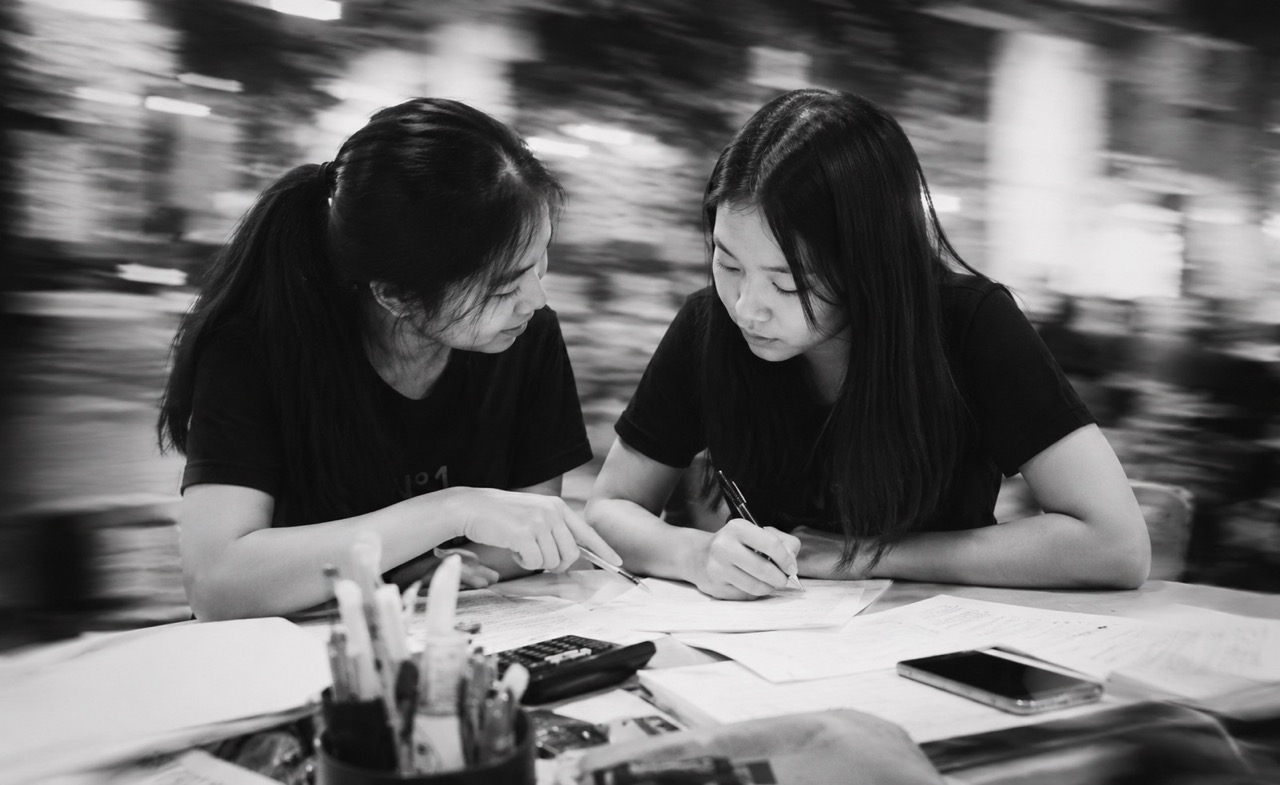
Our small-group model is built around three students because the tutor can hear and compare several reasoning routes while every learner remains visible.
One student gives a route. Three students give routes to compare.
The value is therefore not simply “more attention”. It is higher-resolution diagnosis and faster targeted correction.
Read: Why Three Students Work for Primary Science
What happens before enrolment
- Bring evidence. Recent school work, corrections, tests or examination papers are useful.
- Identify the current state. We look at concept knowledge, misconceptions, representation, transfer, reasoning, expression, load and independence.
- Decide whether intervention is needed. Tuition is not automatically the answer.
- Define the job. If tuition is justified, we state what the programme should change.
- Choose the correct room. Learning, repair, class runtime, tutor control, readiness or examination work should not be mixed without reason.
What to bring to a consultation
- one recent school Science test or paper;
- one or two pieces of ordinary classwork or homework;
- recent corrections if available;
- the parent’s main concern in one sentence;
- the child’s own description of what feels difficult.
You do not need to prepare a large file. A few well-chosen examples usually reveal more than a stack of undifferentiated worksheets.
Where to start in the Science library
| Your question | Start here |
|---|---|
| I want the overall programme. | Primary Science Programme Gateway |
| I am not sure tuition is necessary. | Does My Child Need Primary Science Tuition? |
| I want to understand the P3→P6 progression. | Primary Science Learning Journey |
| I want to know how a 3-student class works. | Why Three Students Work |
| My P4/P5/P6 child is struggling. | Primary Science Learning Architecture |
| PSLE is approaching and I need to know what to do first. | PSLE Science Triage |
| I want the current examination room. | 2026 PSLE Science |
What this centre page does not promise
- No guaranteed AL1 outcome.
- No claim that every child needs tuition.
- No generic promise that more worksheets will solve the problem.
- No premature P1/P2 Science examination programme.
- No trial lesson used as a substitute for diagnosis.
The operating principle
Evidence → diagnosis → smallest justified intervention → retest → transfer → independence.
If the evidence says the learner is already progressing well, that matters too. Good educational decision-making includes knowing when not to add another intervention.
Current Punggol Primary Science arrangements
For current Punggol Primary Science class suitability, timing, availability, consultation and enrolment, continue to Sign Up for Primary Science Tuition at eduKatePunggol. For the live teaching architecture, use Primary Science Lesson Architecture. This retained eduKateSingapore page does not maintain current local contact or availability data.