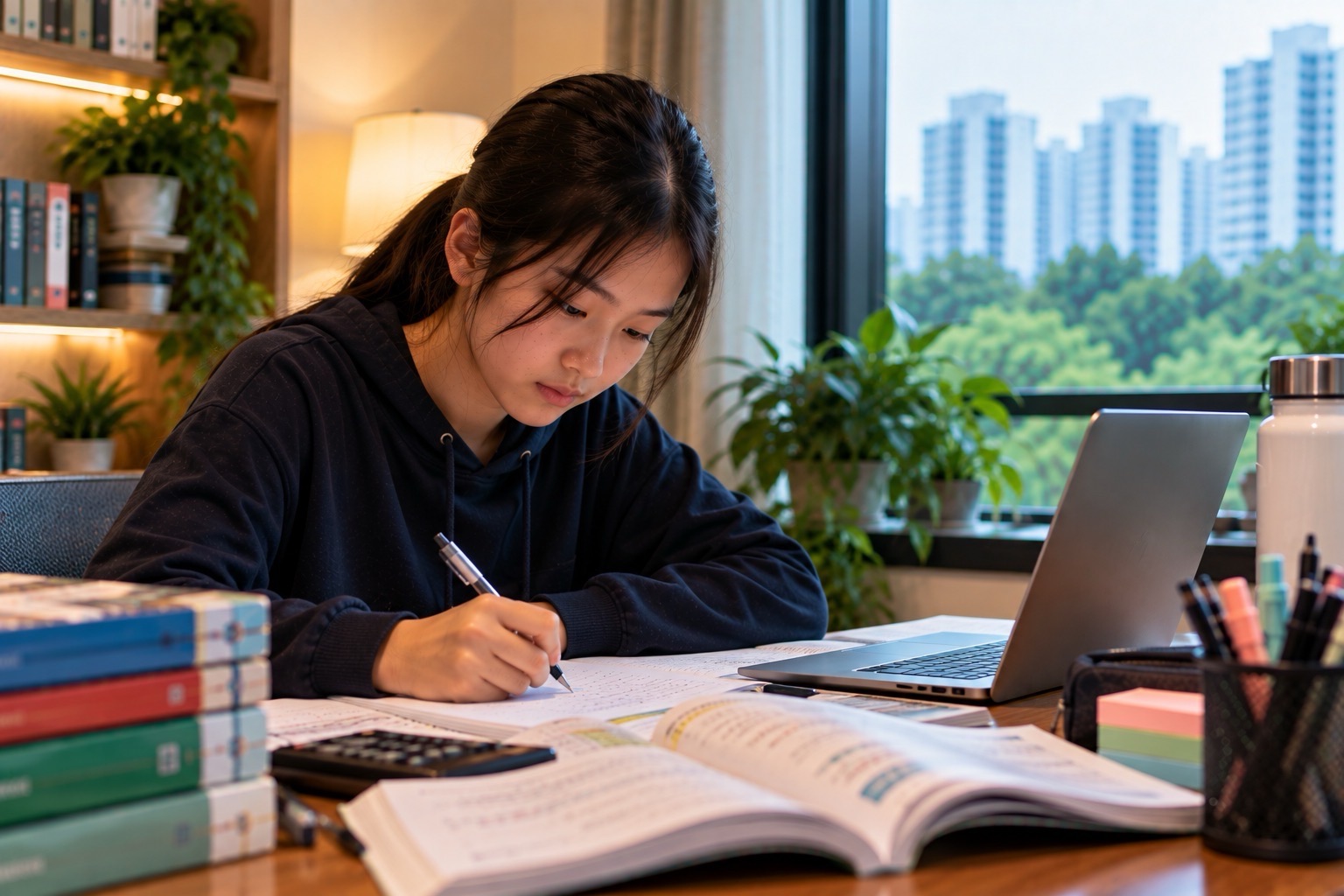
For a PSLE Score of 4, 5, 6 or 7, a child with strong interests in music, art, creative writing or languages can choose a meaningful PG3/SEC secondary-school pathway without being obliged to enter IP. In the previous PSLE 2025 posting for Secondary 1 in January 2026, Catholic High, Methodist Girls’ School, Singapore Chinese Girls’ School and St Joseph’s Institution all had non-affiliated PG3 cutoffs of 8 or 8(M), despite offering separate IP routes. Catholic High and MGS publish Music Elective Programmes with audition and listening tests; SJI’s SEC offers Josephian Arts in Visual Arts and Music; SCGS offers broad-based lower-secondary arts and a range of performing-arts CCAs. A school posting does not automatically grant a selected music elective or talent award.
Parents should first identify what the pupil actually wants to make, perform or read, then check ordinary SEC arts lessons, auditions, gender, bilingual culture and the actual commute. All Scores 4–7 qualify for PG3, and the 2025 non-affiliated PG3 cutoff range began at 8, while some IP-only schools had older cutoffs of 6 or 7. Those are different programme histories, not measures of artistic ability. The PSLE 2026 results are issued on Tuesday 24 November at 11.00am; the online S1 Portal opens at 11.30am and closes at 4.30pm on Monday 30 November. Rank six genuine school preferences and keep specialist-programme selection separate from admission.
- All Scores 4–7 are PG3 eligible; a child may choose a four-year SEC route despite strong IP eligibility.
- Catholic High: former PG3 8(M), IP 7(M); Music Elective Programme also open to selected SEC/SP students.
- MGS: former PG3 8, IP 6; MEP selection involves listening, two solo pieces and interview.
- SJI: former PG3 8, IP 7; Josephian Arts includes Visual Arts and Music in the SEC learning framework.
- SCGS: former PG3 8, IP 7; broad lower-secondary aesthetics and music/arts CCAs.
- School-wide arts, selected MEP/JAP pathways and earlier DSA admission are different processes.
- Six choices close at 4.30pm on Monday 30 November 2026.
1. What PSLE Scores 4–7 really mean for school choice
The PSLE Score adds the Achievement Levels obtained in English Language, Mathematics, Science and Mother Tongue Language. A lower total means a stronger overall result. Scores 4, 5, 6 and 7 are comfortably within Posting Group 3 (PG3), but the four individual grades and the child’s interests still matter. A pupil who scored 4 received AL1 in each of the four subjects; a Score 7 pupil might have several strong subjects and a slightly different result in another. Neither total tells us whether the child enjoys Science, music, competitive sport or independent research, or what they need for a positive daily school life.
Families sometimes assume that a Score 4–7 must automatically lead to an Integrated Programme (IP). That is not a requirement. Some institutions offer only IP entry; others offer a separate four-year SEC programme in addition to IP; many mainstream secondary schools have PG3/SEC without IP. A child can choose an appropriate ordinary SEC route for its subject teaching, applied learning, school culture, CCA opportunities or proximity to home. The family should not make a twelve-year-old feel that studying for the SEC represents a failure to use a strong PSLE score.
A pupil with an outstanding PSLE result can still find new Secondary 1 algebra difficult, feel uncertain about friendships or prefer practical projects over extended examinations. Look at how teachers explain mistakes, what pupils can do after ordinary lessons, whether activities require additional selection and how long the child travels home. Those facts are more useful for long-term school fit than treating a previous last-posted cutoff as a quality ranking. The child’s future learning begins after the posting, not ends with a PSLE total.
2. Confirmed 2026 results and the official Secondary 1 submission window
| Singapore date and time | Official milestone | Parent action |
|---|---|---|
| Tuesday 24 November 2026, 11.00am | PSLE 2026 results released | Collect the official total and individual AL grades |
| Tuesday 24 November 2026, 11.30am | MOE S1 Portal opens | Use a parent’s Singpass and inspect eligible school programmes |
| 24–30 November 2026 | School research and submission | Compare up to six genuine preferences and transport |
| Monday 30 November 2026, 4.30pm | Online school choices close | Submit before the deadline and retain acknowledgement |
| Friday 18 December 2026 (tentative) | Secondary 1 posting results expected | Wait for the final MOE date and school reporting instructions |
The 17 November 2026 SEAB/MOE results announcement confirms these dates and encourages parents to consider school culture, subjects, distinctive programmes and CCAs. The official submission route is MOE S1 Posting. One parent with a valid Singpass may submit the form; those who need help should contact the child’s primary school before 4.30pm on 30 November. An unfinished online form is not an accepted school choice. Keep the successful acknowledgement and check the chosen route and school code carefully.
The announced Secondary 1 posting results date of 18 December is tentative, not a confirmed guarantee. Parents should follow later MOE notices. The earlier year’s cutoff figures are also not published future thresholds: the last pupil admitted in January 2027 will only be known after the 2026 cohort’s preferences and places are processed. It is better to prepare a list where every school has a positive reason to be included than a list of six famous names chosen without a child-centred discussion.
3. The crucial difference between an old PG3 cutoff and an IP cutoff
For the PSLE 2025 cohort entering Secondary 1 in January 2026, the lowest non-affiliated ordinary PG3 last-posted cutoff in the national comparison was 8, while some IP-only schools had last-posted scores of 6 or 7. A child scoring 4–7 therefore had a numerically stronger total than those previous ordinary PG3 endpoint scores. This does not guarantee a 2027 place; it simply means the previous PG3 admissions boundary is not the same as the stricter IP-only boundary. Families must not quote an IP cutoff of 6 as though it were a PG3 cutoff for that school.
In the completed 2025 posting, Catholic High, CHIJ St Nicholas Girls’, MGS, SCGS, ACS (Independent) and SJI each had an ordinary non-affiliated PG3 cutoff of 8, with a separate IP cutoff. Victoria School and Cedar Girls’ also operated separate IP and PG3 options with different or sometimes matching historic numbers. In contrast, Raffles Institution, Raffles Girls’, Hwa Chong Institution and Nanyang Girls’ High offered IP rather than ordinary PG3. Parents cannot submit those IP-only institutions as PG3/SEC choices. An interested Score 4–7 pupil can separately assess whether IP is eligible and desirable.
A school may also publish a formally affiliated range that differs substantially from the non-affiliated score. A parent being an alumnus or a school sharing a religious tradition does not by itself create affiliation for the pupil. Confirm the exact qualifying primary-to-secondary school link where relevant. At SAP schools, Higher Chinese grades may appear as suffixes such as D, M or P, describing the previous last-posted pupil’s HCL result. Do not remove the suffix, deduct imaginary points from the overall score or confuse language subject eligibility with a school’s special posting priority.
| School/route | 2026-intake ordinary non-affiliated PG3 cutoff | Separate IP 2026-intake cutoff | Important distinction |
|---|---|---|---|
| Catholic High (boys, SAP) | 8(M) | 7(M) | Both offered; SEC and IP are different curricula |
| CHIJ St Nicholas Girls’ (girls, SAP) | 8(M) | 7(M) | Girls-only secondary, separate IP and SEC |
| Methodist Girls’ School (girls) | 8 | 6 | Dual track with selected Music and other programmes |
| Singapore Chinese Girls’ School (girls) | 8 | 7 | Dual track, separate SEC and IP |
| ACS (Independent) (boys) | 8 | 7 | Do not confuse with ACS (Barker Road) |
| St Joseph’s Institution (boys) | 8 | 7 | Four-year SEC and separate six-year IP route |
| Victoria School (boys) | 9 | 8 | Different programme pathways and entry categories |
| Cedar Girls’ (girls) | 9 | 9 | Confirm the current route despite same former cutoff |
| Raffles Institution / Raffles Girls’ | No ordinary PG3 route | 6 | IP only for this comparison |
| Hwa Chong Institution / Nanyang Girls’ High | No ordinary PG3 route | 6(M) | IP only; SAP/HCL notation matters |
These previous numbers are grounded in the 2025 PSLE posting for January 2026 entry, not predetermined January 2027 cutoffs. The authoritative check is MOE SchoolFinder for the actual school, route, gender, fee category and published score range. The 2026 intake historical IP/PG3 comparison is a supplementary table only; MOE and the actual school’s most recent notices take priority. An IP-only choice and an ordinary PG3/SEC choice are not interchangeable even when the school names have similar traditions.
4. Full Subject-Based Banding, G3, SEC and later opportunities
Under MOE Full Subject-Based Banding, PG3 is used for school admission while G3 describes a subject-learning level. Pupils entering through PG3 generally start most subjects at G3 in a four-year SEC programme. The Singapore-Cambridge Secondary Education Certificate replaces the earlier separate N- and O-Level examination structures from the 2027 graduating cohort. Children joining Secondary 1 in 2027 will reach the applicable national examination in later years, not immediately. Their subsequent JC, polytechnic, ITE and other educational pathways will depend on later subjects and results, not on PSLE alone.
IP is a different school curriculum designed as a longer route leading towards post-secondary study without taking the ordinary Secondary 4 SEC examination along the way. It may include additional extended research, humanities or overseas experiences. But IP is not a universal measure of a child’s curiosity or potential: ordinary SEC schools also offer advanced academic and co-curricular opportunities. Catholic High officially explains that its IP and SEC/SP students share many core lessons, CCAs, student development and selected talent programmes, while IP has specific extension activities that the SEC timetable does not include.
Parents should therefore compare the actual years, subjects, assessment and school culture. A child who enjoys a wide range of subjects and a longer IP curriculum may prefer an IP-only or dual-track IP route if eligible. Another equally strong pupil may choose SEC because it suits their learning style, location, interests or family preferences. The decision should be based on the education the child will experience rather than the perceived status of a label or an assumption that one route automatically guarantees a particular university.
5. School-specific options for art, music, language and cultural learning
The following table is a research shortlist, not a league table. The historical cutoff for each ordinary PG3 route refers to PSLE 2025 and Secondary 1 entry in 2026. Programme facts come from school sources, while entries marked as questions must be verified rather than assumed. Admission to the school does not guarantee a specialist elective, advanced research opportunity, sports squad or talent-selected CCA; some of those have separate entry requirements.
| School | Area | Previous non-affiliated PG3 COP | Distinctive programme or question | What the family must check |
|---|---|---|---|---|
| Catholic High (Secondary) | Bishan | 8(M) | Music Elective, bicultural arts, creative Passion Pursuit | Boys, SAP; MEP audition after entry, distinct IP |
| Methodist Girls’ School | Bukit Timah | 8 | MEP with listening, performance and interview | Girls, MEP students join music CCA; SEC/IP differ |
| St Joseph’s Institution | Malcolm Road | 8 | Josephian Arts Visual Arts and Music in SEC learning | Boys; art DSA requirements distinct from normal posting |
| SCGS (Secondary) | Stevens | 8 | Broad lower-secondary art/music and expressive CCAs | Girls, SEC and IP separate |
| CHIJ St Nicholas Girls’ | Ang Mo Kio | 8(M) | Check SAP aesthetics and music/arts talent programmes | Girls, SAP, SEC/IP separately |
| ACS (Independent) | Dover | 8 | Current SEC arts CCAs and language options to verify | Boys, separate IP and school fees |
| Cedar Girls’ | Potong Pasir | 9 | Art talent stages, performing arts and regional studies | Girls, IP/PG3 and selected talent routes |
| Victoria School | East Singapore | 9 | Present performing arts and language activities to verify | Boys, separate IP and PG3 |
| Nan Chiau High | Sengkang | 11(M) | Broad arts LLP, selected Art Talent and later EAP | SAP PG3 school with additional music/art context |
| Tanjong Katong Girls’ | Katong | 13 | MEP and sports/arts, selected admission | Girls, SEC PG3; historically less stringent old cutoff |
6. Five programme distinctions that can change the decision
1. Catholic High MEP is available to eligible SEC boys, not only IP
Catholic High’s official Music Elective Programme is available to pupils in both its IP and SEC/SP tracks who demonstrate interest and aptitude. It develops listening, music studies, composing and performing across world music, Western traditions and different styles. The school describes specialised MEP studios, concerts and workshops, and preparation for the G3 Higher Music assessment under SEC. An interested boy who is posted through the ordinary SEC route can apply during Secondary 1 registration, rather than being told that a pupil must first obtain the separate IP entry. This is important because a strong PSLE score should not obscure a real SEC curriculum option.
Entry to the MEP is nevertheless selected: the school’s process involves musical competence, an e-listening assessment and performance of two contrasting solo pieces, with further requirements according to the current intake notice. A school place does not guarantee successful MEP enrolment, and a 2026 selection date should not be reused as the 2027 date without verification. Catholic High’s SAP Flagship Programme also exposes students to Chinese cultural forms such as music, calligraphy, painting and other arts, but parents must investigate the actual year-level activities. The former PG3 cutoff was 8(M); the IP cutoff 7(M) belongs to another route.
2. MGS Music Elective: a commitment in both school timetable and CCA
Methodist Girls’ School publishes a Music Elective Programme with listening, performing, creating and music research across Classical, Jazz, Popular and Asian traditions. Its selection includes a listening test on Western and non-Western music, an audition of two contrasting solo pieces on instrument or voice, and an interview about musical interests. This is different from an ordinary music appreciation lesson and different from an earlier DSA MEP talent offer. Parents should ask how the current SEC pupil applies, what preparation is genuinely necessary and whether the child wants the time commitment of the full elective.
The school states that MEP participants must join a music performing-arts CCA, with offerings such as choir, guitar ensemble, handbell choir and strings. This is a meaningful commitment that can be rewarding for a musically motivated child but may be less suitable to one who merely enjoys casual performance. MGS had an earlier non-affiliated PG3 cutoff of 8 and IP cutoff 6; it officially distinguishes a four-year SEC programme leading to SEC exams from a six-year IP path. A Score 4–7 girl may research either route as appropriate, but not treat a PG3 school place as automatic MEP or IP entry.
3. SJI’s Josephian Arts links creativity with academic inquiry
St Joseph’s Institution publishes a four-year SEC programme that includes Josephian Arts in Visual Arts and Music, alongside other Level 1 and Level 2 learning experiences. Its Visual Arts programme develops artistic practice, investigation, reflection, creative thinking and links between art and the community. The school states that Josephian Arts Visual Arts is compulsory for boys admitted through DSA in Visual Arts; this is a specific DSA condition, not a statement that every ordinarily posted SEC boy is automatically selected into the same art course. Parents should ask about current ordinary access and subject or programme requirements.
The Josephian Arts Music programme allows SEC pupils to explore Music for two years and, where eligible, apply to pursue Music as an upper-secondary SEC subject at an MOE Music Centre. It should not be confused with the IP programme’s longer music arrangement. SJI also has Academic Discovery and Independent Study Modules that can support broad curiosity in history, Science and creative topics. The previous PG3 non-affiliated cutoff was 8 and the IP cutoff 7. A boy whose interest lies in visual communication or music may reasonably prefer the SEC school experience, even with a PSLE Score that also makes some IP choices worth investigating.
4. SCGS gives broad arts education beyond a single elective
Singapore Chinese Girls’ School’s secondary Aesthetics department describes broad-based learning in visual art, music and movement. The lower-secondary programme includes creating art, studying elements of music, improvising and appreciating cultural works through concerts, exhibitions and related experiences. It also lists later opportunities for students with interest and aptitude to study art or music more deeply in upper secondary. This distinction matters: a girl can benefit from arts learning during normal classes without necessarily entering a selected upper-secondary programme or elite CCA.
SCGS’s CCA offerings include choir, band, handbell ensemble, strings, Chinese and English drama, dance and art or media clubs, alongside sports and leadership groups. Some activities may require auditions, capacity limits or other school procedures, so parents should ask about the current 2027 arrangement. The school reported a former non-affiliated PG3 cutoff of 8 and a separate IP cutoff 7. A family should choose the actual track and discuss the girl’s artistic interests, commute, normal teaching and fee considerations rather than infer that a well-known school name guarantees personal access to every available arts option.
5. Language choice, bicultural study and an honest SAP comparison
At SAP schools such as Catholic High and St Nicholas, the historic cutoff may include a Higher Chinese suffix such as 8(M) or 7(M). This records the last-posted pupil’s HCL result in the earlier cohort, not a fixed point bonus to be deducted from the total. The school’s Chinese-language culture should suit the child, and applicable HCL subject options should be checked. A family that values bilingual learning should also distinguish Catholic High’s general bicultural and SAP experiences from more specialised IP-only extensions; the school’s IP-versus-SEC comparison explains that some advanced features require IP because of curriculum time.
Strong language interests can also be developed through reading, debate, journalism, speech and drama, Mother Tongue studies or arts CCAs at many ordinary SEC schools. A child should not be forced into a language environment they do not enjoy merely to follow an admissions chart. Compare actual teaching locations for any Higher Mother Tongue subject, whether a centre is involved and whether the child can maintain other interests. A good bilingual education connects language with communication and cultural understanding while preserving general academic foundations and wellbeing.
7. Work through the four scores, not a generic high-achiever list
1. Score 4, an artistic girl whose family wants IP automatically
MGS or SCGS has an SEC track and a separate IP track. A child may prefer the four-year SEC arts environment; check programme content rather than equate admission cutoff with artistic talent.
2. Score 5, boy interested in Higher Music
Catholic High allows interested SEC/SP boys to apply for MEP after school posting, but selection tests and musical aptitude still apply; not every posted boy enters MEP.
3. Score 6, girl already active in strings
MGS MEP includes an interview and two contrasting solo audition pieces, and selected MEP pupils join a music CCA. Check the child’s enthusiasm for the full commitment.
4. Score 7, boy who likes visual arts and research
SJI offers SEC Josephian Arts and inquiry opportunities, separate from its IP route. Compare teaching, selected programme access and daily travel.
8. Six school preferences: a practical family method
- Read all four official subject ALs, any Higher Chinese result and any earlier confirmed DSA-Sec commitment.
- Decide whether the child is genuinely interested in an ordinary PG3/SEC route or a separate IP route; compare each correctly.
- Confirm school gender, exact school code, campus, formal primary-school affiliation and whether the route is offered.
- Ask the child to give two positive reasons for attending each school, beyond its former cutoff or prestige.
- Check which specialist activities are school-wide and which require selected participation, an audition or later application.
- Test the journey before school and after CCA, including walking, transfers, equipment and family costs.
- Include appropriately less stringent historical choices where possible, but never call them guaranteed.
- Rank the six in authentic preference order and submit by Monday 30 November 2026 at 4.30pm.
A school with a numerically less stringent previous cutoff can be Choice One when it is the school the pupil most wants to attend. School preference order can matter as a tie-breaker among pupils with the same overall score and applicable citizenship priority; computerised balloting may be used when necessary. The family should not arrange schools mechanically from strictest previous cutoff to largest old score if that is not the actual order of preference. Likewise, a selected arts elective or Science programme should not be counted as secured merely because the parent likes its name.
Imagine the child receives Choice Six. Is it somewhere they could willingly go every day? Can they manage the commute, join a meaningful CCA and get help when work is confusing? Does the school offer subjects and a culture they would value, and can the family manage its fees and other expenses? If the last school is an unwanted name used only to fill a slot, revise it. Apply the same reality test to Choice One, especially when a school is far away and the parent is attracted mainly to its earlier cutoff.
9. School open-house questions that reveal actual educational fit
| Question | Evidence to collect | Why it matters |
|---|---|---|
| What does the pupil do in ordinary Secondary 1 classes? | Actual G3/SEC timetable, core lessons and feedback methods | Academic foundations matter more than a brochure slogan |
| Which distinctive experiences are available to all? | School-wide learning versus elective, talent or selected programme | Prevents automatic-entry promises |
| What must be auditioned or selected? | Advanced Science, MEP, arts, research and CCAs | School posting and activity entry are separate |
| How will the pupil settle? | Orientation, form teachers, peers, counselling contacts | Confidence and friendships are part of school success |
| Does the child like the social environment? | School ethos, gender eligibility, student voices and ordinary CCAs | A strong PSLE total does not determine belonging |
| Is the school route correctly labelled? | SEC/PG3, IP, SAP/HCL, affiliated or not | Avoids using a cutoff from the wrong course |
| Can daily travel work? | Morning and after-CCA journeys, costs and sleep | A sustainable routine supports learning |
An open house can be valuable when the child asks their own questions. A child who enjoys Science might want to know how the school teaches experiments and whether beginners can join a maker CCA. Another may ask about art exhibitions, music rehearsals, basketball trials or school leadership. Parents should listen to the answers about what is available to normal pupils, not only to photographs of top talent or national competition teams. Every school needs to provide effective ordinary subject teaching and a community where the pupil feels comfortable seeking help.
10. Preparing for January 2027 after the school is confirmed
The posting result is tentatively expected on 18 December 2026; MOE will confirm the exact date. Once the child is allocated a school, follow the specific reporting, orientation, booklist and subject instructions. Do not buy specialist equipment or tuition courses based on an assumed school programme before posting. Help the pupil learn a route home, understand their timetable, organise school materials and approach teachers when unsure. A child can achieve a high PSLE score yet still need guidance with new friendships, homework demands or more abstract secondary subjects.
The immutable eduKate Clementi Secondary 1 Mathematics tutorial reference illustrates the benefit of clear explanations and manageable foundations-first practice. A pupil may revise algebraic thinking, proportional reasoning, reading or Science explanations according to actual needs, but a strong result does not require either compulsory accelerated tuition or an assumption that the pupil can never struggle. Time for exercise, reading, creativity, rest and friendships is part of a healthy secondary-school transition.
11. Frequently asked questions
Are PSLE Scores 4–7 within PG3?
Yes. They are within the ordinary 4–20 PG3 posting band, though IP choices must be considered separately.
Does a Score 4 automatically give a place in every IP school?
No. IP programmes have school-specific places, criteria, cutoffs and current-year demand.
Is IP compulsory for a child scoring 4–7?
No. A pupil can choose an eligible four-year SEC/PG3 programme that better suits the child.
What was the lowest previous non-affiliated PG3 cutoff?
The earlier 2026-intake comparison began at 8, separate from IP-only previous cutoffs of 6 or 7.
Does a previous cutoff guarantee the 2027 place?
No. It is the last-posted result of a completed cohort, not a future offer.
Can a pupil use a former affiliated cutoff without actual affiliation?
No. The formally recognised primary-to-secondary relationship and relevant conditions must apply.
Does school admission guarantee a specialist programme place?
No. Some talent, elective and CCA opportunities require later selection.
Can the child prefer a school with a less stringent old cutoff?
Yes. Authentic school fit, teaching, activities and transport should determine preference order.
Does choosing SEC rather than IP limit all future education?
No. SEC pupils can pursue different post-secondary pathways subject to their later subjects, results and applicable criteria.
When do S1 choices close?
Monday 30 November 2026 at 4.30pm, Singapore time.
12. Official school evidence and eduKate parent reading
- SEAB/MOE confirmed 2026 PSLE result and S1 posting dates
- MOE SchoolFinder
- MOE Secondary 1 Posting
- MOE Full Subject-Based Banding
- Historical 2026-intake IP and PG3 cutoff comparison
- Catholic High official IP versus SEC/SP comparison
- SJI official four-year SEC programme
- Catholic High Music Elective programme and audition — current school programme description
- Catholic High IP versus SEC/SP — current school programme description
- MGS Music Elective audition and CCA — current school programme description
- MGS SEC/IP and 2027 admissions — current school programme description
- SJI SEC Josephian Arts programmes — current school programme description
- SCGS broad secondary aesthetics — current school programme description
- SCGS current arts and other CCAs — current school programme description
- eduKate PSLE Score 4 PG3 school finder
- eduKate PSLE Score 5 PG3 school finder
- eduKate PSLE Score 6 PG3 school finder
- eduKate PSLE Score 7 PG3 school finder
- Immutable eduKate Clementi Secondary 1 Mathematics reference
Independent eduKateSingapore.com parent guide prepared 20 November 2026. Historical cutoffs describe the PSLE 2025 cohort entering Secondary 1 in January 2026, not confirmed January 2027 admissions. Programme details, gender, fees, SAP/HCL, affiliated eligibility and CCA selection should be checked with MOE and the relevant schools. Not an MOE or SEAB publication.