Everyday Vocabulary Age 2: six worked conversations for real-life meaning
Top 100 Vocabulary Words for Children | Age 2 is most useful as a guide to words that do something in everyday communication. A two-year-old may need to choose, request, locate, ask for help or explain a simple action long before they can repeat a complete adult sentence. These six original worked conversations bring together the existing list’s familiar words—together, turn, choose, show, listen, plate, stir, zip, under, beside, stack, fix, surprised and gentle—without treating the list as a mandatory speaking checklist. Adults can model short, accurate language while children answer through pointing, gesture, speech, home languages or communication aids. Each activity follows a real purpose and ends when the child loses interest or needs care; the 100-word reference remains intact below.
Choose and take a turn: the two-picture reading invitation
The familiar moment: A caregiver places two sturdy picture books on a low, safe surface. One shows a cat and the other shows a bus. The adult says, “You can choose a book. Cat or bus?” If the child points at the bus book, the adult responds, “You chose the bus. Let’s read together.” The child’s pointing has already made a successful choice.
Use turn when it has a real meaning: During shared reading, the adult gently turns one page, then invites the child to turn the next sturdy page if they want. “My turn. Your turn.” These words identify whose action is happening, not whose worth or ability is greater. A child who only watches can still enjoy the shared book.
A useful distinction: Choose describes selection among available options. Together describes participating with another person. Turn describes a moment when one participant acts. The adult might model “You chose this book, and now we can read together,” but no child must say the whole sentence before receiving the chosen book.
Repair an unclear signal: If the child reaches between the books, the adult can ask gently, “This one?” while offering one at a time for confirmation. Do not pretend a gesture means a choice when the child appears undecided. Let the actual selection guide the conversation.
Carry it elsewhere: Later, the family may choose which familiar song to sing. A good caregiver note is “Pointed to bus book when offered two covers; turned one page after adult model.” It would be premature to claim the child has mastered all choice and turn-taking vocabulary from one interaction.
Plate, fruit and stir: describe an adult-led paper picnic
The safe play setting: An adult uses paper pictures of a plate, an apple, an orange and a bowl of soup. The child can arrange them on a mat without handling hot food, sharp utensils or small loose parts. “The apple goes on the plate. The soup is in the bowl.” Words that were familiar at meals now describe pretend positions.
A meaningful comparison: The child chooses the apple picture. The caregiver says, “You chose fruit. The apple is fruit, and the orange is fruit too.” The word fruit names a category, while apple and orange name examples. The child need not explain category membership; arranging two pictures can demonstrate the connection.
Use stir as a descriptive action: Show a drawing of an adult stirring soup with a spoon, and say “The grown-up stirs the soup.” Stir means moving the liquid or mixture around with a utensil. It does not mean tasting or eating. Any actual cooking remains an adult responsibility and should not be staged as a vocabulary performance.
Let different requests stand: If the child asks to read rather than play picnic, accept the change. If they prefer one picture, model the word for the selected object. A responsive exchange may be two utterances long: Child: “Apple.” Adult: “Apple on plate.”
Observe what happened: “Placed the apple picture on the plate after the adult said on; independently named orange in the next picture.” This keeps understanding, imitation and independent naming separate. The same words can later appear naturally during an ordinary supervised meal.
Shirt, zip, tissue and brush: describe care without delaying care
A morning moment: A caregiver helps a child prepare for the day. The child points towards a shirt and hands over a jacket. The adult says “Here is your shirt. The jacket has a zip.” If the child offers the zip, the caregiver assists appropriately rather than insisting on “Help me with the zip” first.
Show the feature visually: The zip can be seen moving up or down when an adult operates it safely. A picture may be used if the garment is not suitable for demonstration. The words zip, jacket and shirt refer to different things: a fastening and two clothing items. The adult can clarify by pointing to the relevant part.
Use a real tissue or picture only as appropriate: During ordinary care, the adult says “Here is a tissue” and helps the child according to need. Toothbrushing is another adult-supported routine, not a game that must be extended for vocabulary. “We brush our teeth” can be a natural sentence, while decisions about toothpaste, brushing and supervision follow appropriate care guidance.
Allow refusal and sensory needs: If a child dislikes the jacket or needs a break, the adult can respond calmly and adapt where possible. Words such as wait, gentle and help can be modelled while meeting the child’s needs. A child’s discomfort is not an obstacle that language practice should override.
A precise handover: “Brought jacket to adult and touched the zip; adult named zip and helped close it.” This is useful for the next caregiver and avoids declaring independent use of a word the child did not say.
Behind, beside and between: a toy-train platform on paper
The picture: An adult draws a pretend railway platform and places a large toy train beside the drawn station. They say “The train is beside the station.” A second large toy is behind a stable cardboard sign. “The bus is behind the sign.” These words describe where things are relative to a visible reference.
Add a two-reference relation: Draw two clear trees on the paper and put a large toy animal between them. “The animal is between the trees.” Between depends on both reference objects. If only one tree is visible, the picture does not fully explain the relation.
Make the contrast visible: Move the toy from beside the station to behind it in the pretend scene. Do not say “behind” merely because the toy is far away from the child; the location depends on the relationship to the station. A child may point, move a toy or offer “Train there,” all of which can serve the interaction.
Keep the location safe: Use a floor mat, paper map and suitably large play pieces. Do not ask a toddler to go behind real traffic barriers, enter a rail platform or crawl under furniture to demonstrate position words. Real travel directions remain the responsibility of an adult.
Transfer: During shared reading, identify a cat beside a chair or a bird between two branches in an illustration. A note such as “Moved the animal between two paper trees after seeing an adult demonstration” reports a specific act without claiming broad mastery of spatial language.
Build, stack, fall and fix: a paper picture story rather than a test
The invented four-panel story: A picture character stacks three large blocks. A pet brushes past, the blocks fall, and the character rebuilds the stack. Ask the child to look at the pictures with you. Use one ordinary sentence per event: “She builds a stack.” “The blocks fall.” “She will fix it.”
Distinguish what happened from why: In this fictional drawing, the pet touches the blocks just before they fall. The adult might say “The blocks fell when the pet brushed them.” This names the visible sequence. A stronger claim about exactly which force caused the fall would need a clear enough picture or demonstration; do not add an unshown accident or hidden intention.
Invite participation without a speech demand: The adult asks “What happened next?” The child may point to the final panel or say “Fix.” The caregiver can respond “Yes, she fixed the stack.” That natural expansion is enough. A child who wants to act out the story may use appropriate large blocks on a safe mat.
A helpful contrast: Break can describe a damaged object, whereas fall describes an object moving down. Blocks that fall do not necessarily break. If the picture shows intact blocks, “They fell” is more accurate than “They broke.” The words become useful because they tell the listener different things.
Transfer: Use a new three-picture story of a book slipping from a shelf and an adult picking it up. Ask the child to point to first and next, or simply retell in their own way. Record the actual sequence they communicated rather than counting full-sentence repetitions.
Surprised, worried, gentle and proud: responding to a friend’s choice
The little social story: A fictional toy character hears an unexpected loud noise and looks startled. Another toy character approaches slowly. An adult says “She was surprised by the noise. Her friend was gentle.” The word surprised describes a possible reaction; it is not the same as a longer-lasting feeling of worry.
Give feelings a respectful context: A child looking at the picture might call the character scared. That is a plausible interpretation if the illustration supports it. The adult can say “She might feel scared. Let’s look at the picture.” Do not insist that one adjective is the only acceptable description of an imaginary person’s feelings.
Model considerate action: The second character might ask “Would you like me to sit here?” or offer a familiar toy. Being kind can include giving another person space. Adults should not insist that a real child hug, touch or share a treasured object to prove that they understand kindness.
Use proud appropriately: At the end of the story, the character tries a new safe action and smiles. The adult may say “She looks proud of what she tried,” but should avoid asserting an internal state as certain from appearance alone. The child may describe happy instead, and the caregiver can preserve that useful ordinary word.
Transfer: In a real playgroup, name a gentle action when it occurs and respect children’s choices. A handover can read “Noticed the startled figure in the picture; adult modelled surprised and gentle.” The goal is better interpretation and care, not a list of required emotional labels.
Parent and tutor checkpoint: One genuine choice, supported care routine or brief picture conversation is enough for a useful vocabulary encounter. Notice whether the child used an independent word, a copied word, a gesture or a home-language expression, and do not treat those as identical kinds of evidence. Respond to needs first, demonstrate the word once where it fits, and revisit during a different familiar routine only when the child is engaged. Persistent concerns about language, hearing or lost skills deserve advice from an appropriately qualified professional, not a score derived from this list.
The complete original Top 100 Vocabulary Words for Children | Age 2 article follows below, including all 100 words, themed chapters, existing practice routines, illustrations, caregiver guidance and further reading. Browse the Children’s Vocabulary Ages 1–12 series hub to choose Everyday, Base, Connecting or Maximum Fence activities that fit the learner’s current needs.

Explore this vocabulary series
Children’s Vocabulary Ages 1–12: series hub — choose everyday words, Base Fence meanings, Connecting Fence sentences or Maximum Fence extensions.
Age 2: Everyday Age 2 (this guide) · Base Age 2 · Connecting Age 2 · Maximum Age 2
Previous: Everyday Age 1 · Next: Everyday Age 3
Choose a guide that fits the child’s current needs. At early ages, longer sentences are adult models, not required spoken targets.
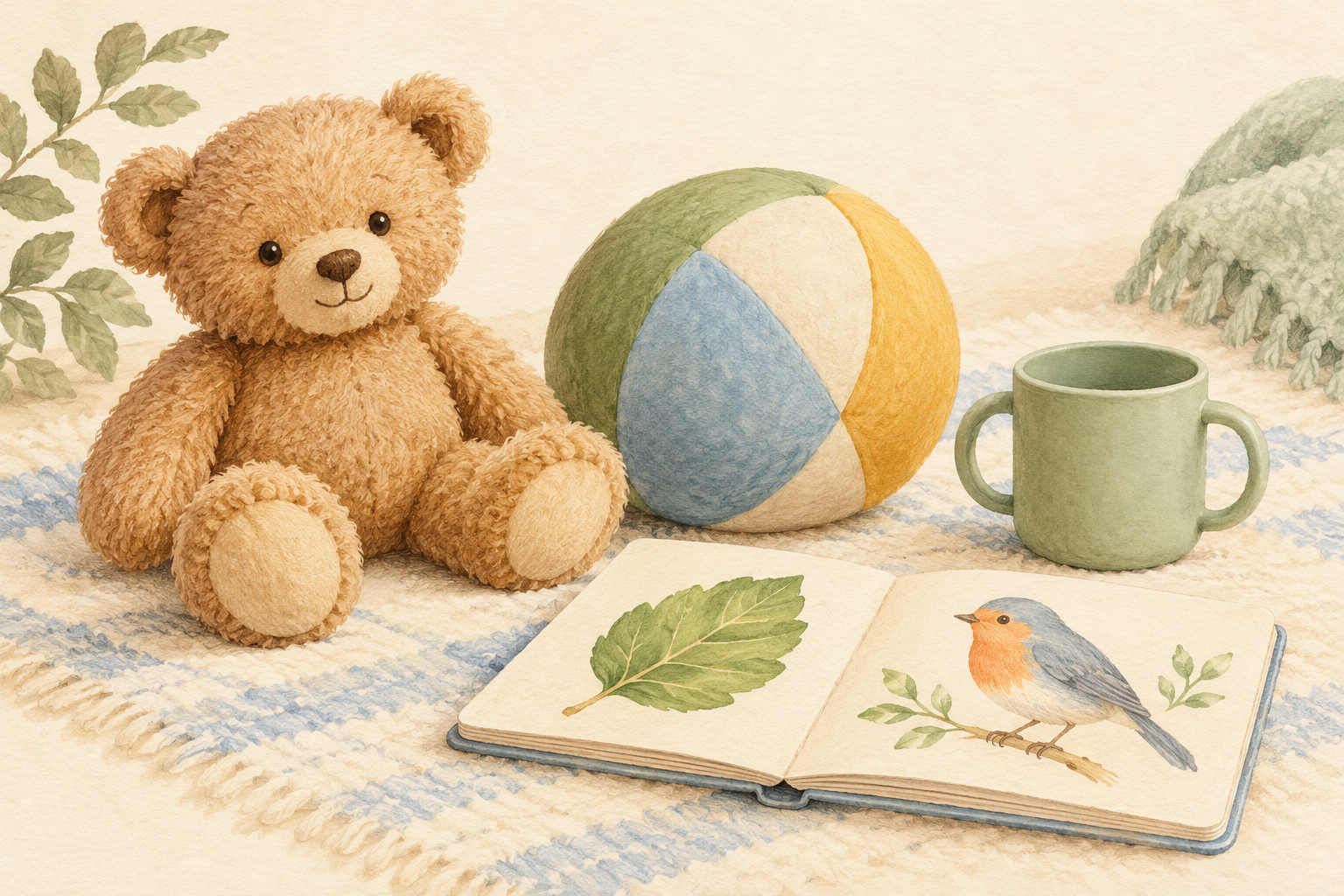
Header illustration: AI-generated watercolour of familiar vocabulary objects.
Did you know a word as ordinary as find can give a two-year-old a whole little story? The ball is missing, someone looks under a chair, and the ball turns up. The words are not impressive on their own, but they give a child useful ways to join the world. Top 100 Vocabulary Words for Children | Age 2 collects 100 new English headwords for adults to model in warm, real conversations, with practical examples for parents, caregivers and early-years tutors.
Age 2 means roughly 24 to 35 months. The 100 words are a teaching reference for adults, not a list every two-year-old is expected to say. A child may use short spoken combinations, gestures, signs, pictures, a communication device or a mixture. Start where communication is already meaningful, and seek professional advice for individual developmental concerns rather than using this list as a diagnostic checklist.
This is the next chapter after Top 100 Vocabulary Words for Children | Age 1. It introduces 100 distinct headwords, while deliberately reusing familiar Age 1 words inside natural phrases. That overlap in example sentences is valuable: a new word becomes useful when the child can connect it to a familiar person, object, action or feeling.
Use the 100-word index to jump to a word, or select a themed group. Each word card explains the meaning, models adult language, offers a small interaction, shows an important distinction and describes what to notice. The later sections provide complete routines and parent-and-tutor plans. This long guide is meant to be read a little at a time.
Quick answer for busy parents
The most helpful Age 2 method is notice → name → respond → expand → revisit. Notice what the child is attending to, name something relevant, respond to the message they already give, add one small piece of language, and revisit it in another real situation later. For example, when a child hands you a shoe, you may say, “You found your shoe,” then help put it on. Do not delay the help so that the child must repeat the new word.
At this stage, a useful sentence may contain two words, several words or none from the child. The adult’s short phrase is an example to hear, not a line to recite. If the child points to the book, says “book” or uses an established sign, respond meaningfully: “You chose the book. Let’s read.” This makes the communication successful and supplies a slightly richer model.
- One real purpose: ask for help, make a choice, find something, describe an action or share a discovery.
- One or two words of focus: pick the words that belong to the moment, rather than ten unfamiliar flashcards.
- A warm response: the child’s gesture, approximation, sign or word can already communicate something important.
- No withholding: food, drink, comfort and essential care are never dependent on a spoken performance.
- Flexible repetition: return to a useful word in a different routine, not through repeated commands to say it.
- Safety and access: choose large age-appropriate play materials, supervise closely and adapt movement or visual demands to the child.
What the age label does and does not mean
A child who has just turned two and one approaching the third birthday may communicate very differently. The CDC’s two-year milestone checklist includes combining at least two words, pointing to pictures and body parts on request, and using more varied gestures. The 30-month checklist includes around 50 spoken words, two-or-more-word combinations with an action word, some pronouns and naming things in a book. These are selected examples at two distinct ages—not a target of all 100 words from this article.
CDC says its developmental milestones describe skills that at least 75% of children can do by a certain age. The checklists are for developmental monitoring, not substitutes for validated screening. ASHA’s communication milestones for two to three years likewise describe growing word combinations, forms and conversational purposes across the age range. If hearing, language comprehension, social communication, speech or loss of skills worries you, talk to a qualified health professional. Bring examples across the child’s languages and communication forms.
A spoken word and understanding a word are not identical. A toddler may understand “shoes” during a dressing routine before saying it. An immediate imitation may sound like a word but may not yet be used independently. A point, a familiar sign or an AAC selection may communicate the idea effectively. Note these separately so that adults respond to the child’s real abilities without inflating a spoken-word tally or overlooking nonspoken communication.
These 100 words are a practical editorial choice, not a nationally mandated toddler syllabus, a scientific list of the 100 most frequent two-year-old words or a clinical threshold. Many children will already know some; others may not need particular words in their home. Skip a relationship title if it is not part of the child’s life and choose a familiar equivalent. The word bank offers possible language, while the child’s daily experience determines which word is useful.
Build phrases from familiar Age 1 words
A new word often has more meaning when it joins one already known. Ball can join find: “Find the ball.” Book can join choose: “You chose the book.” Teddy can join behind: “Teddy is behind the box.” A familiar cup can become “blue cup”, and the old word go can connect with outside or around. This is a gradual extension of useful conversations rather than a requirement to produce longer sentences on demand.
Use three routes to broaden a familiar expression. Add an action (“bird flies”), add a characteristic (“blue bird”), or add a relationship (“bird above tree”). You may begin with an adult model longer than the child’s own speech as long as it is clear and tied to the moment. Keep phrases accurate, because “The soup is cold” and “The soup is hot” carry different practical meanings. A child can listen to these distinctions long before giving formal explanations.
The connection can move beyond the original setting. If the child has heard “under the chair” with a toy, the same meaning might later appear in a book. When the family hears “thirsty” during a drink routine, a character in a story might be thirsty too. Revisiting a word with a new person or object gives another chance to understand its meaning. Do not force the transfer; notice the next time an opportunity arrives.
Contents: ten themed groups and practical guides
Each section can be read separately. The group links below open the correct word range. This makes a long guide easier for parents and tutors to use while planning a short interaction.
- 1. People and sharing a world — words 1–10
- 2. Asking, showing and understanding — words 11–20
- 3. Food, eating and preparation words — words 21–30
- 4. Clothing, dressing and self-care — words 31–40
- 5. Home, places and helpful objects — words 41–50
- 6. Actions that make little stories — words 51–60
- 7. Position words and moving through space — words 61–70
- 8. Colours, shapes and describing differences — words 71–80
- 9. Feelings, needs and kind actions — words 81–90
- 10. Nature, weather and places to explore — words 91–100
- Five detailed play and conversation workshops
- Seven useful daily routines
- A flexible fourteen-day plan
- Twelve common learning problems and responses
- Multilingual and accessible communication
- Parent–tutor observation and handovers
- Frequently asked questions
- Continuity from Age 1 through Age 12
- References and further reading
The 100-word clickable index
Numbers are for navigation rather than acquisition order. Select a word to reach the detailed example. A familiar word may appear elsewhere inside a phrase, but each numbered headword occurs once in the bank.
1–10 · People and sharing a world: 1. brother · 2. sister · 3. friend · 4. auntie · 5. uncle · 6. neighbour · 7. teacher · 8. visitor · 9. together · 10. turn
11–20 · Asking, showing and understanding: 11. want · 12. please · 13. thanks · 14. sorry · 15. wait · 16. choose · 17. show · 18. tell · 19. look · 20. listen
21–30 · Food, eating and preparation words: 21. apple · 22. orange · 23. egg · 24. noodles · 25. soup · 26. plate · 27. fork · 28. fruit · 29. peel · 30. stir
31–40 · Clothing, dressing and self-care: 31. shirt · 32. shorts · 33. jacket · 34. zip · 35. button · 36. brush · 37. teeth · 38. comb · 39. tissue · 40. pyjamas
41–50 · Home, places and helpful objects: 41. window · 42. mirror · 43. clock · 44. blanket · 45. pillow · 46. shelf · 47. drawer · 48. stairs · 49. lift · 50. key
51–60 · Actions that make little stories: 51. start · 52. rest · 53. find · 54. hide · 55. carry · 56. build · 57. stack · 58. fall · 59. break · 60. fix
61–70 · Position words and moving through space: 61. under · 62. over · 63. behind · 64. beside · 65. between · 66. near · 67. far · 68. inside · 69. outside · 70. around
71–80 · Colours, shapes and describing differences: 71. red · 72. blue · 73. yellow · 74. green · 75. round · 76. flat · 77. full · 78. empty · 79. sticky · 80. smooth
81–90 · Feelings, needs and kind actions: 81. angry · 82. scared · 83. surprised · 84. excited · 85. proud · 86. hungry · 87. thirsty · 88. worried · 89. kind · 90. gentle
91–100 · Nature, weather and places to explore: 91. flower · 92. leaf · 93. cloud · 94. sun · 95. moon · 96. shadow · 97. puddle · 98. park · 99. playground · 100. garden
1. People and sharing a world | Words 1–10
Familiar people give children reasons to share attention, look forward to someone returning and notice what other people do. Age 2 can introduce more social roles, but the terms should belong to real people rather than a list of imagined relatives.
Bring the word into a genuine greeting or shared activity. Rather than pointing at ten faces and asking who each person is, say what someone is doing, accept the child’s interest and allow the relationship to carry the conversation.
Use a family-approved picture, a familiar character or a real adult interaction. Avoid putting a child in a position where they must hug, wave or approach someone in order to demonstrate that a name or social word has been understood.
Build a tiny scene around a named person. One person arrives, a shared action happens, then the person leaves. Words such as together, turn and visitor gain meaning from these changes. A person who visits may also be a relative, but the relationship and the act of visiting are different concepts. A child can learn about both without mastering a taxonomy of family roles.
A quick way to begin
Choose a real event already happening in people and sharing a world. Name one detail your child notices, then allow time to respond. If they use a gesture, sound, sign, picture or spoken word, let that communication affect what happens next. The aim is a useful exchange that can continue as a small play story, not a fast check of ten word definitions.
For a child who already uses a familiar word from this group, a caregiver can add one extra detail in their own speech. If a word is new, repeat it only when the meaning can be shown clearly. If a word is not relevant to the family’s daily life, leave it unused. This group exists as an option, not an obligation. A child’s preferred activity and safe access requirements determine the useful choice.
1. brother
Meaning. A male sibling in a family where that relationship exists. Words become easier to use when they fit a genuine exchange. A clear description in the moment offers a more helpful model than asking for a definition.
In a real conversation. “Brother is drawing,” while watching him.
Try it together. Share a familiar photograph and name one action the brother is doing. Keep the interaction brief, age-appropriate and responsive.
An important distinction. A brother is not simply any boy; the family relationship matters. Clarify that distinction through the next genuine example instead of rapid correction.
What to notice and how to revisit it. Notice recognition and willingness to share the interaction, not a forced greeting. Another day, listen for the word or a response in a different familiar situation.
2. sister
Meaning. A female sibling, personalised to the people in this household. The best starting example is often already part of the child’s day. Use what they can see, hear, touch appropriately or choose.
In a real conversation. “Sister has the book,” during a real shared activity.
Try it together. Invite a short relaxed game using one favourite book or large ball. Keep the interaction brief, age-appropriate and responsive.
An important distinction. A sister is not every girl in a picture; avoid imposing a family role.
What to notice and how to revisit it. Notice whether the child follows the familiar person or chooses another activity.
3. friend
Meaning. A person with whom the child enjoys playing or spending time. A word can carry a small purpose: explaining where something went, who is involved, what an adult is doing or what the child wants.
In a real conversation. “Your friend is here,” as a known playmate arrives.
Try it together. Support comfortable parallel play with two safe toys. Keep the interaction brief, age-appropriate and responsive.
An important distinction. Friendship does not mean a toddler must share toys or give hugs on demand.
What to notice and how to revisit it. Observe how the children signal interest, space or a wish to stop.
4. auntie
Meaning. A familiar adult addressed by this family or respectful title. Adult speech can be a little richer than the child’s response while remaining short and connected to something real.
In a real conversation. “Auntie is waving,” if the person is doing so.
Try it together. Use the real adult’s chosen name during a comfortable visit. Keep the interaction brief, age-appropriate and responsive.
An important distinction. The title can be used differently across families; respect the local meaning.
What to notice and how to revisit it. A look or point may show recognition without an audible name.
5. uncle
Meaning. A familiar adult addressed by this title within a family or community. One successful interaction is worth noticing, but the next conversation may be different. Use the word naturally again when it belongs.
In a real conversation. “Uncle brought a bag,” during a genuine visit.
Try it together. Talk about a single familiar action the adult performs. Keep the interaction brief, age-appropriate and responsive.
An important distinction. An unfamiliar adult should not be approached simply to practise the title.
What to notice and how to revisit it. Notice preferred ways of greeting and respect refusal of touch.
6. neighbour
Meaning. Someone who lives nearby and may be seen around the home. A favourite person, toy or book often provides enough context. No specially purchased vocabulary materials are required.
In a real conversation. “Our neighbour is coming home,” about a known person.
Try it together. Offer a wave from a safe, comfortable distance if welcome. Keep the interaction brief, age-appropriate and responsive.
An important distinction. Living nearby is not the same as being a friend or relative.
What to notice and how to revisit it. Acknowledge recognition without requiring conversation with strangers.
7. teacher
Meaning. An educator who works with the child in an actual care or learning setting. Parents and tutors can support communication by responding first and modelling a useful word alongside the response.
In a real conversation. “Teacher read us a book,” when recalling a real activity.
Try it together. At a caregiver handover, name one familiar teacher and an enjoyable event. Keep the interaction brief, age-appropriate and responsive.
An important distinction. Not every helping adult is a teacher, and childcare attendance is not required.
What to notice and how to revisit it. Notice whether the child connects a person with a known activity.
8. visitor
Meaning. A person arriving for a temporary stay or short visit. A child’s interest may change during play. Follow the new topic rather than returning to a planned word at any cost.
In a real conversation. “A visitor is here,” when someone comes over.
Try it together. Observe an ordinary arrival and departure without a special game. Keep the interaction brief, age-appropriate and responsive.
An important distinction. Visitor describes the visit, not necessarily the family relationship.
What to notice and how to revisit it. Watch for comfort or uncertainty and allow the child to remain close.
9. together
Meaning. Doing or enjoying something with another person. The printed wording is an example, not a script. Substitute the person’s name, place, object or home language when appropriate.
In a real conversation. “We are reading together,” while sharing a book.
Try it together. Invite the child to choose a page while the adult holds the book. Keep the interaction brief, age-appropriate and responsive.
An important distinction. Together does not require the child to copy an adult’s movement.
What to notice and how to revisit it. Notice joint attention and each participant’s individual contribution.
10. turn
Meaning. A chance to take part before or after someone else. Understanding, imitation and independent expression can look different. Notice what actually happened without treating one response as a final score.
In a real conversation. “My turn to roll; your turn now,” during a willing game.
Try it together. Roll one large soft ball between two interested people. Keep the interaction brief, age-appropriate and responsive.
An important distinction. Turn-taking is supported by adults and is not compulsory surrender of possessions.
What to notice and how to revisit it. Notice whether a predictable brief exchange is enjoyable.
Connect the ten words in group 1
You can make a small story around this topic without saying all ten words. Begin with the one that has a real purpose, allow the child to direct the next action, and return to familiar vocabulary when the conversation needs a bridge. Build a tiny scene around a named person. One person arrives, a shared action happens, then the person leaves. Words such as together, turn and visitor gain meaning from these changes. A person who visits may also be a relative, but the relationship and the act of visiting are different concepts. A child can learn about both without mastering a taxonomy of family roles. A short adult phrase that introduces one new meaning is often easier to connect to an experience than a long explanation about several unfamiliar terms.
For a parent or tutor handover, record a specific moment from this group: the object or person, the adult’s words, the child’s response and whether the child wanted more interaction. The information helps another adult offer a meaningful conversation later. Do not describe a whole word group as mastered because one task was completed, and do not suggest that a child has fallen behind for preferring other topics.
Back to contents · 100-word index · Next word group
2. Asking, showing and understanding | Words 11–20
Children need words that make something happen socially: a request is met, a choice becomes clear, an adult understands a signal or someone notices an interesting detail. These ten words help a child influence events, not just label them.
Give a real response to the child’s existing communication before offering another sentence. A hand reaching for a book already means something. You can model ‘want book’ without withholding the book until the child repeats it.
Instead of testing ten words in a row, arrange a natural exchange with two appropriate items or one shared picture. Leave time for gestures, familiar signs and AAC. A child does not need to answer verbally to contribute meaningfully.
There are important differences within this group. Please and thanks express social conventions; want and choose can communicate preference; wait describes a delay; show and tell organise sharing information; look and listen describe attention. These words are not interchangeable. For example, when a child points to the dog page, they might be showing a discovery, requesting you to open the book or communicating a preference. Let the next part of the interaction clarify the purpose.
A quick way to begin
Choose a real event already happening in asking, showing and understanding. Name one detail your child notices, then allow time to respond. If they use a gesture, sound, sign, picture or spoken word, let that communication affect what happens next. The aim is a useful exchange that can continue as a small play story, not a fast check of ten word definitions.
11. want
Meaning. To have a wish or preference for something. Words become easier to use when they fit a genuine exchange. A clear description in the moment offers a more helpful model than asking for a definition.
In a real conversation. “You want the blue book,” after a choice.
Try it together. Present two suitable books and respond to a point or word. Keep the interaction brief, age-appropriate and responsive.
An important distinction. Want is different from need; essential water and comfort cannot be withheld.
What to notice and how to revisit it. Notice how the child signals a preference and respond.
12. please
Meaning. A polite word sometimes added to a request. The best starting example is often already part of the child’s day. Use what they can see, hear, touch appropriately or choose.
In a real conversation. “Please pass the book,” between willing adults.
Try it together. Let the child hear one authentic courteous exchange. Keep the interaction brief, age-appropriate and responsive.
An important distinction. The child does not need to say please before receiving care.
What to notice and how to revisit it. Observe communication, not a manners performance.
13. thanks
Meaning. A word expressing appreciation after a helpful act. A word can carry a small purpose: explaining where something went, who is involved, what an adult is doing or what the child wants.
In a real conversation. “Thanks for bringing the ball,” after a spontaneous exchange.
Try it together. Model appreciation when another adult helps or offers something. Keep the interaction brief, age-appropriate and responsive.
An important distinction. A copied thanks is not a measure of a child’s empathy.
What to notice and how to revisit it. Accept any comfortable response and continue the activity.
14. sorry
Meaning. An acknowledgement of a mistake, often followed by repairing what happened. Adult speech can be a little richer than the child’s response while remaining short and connected to something real.
In a real conversation. “Sorry I knocked it over; I’ll help fix it,” after a harmless mistake.
Try it together. Show a genuine adult apology paired with practical repair. Keep the interaction brief, age-appropriate and responsive.
An important distinction. An apology does not replace care or make a hurtful act okay.
What to notice and how to revisit it. Notice whether the situation improves rather than demanding remorse.
15. wait
Meaning. To pause briefly before an expected next event. One successful interaction is worth noticing, but the next conversation may be different. Use the word naturally again when it belongs.
In a real conversation. “Wait while I fasten this; then we go,” during dressing.
Try it together. Narrate a real short delay with a reliable next step. Keep the interaction brief, age-appropriate and responsive.
An important distinction. Wait never justifies depriving a child of needed care or support.
What to notice and how to revisit it. Notice signs that waiting is hard and shorten or support the transition.
16. choose
Meaning. To select one from real available possibilities. A favourite person, toy or book often provides enough context. No specially purchased vocabulary materials are required.
In a real conversation. “You chose this book,” after the child reaches for it.
Try it together. Offer a meaningful two-item choice, then honour it. Keep the interaction brief, age-appropriate and responsive.
An important distinction. A pretend choice is confusing when one item is unavailable.
What to notice and how to revisit it. Notice reaching, looking, signs or spoken preference.
17. show
Meaning. To let another person see or notice something. Parents and tutors can support communication by responding first and modelling a useful word alongside the response.
In a real conversation. “Show me the picture,” as the child brings a book.
Try it together. Respond to a favourite object the child offers for your attention. Keep the interaction brief, age-appropriate and responsive.
An important distinction. Showing something does not require handing ownership to the adult.
What to notice and how to revisit it. Notice shared attention, not a test of naming.
18. tell
Meaning. To communicate an idea, choice or event to another person. A child’s interest may change during play. Follow the new topic rather than returning to a planned word at any cost.
In a real conversation. “Tell me about the bus,” after a familiar outing.
Try it together. Invite a response while allowing a point, word or gesture. Keep the interaction brief, age-appropriate and responsive.
An important distinction. Telling is not automatically a complete sentence or a long story.
What to notice and how to revisit it. Notice what idea the child is trying to share.
19. look
Meaning. To direct attention to something visible. The printed wording is an example, not a script. Substitute the person’s name, place, object or home language when appropriate.
In a real conversation. “Look, a bird in the tree,” during a safe observation.
Try it together. Follow the child’s point towards a visible picture or object. Keep the interaction brief, age-appropriate and responsive.
An important distinction. Looking is not the same as making eye contact with an adult.
What to notice and how to revisit it. Notice the actual focus of the child’s attention.
20. listen
Meaning. To pay attention to sound or a message. Understanding, imitation and independent expression can look different. Notice what actually happened without treating one response as a final score.
In a real conversation. “Listen, I can hear rain,” while sheltered indoors.
Try it together. Pause during a gentle song and notice its ending together. Keep the interaction brief, age-appropriate and responsive.
An important distinction. Listening is not proven by a child’s gaze; hearing concerns need qualified assessment.
What to notice and how to revisit it. Notice interest or discomfort and adjust sound and pace.
Connect the ten words in group 2
You can make a small story around this topic without saying all ten words. Begin with the one that has a real purpose, allow the child to direct the next action, and return to familiar vocabulary when the conversation needs a bridge. There are important differences within this group. Please and thanks express social conventions; want and choose can communicate preference; wait describes a delay; show and tell organise sharing information; look and listen describe attention. These words are not interchangeable. For example, when a child points to the dog page, they might be showing a discovery, requesting you to open the book or communicating a preference. Let the next part of the interaction clarify the purpose. A short adult phrase that introduces one new meaning is often easier to connect to an experience than a long explanation about several unfamiliar terms.
Back to contents · 100-word index · Next word group
3. Food, eating and preparation words | Words 21–30
Mealtimes give words a practical setting, but meals are for nourishment and connection. At two, a child may hear more exact food names, category terms and actions such as stir or peel. The adult remains responsible for safe preparation and responds to signs of hunger and fullness.
Name the foods your family already uses. Rice, noodles and fruit are familiar in many Singapore households, but no one menu suits every child. A child can learn the name of a food from a picture or preparation scene without being required to taste it.
Use supervised pretend-play dishes or a clear picture rather than real hot food, sharp utensils or small sensory materials. Pretend play can model a little sequence: somebody has soup, someone stirs and the plate is ready. Follow whatever story the child creates.
Distinguish objects, categories and actions. An apple is a particular fruit; fruit groups several foods; a plate holds food; a fork is a utensil; stir and peel describe actions. The same scene can connect these meanings without asking the child to answer a classification quiz. Respond to a child’s actual requests promptly, even when a new word was not used.
A quick way to begin
Choose a real event already happening in food, eating and preparation words. Name one detail your child notices, then allow time to respond. If they use a gesture, sound, sign, picture or spoken word, let that communication affect what happens next. The aim is a useful exchange that can continue as a small play story, not a fast check of ten word definitions.
21. apple
Meaning. A fruit a child may see at meals or in pictures. Words become easier to use when they fit a genuine exchange. A clear description in the moment offers a more helpful model than asking for a definition.
In a real conversation. “Here is an apple,” while an adult prepares one.
Try it together. Name a real or pictured apple in an ordinary family routine. Keep the interaction brief, age-appropriate and responsive.
An important distinction. Hard raw pieces may be a choking risk; do not serve a food for a word lesson.
What to notice and how to revisit it. Notice recognition without demanding a bite.
22. orange
Meaning. A citrus fruit, and separately a colour. The best starting example is often already part of the child’s day. Use what they can see, hear, touch appropriately or choose.
In a real conversation. “The orange has a peel,” during adult preparation.
Try it together. Look at a clear picture or an intact fruit held by an adult. Keep the interaction brief, age-appropriate and responsive.
An important distinction. The fruit name and colour use are different meanings.
What to notice and how to revisit it. Notice the context before adding a colour label.
23. egg
Meaning. A familiar food prepared according to family needs. A word can carry a small purpose: explaining where something went, who is involved, what an adult is doing or what the child wants.
In a real conversation. “Daddy is cooking an egg,” while safely observing.
Try it together. Talk about the prepared dish as part of a usual meal. Keep the interaction brief, age-appropriate and responsive.
An important distinction. Hot pans and raw eggs are not toddler language props.
What to notice and how to revisit it. Observe interest without turning the meal into an eating requirement.
24. noodles
Meaning. Long strands of food found in many family dishes. Adult speech can be a little richer than the child’s response while remaining short and connected to something real.
In a real conversation. “Noodles in your bowl,” before the meal.
Try it together. Name the actual food being served in its appropriate form. Keep the interaction brief, age-appropriate and responsive.
An important distinction. Strands, broth and heat need safe preparation and supervision.
What to notice and how to revisit it. Respond to requests and feeding cues promptly.
25. soup
Meaning. A liquid-based dish, often served in a bowl. One successful interaction is worth noticing, but the next conversation may be different. Use the word naturally again when it belongs.
In a real conversation. “Soup is ready,” when the adult has prepared it safely.
Try it together. Name a picture-book bowl of soup or the family’s usual dish. Keep the interaction brief, age-appropriate and responsive.
An important distinction. Soup may be very hot; no child should test its temperature by touch.
What to notice and how to revisit it. Notice whether the child refers to food, bowl or spoon.
26. plate
Meaning. A relatively flat dish used to hold food. A favourite person, toy or book often provides enough context. No specially purchased vocabulary materials are required.
In a real conversation. “Your plate is on the table,” while setting up.
Try it together. Show an appropriate unbreakable plate in normal use. Keep the interaction brief, age-appropriate and responsive.
An important distinction. Plate names the dish, not the food sitting on it.
What to notice and how to revisit it. Acknowledge a point towards the plate and check the request.
27. fork
Meaning. An eating utensil with prongs, used only in an age-appropriate form. Parents and tutors can support communication by responding first and modelling a useful word alongside the response.
In a real conversation. “I am using my fork,” during an adult meal.
Try it together. Name a familiar suitable utensil before mealtime. Keep the interaction brief, age-appropriate and responsive.
An important distinction. Sharp adult forks are not materials to hand over for play.
What to notice and how to revisit it. Notice the difference between the utensil and the food.
28. fruit
Meaning. A broad food category that includes apples and bananas. A child’s interest may change during play. Follow the new topic rather than returning to a planned word at any cost.
In a real conversation. “Banana is fruit,” in an ordinary conversation.
Try it together. Show two familiar fruit pictures and mention their shared category. Keep the interaction brief, age-appropriate and responsive.
An important distinction. Grouping does not make different foods interchangeable or equally safe to serve.
What to notice and how to revisit it. Follow the child’s preferred example rather than demanding sorting.
29. peel
Meaning. The outer layer of some fruit, or the action of removing it. The printed wording is an example, not a script. Substitute the person’s name, place, object or home language when appropriate.
In a real conversation. “I will peel the banana,” as an adult does so.
Try it together. Let the child observe safe food preparation from a comfortable spot. Keep the interaction brief, age-appropriate and responsive.
An important distinction. The action peel and noun peel are related but have different sentence jobs.
What to notice and how to revisit it. Notice interest in what changes as the fruit is prepared.
30. stir
Meaning. To move a spoon around a mixture. Understanding, imitation and independent expression can look different. Notice what actually happened without treating one response as a final score.
In a real conversation. “I am stirring the soup,” during adult preparation.
Try it together. Use a child-safe pretend bowl and large spoon in supervised play. Keep the interaction brief, age-appropriate and responsive.
An important distinction. Real hot liquids should remain under adult control.
What to notice and how to revisit it. Notice whether the child explores the action or invents a different game.
Connect the ten words in group 3
You can make a small story around this topic without saying all ten words. Begin with the one that has a real purpose, allow the child to direct the next action, and return to familiar vocabulary when the conversation needs a bridge. Distinguish objects, categories and actions. An apple is a particular fruit; fruit groups several foods; a plate holds food; a fork is a utensil; stir and peel describe actions. The same scene can connect these meanings without asking the child to answer a classification quiz. Respond to a child’s actual requests promptly, even when a new word was not used. A short adult phrase that introduces one new meaning is often easier to connect to an experience than a long explanation about several unfamiliar terms.
Back to contents · 100-word index · Next word group
4. Clothing, dressing and self-care | Words 31–40
Clothing words are easiest to make meaningful when the clothing is already needed. Name what the adult is handling and what happens next; the child can help, direct, watch or ask for a pause. A two-year-old need not fasten a zip or button to understand the word.
During dressing, avoid letting conversation slow care until everyone is frustrated. ‘Jacket on’, ‘I’ll do the zip’ and ‘Shirt in the drawer’ are short useful models. Respond to discomfort with a practical adjustment rather than more language prompts.
An optional pretend-dressing activity can use a sturdy toy and its age-safe clothing. Do not use loose buttons, sharp fasteners or garments that are difficult for the child to manage. The child may choose a picture or narrate while the adult demonstrates.
Dressing offers categories and sequences in a single routine: shirt and shorts are different garments; a zip or button may fasten clothing; brush and comb can describe tools or actions; a tissue is used and discarded. Make the differences clear through what the adult actually does. Praise useful communication and effort without making physical self-care independence the only sign of learning.
A quick way to begin
Choose a real event already happening in clothing, dressing and self-care. Name one detail your child notices, then allow time to respond. If they use a gesture, sound, sign, picture or spoken word, let that communication affect what happens next. The aim is a useful exchange that can continue as a small play story, not a fast check of ten word definitions.
31. shirt
Meaning. Clothing worn on the upper body. Words become easier to use when they fit a genuine exchange. A clear description in the moment offers a more helpful model than asking for a definition.
In a real conversation. “Your shirt is ready,” before dressing.
Try it together. Let the child choose between two comfortable suitable shirts when possible. Keep the interaction brief, age-appropriate and responsive.
An important distinction. Shirt is different from shorts despite the similar sound.
What to notice and how to revisit it. Notice the child identifying or preferring an actual garment.
32. shorts
Meaning. Short-legged clothing worn on the lower body. The best starting example is often already part of the child’s day. Use what they can see, hear, touch appropriately or choose.
In a real conversation. “Here are your shorts,” during normal dressing.
Try it together. Name the garment as it is put on or folded. Keep the interaction brief, age-appropriate and responsive.
An important distinction. Shorts are not a shirt; use the real clothing to show the difference.
What to notice and how to revisit it. Acknowledge a comfortable gesture towards the clothing.
33. jacket
Meaning. An outer garment used for warmth or weather. A word can carry a small purpose: explaining where something went, who is involved, what an adult is doing or what the child wants.
In a real conversation. “Jacket on,” at a genuine outing.
Try it together. Describe a familiar suitable jacket while helping with sleeves. Keep the interaction brief, age-appropriate and responsive.
An important distinction. Not every Singapore outing calls for a jacket; fit the actual routine.
What to notice and how to revisit it. Notice comfort or dislike of a texture and respond.
34. zip
Meaning. A fastening, or the act of using its slider. Adult speech can be a little richer than the child’s response while remaining short and connected to something real.
In a real conversation. “I will close the zip,” while assisting.
Try it together. Allow the child to watch an adult safely fasten their jacket. Keep the interaction brief, age-appropriate and responsive.
An important distinction. A zip has parts that can pinch; it is not a loose toy.
What to notice and how to revisit it. Notice interest in the action without demanding independent fastening.
35. button
Meaning. A small clothing fastening, also a word for other controls. One successful interaction is worth noticing, but the next conversation may be different. Use the word naturally again when it belongs.
In a real conversation. “This shirt has a button,” if it does.
Try it together. Point out a securely attached button in an ordinary dressing routine. Keep the interaction brief, age-appropriate and responsive.
An important distinction. Loose buttons are choking hazards; do not detach them.
What to notice and how to revisit it. Notice the child’s actual interest in the garment, not button manipulation.
36. brush
Meaning. A grooming tool or the action of using it. A favourite person, toy or book often provides enough context. No specially purchased vocabulary materials are required.
In a real conversation. “I will brush your hair gently,” during comfortable care.
Try it together. Show a suitable familiar hairbrush before normal grooming. Keep the interaction brief, age-appropriate and responsive.
An important distinction. Brush for hair and toothbrush for teeth have different purposes.
What to notice and how to revisit it. Respond to any discomfort or wish for a pause.
37. teeth
Meaning. The hard structures in the mouth used for biting and chewing. Parents and tutors can support communication by responding first and modelling a useful word alongside the response.
In a real conversation. “Time to brush teeth,” during the established care routine.
Try it together. Name the action while the adult helps with usual toothbrushing. Keep the interaction brief, age-appropriate and responsive.
An important distinction. No child needs to open their mouth for a vocabulary examination.
What to notice and how to revisit it. Notice anticipation or a help request and support care.
38. comb
Meaning. A tool with narrow teeth for arranging hair. A child’s interest may change during play. Follow the new topic rather than returning to a planned word at any cost.
In a real conversation. “I am using the comb,” during ordinary grooming.
Try it together. Let the child watch an adult gently comb their own hair. Keep the interaction brief, age-appropriate and responsive.
An important distinction. A comb and brush can have similar purposes but different shapes.
What to notice and how to revisit it. Adjust or stop an uncomfortable demonstration.
39. tissue
Meaning. Soft paper used for wiping and then disposing of. The printed wording is an example, not a script. Substitute the person’s name, place, object or home language when appropriate.
In a real conversation. “I need a tissue,” before wiping a nose.
Try it together. Name a tissue in a normal hygienic care routine. Keep the interaction brief, age-appropriate and responsive.
An important distinction. Used tissues and packaging are not materials for mouthing or shredding.
What to notice and how to revisit it. Notice a child offering a tissue, and acknowledge the help.
40. pyjamas
Meaning. Clothes often worn for sleeping or bedtime. Understanding, imitation and independent expression can look different. Notice what actually happened without treating one response as a final score.
In a real conversation. “Pyjamas on,” as the familiar bedtime routine begins.
Try it together. Let the child see two comfortable pairs if a real choice is possible. Keep the interaction brief, age-appropriate and responsive.
An important distinction. Pyjamas are clothes, not sleep itself, and families may use another term.
What to notice and how to revisit it. Notice a comfortable choice or a request for help.
Connect the ten words in group 4
You can make a small story around this topic without saying all ten words. Begin with the one that has a real purpose, allow the child to direct the next action, and return to familiar vocabulary when the conversation needs a bridge. Dressing offers categories and sequences in a single routine: shirt and shorts are different garments; a zip or button may fasten clothing; brush and comb can describe tools or actions; a tissue is used and discarded. Make the differences clear through what the adult actually does. Praise useful communication and effort without making physical self-care independence the only sign of learning. A short adult phrase that introduces one new meaning is often easier to connect to an experience than a long explanation about several unfamiliar terms.
Back to contents · 100-word index · Next word group
5. Home, places and helpful objects | Words 41–50
The home contains objects with regular purposes. A window lets us see outside; a drawer holds clothing; a shelf stores books; a lift moves between floors. A child can understand these words through observation without handling everything named.
Choose safe moments already happening, such as finding a pillow, putting books on the shelf or travelling in the lift. Do not convert drawers, staircases, doors, keys and electrical objects into toys. The adult can demonstrate the relevant action while the child observes or directs.
Use large pictures or sturdy pretend props for any object that is unsafe to handle. An everyday location phrase is often more useful than another noun quiz: ‘book on shelf’ and ‘shirt in drawer’ connect objects to their real place.
Some names refer to a whole place, others to a part or tool. A shelf and drawer both store things, but work differently. A window and mirror both show images, but one lets people see beyond it and the other reflects what is in front. A clock helps adults track time, but the toddler does not need to tell it. These distinctions can be modelled gently over repeated real encounters.
A quick way to begin
Choose a real event already happening in home, places and helpful objects. Name one detail your child notices, then allow time to respond. If they use a gesture, sound, sign, picture or spoken word, let that communication affect what happens next. The aim is a useful exchange that can continue as a small play story, not a fast check of ten word definitions.
41. window
Meaning. A glass-covered opening through which people can see outside. Words become easier to use when they fit a genuine exchange. A clear description in the moment offers a more helpful model than asking for a definition.
In a real conversation. “I see a tree through the window,” while safely indoors.
Try it together. Look together from a secure window and follow one familiar view. Keep the interaction brief, age-appropriate and responsive.
An important distinction. Windows are not climbing equipment and may need safety barriers.
What to notice and how to revisit it. Notice the subject outside that has attracted attention.
42. mirror
Meaning. A surface showing a reflection. The best starting example is often already part of the child’s day. Use what they can see, hear, touch appropriately or choose.
In a real conversation. “I can see us in the mirror,” during dressing.
Try it together. Use a safely fixed mirror and comment on a familiar garment. Keep the interaction brief, age-appropriate and responsive.
An important distinction. The reflected image is not another person; eye contact is never required.
What to notice and how to revisit it. Follow interest in the reflection or another object.
43. clock
Meaning. An object adults use for telling the time. A word can carry a small purpose: explaining where something went, who is involved, what an adult is doing or what the child wants.
In a real conversation. “The clock is on the wall,” if visible.
Try it together. Point out a securely mounted clock during an ordinary routine. Keep the interaction brief, age-appropriate and responsive.
An important distinction. Reading numbers or telling the time is not an Age 2 vocabulary requirement.
What to notice and how to revisit it. Notice attention to movement or sound without handling batteries.
44. blanket
Meaning. A large piece of fabric used for warmth or comfort. Adult speech can be a little richer than the child’s response while remaining short and connected to something real.
In a real conversation. “Here is your blanket,” during suitable supervised awake use.
Try it together. Name the familiar blanket as an adult folds it or offers comfort. Keep the interaction brief, age-appropriate and responsive.
An important distinction. Sleep safety guidance takes precedence over teaching with blankets.
What to notice and how to revisit it. Respond to a wish for comfort or refusal of a texture.
45. pillow
Meaning. A soft cushion supporting a head or body in suitable situations. One successful interaction is worth noticing, but the next conversation may be different. Use the word naturally again when it belongs.
In a real conversation. “The pillow is on the sofa,” if visible.
Try it together. Name a familiar adult couch cushion in a safe awake context. Keep the interaction brief, age-appropriate and responsive.
An important distinction. Do not add pillows to a child’s sleeping space for a vocabulary lesson.
What to notice and how to revisit it. Notice interest in its location or fabric.
46. shelf
Meaning. A raised surface for keeping books or belongings. A favourite person, toy or book often provides enough context. No specially purchased vocabulary materials are required.
In a real conversation. “I put the book on the shelf,” while tidying.
Try it together. Let a child choose a book that an adult retrieves. Keep the interaction brief, age-appropriate and responsive.
An important distinction. Furniture must be stable; shelves are not for climbing.
What to notice and how to revisit it. Respond to a point towards a desired book.
47. drawer
Meaning. A sliding compartment used for storage. Parents and tutors can support communication by responding first and modelling a useful word alongside the response.
In a real conversation. “Socks in the drawer,” while getting dressed.
Try it together. Watch an adult fetch clothing from a familiar drawer. Keep the interaction brief, age-appropriate and responsive.
An important distinction. Moving drawers can pinch fingers and tip furniture.
What to notice and how to revisit it. Notice whether the child refers to socks or their storage place.
48. stairs
Meaning. A series of steps connecting different levels. A child’s interest may change during play. Follow the new topic rather than returning to a planned word at any cost.
In a real conversation. “We are passing the stairs,” at a safe place.
Try it together. Observe a familiar adult using stairs, or use a clear picture. Keep the interaction brief, age-appropriate and responsive.
An important distinction. Never arrange extra climbing as a vocabulary demonstration.
What to notice and how to revisit it. Attend to safety and the child’s ability and support.
49. lift
Meaning. A vehicle that carries people between floors in a building. The printed wording is an example, not a script. Substitute the person’s name, place, object or home language when appropriate.
In a real conversation. “The lift is here,” when doors open.
Try it together. Name the lift during a genuine supervised Singapore outing. Keep the interaction brief, age-appropriate and responsive.
An important distinction. Lift doors and buttons are adult-managed safety matters.
What to notice and how to revisit it. Notice anticipation and narrate the next step.
50. key
Meaning. A small object used to open or secure a lock. Understanding, imitation and independent expression can look different. Notice what actually happened without treating one response as a final score.
In a real conversation. “I have the key,” while an adult locks the door.
Try it together. Let the child watch the adult complete a familiar task. Keep the interaction brief, age-appropriate and responsive.
An important distinction. Loose keys and key rings can be choking or injury hazards.
What to notice and how to revisit it. Notice the door’s change and use a short explanation.
Connect the ten words in group 5
You can make a small story around this topic without saying all ten words. Begin with the one that has a real purpose, allow the child to direct the next action, and return to familiar vocabulary when the conversation needs a bridge. Some names refer to a whole place, others to a part or tool. A shelf and drawer both store things, but work differently. A window and mirror both show images, but one lets people see beyond it and the other reflects what is in front. A clock helps adults track time, but the toddler does not need to tell it. These distinctions can be modelled gently over repeated real encounters. A short adult phrase that introduces one new meaning is often easier to connect to an experience than a long explanation about several unfamiliar terms.
Back to contents · 100-word index · Next word group
6. Actions that make little stories | Words 51–60
Action words are important because they move a conversation beyond labelling. A child may understand or say ‘ball’, but a sentence such as ‘I found ball’ or ‘tower fell’ explains what happened. These verbs can join known names to new meaning.
Show the real action rather than reciting a definition. A block tower can be built, fall and sometimes be fixed. A familiar item might go missing and be found. Keep the child’s experience central and avoid manufacturing distress or damage simply to make an interesting lesson.
During a tiny pretend story, model beginning, a change and a result. For instance, a bear hides behind a box, a friend finds it and they start a game. Let the child choose a different outcome. Their idea is valuable even if the adult’s target verb was not produced.
Verbs can be used with several different objects, and that flexibility matters. People carry books or bags; they build towers or pretend houses; they fix a misaligned block or an ordinary household problem. At two, these are language models, not a demand for explanations about cause and effect. Repeated natural encounters can support broader understanding without turning play into rehearsed answers.
A quick way to begin
Choose a real event already happening in actions that make little stories. Name one detail your child notices, then allow time to respond. If they use a gesture, sound, sign, picture or spoken word, let that communication affect what happens next. The aim is a useful exchange that can continue as a small play story, not a fast check of ten word definitions.
51. start
Meaning. To begin something that is about to happen. Words become easier to use when they fit a genuine exchange. A clear description in the moment offers a more helpful model than asking for a definition.
In a real conversation. “Let’s start the story,” before opening a book.
Try it together. Name the beginning of a familiar game or song. Keep the interaction brief, age-appropriate and responsive.
An important distinction. Start can apply to many activities, not just physical movement.
What to notice and how to revisit it. Notice anticipation and a wish to begin.
52. rest
Meaning. To pause an activity and be comfortable. The best starting example is often already part of the child’s day. Use what they can see, hear, touch appropriately or choose.
In a real conversation. “We can rest now,” when the child needs a break.
Try it together. Offer a calm book or comfortable pause within the family routine. Keep the interaction brief, age-appropriate and responsive.
An important distinction. Rest is not punishment and does not require sitting motionless.
What to notice and how to revisit it. Notice tiredness or an interest in quiet time.
53. find
Meaning. To discover where something is. A word can carry a small purpose: explaining where something went, who is involved, what an adult is doing or what the child wants.
In a real conversation. “I found your shoe,” during a genuine search.
Try it together. Look together for an item the child already wants. Keep the interaction brief, age-appropriate and responsive.
An important distinction. A familiar routine can provide location clues; do not treat finding as proof of a word.
What to notice and how to revisit it. Observe pointing and shared satisfaction at the discovery.
54. hide
Meaning. To put something out of sight, usually briefly for this age. Adult speech can be a little richer than the child’s response while remaining short and connected to something real.
In a real conversation. “Teddy is hiding behind the box,” during safe play.
Try it together. Partly hide a large toy and return it readily. Keep the interaction brief, age-appropriate and responsive.
An important distinction. Never hide essential comfort objects or make a child upset.
What to notice and how to revisit it. Notice whether the gentle surprise is enjoyable.
55. carry
Meaning. To hold and transport something. One successful interaction is worth noticing, but the next conversation may be different. Use the word naturally again when it belongs.
In a real conversation. “I’ll carry our bag,” when leaving home.
Try it together. Offer a lightweight suitable object or let the child direct an adult. Keep the interaction brief, age-appropriate and responsive.
An important distinction. Carrying does not require strength or a particular motor ability.
What to notice and how to revisit it. Notice the intended destination and the child’s chosen role.
56. build
Meaning. To make something by joining parts. A favourite person, toy or book often provides enough context. No specially purchased vocabulary materials are required.
In a real conversation. “We can build with blocks,” during play.
Try it together. Offer large suitable blocks and follow the child’s arrangement. Keep the interaction brief, age-appropriate and responsive.
An important distinction. A perfect tower is not the definition of success.
What to notice and how to revisit it. Describe the creation the child chooses.
57. stack
Meaning. To put objects one on top of another. Parents and tutors can support communication by responding first and modelling a useful word alongside the response.
In a real conversation. “I am stacking the blocks,” as the tower grows.
Try it together. Use large stable blocks on a clear floor. Keep the interaction brief, age-appropriate and responsive.
An important distinction. Stacking differs from arranging toys in a row; both are valid play.
What to notice and how to revisit it. Notice how the child chooses to organise materials.
58. fall
Meaning. To move down from a higher position without support. A child’s interest may change during play. Follow the new topic rather than returning to a planned word at any cost.
In a real conversation. “The block tower fell,” when it safely tips over.
Try it together. Let a low soft-block tower tumble onto a clear surface. Keep the interaction brief, age-appropriate and responsive.
An important distinction. Never prompt dangerous falling, jumping or climbing.
What to notice and how to revisit it. Respond to surprise, laughter or distress.
59. break
Meaning. To become damaged or come apart. The printed wording is an example, not a script. Substitute the person’s name, place, object or home language when appropriate.
In a real conversation. “The toy broke,” only after a real safe observation.
Try it together. Use a suitable story picture of a damaged toy. Keep the interaction brief, age-appropriate and responsive.
An important distinction. Do not break toys or glass to demonstrate the word.
What to notice and how to revisit it. Notice whether the child needs help with the problem.
60. fix
Meaning. To repair, correct or improve something that is not right. Understanding, imitation and independent expression can look different. Notice what actually happened without treating one response as a final score.
In a real conversation. “I’ll help fix the tower,” after the blocks fall.
Try it together. Work with the child on a harmless play problem. Keep the interaction brief, age-appropriate and responsive.
An important distinction. Some broken things must be removed or replaced, not handled.
What to notice and how to revisit it. Notice requests for help and offer a real repair.
Connect the ten words in group 6
You can make a small story around this topic without saying all ten words. Begin with the one that has a real purpose, allow the child to direct the next action, and return to familiar vocabulary when the conversation needs a bridge. Verbs can be used with several different objects, and that flexibility matters. People carry books or bags; they build towers or pretend houses; they fix a misaligned block or an ordinary household problem. At two, these are language models, not a demand for explanations about cause and effect. Repeated natural encounters can support broader understanding without turning play into rehearsed answers. A short adult phrase that introduces one new meaning is often easier to connect to an experience than a long explanation about several unfamiliar terms.
Back to contents · 100-word index · Next word group
7. Position words and moving through space | Words 61–70
Position words explain a relationship. A book might be beside the cup, a toy under the chair, or a vehicle far away. At two, the adult can make the position visible with one familiar object instead of demanding a series of spoken answers.
Use actual locations around the child, safely and without moving furniture just for practice. Words such as inside and outside become meaningful during daily transitions; near and far depend on the reference point. Keep your language specific and avoid turning the scene into a spatial test.
A stable box, a large soft toy and a picture provide enough flexibility to model several relations. Let the child choose where the object goes, then describe its true position. Use accessible positioning and adult assistance if the child does not want to move it.
These ten words offer subtle distinctions: behind is not always under; beside is not between; near is relative to the observer; outside can mean outdoors or not contained in a box. The point is not to teach every distinction in a single session. One meaningful contrast in a real event is enough for today, and the child can revisit the same idea in another familiar place.
A quick way to begin
Choose a real event already happening in position words and moving through space. Name one detail your child notices, then allow time to respond. If they use a gesture, sound, sign, picture or spoken word, let that communication affect what happens next. The aim is a useful exchange that can continue as a small play story, not a fast check of ten word definitions.
61. under
Meaning. In a place lower than something else. Words become easier to use when they fit a genuine exchange. A clear description in the moment offers a more helpful model than asking for a definition.
In a real conversation. “The ball is under the chair,” if that is where it rolled.
Try it together. Use a large toy beneath a stable child-safe surface. Keep the interaction brief, age-appropriate and responsive.
An important distinction. Never encourage crawling under unstable furniture.
What to notice and how to revisit it. Notice the child searching and respond to the real location.
62. over
Meaning. Above or passing across something. The best starting example is often already part of the child’s day. Use what they can see, hear, touch appropriately or choose.
In a real conversation. “The bird flew over the tree,” in a clear picture.
Try it together. Move your hand above a book while seated. Keep the interaction brief, age-appropriate and responsive.
An important distinction. Over has several meanings; begin with the visible relationship.
What to notice and how to revisit it. Follow attention to the movement rather than requesting imitation.
63. behind
Meaning. At the back of something from the chosen viewpoint. A word can carry a small purpose: explaining where something went, who is involved, what an adult is doing or what the child wants.
In a real conversation. “Teddy is behind the box,” during gentle play.
Try it together. Let a large toy remain partly visible behind a sturdy container. Keep the interaction brief, age-appropriate and responsive.
An important distinction. Behind is different from inside, even when the toy is hidden.
What to notice and how to revisit it. Notice whether the child enjoys the discovery.
64. beside
Meaning. Next to another object or person. Adult speech can be a little richer than the child’s response while remaining short and connected to something real.
In a real conversation. “The cup is beside the plate,” during a real setup.
Try it together. Put two familiar suitable items next to one another. Keep the interaction brief, age-appropriate and responsive.
An important distinction. Beside does not mean one item sits inside another.
What to notice and how to revisit it. Follow the child’s chosen arrangement.
65. between
Meaning. In the space separating two things. One successful interaction is worth noticing, but the next conversation may be different. Use the word naturally again when it belongs.
In a real conversation. “The teddy is between the cushions,” if safely placed.
Try it together. Set a large toy between two low soft objects. Keep the interaction brief, age-appropriate and responsive.
An important distinction. Between needs two reference points; do not confuse it with beside.
What to notice and how to revisit it. Notice whether the child follows the relation visually.
66. near
Meaning. A relatively short distance from a person or place. A favourite person, toy or book often provides enough context. No specially purchased vocabulary materials are required.
In a real conversation. “Your book is near the chair,” when finding it.
Try it together. Name a familiar reachable item in a real search. Keep the interaction brief, age-appropriate and responsive.
An important distinction. Near depends on context and does not necessarily mean touching.
What to notice and how to revisit it. Respond to what the child wants to reach.
67. far
Meaning. A relatively great distance away. Parents and tutors can support communication by responding first and modelling a useful word alongside the response.
In a real conversation. “The bus is far away,” during a safe observation.
Try it together. Compare a nearby toy with a distant visible vehicle. Keep the interaction brief, age-appropriate and responsive.
An important distinction. No long walk is required to demonstrate distance.
What to notice and how to revisit it. Notice where the child is looking and describe the scene.
68. inside
Meaning. Contained within a place or object. A child’s interest may change during play. Follow the new topic rather than returning to a planned word at any cost.
In a real conversation. “Teddy is inside the box,” with the opening visible.
Try it together. Place a large toy in an open child-safe container. Keep the interaction brief, age-appropriate and responsive.
An important distinction. Inside is not the same as behind a container.
What to notice and how to revisit it. Notice the child’s preferred way to retrieve the toy.
69. outside
Meaning. Beyond a room, building or container. The printed wording is an example, not a script. Substitute the person’s name, place, object or home language when appropriate.
In a real conversation. “We are outside now,” on a normal supervised outing.
Try it together. Name the outdoor space after a safe transition. Keep the interaction brief, age-appropriate and responsive.
An important distinction. Do not go out in unsafe weather or conditions for a word activity.
What to notice and how to revisit it. Notice the child’s current interest in the surroundings.
70. around
Meaning. Moving along a route that passes the sides of something. Understanding, imitation and independent expression can look different. Notice what actually happened without treating one response as a final score.
In a real conversation. “The toy car goes around the box,” during play.
Try it together. Move a large toy car around a stable object. Keep the interaction brief, age-appropriate and responsive.
An important distinction. Around differs from through; do not introduce both at once.
What to notice and how to revisit it. Notice the path the child chooses for the toy.
Connect the ten words in group 7
You can make a small story around this topic without saying all ten words. Begin with the one that has a real purpose, allow the child to direct the next action, and return to familiar vocabulary when the conversation needs a bridge. These ten words offer subtle distinctions: behind is not always under; beside is not between; near is relative to the observer; outside can mean outdoors or not contained in a box. The point is not to teach every distinction in a single session. One meaningful contrast in a real event is enough for today, and the child can revisit the same idea in another familiar place. A short adult phrase that introduces one new meaning is often easier to connect to an experience than a long explanation about several unfamiliar terms.
Back to contents · 100-word index · Next word group
8. Colours, shapes and describing differences | Words 71–80
A describing word gives a familiar thing one more useful detail. A child’s book can be red, a toy can be smooth and a box can be empty. The word is most helpful when it clarifies the child’s own choice or a change they have noticed.
Colour names can enter conversation naturally without flashcard sessions. Name an actual object and the attribute when both are clear. Recognising a colour on one toy does not guarantee the child will recognise it under every light or in every setting.
Use two familiar safe items rather than a large colourful collection. Follow preferences and visual access needs. Contrasts such as full versus empty can be shown with a sturdy open container and large toys, without requiring repeated correct answers.
This set contains different kinds of descriptors. Red, blue, yellow and green describe perceived colour; round and flat describe shape or surface; full and empty depend on contents; sticky and smooth describe texture. A child may have access to some properties through touch, others through vision or an adult’s model. Adapt to their individual sensory profile and avoid assuming one route to understanding.
A quick way to begin
Choose a real event already happening in colours, shapes and describing differences. Name one detail your child notices, then allow time to respond. If they use a gesture, sound, sign, picture or spoken word, let that communication affect what happens next. The aim is a useful exchange that can continue as a small play story, not a fast check of ten word definitions.
71. red
Meaning. A colour used to describe some familiar objects. Words become easier to use when they fit a genuine exchange. A clear description in the moment offers a more helpful model than asking for a definition.
In a real conversation. “Your red car is here,” if accurate.
Try it together. Name a known red toy while joining ordinary play. Keep the interaction brief, age-appropriate and responsive.
An important distinction. Red is a feature of the car, not its identity.
What to notice and how to revisit it. Notice object choice without testing colour naming.
72. blue
Meaning. A colour present on clothing, toys or pictures. The best starting example is often already part of the child’s day. Use what they can see, hear, touch appropriately or choose.
In a real conversation. “The blue cup is on the table,” if true.
Try it together. Describe a familiar cup during a real choice. Keep the interaction brief, age-appropriate and responsive.
An important distinction. Colour appearance varies with lighting and visual access.
What to notice and how to revisit it. Respond to the child’s preferred item first.
73. yellow
Meaning. A colour that may appear on a toy duck or a book. A word can carry a small purpose: explaining where something went, who is involved, what an adult is doing or what the child wants.
In a real conversation. “Yellow duck,” while sharing a familiar picture.
Try it together. Use one known age-safe toy in a short pretend scene. Keep the interaction brief, age-appropriate and responsive.
An important distinction. A duck is still a duck if it is another colour.
What to notice and how to revisit it. Notice whether the child follows the animal or the colour.
74. green
Meaning. A colour commonly noticed on leaves and objects. Adult speech can be a little richer than the child’s response while remaining short and connected to something real.
In a real conversation. “That leaf is green,” from a safe viewing place.
Try it together. Notice one leaf during a family walk. Keep the interaction brief, age-appropriate and responsive.
An important distinction. Not every plant or leaf must look green.
What to notice and how to revisit it. Follow the child’s interest in movement, shape or colour.
75. round
Meaning. Having a curved outline with no sharp corners, as in a ball. One successful interaction is worth noticing, but the next conversation may be different. Use the word naturally again when it belongs.
In a real conversation. “This ball is round,” during play.
Try it together. Roll a large soft ball on a clear surface. Keep the interaction brief, age-appropriate and responsive.
An important distinction. Round and flat can sometimes describe different properties of the same thing.
What to notice and how to revisit it. Notice interest in the rolling action.
76. flat
Meaning. Level or spread without a raised curve. A favourite person, toy or book often provides enough context. No specially purchased vocabulary materials are required.
In a real conversation. “The paper lies flat,” as you open a book.
Try it together. Smooth an ordinary book page with your own hand. Keep the interaction brief, age-appropriate and responsive.
An important distinction. Flat is not a synonym for small or thin.
What to notice and how to revisit it. Follow attention to the page rather than demanding a shape answer.
77. full
Meaning. Holding as much as expected or little spare space. Parents and tutors can support communication by responding first and modelling a useful word alongside the response.
In a real conversation. “The toy box is full,” when packed with suitable large toys.
Try it together. Add large blocks to a safe open container. Keep the interaction brief, age-appropriate and responsive.
An important distinction. Do not overfill food or drink as a demonstration.
What to notice and how to revisit it. Respond if the child wants an item removed.
78. empty
Meaning. Having no relevant contents inside. A child’s interest may change during play. Follow the new topic rather than returning to a planned word at any cost.
In a real conversation. “The box is empty,” after removing its last toy.
Try it together. Look at an open box after all toys are taken out. Keep the interaction brief, age-appropriate and responsive.
An important distinction. Empty does not necessarily mean broken or finished.
What to notice and how to revisit it. Notice what the child wants to put back.
79. sticky
Meaning. Tending to adhere lightly to another surface. The printed wording is an example, not a script. Substitute the person’s name, place, object or home language when appropriate.
In a real conversation. “My fingers feel sticky,” during ordinary cleanup.
Try it together. Describe a real mild sensation then wash comfortably. Keep the interaction brief, age-appropriate and responsive.
An important distinction. Glue and slime are unnecessary for learning the word.
What to notice and how to revisit it. Notice discomfort and clean the area promptly.
80. smooth
Meaning. Having an even surface without obvious bumps. Understanding, imitation and independent expression can look different. Notice what actually happened without treating one response as a final score.
In a real conversation. “This cup feels smooth,” with a safe familiar object.
Try it together. Offer voluntary exploration of a suitable toy or demonstrate yourself. Keep the interaction brief, age-appropriate and responsive.
An important distinction. Do not insist on touching if the texture is unwelcome.
What to notice and how to revisit it. Notice individual preferences and sensory access.
Connect the ten words in group 8
You can make a small story around this topic without saying all ten words. Begin with the one that has a real purpose, allow the child to direct the next action, and return to familiar vocabulary when the conversation needs a bridge. This set contains different kinds of descriptors. Red, blue, yellow and green describe perceived colour; round and flat describe shape or surface; full and empty depend on contents; sticky and smooth describe texture. A child may have access to some properties through touch, others through vision or an adult’s model. Adapt to their individual sensory profile and avoid assuming one route to understanding. A short adult phrase that introduces one new meaning is often easier to connect to an experience than a long explanation about several unfamiliar terms.
Back to contents · 100-word index · Next word group
9. Feelings, needs and kind actions | Words 81–90
Feelings are important, but an adult cannot always know a child’s internal state from one expression. Use tentative phrases, respond with comfort and give the child room to express disagreement. Bodily needs should be met without language demands.
When you think the child is angry, scared or tired, begin with support. If the feeling word helps, model it briefly: ‘You seem worried. I’m here.’ With familiar stories, describe a character’s situation and what somebody does to help.
A gentle picture-book event is often a better setting than deliberately provoking strong emotions. Avoid making a child display a particular facial expression. Children differ in how they show excitement, distress and pride; their feelings are valid even when expressed quietly.
This group includes feelings such as surprised, bodily needs such as thirsty, and qualities of actions such as gentle. These are not the same kind of word. A child may need water without saying thirsty. A child can receive a gentle touch without copying it, and may prefer no touch. Kindness is best demonstrated by practical help, not a morality score. Use real responses that protect dignity and comfort.
A quick way to begin
Choose a real event already happening in feelings, needs and kind actions. Name one detail your child notices, then allow time to respond. If they use a gesture, sound, sign, picture or spoken word, let that communication affect what happens next. The aim is a useful exchange that can continue as a small play story, not a fast check of ten word definitions.
81. angry
Meaning. Feeling strong displeasure when something is upsetting. Words become easier to use when they fit a genuine exchange. A clear description in the moment offers a more helpful model than asking for a definition.
In a real conversation. “You seem angry that the game ended,” if plausible.
Try it together. Discuss a gentle story character facing a small problem. Keep the interaction brief, age-appropriate and responsive.
An important distinction. Anger is a feeling, not a label for a child’s identity.
What to notice and how to revisit it. Help with distress and safe limits before further words.
82. scared
Meaning. Feeling afraid, unsafe or uneasy about something. The best starting example is often already part of the child’s day. Use what they can see, hear, touch appropriately or choose.
In a real conversation. “That noise may have scared you. I’m here,” while comforting.
Try it together. Use a mild book scene where a character seeks help. Keep the interaction brief, age-appropriate and responsive.
An important distinction. Withdrawal may also reflect tiredness or sensory discomfort.
What to notice and how to revisit it. Notice what actually helps the child feel secure.
83. surprised
Meaning. Reacting to an unexpected event, pleasant or not. A word can carry a small purpose: explaining where something went, who is involved, what an adult is doing or what the child wants.
In a real conversation. “I was surprised when the bird flew,” about a genuine event.
Try it together. Talk about a predictable gentle toy reappearance if enjoyable. Keep the interaction brief, age-appropriate and responsive.
An important distinction. Surprise does not require a loud startling game.
What to notice and how to revisit it. Observe delight or concern and respond sensitively.
84. excited
Meaning. Looking forward to something with eager interest. Adult speech can be a little richer than the child’s response while remaining short and connected to something real.
In a real conversation. “You seem excited about the park,” if it fits.
Try it together. Mention a familiar upcoming outing during getting-ready time. Keep the interaction brief, age-appropriate and responsive.
An important distinction. Excitement can look quiet as well as energetic.
What to notice and how to revisit it. Notice a child’s individual signs of anticipation.
85. proud
Meaning. Feeling pleased about an effort or accomplishment. One successful interaction is worth noticing, but the next conversation may be different. Use the word naturally again when it belongs.
In a real conversation. “You look proud of your tower,” if that seems right.
Try it together. Acknowledge a child-chosen creation rather than directing it. Keep the interaction brief, age-appropriate and responsive.
An important distinction. Pride is not being better than another child.
What to notice and how to revisit it. Notice attempts to share a result or celebrate effort.
86. hungry
Meaning. Feeling the body’s need for food. A favourite person, toy or book often provides enough context. No specially purchased vocabulary materials are required.
In a real conversation. “You might be hungry; here’s lunch,” during usual care.
Try it together. Name the feeling briefly as an appropriate meal is provided. Keep the interaction brief, age-appropriate and responsive.
An important distinction. Never delay food to elicit the spoken word.
What to notice and how to revisit it. Respond to known hunger signals immediately.
87. thirsty
Meaning. Feeling the body’s need for a drink. Parents and tutors can support communication by responding first and modelling a useful word alongside the response.
In a real conversation. “You seem thirsty; here’s water,” as you respond.
Try it together. Include the word in an ordinary drink routine. Keep the interaction brief, age-appropriate and responsive.
An important distinction. Do not create thirst or withhold water for practice.
What to notice and how to revisit it. Notice the child’s communication and meet the need.
88. worried
Meaning. Feeling concerned that something might go wrong. A child’s interest may change during play. Follow the new topic rather than returning to a planned word at any cost.
In a real conversation. “The bear looks worried about his toy,” in a story.
Try it together. Follow a book character through a small problem and supportive solution. Keep the interaction brief, age-appropriate and responsive.
An important distinction. Worried is not identical to sad or scared.
What to notice and how to revisit it. Let the child’s interpretation of the scene guide discussion.
89. kind
Meaning. Showing care or consideration through actions. The printed wording is an example, not a script. Substitute the person’s name, place, object or home language when appropriate.
In a real conversation. “That was kind of Grandma to help,” after a real act.
Try it together. Notice a simple voluntary gesture of help in everyday life. Keep the interaction brief, age-appropriate and responsive.
An important distinction. Kindness does not require a toddler to give away cherished possessions.
What to notice and how to revisit it. Acknowledge the helpful act without comparing children.
90. gentle
Meaning. Moving or touching in a soft, careful way. Understanding, imitation and independent expression can look different. Notice what actually happened without treating one response as a final score.
In a real conversation. “I’ll brush your hair gently,” while providing comfortable care.
Try it together. Model a gentle action on a suitable toy or your own arm. Keep the interaction brief, age-appropriate and responsive.
An important distinction. Gentle touch remains optional; respect a child who does not want touch.
What to notice and how to revisit it. Notice comfort and stop if the action feels unwelcome.
Connect the ten words in group 9
You can make a small story around this topic without saying all ten words. Begin with the one that has a real purpose, allow the child to direct the next action, and return to familiar vocabulary when the conversation needs a bridge. This group includes feelings such as surprised, bodily needs such as thirsty, and qualities of actions such as gentle. These are not the same kind of word. A child may need water without saying thirsty. A child can receive a gentle touch without copying it, and may prefer no touch. Kindness is best demonstrated by practical help, not a morality score. Use real responses that protect dignity and comfort. A short adult phrase that introduces one new meaning is often easier to connect to an experience than a long explanation about several unfamiliar terms.
Back to contents · 100-word index · Next word group
10. Nature, weather and places to explore | Words 91–100
Singapore offers language opportunities in a neighbourhood view, a home garden, a park or a book. A leaf moving outside a window can be just as useful as a special excursion. Let the child’s own attention choose the subject.
Use safe observation rather than collection, climbing or touching unknown plants. Weather changes may be visible from indoors. A word such as puddle can be learned without stepping in one. If a child is tired or the weather is unsafe, a picture book can provide another meaningful example.
Begin with a simple picture or a real safe view. Add one action or location phrase, like ‘cloud over tree’, then pause for the child’s response. Avoid overloaded nature vocabulary worksheets at this stage; shared noticing is enough.
Nature and place words can connect what the child sees with what happens. A cloud may pass over a tree; a leaf may move in the wind; rain may leave a puddle; people may walk in a park. These are small causal or location connections, introduced naturally in adult speech rather than demanded as explanations. A child does not need to recognise every kind of flower or distinguish every plant part in order to talk meaningfully about nature.
A quick way to begin
Choose a real event already happening in nature, weather and places to explore. Name one detail your child notices, then allow time to respond. If they use a gesture, sound, sign, picture or spoken word, let that communication affect what happens next. The aim is a useful exchange that can continue as a small play story, not a fast check of ten word definitions.
91. flower
Meaning. A blossom on a plant, often noticed for colour or shape. Words become easier to use when they fit a genuine exchange. A clear description in the moment offers a more helpful model than asking for a definition.
In a real conversation. “The flower is yellow,” if that is true.
Try it together. Watch a real flower from a safe place or look at a picture. Keep the interaction brief, age-appropriate and responsive.
An important distinction. Unknown plants may irritate or harm; no tasting or picking is needed.
What to notice and how to revisit it. Notice the detail the child is observing.
92. leaf
Meaning. A plant part, often seen moving in a breeze. The best starting example is often already part of the child’s day. Use what they can see, hear, touch appropriately or choose.
In a real conversation. “The leaf is moving,” when visible.
Try it together. Follow one leaf on a known tree during a safe walk. Keep the interaction brief, age-appropriate and responsive.
An important distinction. Leaves are not food or sensory materials to collect indiscriminately.
What to notice and how to revisit it. Notice movement or position and describe it.
93. cloud
Meaning. A visible mass in the sky that can change shape. A word can carry a small purpose: explaining where something went, who is involved, what an adult is doing or what the child wants.
In a real conversation. “There is a big cloud,” on a cloudy day.
Try it together. Look through a secure window at a familiar sky view. Keep the interaction brief, age-appropriate and responsive.
An important distinction. Cloud is not the same as smoke or rain.
What to notice and how to revisit it. Notice interest in light and movement.
94. sun
Meaning. The bright star providing daylight and warmth. Adult speech can be a little richer than the child’s response while remaining short and connected to something real.
In a real conversation. “The sun makes it bright,” while remaining shaded.
Try it together. Talk about daylight or a shadow from a comfortable indoor spot. Keep the interaction brief, age-appropriate and responsive.
An important distinction. Never encourage looking directly at the sun.
What to notice and how to revisit it. Respond to brightness or heat comfort needs.
95. moon
Meaning. The natural object often visible in the sky, including sometimes by day. One successful interaction is worth noticing, but the next conversation may be different. Use the word naturally again when it belongs.
In a real conversation. “The moon is in the sky,” when visible.
Try it together. Use a familiar bedtime picture or a safe window view. Keep the interaction brief, age-appropriate and responsive.
An important distinction. The moon is not restricted to nighttime.
What to notice and how to revisit it. Notice the child’s interest in shape or location.
96. shadow
Meaning. A darker shape formed when something blocks light. A favourite person, toy or book often provides enough context. No specially purchased vocabulary materials are required.
In a real conversation. “My hand makes a shadow,” on a normal wall.
Try it together. Notice a simple shadow in daylight without bright directed lights. Keep the interaction brief, age-appropriate and responsive.
An important distinction. A shadow is an effect, not a solid object to pick up.
What to notice and how to revisit it. Follow changes the child finds interesting.
97. puddle
Meaning. A small pool of water left on a surface. Parents and tutors can support communication by responding first and modelling a useful word alongside the response.
In a real conversation. “There is a puddle beside the path,” during a safe outing.
Try it together. Observe from a stable dry place or use a clear book picture. Keep the interaction brief, age-appropriate and responsive.
An important distinction. Puddles may hide hazards; splashing is not required.
What to notice and how to revisit it. Notice reflection or rain-related interest without stepping in.
98. park
Meaning. An outdoor shared space where people may walk or rest. A child’s interest may change during play. Follow the new topic rather than returning to a planned word at any cost.
In a real conversation. “We are at the park,” during a real outing.
Try it together. Name one familiar feature such as a tree or bench. Keep the interaction brief, age-appropriate and responsive.
An important distinction. Parks differ and may not be easily accessible to every family.
What to notice and how to revisit it. Follow the child’s preferred place or activity.
99. playground
Meaning. An area set aside for play, often with structures or equipment. The printed wording is an example, not a script. Substitute the person’s name, place, object or home language when appropriate.
In a real conversation. “The playground has a slide,” when visible.
Try it together. Observe from an appropriate safe place and choose suitable play only. Keep the interaction brief, age-appropriate and responsive.
An important distinction. Not all equipment suits every child’s abilities or age.
What to notice and how to revisit it. Notice interest in a feature while adults manage safety.
100. garden
Meaning. An area for growing or caring for plants. Understanding, imitation and independent expression can look different. Notice what actually happened without treating one response as a final score.
In a real conversation. “Grandma’s garden has flowers,” if true.
Try it together. Observe a planted area or a clear book image. Keep the interaction brief, age-appropriate and responsive.
An important distinction. Unknown plants, soil treatments and gardening tools remain adult-controlled.
What to notice and how to revisit it. Notice a favourite plant or person caring for it.
Connect the ten words in group 10
You can make a small story around this topic without saying all ten words. Begin with the one that has a real purpose, allow the child to direct the next action, and return to familiar vocabulary when the conversation needs a bridge. Nature and place words can connect what the child sees with what happens. A cloud may pass over a tree; a leaf may move in the wind; rain may leave a puddle; people may walk in a park. These are small causal or location connections, introduced naturally in adult speech rather than demanded as explanations. A child does not need to recognise every kind of flower or distinguish every plant part in order to talk meaningfully about nature. A short adult phrase that introduces one new meaning is often easier to connect to an experience than a long explanation about several unfamiliar terms.
Back to contents · 100-word index · Next: practice workshops
Five complete play-and-conversation workshops
These are adult examples, not standardised interventions. Each offers a beginning, a useful word, an opportunity for a child-led response and a meaningful ending. Choose one scenario that already suits the family rather than arranging all five in a day.
1. Find a missing ball
Imagine a large soft ball rolled beneath a stable chair. Your child looks for it. Start with the actual purpose: finding the ball. You may say, ‘Where did it go?’ and then, ‘The ball is under the chair.’ If the child points, acknowledge the discovery before retrieving the ball safely. ‘You found it’ gives the activity a satisfying ending. If the child wants it rolled again, the next action can become part of the story without a formal lesson change.
The adult can do the reaching, which removes a motor demand while preserving the location word. A child who says ‘ball’, gestures towards the chair or selects a picture still contributes to the exchange. Record what happened if it is useful: ‘Pointed beneath chair after watching the ball roll there; adult said under.’ Do not claim this proves full understanding of under in every setting. Later, a picture of a cat under a table can offer a related but distinct example.
For a tutor or another caregiver, the handover can be one sentence: what the child was interested in, the useful adult phrase, and how the child responded. Include a gesture or sign when that is what was used. A note helps someone else restart an enjoyable exchange and does not need a mark, accuracy percentage or a fixed number of repetitions.
2. Prepare clothes for a genuine outing
While getting ready, begin with a garment your child actually needs. Say, ‘Shirt first’, ‘Jacket on’ or ‘I will close the zip’, using the phrase that matches the present moment. Invite a genuine choice between two suitable items if available. If the child points to a blue shirt, respond by choosing it, then model ‘You chose the blue shirt’. Name the bag or lift only when those objects enter the routine, and allow time for the child to experience what comes next.
A two-year-old might manage part of dressing independently, need full adult help or find the texture uncomfortable. Adapt the routine rather than making language contingent on independence. Keep loose buttons, keys and zips under appropriate adult control. If the outfit must change for safety or comfort, explain simply. The value comes from naming a real sequence, not completing five clothing targets before going outside.
3. Make a tiny pretend café
Use safe, large pretend items already owned by the family, such as an age-appropriate toy plate and a bowl. You might say, ‘Teddy wants soup’, then ‘I’ll stir’ while gently moving a suitable pretend utensil. If the child puts the bowl beside a toy, describe the position accurately. Follow their chosen story: the café could become a family picnic or the food could be carried home. Nothing in the list requires the child to stay with the café idea or memorise menu vocabulary.
This is pretend play, not feeding. Avoid real hot food, sharp cutlery, small loose toy food, raw dry grains or packaging that could be swallowed. A child may prefer to watch the adult act out the scene or use an established sign or device to choose an item. Let that contribution alter the story. If your child chooses the plate repeatedly, name it in a new sentence rather than testing whether they can say the word.
4. Notice weather from a safe window
Choose a window with appropriate safety measures and follow a real outdoor detail your child notices. Maybe a cloud moves across the sky, a leaf shakes or a puddle remains beside a footpath. Use one short description: ‘Big cloud’, ‘Leaf moving’ or ‘Puddle outside’. If the child becomes interested in a bus instead, follow the bus. Their shift in attention tells you what currently has meaning in the scene; completing the planned weather list is unnecessary.
No one needs to step into puddles, collect unknown leaves or look directly towards the sun to learn these words. A book illustration provides a calmer alternative if there is no useful view or the child is tired. Another day, return to the same window and notice a different detail. A naturally changing scene can show how one familiar place gives several independent opportunities to revisit vocabulary.
5. Repair a tower as a little problem story
Begin with large stable blocks on a clear floor. If a small tower falls in ordinary play, name what happened: ‘Tower fell.’ Look at the child’s response. If they appear upset, offer comfort and help. ‘We can fix it together’ may be a useful model while the adult helps rebuild. If the child wants to knock the tower over again, keep the game safe and describe that decision without judgement. A child may communicate the wish by moving a block, making a sound or selecting another direction.
Do not break a toy or engineer a frustrating problem in order to teach break, fix or sorry. A genuine harmless change is enough. The adult should not turn a failed tower into a moral lesson about being careful. Instead, describe the sequence and support the child’s chosen solution. On another day, the same verbs might appear when a book character finds and repairs a lost toy, adding a fresh context.
Seven everyday routines for useful language
1. Morning greeting
A familiar person arrives and the child chooses how to respond. You might say, ‘Hello, Auntie’ or ‘Brother is here.’ If the child wants a hug, ask and respond appropriately; if not, a wave or no greeting is acceptable. During a quiet book, one new relationship word may become relevant. The goal is connection, not a politeness performance.
At the next natural opportunity, revisit one part of the exchange with slightly different language. You might change the person, object or location while preserving the useful meaning. Avoid making the child repeat everything; listen for spontaneous communication and respond to it. If the family already has a comfortable routine, vocabulary should fit around it rather than replacing it with a formal lesson.
2. Dressing and care
Keep clothing ready, notice the child’s preferences and offer appropriate help. ‘Blue shirt’, ‘Zip on jacket’ and ‘Socks in drawer’ model a label, an action and a location across one useful routine. A child who points to a garment has communicated. Do not pause essential care until the child names it. Change an uncomfortable item rather than insisting on the planned example.
3. Breakfast
A usual meal may include apple, noodles, soup or another familiar dish. Name the food that is genuinely being served, then add an action when it is visible: ‘I stirred the soup.’ Respond promptly to food and drink requests, prepare food appropriately and supervise the child while seated. There is no need to practise while chewing, and the child may decline the food.
4. A short trip in the neighbourhood
The lift, stairs, park, garden or familiar neighbour may be noticed during a real outing. Adults control traffic, lift doors and other hazards. Choose one subject the child points to, add a phrase such as ‘Lift goes down’ if true, and move on. Do not turn every outing into a series of identification questions or require a detour to reach a target word.
5. Book sharing
Let the child select a page and follow the part they notice. ‘Bear is worried’, ‘Friend came’ or ‘Teddy is behind the tree’ can be short story descriptions. Children may repeat a favourite page or skip pages entirely. Join the interest instead of insisting on reading every sentence aloud. A short shared book encounter is meaningful even when no word is repeated.
6. Floor play
Large soft balls, sturdy boxes and suitable blocks offer a few simple actions. A toy may go inside a box, come out, move around it or fall from a small tower. Respond to the child’s idea and describe it. Do not require the child to crawl beneath furniture, climb, balance or share a toy on demand. Familiar play is enough.
7. Rest and transition
At the end of a busy activity, a child may be tired, excited or unsure. Name what you can observe cautiously: ‘You seem tired. We can rest.’ Offer comfort, a familiar book or quiet depending on the child’s needs. The evening transition is not the time to complete missed vocabulary cards, and safe sleep arrangements come before any language prop.
A flexible two-week plan: fourteen optional starting points
This is a planning menu for adults, not a fourteen-day test. Skip days, repeat favourites or change activities when needs and interest shift. It is possible to spend a whole week with one useful word if it belongs to the family’s daily experience. No child needs to complete the plan in a set time.
Day 1: A familiar person
Notice one real family greeting or shared action and model a word that suits the actual relationship. Before beginning, ask whether the child actually wants to participate and whether the material is safely available. After the short exchange, listen to what they communicated rather than counting correct repetitions. A more useful next step may be to offer comfort, change activities or return to the same meaningful word during tomorrow’s ordinary routine.
Day 2: A genuine choice
Offer two suitable books or toys and honour the child’s selection, with a natural choice phrase. Before beginning, ask whether the child actually wants to participate and whether the material is safely available. After the short exchange, listen to what they communicated rather than counting correct repetitions. A more useful next step may be to offer comfort, change activities or return to the same meaningful word during tomorrow’s ordinary routine.
Day 3: A food action
During the usual safe meal, name one food and an action the adult is already performing. Before beginning, ask whether the child actually wants to participate and whether the material is safely available. After the short exchange, listen to what they communicated rather than counting correct repetitions. A more useful next step may be to offer comfort, change activities or return to the same meaningful word during tomorrow’s ordinary routine.
Day 4: An item of clothing
Use shirt, jacket or zip in an ordinary getting-ready routine, respecting comfort. Before beginning, ask whether the child actually wants to participate and whether the material is safely available. After the short exchange, listen to what they communicated rather than counting correct repetitions. A more useful next step may be to offer comfort, change activities or return to the same meaningful word during tomorrow’s ordinary routine.
Day 5: A home object
Name a window, mirror or shelf as it becomes relevant to the child’s activity. Before beginning, ask whether the child actually wants to participate and whether the material is safely available. After the short exchange, listen to what they communicated rather than counting correct repetitions. A more useful next step may be to offer comfort, change activities or return to the same meaningful word during tomorrow’s ordinary routine.
Day 6: A tiny action story
Find, build or carry a familiar object while following the child’s own plan. Before beginning, ask whether the child actually wants to participate and whether the material is safely available. After the short exchange, listen to what they communicated rather than counting correct repetitions. A more useful next step may be to offer comfort, change activities or return to the same meaningful word during tomorrow’s ordinary routine.
Day 7: A favourite revisit
Repeat an enjoyable book or game, using a familiar word in a new short phrase. Before beginning, ask whether the child actually wants to participate and whether the material is safely available. After the short exchange, listen to what they communicated rather than counting correct repetitions. A more useful next step may be to offer comfort, change activities or return to the same meaningful word during tomorrow’s ordinary routine.
Day 8: A helpful social exchange
Model thanks, please or sorry where an adult truly has a reason to use it. Before beginning, ask whether the child actually wants to participate and whether the material is safely available. After the short exchange, listen to what they communicated rather than counting correct repetitions. A more useful next step may be to offer comfort, change activities or return to the same meaningful word during tomorrow’s ordinary routine.
Day 9: A position
Use under, beside or inside with a large safe toy and an open container. Before beginning, ask whether the child actually wants to participate and whether the material is safely available. After the short exchange, listen to what they communicated rather than counting correct repetitions. A more useful next step may be to offer comfort, change activities or return to the same meaningful word during tomorrow’s ordinary routine.
Day 10: A quality
Describe a familiar red, full or smooth object if the property is genuinely apparent. Before beginning, ask whether the child actually wants to participate and whether the material is safely available. After the short exchange, listen to what they communicated rather than counting correct repetitions. A more useful next step may be to offer comfort, change activities or return to the same meaningful word during tomorrow’s ordinary routine.
Day 11: A gentle feeling story
Name a character’s possible feeling and the help offered within the story. Before beginning, ask whether the child actually wants to participate and whether the material is safely available. After the short exchange, listen to what they communicated rather than counting correct repetitions. A more useful next step may be to offer comfort, change activities or return to the same meaningful word during tomorrow’s ordinary routine.
Day 12: A nature observation
Notice a real leaf, cloud or flower from a comfortable and safe position. Before beginning, ask whether the child actually wants to participate and whether the material is safely available. After the short exchange, listen to what they communicated rather than counting correct repetitions. A more useful next step may be to offer comfort, change activities or return to the same meaningful word during tomorrow’s ordinary routine.
Day 13: An ordinary repair
Respond to a harmless genuine problem and model fix or help without manufacturing distress. Before beginning, ask whether the child actually wants to participate and whether the material is safely available. After the short exchange, listen to what they communicated rather than counting correct repetitions. A more useful next step may be to offer comfort, change activities or return to the same meaningful word during tomorrow’s ordinary routine.
Day 14: A family conversation
Review a specific enjoyable moment; share it with another caregiver and choose what to revisit. Before beginning, ask whether the child actually wants to participate and whether the material is safely available. After the short exchange, listen to what they communicated rather than counting correct repetitions. A more useful next step may be to offer comfort, change activities or return to the same meaningful word during tomorrow’s ordinary routine.
After two weeks, talk with other caregivers about the experiences the child enjoyed, which words seemed useful for making requests or sharing attention, and which activities were not comfortable. Do not add up a score from the fourteen days to judge development. If there are ongoing concerns about speech, hearing, understanding or lost skills, take examples to a health professional. A vocabulary plan does not replace assessment.
Twelve common problems: what to change next
1. The child points but does not say the word
Respond to the point and supply a clear model without insisting on spoken repetition. Pointing may be a meaningful request or a way to share attention. Look closely at the communication purpose and the demands created by the adult. Reduce those demands before asking for another response. If the child is communicating that something is uncomfortable, the right teaching decision may be to stop. Any note for a caregiver should say what happened in context, not attach a judgement to the child.
2. The same sound seems to name several things
Respond to the most plausible meaning in the immediate context. Record the sound accurately and avoid counting several separate spoken words from an ambiguous approximation. Look closely at the communication purpose and the demands created by the adult. Reduce those demands before asking for another response. If the child is communicating that something is uncomfortable, the right teaching decision may be to stop. Any note for a caregiver should say what happened in context, not attach a judgement to the child.
3. Every answer is echoed after the adult
Immediate imitation can be part of interaction but differs from spontaneous use. Return to ordinary play and see whether the word arises naturally again. Look closely at the communication purpose and the demands created by the adult. Reduce those demands before asking for another response. If the child is communicating that something is uncomfortable, the right teaching decision may be to stop. Any note for a caregiver should say what happened in context, not attach a judgement to the child.
4. The child loses interest after seconds
Check whether the material or timing actually fits. A shorter exchange or different topic can be useful; an unwilling child need not be brought back to the planned activity. Look closely at the communication purpose and the demands created by the adult. Reduce those demands before asking for another response. If the child is communicating that something is uncomfortable, the right teaching decision may be to stop. Any note for a caregiver should say what happened in context, not attach a judgement to the child.
5. A child becomes frustrated before receiving a needed item
Provide the item or help promptly. Never create a speech test around water, food, hygiene, pain relief or emotional comfort. Look closely at the communication purpose and the demands created by the adult. Reduce those demands before asking for another response. If the child is communicating that something is uncomfortable, the right teaching decision may be to stop. Any note for a caregiver should say what happened in context, not attach a judgement to the child.
6. Another caregiver speaks a different language
Respond to the child in the language familiar to that adult. Share context and avoid treating a home-language word as an error. Look closely at the communication purpose and the demands created by the adult. Reduce those demands before asking for another response. If the child is communicating that something is uncomfortable, the right teaching decision may be to stop. Any note for a caregiver should say what happened in context, not attach a judgement to the child.
7. A child uses an AAC symbol rather than speech
Respond to the symbol as communication and keep the established system accessible. Follow the child’s individual professional plan. Look closely at the communication purpose and the demands created by the adult. Reduce those demands before asking for another response. If the child is communicating that something is uncomfortable, the right teaching decision may be to stop. Any note for a caregiver should say what happened in context, not attach a judgement to the child.
8. An adult repeats ‘What is that?’ too often
Offer descriptive comments connected to the child’s interest. Genuine questions have a place, but conversation needs more than testing labels. Look closely at the communication purpose and the demands created by the adult. Reduce those demands before asking for another response. If the child is communicating that something is uncomfortable, the right teaching decision may be to stop. Any note for a caregiver should say what happened in context, not attach a judgement to the child.
9. A story picture is confusing
Choose a simpler picture or a real event with a clear referent. Avoid insisting on an abstract definition when the scene does not support the meaning. Look closely at the communication purpose and the demands created by the adult. Reduce those demands before asking for another response. If the child is communicating that something is uncomfortable, the right teaching decision may be to stop. Any note for a caregiver should say what happened in context, not attach a judgement to the child.
10. One child will not share a toy with another
Support the children, offer alternatives and create comfortable turns only where possible. Learning the word turn does not justify forced sharing. Look closely at the communication purpose and the demands created by the adult. Reduce those demands before asking for another response. If the child is communicating that something is uncomfortable, the right teaching decision may be to stop. Any note for a caregiver should say what happened in context, not attach a judgement to the child.
11. The available material is unsafe
Replace it with a sturdy age-appropriate toy, an adult-controlled demonstration or a picture. Never use loose buttons, hot food, sharp utensils or small detachable parts as necessary word props. Look closely at the communication purpose and the demands created by the adult. Reduce those demands before asking for another response. If the child is communicating that something is uncomfortable, the right teaching decision may be to stop. Any note for a caregiver should say what happened in context, not attach a judgement to the child.
12. The parent is concerned about regression
A genuine loss of previously used skills needs prompt professional discussion. More worksheets or repeating these words is not a substitute for assessment. Look closely at the communication purpose and the demands created by the adult. Reduce those demands before asking for another response. If the child is communicating that something is uncomfortable, the right teaching decision may be to stop. Any note for a caregiver should say what happened in context, not attach a judgement to the child.
Multilingual and accessible communication
Many Singapore children hear or use English alongside Mandarin, Malay, Tamil, dialects or other home languages. Multilingual experience is not a disorder by itself. The American Academy of Pediatrics guidance for bilingual and multilingual families supports natural rich conversation in the languages caregivers use comfortably. Family names may not have direct one-to-one equivalents, so use the names and terms that fit the real relationship.
Suppose Grandma says a familiar word for flower in another language while showing a picture. Later, a caregiver says ‘flower’ in English while watching a real blossom. These can be two meaningful encounters. You do not need to interrupt the first conversation to demand an English response. When noting an example, record which language the child used. An English-only tally should not erase communication that happens elsewhere in the child’s language world.
Children may communicate through speech, gestures, signed languages, picture systems or speech-generating devices. ASHA guidance on AAC in early intervention says AAC has no prerequisite age or cognitive threshold and can support rather than impede communication. A qualified speech-language professional can help select an appropriate system. If your child already uses AAC, keep it available and respond to its messages without waiting for speech.
Access includes more than language. Some children cannot reach a toy independently, need a different viewing distance, hear sounds differently or find particular textures overwhelming. A child can indicate ‘under’ by looking towards a location, and an adult can retrieve the toy. A child can understand ‘carry’ while watching someone else carry a bag. Let the real task be done in a comfortable way instead of turning motor ability into a language assessment.
Respect physical boundaries in social vocabulary. A child can decline a hug, choose a quiet greeting or ask for space. A successful exchange might be a nod or smile, not a spoken hello. Likewise, do not insist on eye contact as evidence of listening. Meet the communication purpose as it arises. If you are concerned about development, seek advice that considers the child’s hearing, languages, access needs, established communication and broader developmental picture.
For screens, Singapore HealthHub parent guidance recommends limiting recreational screen time at this age, with an emphasis on adult participation in any suitable viewing. Live play, conversation and books are the foundation of these activities. Communication technologies such as an AAC device are not interchangeable with passive entertainment; protect the child’s access to needed communication supports.
Observation notes and practical parent–tutor handovers
A useful note preserves context. Write down the setting, the adult’s exact phrase, the child’s response and any cues or supports. Distinguish understanding in context, immediate imitation, independent use, gesture and AAC selection. These may all be meaningful while telling you different things. A record does not have to be long; a few honest lines may be more useful than a sheet of unexplained tick marks.
| Observation type | Example note | What not to claim |
|---|---|---|
| Response after an adult model | Adult said ‘blue cup’; child pointed to the blue cup. | That the child knows every colour or said blue. |
| Spontaneous use | Child said ‘under’ while looking for a large ball; no immediate spoken model. | That the child uses under in all situations. |
| Gesture | Child brought a familiar book towards Grandma. | That the child spoke the word show. |
| Home-language word | Child used the family’s own name for Auntie during a visit. | That English alone describes the whole vocabulary. |
| Imitation | Child copied part of ‘flower’ once immediately after an adult model. | That flower is fully established independently. |
| AAC | Child selected a known want symbol and then chose a book. | That the child spoke the word want. |
A short handover could say: ‘We looked at the picture of the worried bear. He pointed at the toy behind the chair. I said “behind”, and then he turned the page.’ This tells the next caregiver what attracted interest, what the adult modelled and what the child did. It also preserves the difference between pointing and speaking. The next adult can return to the book if welcome or choose another activity if the child prefers.
If observations are part of a concern about language or hearing, share them with a qualified health professional. Bring information about all languages the child hears and uses, communication supports, hearing concerns and any changes in skills. In Singapore the Child Health Booklet can support that discussion. This article does not diagnose a delay or establish a word-count threshold for an individual child.
Frequently asked questions for families and tutors
Should a two-year-old know these exact 100 words?
No. The list is an editorial bank of options for adults, not an assessment or a milestone target. Choose what belongs to the child’s life and rely on age-specific developmental guidance for monitoring.
Are the 100 headwords really different from Age 1?
Yes. The selected headwords are new relative to the Age 1 bank, while familiar Age 1 words intentionally appear in examples. That connects new vocabulary with established meanings rather than creating isolated lists.
Can I expect a two-word sentence after each new word?
No. Adults can model short phrases, but a child may listen, gesture, sign, point or speak at their own developmental stage. Support meaningful communication rather than requiring the exact adult phrase.
What if a child says a word incorrectly?
Reply with the clear word in a natural meaningful sentence instead of repeatedly demanding correction. If pronunciation or language concerns persist, discuss them with a qualified professional.
Are flashcards needed?
No. Familiar objects, real events and shared books often provide clearer reasons for communication. Picture cards can be an optional tool if they suit the child and are not replacing interaction.
Can the family keep using Mandarin, Malay, Tamil or a dialect?
Yes. Use the languages in which caregivers communicate naturally. Record observations across languages and do not judge a multilingual child solely from an English-only list.
Should I teach colours before action words?
There is no mandatory order in this article. Choose the word that makes a real situation easier to understand. A useful action or request may matter more today than identifying the colour of a toy.
What does a tutor need to know?
A tutor should support child-led play, keep materials safe, use clear modelling, respect the child’s communication system and share accurate observations. This list does not license diagnosis or pressure-based drills.
Does pointing count as a spoken word?
No. Pointing can be meaningful communication but is different from saying a word. Keep records accurate and respond to the meaning regardless of the form.
Should I withhold an item until my child says please?
No. Essential needs, comfort, support and ordinary play should never be held hostage to spoken performance. Model polite language during real interactions without conditions.
Can we use AAC or picture symbols?
Yes, preserve the child’s established communication methods. Consult a qualified speech-language professional about appropriate AAC support. AAC is not a barrier to speech.
When should we seek a professional opinion?
Seek advice promptly for concerns about hearing, comprehension, communication, lost skills or developmental milestones. Do not wait to complete this word bank or its two-week plan.
Progression across the Age 1–12 series
The series is designed to revisit familiar meanings with greater precision rather than replace each age’s words wholesale. At Age 1, adults help children notice familiar people, objects, needs and actions. At Age 2, adults can model clearer requests, relationships, positions, descriptions and small sequences. Subsequent ages extend conversation, comprehension and eventually precise writing or subject-specific vocabulary. These are editorial directions, not clinical age norms or official syllabus guarantees.
- Age 1: familiar people, first meaningful labels, gestures, needs and actions.
- Age 2: more specific actions, positions, qualities, social exchanges and short phrase models.
- Age 3: pretend-play stories, simple event retelling and more nuanced everyday choices.
- Age 4: categories, comparison, explaining what happened and why in familiar contexts.
- Age 5: richer shared-book vocabulary, early story structure and requests for clarification.
- Age 6: bridge spoken ideas with story comprehension, reading and writing where appropriate.
- Age 7: precise verbs, basic word families and useful school-subject language.
- Age 8: multiple meanings, contexts, inference and clearer explanations.
- Age 9: cause and effect, evidence, word parts and more careful descriptions.
- Age 10: abstract concepts explained through concrete examples and comparisons.
- Age 11: claims, distinctions, arguments, qualification and awareness of audience.
- Age 12: synthesis, nuanced academic and civic language, reflection and purpose.
A word such as help can remain useful from early toddlerhood into later academic discussions: first asking for assistance, then explaining the kind of assistance needed, and eventually analysing cooperation or responsibility. A child can revisit the meaning at each stage. The next entry, Age 3, will therefore build from familiar words and contexts rather than assume the learner has completed every card from Ages 1 and 2.
References and next reading
Developmental, communication and safety guidance was checked against the cited sources on 25 October 2026. Word choices and individual play examples are original educational suggestions. They are neither standardised developmental tests nor an official Singapore early-years vocabulary syllabus.
- CDC — Milestones by 2 Years (15 May 2026)
- CDC — Milestones by 30 Months (15 May 2026)
- ASHA — Communication Milestones: 2 to 3 Years
- ASHA — AAC in Early Intervention
- CDC — Choking Hazards and Toddler Nutrition (11 March 2026)
- Singapore HealthHub — Parent Hub Screen Use
- Singapore HealthHub — Child Health Booklet
- AAP HealthyChildren — Multilingual Language Learning
Continue with Top 100 Vocabulary Words for Children | Age 1, the shorter Quick Vocabulary Lessons | 2-Year-Old Vocabulary, the wider eduKate Vocabulary Learning System or the separate Top 200 Vocabulary Words for Kindergarten guide for a later stage.
The most useful next word is not necessarily the next number in the index. It is the word that helps the child share a discovery, make a choice, ask for assistance or understand what is happening today. Keep the conversation warm, respond to the child’s existing communication and return to the article whenever another meaningful moment appears.
Continue exploring the series
Open the complete Children’s Vocabulary Ages 1–12 series hub · Vocabulary Learning System.
Age 1: Everyday Age 1 · Base Age 1 · Connecting Age 1 · Maximum Age 1
Age 2: Everyday Age 2 (this guide) · Base Age 2 · Connecting Age 2 · Maximum Age 2
Age 3: Everyday Age 3 · Base Age 3 · Connecting Age 3 · Maximum Age 3
Age 4: Everyday Age 4 · Base Age 4 · Connecting Age 4 · Maximum Age 4
Age 5: Everyday Age 5 · Base Age 5 · Connecting Age 5 · Maximum Age 5
Age 6: Everyday Age 6 · Base Age 6 · Connecting Age 6 · Maximum Age 6
Age 7: Everyday Age 7 · Base Age 7 · Connecting Age 7 · Maximum Age 7
Age 8: Everyday Age 8 · Base Age 8 · Connecting Age 8 · Maximum Age 8
Age 9: Everyday Age 9 · Base Age 9 · Connecting Age 9 · Maximum Age 9
Age 10: Everyday Age 10 · Base Age 10 · Connecting Age 10 · Maximum Age 10
Age 11: Everyday Age 11 · Base Age 11 · Connecting Age 11 · Maximum Age 11
Age 12: Everyday Age 12 · Base Age 12 · Connecting Age 12 · Maximum Age 12