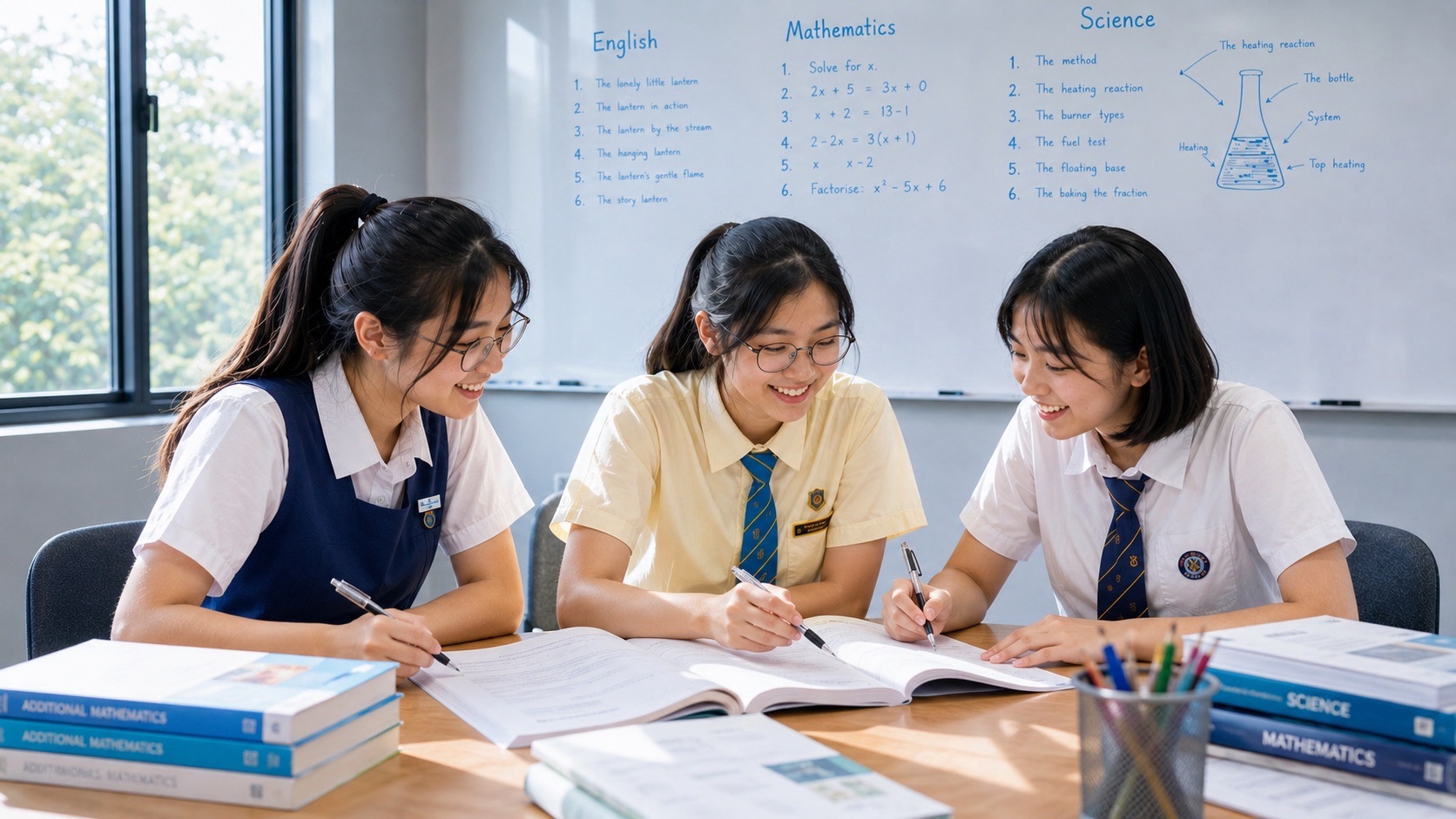
A strong Secondary 3 vocabulary list should do more than collect difficult words. For Grade 9 students, academic vocabulary becomes useful when words help them read research, interpret data, explain evidence, compare sources, evaluate claims and write precise conclusions. This Top 100 Secondary 3 Vocabulary List therefore concentrates on academic vocabulary words for research and data analysis, with meanings developed through context, distinctions, examples and transfer practice.
Students searching for Secondary 3 vocabulary words, Grade 9 vocabulary words with meanings and examples, academic vocabulary, research vocabulary or data analysis vocabulary usually need the same underlying capability: they must understand a word when reading and then use it accurately in their own speaking and writing. The goal is not decorative sophistication. It is controlled language that makes thinking clearer.
The 100 words below are designed for worldwide use rather than one examination board or location. They can support English lessons, research projects, Science investigations, Geography fieldwork, Humanities source work, Mathematics data tasks and interdisciplinary assignments. Each word belongs to a connected language system, so students should learn relationships such as correlation versus causation, reliability versus validity, sample versus population, accuracy versus precision, and observation versus interpretation.
How to use this Secondary 3 vocabulary list
Use the list in three passes. Maren’s writing route asks whether the word improves structure and precision in a sentence. Iona’s reading route asks what the word means in the exact context and what evidence justifies that interpretation. Leonie’s execution route turns recognition into fast retrieval: define the word without looking, use it in a fresh sentence, contrast it with a nearby word, and return to it after a delay. The three routes prevent a common problem in vocabulary study: recognising a word on a page but being unable to retrieve it accurately when writing.
Do not attempt to memorise all 100 words in one sitting. Work in sets of ten. First read the set in context. Next explain each word in plain language. Then create one original sentence connected to a real school subject. Finally, retrieve the words after one day, several days and a week. If a word is repeatedly confused with a neighbour, study the distinction rather than repeating the same definition.
1. Research questions and reasoning
These words help students turn a broad topic into a precise question, distinguish claims from assumptions, and explain why evidence supports a conclusion.
1. analyse
Working meaning. In academic work, analyse is a precision word used when reading claims and evaluating evidence. Learn it as part of a reasoning move, not as an isolated dictionary item. Ask what the writer is doing with the word: naming evidence, setting a boundary, describing a relationship, measuring a quantity, qualifying a conclusion or explaining a method.
Use in context. A Secondary 3 student should be able to meet analyse in an unfamiliar passage, infer its role from surrounding information, and then use it in a new sentence whose meaning remains clear without a memorised example. In research and data writing, the safest sentence pattern is to connect the word to a specific object: the analyse of the sample, method, variable, source, graph, result, claim or conclusion. The exact pairing depends on meaning, so check that the sentence says something testable or interpretable rather than merely sounding academic.
Maren · Iona · Leonie transfer. Maren: write one sentence using analyse to make an explanation more precise, then revise it until every clause has a job. Iona: locate the evidence in the sentence or paragraph that tells you how analyse is being used; do not rely on tone alone. Leonie: close the list and retrieve the word from a prompt, then use it again in a different subject. If retrieval is slow or the sentence is vague, the word is not yet productive vocabulary.
2. approach
Working meaning. In academic work, approach is a precision word used when reading claims and evaluating evidence. Learn it as part of a reasoning move, not as an isolated dictionary item. Ask what the writer is doing with the word: naming evidence, setting a boundary, describing a relationship, measuring a quantity, qualifying a conclusion or explaining a method.
Use in context. A Secondary 3 student should be able to meet approach in an unfamiliar passage, infer its role from surrounding information, and then use it in a new sentence whose meaning remains clear without a memorised example. In research and data writing, the safest sentence pattern is to connect the word to a specific object: the approach of the sample, method, variable, source, graph, result, claim or conclusion. The exact pairing depends on meaning, so check that the sentence says something testable or interpretable rather than merely sounding academic.
Maren · Iona · Leonie transfer. Maren: write one sentence using approach to make an explanation more precise, then revise it until every clause has a job. Iona: locate the evidence in the sentence or paragraph that tells you how approach is being used; do not rely on tone alone. Leonie: close the list and retrieve the word from a prompt, then use it again in a different subject. If retrieval is slow or the sentence is vague, the word is not yet productive vocabulary.
3. assess
Working meaning. In academic work, assess is a precision word used when reading claims and evaluating evidence. Learn it as part of a reasoning move, not as an isolated dictionary item. Ask what the writer is doing with the word: naming evidence, setting a boundary, describing a relationship, measuring a quantity, qualifying a conclusion or explaining a method.
Use in context. A Secondary 3 student should be able to meet assess in an unfamiliar passage, infer its role from surrounding information, and then use it in a new sentence whose meaning remains clear without a memorised example. In research and data writing, the safest sentence pattern is to connect the word to a specific object: the assess of the sample, method, variable, source, graph, result, claim or conclusion. The exact pairing depends on meaning, so check that the sentence says something testable or interpretable rather than merely sounding academic.
Maren · Iona · Leonie transfer. Maren: write one sentence using assess to make an explanation more precise, then revise it until every clause has a job. Iona: locate the evidence in the sentence or paragraph that tells you how assess is being used; do not rely on tone alone. Leonie: close the list and retrieve the word from a prompt, then use it again in a different subject. If retrieval is slow or the sentence is vague, the word is not yet productive vocabulary.
4. assumption
Working meaning. In academic work, assumption is a precision word used when reading claims and evaluating evidence. Learn it as part of a reasoning move, not as an isolated dictionary item. Ask what the writer is doing with the word: naming evidence, setting a boundary, describing a relationship, measuring a quantity, qualifying a conclusion or explaining a method.
Use in context. A Secondary 3 student should be able to meet assumption in an unfamiliar passage, infer its role from surrounding information, and then use it in a new sentence whose meaning remains clear without a memorised example. In research and data writing, the safest sentence pattern is to connect the word to a specific object: the assumption of the sample, method, variable, source, graph, result, claim or conclusion. The exact pairing depends on meaning, so check that the sentence says something testable or interpretable rather than merely sounding academic.
Maren · Iona · Leonie transfer. Maren: write one sentence using assumption to make an explanation more precise, then revise it until every clause has a job. Iona: locate the evidence in the sentence or paragraph that tells you how assumption is being used; do not rely on tone alone. Leonie: close the list and retrieve the word from a prompt, then use it again in a different subject. If retrieval is slow or the sentence is vague, the word is not yet productive vocabulary.
5. attribute
Working meaning. In academic work, attribute is a precision word used when reading claims and evaluating evidence. Learn it as part of a reasoning move, not as an isolated dictionary item. Ask what the writer is doing with the word: naming evidence, setting a boundary, describing a relationship, measuring a quantity, qualifying a conclusion or explaining a method.
Use in context. A Secondary 3 student should be able to meet attribute in an unfamiliar passage, infer its role from surrounding information, and then use it in a new sentence whose meaning remains clear without a memorised example. In research and data writing, the safest sentence pattern is to connect the word to a specific object: the attribute of the sample, method, variable, source, graph, result, claim or conclusion. The exact pairing depends on meaning, so check that the sentence says something testable or interpretable rather than merely sounding academic.
Maren · Iona · Leonie transfer. Maren: write one sentence using attribute to make an explanation more precise, then revise it until every clause has a job. Iona: locate the evidence in the sentence or paragraph that tells you how attribute is being used; do not rely on tone alone. Leonie: close the list and retrieve the word from a prompt, then use it again in a different subject. If retrieval is slow or the sentence is vague, the word is not yet productive vocabulary.
6. bias
Working meaning. In academic work, bias is a precision word used when reading claims and evaluating evidence. Learn it as part of a reasoning move, not as an isolated dictionary item. Ask what the writer is doing with the word: naming evidence, setting a boundary, describing a relationship, measuring a quantity, qualifying a conclusion or explaining a method.
Use in context. A Secondary 3 student should be able to meet bias in an unfamiliar passage, infer its role from surrounding information, and then use it in a new sentence whose meaning remains clear without a memorised example. In research and data writing, the safest sentence pattern is to connect the word to a specific object: the bias of the sample, method, variable, source, graph, result, claim or conclusion. The exact pairing depends on meaning, so check that the sentence says something testable or interpretable rather than merely sounding academic.
Maren · Iona · Leonie transfer. Maren: write one sentence using bias to make an explanation more precise, then revise it until every clause has a job. Iona: locate the evidence in the sentence or paragraph that tells you how bias is being used; do not rely on tone alone. Leonie: close the list and retrieve the word from a prompt, then use it again in a different subject. If retrieval is slow or the sentence is vague, the word is not yet productive vocabulary.
7. category
Working meaning. In academic work, category is a precision word used when reading claims and evaluating evidence. Learn it as part of a reasoning move, not as an isolated dictionary item. Ask what the writer is doing with the word: naming evidence, setting a boundary, describing a relationship, measuring a quantity, qualifying a conclusion or explaining a method.
Use in context. A Secondary 3 student should be able to meet category in an unfamiliar passage, infer its role from surrounding information, and then use it in a new sentence whose meaning remains clear without a memorised example. In research and data writing, the safest sentence pattern is to connect the word to a specific object: the category of the sample, method, variable, source, graph, result, claim or conclusion. The exact pairing depends on meaning, so check that the sentence says something testable or interpretable rather than merely sounding academic.
Maren · Iona · Leonie transfer. Maren: write one sentence using category to make an explanation more precise, then revise it until every clause has a job. Iona: locate the evidence in the sentence or paragraph that tells you how category is being used; do not rely on tone alone. Leonie: close the list and retrieve the word from a prompt, then use it again in a different subject. If retrieval is slow or the sentence is vague, the word is not yet productive vocabulary.
8. cause
Working meaning. In academic work, cause is a precision word used when reading claims and evaluating evidence. Learn it as part of a reasoning move, not as an isolated dictionary item. Ask what the writer is doing with the word: naming evidence, setting a boundary, describing a relationship, measuring a quantity, qualifying a conclusion or explaining a method.
Use in context. A Secondary 3 student should be able to meet cause in an unfamiliar passage, infer its role from surrounding information, and then use it in a new sentence whose meaning remains clear without a memorised example. In research and data writing, the safest sentence pattern is to connect the word to a specific object: the cause of the sample, method, variable, source, graph, result, claim or conclusion. The exact pairing depends on meaning, so check that the sentence says something testable or interpretable rather than merely sounding academic.
Maren · Iona · Leonie transfer. Maren: write one sentence using cause to make an explanation more precise, then revise it until every clause has a job. Iona: locate the evidence in the sentence or paragraph that tells you how cause is being used; do not rely on tone alone. Leonie: close the list and retrieve the word from a prompt, then use it again in a different subject. If retrieval is slow or the sentence is vague, the word is not yet productive vocabulary.
9. claim
Working meaning. In academic work, claim is a precision word used when reading claims and evaluating evidence. Learn it as part of a reasoning move, not as an isolated dictionary item. Ask what the writer is doing with the word: naming evidence, setting a boundary, describing a relationship, measuring a quantity, qualifying a conclusion or explaining a method.
Use in context. A Secondary 3 student should be able to meet claim in an unfamiliar passage, infer its role from surrounding information, and then use it in a new sentence whose meaning remains clear without a memorised example. In research and data writing, the safest sentence pattern is to connect the word to a specific object: the claim of the sample, method, variable, source, graph, result, claim or conclusion. The exact pairing depends on meaning, so check that the sentence says something testable or interpretable rather than merely sounding academic.
Maren · Iona · Leonie transfer. Maren: write one sentence using claim to make an explanation more precise, then revise it until every clause has a job. Iona: locate the evidence in the sentence or paragraph that tells you how claim is being used; do not rely on tone alone. Leonie: close the list and retrieve the word from a prompt, then use it again in a different subject. If retrieval is slow or the sentence is vague, the word is not yet productive vocabulary.
10. classify
Working meaning. In academic work, classify is a precision word used when reading claims and evaluating evidence. Learn it as part of a reasoning move, not as an isolated dictionary item. Ask what the writer is doing with the word: naming evidence, setting a boundary, describing a relationship, measuring a quantity, qualifying a conclusion or explaining a method.
Use in context. A Secondary 3 student should be able to meet classify in an unfamiliar passage, infer its role from surrounding information, and then use it in a new sentence whose meaning remains clear without a memorised example. In research and data writing, the safest sentence pattern is to connect the word to a specific object: the classify of the sample, method, variable, source, graph, result, claim or conclusion. The exact pairing depends on meaning, so check that the sentence says something testable or interpretable rather than merely sounding academic.
Maren · Iona · Leonie transfer. Maren: write one sentence using classify to make an explanation more precise, then revise it until every clause has a job. Iona: locate the evidence in the sentence or paragraph that tells you how classify is being used; do not rely on tone alone. Leonie: close the list and retrieve the word from a prompt, then use it again in a different subject. If retrieval is slow or the sentence is vague, the word is not yet productive vocabulary.
2. Evidence and evaluation
These words are useful when judging whether information is relevant, credible, sufficient and appropriately interpreted.
11. coherent
Working meaning. In academic work, coherent is a precision word used when reading claims and evaluating evidence. Learn it as part of a reasoning move, not as an isolated dictionary item. Ask what the writer is doing with the word: naming evidence, setting a boundary, describing a relationship, measuring a quantity, qualifying a conclusion or explaining a method.
Use in context. A Secondary 3 student should be able to meet coherent in an unfamiliar passage, infer its role from surrounding information, and then use it in a new sentence whose meaning remains clear without a memorised example. In research and data writing, the safest sentence pattern is to connect the word to a specific object: the coherent of the sample, method, variable, source, graph, result, claim or conclusion. The exact pairing depends on meaning, so check that the sentence says something testable or interpretable rather than merely sounding academic.
Maren · Iona · Leonie transfer. Maren: write one sentence using coherent to make an explanation more precise, then revise it until every clause has a job. Iona: locate the evidence in the sentence or paragraph that tells you how coherent is being used; do not rely on tone alone. Leonie: close the list and retrieve the word from a prompt, then use it again in a different subject. If retrieval is slow or the sentence is vague, the word is not yet productive vocabulary.
12. compare
Working meaning. In academic work, compare is a precision word used when reading claims and evaluating evidence. Learn it as part of a reasoning move, not as an isolated dictionary item. Ask what the writer is doing with the word: naming evidence, setting a boundary, describing a relationship, measuring a quantity, qualifying a conclusion or explaining a method.
Use in context. A Secondary 3 student should be able to meet compare in an unfamiliar passage, infer its role from surrounding information, and then use it in a new sentence whose meaning remains clear without a memorised example. In research and data writing, the safest sentence pattern is to connect the word to a specific object: the compare of the sample, method, variable, source, graph, result, claim or conclusion. The exact pairing depends on meaning, so check that the sentence says something testable or interpretable rather than merely sounding academic.
Maren · Iona · Leonie transfer. Maren: write one sentence using compare to make an explanation more precise, then revise it until every clause has a job. Iona: locate the evidence in the sentence or paragraph that tells you how compare is being used; do not rely on tone alone. Leonie: close the list and retrieve the word from a prompt, then use it again in a different subject. If retrieval is slow or the sentence is vague, the word is not yet productive vocabulary.
13. component
Working meaning. In academic work, component is a precision word used when reading claims and evaluating evidence. Learn it as part of a reasoning move, not as an isolated dictionary item. Ask what the writer is doing with the word: naming evidence, setting a boundary, describing a relationship, measuring a quantity, qualifying a conclusion or explaining a method.
Use in context. A Secondary 3 student should be able to meet component in an unfamiliar passage, infer its role from surrounding information, and then use it in a new sentence whose meaning remains clear without a memorised example. In research and data writing, the safest sentence pattern is to connect the word to a specific object: the component of the sample, method, variable, source, graph, result, claim or conclusion. The exact pairing depends on meaning, so check that the sentence says something testable or interpretable rather than merely sounding academic.
Maren · Iona · Leonie transfer. Maren: write one sentence using component to make an explanation more precise, then revise it until every clause has a job. Iona: locate the evidence in the sentence or paragraph that tells you how component is being used; do not rely on tone alone. Leonie: close the list and retrieve the word from a prompt, then use it again in a different subject. If retrieval is slow or the sentence is vague, the word is not yet productive vocabulary.
14. concept
Working meaning. In academic work, concept is a precision word used when reading claims and evaluating evidence. Learn it as part of a reasoning move, not as an isolated dictionary item. Ask what the writer is doing with the word: naming evidence, setting a boundary, describing a relationship, measuring a quantity, qualifying a conclusion or explaining a method.
Use in context. A Secondary 3 student should be able to meet concept in an unfamiliar passage, infer its role from surrounding information, and then use it in a new sentence whose meaning remains clear without a memorised example. In research and data writing, the safest sentence pattern is to connect the word to a specific object: the concept of the sample, method, variable, source, graph, result, claim or conclusion. The exact pairing depends on meaning, so check that the sentence says something testable or interpretable rather than merely sounding academic.
Maren · Iona · Leonie transfer. Maren: write one sentence using concept to make an explanation more precise, then revise it until every clause has a job. Iona: locate the evidence in the sentence or paragraph that tells you how concept is being used; do not rely on tone alone. Leonie: close the list and retrieve the word from a prompt, then use it again in a different subject. If retrieval is slow or the sentence is vague, the word is not yet productive vocabulary.
15. conclusion
Working meaning. In academic work, conclusion is a precision word used when reading claims and evaluating evidence. Learn it as part of a reasoning move, not as an isolated dictionary item. Ask what the writer is doing with the word: naming evidence, setting a boundary, describing a relationship, measuring a quantity, qualifying a conclusion or explaining a method.
Use in context. A Secondary 3 student should be able to meet conclusion in an unfamiliar passage, infer its role from surrounding information, and then use it in a new sentence whose meaning remains clear without a memorised example. In research and data writing, the safest sentence pattern is to connect the word to a specific object: the conclusion of the sample, method, variable, source, graph, result, claim or conclusion. The exact pairing depends on meaning, so check that the sentence says something testable or interpretable rather than merely sounding academic.
Maren · Iona · Leonie transfer. Maren: write one sentence using conclusion to make an explanation more precise, then revise it until every clause has a job. Iona: locate the evidence in the sentence or paragraph that tells you how conclusion is being used; do not rely on tone alone. Leonie: close the list and retrieve the word from a prompt, then use it again in a different subject. If retrieval is slow or the sentence is vague, the word is not yet productive vocabulary.
16. condition
Working meaning. In academic work, condition is a precision word used when reading claims and evaluating evidence. Learn it as part of a reasoning move, not as an isolated dictionary item. Ask what the writer is doing with the word: naming evidence, setting a boundary, describing a relationship, measuring a quantity, qualifying a conclusion or explaining a method.
Use in context. A Secondary 3 student should be able to meet condition in an unfamiliar passage, infer its role from surrounding information, and then use it in a new sentence whose meaning remains clear without a memorised example. In research and data writing, the safest sentence pattern is to connect the word to a specific object: the condition of the sample, method, variable, source, graph, result, claim or conclusion. The exact pairing depends on meaning, so check that the sentence says something testable or interpretable rather than merely sounding academic.
Maren · Iona · Leonie transfer. Maren: write one sentence using condition to make an explanation more precise, then revise it until every clause has a job. Iona: locate the evidence in the sentence or paragraph that tells you how condition is being used; do not rely on tone alone. Leonie: close the list and retrieve the word from a prompt, then use it again in a different subject. If retrieval is slow or the sentence is vague, the word is not yet productive vocabulary.
17. consistent
Working meaning. In academic work, consistent is a precision word used when reading claims and evaluating evidence. Learn it as part of a reasoning move, not as an isolated dictionary item. Ask what the writer is doing with the word: naming evidence, setting a boundary, describing a relationship, measuring a quantity, qualifying a conclusion or explaining a method.
Use in context. A Secondary 3 student should be able to meet consistent in an unfamiliar passage, infer its role from surrounding information, and then use it in a new sentence whose meaning remains clear without a memorised example. In research and data writing, the safest sentence pattern is to connect the word to a specific object: the consistent of the sample, method, variable, source, graph, result, claim or conclusion. The exact pairing depends on meaning, so check that the sentence says something testable or interpretable rather than merely sounding academic.
Maren · Iona · Leonie transfer. Maren: write one sentence using consistent to make an explanation more precise, then revise it until every clause has a job. Iona: locate the evidence in the sentence or paragraph that tells you how consistent is being used; do not rely on tone alone. Leonie: close the list and retrieve the word from a prompt, then use it again in a different subject. If retrieval is slow or the sentence is vague, the word is not yet productive vocabulary.
18. context
Working meaning. In academic work, context is a precision word used when reading claims and evaluating evidence. Learn it as part of a reasoning move, not as an isolated dictionary item. Ask what the writer is doing with the word: naming evidence, setting a boundary, describing a relationship, measuring a quantity, qualifying a conclusion or explaining a method.
Use in context. A Secondary 3 student should be able to meet context in an unfamiliar passage, infer its role from surrounding information, and then use it in a new sentence whose meaning remains clear without a memorised example. In research and data writing, the safest sentence pattern is to connect the word to a specific object: the context of the sample, method, variable, source, graph, result, claim or conclusion. The exact pairing depends on meaning, so check that the sentence says something testable or interpretable rather than merely sounding academic.
Maren · Iona · Leonie transfer. Maren: write one sentence using context to make an explanation more precise, then revise it until every clause has a job. Iona: locate the evidence in the sentence or paragraph that tells you how context is being used; do not rely on tone alone. Leonie: close the list and retrieve the word from a prompt, then use it again in a different subject. If retrieval is slow or the sentence is vague, the word is not yet productive vocabulary.
19. contrast
Working meaning. In academic work, contrast is a precision word used when reading claims and evaluating evidence. Learn it as part of a reasoning move, not as an isolated dictionary item. Ask what the writer is doing with the word: naming evidence, setting a boundary, describing a relationship, measuring a quantity, qualifying a conclusion or explaining a method.
Use in context. A Secondary 3 student should be able to meet contrast in an unfamiliar passage, infer its role from surrounding information, and then use it in a new sentence whose meaning remains clear without a memorised example. In research and data writing, the safest sentence pattern is to connect the word to a specific object: the contrast of the sample, method, variable, source, graph, result, claim or conclusion. The exact pairing depends on meaning, so check that the sentence says something testable or interpretable rather than merely sounding academic.
Maren · Iona · Leonie transfer. Maren: write one sentence using contrast to make an explanation more precise, then revise it until every clause has a job. Iona: locate the evidence in the sentence or paragraph that tells you how contrast is being used; do not rely on tone alone. Leonie: close the list and retrieve the word from a prompt, then use it again in a different subject. If retrieval is slow or the sentence is vague, the word is not yet productive vocabulary.
20. correlation
Working meaning. In academic work, correlation is a precision word used when reading claims and evaluating evidence. Learn it as part of a reasoning move, not as an isolated dictionary item. Ask what the writer is doing with the word: naming evidence, setting a boundary, describing a relationship, measuring a quantity, qualifying a conclusion or explaining a method.
Use in context. A Secondary 3 student should be able to meet correlation in an unfamiliar passage, infer its role from surrounding information, and then use it in a new sentence whose meaning remains clear without a memorised example. In research and data writing, the safest sentence pattern is to connect the word to a specific object: the correlation of the sample, method, variable, source, graph, result, claim or conclusion. The exact pairing depends on meaning, so check that the sentence says something testable or interpretable rather than merely sounding academic.
Maren · Iona · Leonie transfer. Maren: write one sentence using correlation to make an explanation more precise, then revise it until every clause has a job. Iona: locate the evidence in the sentence or paragraph that tells you how correlation is being used; do not rely on tone alone. Leonie: close the list and retrieve the word from a prompt, then use it again in a different subject. If retrieval is slow or the sentence is vague, the word is not yet productive vocabulary.
3. Data and measurement
These terms give students the language needed to discuss observations, variables, measurement, accuracy and uncertainty.
21. criterion
Working meaning. In academic work, criterion is a precision word used when describing data, patterns and comparisons. Learn it as part of a reasoning move, not as an isolated dictionary item. Ask what the writer is doing with the word: naming evidence, setting a boundary, describing a relationship, measuring a quantity, qualifying a conclusion or explaining a method.
Use in context. A Secondary 3 student should be able to meet criterion in an unfamiliar passage, infer its role from surrounding information, and then use it in a new sentence whose meaning remains clear without a memorised example. In research and data writing, the safest sentence pattern is to connect the word to a specific object: the criterion of the sample, method, variable, source, graph, result, claim or conclusion. The exact pairing depends on meaning, so check that the sentence says something testable or interpretable rather than merely sounding academic.
Maren · Iona · Leonie transfer. Maren: write one sentence using criterion to make an explanation more precise, then revise it until every clause has a job. Iona: locate the evidence in the sentence or paragraph that tells you how criterion is being used; do not rely on tone alone. Leonie: close the list and retrieve the word from a prompt, then use it again in a different subject. If retrieval is slow or the sentence is vague, the word is not yet productive vocabulary.
22. data
Working meaning. In academic work, data is a precision word used when describing data, patterns and comparisons. Learn it as part of a reasoning move, not as an isolated dictionary item. Ask what the writer is doing with the word: naming evidence, setting a boundary, describing a relationship, measuring a quantity, qualifying a conclusion or explaining a method.
Use in context. A Secondary 3 student should be able to meet data in an unfamiliar passage, infer its role from surrounding information, and then use it in a new sentence whose meaning remains clear without a memorised example. In research and data writing, the safest sentence pattern is to connect the word to a specific object: the data of the sample, method, variable, source, graph, result, claim or conclusion. The exact pairing depends on meaning, so check that the sentence says something testable or interpretable rather than merely sounding academic.
Maren · Iona · Leonie transfer. Maren: write one sentence using data to make an explanation more precise, then revise it until every clause has a job. Iona: locate the evidence in the sentence or paragraph that tells you how data is being used; do not rely on tone alone. Leonie: close the list and retrieve the word from a prompt, then use it again in a different subject. If retrieval is slow or the sentence is vague, the word is not yet productive vocabulary.
23. define
Working meaning. In academic work, define is a precision word used when describing data, patterns and comparisons. Learn it as part of a reasoning move, not as an isolated dictionary item. Ask what the writer is doing with the word: naming evidence, setting a boundary, describing a relationship, measuring a quantity, qualifying a conclusion or explaining a method.
Use in context. A Secondary 3 student should be able to meet define in an unfamiliar passage, infer its role from surrounding information, and then use it in a new sentence whose meaning remains clear without a memorised example. In research and data writing, the safest sentence pattern is to connect the word to a specific object: the define of the sample, method, variable, source, graph, result, claim or conclusion. The exact pairing depends on meaning, so check that the sentence says something testable or interpretable rather than merely sounding academic.
Maren · Iona · Leonie transfer. Maren: write one sentence using define to make an explanation more precise, then revise it until every clause has a job. Iona: locate the evidence in the sentence or paragraph that tells you how define is being used; do not rely on tone alone. Leonie: close the list and retrieve the word from a prompt, then use it again in a different subject. If retrieval is slow or the sentence is vague, the word is not yet productive vocabulary.
24. demonstrate
Working meaning. In academic work, demonstrate is a precision word used when describing data, patterns and comparisons. Learn it as part of a reasoning move, not as an isolated dictionary item. Ask what the writer is doing with the word: naming evidence, setting a boundary, describing a relationship, measuring a quantity, qualifying a conclusion or explaining a method.
Use in context. A Secondary 3 student should be able to meet demonstrate in an unfamiliar passage, infer its role from surrounding information, and then use it in a new sentence whose meaning remains clear without a memorised example. In research and data writing, the safest sentence pattern is to connect the word to a specific object: the demonstrate of the sample, method, variable, source, graph, result, claim or conclusion. The exact pairing depends on meaning, so check that the sentence says something testable or interpretable rather than merely sounding academic.
Maren · Iona · Leonie transfer. Maren: write one sentence using demonstrate to make an explanation more precise, then revise it until every clause has a job. Iona: locate the evidence in the sentence or paragraph that tells you how demonstrate is being used; do not rely on tone alone. Leonie: close the list and retrieve the word from a prompt, then use it again in a different subject. If retrieval is slow or the sentence is vague, the word is not yet productive vocabulary.
25. derive
Working meaning. In academic work, derive is a precision word used when describing data, patterns and comparisons. Learn it as part of a reasoning move, not as an isolated dictionary item. Ask what the writer is doing with the word: naming evidence, setting a boundary, describing a relationship, measuring a quantity, qualifying a conclusion or explaining a method.
Use in context. A Secondary 3 student should be able to meet derive in an unfamiliar passage, infer its role from surrounding information, and then use it in a new sentence whose meaning remains clear without a memorised example. In research and data writing, the safest sentence pattern is to connect the word to a specific object: the derive of the sample, method, variable, source, graph, result, claim or conclusion. The exact pairing depends on meaning, so check that the sentence says something testable or interpretable rather than merely sounding academic.
Maren · Iona · Leonie transfer. Maren: write one sentence using derive to make an explanation more precise, then revise it until every clause has a job. Iona: locate the evidence in the sentence or paragraph that tells you how derive is being used; do not rely on tone alone. Leonie: close the list and retrieve the word from a prompt, then use it again in a different subject. If retrieval is slow or the sentence is vague, the word is not yet productive vocabulary.
26. distribution
Working meaning. In academic work, distribution is a precision word used when describing data, patterns and comparisons. Learn it as part of a reasoning move, not as an isolated dictionary item. Ask what the writer is doing with the word: naming evidence, setting a boundary, describing a relationship, measuring a quantity, qualifying a conclusion or explaining a method.
Use in context. A Secondary 3 student should be able to meet distribution in an unfamiliar passage, infer its role from surrounding information, and then use it in a new sentence whose meaning remains clear without a memorised example. In research and data writing, the safest sentence pattern is to connect the word to a specific object: the distribution of the sample, method, variable, source, graph, result, claim or conclusion. The exact pairing depends on meaning, so check that the sentence says something testable or interpretable rather than merely sounding academic.
Maren · Iona · Leonie transfer. Maren: write one sentence using distribution to make an explanation more precise, then revise it until every clause has a job. Iona: locate the evidence in the sentence or paragraph that tells you how distribution is being used; do not rely on tone alone. Leonie: close the list and retrieve the word from a prompt, then use it again in a different subject. If retrieval is slow or the sentence is vague, the word is not yet productive vocabulary.
27. effect
Working meaning. In academic work, effect is a precision word used when describing data, patterns and comparisons. Learn it as part of a reasoning move, not as an isolated dictionary item. Ask what the writer is doing with the word: naming evidence, setting a boundary, describing a relationship, measuring a quantity, qualifying a conclusion or explaining a method.
Use in context. A Secondary 3 student should be able to meet effect in an unfamiliar passage, infer its role from surrounding information, and then use it in a new sentence whose meaning remains clear without a memorised example. In research and data writing, the safest sentence pattern is to connect the word to a specific object: the effect of the sample, method, variable, source, graph, result, claim or conclusion. The exact pairing depends on meaning, so check that the sentence says something testable or interpretable rather than merely sounding academic.
Maren · Iona · Leonie transfer. Maren: write one sentence using effect to make an explanation more precise, then revise it until every clause has a job. Iona: locate the evidence in the sentence or paragraph that tells you how effect is being used; do not rely on tone alone. Leonie: close the list and retrieve the word from a prompt, then use it again in a different subject. If retrieval is slow or the sentence is vague, the word is not yet productive vocabulary.
28. estimate
Working meaning. In academic work, estimate is a precision word used when describing data, patterns and comparisons. Learn it as part of a reasoning move, not as an isolated dictionary item. Ask what the writer is doing with the word: naming evidence, setting a boundary, describing a relationship, measuring a quantity, qualifying a conclusion or explaining a method.
Use in context. A Secondary 3 student should be able to meet estimate in an unfamiliar passage, infer its role from surrounding information, and then use it in a new sentence whose meaning remains clear without a memorised example. In research and data writing, the safest sentence pattern is to connect the word to a specific object: the estimate of the sample, method, variable, source, graph, result, claim or conclusion. The exact pairing depends on meaning, so check that the sentence says something testable or interpretable rather than merely sounding academic.
Maren · Iona · Leonie transfer. Maren: write one sentence using estimate to make an explanation more precise, then revise it until every clause has a job. Iona: locate the evidence in the sentence or paragraph that tells you how estimate is being used; do not rely on tone alone. Leonie: close the list and retrieve the word from a prompt, then use it again in a different subject. If retrieval is slow or the sentence is vague, the word is not yet productive vocabulary.
29. evaluate
Working meaning. In academic work, evaluate is a precision word used when describing data, patterns and comparisons. Learn it as part of a reasoning move, not as an isolated dictionary item. Ask what the writer is doing with the word: naming evidence, setting a boundary, describing a relationship, measuring a quantity, qualifying a conclusion or explaining a method.
Use in context. A Secondary 3 student should be able to meet evaluate in an unfamiliar passage, infer its role from surrounding information, and then use it in a new sentence whose meaning remains clear without a memorised example. In research and data writing, the safest sentence pattern is to connect the word to a specific object: the evaluate of the sample, method, variable, source, graph, result, claim or conclusion. The exact pairing depends on meaning, so check that the sentence says something testable or interpretable rather than merely sounding academic.
Maren · Iona · Leonie transfer. Maren: write one sentence using evaluate to make an explanation more precise, then revise it until every clause has a job. Iona: locate the evidence in the sentence or paragraph that tells you how evaluate is being used; do not rely on tone alone. Leonie: close the list and retrieve the word from a prompt, then use it again in a different subject. If retrieval is slow or the sentence is vague, the word is not yet productive vocabulary.
30. evidence
Working meaning. In academic work, evidence is a precision word used when describing data, patterns and comparisons. Learn it as part of a reasoning move, not as an isolated dictionary item. Ask what the writer is doing with the word: naming evidence, setting a boundary, describing a relationship, measuring a quantity, qualifying a conclusion or explaining a method.
Use in context. A Secondary 3 student should be able to meet evidence in an unfamiliar passage, infer its role from surrounding information, and then use it in a new sentence whose meaning remains clear without a memorised example. In research and data writing, the safest sentence pattern is to connect the word to a specific object: the evidence of the sample, method, variable, source, graph, result, claim or conclusion. The exact pairing depends on meaning, so check that the sentence says something testable or interpretable rather than merely sounding academic.
Maren · Iona · Leonie transfer. Maren: write one sentence using evidence to make an explanation more precise, then revise it until every clause has a job. Iona: locate the evidence in the sentence or paragraph that tells you how evidence is being used; do not rely on tone alone. Leonie: close the list and retrieve the word from a prompt, then use it again in a different subject. If retrieval is slow or the sentence is vague, the word is not yet productive vocabulary.
4. Patterns and comparison
These words help students describe relationships, distributions, trends, differences and similarities without overstating what the data show.
31. factor
Working meaning. In academic work, factor is a precision word used when describing data, patterns and comparisons. Learn it as part of a reasoning move, not as an isolated dictionary item. Ask what the writer is doing with the word: naming evidence, setting a boundary, describing a relationship, measuring a quantity, qualifying a conclusion or explaining a method.
Use in context. A Secondary 3 student should be able to meet factor in an unfamiliar passage, infer its role from surrounding information, and then use it in a new sentence whose meaning remains clear without a memorised example. In research and data writing, the safest sentence pattern is to connect the word to a specific object: the factor of the sample, method, variable, source, graph, result, claim or conclusion. The exact pairing depends on meaning, so check that the sentence says something testable or interpretable rather than merely sounding academic.
Maren · Iona · Leonie transfer. Maren: write one sentence using factor to make an explanation more precise, then revise it until every clause has a job. Iona: locate the evidence in the sentence or paragraph that tells you how factor is being used; do not rely on tone alone. Leonie: close the list and retrieve the word from a prompt, then use it again in a different subject. If retrieval is slow or the sentence is vague, the word is not yet productive vocabulary.
32. feature
Working meaning. In academic work, feature is a precision word used when describing data, patterns and comparisons. Learn it as part of a reasoning move, not as an isolated dictionary item. Ask what the writer is doing with the word: naming evidence, setting a boundary, describing a relationship, measuring a quantity, qualifying a conclusion or explaining a method.
Use in context. A Secondary 3 student should be able to meet feature in an unfamiliar passage, infer its role from surrounding information, and then use it in a new sentence whose meaning remains clear without a memorised example. In research and data writing, the safest sentence pattern is to connect the word to a specific object: the feature of the sample, method, variable, source, graph, result, claim or conclusion. The exact pairing depends on meaning, so check that the sentence says something testable or interpretable rather than merely sounding academic.
Maren · Iona · Leonie transfer. Maren: write one sentence using feature to make an explanation more precise, then revise it until every clause has a job. Iona: locate the evidence in the sentence or paragraph that tells you how feature is being used; do not rely on tone alone. Leonie: close the list and retrieve the word from a prompt, then use it again in a different subject. If retrieval is slow or the sentence is vague, the word is not yet productive vocabulary.
33. framework
Working meaning. In academic work, framework is a precision word used when describing data, patterns and comparisons. Learn it as part of a reasoning move, not as an isolated dictionary item. Ask what the writer is doing with the word: naming evidence, setting a boundary, describing a relationship, measuring a quantity, qualifying a conclusion or explaining a method.
Use in context. A Secondary 3 student should be able to meet framework in an unfamiliar passage, infer its role from surrounding information, and then use it in a new sentence whose meaning remains clear without a memorised example. In research and data writing, the safest sentence pattern is to connect the word to a specific object: the framework of the sample, method, variable, source, graph, result, claim or conclusion. The exact pairing depends on meaning, so check that the sentence says something testable or interpretable rather than merely sounding academic.
Maren · Iona · Leonie transfer. Maren: write one sentence using framework to make an explanation more precise, then revise it until every clause has a job. Iona: locate the evidence in the sentence or paragraph that tells you how framework is being used; do not rely on tone alone. Leonie: close the list and retrieve the word from a prompt, then use it again in a different subject. If retrieval is slow or the sentence is vague, the word is not yet productive vocabulary.
34. frequency
Working meaning. In academic work, frequency is a precision word used when describing data, patterns and comparisons. Learn it as part of a reasoning move, not as an isolated dictionary item. Ask what the writer is doing with the word: naming evidence, setting a boundary, describing a relationship, measuring a quantity, qualifying a conclusion or explaining a method.
Use in context. A Secondary 3 student should be able to meet frequency in an unfamiliar passage, infer its role from surrounding information, and then use it in a new sentence whose meaning remains clear without a memorised example. In research and data writing, the safest sentence pattern is to connect the word to a specific object: the frequency of the sample, method, variable, source, graph, result, claim or conclusion. The exact pairing depends on meaning, so check that the sentence says something testable or interpretable rather than merely sounding academic.
Maren · Iona · Leonie transfer. Maren: write one sentence using frequency to make an explanation more precise, then revise it until every clause has a job. Iona: locate the evidence in the sentence or paragraph that tells you how frequency is being used; do not rely on tone alone. Leonie: close the list and retrieve the word from a prompt, then use it again in a different subject. If retrieval is slow or the sentence is vague, the word is not yet productive vocabulary.
35. function
Working meaning. In academic work, function is a precision word used when describing data, patterns and comparisons. Learn it as part of a reasoning move, not as an isolated dictionary item. Ask what the writer is doing with the word: naming evidence, setting a boundary, describing a relationship, measuring a quantity, qualifying a conclusion or explaining a method.
Use in context. A Secondary 3 student should be able to meet function in an unfamiliar passage, infer its role from surrounding information, and then use it in a new sentence whose meaning remains clear without a memorised example. In research and data writing, the safest sentence pattern is to connect the word to a specific object: the function of the sample, method, variable, source, graph, result, claim or conclusion. The exact pairing depends on meaning, so check that the sentence says something testable or interpretable rather than merely sounding academic.
Maren · Iona · Leonie transfer. Maren: write one sentence using function to make an explanation more precise, then revise it until every clause has a job. Iona: locate the evidence in the sentence or paragraph that tells you how function is being used; do not rely on tone alone. Leonie: close the list and retrieve the word from a prompt, then use it again in a different subject. If retrieval is slow or the sentence is vague, the word is not yet productive vocabulary.
36. hypothesis
Working meaning. In academic work, hypothesis is a precision word used when describing data, patterns and comparisons. Learn it as part of a reasoning move, not as an isolated dictionary item. Ask what the writer is doing with the word: naming evidence, setting a boundary, describing a relationship, measuring a quantity, qualifying a conclusion or explaining a method.
Use in context. A Secondary 3 student should be able to meet hypothesis in an unfamiliar passage, infer its role from surrounding information, and then use it in a new sentence whose meaning remains clear without a memorised example. In research and data writing, the safest sentence pattern is to connect the word to a specific object: the hypothesis of the sample, method, variable, source, graph, result, claim or conclusion. The exact pairing depends on meaning, so check that the sentence says something testable or interpretable rather than merely sounding academic.
Maren · Iona · Leonie transfer. Maren: write one sentence using hypothesis to make an explanation more precise, then revise it until every clause has a job. Iona: locate the evidence in the sentence or paragraph that tells you how hypothesis is being used; do not rely on tone alone. Leonie: close the list and retrieve the word from a prompt, then use it again in a different subject. If retrieval is slow or the sentence is vague, the word is not yet productive vocabulary.
37. identify
Working meaning. In academic work, identify is a precision word used when describing data, patterns and comparisons. Learn it as part of a reasoning move, not as an isolated dictionary item. Ask what the writer is doing with the word: naming evidence, setting a boundary, describing a relationship, measuring a quantity, qualifying a conclusion or explaining a method.
Use in context. A Secondary 3 student should be able to meet identify in an unfamiliar passage, infer its role from surrounding information, and then use it in a new sentence whose meaning remains clear without a memorised example. In research and data writing, the safest sentence pattern is to connect the word to a specific object: the identify of the sample, method, variable, source, graph, result, claim or conclusion. The exact pairing depends on meaning, so check that the sentence says something testable or interpretable rather than merely sounding academic.
Maren · Iona · Leonie transfer. Maren: write one sentence using identify to make an explanation more precise, then revise it until every clause has a job. Iona: locate the evidence in the sentence or paragraph that tells you how identify is being used; do not rely on tone alone. Leonie: close the list and retrieve the word from a prompt, then use it again in a different subject. If retrieval is slow or the sentence is vague, the word is not yet productive vocabulary.
38. imply
Working meaning. In academic work, imply is a precision word used when describing data, patterns and comparisons. Learn it as part of a reasoning move, not as an isolated dictionary item. Ask what the writer is doing with the word: naming evidence, setting a boundary, describing a relationship, measuring a quantity, qualifying a conclusion or explaining a method.
Use in context. A Secondary 3 student should be able to meet imply in an unfamiliar passage, infer its role from surrounding information, and then use it in a new sentence whose meaning remains clear without a memorised example. In research and data writing, the safest sentence pattern is to connect the word to a specific object: the imply of the sample, method, variable, source, graph, result, claim or conclusion. The exact pairing depends on meaning, so check that the sentence says something testable or interpretable rather than merely sounding academic.
Maren · Iona · Leonie transfer. Maren: write one sentence using imply to make an explanation more precise, then revise it until every clause has a job. Iona: locate the evidence in the sentence or paragraph that tells you how imply is being used; do not rely on tone alone. Leonie: close the list and retrieve the word from a prompt, then use it again in a different subject. If retrieval is slow or the sentence is vague, the word is not yet productive vocabulary.
39. indicator
Working meaning. In academic work, indicator is a precision word used when describing data, patterns and comparisons. Learn it as part of a reasoning move, not as an isolated dictionary item. Ask what the writer is doing with the word: naming evidence, setting a boundary, describing a relationship, measuring a quantity, qualifying a conclusion or explaining a method.
Use in context. A Secondary 3 student should be able to meet indicator in an unfamiliar passage, infer its role from surrounding information, and then use it in a new sentence whose meaning remains clear without a memorised example. In research and data writing, the safest sentence pattern is to connect the word to a specific object: the indicator of the sample, method, variable, source, graph, result, claim or conclusion. The exact pairing depends on meaning, so check that the sentence says something testable or interpretable rather than merely sounding academic.
Maren · Iona · Leonie transfer. Maren: write one sentence using indicator to make an explanation more precise, then revise it until every clause has a job. Iona: locate the evidence in the sentence or paragraph that tells you how indicator is being used; do not rely on tone alone. Leonie: close the list and retrieve the word from a prompt, then use it again in a different subject. If retrieval is slow or the sentence is vague, the word is not yet productive vocabulary.
40. infer
Working meaning. In academic work, infer is a precision word used when describing data, patterns and comparisons. Learn it as part of a reasoning move, not as an isolated dictionary item. Ask what the writer is doing with the word: naming evidence, setting a boundary, describing a relationship, measuring a quantity, qualifying a conclusion or explaining a method.
Use in context. A Secondary 3 student should be able to meet infer in an unfamiliar passage, infer its role from surrounding information, and then use it in a new sentence whose meaning remains clear without a memorised example. In research and data writing, the safest sentence pattern is to connect the word to a specific object: the infer of the sample, method, variable, source, graph, result, claim or conclusion. The exact pairing depends on meaning, so check that the sentence says something testable or interpretable rather than merely sounding academic.
Maren · Iona · Leonie transfer. Maren: write one sentence using infer to make an explanation more precise, then revise it until every clause has a job. Iona: locate the evidence in the sentence or paragraph that tells you how infer is being used; do not rely on tone alone. Leonie: close the list and retrieve the word from a prompt, then use it again in a different subject. If retrieval is slow or the sentence is vague, the word is not yet productive vocabulary.
5. Methods and design
These terms support clear explanations of sampling, procedures, conditions, surveys, experiments and research choices.
41. interpret
Working meaning. In academic work, interpret is a precision word used when explaining methods and interpreting results. Learn it as part of a reasoning move, not as an isolated dictionary item. Ask what the writer is doing with the word: naming evidence, setting a boundary, describing a relationship, measuring a quantity, qualifying a conclusion or explaining a method.
Use in context. A Secondary 3 student should be able to meet interpret in an unfamiliar passage, infer its role from surrounding information, and then use it in a new sentence whose meaning remains clear without a memorised example. In research and data writing, the safest sentence pattern is to connect the word to a specific object: the interpret of the sample, method, variable, source, graph, result, claim or conclusion. The exact pairing depends on meaning, so check that the sentence says something testable or interpretable rather than merely sounding academic.
Maren · Iona · Leonie transfer. Maren: write one sentence using interpret to make an explanation more precise, then revise it until every clause has a job. Iona: locate the evidence in the sentence or paragraph that tells you how interpret is being used; do not rely on tone alone. Leonie: close the list and retrieve the word from a prompt, then use it again in a different subject. If retrieval is slow or the sentence is vague, the word is not yet productive vocabulary.
42. interval
Working meaning. In academic work, interval is a precision word used when explaining methods and interpreting results. Learn it as part of a reasoning move, not as an isolated dictionary item. Ask what the writer is doing with the word: naming evidence, setting a boundary, describing a relationship, measuring a quantity, qualifying a conclusion or explaining a method.
Use in context. A Secondary 3 student should be able to meet interval in an unfamiliar passage, infer its role from surrounding information, and then use it in a new sentence whose meaning remains clear without a memorised example. In research and data writing, the safest sentence pattern is to connect the word to a specific object: the interval of the sample, method, variable, source, graph, result, claim or conclusion. The exact pairing depends on meaning, so check that the sentence says something testable or interpretable rather than merely sounding academic.
Maren · Iona · Leonie transfer. Maren: write one sentence using interval to make an explanation more precise, then revise it until every clause has a job. Iona: locate the evidence in the sentence or paragraph that tells you how interval is being used; do not rely on tone alone. Leonie: close the list and retrieve the word from a prompt, then use it again in a different subject. If retrieval is slow or the sentence is vague, the word is not yet productive vocabulary.
43. justify
Working meaning. In academic work, justify is a precision word used when explaining methods and interpreting results. Learn it as part of a reasoning move, not as an isolated dictionary item. Ask what the writer is doing with the word: naming evidence, setting a boundary, describing a relationship, measuring a quantity, qualifying a conclusion or explaining a method.
Use in context. A Secondary 3 student should be able to meet justify in an unfamiliar passage, infer its role from surrounding information, and then use it in a new sentence whose meaning remains clear without a memorised example. In research and data writing, the safest sentence pattern is to connect the word to a specific object: the justify of the sample, method, variable, source, graph, result, claim or conclusion. The exact pairing depends on meaning, so check that the sentence says something testable or interpretable rather than merely sounding academic.
Maren · Iona · Leonie transfer. Maren: write one sentence using justify to make an explanation more precise, then revise it until every clause has a job. Iona: locate the evidence in the sentence or paragraph that tells you how justify is being used; do not rely on tone alone. Leonie: close the list and retrieve the word from a prompt, then use it again in a different subject. If retrieval is slow or the sentence is vague, the word is not yet productive vocabulary.
44. limitation
Working meaning. In academic work, limitation is a precision word used when explaining methods and interpreting results. Learn it as part of a reasoning move, not as an isolated dictionary item. Ask what the writer is doing with the word: naming evidence, setting a boundary, describing a relationship, measuring a quantity, qualifying a conclusion or explaining a method.
Use in context. A Secondary 3 student should be able to meet limitation in an unfamiliar passage, infer its role from surrounding information, and then use it in a new sentence whose meaning remains clear without a memorised example. In research and data writing, the safest sentence pattern is to connect the word to a specific object: the limitation of the sample, method, variable, source, graph, result, claim or conclusion. The exact pairing depends on meaning, so check that the sentence says something testable or interpretable rather than merely sounding academic.
Maren · Iona · Leonie transfer. Maren: write one sentence using limitation to make an explanation more precise, then revise it until every clause has a job. Iona: locate the evidence in the sentence or paragraph that tells you how limitation is being used; do not rely on tone alone. Leonie: close the list and retrieve the word from a prompt, then use it again in a different subject. If retrieval is slow or the sentence is vague, the word is not yet productive vocabulary.
45. measure
Working meaning. In academic work, measure is a precision word used when explaining methods and interpreting results. Learn it as part of a reasoning move, not as an isolated dictionary item. Ask what the writer is doing with the word: naming evidence, setting a boundary, describing a relationship, measuring a quantity, qualifying a conclusion or explaining a method.
Use in context. A Secondary 3 student should be able to meet measure in an unfamiliar passage, infer its role from surrounding information, and then use it in a new sentence whose meaning remains clear without a memorised example. In research and data writing, the safest sentence pattern is to connect the word to a specific object: the measure of the sample, method, variable, source, graph, result, claim or conclusion. The exact pairing depends on meaning, so check that the sentence says something testable or interpretable rather than merely sounding academic.
Maren · Iona · Leonie transfer. Maren: write one sentence using measure to make an explanation more precise, then revise it until every clause has a job. Iona: locate the evidence in the sentence or paragraph that tells you how measure is being used; do not rely on tone alone. Leonie: close the list and retrieve the word from a prompt, then use it again in a different subject. If retrieval is slow or the sentence is vague, the word is not yet productive vocabulary.
46. method
Working meaning. In academic work, method is a precision word used when explaining methods and interpreting results. Learn it as part of a reasoning move, not as an isolated dictionary item. Ask what the writer is doing with the word: naming evidence, setting a boundary, describing a relationship, measuring a quantity, qualifying a conclusion or explaining a method.
Use in context. A Secondary 3 student should be able to meet method in an unfamiliar passage, infer its role from surrounding information, and then use it in a new sentence whose meaning remains clear without a memorised example. In research and data writing, the safest sentence pattern is to connect the word to a specific object: the method of the sample, method, variable, source, graph, result, claim or conclusion. The exact pairing depends on meaning, so check that the sentence says something testable or interpretable rather than merely sounding academic.
Maren · Iona · Leonie transfer. Maren: write one sentence using method to make an explanation more precise, then revise it until every clause has a job. Iona: locate the evidence in the sentence or paragraph that tells you how method is being used; do not rely on tone alone. Leonie: close the list and retrieve the word from a prompt, then use it again in a different subject. If retrieval is slow or the sentence is vague, the word is not yet productive vocabulary.
47. model
Working meaning. In academic work, model is a precision word used when explaining methods and interpreting results. Learn it as part of a reasoning move, not as an isolated dictionary item. Ask what the writer is doing with the word: naming evidence, setting a boundary, describing a relationship, measuring a quantity, qualifying a conclusion or explaining a method.
Use in context. A Secondary 3 student should be able to meet model in an unfamiliar passage, infer its role from surrounding information, and then use it in a new sentence whose meaning remains clear without a memorised example. In research and data writing, the safest sentence pattern is to connect the word to a specific object: the model of the sample, method, variable, source, graph, result, claim or conclusion. The exact pairing depends on meaning, so check that the sentence says something testable or interpretable rather than merely sounding academic.
Maren · Iona · Leonie transfer. Maren: write one sentence using model to make an explanation more precise, then revise it until every clause has a job. Iona: locate the evidence in the sentence or paragraph that tells you how model is being used; do not rely on tone alone. Leonie: close the list and retrieve the word from a prompt, then use it again in a different subject. If retrieval is slow or the sentence is vague, the word is not yet productive vocabulary.
48. objective
Working meaning. In academic work, objective is a precision word used when explaining methods and interpreting results. Learn it as part of a reasoning move, not as an isolated dictionary item. Ask what the writer is doing with the word: naming evidence, setting a boundary, describing a relationship, measuring a quantity, qualifying a conclusion or explaining a method.
Use in context. A Secondary 3 student should be able to meet objective in an unfamiliar passage, infer its role from surrounding information, and then use it in a new sentence whose meaning remains clear without a memorised example. In research and data writing, the safest sentence pattern is to connect the word to a specific object: the objective of the sample, method, variable, source, graph, result, claim or conclusion. The exact pairing depends on meaning, so check that the sentence says something testable or interpretable rather than merely sounding academic.
Maren · Iona · Leonie transfer. Maren: write one sentence using objective to make an explanation more precise, then revise it until every clause has a job. Iona: locate the evidence in the sentence or paragraph that tells you how objective is being used; do not rely on tone alone. Leonie: close the list and retrieve the word from a prompt, then use it again in a different subject. If retrieval is slow or the sentence is vague, the word is not yet productive vocabulary.
49. observation
Working meaning. In academic work, observation is a precision word used when explaining methods and interpreting results. Learn it as part of a reasoning move, not as an isolated dictionary item. Ask what the writer is doing with the word: naming evidence, setting a boundary, describing a relationship, measuring a quantity, qualifying a conclusion or explaining a method.
Use in context. A Secondary 3 student should be able to meet observation in an unfamiliar passage, infer its role from surrounding information, and then use it in a new sentence whose meaning remains clear without a memorised example. In research and data writing, the safest sentence pattern is to connect the word to a specific object: the observation of the sample, method, variable, source, graph, result, claim or conclusion. The exact pairing depends on meaning, so check that the sentence says something testable or interpretable rather than merely sounding academic.
Maren · Iona · Leonie transfer. Maren: write one sentence using observation to make an explanation more precise, then revise it until every clause has a job. Iona: locate the evidence in the sentence or paragraph that tells you how observation is being used; do not rely on tone alone. Leonie: close the list and retrieve the word from a prompt, then use it again in a different subject. If retrieval is slow or the sentence is vague, the word is not yet productive vocabulary.
50. outcome
Working meaning. In academic work, outcome is a precision word used when explaining methods and interpreting results. Learn it as part of a reasoning move, not as an isolated dictionary item. Ask what the writer is doing with the word: naming evidence, setting a boundary, describing a relationship, measuring a quantity, qualifying a conclusion or explaining a method.
Use in context. A Secondary 3 student should be able to meet outcome in an unfamiliar passage, infer its role from surrounding information, and then use it in a new sentence whose meaning remains clear without a memorised example. In research and data writing, the safest sentence pattern is to connect the word to a specific object: the outcome of the sample, method, variable, source, graph, result, claim or conclusion. The exact pairing depends on meaning, so check that the sentence says something testable or interpretable rather than merely sounding academic.
Maren · Iona · Leonie transfer. Maren: write one sentence using outcome to make an explanation more precise, then revise it until every clause has a job. Iona: locate the evidence in the sentence or paragraph that tells you how outcome is being used; do not rely on tone alone. Leonie: close the list and retrieve the word from a prompt, then use it again in a different subject. If retrieval is slow or the sentence is vague, the word is not yet productive vocabulary.
6. Interpretation and communication
These words help students move from raw information to careful explanation, evaluation and evidence-based writing.
51. parameter
Working meaning. In academic work, parameter is a precision word used when explaining methods and interpreting results. Learn it as part of a reasoning move, not as an isolated dictionary item. Ask what the writer is doing with the word: naming evidence, setting a boundary, describing a relationship, measuring a quantity, qualifying a conclusion or explaining a method.
Use in context. A Secondary 3 student should be able to meet parameter in an unfamiliar passage, infer its role from surrounding information, and then use it in a new sentence whose meaning remains clear without a memorised example. In research and data writing, the safest sentence pattern is to connect the word to a specific object: the parameter of the sample, method, variable, source, graph, result, claim or conclusion. The exact pairing depends on meaning, so check that the sentence says something testable or interpretable rather than merely sounding academic.
Maren · Iona · Leonie transfer. Maren: write one sentence using parameter to make an explanation more precise, then revise it until every clause has a job. Iona: locate the evidence in the sentence or paragraph that tells you how parameter is being used; do not rely on tone alone. Leonie: close the list and retrieve the word from a prompt, then use it again in a different subject. If retrieval is slow or the sentence is vague, the word is not yet productive vocabulary.
52. pattern
Working meaning. In academic work, pattern is a precision word used when explaining methods and interpreting results. Learn it as part of a reasoning move, not as an isolated dictionary item. Ask what the writer is doing with the word: naming evidence, setting a boundary, describing a relationship, measuring a quantity, qualifying a conclusion or explaining a method.
Use in context. A Secondary 3 student should be able to meet pattern in an unfamiliar passage, infer its role from surrounding information, and then use it in a new sentence whose meaning remains clear without a memorised example. In research and data writing, the safest sentence pattern is to connect the word to a specific object: the pattern of the sample, method, variable, source, graph, result, claim or conclusion. The exact pairing depends on meaning, so check that the sentence says something testable or interpretable rather than merely sounding academic.
Maren · Iona · Leonie transfer. Maren: write one sentence using pattern to make an explanation more precise, then revise it until every clause has a job. Iona: locate the evidence in the sentence or paragraph that tells you how pattern is being used; do not rely on tone alone. Leonie: close the list and retrieve the word from a prompt, then use it again in a different subject. If retrieval is slow or the sentence is vague, the word is not yet productive vocabulary.
53. population
Working meaning. In academic work, population is a precision word used when explaining methods and interpreting results. Learn it as part of a reasoning move, not as an isolated dictionary item. Ask what the writer is doing with the word: naming evidence, setting a boundary, describing a relationship, measuring a quantity, qualifying a conclusion or explaining a method.
Use in context. A Secondary 3 student should be able to meet population in an unfamiliar passage, infer its role from surrounding information, and then use it in a new sentence whose meaning remains clear without a memorised example. In research and data writing, the safest sentence pattern is to connect the word to a specific object: the population of the sample, method, variable, source, graph, result, claim or conclusion. The exact pairing depends on meaning, so check that the sentence says something testable or interpretable rather than merely sounding academic.
Maren · Iona · Leonie transfer. Maren: write one sentence using population to make an explanation more precise, then revise it until every clause has a job. Iona: locate the evidence in the sentence or paragraph that tells you how population is being used; do not rely on tone alone. Leonie: close the list and retrieve the word from a prompt, then use it again in a different subject. If retrieval is slow or the sentence is vague, the word is not yet productive vocabulary.
54. predict
Working meaning. In academic work, predict is a precision word used when explaining methods and interpreting results. Learn it as part of a reasoning move, not as an isolated dictionary item. Ask what the writer is doing with the word: naming evidence, setting a boundary, describing a relationship, measuring a quantity, qualifying a conclusion or explaining a method.
Use in context. A Secondary 3 student should be able to meet predict in an unfamiliar passage, infer its role from surrounding information, and then use it in a new sentence whose meaning remains clear without a memorised example. In research and data writing, the safest sentence pattern is to connect the word to a specific object: the predict of the sample, method, variable, source, graph, result, claim or conclusion. The exact pairing depends on meaning, so check that the sentence says something testable or interpretable rather than merely sounding academic.
Maren · Iona · Leonie transfer. Maren: write one sentence using predict to make an explanation more precise, then revise it until every clause has a job. Iona: locate the evidence in the sentence or paragraph that tells you how predict is being used; do not rely on tone alone. Leonie: close the list and retrieve the word from a prompt, then use it again in a different subject. If retrieval is slow or the sentence is vague, the word is not yet productive vocabulary.
55. procedure
Working meaning. In academic work, procedure is a precision word used when explaining methods and interpreting results. Learn it as part of a reasoning move, not as an isolated dictionary item. Ask what the writer is doing with the word: naming evidence, setting a boundary, describing a relationship, measuring a quantity, qualifying a conclusion or explaining a method.
Use in context. A Secondary 3 student should be able to meet procedure in an unfamiliar passage, infer its role from surrounding information, and then use it in a new sentence whose meaning remains clear without a memorised example. In research and data writing, the safest sentence pattern is to connect the word to a specific object: the procedure of the sample, method, variable, source, graph, result, claim or conclusion. The exact pairing depends on meaning, so check that the sentence says something testable or interpretable rather than merely sounding academic.
Maren · Iona · Leonie transfer. Maren: write one sentence using procedure to make an explanation more precise, then revise it until every clause has a job. Iona: locate the evidence in the sentence or paragraph that tells you how procedure is being used; do not rely on tone alone. Leonie: close the list and retrieve the word from a prompt, then use it again in a different subject. If retrieval is slow or the sentence is vague, the word is not yet productive vocabulary.
56. proportion
Working meaning. In academic work, proportion is a precision word used when explaining methods and interpreting results. Learn it as part of a reasoning move, not as an isolated dictionary item. Ask what the writer is doing with the word: naming evidence, setting a boundary, describing a relationship, measuring a quantity, qualifying a conclusion or explaining a method.
Use in context. A Secondary 3 student should be able to meet proportion in an unfamiliar passage, infer its role from surrounding information, and then use it in a new sentence whose meaning remains clear without a memorised example. In research and data writing, the safest sentence pattern is to connect the word to a specific object: the proportion of the sample, method, variable, source, graph, result, claim or conclusion. The exact pairing depends on meaning, so check that the sentence says something testable or interpretable rather than merely sounding academic.
Maren · Iona · Leonie transfer. Maren: write one sentence using proportion to make an explanation more precise, then revise it until every clause has a job. Iona: locate the evidence in the sentence or paragraph that tells you how proportion is being used; do not rely on tone alone. Leonie: close the list and retrieve the word from a prompt, then use it again in a different subject. If retrieval is slow or the sentence is vague, the word is not yet productive vocabulary.
57. qualitative
Working meaning. In academic work, qualitative is a precision word used when explaining methods and interpreting results. Learn it as part of a reasoning move, not as an isolated dictionary item. Ask what the writer is doing with the word: naming evidence, setting a boundary, describing a relationship, measuring a quantity, qualifying a conclusion or explaining a method.
Use in context. A Secondary 3 student should be able to meet qualitative in an unfamiliar passage, infer its role from surrounding information, and then use it in a new sentence whose meaning remains clear without a memorised example. In research and data writing, the safest sentence pattern is to connect the word to a specific object: the qualitative of the sample, method, variable, source, graph, result, claim or conclusion. The exact pairing depends on meaning, so check that the sentence says something testable or interpretable rather than merely sounding academic.
Maren · Iona · Leonie transfer. Maren: write one sentence using qualitative to make an explanation more precise, then revise it until every clause has a job. Iona: locate the evidence in the sentence or paragraph that tells you how qualitative is being used; do not rely on tone alone. Leonie: close the list and retrieve the word from a prompt, then use it again in a different subject. If retrieval is slow or the sentence is vague, the word is not yet productive vocabulary.
58. quantitative
Working meaning. In academic work, quantitative is a precision word used when explaining methods and interpreting results. Learn it as part of a reasoning move, not as an isolated dictionary item. Ask what the writer is doing with the word: naming evidence, setting a boundary, describing a relationship, measuring a quantity, qualifying a conclusion or explaining a method.
Use in context. A Secondary 3 student should be able to meet quantitative in an unfamiliar passage, infer its role from surrounding information, and then use it in a new sentence whose meaning remains clear without a memorised example. In research and data writing, the safest sentence pattern is to connect the word to a specific object: the quantitative of the sample, method, variable, source, graph, result, claim or conclusion. The exact pairing depends on meaning, so check that the sentence says something testable or interpretable rather than merely sounding academic.
Maren · Iona · Leonie transfer. Maren: write one sentence using quantitative to make an explanation more precise, then revise it until every clause has a job. Iona: locate the evidence in the sentence or paragraph that tells you how quantitative is being used; do not rely on tone alone. Leonie: close the list and retrieve the word from a prompt, then use it again in a different subject. If retrieval is slow or the sentence is vague, the word is not yet productive vocabulary.
59. range
Working meaning. In academic work, range is a precision word used when explaining methods and interpreting results. Learn it as part of a reasoning move, not as an isolated dictionary item. Ask what the writer is doing with the word: naming evidence, setting a boundary, describing a relationship, measuring a quantity, qualifying a conclusion or explaining a method.
Use in context. A Secondary 3 student should be able to meet range in an unfamiliar passage, infer its role from surrounding information, and then use it in a new sentence whose meaning remains clear without a memorised example. In research and data writing, the safest sentence pattern is to connect the word to a specific object: the range of the sample, method, variable, source, graph, result, claim or conclusion. The exact pairing depends on meaning, so check that the sentence says something testable or interpretable rather than merely sounding academic.
Maren · Iona · Leonie transfer. Maren: write one sentence using range to make an explanation more precise, then revise it until every clause has a job. Iona: locate the evidence in the sentence or paragraph that tells you how range is being used; do not rely on tone alone. Leonie: close the list and retrieve the word from a prompt, then use it again in a different subject. If retrieval is slow or the sentence is vague, the word is not yet productive vocabulary.
60. ratio
Working meaning. In academic work, ratio is a precision word used when explaining methods and interpreting results. Learn it as part of a reasoning move, not as an isolated dictionary item. Ask what the writer is doing with the word: naming evidence, setting a boundary, describing a relationship, measuring a quantity, qualifying a conclusion or explaining a method.
Use in context. A Secondary 3 student should be able to meet ratio in an unfamiliar passage, infer its role from surrounding information, and then use it in a new sentence whose meaning remains clear without a memorised example. In research and data writing, the safest sentence pattern is to connect the word to a specific object: the ratio of the sample, method, variable, source, graph, result, claim or conclusion. The exact pairing depends on meaning, so check that the sentence says something testable or interpretable rather than merely sounding academic.
Maren · Iona · Leonie transfer. Maren: write one sentence using ratio to make an explanation more precise, then revise it until every clause has a job. Iona: locate the evidence in the sentence or paragraph that tells you how ratio is being used; do not rely on tone alone. Leonie: close the list and retrieve the word from a prompt, then use it again in a different subject. If retrieval is slow or the sentence is vague, the word is not yet productive vocabulary.
7. Statistics and quantities
These terms provide a practical bridge into the language of proportions, ratios, parameters, statistics and numerical summaries.
61. reliable
Working meaning. In academic work, reliable is a precision word used when working with quantities and judging evidence quality. Learn it as part of a reasoning move, not as an isolated dictionary item. Ask what the writer is doing with the word: naming evidence, setting a boundary, describing a relationship, measuring a quantity, qualifying a conclusion or explaining a method.
Use in context. A Secondary 3 student should be able to meet reliable in an unfamiliar passage, infer its role from surrounding information, and then use it in a new sentence whose meaning remains clear without a memorised example. In research and data writing, the safest sentence pattern is to connect the word to a specific object: the reliable of the sample, method, variable, source, graph, result, claim or conclusion. The exact pairing depends on meaning, so check that the sentence says something testable or interpretable rather than merely sounding academic.
Maren · Iona · Leonie transfer. Maren: write one sentence using reliable to make an explanation more precise, then revise it until every clause has a job. Iona: locate the evidence in the sentence or paragraph that tells you how reliable is being used; do not rely on tone alone. Leonie: close the list and retrieve the word from a prompt, then use it again in a different subject. If retrieval is slow or the sentence is vague, the word is not yet productive vocabulary.
62. representative
Working meaning. In academic work, representative is a precision word used when working with quantities and judging evidence quality. Learn it as part of a reasoning move, not as an isolated dictionary item. Ask what the writer is doing with the word: naming evidence, setting a boundary, describing a relationship, measuring a quantity, qualifying a conclusion or explaining a method.
Use in context. A Secondary 3 student should be able to meet representative in an unfamiliar passage, infer its role from surrounding information, and then use it in a new sentence whose meaning remains clear without a memorised example. In research and data writing, the safest sentence pattern is to connect the word to a specific object: the representative of the sample, method, variable, source, graph, result, claim or conclusion. The exact pairing depends on meaning, so check that the sentence says something testable or interpretable rather than merely sounding academic.
Maren · Iona · Leonie transfer. Maren: write one sentence using representative to make an explanation more precise, then revise it until every clause has a job. Iona: locate the evidence in the sentence or paragraph that tells you how representative is being used; do not rely on tone alone. Leonie: close the list and retrieve the word from a prompt, then use it again in a different subject. If retrieval is slow or the sentence is vague, the word is not yet productive vocabulary.
63. research
Working meaning. In academic work, research is a precision word used when working with quantities and judging evidence quality. Learn it as part of a reasoning move, not as an isolated dictionary item. Ask what the writer is doing with the word: naming evidence, setting a boundary, describing a relationship, measuring a quantity, qualifying a conclusion or explaining a method.
Use in context. A Secondary 3 student should be able to meet research in an unfamiliar passage, infer its role from surrounding information, and then use it in a new sentence whose meaning remains clear without a memorised example. In research and data writing, the safest sentence pattern is to connect the word to a specific object: the research of the sample, method, variable, source, graph, result, claim or conclusion. The exact pairing depends on meaning, so check that the sentence says something testable or interpretable rather than merely sounding academic.
Maren · Iona · Leonie transfer. Maren: write one sentence using research to make an explanation more precise, then revise it until every clause has a job. Iona: locate the evidence in the sentence or paragraph that tells you how research is being used; do not rely on tone alone. Leonie: close the list and retrieve the word from a prompt, then use it again in a different subject. If retrieval is slow or the sentence is vague, the word is not yet productive vocabulary.
64. response
Working meaning. In academic work, response is a precision word used when working with quantities and judging evidence quality. Learn it as part of a reasoning move, not as an isolated dictionary item. Ask what the writer is doing with the word: naming evidence, setting a boundary, describing a relationship, measuring a quantity, qualifying a conclusion or explaining a method.
Use in context. A Secondary 3 student should be able to meet response in an unfamiliar passage, infer its role from surrounding information, and then use it in a new sentence whose meaning remains clear without a memorised example. In research and data writing, the safest sentence pattern is to connect the word to a specific object: the response of the sample, method, variable, source, graph, result, claim or conclusion. The exact pairing depends on meaning, so check that the sentence says something testable or interpretable rather than merely sounding academic.
Maren · Iona · Leonie transfer. Maren: write one sentence using response to make an explanation more precise, then revise it until every clause has a job. Iona: locate the evidence in the sentence or paragraph that tells you how response is being used; do not rely on tone alone. Leonie: close the list and retrieve the word from a prompt, then use it again in a different subject. If retrieval is slow or the sentence is vague, the word is not yet productive vocabulary.
65. sample
Working meaning. In academic work, sample is a precision word used when working with quantities and judging evidence quality. Learn it as part of a reasoning move, not as an isolated dictionary item. Ask what the writer is doing with the word: naming evidence, setting a boundary, describing a relationship, measuring a quantity, qualifying a conclusion or explaining a method.
Use in context. A Secondary 3 student should be able to meet sample in an unfamiliar passage, infer its role from surrounding information, and then use it in a new sentence whose meaning remains clear without a memorised example. In research and data writing, the safest sentence pattern is to connect the word to a specific object: the sample of the sample, method, variable, source, graph, result, claim or conclusion. The exact pairing depends on meaning, so check that the sentence says something testable or interpretable rather than merely sounding academic.
Maren · Iona · Leonie transfer. Maren: write one sentence using sample to make an explanation more precise, then revise it until every clause has a job. Iona: locate the evidence in the sentence or paragraph that tells you how sample is being used; do not rely on tone alone. Leonie: close the list and retrieve the word from a prompt, then use it again in a different subject. If retrieval is slow or the sentence is vague, the word is not yet productive vocabulary.
66. significant
Working meaning. In academic work, significant is a precision word used when working with quantities and judging evidence quality. Learn it as part of a reasoning move, not as an isolated dictionary item. Ask what the writer is doing with the word: naming evidence, setting a boundary, describing a relationship, measuring a quantity, qualifying a conclusion or explaining a method.
Use in context. A Secondary 3 student should be able to meet significant in an unfamiliar passage, infer its role from surrounding information, and then use it in a new sentence whose meaning remains clear without a memorised example. In research and data writing, the safest sentence pattern is to connect the word to a specific object: the significant of the sample, method, variable, source, graph, result, claim or conclusion. The exact pairing depends on meaning, so check that the sentence says something testable or interpretable rather than merely sounding academic.
Maren · Iona · Leonie transfer. Maren: write one sentence using significant to make an explanation more precise, then revise it until every clause has a job. Iona: locate the evidence in the sentence or paragraph that tells you how significant is being used; do not rely on tone alone. Leonie: close the list and retrieve the word from a prompt, then use it again in a different subject. If retrieval is slow or the sentence is vague, the word is not yet productive vocabulary.
67. source
Working meaning. In academic work, source is a precision word used when working with quantities and judging evidence quality. Learn it as part of a reasoning move, not as an isolated dictionary item. Ask what the writer is doing with the word: naming evidence, setting a boundary, describing a relationship, measuring a quantity, qualifying a conclusion or explaining a method.
Use in context. A Secondary 3 student should be able to meet source in an unfamiliar passage, infer its role from surrounding information, and then use it in a new sentence whose meaning remains clear without a memorised example. In research and data writing, the safest sentence pattern is to connect the word to a specific object: the source of the sample, method, variable, source, graph, result, claim or conclusion. The exact pairing depends on meaning, so check that the sentence says something testable or interpretable rather than merely sounding academic.
Maren · Iona · Leonie transfer. Maren: write one sentence using source to make an explanation more precise, then revise it until every clause has a job. Iona: locate the evidence in the sentence or paragraph that tells you how source is being used; do not rely on tone alone. Leonie: close the list and retrieve the word from a prompt, then use it again in a different subject. If retrieval is slow or the sentence is vague, the word is not yet productive vocabulary.
68. statistic
Working meaning. In academic work, statistic is a precision word used when working with quantities and judging evidence quality. Learn it as part of a reasoning move, not as an isolated dictionary item. Ask what the writer is doing with the word: naming evidence, setting a boundary, describing a relationship, measuring a quantity, qualifying a conclusion or explaining a method.
Use in context. A Secondary 3 student should be able to meet statistic in an unfamiliar passage, infer its role from surrounding information, and then use it in a new sentence whose meaning remains clear without a memorised example. In research and data writing, the safest sentence pattern is to connect the word to a specific object: the statistic of the sample, method, variable, source, graph, result, claim or conclusion. The exact pairing depends on meaning, so check that the sentence says something testable or interpretable rather than merely sounding academic.
Maren · Iona · Leonie transfer. Maren: write one sentence using statistic to make an explanation more precise, then revise it until every clause has a job. Iona: locate the evidence in the sentence or paragraph that tells you how statistic is being used; do not rely on tone alone. Leonie: close the list and retrieve the word from a prompt, then use it again in a different subject. If retrieval is slow or the sentence is vague, the word is not yet productive vocabulary.
69. structure
Working meaning. In academic work, structure is a precision word used when working with quantities and judging evidence quality. Learn it as part of a reasoning move, not as an isolated dictionary item. Ask what the writer is doing with the word: naming evidence, setting a boundary, describing a relationship, measuring a quantity, qualifying a conclusion or explaining a method.
Use in context. A Secondary 3 student should be able to meet structure in an unfamiliar passage, infer its role from surrounding information, and then use it in a new sentence whose meaning remains clear without a memorised example. In research and data writing, the safest sentence pattern is to connect the word to a specific object: the structure of the sample, method, variable, source, graph, result, claim or conclusion. The exact pairing depends on meaning, so check that the sentence says something testable or interpretable rather than merely sounding academic.
Maren · Iona · Leonie transfer. Maren: write one sentence using structure to make an explanation more precise, then revise it until every clause has a job. Iona: locate the evidence in the sentence or paragraph that tells you how structure is being used; do not rely on tone alone. Leonie: close the list and retrieve the word from a prompt, then use it again in a different subject. If retrieval is slow or the sentence is vague, the word is not yet productive vocabulary.
70. survey
Working meaning. In academic work, survey is a precision word used when working with quantities and judging evidence quality. Learn it as part of a reasoning move, not as an isolated dictionary item. Ask what the writer is doing with the word: naming evidence, setting a boundary, describing a relationship, measuring a quantity, qualifying a conclusion or explaining a method.
Use in context. A Secondary 3 student should be able to meet survey in an unfamiliar passage, infer its role from surrounding information, and then use it in a new sentence whose meaning remains clear without a memorised example. In research and data writing, the safest sentence pattern is to connect the word to a specific object: the survey of the sample, method, variable, source, graph, result, claim or conclusion. The exact pairing depends on meaning, so check that the sentence says something testable or interpretable rather than merely sounding academic.
Maren · Iona · Leonie transfer. Maren: write one sentence using survey to make an explanation more precise, then revise it until every clause has a job. Iona: locate the evidence in the sentence or paragraph that tells you how survey is being used; do not rely on tone alone. Leonie: close the list and retrieve the word from a prompt, then use it again in a different subject. If retrieval is slow or the sentence is vague, the word is not yet productive vocabulary.
8. Quality and limitations
These words help students discuss reliability, validity, bias, error, robustness and the boundaries of a conclusion.
71. trend
Working meaning. In academic work, trend is a precision word used when working with quantities and judging evidence quality. Learn it as part of a reasoning move, not as an isolated dictionary item. Ask what the writer is doing with the word: naming evidence, setting a boundary, describing a relationship, measuring a quantity, qualifying a conclusion or explaining a method.
Use in context. A Secondary 3 student should be able to meet trend in an unfamiliar passage, infer its role from surrounding information, and then use it in a new sentence whose meaning remains clear without a memorised example. In research and data writing, the safest sentence pattern is to connect the word to a specific object: the trend of the sample, method, variable, source, graph, result, claim or conclusion. The exact pairing depends on meaning, so check that the sentence says something testable or interpretable rather than merely sounding academic.
Maren · Iona · Leonie transfer. Maren: write one sentence using trend to make an explanation more precise, then revise it until every clause has a job. Iona: locate the evidence in the sentence or paragraph that tells you how trend is being used; do not rely on tone alone. Leonie: close the list and retrieve the word from a prompt, then use it again in a different subject. If retrieval is slow or the sentence is vague, the word is not yet productive vocabulary.
72. valid
Working meaning. In academic work, valid is a precision word used when working with quantities and judging evidence quality. Learn it as part of a reasoning move, not as an isolated dictionary item. Ask what the writer is doing with the word: naming evidence, setting a boundary, describing a relationship, measuring a quantity, qualifying a conclusion or explaining a method.
Use in context. A Secondary 3 student should be able to meet valid in an unfamiliar passage, infer its role from surrounding information, and then use it in a new sentence whose meaning remains clear without a memorised example. In research and data writing, the safest sentence pattern is to connect the word to a specific object: the valid of the sample, method, variable, source, graph, result, claim or conclusion. The exact pairing depends on meaning, so check that the sentence says something testable or interpretable rather than merely sounding academic.
Maren · Iona · Leonie transfer. Maren: write one sentence using valid to make an explanation more precise, then revise it until every clause has a job. Iona: locate the evidence in the sentence or paragraph that tells you how valid is being used; do not rely on tone alone. Leonie: close the list and retrieve the word from a prompt, then use it again in a different subject. If retrieval is slow or the sentence is vague, the word is not yet productive vocabulary.
73. variable
Working meaning. In academic work, variable is a precision word used when working with quantities and judging evidence quality. Learn it as part of a reasoning move, not as an isolated dictionary item. Ask what the writer is doing with the word: naming evidence, setting a boundary, describing a relationship, measuring a quantity, qualifying a conclusion or explaining a method.
Use in context. A Secondary 3 student should be able to meet variable in an unfamiliar passage, infer its role from surrounding information, and then use it in a new sentence whose meaning remains clear without a memorised example. In research and data writing, the safest sentence pattern is to connect the word to a specific object: the variable of the sample, method, variable, source, graph, result, claim or conclusion. The exact pairing depends on meaning, so check that the sentence says something testable or interpretable rather than merely sounding academic.
Maren · Iona · Leonie transfer. Maren: write one sentence using variable to make an explanation more precise, then revise it until every clause has a job. Iona: locate the evidence in the sentence or paragraph that tells you how variable is being used; do not rely on tone alone. Leonie: close the list and retrieve the word from a prompt, then use it again in a different subject. If retrieval is slow or the sentence is vague, the word is not yet productive vocabulary.
74. variation
Working meaning. In academic work, variation is a precision word used when working with quantities and judging evidence quality. Learn it as part of a reasoning move, not as an isolated dictionary item. Ask what the writer is doing with the word: naming evidence, setting a boundary, describing a relationship, measuring a quantity, qualifying a conclusion or explaining a method.
Use in context. A Secondary 3 student should be able to meet variation in an unfamiliar passage, infer its role from surrounding information, and then use it in a new sentence whose meaning remains clear without a memorised example. In research and data writing, the safest sentence pattern is to connect the word to a specific object: the variation of the sample, method, variable, source, graph, result, claim or conclusion. The exact pairing depends on meaning, so check that the sentence says something testable or interpretable rather than merely sounding academic.
Maren · Iona · Leonie transfer. Maren: write one sentence using variation to make an explanation more precise, then revise it until every clause has a job. Iona: locate the evidence in the sentence or paragraph that tells you how variation is being used; do not rely on tone alone. Leonie: close the list and retrieve the word from a prompt, then use it again in a different subject. If retrieval is slow or the sentence is vague, the word is not yet productive vocabulary.
75. verify
Working meaning. In academic work, verify is a precision word used when working with quantities and judging evidence quality. Learn it as part of a reasoning move, not as an isolated dictionary item. Ask what the writer is doing with the word: naming evidence, setting a boundary, describing a relationship, measuring a quantity, qualifying a conclusion or explaining a method.
Use in context. A Secondary 3 student should be able to meet verify in an unfamiliar passage, infer its role from surrounding information, and then use it in a new sentence whose meaning remains clear without a memorised example. In research and data writing, the safest sentence pattern is to connect the word to a specific object: the verify of the sample, method, variable, source, graph, result, claim or conclusion. The exact pairing depends on meaning, so check that the sentence says something testable or interpretable rather than merely sounding academic.
Maren · Iona · Leonie transfer. Maren: write one sentence using verify to make an explanation more precise, then revise it until every clause has a job. Iona: locate the evidence in the sentence or paragraph that tells you how verify is being used; do not rely on tone alone. Leonie: close the list and retrieve the word from a prompt, then use it again in a different subject. If retrieval is slow or the sentence is vague, the word is not yet productive vocabulary.
76. accuracy
Working meaning. In academic work, accuracy is a precision word used when working with quantities and judging evidence quality. Learn it as part of a reasoning move, not as an isolated dictionary item. Ask what the writer is doing with the word: naming evidence, setting a boundary, describing a relationship, measuring a quantity, qualifying a conclusion or explaining a method.
Use in context. A Secondary 3 student should be able to meet accuracy in an unfamiliar passage, infer its role from surrounding information, and then use it in a new sentence whose meaning remains clear without a memorised example. In research and data writing, the safest sentence pattern is to connect the word to a specific object: the accuracy of the sample, method, variable, source, graph, result, claim or conclusion. The exact pairing depends on meaning, so check that the sentence says something testable or interpretable rather than merely sounding academic.
Maren · Iona · Leonie transfer. Maren: write one sentence using accuracy to make an explanation more precise, then revise it until every clause has a job. Iona: locate the evidence in the sentence or paragraph that tells you how accuracy is being used; do not rely on tone alone. Leonie: close the list and retrieve the word from a prompt, then use it again in a different subject. If retrieval is slow or the sentence is vague, the word is not yet productive vocabulary.
77. aggregate
Working meaning. In academic work, aggregate is a precision word used when working with quantities and judging evidence quality. Learn it as part of a reasoning move, not as an isolated dictionary item. Ask what the writer is doing with the word: naming evidence, setting a boundary, describing a relationship, measuring a quantity, qualifying a conclusion or explaining a method.
Use in context. A Secondary 3 student should be able to meet aggregate in an unfamiliar passage, infer its role from surrounding information, and then use it in a new sentence whose meaning remains clear without a memorised example. In research and data writing, the safest sentence pattern is to connect the word to a specific object: the aggregate of the sample, method, variable, source, graph, result, claim or conclusion. The exact pairing depends on meaning, so check that the sentence says something testable or interpretable rather than merely sounding academic.
Maren · Iona · Leonie transfer. Maren: write one sentence using aggregate to make an explanation more precise, then revise it until every clause has a job. Iona: locate the evidence in the sentence or paragraph that tells you how aggregate is being used; do not rely on tone alone. Leonie: close the list and retrieve the word from a prompt, then use it again in a different subject. If retrieval is slow or the sentence is vague, the word is not yet productive vocabulary.
78. anomaly
Working meaning. In academic work, anomaly is a precision word used when working with quantities and judging evidence quality. Learn it as part of a reasoning move, not as an isolated dictionary item. Ask what the writer is doing with the word: naming evidence, setting a boundary, describing a relationship, measuring a quantity, qualifying a conclusion or explaining a method.
Use in context. A Secondary 3 student should be able to meet anomaly in an unfamiliar passage, infer its role from surrounding information, and then use it in a new sentence whose meaning remains clear without a memorised example. In research and data writing, the safest sentence pattern is to connect the word to a specific object: the anomaly of the sample, method, variable, source, graph, result, claim or conclusion. The exact pairing depends on meaning, so check that the sentence says something testable or interpretable rather than merely sounding academic.
Maren · Iona · Leonie transfer. Maren: write one sentence using anomaly to make an explanation more precise, then revise it until every clause has a job. Iona: locate the evidence in the sentence or paragraph that tells you how anomaly is being used; do not rely on tone alone. Leonie: close the list and retrieve the word from a prompt, then use it again in a different subject. If retrieval is slow or the sentence is vague, the word is not yet productive vocabulary.
79. baseline
Working meaning. In academic work, baseline is a precision word used when working with quantities and judging evidence quality. Learn it as part of a reasoning move, not as an isolated dictionary item. Ask what the writer is doing with the word: naming evidence, setting a boundary, describing a relationship, measuring a quantity, qualifying a conclusion or explaining a method.
Use in context. A Secondary 3 student should be able to meet baseline in an unfamiliar passage, infer its role from surrounding information, and then use it in a new sentence whose meaning remains clear without a memorised example. In research and data writing, the safest sentence pattern is to connect the word to a specific object: the baseline of the sample, method, variable, source, graph, result, claim or conclusion. The exact pairing depends on meaning, so check that the sentence says something testable or interpretable rather than merely sounding academic.
Maren · Iona · Leonie transfer. Maren: write one sentence using baseline to make an explanation more precise, then revise it until every clause has a job. Iona: locate the evidence in the sentence or paragraph that tells you how baseline is being used; do not rely on tone alone. Leonie: close the list and retrieve the word from a prompt, then use it again in a different subject. If retrieval is slow or the sentence is vague, the word is not yet productive vocabulary.
80. benchmark
Working meaning. In academic work, benchmark is a precision word used when working with quantities and judging evidence quality. Learn it as part of a reasoning move, not as an isolated dictionary item. Ask what the writer is doing with the word: naming evidence, setting a boundary, describing a relationship, measuring a quantity, qualifying a conclusion or explaining a method.
Use in context. A Secondary 3 student should be able to meet benchmark in an unfamiliar passage, infer its role from surrounding information, and then use it in a new sentence whose meaning remains clear without a memorised example. In research and data writing, the safest sentence pattern is to connect the word to a specific object: the benchmark of the sample, method, variable, source, graph, result, claim or conclusion. The exact pairing depends on meaning, so check that the sentence says something testable or interpretable rather than merely sounding academic.
Maren · Iona · Leonie transfer. Maren: write one sentence using benchmark to make an explanation more precise, then revise it until every clause has a job. Iona: locate the evidence in the sentence or paragraph that tells you how benchmark is being used; do not rely on tone alone. Leonie: close the list and retrieve the word from a prompt, then use it again in a different subject. If retrieval is slow or the sentence is vague, the word is not yet productive vocabulary.
9. Organisation and modelling
These terms support structured thinking about frameworks, models, components, categories, sequences and systems.
81. code
Working meaning. In academic work, code is a precision word used when organising ideas and transferring them across subjects. Learn it as part of a reasoning move, not as an isolated dictionary item. Ask what the writer is doing with the word: naming evidence, setting a boundary, describing a relationship, measuring a quantity, qualifying a conclusion or explaining a method.
Use in context. A Secondary 3 student should be able to meet code in an unfamiliar passage, infer its role from surrounding information, and then use it in a new sentence whose meaning remains clear without a memorised example. In research and data writing, the safest sentence pattern is to connect the word to a specific object: the code of the sample, method, variable, source, graph, result, claim or conclusion. The exact pairing depends on meaning, so check that the sentence says something testable or interpretable rather than merely sounding academic.
Maren · Iona · Leonie transfer. Maren: write one sentence using code to make an explanation more precise, then revise it until every clause has a job. Iona: locate the evidence in the sentence or paragraph that tells you how code is being used; do not rely on tone alone. Leonie: close the list and retrieve the word from a prompt, then use it again in a different subject. If retrieval is slow or the sentence is vague, the word is not yet productive vocabulary.
82. dataset
Working meaning. In academic work, dataset is a precision word used when organising ideas and transferring them across subjects. Learn it as part of a reasoning move, not as an isolated dictionary item. Ask what the writer is doing with the word: naming evidence, setting a boundary, describing a relationship, measuring a quantity, qualifying a conclusion or explaining a method.
Use in context. A Secondary 3 student should be able to meet dataset in an unfamiliar passage, infer its role from surrounding information, and then use it in a new sentence whose meaning remains clear without a memorised example. In research and data writing, the safest sentence pattern is to connect the word to a specific object: the dataset of the sample, method, variable, source, graph, result, claim or conclusion. The exact pairing depends on meaning, so check that the sentence says something testable or interpretable rather than merely sounding academic.
Maren · Iona · Leonie transfer. Maren: write one sentence using dataset to make an explanation more precise, then revise it until every clause has a job. Iona: locate the evidence in the sentence or paragraph that tells you how dataset is being used; do not rely on tone alone. Leonie: close the list and retrieve the word from a prompt, then use it again in a different subject. If retrieval is slow or the sentence is vague, the word is not yet productive vocabulary.
83. deviation
Working meaning. In academic work, deviation is a precision word used when organising ideas and transferring them across subjects. Learn it as part of a reasoning move, not as an isolated dictionary item. Ask what the writer is doing with the word: naming evidence, setting a boundary, describing a relationship, measuring a quantity, qualifying a conclusion or explaining a method.
Use in context. A Secondary 3 student should be able to meet deviation in an unfamiliar passage, infer its role from surrounding information, and then use it in a new sentence whose meaning remains clear without a memorised example. In research and data writing, the safest sentence pattern is to connect the word to a specific object: the deviation of the sample, method, variable, source, graph, result, claim or conclusion. The exact pairing depends on meaning, so check that the sentence says something testable or interpretable rather than merely sounding academic.
Maren · Iona · Leonie transfer. Maren: write one sentence using deviation to make an explanation more precise, then revise it until every clause has a job. Iona: locate the evidence in the sentence or paragraph that tells you how deviation is being used; do not rely on tone alone. Leonie: close the list and retrieve the word from a prompt, then use it again in a different subject. If retrieval is slow or the sentence is vague, the word is not yet productive vocabulary.
84. dimension
Working meaning. In academic work, dimension is a precision word used when organising ideas and transferring them across subjects. Learn it as part of a reasoning move, not as an isolated dictionary item. Ask what the writer is doing with the word: naming evidence, setting a boundary, describing a relationship, measuring a quantity, qualifying a conclusion or explaining a method.
Use in context. A Secondary 3 student should be able to meet dimension in an unfamiliar passage, infer its role from surrounding information, and then use it in a new sentence whose meaning remains clear without a memorised example. In research and data writing, the safest sentence pattern is to connect the word to a specific object: the dimension of the sample, method, variable, source, graph, result, claim or conclusion. The exact pairing depends on meaning, so check that the sentence says something testable or interpretable rather than merely sounding academic.
Maren · Iona · Leonie transfer. Maren: write one sentence using dimension to make an explanation more precise, then revise it until every clause has a job. Iona: locate the evidence in the sentence or paragraph that tells you how dimension is being used; do not rely on tone alone. Leonie: close the list and retrieve the word from a prompt, then use it again in a different subject. If retrieval is slow or the sentence is vague, the word is not yet productive vocabulary.
85. error
Working meaning. In academic work, error is a precision word used when organising ideas and transferring them across subjects. Learn it as part of a reasoning move, not as an isolated dictionary item. Ask what the writer is doing with the word: naming evidence, setting a boundary, describing a relationship, measuring a quantity, qualifying a conclusion or explaining a method.
Use in context. A Secondary 3 student should be able to meet error in an unfamiliar passage, infer its role from surrounding information, and then use it in a new sentence whose meaning remains clear without a memorised example. In research and data writing, the safest sentence pattern is to connect the word to a specific object: the error of the sample, method, variable, source, graph, result, claim or conclusion. The exact pairing depends on meaning, so check that the sentence says something testable or interpretable rather than merely sounding academic.
Maren · Iona · Leonie transfer. Maren: write one sentence using error to make an explanation more precise, then revise it until every clause has a job. Iona: locate the evidence in the sentence or paragraph that tells you how error is being used; do not rely on tone alone. Leonie: close the list and retrieve the word from a prompt, then use it again in a different subject. If retrieval is slow or the sentence is vague, the word is not yet productive vocabulary.
86. exclude
Working meaning. In academic work, exclude is a precision word used when organising ideas and transferring them across subjects. Learn it as part of a reasoning move, not as an isolated dictionary item. Ask what the writer is doing with the word: naming evidence, setting a boundary, describing a relationship, measuring a quantity, qualifying a conclusion or explaining a method.
Use in context. A Secondary 3 student should be able to meet exclude in an unfamiliar passage, infer its role from surrounding information, and then use it in a new sentence whose meaning remains clear without a memorised example. In research and data writing, the safest sentence pattern is to connect the word to a specific object: the exclude of the sample, method, variable, source, graph, result, claim or conclusion. The exact pairing depends on meaning, so check that the sentence says something testable or interpretable rather than merely sounding academic.
Maren · Iona · Leonie transfer. Maren: write one sentence using exclude to make an explanation more precise, then revise it until every clause has a job. Iona: locate the evidence in the sentence or paragraph that tells you how exclude is being used; do not rely on tone alone. Leonie: close the list and retrieve the word from a prompt, then use it again in a different subject. If retrieval is slow or the sentence is vague, the word is not yet productive vocabulary.
87. generalise
Working meaning. In academic work, generalise is a precision word used when organising ideas and transferring them across subjects. Learn it as part of a reasoning move, not as an isolated dictionary item. Ask what the writer is doing with the word: naming evidence, setting a boundary, describing a relationship, measuring a quantity, qualifying a conclusion or explaining a method.
Use in context. A Secondary 3 student should be able to meet generalise in an unfamiliar passage, infer its role from surrounding information, and then use it in a new sentence whose meaning remains clear without a memorised example. In research and data writing, the safest sentence pattern is to connect the word to a specific object: the generalise of the sample, method, variable, source, graph, result, claim or conclusion. The exact pairing depends on meaning, so check that the sentence says something testable or interpretable rather than merely sounding academic.
Maren · Iona · Leonie transfer. Maren: write one sentence using generalise to make an explanation more precise, then revise it until every clause has a job. Iona: locate the evidence in the sentence or paragraph that tells you how generalise is being used; do not rely on tone alone. Leonie: close the list and retrieve the word from a prompt, then use it again in a different subject. If retrieval is slow or the sentence is vague, the word is not yet productive vocabulary.
88. metric
Working meaning. In academic work, metric is a precision word used when organising ideas and transferring them across subjects. Learn it as part of a reasoning move, not as an isolated dictionary item. Ask what the writer is doing with the word: naming evidence, setting a boundary, describing a relationship, measuring a quantity, qualifying a conclusion or explaining a method.
Use in context. A Secondary 3 student should be able to meet metric in an unfamiliar passage, infer its role from surrounding information, and then use it in a new sentence whose meaning remains clear without a memorised example. In research and data writing, the safest sentence pattern is to connect the word to a specific object: the metric of the sample, method, variable, source, graph, result, claim or conclusion. The exact pairing depends on meaning, so check that the sentence says something testable or interpretable rather than merely sounding academic.
Maren · Iona · Leonie transfer. Maren: write one sentence using metric to make an explanation more precise, then revise it until every clause has a job. Iona: locate the evidence in the sentence or paragraph that tells you how metric is being used; do not rely on tone alone. Leonie: close the list and retrieve the word from a prompt, then use it again in a different subject. If retrieval is slow or the sentence is vague, the word is not yet productive vocabulary.
89. normalise
Working meaning. In academic work, normalise is a precision word used when organising ideas and transferring them across subjects. Learn it as part of a reasoning move, not as an isolated dictionary item. Ask what the writer is doing with the word: naming evidence, setting a boundary, describing a relationship, measuring a quantity, qualifying a conclusion or explaining a method.
Use in context. A Secondary 3 student should be able to meet normalise in an unfamiliar passage, infer its role from surrounding information, and then use it in a new sentence whose meaning remains clear without a memorised example. In research and data writing, the safest sentence pattern is to connect the word to a specific object: the normalise of the sample, method, variable, source, graph, result, claim or conclusion. The exact pairing depends on meaning, so check that the sentence says something testable or interpretable rather than merely sounding academic.
Maren · Iona · Leonie transfer. Maren: write one sentence using normalise to make an explanation more precise, then revise it until every clause has a job. Iona: locate the evidence in the sentence or paragraph that tells you how normalise is being used; do not rely on tone alone. Leonie: close the list and retrieve the word from a prompt, then use it again in a different subject. If retrieval is slow or the sentence is vague, the word is not yet productive vocabulary.
90. precision
Working meaning. In academic work, precision is a precision word used when organising ideas and transferring them across subjects. Learn it as part of a reasoning move, not as an isolated dictionary item. Ask what the writer is doing with the word: naming evidence, setting a boundary, describing a relationship, measuring a quantity, qualifying a conclusion or explaining a method.
Use in context. A Secondary 3 student should be able to meet precision in an unfamiliar passage, infer its role from surrounding information, and then use it in a new sentence whose meaning remains clear without a memorised example. In research and data writing, the safest sentence pattern is to connect the word to a specific object: the precision of the sample, method, variable, source, graph, result, claim or conclusion. The exact pairing depends on meaning, so check that the sentence says something testable or interpretable rather than merely sounding academic.
Maren · Iona · Leonie transfer. Maren: write one sentence using precision to make an explanation more precise, then revise it until every clause has a job. Iona: locate the evidence in the sentence or paragraph that tells you how precision is being used; do not rely on tone alone. Leonie: close the list and retrieve the word from a prompt, then use it again in a different subject. If retrieval is slow or the sentence is vague, the word is not yet productive vocabulary.
10. Transfer and advanced use
These words help students apply academic vocabulary across English, Science, Geography, Humanities, Mathematics and project work.
91. random
Working meaning. In academic work, random is a precision word used when organising ideas and transferring them across subjects. Learn it as part of a reasoning move, not as an isolated dictionary item. Ask what the writer is doing with the word: naming evidence, setting a boundary, describing a relationship, measuring a quantity, qualifying a conclusion or explaining a method.
Use in context. A Secondary 3 student should be able to meet random in an unfamiliar passage, infer its role from surrounding information, and then use it in a new sentence whose meaning remains clear without a memorised example. In research and data writing, the safest sentence pattern is to connect the word to a specific object: the random of the sample, method, variable, source, graph, result, claim or conclusion. The exact pairing depends on meaning, so check that the sentence says something testable or interpretable rather than merely sounding academic.
Maren · Iona · Leonie transfer. Maren: write one sentence using random to make an explanation more precise, then revise it until every clause has a job. Iona: locate the evidence in the sentence or paragraph that tells you how random is being used; do not rely on tone alone. Leonie: close the list and retrieve the word from a prompt, then use it again in a different subject. If retrieval is slow or the sentence is vague, the word is not yet productive vocabulary.
92. replicate
Working meaning. In academic work, replicate is a precision word used when organising ideas and transferring them across subjects. Learn it as part of a reasoning move, not as an isolated dictionary item. Ask what the writer is doing with the word: naming evidence, setting a boundary, describing a relationship, measuring a quantity, qualifying a conclusion or explaining a method.
Use in context. A Secondary 3 student should be able to meet replicate in an unfamiliar passage, infer its role from surrounding information, and then use it in a new sentence whose meaning remains clear without a memorised example. In research and data writing, the safest sentence pattern is to connect the word to a specific object: the replicate of the sample, method, variable, source, graph, result, claim or conclusion. The exact pairing depends on meaning, so check that the sentence says something testable or interpretable rather than merely sounding academic.
Maren · Iona · Leonie transfer. Maren: write one sentence using replicate to make an explanation more precise, then revise it until every clause has a job. Iona: locate the evidence in the sentence or paragraph that tells you how replicate is being used; do not rely on tone alone. Leonie: close the list and retrieve the word from a prompt, then use it again in a different subject. If retrieval is slow or the sentence is vague, the word is not yet productive vocabulary.
93. robust
Working meaning. In academic work, robust is a precision word used when organising ideas and transferring them across subjects. Learn it as part of a reasoning move, not as an isolated dictionary item. Ask what the writer is doing with the word: naming evidence, setting a boundary, describing a relationship, measuring a quantity, qualifying a conclusion or explaining a method.
Use in context. A Secondary 3 student should be able to meet robust in an unfamiliar passage, infer its role from surrounding information, and then use it in a new sentence whose meaning remains clear without a memorised example. In research and data writing, the safest sentence pattern is to connect the word to a specific object: the robust of the sample, method, variable, source, graph, result, claim or conclusion. The exact pairing depends on meaning, so check that the sentence says something testable or interpretable rather than merely sounding academic.
Maren · Iona · Leonie transfer. Maren: write one sentence using robust to make an explanation more precise, then revise it until every clause has a job. Iona: locate the evidence in the sentence or paragraph that tells you how robust is being used; do not rely on tone alone. Leonie: close the list and retrieve the word from a prompt, then use it again in a different subject. If retrieval is slow or the sentence is vague, the word is not yet productive vocabulary.
94. scale
Working meaning. In academic work, scale is a precision word used when organising ideas and transferring them across subjects. Learn it as part of a reasoning move, not as an isolated dictionary item. Ask what the writer is doing with the word: naming evidence, setting a boundary, describing a relationship, measuring a quantity, qualifying a conclusion or explaining a method.
Use in context. A Secondary 3 student should be able to meet scale in an unfamiliar passage, infer its role from surrounding information, and then use it in a new sentence whose meaning remains clear without a memorised example. In research and data writing, the safest sentence pattern is to connect the word to a specific object: the scale of the sample, method, variable, source, graph, result, claim or conclusion. The exact pairing depends on meaning, so check that the sentence says something testable or interpretable rather than merely sounding academic.
Maren · Iona · Leonie transfer. Maren: write one sentence using scale to make an explanation more precise, then revise it until every clause has a job. Iona: locate the evidence in the sentence or paragraph that tells you how scale is being used; do not rely on tone alone. Leonie: close the list and retrieve the word from a prompt, then use it again in a different subject. If retrieval is slow or the sentence is vague, the word is not yet productive vocabulary.
95. scope
Working meaning. In academic work, scope is a precision word used when organising ideas and transferring them across subjects. Learn it as part of a reasoning move, not as an isolated dictionary item. Ask what the writer is doing with the word: naming evidence, setting a boundary, describing a relationship, measuring a quantity, qualifying a conclusion or explaining a method.
Use in context. A Secondary 3 student should be able to meet scope in an unfamiliar passage, infer its role from surrounding information, and then use it in a new sentence whose meaning remains clear without a memorised example. In research and data writing, the safest sentence pattern is to connect the word to a specific object: the scope of the sample, method, variable, source, graph, result, claim or conclusion. The exact pairing depends on meaning, so check that the sentence says something testable or interpretable rather than merely sounding academic.
Maren · Iona · Leonie transfer. Maren: write one sentence using scope to make an explanation more precise, then revise it until every clause has a job. Iona: locate the evidence in the sentence or paragraph that tells you how scope is being used; do not rely on tone alone. Leonie: close the list and retrieve the word from a prompt, then use it again in a different subject. If retrieval is slow or the sentence is vague, the word is not yet productive vocabulary.
96. sequence
Working meaning. In academic work, sequence is a precision word used when organising ideas and transferring them across subjects. Learn it as part of a reasoning move, not as an isolated dictionary item. Ask what the writer is doing with the word: naming evidence, setting a boundary, describing a relationship, measuring a quantity, qualifying a conclusion or explaining a method.
Use in context. A Secondary 3 student should be able to meet sequence in an unfamiliar passage, infer its role from surrounding information, and then use it in a new sentence whose meaning remains clear without a memorised example. In research and data writing, the safest sentence pattern is to connect the word to a specific object: the sequence of the sample, method, variable, source, graph, result, claim or conclusion. The exact pairing depends on meaning, so check that the sentence says something testable or interpretable rather than merely sounding academic.
Maren · Iona · Leonie transfer. Maren: write one sentence using sequence to make an explanation more precise, then revise it until every clause has a job. Iona: locate the evidence in the sentence or paragraph that tells you how sequence is being used; do not rely on tone alone. Leonie: close the list and retrieve the word from a prompt, then use it again in a different subject. If retrieval is slow or the sentence is vague, the word is not yet productive vocabulary.
97. subset
Working meaning. In academic work, subset is a precision word used when organising ideas and transferring them across subjects. Learn it as part of a reasoning move, not as an isolated dictionary item. Ask what the writer is doing with the word: naming evidence, setting a boundary, describing a relationship, measuring a quantity, qualifying a conclusion or explaining a method.
Use in context. A Secondary 3 student should be able to meet subset in an unfamiliar passage, infer its role from surrounding information, and then use it in a new sentence whose meaning remains clear without a memorised example. In research and data writing, the safest sentence pattern is to connect the word to a specific object: the subset of the sample, method, variable, source, graph, result, claim or conclusion. The exact pairing depends on meaning, so check that the sentence says something testable or interpretable rather than merely sounding academic.
Maren · Iona · Leonie transfer. Maren: write one sentence using subset to make an explanation more precise, then revise it until every clause has a job. Iona: locate the evidence in the sentence or paragraph that tells you how subset is being used; do not rely on tone alone. Leonie: close the list and retrieve the word from a prompt, then use it again in a different subject. If retrieval is slow or the sentence is vague, the word is not yet productive vocabulary.
98. threshold
Working meaning. In academic work, threshold is a precision word used when organising ideas and transferring them across subjects. Learn it as part of a reasoning move, not as an isolated dictionary item. Ask what the writer is doing with the word: naming evidence, setting a boundary, describing a relationship, measuring a quantity, qualifying a conclusion or explaining a method.
Use in context. A Secondary 3 student should be able to meet threshold in an unfamiliar passage, infer its role from surrounding information, and then use it in a new sentence whose meaning remains clear without a memorised example. In research and data writing, the safest sentence pattern is to connect the word to a specific object: the threshold of the sample, method, variable, source, graph, result, claim or conclusion. The exact pairing depends on meaning, so check that the sentence says something testable or interpretable rather than merely sounding academic.
Maren · Iona · Leonie transfer. Maren: write one sentence using threshold to make an explanation more precise, then revise it until every clause has a job. Iona: locate the evidence in the sentence or paragraph that tells you how threshold is being used; do not rely on tone alone. Leonie: close the list and retrieve the word from a prompt, then use it again in a different subject. If retrieval is slow or the sentence is vague, the word is not yet productive vocabulary.
99. uncertainty
Working meaning. In academic work, uncertainty is a precision word used when organising ideas and transferring them across subjects. Learn it as part of a reasoning move, not as an isolated dictionary item. Ask what the writer is doing with the word: naming evidence, setting a boundary, describing a relationship, measuring a quantity, qualifying a conclusion or explaining a method.
Use in context. A Secondary 3 student should be able to meet uncertainty in an unfamiliar passage, infer its role from surrounding information, and then use it in a new sentence whose meaning remains clear without a memorised example. In research and data writing, the safest sentence pattern is to connect the word to a specific object: the uncertainty of the sample, method, variable, source, graph, result, claim or conclusion. The exact pairing depends on meaning, so check that the sentence says something testable or interpretable rather than merely sounding academic.
Maren · Iona · Leonie transfer. Maren: write one sentence using uncertainty to make an explanation more precise, then revise it until every clause has a job. Iona: locate the evidence in the sentence or paragraph that tells you how uncertainty is being used; do not rely on tone alone. Leonie: close the list and retrieve the word from a prompt, then use it again in a different subject. If retrieval is slow or the sentence is vague, the word is not yet productive vocabulary.
100. validate
Working meaning. In academic work, validate is a precision word used when organising ideas and transferring them across subjects. Learn it as part of a reasoning move, not as an isolated dictionary item. Ask what the writer is doing with the word: naming evidence, setting a boundary, describing a relationship, measuring a quantity, qualifying a conclusion or explaining a method.
Use in context. A Secondary 3 student should be able to meet validate in an unfamiliar passage, infer its role from surrounding information, and then use it in a new sentence whose meaning remains clear without a memorised example. In research and data writing, the safest sentence pattern is to connect the word to a specific object: the validate of the sample, method, variable, source, graph, result, claim or conclusion. The exact pairing depends on meaning, so check that the sentence says something testable or interpretable rather than merely sounding academic.
Maren · Iona · Leonie transfer. Maren: write one sentence using validate to make an explanation more precise, then revise it until every clause has a job. Iona: locate the evidence in the sentence or paragraph that tells you how validate is being used; do not rely on tone alone. Leonie: close the list and retrieve the word from a prompt, then use it again in a different subject. If retrieval is slow or the sentence is vague, the word is not yet productive vocabulary.
The distinctions that protect meaning
Advanced vocabulary is often tested indirectly through distinctions. Correlation is not causation. Reliability is not validity. Accuracy is not precision. A sample is not a population. A statistic is not automatically a parameter. An observation is not an interpretation. A result is not automatically a conclusion. A limitation does not necessarily invalidate a study, and statistical significance does not automatically mean practical importance. Students who learn these boundaries gain more than definitions: they gain control over the claims they are permitted to make.
A 20-minute practice cycle
Minutes 1–4: read ten words and identify the reasoning job of each. Minutes 5–8: cover the list and retrieve plain-language meanings. Minutes 9–12: write five paired contrasts, such as reliable/valid or sample/population. Minutes 13–16: apply five words to a graph, short article, experiment or source. Minutes 17–20: write a compact paragraph using three words naturally. The following day, begin with retrieval before rereading. This turns the list into a training system rather than a page that is merely scanned.
From receptive to productive vocabulary
Recognition is the first stage. Productive command is the target. A word becomes useful when a student can retrieve it, choose it over a less precise alternative, place it in a grammatically sound sentence, preserve its technical boundary and adapt it to a new context. That is why this list repeatedly asks for transfer. The same word should survive movement from English to Science, from Science to Geography, from a graph to a paragraph, and from a classroom example to an unfamiliar problem.
Final checkpoint
Choose any ten words at random. For each, give a plain-language meaning, one accurate academic sentence, one nearby word that could be confused with it, and one example from a different school subject. Then write a 150-word explanation of a small dataset using at least six words without forcing them into the prose. If the writing becomes less clear when the advanced vocabulary is added, simplify and try again. Vocabulary mastery is demonstrated by greater precision, not greater difficulty.
Vocabulary routes: Vocabulary Article Directory · Vocabulary Learning System · English Vocabulary Lists.