Primary 3 is often where Science begins to feel more formal because children are asked not only to know facts, but to look at evidence and decide what it supports.
One of the earliest hidden weaknesses is the inability to separate observation from inference. A child may see a leaf drooping and immediately say, “the plant has no water.” That may be plausible, but it is not what was directly observed.
Observation Is What the Evidence Shows
An observation is grounded in what can be seen, measured, heard or otherwise detected. An inference is the explanation the learner builds from that evidence.
Science becomes stronger when the child learns to say, “The leaf is drooping” before deciding why.
Why This Distinction Matters
- It reduces guessing dressed up as certainty.
- It improves open-ended explanations.
- It helps the child interpret experiments more carefully.
- It prepares the learner for later work with variables, evidence and claims.
A Simple Diagnostic
Give the child a picture, graph or simple experiment result and ask two separate questions: “What do you notice?” and “What might explain that?” If the answers collapse into one, the distinction is not yet secure.
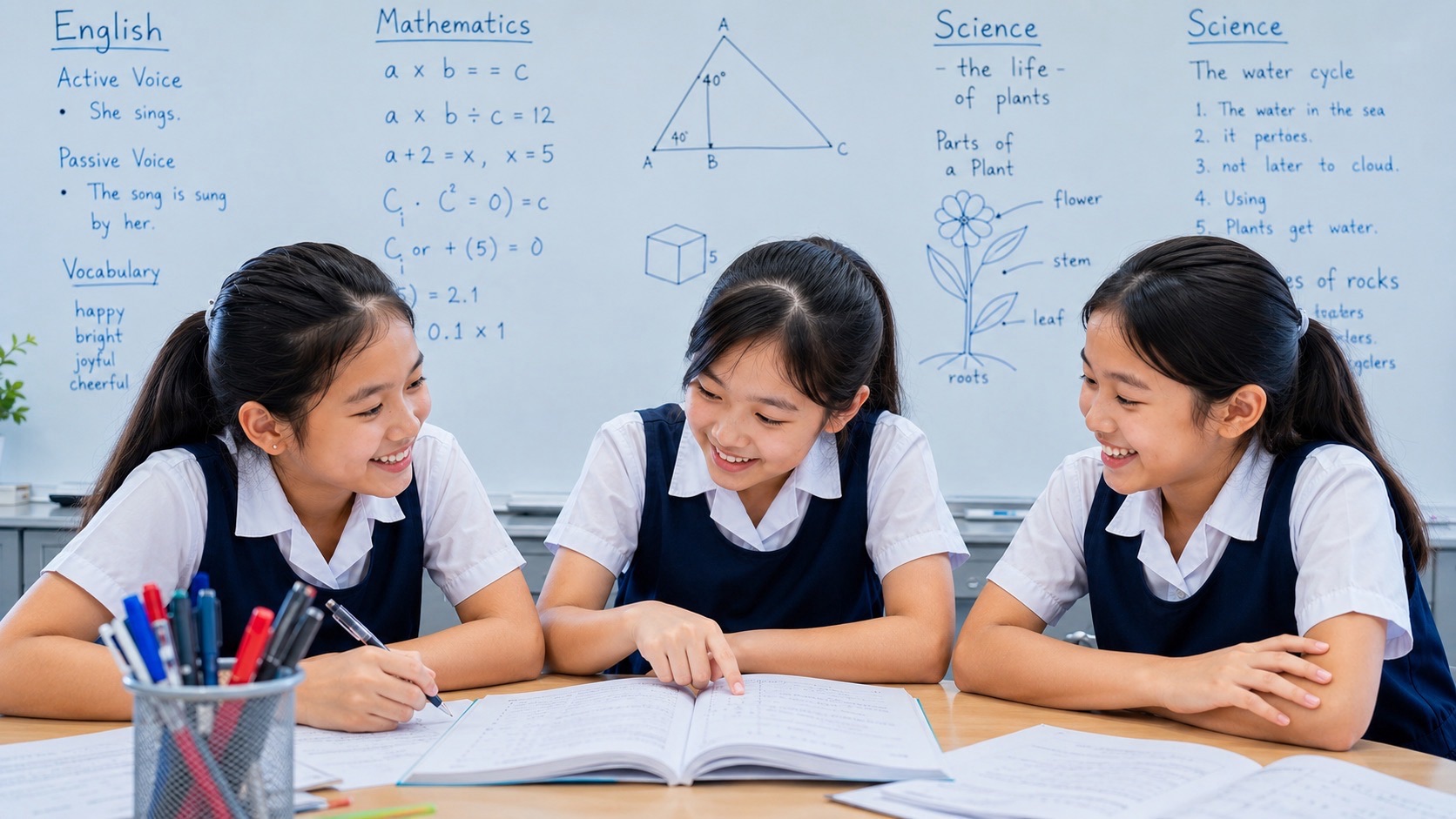
Three-Student Tutorials Make Reasoning Visible
In a three-student group, one learner may report only the evidence, another may jump too quickly to a cause, and a third may offer several possible explanations. Comparing those responses helps children see that good Science is not just having an answer. It is knowing what the evidence actually supports.
What Progress Looks Like
- The child states observations before conclusions.
- Explanations use evidence explicitly.
- Alternative explanations are considered when evidence is incomplete.
- Scientific claims become more cautious and precise.
The Better Parent Question
Instead of asking, “Does my child know the Science fact?”, ask: Can the child tell me what was actually observed, then explain what can reasonably be inferred from it?
Current route: This legacy Serangoon P3 Science URL now owns the observation-vs-inference diagnosis rather than a location claim. For current Science navigation, use the Science Article Directory.