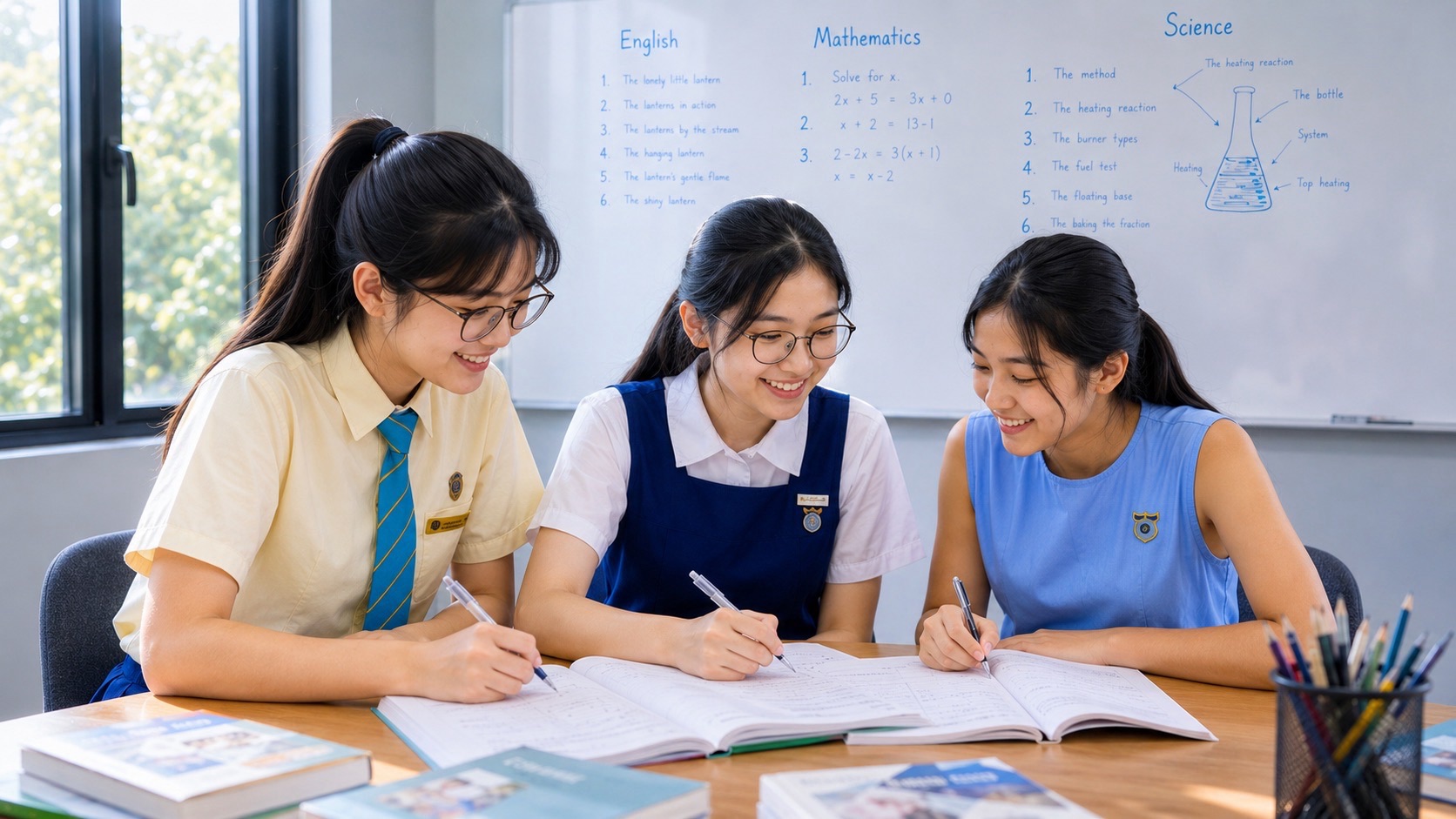
Sengkang Green Primary School English Tuition | Building Reading Stamina Without Rushing Comprehension is this legacy eduKateSingapore page’s specialist search intent: an independent Primary English guide for families around Sengkang Green Primary School whose children can often understand short texts but lose accuracy, reference, vocabulary control, evidence or confidence as passages become longer. Reading stamina is not the ability to stare at a page for more minutes. It is the ability to preserve a coherent model of meaning from the first sentence to the last, recover when attention slips, manage unfamiliar words without collapsing the whole passage, and still answer from evidence after sustained reading.
For parents searching for Sengkang Green Primary School English tuition, the important diagnostic question is therefore not simply whether the child reads slowly or quickly. One learner may decode accurately but exhaust attention on every word; another may read fluently yet lose pronoun reference; another may understand each paragraph separately but fail to connect cause, contrast and change; another may begin a comprehension strongly and deteriorate only in the final third. Good tuition identifies where reading stability first breaks and builds endurance without teaching the child to trade comprehension for speed.
This rebuilt owner deliberately stays narrower than English Tuition for Sengkang Green Primary School, which owns the broad school-family English route, narrower than Compass One English Tuition | Annotation Discipline: Mark Less, Understand More, which owns annotation, and separate from Creative Writing Class for Sengkang Green Primary | Show Emotion Without Overwriting It. This page owns one question: how a Primary learner sustains accurate comprehension across longer reading without rushing. eduKateSingapore is independent and this school-named historical URL does not imply affiliation with or endorsement by Sengkang Green Primary School.
1. Current MOE and SEAB Reading Boundary
MOE’s current Primary English Language Syllabus 2020 develops reading and viewing together with vocabulary, grammar, oracy, writing, knowledge building and increasingly independent language use. It emphasises meaning, comprehension strategies, extensive reading and the ability to monitor understanding. Reading stamina belongs inside that system. A pupil is not reading successfully merely because every word was pronounced; the reader has to build and update meaning across sentences, paragraphs and text types.
For Primary 6, SEAB’s 2026 PSLE English Language syllabus states that Paper 2 assesses comprehension of written and multimodal texts at literal, inferential and evaluative levels. That makes stamina educationally relevant, but it does not justify rushing younger pupils through examination passages. P1-P4 should establish fluent access, vocabulary, reference tracking, paragraph relationships and recovery. P5 can increase load and transfer. P6 can integrate those capabilities under realistic assessment conditions.
2. Reading Stamina Is Meaning Stability Across Time
A child can remain physically seated with a text for twenty minutes and still lose the passage after five. The useful measure is whether meaning remains connected. Can the learner identify who or what is being discussed, what changed, how one paragraph relates to the next, what new vocabulary probably means, and where evidence for a question is located after several minutes of reading?
Stamina therefore combines fluency, vocabulary, working memory, attention, knowledge, reference tracking and strategic rereading. Tuition should not label every late-passage error as weak concentration. The first job is to locate which component has begun to fail.
3. The Strong-Start, Weak-Finish Pattern
One of the clearest stamina signatures is declining accuracy across a passage. The first questions are correct, middle questions become less precise, and the final questions show broad copying, missed reference or unsupported guessing. The overall score can hide that slope.
Mark questions by passage position. Compare early, middle and late accuracy. Then inspect what changed: reading pace, vocabulary density, number of rereads, time remaining or complexity of inference. This transforms ‘gets tired’ into a specific learner model.
4. The Fast-Finish, Weak-Model Pattern
Some pupils read quickly and feel confident because the page is completed. Yet retelling reveals only isolated details. The student may have processed sentences locally without building a passage model.
After each paragraph, ask a light internal question: what changed, what is this paragraph doing, and how does it connect to what came before? Do not force a written summary after every paragraph. The aim is an internal model that remains available when the questions begin.
5. The Slow-Accurate Reader Has a Different Problem
A slow reader can understand very well if given enough time. The constraint may be decoding automaticity, vocabulary retrieval, cautious rereading or handwriting during answers rather than comprehension itself. Telling this learner to speed up can damage the very accuracy that is currently strong.
Measure stage time. Separate reading from answering. Listen to oral reading. If word-level effort is high, build fluency with accessible texts before compressing the clock. If reading is smooth but deliberate, work on stopping rules for rereading and evidence selection.
6. The Unknown-Word Freeze
One unfamiliar word can stop an entire paragraph when the learner believes every word must be solved before reading can continue. This increases time, working-memory load and frustration.
Teach a local-problem rule: keep reading if enough meaning survives; note the word mentally or lightly; use sentence context, word class, morphology, contrast and examples; return only if the word is load-bearing. Unknown vocabulary should create a local uncertainty, not a full-passage collapse.
7. Load-Bearing Vocabulary Deserves More Attention
Some words genuinely control meaning. A contrast word, emotional state, technical term or key verb may determine how the paragraph should be understood. Skipping it can contaminate later inference.
Teach students to distinguish optional precision from load-bearing meaning. If replacing the word with ‘something’ makes the paragraph incoherent, investigate it. If the broad relationship remains clear, continue and verify later if needed.
8. Vocabulary Retrieval Speed Affects Stamina
A learner may know many words but retrieve them slowly. Long passages expose this because each small pause accumulates. The child reaches later questions with less time and more cognitive fatigue.
Vocabulary practice should therefore include delayed retrieval, contrast and fresh use, not only recognition. A word that becomes rapidly available frees attention for comprehension. Over a long passage, dozens of small efficiencies matter.
9. Pronoun Reference Drift
Longer texts create longer chains: a person is named, then described by role, then replaced by he, she or they; an event becomes ‘this decision’ or ‘the incident’; a proposal becomes ‘it’. Once the learner loses the chain, later sentences can be interpreted around the wrong subject.
When reference becomes uncertain, stop locally. Identify plausible antecedents, check number and meaning, reread the sentence, then continue. The goal is not to draw arrows everywhere but to have a recovery routine when reference becomes unstable.
10. Reference Drift Can Be Cumulative
A wrong pronoun interpretation may not cause an immediate obvious error. It can distort several later sentences and make a final inference appear impossible. This is why some pupils say a passage ‘suddenly stopped making sense’ even though the original error occurred much earlier.
Teach backwards repair. Return to the last point where meaning was clear, reconstruct the referent, and move forward again. This is more efficient than rereading the entire passage from line one.
11. Paragraph-Island Reading
A pupil can understand each paragraph in isolation yet lose the relationship between them. The text then feels like several mini-passages. Questions about purpose, main idea, cause, contrast or development become difficult.
Train paragraph relationships: cause, example, contrast, continuation, problem, solution, change, qualification and consequence. The learner should be able to say what a paragraph contributes to the text, not merely what facts it contains.
12. Paragraph Jobs Should Stay Small
A margin label such as ’cause’, ‘example’ or ‘turning point’ can help when a text is dense, but lengthy notes create another reading task. Students should not copy sentences into the margin to prove that they understood them.
The best external support is the smallest cue that preserves the relationship. As the learner becomes more stable, even that cue should fade.
13. Main Idea Must Survive Detail
Long passages contain attractive details that are easy to remember. A pupil may recall the unusual example yet forget what the paragraph was demonstrating. Stamina includes protecting hierarchy: which details are evidence and which idea do they support?
After a dense paragraph, ask for the point in one sentence. Then ask which detail is most useful for proving it. This keeps facts attached to purpose.
14. State Change Is a High-Value Reading Anchor
In narratives, readers should notice changes in knowledge, emotion, intention, relationship and danger. In informational texts, they should notice changes in conditions, findings, arguments or solutions. Change often carries the most question value.
A simple before-to-after representation can preserve the trajectory. The child does not need to mark every detail if the central change remains clear.
15. Cause and Sequence Are Not the Same
Tired readers may collapse relationships into ‘then’. One event happened before another, but that does not prove causation. Longer texts frequently require the reader to preserve why something changed.
Ask ‘because of what?’ and ‘what did that cause next?’ If the answer is unclear, return to the relevant region. Causal tracking helps both comprehension and later writing.
16. Connectors Reduce Search Cost
Words such as however, therefore, although, because, instead, meanwhile and despite tell the reader how ideas relate. Recognising them rapidly reduces the cognitive work required to infer structure.
Do not circle every connector. Notice the load-bearing ones and translate them into relationships: contrast, result, concession, cause or alternative. The meaning matters more than the symbol.
17. Concession Requires More Stamina Than Simple Contrast
Older Primary texts may say that one point is true while another remains more important. If the reader interprets this as simple contradiction, the writer’s actual position can be lost.
Use plain language: accepts X, but still argues Y. This creates a stable representation that can survive through the rest of the paragraph.
18. Rereading Needs a Purpose
Repeated reading can be productive or wasteful. The difference is whether the learner knows what uncertainty is being resolved. Rereading the same sentence three times without a question often produces no new information.
Before rereading, name the problem: unknown word, pronoun, cause, paragraph link, evidence or task demand. Then reread only the required zone. Purposeful rereading conserves stamina.
19. Whole-Passage Rereading Should Be Rare
Some students restart from the beginning whenever they feel uncertain. This uses large amounts of time and may reproduce the same misunderstanding. Stronger readers repair locally.
Teach a return-point habit: go back to the last sentence or paragraph that was definitely understood, resolve the broken relationship and continue. Whole-passage rereading is reserved for genuine global misunderstanding.
20. The Three-Level Reading Model
Level one is local sentence meaning. Level two is paragraph relationship. Level three is the whole-text model: topic, development, central change or argument. Stamina requires all three to remain coordinated.
A child can be strong at one level and weak at another. Diagnosis should identify where meaning stops accumulating. Tuition can then practise that level without reducing every problem to generic comprehension.
21. Read the Question Without Destroying the Text Model
Question-first strategies can help pupils focus, but they can also turn reading into keyword hunting. Passage-first strategies can build meaning but leave the learner forgetting exact demands. The right balance depends on the child and text.
Train flexible control. On a short passage, broad reading first may work. On a long comprehension with precise multi-part demands, compressing the questions can reduce working-memory load. Strategy should solve a real problem.
22. Question-Demand Compression
Long wording can be reduced to a compact mental cue: two reasons; evidence; meaning here; before versus after; why; main idea; reference; writer’s purpose. The cue protects scope while the learner returns to the passage.
Do not rewrite the whole question. Preserve number, command, target and scope. As control improves, the visible note can disappear.
23. Scope Errors Grow Under Fatigue
Late in a passage, students often over-answer because they no longer trust their selection. They copy entire sentences or include every related detail. This uses more time and can weaken precision.
Teach a boundary check before writing: exactly how many ideas, from which paragraph or stage, and what answer form? Stamina includes the ability to remain selective when tired.
24. Evidence Zones Reduce Search
Instead of highlighting every possible clue, locate the paragraph or sentence region most likely to contain the answer. Then choose the exact evidence needed.
This two-stage process separates navigation from selection. It is particularly useful for longer passages because the learner can return to a small zone instead of scanning the entire text repeatedly.
25. Evidence Must Be Sufficient, Not Maximal
A child can select the right area and still copy too much. Ask what information is necessary to prove the answer and what can be removed without weakening it.
Evidence economy protects time and improves answer clarity. It also develops the idea that comprehension is controlled selection, not text reproduction.
26. Inference Requires Stable Context
Inference becomes harder late in a passage when earlier details have faded. The learner may make a plausible guess that ignores a clue introduced several paragraphs before.
Build a stable model of character, event or argument so the inference can use both local and earlier evidence. If a clue depends on an old event, return to that event deliberately rather than guessing from the final sentence alone.
27. Background Knowledge Can Reduce Reading Load
Readers with relevant knowledge connect ideas faster because fewer relationships are completely new. This is one reason extensive reading matters. Knowledge makes later reading more efficient.
Tuition should not treat stamina as a purely attentional trait. Build knowledge through varied fiction and nonfiction, discussion and vocabulary. A richer learner has more structures onto which new text can attach.
28. Knowledge Gaps Can Look Like Stamina Failure
A child may slow dramatically on a text about an unfamiliar domain. The issue is not necessarily weak endurance; the learner is constructing concepts from scratch while reading.
Compare performance on familiar and unfamiliar topics. If stamina is much stronger when background knowledge exists, build knowledge and teach strategies for entering unfamiliar domains.
29. Fluency Frees Attention
When decoding is automatic enough, working memory can be used for meaning, inference and evidence. When every word is effortful, longer texts become disproportionately expensive.
Fluency practice should use readable text and preserve comprehension. Faster nonsense reading is not the target. The learner should sound more natural and remember more.
30. Repeated Reading Has a Specific Job
Repeated reading can improve phrasing and automaticity when the same short passage is reread for a reason. It is not a substitute for broad reading.
Use it selectively: first for accuracy, then phrasing, then a final meaning check. After fluency improves, transfer to a new passage of similar difficulty.
31. Phrase Reading Supports Sentence Meaning
Word-by-word reading can overload attention and distort syntax. Teach students to group meaningful phrases around punctuation and grammar.
A child who reads ‘After the rain / had stopped / the team returned / to the field’ preserves relationships more easily than one who processes isolated words. Phrasing is a bridge between fluency and comprehension.
32. Punctuation Is a Reading Map
Commas, full stops, quotation marks, dashes and colons guide relationships and voice. Pupils who ignore punctuation may misread who speaks or which ideas belong together.
Use oral reading to make punctuation audible. Then ask what the punctuation changed in meaning. This keeps reading fluency connected to syntax.
33. Reading Rate Should Be Measured with Meaning
A rate number without comprehension can be misleading. Record time, accuracy, retell quality and question performance together. The fastest reader is not automatically the most efficient.
Look for total task efficiency: enough pace to finish, enough comprehension to answer accurately, and enough reserve to check. Stamina is balanced performance.
34. A Slightly Slower Reader May Be More Efficient Overall
If one learner reads a minute slower but needs far less rereading and answers more accurately, the total task can be faster. Parents should not treat visible reading speed as the only variable.
Optimise the system rather than one stage. Good tuition often makes reading feel calmer before it becomes faster.
35. The First Stamina Baseline Should Be Simple
Choose a passage appropriate to the child’s current level. Record reading time, unknown-word pauses, rereads, reference errors, retell, question accuracy and whether accuracy changes from early to late questions.
The baseline is not a test of worth. It creates a comparison point. Later, a similar passage can show whether the learner maintains meaning more steadily with less support.
36. Do Not Use Only the Hardest Passage for Baseline
If the initial text is far above the learner’s independent level, every system may fail at once. That makes diagnosis difficult.
Begin with material that is challenging but accessible. Increase length or density only after the tutor understands the learner’s current reading process.
37. Build Length Before Density When Appropriate
Some students can understand complex sentences in short texts but lose stamina over length. Others struggle with dense vocabulary even in short passages. The progression should follow the constraint.
For a length problem, use longer readable texts. For a density problem, keep texts shorter while teaching vocabulary and syntax. Do not increase both variables at once unless the learner is ready.
38. Build Density Before Speed When Appropriate
A learner who reads everyday narrative well but slows on informational text may need practice with academic vocabulary, nominalisation, complex sentences and paragraph structure.
Teach the features first. Speed can follow as familiarity grows. Rushing dense text before structure is understood can train superficial reading.
39. Reading Stamina Is Genre-Specific at First
A pupil may sustain narrative well and struggle with informational text, or handle factual articles but lose track of dialogue and character reference. Stamina should be tested across genres.
Progress becomes stronger when the learner can carry meaning through narrative, explanation, argument and multimodal material. Do not assume one good passage represents all reading.
40. Narrative Stamina Depends on Character and Event Tracking
In stories, readers need to maintain who wants what, what changed and why later action matters. Long narrative comprehension often fails when character motives or event sequence become disconnected.
Use light character and change tracking. Retell the central conflict after several paragraphs. The goal is a coherent story model, not a list of details.
41. Informational Stamina Depends on Structure
Explanatory texts may move through definition, cause, process, example, consequence and solution. Students who read them like stories can retain facts without understanding organisation.
Teach paragraph jobs and connector relationships. A structural map reduces the amount of information the learner must hold as separate items.
42. Argumentative Stamina Depends on Position and Qualification
Older Primary students may encounter texts that present claims, reasons, examples and qualifications. Stamina requires remembering the writer’s position while processing supporting detail.
Use compact labels such as claim, evidence, limitation and final position. Then fade them as the learner becomes able to reconstruct the argument internally.
43. Multimodal Reading Adds Switching Load
Charts, images, captions and text require the learner to move between representations. A pupil may read the prose well but ignore visual evidence, or focus on the image and miss qualifying language.
Teach integration: what information comes from the visual, what comes from the words, and how do they relate? Switching should be purposeful, not distracting.
44. Visual Texts Still Need Evidence Discipline
A chart or image is not self-explanatory. Check labels, units, categories, captions and what comparison the question requires.
Stamina includes maintaining precision while moving across modes. One quick misread of an axis or caption can distort the entire answer.
45. Cloze Stamina Requires Both Local and Global Meaning
Open cloze and vocabulary cloze expose whether the learner can maintain passage meaning while solving individual gaps. A word may fit grammatically but contradict the wider paragraph.
Use a two-level check: sentence fit and passage fit. Avoid treating each blank as an isolated puzzle.
46. Cloze Should Not Become Endless Backtracking
When a blank is difficult, make a provisional choice, continue and return after the wider meaning becomes clearer. This mirrors the unknown-word rule.
Stamina improves when unresolved local problems are contained rather than allowed to block the entire text.
47. Editing Stamina Is Different from Comprehension Stamina
Editing asks the learner to sustain attention to form while preserving meaning. Students may become less accurate later because scanning becomes random or they start changing correct language.
Teach structural checks: subject-verb, tense, pronoun, article-noun, preposition and sentence boundary. A repeatable scan is more sustainable than hunting for whatever looks strange.
48. Long Writing Tasks Also Depend on Reading Stamina
Before writing, pupils must read the prompt, pictures, situation or instructions accurately. A tired or rushed reader can misinterpret the task before the first sentence is written.
Teach a short task-reading routine. In P6 Paper 1, writing quality begins with reading the task well enough to preserve purpose, audience, context and topic.
49. Reading Feeds Writing Architecture
Long-text reading exposes paragraph movement, reference, cause, contrast, vocabulary in context and sentence rhythm. Students should abstract these relationships rather than copy attractive phrases.
Ask what the paragraph is doing and how the writer keeps the reader oriented. Then apply the principle in original writing.
50. Reading Stamina Should Increase Writing Knowledge
A child who reads more widely gains story structures, factual knowledge, vocabulary and ways of organising explanations. This reduces idea-generation load later.
Tuition should preserve extensive reading rather than replace it with only assessment passages. The long-term system is larger than the worksheet.
51. Primary 1: Stamina Begins with Short Successful Reading
P1 should not be asked to endure long comprehension passages merely to build stamina. The first goal is secure reading access, enjoyment, oral meaning and the habit of recovering after an unfamiliar word.
Use short accessible texts, frequent discussion and plenty of successful independent reading. Length can grow as automaticity grows.
52. Primary 1: Oral Retell Is an Important Stamina Check
A child can read a few sentences accurately and still not integrate them. Ask for a simple retell: who, what happened and what changed.
If retell is strong when the adult reads but weak when the child reads, word-level effort may be consuming comprehension capacity.
53. Primary 2: Connect Sentences Across Paragraphs
P2 can begin holding longer sequences and simple paragraph relationships. Vocabulary and reference become more important as texts expand.
Use short linked paragraphs and ask how the second adds to the first. Keep reading practice broad and enjoyable.
54. Primary 2: Build Rereading Discipline
Teach that rereading is a strategy, not a punishment. When a sentence does not make sense, return to the specific phrase, resolve the problem and continue.
This early recovery habit prevents later students from either giving up or rereading entire passages mechanically.
55. Primary 3: Longer Comprehension Requires Question Control
P3 often introduces more sustained reading and formal comprehension. Students benefit from learning question demand, evidence zones and main-idea preservation without excessive annotation.
Stamina work should remain meaning-centred. The learner is building a reading operating system, not an examination ritual.
56. Primary 3: Vocabulary Density Becomes More Visible
A few unknown words across a short text may be manageable. In longer P3 passages, gaps can accumulate. Teach context narrowing and word-family awareness while expanding reading volume outside worksheets.
Old vocabulary should return after delay so more words become rapidly available.
57. Primary 4: Reference Chains Become More Demanding
Longer texts, multiple characters and more abstract informational writing can create reference drift. P4 students can learn to resolve pronouns and renamed ideas systematically.
Use visible marks only for difficult chains. The final goal is internal tracking.
58. Primary 4: Paragraph Relationships Need Explicit Language
Students can begin naming cause, contrast, example, sequence, problem and solution. This vocabulary for structure helps them compress longer texts.
Once the relationships are recognised fluently, visible labels can fade.
59. Primary 5: Integrate Stamina with Evidence Selection
P5 students often understand the passage but lose marks when fatigue makes answer selection broad or imprecise. Stamina training must therefore include the answering phase, not only reading.
Track total task time, evidence quality and late-question accuracy. The most useful efficiency may come from narrower answers rather than faster reading.
60. Primary 5: Increase Genre Variety
Use narrative, informational, argumentative and multimodal materials. A child who is stable in one genre should learn to adapt structure-tracking strategies to another.
Genre transfer reveals whether the reading system is robust rather than memorised.
61. Primary 6: Integrate Stamina with Current PSLE Demands
By P6, pupils need sustained performance across the current English assessment structure. Full-paper work can reveal where reading accuracy drops under cumulative load.
Use current SEAB materials and formats, but treat practice as diagnosis. If the child collapses late in Paper 2, determine whether the cause is pace, vocabulary, question demand, fatigue or poor stopping rules.
62. Primary 6: Literal, Inferential and Evaluative Reading Need Different Energy
Literal questions may be faster when evidence is clear. Inference and evaluative questions require more integration and judgement. A learner should not spend the same effort on every item.
Teach flexible allocation. Secure easy evidence efficiently, then invest more reasoning where the task genuinely requires it.
63. Primary 6: Full Papers Should Be Followed by Part-Practice
If a full paper reveals reference drift or late-passage evidence problems, isolate that weakness in shorter work before running another full paper.
This creates more repetitions of the exact repair. Whole tasks test integration; part-practice changes the mechanism.
64. Stamina Training Should Not Become Permanent Time Pressure
Reading under a clock is useful only after enough skill exists to preserve meaning. Constant timing can make developing readers rush and guess.
Alternate untimed quality building, moderately timed passages and realistic P6 practice. The learner should experience both depth and execution.
65. Micro-Resets Can Restore Attention
During training, teach a brief reset at a natural boundary: look away for a second, state the main idea mentally, restore posture and continue. The reset is not a ritual to perform after every paragraph.
Its purpose is to show that attention can be deliberately restored before meaning drifts further.
66. The Reset Must Preserve the Text Model
A reset that clears the mind completely is unhelpful. Before continuing, the learner should know who or what is active and what the paragraph has established.
This is why a one-line mental summary can be useful. The reader resumes from a stable representation rather than from empty attention.
67. Breaks Outside the Passage Also Matter
Long study sessions can degrade reading even when the passage strategy is good. Pupils need realistic lesson structure, hydration, movement and sleep.
Tuition should not interpret exhaustion as a need for harder stamina drills. The whole weekly load matters.
68. Sleep Is Part of Reading Performance
Tired learners read more slowly, reread more and lose reference more easily. A late tuition schedule can therefore create the very comprehension weakness it is trying to repair.
Parents should observe whether late-passage errors cluster after long school days or late classes. Timing can be an instructional variable.
69. Travel Is Part of the Reading Load
For Sengkang families, a long journey before class can reduce the attention available for sustained text work. Location does not determine teaching quality, but it influences usable energy.
Compare door-to-door time and the child’s state on arrival. A good reading lesson requires enough cognitive reserve to participate.
70. A Three-Student Class Can See Stamina Failure More Clearly
In a very small group, the tutor can compare early and late answers, listen to each pupil read, see who rereads repeatedly and ask for a retell without the child disappearing into a large class.
The group size itself is not the method. Visibility must lead to different next steps.
71. Individual First Attempts Protect the Evidence
Before peers discuss a passage, each learner should often record an initial answer or evidence zone. Otherwise the strongest student may repair the group before the tutor sees who lost meaning.
After discussion, a second response shows what changed. The tutor can then test independent transfer on a fresh item.
72. Peer Retell Can Reveal Different Passage Models
Ask each student to summarise one section. Differences reveal what each learner considered central. One may focus on a vivid detail; another may preserve the causal relationship; a third may miss the paragraph’s change entirely.
Comparison becomes a reading lesson when students justify selection with the text.
73. Peer Explanation Should Not Replace Independent Reading
A learner can appear strong after hearing a peer’s interpretation. Always return to individual proof: another question, new paragraph or fresh passage.
Peer interaction should strengthen retrieval and structure, not become an answer source.
74. Annotation Should Stay Minimal
Over-annotation increases visual and cognitive load. A stamina learner should not be asked to highlight every noun, connector and unknown word.
Use marks only when they solve a real problem: question demand, difficult reference, state change, paragraph job or evidence zone. The dedicated annotation owner goes deeper; this page uses annotation only as a stamina support.
75. No-Annotation Reading Is an Important Transfer Test
After a strategy becomes secure, give a comparable clean passage. Can the child sustain meaning without visible cues?
If accuracy remains stable, external support can fade. If it collapses, identify the specific relationship that still needs externalisation.
76. Reading Aloud and Silent Reading Provide Different Evidence
Oral reading reveals decoding, phrasing and self-correction. Silent reading better resembles many school tasks and may allow faster processing.
Use both diagnostically. A child who comprehends much better after oral reading may need fluency work; a child who reads aloud beautifully but retells weakly may need deeper meaning monitoring.
77. Retelling Is a High-Value Stamina Test
Retelling requires the learner to maintain sequence, main ideas and relationships without answer choices. It exposes whether the passage exists as a coherent model.
Ask for a concise retell, not a sentence-by-sentence replay. The ability to compress is evidence of comprehension.
78. One-Sentence Paragraph Summaries Train Compression
When a pupil loses the main idea, short written or oral summaries can stabilise the model. Keep them temporary. The learner should not turn every reading task into a long note-making exercise.
As skill improves, move from full sentence to phrase to mental label to no visible summary.
79. End-of-Passage Summary Tests Integration
Before answering, ask the learner for the whole passage in two or three sentences. Can the child state the central situation, development and outcome or main claim and supporting structure?
If the summary is fragmented, return to paragraph relationships before tackling difficult inference questions.
80. Evidence Retrieval After Delay Is a Strong Stamina Test
After discussing another question, ask the learner to return to an earlier evidence zone without rereading the whole passage. This tests whether the passage map remains available.
Strong readers remember roughly where meaning lives even when exact wording has faded.
81. Late-Passage Vocabulary Needs Special Attention
Unknown words near the end can cause more damage because the learner has less cognitive reserve and time. Track whether vocabulary errors cluster late.
If they do, improve earlier pacing and vocabulary retrieval while teaching the local-problem rule. The fix may not be simply learning more words.
82. Late-Passage Reference Needs Special Attention
Pronoun chains can become more difficult as more entities have accumulated. Teach readers to restore the active cast before continuing.
A quick question such as ‘who is this now?’ can prevent several downstream errors.
83. Late-Passage Inference Needs Context Protection
Inference late in a text often depends on earlier events. Tired readers may use only the nearest sentence. Train them to ask whether the conclusion requires a clue from earlier.
Purposeful return to one earlier event is more efficient than starting the passage again.
84. Working Memory Can Be Supported Without Over-Scaffolding
Small external cues, paragraph jobs and evidence zones can reduce memory load, but the support should be temporary and selective.
The goal is to preserve enough internal space for reasoning, not to externalise every detail. As fluency and knowledge grow, reduce the cues.
85. Stronger Working Memory Is Not the Only Goal
Children vary in how much information they can hold, and reading systems should be designed intelligently rather than treating memory as a character trait to be forced.
Chunking, structure recognition, vocabulary automaticity and selective notes reduce demand. Better strategy can make the same memory capacity far more effective.
86. Stamina Is Also Emotional
A child who expects long passages to go badly can become anxious, rush or give up early. Repeated successful exposure at an appropriate difficulty matters.
Increase load gradually and make recovery visible. Confidence should come from evidence that the learner can restore meaning after difficulty.
87. Avoid the ‘You Are a Slow Reader’ Label
Labels can make strategy feel fixed. Describe the current process instead: vocabulary retrieval is slow; decoding becomes effortful with longer words; rereading has no stopping rule; paragraph relationships are being lost.
Processes can be taught and measured. Specificity is more useful than identity language.
88. Avoid the ‘Careless’ Label
Late errors may come from fatigue, time pressure, answer scope or reference drift. ‘Careless’ tells the student nothing about what to do next.
Name the behaviour and teach the check. If a recurring error cannot be described, diagnosis is not yet finished.
89. Avoid the ‘Just Read More’ Non-Diagnosis
Wide reading is valuable, but a child with a specific bottleneck may need targeted repair before extra volume becomes productive.
Combine extensive reading with precise intervention. Reading more should reinforce a better process, not repeat the same failure hundreds of times.
90. Reading Volume Still Matters
Once access is adequate, regular reading builds automaticity, vocabulary, knowledge and comfort with text. Stamina is partly the result of accumulated successful reading experiences.
Protect authentic reading time outside tuition. A child who reads only examination passages receives a narrow diet.
91. Fiction and Nonfiction Build Different Resources
Fiction strengthens narrative sequence, motive, perspective and voice. Nonfiction builds knowledge, academic vocabulary and explanatory structure. Both contribute to comprehension stamina.
Use variety rather than only the genre the child finds easiest.
92. Reading Choice Can Increase Volume
When appropriate, allow the learner to select some books or topics. Choice increases willingness to spend time with text and can make practice more sustainable.
Choice does not mean avoiding all challenge. Balance interest with texts that extend vocabulary and structure.
93. Knowledge-Rich Conversation Supports Stamina
Discuss what the child reads. Ask one real question about cause, choice, surprising information or connection. Conversation helps organise meaning and knowledge.
Do not interrogate every page. The goal is intellectual engagement, not converting leisure reading into another assessment.
94. Parent Help Should Not Become Live Translation
If a parent explains every difficult sentence immediately, the child may stop attempting repair. Use a prompting ladder: what do you understand so far, which word or reference is unclear, what can you try first?
Give enough help to restart, then return the reading to the child.
95. Parent Read-Aloud Still Has Value
Reading aloud to older Primary children can expose them to language and knowledge above independent reading level. It does not replace independent practice.
Use read-alouds to preserve rich comprehension while word-level skills catch up. Discuss meaning, then keep independent texts at a manageable level.
96. The Home Stamina Session Should Be Short Enough to Succeed
A developing reader does not need an exhausting nightly marathon. Ten to twenty focused minutes of successful reading may build more than a long conflict-filled session.
Increase duration when accuracy, recovery and willingness remain stable.
97. The Tutor Should Record Where Meaning Broke
Instead of noting only total score, record the approximate point where reference, pace or evidence began to weaken. This can be question number, paragraph position or minutes into the task.
Over time, the failure point should move later or disappear. That is a direct stamina measure.
98. The Tutor Should Record Recovery Quality
When the child loses meaning, what happens next? Does the learner reread purposefully, guess, ask for help, restart the whole passage or freeze?
Recovery is a trainable capability. A student who can restore meaning with one local action has stronger stamina than one who needs a full adult rescue.
99. The Tutor Should Record Prompt Level
A comprehension answer after a full tutor explanation is different from the same answer after a general cue. Occasionally record support level on the active stamina target.
Progress can appear as the same accuracy with fewer prompts before marks rise.
100. The Tutor Should Test Delayed Stamina
Return to longer reading after several lessons without announcing the exact strategy. Can the learner still manage unknown words, reference and paragraph structure?
The system is becoming durable when the student selects recovery actions without being reminded which technique was taught last week.
101. A Six-Week Review Should Look Beyond Marks
Compare reading time, retell, unknown-word behaviour, rereading frequency, reference accuracy, early-versus-late question accuracy and prompt dependence.
These process measures can show real change before a school assessment happens to sample the same skills.
102. A Term Review Should Test Transfer
Use a different genre and unfamiliar topic. The text should be comparable in difficulty but not resemble the tuition passage closely.
Ask whether the learner can preserve meaning, retrieve evidence and manage uncertainty with the same level of independence. Transfer is stronger proof than repetition.
103. If Progress Stalls, Change a Variable
Do not simply add more passages. Recheck text difficulty, vocabulary load, fluency, strategy complexity, sleep, timing and whether annotation is adding burden.
Change one important variable, then observe. Diagnostic teaching treats stalled progress as information.
104. If Progress Is Fast, Reduce Scaffolds
When paragraph summaries, arrows or question cues are no longer needed, remove them. Increase genre variety or text density instead of keeping an easy scaffold.
Mastery should produce greater internal control.
105. Strong Readers Need Depth, Not Just Longer Passages
Extension can involve subtler reference, competing inferences, denser argument, cross-text synthesis or evidence evaluation. Length alone is a crude measure of difficulty.
Ask stronger readers to reconstruct structure with fewer marks and defend interpretations from evidence.
106. Developing Readers Need Accessible Challenge
A learner should experience enough difficulty to practise recovery but enough success to maintain a coherent passage model.
Texts far beyond independent level can train dependence and guessing. Adjust length, vocabulary or syntax one variable at a time.
107. Reading Stamina and Annotation Discipline Must Stay Separate
Annotation can support stamina by reducing memory load, but a child who needs marks everywhere has not necessarily developed stronger internal reading. Use the annotation owner for the full minimal-marking system.
This page asks a different question: can meaning remain stable across length?
108. Reading Stamina and Broad School English Must Stay Separate
The broad Sengkang Green Primary School English Tuition page covers reading, vocabulary, grammar, writing, oral, listening and parent decision-making.
This specialist owner should not repeat all of that. It exists because sustained comprehension is a distinct mechanism worthy of deep treatment.
109. Reading Stamina and Creative Writing Must Stay Separate
Long reading can improve writing, but composition craft has its own owners. For broad P3-P6 writing, use Creative Writing Sengkang. For emotional restraint, use the Sengkang Green specialist creative-writing owner.
Internal routing keeps each legacy article useful without cannibalising the estate.
110. Worked Case: P2 Reader Who Stops at Every Unknown Word
The child reads accurately but halts whenever a word is unfamiliar, asks an adult immediately and forgets the surrounding sentence. Longer texts become exhausting.
Intervention: teach the local-problem rule, continue to sentence end, use context and word form, then verify only if the word matters. Start with short texts. Progress is the ability to continue without losing the paragraph.
111. Worked Case: P3 Reader Who Reads Fast but Retells Weakly
The learner finishes first but remembers scattered details. Oral reading is fluent. The issue is model building rather than access.
Intervention: light paragraph-job questions, short retells and a final two-sentence passage summary. Speed is temporarily deprioritised. Transfer is tested on a new narrative.
112. Worked Case: P4 Reader Who Loses Pronouns
The learner understands paragraphs until several characters and renamed objects accumulate. Later questions fail because ‘he’, ‘they’ and ‘this’ are attached to the wrong referents.
Intervention: targeted reference verification and occasional arrows only at ambiguous points. Later passages remove the arrows and test internal tracking.
113. Worked Case: P4 Reader Who Rereads Everything
The child is accurate but slow because each question triggers a whole-passage reread.
Intervention: question-demand compression, evidence zones and purposeful return points. The learner still rereads, but only where the question requires it.
114. Worked Case: P5 Reader Whose Accuracy Falls Late
Early answers are strong; late answers become broad and speculative. Time records show repeated vocabulary pauses and over-annotation.
Intervention: reduce marks, practise local vocabulary decisions, set a midpoint check and track late-question accuracy separately. The goal is steady quality, not just faster completion.
115. Worked Case: P5 Reader Strong in Narrative, Weak in Nonfiction
The learner follows characters and events well but struggles with explanations and argument. Reading speed drops sharply on denser informational text.
Intervention: paragraph jobs, connectors, cause-and-effect and academic vocabulary. Extend length only after structural control improves.
116. Worked Case: P6 Reader Who Runs Out of Paper 2 Time
Untimed comprehension is accurate. Under assessment conditions the learner spends too long on early difficult questions and reaches later sections with little time.
Intervention: task triage, stopping rules, evidence-zone efficiency and timed sections. Full Paper 2 practice later tests whether the same control survives cumulative load.
117. Worked Case: P6 Reader Who Finishes but Over-Answers
The learner completes on time but copies large text chunks because fatigue reduces confidence in selection.
Intervention: scope checks and deletion practice. Students answer, then remove every phrase not required by the question. Transfer is tested late in a timed passage.
118. Worked Case: Strong Reader Who Needs Extension
The child reads long passages accurately and quickly. More pages would add volume but little new thinking.
Extension: denser texts, competing interpretations, qualification, tone, cross-text relationships and no-annotation reconstruction. Depth replaces raw length.
119. Worked Case: Reader Whose Performance Depends on the Tutor
In tuition, the learner appears stable because the tutor asks guiding questions after every paragraph. At home, meaning collapses.
Intervention: reduce prompts, capture independent first attempts and use delayed transfer. The tutor should become less present inside the reading process as the learner improves.
120. Worked Case: Reader Whose Performance Depends on the Parent
Homework is correct because a parent explains vocabulary and rereads difficult sentences. School work remains inconsistent.
Intervention: parent prompting ladder, honest marking of help used, and easier independent home texts while tuition repairs the bottleneck. Clean homework is no longer mistaken for independent stamina.
121. A Reading-Stamina Diagnostic Grid
- Decoding accuracy and automaticity.
- Phrase-level fluency.
- Vocabulary retrieval speed.
- Unknown-word recovery.
- Pronoun and reference tracking.
- Paragraph relationships.
- Main-idea preservation.
- Purposeful rereading.
- Evidence-zone location.
- Answer-scope control.
- Early versus late accuracy.
- Total reading-and-answer time.
- Prompt dependence.
- Transfer across genres.
The grid separates stamina mechanisms so that intervention can be precise.
122. A Parent Home Audit
- Does the child stop at every unknown word?
- Does oral reading sound effortful?
- Can the child retell after reading?
- Does meaning collapse late in longer texts?
- Does the child reread the whole passage repeatedly?
- Are pronouns and characters confused?
- Does homework require live explanation?
- Does the child still choose to read anything voluntarily?
Patterns matter more than one difficult evening.
123. A Tutor Lesson Audit
- Was an independent first attempt observed?
- Was reading access separated from comprehension?
- Was the earliest unstable process identified?
- Was the prompt no larger than necessary?
- Did the learner reperform?
- Was a fresh transfer task used?
- Was old learning retrieved after delay?
- Was late-passage accuracy checked?
- Did scaffolds reduce as skill improved?
High-quality stamina teaching is observable and testable.
124. A Student Recovery Card
- Pause.
- What exactly stopped making sense?
- Word, reference, cause, paragraph or question?
- Return only to the necessary zone.
- Repair the relationship.
- Restate the main idea.
- Continue.
The card should become unnecessary once the sequence is internal.
125. Frequently Asked Questions
Is eduKate affiliated with Sengkang Green Primary School?
No. eduKateSingapore is an independent tuition provider. The school name reflects the historical search context of this legacy article and does not imply endorsement or partnership.
What is reading stamina?
It is the ability to sustain accurate meaning, reference, structure and evidence use across longer reading, with enough recovery skill to manage local difficulty without losing the whole text.
Is reading stamina just concentration?
No. Attention matters, but vocabulary, fluency, knowledge, syntax, reference, working memory and strategy also affect how long comprehension remains stable.
Should children simply read faster?
No. Pace should improve without sacrificing meaning. First identify why reading is slow and whether the slower pace is currently protecting accuracy.
Should children read longer passages every day?
Not necessarily. Build load gradually and preserve regular authentic reading. Short successful practice can be more useful than daily exhausting passages.
What if my child reads quickly but does not remember?
Work on model building: paragraph jobs, cause, change, reference and brief retell. Speed is not useful if the passage remains fragmented.
What if my child reads slowly but understands well?
Separate decoding, vocabulary and cautious rereading. Improve the bottleneck gradually rather than forcing speed and losing the strong comprehension base.
What if one unknown word stops everything?
Teach the local-problem rule: keep reading when enough meaning survives, infer provisionally, verify only when the word is load-bearing, then continue.
How can pronoun reference improve?
Identify plausible antecedents, test number and meaning, reread and continue. Use visible arrows only when genuinely helpful.
How can paragraph relationships improve?
Practise cause, contrast, example, problem-solution, sequence and change. Ask what each paragraph contributes to the whole text.
Is annotation useful?
Yes when minimal and purposeful. Over-annotation can increase load. Use the dedicated annotation owner for the full system.
How do we know if stamina is improving?
Look for steadier late-question accuracy, fewer whole-passage rereads, faster vocabulary recovery, stronger reference tracking, more precise evidence and fewer prompts.
Should reading be timed?
Timing can be useful after comprehension is sufficiently stable. Use it diagnostically, not as constant pressure.
What does P6 need specifically?
P6 needs integration of durable reading with current PSLE execution: accurate task reading, evidence selection, efficient rereading, time control and recovery under cumulative load.
What if full papers keep showing the same problem?
Stop repeating the whole task for a while. Isolate the weak process, practise it several times, then return to full integration.
Can strong readers benefit from tuition?
Yes if extension increases depth, genre range, inference, argument analysis and independence rather than simply adding more pages.
How should parents help at home?
Preserve reading ownership. Ask where meaning broke and what the child can try. Avoid translating every difficult sentence immediately.
Should parents read aloud to older Primary children?
Yes, as one part of a broader reading life. Read-alouds can expose children to richer vocabulary and knowledge while independent reading develops separately.
How much home reading is enough?
There is no universal number. Use a sustainable amount that allows regular successful reading without damaging sleep or turning every session into conflict.
What if the child hates long passages?
Reduce difficulty, restore successful reading, diagnose the bottleneck and rebuild length gradually. Resistance can be a rational response to repeated overload.
How does a three-student class help?
It lets the tutor observe individual reading, compare early and late performance, hear retells, watch recovery and differentiate the next task while retaining peer discussion.
When should tuition reduce?
When the original need is secure, school reading is stable and the learner can manage longer texts independently, reducing support can be appropriate.
Where is the broad Sengkang Green English route?
Use English Tuition for Sengkang Green Primary School for the full Primary English system.
Where is the broad Sengkang Primary English route?
Use Sengkang Primary English Tuition | P1-P6 & PSLE English.
126. A 12-Week Reading-Stamina Cycle
Weeks 1-2 establish baseline: readable passage, oral reading sample, retell, early-versus-late question accuracy, vocabulary pauses and reread pattern. Weeks 3-4 target the first unstable mechanism. If it is fluency, use accessible repeated reading and phrase work. If it is reference, practise chains. If it is vocabulary, train local recovery and retrieval.
Weeks 5-6 increase length without sharply increasing density. Weeks 7-8 change genre and test delayed retrieval. Weeks 9-10 add moderate timing and tighter evidence selection. Weeks 11-12 use unfamiliar material with reduced scaffolds, then compare against baseline. The cycle should end with a clearer learner model and fewer external supports.
127. A Primary 3 Sample Progression
Start with two linked paragraphs that the child can read accurately. Add a short retell and one literal plus one inference question. Increase to three or four paragraphs only when meaning remains connected.
Vocabulary and question-demand work should be integrated lightly. P3 stamina is built through repeated success, not by giving P6-length material early.
128. A Primary 4 Sample Progression
Use texts with more characters, longer reference chains and clearer paragraph relationships. Add paragraph-job language and occasional evidence zones.
Transfer from narrative to informational texts. Begin comparing early and late accuracy to see whether the learner can hold structure across increased length.
129. A Primary 5 Sample Progression
Increase genre variety, vocabulary density and the need for precise answer scope. Use longer passages with mixed question types and occasional timed sections.
Teach the learner to choose when annotation or rereading is necessary. Independence includes method selection.
130. A Primary 6 Sample Progression
Use current-format materials and full-paper integration strategically. Alternate realistic timed work with targeted repair on the exact stamina failure identified.
Track total time, late-question accuracy, evidence quality and recovery after difficult items. The aim is reliable performance rather than merely surviving more papers.
131. Internal Routing: Annotation
If the learner’s main problem is excessive highlighting, unclear annotation purpose or dependence on colour systems, use Compass One English Tuition | Annotation Discipline: Mark Less, Understand More.
132. Internal Routing: Broad School-Family English
If the learner needs a broad diagnostic across reading, vocabulary, grammar, writing, oral and listening, use English Tuition for Sengkang Green Primary School.
133. Internal Routing: Creative Writing
For broad P3-P6 writing, use Creative Writing Sengkang. For emotional restraint, use Creative Writing Class for Sengkang Green Primary | Show Emotion Without Overwriting It.
134. Internal Routing: English Resources
For additional reading, vocabulary, comprehension, grammar, writing and examination owners, use the English Article Directory. For current programmes, use the Tuition Programmes Directory.
135. Final Parent Standard
Judge reading support by what remains connected after the text becomes longer. The child should preserve more meaning, lose reference less often, recover unfamiliar vocabulary more efficiently, reread for a purpose, locate evidence without restarting the passage and maintain answer quality later in the task.
Ask what the tutor believes is the first stamina bottleneck, what support is being used, how it is being reduced and what fresh text will prove transfer. A good explanation should describe behaviour and evidence, not simply say that the child needs to concentrate more.
136. Final Student Standard
Do not race the text and do not surrender to every difficult word. Build the passage, notice when meaning breaks, identify what broke, repair locally, restore the main idea and continue. Read long enough to preserve the whole meaning, not merely long enough to reach the last line.
137. Final Tutor Standard
Separate fluency, vocabulary, knowledge, reference, structure, evidence, time and attention. Observe early, middle and late performance. Give the smallest useful scaffold, require recovery, test a fresh passage and revisit after delay. Stamina is a teachable reading system when its mechanisms are made visible.
138. Closing: What This Legacy Owner Now Means
This historical URL once carried cross-location wording. Its durable job is now precise: Sengkang Green Primary School English Tuition | Building Reading Stamina Without Rushing Comprehension. It preserves canonical continuity while removing Yishun contamination and keeping the school context accurate and independent.
The operating sequence is simple: accessible reading → fluent phrasing → vocabulary recovery → reference → paragraph structure → main idea → evidence → purposeful rereading → sustained accuracy → transfer. When that sequence strengthens, longer passages stop feeling like endurance tests and become texts the learner can actually hold, understand and use.