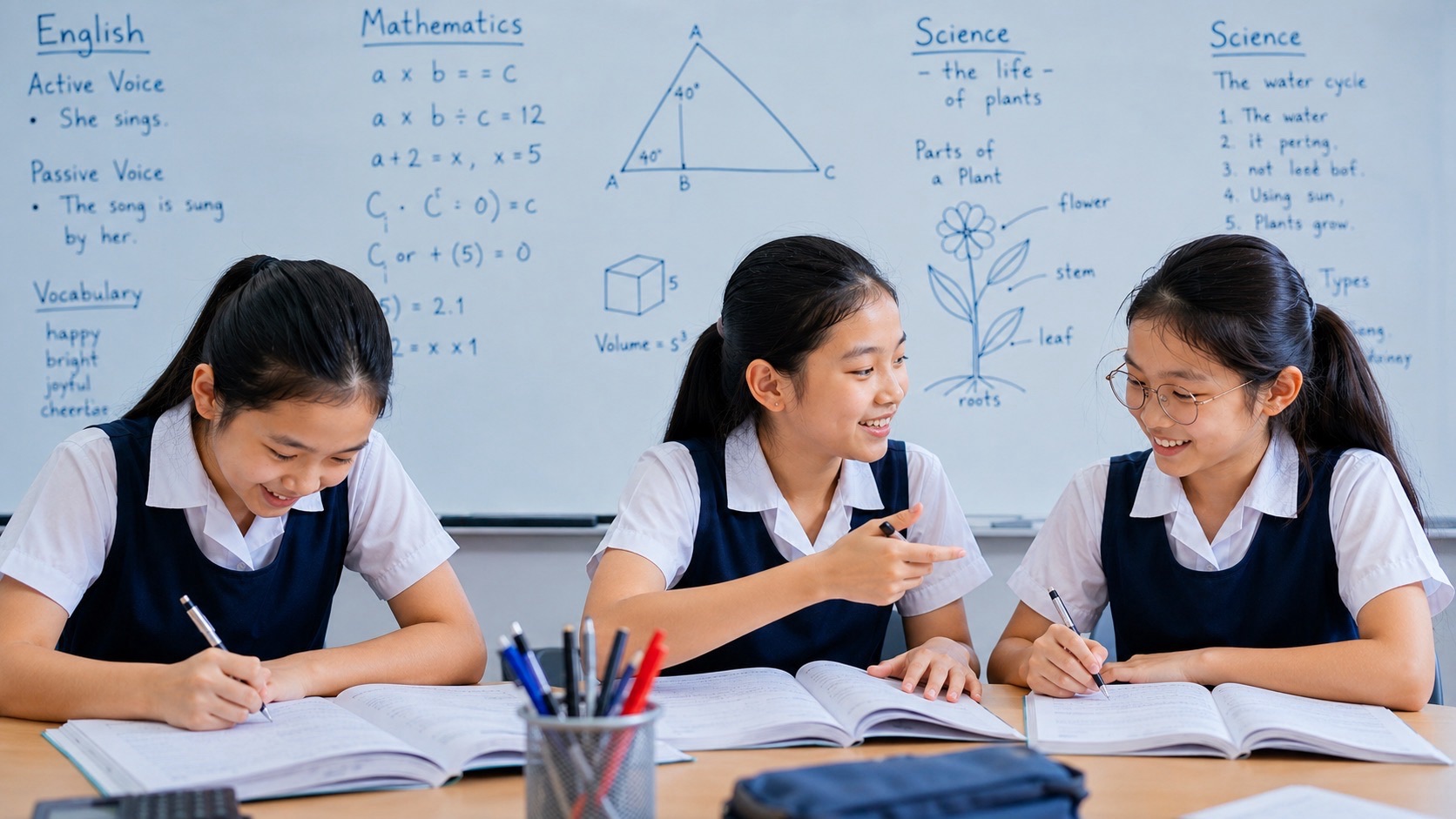
Primary 3 Mathematics | Strong Computation but Weak Problem Solving
A Primary 3 child can be accurate at computation and still be weak at mathematical problem solving. For families searching for Primary 3 Math tuition in Bukit Timah, P3 Maths tuition in Singapore, or help with word problems, that distinction is crucial. Computation answers the question after a method has been chosen. Problem solving starts earlier: the student must interpret information, identify quantities, represent relationships, retrieve relevant knowledge, select a method, execute it and check whether the answer fits the situation.
This 20,000+ word guide is anchored to the current MOE Primary Mathematics Syllabus P1–P6. Current Primary 3 tuition pages often emphasise multiplication tables, fractions, bar models, multi-step word problems, area and perimeter, diagnostic checklists and preparation for the P4 jump. Those themes are useful, but the central learner job is broader: P3 is where the child must begin turning arithmetic knowledge into representations and method choices that survive unfamiliar wording.
Alicia calculates rapidly but can begin before understanding the structure. Tricia represents carefully but may take too long to choose. Kai Kai can solve once somebody names the method, yet he hesitates when the chapter label disappears. Their scores can look similar on routine computation and diverge sharply on word problems. The central proposition of this article is that strong P3 problem solving depends on representation and method selection, not on arithmetic volume alone.
When computation is strong but problem solving is weak, diagnose the decision before adding more arithmetic.
The 50-Second P3 Router
| What you see | Likely bottleneck | Best first response |
|---|---|---|
| Routine sums are strong; word problems are weak | Representation / selection | Show knowns, unknown and relationship before calculating. |
| Multiplication facts are fast; division stories confuse | Operation meaning | Connect grouping, sharing and inverse relationships. |
| One-step problems work; two-step problems collapse | Intermediate quantity | Label what the first answer represents before step two. |
| Bar models are drawn but do not help | Representation is procedural | Build labels and relationships before bar lengths. |
| Familiar problem types work; changed wording fails | Transfer | Vary surface features and ask what stayed mathematically the same. |
| Needs the tutor to say ‘use multiplication’ | Recognition / prompt dependence | Mix methods and fade category cues. |
| Fractions work only as shaded shapes | Fraction representation | Move among sets, strips, number lines and symbols. |
| Area/perimeter are confused | Quantity meaning | Name what is being measured before choosing a formula or procedure. |
| Many answers are almost right | Execution / checking | Locate recurring arithmetic, unit or copying controls. |
| Child is already strong | Depth | Compare methods, generalise and create problems rather than only accelerate. |
What Changes in Primary 3
Primary 3 often feels like a mathematical density jump. The child still needs whole-number fluency, but multiplication and division become more central, fractions become more important, measurement and geometry demand stronger quantity control, and word problems increasingly require more than one relationship. The surface can become longer even when the underlying ideas are still accessible.
The critical shift is from ‘I can do the operation’ to ‘I can decide which operation or representation belongs here’. A worksheet headed Multiplication quietly supplies the method. A mixed word problem does not. That missing cue is where many apparently strong students begin to struggle.
Tuition is useful when it makes those hidden decisions observable. A tutor can ask the child to pause before calculation, compare two similar-looking questions, explain what each number represents, or solve the same structure in two representations. The aim is not to make problem solving mysterious; it is to teach the sequence of decisions explicitly and then fade the support.
Computation versus problem solving
In Primary 3, computation executes a chosen method while problem solving includes interpretation, representation and selection is part of the bridge between strong computation and genuine problem solving. A common failure mode is giving more arithmetic drills when the arithmetic is already strong. That can produce an unusual profile: the child looks excellent on calculation pages and unexpectedly weak when information must be organised independently.
A useful example is the same numbers can appear in two stories requiring different operations. The educational purpose is to expose the decision that comes before computation. Ask what each quantity represents, what relationship is being preserved, and what a sensible answer should look like. If the student cannot answer those questions, more arithmetic may increase speed without improving problem entry.
Alicia gives the section a learner lens. Imagine Alicia knows the operation once it is named but hesitates before the name appears. The tutor should inspect the first pause rather than rushing to rescue. Is the problem mathematical language, a missing concept, retrieval, representation, recognition or execution? The distinction determines the practice design.
Practice should separate ‘can calculate’ from ‘can decide’ in diagnostic work. Start with enough structure that the relationship is visible, then change the surface and remove cues. A method becomes useful problem-solving knowledge only when the learner can recognise and reconstruct it in a fresh setting.
For parents, look for a change in the first thirty seconds of a problem: the child marks knowns, draws a useful representation, states a relationship, estimates or chooses a method with less prompting. Those process changes often precede the next grade improvement because they strengthen the decisions from which the calculation follows.
Problem representation
In Primary 3, turning a situation into a model, sketch, table, equation or labelled relationship is part of the bridge between strong computation and genuine problem solving. A common failure mode is starting with an operation before the situation is organised. That can produce an unusual profile: the child looks excellent on calculation pages and unexpectedly weak when information must be organised independently.
A useful example is show knowns, unknown and relationship before writing a number sentence. The educational purpose is to expose the decision that comes before computation. Ask what each quantity represents, what relationship is being preserved, and what a sensible answer should look like. If the student cannot answer those questions, more arithmetic may increase speed without improving problem entry.
Tricia gives the section a learner lens. Imagine Tricia knows the operation once it is named but hesitates before the name appears. The tutor should inspect the first pause rather than rushing to rescue. Is the problem mathematical language, a missing concept, retrieval, representation, recognition or execution? The distinction determines the practice design.
Practice should require one useful representation before calculation on unfamiliar problems. Start with enough structure that the relationship is visible, then change the surface and remove cues. A method becomes useful problem-solving knowledge only when the learner can recognise and reconstruct it in a fresh setting.
For parents, look for a change in the first thirty seconds of a problem: the child marks knowns, draws a useful representation, states a relationship, estimates or chooses a method with less prompting. Those process changes often precede the next grade improvement because they strengthen the decisions from which the calculation follows.
Mathematical reading
In Primary 3, reading for quantities, relationships and conditions rather than keywords is part of the bridge between strong computation and genuine problem solving. A common failure mode is underlining every number and hunting operation words. That can produce an unusual profile: the child looks excellent on calculation pages and unexpectedly weak when information must be organised independently.
A useful example is ask what each number measures and how it relates to the unknown. The educational purpose is to expose the decision that comes before computation. Ask what each quantity represents, what relationship is being preserved, and what a sensible answer should look like. If the student cannot answer those questions, more arithmetic may increase speed without improving problem entry.
Kai Kai gives the section a learner lens. Imagine Kai Kai knows the operation once it is named but hesitates before the name appears. The tutor should inspect the first pause rather than rushing to rescue. Is the problem mathematical language, a missing concept, retrieval, representation, recognition or execution? The distinction determines the practice design.
Practice should rewrite wording while preserving structure to test understanding. Start with enough structure that the relationship is visible, then change the surface and remove cues. A method becomes useful problem-solving knowledge only when the learner can recognise and reconstruct it in a fresh setting.
For parents, look for a change in the first thirty seconds of a problem: the child marks knowns, draws a useful representation, states a relationship, estimates or chooses a method with less prompting. Those process changes often precede the next grade improvement because they strengthen the decisions from which the calculation follows.
Part-whole structure
In Primary 3, seeing a total as composed of parts is part of the bridge between strong computation and genuine problem solving. A common failure mode is using addition or subtraction without deciding what is whole and what is part. That can produce an unusual profile: the child looks excellent on calculation pages and unexpectedly weak when information must be organised independently.
A useful example is one unknown part of a known total versus an unknown total of known parts. The educational purpose is to expose the decision that comes before computation. Ask what each quantity represents, what relationship is being preserved, and what a sensible answer should look like. If the student cannot answer those questions, more arithmetic may increase speed without improving problem entry.
Alicia gives the section a learner lens. Imagine Alicia knows the operation once it is named but hesitates before the name appears. The tutor should inspect the first pause rather than rushing to rescue. Is the problem mathematical language, a missing concept, retrieval, representation, recognition or execution? The distinction determines the practice design.
Practice should label whole and parts before choosing the operation. Start with enough structure that the relationship is visible, then change the surface and remove cues. A method becomes useful problem-solving knowledge only when the learner can recognise and reconstruct it in a fresh setting.
For parents, look for a change in the first thirty seconds of a problem: the child marks knowns, draws a useful representation, states a relationship, estimates or chooses a method with less prompting. Those process changes often precede the next grade improvement because they strengthen the decisions from which the calculation follows.
Comparison structure
In Primary 3, seeing difference as a relationship between quantities is part of the bridge between strong computation and genuine problem solving. A common failure mode is treating every ‘more’ or ‘less’ sentence as a keyword rule. That can produce an unusual profile: the child looks excellent on calculation pages and unexpectedly weak when information must be organised independently.
A useful example is compare two quantities and identify larger, smaller and difference. The educational purpose is to expose the decision that comes before computation. Ask what each quantity represents, what relationship is being preserved, and what a sensible answer should look like. If the student cannot answer those questions, more arithmetic may increase speed without improving problem entry.
Tricia gives the section a learner lens. Imagine Tricia knows the operation once it is named but hesitates before the name appears. The tutor should inspect the first pause rather than rushing to rescue. Is the problem mathematical language, a missing concept, retrieval, representation, recognition or execution? The distinction determines the practice design.
Practice should draw aligned bars or use a difference equation before computing. Start with enough structure that the relationship is visible, then change the surface and remove cues. A method becomes useful problem-solving knowledge only when the learner can recognise and reconstruct it in a fresh setting.
For parents, look for a change in the first thirty seconds of a problem: the child marks knowns, draws a useful representation, states a relationship, estimates or chooses a method with less prompting. Those process changes often precede the next grade improvement because they strengthen the decisions from which the calculation follows.
Before-and-after structure
In Primary 3, tracking how a quantity changes over time is part of the bridge between strong computation and genuine problem solving. A common failure mode is mixing original, change and final quantities. That can produce an unusual profile: the child looks excellent on calculation pages and unexpectedly weak when information must be organised independently.
A useful example is start amount, change, end amount with one unknown. The educational purpose is to expose the decision that comes before computation. Ask what each quantity represents, what relationship is being preserved, and what a sensible answer should look like. If the student cannot answer those questions, more arithmetic may increase speed without improving problem entry.
Kai Kai gives the section a learner lens. Imagine Kai Kai knows the operation once it is named but hesitates before the name appears. The tutor should inspect the first pause rather than rushing to rescue. Is the problem mathematical language, a missing concept, retrieval, representation, recognition or execution? The distinction determines the practice design.
Practice should use a timeline or labelled bar to preserve sequence. Start with enough structure that the relationship is visible, then change the surface and remove cues. A method becomes useful problem-solving knowledge only when the learner can recognise and reconstruct it in a fresh setting.
For parents, look for a change in the first thirty seconds of a problem: the child marks knowns, draws a useful representation, states a relationship, estimates or chooses a method with less prompting. Those process changes often precede the next grade improvement because they strengthen the decisions from which the calculation follows.
Equal-group structure
In Primary 3, multiplicative reasoning through equal groups is part of the bridge between strong computation and genuine problem solving. A common failure mode is solving every group problem by repeated addition without seeing scale. That can produce an unusual profile: the child looks excellent on calculation pages and unexpectedly weak when information must be organised independently.
A useful example is number of groups × amount in each group = total. The educational purpose is to expose the decision that comes before computation. Ask what each quantity represents, what relationship is being preserved, and what a sensible answer should look like. If the student cannot answer those questions, more arithmetic may increase speed without improving problem entry.
Alicia gives the section a learner lens. Imagine Alicia knows the operation once it is named but hesitates before the name appears. The tutor should inspect the first pause rather than rushing to rescue. Is the problem mathematical language, a missing concept, retrieval, representation, recognition or execution? The distinction determines the practice design.
Practice should move among arrays, group drawings and equations. Start with enough structure that the relationship is visible, then change the surface and remove cues. A method becomes useful problem-solving knowledge only when the learner can recognise and reconstruct it in a fresh setting.
For parents, look for a change in the first thirty seconds of a problem: the child marks knowns, draws a useful representation, states a relationship, estimates or chooses a method with less prompting. Those process changes often precede the next grade improvement because they strengthen the decisions from which the calculation follows.
Sharing division
In Primary 3, splitting a total into a known number of equal groups is part of the bridge between strong computation and genuine problem solving. A common failure mode is using division symbol without knowing what quotient represents. That can produce an unusual profile: the child looks excellent on calculation pages and unexpectedly weak when information must be organised independently.
A useful example is 24 shared among six groups means four in each. The educational purpose is to expose the decision that comes before computation. Ask what each quantity represents, what relationship is being preserved, and what a sensible answer should look like. If the student cannot answer those questions, more arithmetic may increase speed without improving problem entry.
Tricia gives the section a learner lens. Imagine Tricia knows the operation once it is named but hesitates before the name appears. The tutor should inspect the first pause rather than rushing to rescue. Is the problem mathematical language, a missing concept, retrieval, representation, recognition or execution? The distinction determines the practice design.
Practice should label group count and group size explicitly. Start with enough structure that the relationship is visible, then change the surface and remove cues. A method becomes useful problem-solving knowledge only when the learner can recognise and reconstruct it in a fresh setting.
For parents, look for a change in the first thirty seconds of a problem: the child marks knowns, draws a useful representation, states a relationship, estimates or chooses a method with less prompting. Those process changes often precede the next grade improvement because they strengthen the decisions from which the calculation follows.
Grouping division
In Primary 3, finding how many groups of a known size fit into a total is part of the bridge between strong computation and genuine problem solving. A common failure mode is confusing group size with number of groups. That can produce an unusual profile: the child looks excellent on calculation pages and unexpectedly weak when information must be organised independently.
A useful example is 24 with six in each group gives four groups. The educational purpose is to expose the decision that comes before computation. Ask what each quantity represents, what relationship is being preserved, and what a sensible answer should look like. If the student cannot answer those questions, more arithmetic may increase speed without improving problem entry.
Kai Kai gives the section a learner lens. Imagine Kai Kai knows the operation once it is named but hesitates before the name appears. The tutor should inspect the first pause rather than rushing to rescue. Is the problem mathematical language, a missing concept, retrieval, representation, recognition or execution? The distinction determines the practice design.
Practice should contrast sharing and grouping stories using the same numbers. Start with enough structure that the relationship is visible, then change the surface and remove cues. A method becomes useful problem-solving knowledge only when the learner can recognise and reconstruct it in a fresh setting.
For parents, look for a change in the first thirty seconds of a problem: the child marks knowns, draws a useful representation, states a relationship, estimates or chooses a method with less prompting. Those process changes often precede the next grade improvement because they strengthen the decisions from which the calculation follows.
Inverse operations
In Primary 3, using multiplication/division and addition/subtraction to reconstruct and check is part of the bridge between strong computation and genuine problem solving. A common failure mode is learning operation facts as separate lists. That can produce an unusual profile: the child looks excellent on calculation pages and unexpectedly weak when information must be organised independently.
A useful example is 7×8=56 connects with 56÷7=8 and 56÷8=7. The educational purpose is to expose the decision that comes before computation. Ask what each quantity represents, what relationship is being preserved, and what a sensible answer should look like. If the student cannot answer those questions, more arithmetic may increase speed without improving problem entry.
Alicia gives the section a learner lens. Imagine Alicia knows the operation once it is named but hesitates before the name appears. The tutor should inspect the first pause rather than rushing to rescue. Is the problem mathematical language, a missing concept, retrieval, representation, recognition or execution? The distinction determines the practice design.
Practice should use fact families and inverse checks. Start with enough structure that the relationship is visible, then change the surface and remove cues. A method becomes useful problem-solving knowledge only when the learner can recognise and reconstruct it in a fresh setting.
For parents, look for a change in the first thirty seconds of a problem: the child marks knowns, draws a useful representation, states a relationship, estimates or chooses a method with less prompting. Those process changes often precede the next grade improvement because they strengthen the decisions from which the calculation follows.
Multiplication fluency
In Primary 3, facts sufficiently available to support multi-step reasoning is part of the bridge between strong computation and genuine problem solving. A common failure mode is turning P3 into a speed contest. That can produce an unusual profile: the child looks excellent on calculation pages and unexpectedly weak when information must be organised independently.
A useful example is recovering a forgotten fact from distributive or known patterns. The educational purpose is to expose the decision that comes before computation. Ask what each quantity represents, what relationship is being preserved, and what a sensible answer should look like. If the student cannot answer those questions, more arithmetic may increase speed without improving problem entry.
Tricia gives the section a learner lens. Imagine Tricia knows the operation once it is named but hesitates before the name appears. The tutor should inspect the first pause rather than rushing to rescue. Is the problem mathematical language, a missing concept, retrieval, representation, recognition or execution? The distinction determines the practice design.
Practice should target only facts that repeatedly consume working memory. Start with enough structure that the relationship is visible, then change the surface and remove cues. A method becomes useful problem-solving knowledge only when the learner can recognise and reconstruct it in a fresh setting.
For parents, look for a change in the first thirty seconds of a problem: the child marks knowns, draws a useful representation, states a relationship, estimates or chooses a method with less prompting. Those process changes often precede the next grade improvement because they strengthen the decisions from which the calculation follows.
Written multiplication
In Primary 3, a written procedure anchored to place value is part of the bridge between strong computation and genuine problem solving. A common failure mode is copying carries or partial products without quantity meaning. That can produce an unusual profile: the child looks excellent on calculation pages and unexpectedly weak when information must be organised independently.
A useful example is showing how tens and ones contribute to the product. The educational purpose is to expose the decision that comes before computation. Ask what each quantity represents, what relationship is being preserved, and what a sensible answer should look like. If the student cannot answer those questions, more arithmetic may increase speed without improving problem entry.
Kai Kai gives the section a learner lens. Imagine Kai Kai knows the operation once it is named but hesitates before the name appears. The tutor should inspect the first pause rather than rushing to rescue. Is the problem mathematical language, a missing concept, retrieval, representation, recognition or execution? The distinction determines the practice design.
Practice should unpack the algorithm when errors recur, then recompress. Start with enough structure that the relationship is visible, then change the surface and remove cues. A method becomes useful problem-solving knowledge only when the learner can recognise and reconstruct it in a fresh setting.
For parents, look for a change in the first thirty seconds of a problem: the child marks knowns, draws a useful representation, states a relationship, estimates or chooses a method with less prompting. Those process changes often precede the next grade improvement because they strengthen the decisions from which the calculation follows.
Written division
In Primary 3, a procedure that preserves grouping and place value is part of the bridge between strong computation and genuine problem solving. A common failure mode is treating each digit step as an unexplained ritual. That can produce an unusual profile: the child looks excellent on calculation pages and unexpectedly weak when information must be organised independently.
A useful example is estimate group size and interpret quotient or remainder appropriately. The educational purpose is to expose the decision that comes before computation. Ask what each quantity represents, what relationship is being preserved, and what a sensible answer should look like. If the student cannot answer those questions, more arithmetic may increase speed without improving problem entry.
Alicia gives the section a learner lens. Imagine Alicia knows the operation once it is named but hesitates before the name appears. The tutor should inspect the first pause rather than rushing to rescue. Is the problem mathematical language, a missing concept, retrieval, representation, recognition or execution? The distinction determines the practice design.
Practice should connect written steps back to grouping meaning. Start with enough structure that the relationship is visible, then change the surface and remove cues. A method becomes useful problem-solving knowledge only when the learner can recognise and reconstruct it in a fresh setting.
For parents, look for a change in the first thirty seconds of a problem: the child marks knowns, draws a useful representation, states a relationship, estimates or chooses a method with less prompting. Those process changes often precede the next grade improvement because they strengthen the decisions from which the calculation follows.
Estimation
In Primary 3, predicting approximate magnitude before exact work is part of the bridge between strong computation and genuine problem solving. A common failure mode is accepting an exact-looking answer without a mental model. That can produce an unusual profile: the child looks excellent on calculation pages and unexpectedly weak when information must be organised independently.
A useful example is expecting a product near a benchmark before multiplying. The educational purpose is to expose the decision that comes before computation. Ask what each quantity represents, what relationship is being preserved, and what a sensible answer should look like. If the student cannot answer those questions, more arithmetic may increase speed without improving problem entry.
Tricia gives the section a learner lens. Imagine Tricia knows the operation once it is named but hesitates before the name appears. The tutor should inspect the first pause rather than rushing to rescue. Is the problem mathematical language, a missing concept, retrieval, representation, recognition or execution? The distinction determines the practice design.
Practice should estimate on selected questions and compare after solving. Start with enough structure that the relationship is visible, then change the surface and remove cues. A method becomes useful problem-solving knowledge only when the learner can recognise and reconstruct it in a fresh setting.
For parents, look for a change in the first thirty seconds of a problem: the child marks knowns, draws a useful representation, states a relationship, estimates or chooses a method with less prompting. Those process changes often precede the next grade improvement because they strengthen the decisions from which the calculation follows.
Number sense with larger values
In Primary 3, preserving place value flexibility as numbers grow is part of the bridge between strong computation and genuine problem solving. A common failure mode is letting larger numerals become opaque strings. That can produce an unusual profile: the child looks excellent on calculation pages and unexpectedly weak when information must be organised independently.
A useful example is decompose, round and compare before operating. The educational purpose is to expose the decision that comes before computation. Ask what each quantity represents, what relationship is being preserved, and what a sensible answer should look like. If the student cannot answer those questions, more arithmetic may increase speed without improving problem entry.
Kai Kai gives the section a learner lens. Imagine Kai Kai knows the operation once it is named but hesitates before the name appears. The tutor should inspect the first pause rather than rushing to rescue. Is the problem mathematical language, a missing concept, retrieval, representation, recognition or execution? The distinction determines the practice design.
Practice should use benchmarks and expanded forms strategically. Start with enough structure that the relationship is visible, then change the surface and remove cues. A method becomes useful problem-solving knowledge only when the learner can recognise and reconstruct it in a fresh setting.
For parents, look for a change in the first thirty seconds of a problem: the child marks knowns, draws a useful representation, states a relationship, estimates or chooses a method with less prompting. Those process changes often precede the next grade improvement because they strengthen the decisions from which the calculation follows.
Fractions as numbers
In Primary 3, fractions with magnitude and unit-fraction meaning is part of the bridge between strong computation and genuine problem solving. A common failure mode is treating numerator and denominator as separate whole numbers. That can produce an unusual profile: the child looks excellent on calculation pages and unexpectedly weak when information must be organised independently.
A useful example is three quarters as three units of one quarter. The educational purpose is to expose the decision that comes before computation. Ask what each quantity represents, what relationship is being preserved, and what a sensible answer should look like. If the student cannot answer those questions, more arithmetic may increase speed without improving problem entry.
Alicia gives the section a learner lens. Imagine Alicia knows the operation once it is named but hesitates before the name appears. The tutor should inspect the first pause rather than rushing to rescue. Is the problem mathematical language, a missing concept, retrieval, representation, recognition or execution? The distinction determines the practice design.
Practice should place simple fractions on strips or number-line representations. Start with enough structure that the relationship is visible, then change the surface and remove cues. A method becomes useful problem-solving knowledge only when the learner can recognise and reconstruct it in a fresh setting.
For parents, look for a change in the first thirty seconds of a problem: the child marks knowns, draws a useful representation, states a relationship, estimates or chooses a method with less prompting. Those process changes often precede the next grade improvement because they strengthen the decisions from which the calculation follows.
Equivalent-looking fractions
In Primary 3, recognising same-sized portions through representation is part of the bridge between strong computation and genuine problem solving. A common failure mode is judging fractions only by numerator or denominator size. That can produce an unusual profile: the child looks excellent on calculation pages and unexpectedly weak when information must be organised independently.
A useful example is compare equal partitions visually and verbally. The educational purpose is to expose the decision that comes before computation. Ask what each quantity represents, what relationship is being preserved, and what a sensible answer should look like. If the student cannot answer those questions, more arithmetic may increase speed without improving problem entry.
Tricia gives the section a learner lens. Imagine Tricia knows the operation once it is named but hesitates before the name appears. The tutor should inspect the first pause rather than rushing to rescue. Is the problem mathematical language, a missing concept, retrieval, representation, recognition or execution? The distinction determines the practice design.
Practice should use models before symbolic shortcuts when the concept is fragile. Start with enough structure that the relationship is visible, then change the surface and remove cues. A method becomes useful problem-solving knowledge only when the learner can recognise and reconstruct it in a fresh setting.
For parents, look for a change in the first thirty seconds of a problem: the child marks knowns, draws a useful representation, states a relationship, estimates or chooses a method with less prompting. Those process changes often precede the next grade improvement because they strengthen the decisions from which the calculation follows.
Fraction of a set
In Primary 3, applying equal-part reasoning to collections is part of the bridge between strong computation and genuine problem solving. A common failure mode is understanding fractions only as shaded regions. That can produce an unusual profile: the child looks excellent on calculation pages and unexpectedly weak when information must be organised independently.
A useful example is one third of 12 as three equal groups with one selected. The educational purpose is to expose the decision that comes before computation. Ask what each quantity represents, what relationship is being preserved, and what a sensible answer should look like. If the student cannot answer those questions, more arithmetic may increase speed without improving problem entry.
Kai Kai gives the section a learner lens. Imagine Kai Kai knows the operation once it is named but hesitates before the name appears. The tutor should inspect the first pause rather than rushing to rescue. Is the problem mathematical language, a missing concept, retrieval, representation, recognition or execution? The distinction determines the practice design.
Practice should connect grouping, division and fraction language. Start with enough structure that the relationship is visible, then change the surface and remove cues. A method becomes useful problem-solving knowledge only when the learner can recognise and reconstruct it in a fresh setting.
For parents, look for a change in the first thirty seconds of a problem: the child marks knowns, draws a useful representation, states a relationship, estimates or chooses a method with less prompting. Those process changes often precede the next grade improvement because they strengthen the decisions from which the calculation follows.
Money problems
In Primary 3, preserving dollars and cents meaning across multi-step situations is part of the bridge between strong computation and genuine problem solving. A common failure mode is computing before identifying totals, costs and change. That can produce an unusual profile: the child looks excellent on calculation pages and unexpectedly weak when information must be organised independently.
A useful example is shopping situations with a clear expected amount. The educational purpose is to expose the decision that comes before computation. Ask what each quantity represents, what relationship is being preserved, and what a sensible answer should look like. If the student cannot answer those questions, more arithmetic may increase speed without improving problem entry.
Alicia gives the section a learner lens. Imagine Alicia knows the operation once it is named but hesitates before the name appears. The tutor should inspect the first pause rather than rushing to rescue. Is the problem mathematical language, a missing concept, retrieval, representation, recognition or execution? The distinction determines the practice design.
Practice should estimate totals and label money quantities. Start with enough structure that the relationship is visible, then change the surface and remove cues. A method becomes useful problem-solving knowledge only when the learner can recognise and reconstruct it in a fresh setting.
For parents, look for a change in the first thirty seconds of a problem: the child marks knowns, draws a useful representation, states a relationship, estimates or chooses a method with less prompting. Those process changes often precede the next grade improvement because they strengthen the decisions from which the calculation follows.
Time problems
In Primary 3, representing sequence and elapsed time is part of the bridge between strong computation and genuine problem solving. A common failure mode is subtracting clock readings mechanically without a timeline. That can produce an unusual profile: the child looks excellent on calculation pages and unexpectedly weak when information must be organised independently.
A useful example is start time, elapsed duration and end time. The educational purpose is to expose the decision that comes before computation. Ask what each quantity represents, what relationship is being preserved, and what a sensible answer should look like. If the student cannot answer those questions, more arithmetic may increase speed without improving problem entry.
Tricia gives the section a learner lens. Imagine Tricia knows the operation once it is named but hesitates before the name appears. The tutor should inspect the first pause rather than rushing to rescue. Is the problem mathematical language, a missing concept, retrieval, representation, recognition or execution? The distinction determines the practice design.
Practice should draw a timeline before formal arithmetic when needed. Start with enough structure that the relationship is visible, then change the surface and remove cues. A method becomes useful problem-solving knowledge only when the learner can recognise and reconstruct it in a fresh setting.
For parents, look for a change in the first thirty seconds of a problem: the child marks knowns, draws a useful representation, states a relationship, estimates or chooses a method with less prompting. Those process changes often precede the next grade improvement because they strengthen the decisions from which the calculation follows.
Length and distance
In Primary 3, measurement with unit-aware quantities is part of the bridge between strong computation and genuine problem solving. A common failure mode is dropping units during word problems. That can produce an unusual profile: the child looks excellent on calculation pages and unexpectedly weak when information must be organised independently.
A useful example is compare or combine lengths only after compatible units. The educational purpose is to expose the decision that comes before computation. Ask what each quantity represents, what relationship is being preserved, and what a sensible answer should look like. If the student cannot answer those questions, more arithmetic may increase speed without improving problem entry.
Kai Kai gives the section a learner lens. Imagine Kai Kai knows the operation once it is named but hesitates before the name appears. The tutor should inspect the first pause rather than rushing to rescue. Is the problem mathematical language, a missing concept, retrieval, representation, recognition or execution? The distinction determines the practice design.
Practice should keep labels at high-risk conversion points. Start with enough structure that the relationship is visible, then change the surface and remove cues. A method becomes useful problem-solving knowledge only when the learner can recognise and reconstruct it in a fresh setting.
For parents, look for a change in the first thirty seconds of a problem: the child marks knowns, draws a useful representation, states a relationship, estimates or chooses a method with less prompting. Those process changes often precede the next grade improvement because they strengthen the decisions from which the calculation follows.
Mass and capacity
In Primary 3, measurement relationships with appropriate units is part of the bridge between strong computation and genuine problem solving. A common failure mode is choosing operations based on number size rather than quantity meaning. That can produce an unusual profile: the child looks excellent on calculation pages and unexpectedly weak when information must be organised independently.
A useful example is identify whether the problem asks for total, difference or groups. The educational purpose is to expose the decision that comes before computation. Ask what each quantity represents, what relationship is being preserved, and what a sensible answer should look like. If the student cannot answer those questions, more arithmetic may increase speed without improving problem entry.
Alicia gives the section a learner lens. Imagine Alicia knows the operation once it is named but hesitates before the name appears. The tutor should inspect the first pause rather than rushing to rescue. Is the problem mathematical language, a missing concept, retrieval, representation, recognition or execution? The distinction determines the practice design.
Practice should state the requested quantity before calculating. Start with enough structure that the relationship is visible, then change the surface and remove cues. A method becomes useful problem-solving knowledge only when the learner can recognise and reconstruct it in a fresh setting.
For parents, look for a change in the first thirty seconds of a problem: the child marks knowns, draws a useful representation, states a relationship, estimates or chooses a method with less prompting. Those process changes often precede the next grade improvement because they strengthen the decisions from which the calculation follows.
Area
In Primary 3, measuring surface coverage is part of the bridge between strong computation and genuine problem solving. A common failure mode is confusing area with perimeter because both use the same shape. That can produce an unusual profile: the child looks excellent on calculation pages and unexpectedly weak when information must be organised independently.
A useful example is count or structure square units covering a rectangle. The educational purpose is to expose the decision that comes before computation. Ask what each quantity represents, what relationship is being preserved, and what a sensible answer should look like. If the student cannot answer those questions, more arithmetic may increase speed without improving problem entry.
Tricia gives the section a learner lens. Imagine Tricia knows the operation once it is named but hesitates before the name appears. The tutor should inspect the first pause rather than rushing to rescue. Is the problem mathematical language, a missing concept, retrieval, representation, recognition or execution? The distinction determines the practice design.
Practice should connect arrays and multiplication to area reasoning. Start with enough structure that the relationship is visible, then change the surface and remove cues. A method becomes useful problem-solving knowledge only when the learner can recognise and reconstruct it in a fresh setting.
For parents, look for a change in the first thirty seconds of a problem: the child marks knowns, draws a useful representation, states a relationship, estimates or chooses a method with less prompting. Those process changes often precede the next grade improvement because they strengthen the decisions from which the calculation follows.
Perimeter
In Primary 3, measuring boundary length is part of the bridge between strong computation and genuine problem solving. A common failure mode is using area-style multiplication without interpreting the boundary. That can produce an unusual profile: the child looks excellent on calculation pages and unexpectedly weak when information must be organised independently.
A useful example is trace the boundary and sum relevant side lengths. The educational purpose is to expose the decision that comes before computation. Ask what each quantity represents, what relationship is being preserved, and what a sensible answer should look like. If the student cannot answer those questions, more arithmetic may increase speed without improving problem entry.
Kai Kai gives the section a learner lens. Imagine Kai Kai knows the operation once it is named but hesitates before the name appears. The tutor should inspect the first pause rather than rushing to rescue. Is the problem mathematical language, a missing concept, retrieval, representation, recognition or execution? The distinction determines the practice design.
Practice should ask what physical quantity is being measured. Start with enough structure that the relationship is visible, then change the surface and remove cues. A method becomes useful problem-solving knowledge only when the learner can recognise and reconstruct it in a fresh setting.
For parents, look for a change in the first thirty seconds of a problem: the child marks knowns, draws a useful representation, states a relationship, estimates or chooses a method with less prompting. Those process changes often precede the next grade improvement because they strengthen the decisions from which the calculation follows.
Area versus perimeter
In Primary 3, distinguishing two different quantities attached to one shape is part of the bridge between strong computation and genuine problem solving. A common failure mode is memorising formulas without meaning. That can produce an unusual profile: the child looks excellent on calculation pages and unexpectedly weak when information must be organised independently.
A useful example is same rectangle can have both boundary length and surface area. The educational purpose is to expose the decision that comes before computation. Ask what each quantity represents, what relationship is being preserved, and what a sensible answer should look like. If the student cannot answer those questions, more arithmetic may increase speed without improving problem entry.
Alicia gives the section a learner lens. Imagine Alicia knows the operation once it is named but hesitates before the name appears. The tutor should inspect the first pause rather than rushing to rescue. Is the problem mathematical language, a missing concept, retrieval, representation, recognition or execution? The distinction determines the practice design.
Practice should compare units and diagrams before calculations. Start with enough structure that the relationship is visible, then change the surface and remove cues. A method becomes useful problem-solving knowledge only when the learner can recognise and reconstruct it in a fresh setting.
For parents, look for a change in the first thirty seconds of a problem: the child marks knowns, draws a useful representation, states a relationship, estimates or chooses a method with less prompting. Those process changes often precede the next grade improvement because they strengthen the decisions from which the calculation follows.
Angles and turns
In Primary 3, reasoning about direction and amount of turn is part of the bridge between strong computation and genuine problem solving. A common failure mode is identifying an angle only from visual size without reference arms. That can produce an unusual profile: the child looks excellent on calculation pages and unexpectedly weak when information must be organised independently.
A useful example is use turns and shape corners as concrete references. The educational purpose is to expose the decision that comes before computation. Ask what each quantity represents, what relationship is being preserved, and what a sensible answer should look like. If the student cannot answer those questions, more arithmetic may increase speed without improving problem entry.
Tricia gives the section a learner lens. Imagine Tricia knows the operation once it is named but hesitates before the name appears. The tutor should inspect the first pause rather than rushing to rescue. Is the problem mathematical language, a missing concept, retrieval, representation, recognition or execution? The distinction determines the practice design.
Practice should rotate drawings and ask what properties remain. Start with enough structure that the relationship is visible, then change the surface and remove cues. A method becomes useful problem-solving knowledge only when the learner can recognise and reconstruct it in a fresh setting.
For parents, look for a change in the first thirty seconds of a problem: the child marks knowns, draws a useful representation, states a relationship, estimates or chooses a method with less prompting. Those process changes often precede the next grade improvement because they strengthen the decisions from which the calculation follows.
Shape properties
In Primary 3, classifying shapes from defining properties is part of the bridge between strong computation and genuine problem solving. A common failure mode is relying on a familiar orientation or prototype. That can produce an unusual profile: the child looks excellent on calculation pages and unexpectedly weak when information must be organised independently.
A useful example is a rotated square remains a square. The educational purpose is to expose the decision that comes before computation. Ask what each quantity represents, what relationship is being preserved, and what a sensible answer should look like. If the student cannot answer those questions, more arithmetic may increase speed without improving problem entry.
Kai Kai gives the section a learner lens. Imagine Kai Kai knows the operation once it is named but hesitates before the name appears. The tutor should inspect the first pause rather than rushing to rescue. Is the problem mathematical language, a missing concept, retrieval, representation, recognition or execution? The distinction determines the practice design.
Practice should sort examples and non-examples and justify. Start with enough structure that the relationship is visible, then change the surface and remove cues. A method becomes useful problem-solving knowledge only when the learner can recognise and reconstruct it in a fresh setting.
For parents, look for a change in the first thirty seconds of a problem: the child marks knowns, draws a useful representation, states a relationship, estimates or chooses a method with less prompting. Those process changes often precede the next grade improvement because they strengthen the decisions from which the calculation follows.
Data tables
In Primary 3, organising information for comparison is part of the bridge between strong computation and genuine problem solving. A common failure mode is reading values without checking row and column labels. That can produce an unusual profile: the child looks excellent on calculation pages and unexpectedly weak when information must be organised independently.
A useful example is locate category and measure before extracting a number. The educational purpose is to expose the decision that comes before computation. Ask what each quantity represents, what relationship is being preserved, and what a sensible answer should look like. If the student cannot answer those questions, more arithmetic may increase speed without improving problem entry.
Alicia gives the section a learner lens. Imagine Alicia knows the operation once it is named but hesitates before the name appears. The tutor should inspect the first pause rather than rushing to rescue. Is the problem mathematical language, a missing concept, retrieval, representation, recognition or execution? The distinction determines the practice design.
Practice should ask the child to verbalise what one cell represents. Start with enough structure that the relationship is visible, then change the surface and remove cues. A method becomes useful problem-solving knowledge only when the learner can recognise and reconstruct it in a fresh setting.
For parents, look for a change in the first thirty seconds of a problem: the child marks knowns, draws a useful representation, states a relationship, estimates or chooses a method with less prompting. Those process changes often precede the next grade improvement because they strengthen the decisions from which the calculation follows.
Graphs
In Primary 3, reading visual data with labels and scale is part of the bridge between strong computation and genuine problem solving. A common failure mode is choosing the tallest visual mark without interpreting axes. That can produce an unusual profile: the child looks excellent on calculation pages and unexpectedly weak when information must be organised independently.
A useful example is compare categories from a simple display. The educational purpose is to expose the decision that comes before computation. Ask what each quantity represents, what relationship is being preserved, and what a sensible answer should look like. If the student cannot answer those questions, more arithmetic may increase speed without improving problem entry.
Tricia gives the section a learner lens. Imagine Tricia knows the operation once it is named but hesitates before the name appears. The tutor should inspect the first pause rather than rushing to rescue. Is the problem mathematical language, a missing concept, retrieval, representation, recognition or execution? The distinction determines the practice design.
Practice should change order and layout to test label dependence. Start with enough structure that the relationship is visible, then change the surface and remove cues. A method becomes useful problem-solving knowledge only when the learner can recognise and reconstruct it in a fresh setting.
For parents, look for a change in the first thirty seconds of a problem: the child marks knowns, draws a useful representation, states a relationship, estimates or chooses a method with less prompting. Those process changes often precede the next grade improvement because they strengthen the decisions from which the calculation follows.
Multi-step problems
In Primary 3, linking relationships through an intermediate quantity is part of the bridge between strong computation and genuine problem solving. A common failure mode is performing two operations because the question looks long. That can produce an unusual profile: the child looks excellent on calculation pages and unexpectedly weak when information must be organised independently.
A useful example is name the first answer in words before using it again. The educational purpose is to expose the decision that comes before computation. Ask what each quantity represents, what relationship is being preserved, and what a sensible answer should look like. If the student cannot answer those questions, more arithmetic may increase speed without improving problem entry.
Kai Kai gives the section a learner lens. Imagine Kai Kai knows the operation once it is named but hesitates before the name appears. The tutor should inspect the first pause rather than rushing to rescue. Is the problem mathematical language, a missing concept, retrieval, representation, recognition or execution? The distinction determines the practice design.
Practice should require an intermediate label and check whether step order matters. Start with enough structure that the relationship is visible, then change the surface and remove cues. A method becomes useful problem-solving knowledge only when the learner can recognise and reconstruct it in a fresh setting.
For parents, look for a change in the first thirty seconds of a problem: the child marks knowns, draws a useful representation, states a relationship, estimates or chooses a method with less prompting. Those process changes often precede the next grade improvement because they strengthen the decisions from which the calculation follows.
Bar-model construction
In Primary 3, building a model from relationships rather than copied shapes is part of the bridge between strong computation and genuine problem solving. A common failure mode is drawing bars first and attaching meaning later. That can produce an unusual profile: the child looks excellent on calculation pages and unexpectedly weak when information must be organised independently.
A useful example is label quantities, identify equal parts and unknowns. The educational purpose is to expose the decision that comes before computation. Ask what each quantity represents, what relationship is being preserved, and what a sensible answer should look like. If the student cannot answer those questions, more arithmetic may increase speed without improving problem entry.
Alicia gives the section a learner lens. Imagine Alicia knows the operation once it is named but hesitates before the name appears. The tutor should inspect the first pause rather than rushing to rescue. Is the problem mathematical language, a missing concept, retrieval, representation, recognition or execution? The distinction determines the practice design.
Practice should compare a correct and misleading model. Start with enough structure that the relationship is visible, then change the surface and remove cues. A method becomes useful problem-solving knowledge only when the learner can recognise and reconstruct it in a fresh setting.
For parents, look for a change in the first thirty seconds of a problem: the child marks knowns, draws a useful representation, states a relationship, estimates or chooses a method with less prompting. Those process changes often precede the next grade improvement because they strengthen the decisions from which the calculation follows.
Tables as representations
In Primary 3, using rows and columns to expose repeated relationships is part of the bridge between strong computation and genuine problem solving. A common failure mode is forcing every problem into a bar model. That can produce an unusual profile: the child looks excellent on calculation pages and unexpectedly weak when information must be organised independently.
A useful example is organise repeated groups or paired quantities. The educational purpose is to expose the decision that comes before computation. Ask what each quantity represents, what relationship is being preserved, and what a sensible answer should look like. If the student cannot answer those questions, more arithmetic may increase speed without improving problem entry.
Tricia gives the section a learner lens. Imagine Tricia knows the operation once it is named but hesitates before the name appears. The tutor should inspect the first pause rather than rushing to rescue. Is the problem mathematical language, a missing concept, retrieval, representation, recognition or execution? The distinction determines the practice design.
Practice should ask which representation is clearest for the specific structure. Start with enough structure that the relationship is visible, then change the surface and remove cues. A method becomes useful problem-solving knowledge only when the learner can recognise and reconstruct it in a fresh setting.
For parents, look for a change in the first thirty seconds of a problem: the child marks knowns, draws a useful representation, states a relationship, estimates or chooses a method with less prompting. Those process changes often precede the next grade improvement because they strengthen the decisions from which the calculation follows.
Number sentences and equations
In Primary 3, compressing a represented relationship into symbols is part of the bridge between strong computation and genuine problem solving. A common failure mode is writing symbols before meaning is stable. That can produce an unusual profile: the child looks excellent on calculation pages and unexpectedly weak when information must be organised independently.
A useful example is translate a labelled model into one or two number sentences. The educational purpose is to expose the decision that comes before computation. Ask what each quantity represents, what relationship is being preserved, and what a sensible answer should look like. If the student cannot answer those questions, more arithmetic may increase speed without improving problem entry.
Kai Kai gives the section a learner lens. Imagine Kai Kai knows the operation once it is named but hesitates before the name appears. The tutor should inspect the first pause rather than rushing to rescue. Is the problem mathematical language, a missing concept, retrieval, representation, recognition or execution? The distinction determines the practice design.
Practice should move from story to symbols and back. Start with enough structure that the relationship is visible, then change the surface and remove cues. A method becomes useful problem-solving knowledge only when the learner can recognise and reconstruct it in a fresh setting.
For parents, look for a change in the first thirty seconds of a problem: the child marks knowns, draws a useful representation, states a relationship, estimates or chooses a method with less prompting. Those process changes often precede the next grade improvement because they strengthen the decisions from which the calculation follows.
Method selection
In Primary 3, choosing among plausible operations and representations is part of the bridge between strong computation and genuine problem solving. A common failure mode is waiting for the chapter label or tutor cue. That can produce an unusual profile: the child looks excellent on calculation pages and unexpectedly weak when information must be organised independently.
A useful example is compare two similar-looking problems with different deep structures. The educational purpose is to expose the decision that comes before computation. Ask what each quantity represents, what relationship is being preserved, and what a sensible answer should look like. If the student cannot answer those questions, more arithmetic may increase speed without improving problem entry.
Alicia gives the section a learner lens. Imagine Alicia knows the operation once it is named but hesitates before the name appears. The tutor should inspect the first pause rather than rushing to rescue. Is the problem mathematical language, a missing concept, retrieval, representation, recognition or execution? The distinction determines the practice design.
Practice should state the deciding feature before solving. Start with enough structure that the relationship is visible, then change the surface and remove cues. A method becomes useful problem-solving knowledge only when the learner can recognise and reconstruct it in a fresh setting.
For parents, look for a change in the first thirty seconds of a problem: the child marks knowns, draws a useful representation, states a relationship, estimates or chooses a method with less prompting. Those process changes often precede the next grade improvement because they strengthen the decisions from which the calculation follows.
Mixed practice
In Primary 3, removing method cues after individual skills are stable is part of the bridge between strong computation and genuine problem solving. A common failure mode is mixing too early or never mixing at all. That can produce an unusual profile: the child looks excellent on calculation pages and unexpectedly weak when information must be organised independently.
A useful example is interleave addition, multiplication, fractions and measurement problems. The educational purpose is to expose the decision that comes before computation. Ask what each quantity represents, what relationship is being preserved, and what a sensible answer should look like. If the student cannot answer those questions, more arithmetic may increase speed without improving problem entry.
Tricia gives the section a learner lens. Imagine Tricia knows the operation once it is named but hesitates before the name appears. The tutor should inspect the first pause rather than rushing to rescue. Is the problem mathematical language, a missing concept, retrieval, representation, recognition or execution? The distinction determines the practice design.
Practice should use mixed sets as a recognition test, not a punishment. Start with enough structure that the relationship is visible, then change the surface and remove cues. A method becomes useful problem-solving knowledge only when the learner can recognise and reconstruct it in a fresh setting.
For parents, look for a change in the first thirty seconds of a problem: the child marks knowns, draws a useful representation, states a relationship, estimates or chooses a method with less prompting. Those process changes often precede the next grade improvement because they strengthen the decisions from which the calculation follows.
Retrieval
In Primary 3, reconstructing old methods after delay is part of the bridge between strong computation and genuine problem solving. A common failure mode is assuming yesterday’s smooth lesson equals durable learning. That can produce an unusual profile: the child looks excellent on calculation pages and unexpectedly weak when information must be organised independently.
A useful example is return to an old topic without notes. The educational purpose is to expose the decision that comes before computation. Ask what each quantity represents, what relationship is being preserved, and what a sensible answer should look like. If the student cannot answer those questions, more arithmetic may increase speed without improving problem entry.
Kai Kai gives the section a learner lens. Imagine Kai Kai knows the operation once it is named but hesitates before the name appears. The tutor should inspect the first pause rather than rushing to rescue. Is the problem mathematical language, a missing concept, retrieval, representation, recognition or execution? The distinction determines the practice design.
Practice should space short retrieval across weeks. Start with enough structure that the relationship is visible, then change the surface and remove cues. A method becomes useful problem-solving knowledge only when the learner can recognise and reconstruct it in a fresh setting.
For parents, look for a change in the first thirty seconds of a problem: the child marks knowns, draws a useful representation, states a relationship, estimates or chooses a method with less prompting. Those process changes often precede the next grade improvement because they strengthen the decisions from which the calculation follows.
Transfer
In Primary 3, using learning when surface features change is part of the bridge between strong computation and genuine problem solving. A common failure mode is succeeding only on familiar templates. That can produce an unusual profile: the child looks excellent on calculation pages and unexpectedly weak when information must be organised independently.
A useful example is same relationship with changed story, numbers or picture. The educational purpose is to expose the decision that comes before computation. Ask what each quantity represents, what relationship is being preserved, and what a sensible answer should look like. If the student cannot answer those questions, more arithmetic may increase speed without improving problem entry.
Alicia gives the section a learner lens. Imagine Alicia knows the operation once it is named but hesitates before the name appears. The tutor should inspect the first pause rather than rushing to rescue. Is the problem mathematical language, a missing concept, retrieval, representation, recognition or execution? The distinction determines the practice design.
Practice should ask what stayed mathematically invariant. Start with enough structure that the relationship is visible, then change the surface and remove cues. A method becomes useful problem-solving knowledge only when the learner can recognise and reconstruct it in a fresh setting.
For parents, look for a change in the first thirty seconds of a problem: the child marks knowns, draws a useful representation, states a relationship, estimates or chooses a method with less prompting. Those process changes often precede the next grade improvement because they strengthen the decisions from which the calculation follows.
Checking
In Primary 3, using specific tests rather than generic carefulness is part of the bridge between strong computation and genuine problem solving. A common failure mode is re-reading the same calculation. That can produce an unusual profile: the child looks excellent on calculation pages and unexpectedly weak when information must be organised independently.
A useful example is inverse operation, estimate, unit check, redraw relationship. The educational purpose is to expose the decision that comes before computation. Ask what each quantity represents, what relationship is being preserved, and what a sensible answer should look like. If the student cannot answer those questions, more arithmetic may increase speed without improving problem entry.
Tricia gives the section a learner lens. Imagine Tricia knows the operation once it is named but hesitates before the name appears. The tutor should inspect the first pause rather than rushing to rescue. Is the problem mathematical language, a missing concept, retrieval, representation, recognition or execution? The distinction determines the practice design.
Practice should teach one efficient check per risk type. Start with enough structure that the relationship is visible, then change the surface and remove cues. A method becomes useful problem-solving knowledge only when the learner can recognise and reconstruct it in a fresh setting.
For parents, look for a change in the first thirty seconds of a problem: the child marks knowns, draws a useful representation, states a relationship, estimates or chooses a method with less prompting. Those process changes often precede the next grade improvement because they strengthen the decisions from which the calculation follows.
Error diagnosis
In Primary 3, locating the first unreliable decision is part of the bridge between strong computation and genuine problem solving. A common failure mode is correcting only the final numerical answer. That can produce an unusual profile: the child looks excellent on calculation pages and unexpectedly weak when information must be organised independently.
A useful example is classify concept, representation, selection, execution or checking. The educational purpose is to expose the decision that comes before computation. Ask what each quantity represents, what relationship is being preserved, and what a sensible answer should look like. If the student cannot answer those questions, more arithmetic may increase speed without improving problem entry.
Kai Kai gives the section a learner lens. Imagine Kai Kai knows the operation once it is named but hesitates before the name appears. The tutor should inspect the first pause rather than rushing to rescue. Is the problem mathematical language, a missing concept, retrieval, representation, recognition or execution? The distinction determines the practice design.
Practice should turn one recurring error into one targeted practice. Start with enough structure that the relationship is visible, then change the surface and remove cues. A method becomes useful problem-solving knowledge only when the learner can recognise and reconstruct it in a fresh setting.
For parents, look for a change in the first thirty seconds of a problem: the child marks knowns, draws a useful representation, states a relationship, estimates or chooses a method with less prompting. Those process changes often precede the next grade improvement because they strengthen the decisions from which the calculation follows.
Prompt fading
In Primary 3, reducing external guidance is part of the bridge between strong computation and genuine problem solving. A common failure mode is making lesson success depend on tutor questions. That can produce an unusual profile: the child looks excellent on calculation pages and unexpectedly weak when information must be organised independently.
A useful example is neutral prompt before strategic hint before worked step. The educational purpose is to expose the decision that comes before computation. Ask what each quantity represents, what relationship is being preserved, and what a sensible answer should look like. If the student cannot answer those questions, more arithmetic may increase speed without improving problem entry.
Alicia gives the section a learner lens. Imagine Alicia knows the operation once it is named but hesitates before the name appears. The tutor should inspect the first pause rather than rushing to rescue. Is the problem mathematical language, a missing concept, retrieval, representation, recognition or execution? The distinction determines the practice design.
Practice should track the smallest prompt required and reduce it. Start with enough structure that the relationship is visible, then change the surface and remove cues. A method becomes useful problem-solving knowledge only when the learner can recognise and reconstruct it in a fresh setting.
For parents, look for a change in the first thirty seconds of a problem: the child marks knowns, draws a useful representation, states a relationship, estimates or chooses a method with less prompting. Those process changes often precede the next grade improvement because they strengthen the decisions from which the calculation follows.
Worked examples
In Primary 3, using examples to model expert organisation is part of the bridge between strong computation and genuine problem solving. A common failure mode is leaving examples visible for every practice question. That can produce an unusual profile: the child looks excellent on calculation pages and unexpectedly weak when information must be organised independently.
A useful example is study why each step is valid, then remove parts of the scaffold. The educational purpose is to expose the decision that comes before computation. Ask what each quantity represents, what relationship is being preserved, and what a sensible answer should look like. If the student cannot answer those questions, more arithmetic may increase speed without improving problem entry.
Tricia gives the section a learner lens. Imagine Tricia knows the operation once it is named but hesitates before the name appears. The tutor should inspect the first pause rather than rushing to rescue. Is the problem mathematical language, a missing concept, retrieval, representation, recognition or execution? The distinction determines the practice design.
Practice should fade from full model to independent changed problem. Start with enough structure that the relationship is visible, then change the surface and remove cues. A method becomes useful problem-solving knowledge only when the learner can recognise and reconstruct it in a fresh setting.
For parents, look for a change in the first thirty seconds of a problem: the child marks knowns, draws a useful representation, states a relationship, estimates or chooses a method with less prompting. Those process changes often precede the next grade improvement because they strengthen the decisions from which the calculation follows.
Self-explanation
In Primary 3, stating why a step or representation fits is part of the bridge between strong computation and genuine problem solving. A common failure mode is copying procedures without purpose. That can produce an unusual profile: the child looks excellent on calculation pages and unexpectedly weak when information must be organised independently.
A useful example is explain why multiplication matches equal groups. The educational purpose is to expose the decision that comes before computation. Ask what each quantity represents, what relationship is being preserved, and what a sensible answer should look like. If the student cannot answer those questions, more arithmetic may increase speed without improving problem entry.
Kai Kai gives the section a learner lens. Imagine Kai Kai knows the operation once it is named but hesitates before the name appears. The tutor should inspect the first pause rather than rushing to rescue. Is the problem mathematical language, a missing concept, retrieval, representation, recognition or execution? The distinction determines the practice design.
Practice should use short explanations at high-leverage decisions. Start with enough structure that the relationship is visible, then change the surface and remove cues. A method becomes useful problem-solving knowledge only when the learner can recognise and reconstruct it in a fresh setting.
For parents, look for a change in the first thirty seconds of a problem: the child marks knowns, draws a useful representation, states a relationship, estimates or chooses a method with less prompting. Those process changes often precede the next grade improvement because they strengthen the decisions from which the calculation follows.
Mathematical writing
In Primary 3, using the page as external memory is part of the bridge between strong computation and genuine problem solving. A common failure mode is either writing only answers or excessive prose. That can produce an unusual profile: the child looks excellent on calculation pages and unexpectedly weak when information must be organised independently.
A useful example is label quantities, intermediate answers and units. The educational purpose is to expose the decision that comes before computation. Ask what each quantity represents, what relationship is being preserved, and what a sensible answer should look like. If the student cannot answer those questions, more arithmetic may increase speed without improving problem entry.
Alicia gives the section a learner lens. Imagine Alicia knows the operation once it is named but hesitates before the name appears. The tutor should inspect the first pause rather than rushing to rescue. Is the problem mathematical language, a missing concept, retrieval, representation, recognition or execution? The distinction determines the practice design.
Practice should keep only working that preserves meaning or supports checking. Start with enough structure that the relationship is visible, then change the surface and remove cues. A method becomes useful problem-solving knowledge only when the learner can recognise and reconstruct it in a fresh setting.
For parents, look for a change in the first thirty seconds of a problem: the child marks knowns, draws a useful representation, states a relationship, estimates or chooses a method with less prompting. Those process changes often precede the next grade improvement because they strengthen the decisions from which the calculation follows.
Productive struggle
In Primary 3, giving the child enough time to organise known ideas is part of the bridge between strong computation and genuine problem solving. A common failure mode is rescuing immediately or leaving confusion indefinitely. That can produce an unusual profile: the child looks excellent on calculation pages and unexpectedly weak when information must be organised independently.
A useful example is try a sketch, known fact or simpler case before help. The educational purpose is to expose the decision that comes before computation. Ask what each quantity represents, what relationship is being preserved, and what a sensible answer should look like. If the student cannot answer those questions, more arithmetic may increase speed without improving problem entry.
Tricia gives the section a learner lens. Imagine Tricia knows the operation once it is named but hesitates before the name appears. The tutor should inspect the first pause rather than rushing to rescue. Is the problem mathematical language, a missing concept, retrieval, representation, recognition or execution? The distinction determines the practice design.
Practice should set a brief search window, then supply the smallest useful cue. Start with enough structure that the relationship is visible, then change the surface and remove cues. A method becomes useful problem-solving knowledge only when the learner can recognise and reconstruct it in a fresh setting.
For parents, look for a change in the first thirty seconds of a problem: the child marks knowns, draws a useful representation, states a relationship, estimates or chooses a method with less prompting. Those process changes often precede the next grade improvement because they strengthen the decisions from which the calculation follows.
Confidence through control
In Primary 3, confidence built from successful independent decisions is part of the bridge between strong computation and genuine problem solving. A common failure mode is praise disconnected from capability. That can produce an unusual profile: the child looks excellent on calculation pages and unexpectedly weak when information must be organised independently.
A useful example is notice a formerly prompted first step now initiated alone. The educational purpose is to expose the decision that comes before computation. Ask what each quantity represents, what relationship is being preserved, and what a sensible answer should look like. If the student cannot answer those questions, more arithmetic may increase speed without improving problem entry.
Kai Kai gives the section a learner lens. Imagine Kai Kai knows the operation once it is named but hesitates before the name appears. The tutor should inspect the first pause rather than rushing to rescue. Is the problem mathematical language, a missing concept, retrieval, representation, recognition or execution? The distinction determines the practice design.
Practice should name the specific behaviour that improved. Start with enough structure that the relationship is visible, then change the surface and remove cues. A method becomes useful problem-solving knowledge only when the learner can recognise and reconstruct it in a fresh setting.
For parents, look for a change in the first thirty seconds of a problem: the child marks knowns, draws a useful representation, states a relationship, estimates or chooses a method with less prompting. Those process changes often precede the next grade improvement because they strengthen the decisions from which the calculation follows.
P4 readiness
In Primary 3, entering the next year with connected multiplicative and representation skills is part of the bridge between strong computation and genuine problem solving. A common failure mode is racing ahead while P3 problem-solving dependencies remain unstable. That can produce an unusual profile: the child looks excellent on calculation pages and unexpectedly weak when information must be organised independently.
A useful example is stronger method selection, fractions, units and multi-step control. The educational purpose is to expose the decision that comes before computation. Ask what each quantity represents, what relationship is being preserved, and what a sensible answer should look like. If the student cannot answer those questions, more arithmetic may increase speed without improving problem entry.
Alicia gives the section a learner lens. Imagine Alicia knows the operation once it is named but hesitates before the name appears. The tutor should inspect the first pause rather than rushing to rescue. Is the problem mathematical language, a missing concept, retrieval, representation, recognition or execution? The distinction determines the practice design.
Practice should audit old dependencies before accelerating. Start with enough structure that the relationship is visible, then change the surface and remove cues. A method becomes useful problem-solving knowledge only when the learner can recognise and reconstruct it in a fresh setting.
For parents, look for a change in the first thirty seconds of a problem: the child marks knowns, draws a useful representation, states a relationship, estimates or chooses a method with less prompting. Those process changes often precede the next grade improvement because they strengthen the decisions from which the calculation follows.
The Strong Computation / Weak Problem-Solving Diagnostic
| Observation | What it suggests | What not to do automatically |
|---|---|---|
| Calculations are accurate, word problems fail before any operation | Representation or recognition | Do not add more computation drills. |
| Method becomes obvious after chapter name is given | Cue dependence | Do not mistake prompted success for mastery. |
| Correct first step, later arithmetic error | Execution | Do not reteach the whole word-problem concept. |
| Good model, wrong operation | Relationship-to-symbol translation | Do not blame reading comprehension broadly. |
| Correct method on familiar form, failure after wording change | Transfer | Do not repeat the same template. |
| Two-step questions lose meaning of step one | Intermediate quantity | Do not focus only on final arithmetic. |
| Bar model is neat but meaningless | Procedural representation | Do not reward the picture without labels. |
A Problem-Solving Runtime for Primary 3
- Read for the question: what is being asked?
- Identify quantities: what does each number or measure represent?
- Name the relationship: part-whole, comparison, groups, sharing, change, measure or another structure?
- Choose a representation: sketch, bar, table, number sentence or equation.
- Choose and execute the operation: now compute.
- Interpret the intermediate result: what does it mean if another step follows?
- Check: estimate, inverse, units or relation to the original question.
The runtime should become lighter as expertise grows. P3 tuition makes it explicit first so that the child has a route into unfamiliar problems; later, many steps become internal and fast.
Why More Arithmetic Is Sometimes the Wrong Prescription
Arithmetic fluency matters. When multiplication facts or written algorithms consume too much attention, targeted practice can improve problem solving indirectly by freeing working memory. The mistake is using arithmetic volume as the default response to every weak Mathematics result.
If the child already calculates accurately after the method is selected, the problem lies upstream. The student may need a better representation, a stronger concept, more retrieval or comparison practice that teaches when a method applies.
A short diagnostic can separate these cases. Give a word problem and ask the student only to represent it, without calculating. If the representation is wrong, arithmetic is not yet the relevant bottleneck. If the representation is correct and the calculation fails, then fluency or execution deserves attention.
Word Problems: Reading Mathematics, Not Hunting Keywords
Primary 3 word problems often become longer, but length is not the deepest challenge. The student must separate story detail from mathematical structure. Keyword rules become increasingly unreliable because natural language can express the same relationship in many ways.
Teach relationship language: whole and parts, larger and smaller quantities, difference, equal groups, each group size, number of groups, start-change-end, and measure. A child who can name the relationship is closer to choosing a useful representation.
Parents can ask neutral questions: ‘What does this number represent?’, ‘What are we trying to find?’, ‘Which quantities belong together?’, and ‘Can you show it another way?’ These prompts support thinking without supplying the operation.
Bar Models: Useful Only When They Preserve the Relationship
A bar model can reduce working-memory load, especially for part-whole and comparison problems. The model becomes weak when students draw a memorised layout before deciding what the bars represent.
Start with labels and relationships. Decide what the whole is, which parts are known, whether parts are equal, and where the unknown belongs. Bar lengths should communicate the structure; they are not decorative rectangles.
Transfer improves when students compare a bar model with a table or number sentence. Representation choice is a skill. The best tool is the one that makes the current relationship easiest to see and manipulate.
The First Weak Link: A P3 Error Taxonomy
| Error type | P3 example | Target |
|---|---|---|
| Concept | Does not understand equal groups or fraction unit | Multiple representations and simpler cases. |
| Language | Misinterprets comparison wording | Contrast relationship sentences. |
| Representation | Draws wrong part-whole structure | Build labels before numbers. |
| Recognition | Knows method after hint | Mixed comparison practice. |
| Retrieval | Old fact or method unavailable | Spaced recall. |
| Selection | Two plausible methods compete | State discriminating feature. |
| Execution | Correct plan, arithmetic slip | Specific control routine. |
| Transfer | Changed context causes collapse | Surface variation with same structure. |
| Checking | Implausible answer accepted | Estimate, inverse, unit check. |
| Prompt dependence | Waits for adult cue | Fade help and retest. |
Ten Primary 3 Case Studies
1. Excellent multiplication tables, poor division stories
Reconnect multiplication and division through the meaning of groups, group size and total. The point is to locate the earliest unreliable decision and isolate it. A case that looks like ‘weak Mathematics’ becomes smaller when we can say whether the child failed to represent, retrieve, select, execute or check.
After the intervention, use a fresh problem whose surface differs from the practice. If the learner succeeds only on the original form, the support has improved performance but not yet produced transfer. If the child can identify the same deep relationship independently, the change is more durable.
2. Accurate addition, weak comparison problems
Represent the two quantities and the difference before calculating. The point is to locate the earliest unreliable decision and isolate it. A case that looks like ‘weak Mathematics’ becomes smaller when we can say whether the child failed to represent, retrieve, select, execute or check.
After the intervention, use a fresh problem whose surface differs from the practice. If the learner succeeds only on the original form, the support has improved performance but not yet produced transfer. If the child can identify the same deep relationship independently, the change is more durable.
3. Good one-step work, weak two-step work
Require a verbal label for the intermediate result before using it. The point is to locate the earliest unreliable decision and isolate it. A case that looks like ‘weak Mathematics’ becomes smaller when we can say whether the child failed to represent, retrieve, select, execute or check.
After the intervention, use a fresh problem whose surface differs from the practice. If the learner succeeds only on the original form, the support has improved performance but not yet produced transfer. If the child can identify the same deep relationship independently, the change is more durable.
4. Strong bar models on familiar worksheets
Change wording and ask the learner to build the model from labels rather than memory. The point is to locate the earliest unreliable decision and isolate it. A case that looks like ‘weak Mathematics’ becomes smaller when we can say whether the child failed to represent, retrieve, select, execute or check.
After the intervention, use a fresh problem whose surface differs from the practice. If the learner succeeds only on the original form, the support has improved performance but not yet produced transfer. If the child can identify the same deep relationship independently, the change is more durable.
5. Weak fractions on number lines
Move between area, set and linear representations so fractions become numbers with magnitude. The point is to locate the earliest unreliable decision and isolate it. A case that looks like ‘weak Mathematics’ becomes smaller when we can say whether the child failed to represent, retrieve, select, execute or check.
After the intervention, use a fresh problem whose surface differs from the practice. If the learner succeeds only on the original form, the support has improved performance but not yet produced transfer. If the child can identify the same deep relationship independently, the change is more durable.
6. Perimeter and area are confused
Ask what physical quantity is being measured and inspect the units before calculating. The point is to locate the earliest unreliable decision and isolate it. A case that looks like ‘weak Mathematics’ becomes smaller when we can say whether the child failed to represent, retrieve, select, execute or check.
After the intervention, use a fresh problem whose surface differs from the practice. If the learner succeeds only on the original form, the support has improved performance but not yet produced transfer. If the child can identify the same deep relationship independently, the change is more durable.
7. Needs chapter headings
Use small mixed sets and ask what feature selects the method. The point is to locate the earliest unreliable decision and isolate it. A case that looks like ‘weak Mathematics’ becomes smaller when we can say whether the child failed to represent, retrieve, select, execute or check.
After the intervention, use a fresh problem whose surface differs from the practice. If the learner succeeds only on the original form, the support has improved performance but not yet produced transfer. If the child can identify the same deep relationship independently, the change is more durable.
8. Always asks for help at the first sentence
Teach a standard entry routine and delay the first prompt. The point is to locate the earliest unreliable decision and isolate it. A case that looks like ‘weak Mathematics’ becomes smaller when we can say whether the child failed to represent, retrieve, select, execute or check.
After the intervention, use a fresh problem whose surface differs from the practice. If the learner succeeds only on the original form, the support has improved performance but not yet produced transfer. If the child can identify the same deep relationship independently, the change is more durable.
9. High marks, low confidence
Name independent decisions that are already stable and create controlled unfamiliar practice. The point is to locate the earliest unreliable decision and isolate it. A case that looks like ‘weak Mathematics’ becomes smaller when we can say whether the child failed to represent, retrieve, select, execute or check.
After the intervention, use a fresh problem whose surface differs from the practice. If the learner succeeds only on the original form, the support has improved performance but not yet produced transfer. If the child can identify the same deep relationship independently, the change is more durable.
10. Far ahead computationally
Use problem creation, method comparison, generalisation and proof-like explanation before automatic acceleration. The point is to locate the earliest unreliable decision and isolate it. A case that looks like ‘weak Mathematics’ becomes smaller when we can say whether the child failed to represent, retrieve, select, execute or check.
After the intervention, use a fresh problem whose surface differs from the practice. If the learner succeeds only on the original form, the support has improved performance but not yet produced transfer. If the child can identify the same deep relationship independently, the change is more durable.
A 12-Week P3 Problem-Solving Cycle
- Baseline: compare computation-only tasks with word problems and locate first-errors.
- Weeks 1–2: teach a stable problem-entry routine and repair one major concept if necessary.
- Weeks 3–4: practise representations without requiring full calculations every time.
- Weeks 5–6: stabilise any fluency bottleneck that is consuming attention.
- Weeks 7–8: mix problem structures and remove chapter cues.
- Weeks 9–10: introduce two-step transfer and delayed retrieval.
- Weeks 11–12: retest with school-like mixed work and compare prompt level with baseline.
The cycle is a template for evidence-led teaching, not a guarantee of a fixed rate of improvement.
Primary 3 Problem-Solving Laboratory
1. Representation-only practice
Give a problem and stop before calculation. The child earns success by producing a correct relationship model, table, sketch or equation. This separates problem understanding from arithmetic.
Use the activity for a defined diagnostic purpose. Observe the first thirty seconds: does the learner name the unknown, represent the relation, retrieve a relevant fact or wait for rescue? The process tells us more than whether the final arithmetic eventually becomes correct.
After success, change one surface feature or return after a delay. A P3 strategy becomes genuine problem-solving knowledge when the student can recognise why it still applies rather than merely remembering that a similar-looking page used the method.
2. Operation-choice practice
Present several represented problems and ask only which operation or sequence would solve them. Method selection can be trained without the extra noise of full calculations.
Use the activity for a defined diagnostic purpose. Observe the first thirty seconds: does the learner name the unknown, represent the relation, retrieve a relevant fact or wait for rescue? The process tells us more than whether the final arithmetic eventually becomes correct.
After success, change one surface feature or return after a delay. A P3 strategy becomes genuine problem-solving knowledge when the student can recognise why it still applies rather than merely remembering that a similar-looking page used the method.
3. Same numbers, different structures
Use identical numbers in a part-whole problem, comparison problem and equal-group problem. The numbers stay fixed while the relationship changes, making keyword habits easier to expose.
Use the activity for a defined diagnostic purpose. Observe the first thirty seconds: does the learner name the unknown, represent the relation, retrieve a relevant fact or wait for rescue? The process tells us more than whether the final arithmetic eventually becomes correct.
After success, change one surface feature or return after a delay. A P3 strategy becomes genuine problem-solving knowledge when the student can recognise why it still applies rather than merely remembering that a similar-looking page used the method.
4. Different numbers, same structure
Change all surface numbers while preserving the relationship. Ask what stayed mathematically the same and why the same representation still works.
Use the activity for a defined diagnostic purpose. Observe the first thirty seconds: does the learner name the unknown, represent the relation, retrieve a relevant fact or wait for rescue? The process tells us more than whether the final arithmetic eventually becomes correct.
After success, change one surface feature or return after a delay. A P3 strategy becomes genuine problem-solving knowledge when the student can recognise why it still applies rather than merely remembering that a similar-looking page used the method.
5. Worked-example fading
Show one complete problem, then remove the representation from the next, then remove the first operation, then give a changed-context problem. Support disappears in planned stages.
Use the activity for a defined diagnostic purpose. Observe the first thirty seconds: does the learner name the unknown, represent the relation, retrieve a relevant fact or wait for rescue? The process tells us more than whether the final arithmetic eventually becomes correct.
After success, change one surface feature or return after a delay. A P3 strategy becomes genuine problem-solving knowledge when the student can recognise why it still applies rather than merely remembering that a similar-looking page used the method.
6. Error sorting
Collect several wrong solutions and sort them into representation, selection, execution and checking errors. Students learn that not every wrong answer has the same cause.
Use the activity for a defined diagnostic purpose. Observe the first thirty seconds: does the learner name the unknown, represent the relation, retrieve a relevant fact or wait for rescue? The process tells us more than whether the final arithmetic eventually becomes correct.
After success, change one surface feature or return after a delay. A P3 strategy becomes genuine problem-solving knowledge when the student can recognise why it still applies rather than merely remembering that a similar-looking page used the method.
7. Intermediate-answer naming
In multi-step problems, require the child to finish the sentence ‘This answer represents…’ before moving to the next step. Meaning stays attached to the number.
Use the activity for a defined diagnostic purpose. Observe the first thirty seconds: does the learner name the unknown, represent the relation, retrieve a relevant fact or wait for rescue? The process tells us more than whether the final arithmetic eventually becomes correct.
After success, change one surface feature or return after a delay. A P3 strategy becomes genuine problem-solving knowledge when the student can recognise why it still applies rather than merely remembering that a similar-looking page used the method.
8. Question creation
Give a bar model or number sentence and ask the child to create a matching story. Creation tests whether symbols and relationships are connected.
Use the activity for a defined diagnostic purpose. Observe the first thirty seconds: does the learner name the unknown, represent the relation, retrieve a relevant fact or wait for rescue? The process tells us more than whether the final arithmetic eventually becomes correct.
After success, change one surface feature or return after a delay. A P3 strategy becomes genuine problem-solving knowledge when the student can recognise why it still applies rather than merely remembering that a similar-looking page used the method.
9. Non-example comparison
Show a tempting but wrong bar model beside a correct one. Ask which relationship each model actually represents. Boundaries become visible.
Use the activity for a defined diagnostic purpose. Observe the first thirty seconds: does the learner name the unknown, represent the relation, retrieve a relevant fact or wait for rescue? The process tells us more than whether the final arithmetic eventually becomes correct.
After success, change one surface feature or return after a delay. A P3 strategy becomes genuine problem-solving knowledge when the student can recognise why it still applies rather than merely remembering that a similar-looking page used the method.
10. Fact-reconstruction practice
When a multiplication fact is forgotten, derive it from a known fact instead of immediately supplying the answer. Arithmetic becomes resilient rather than brittle.
Use the activity for a defined diagnostic purpose. Observe the first thirty seconds: does the learner name the unknown, represent the relation, retrieve a relevant fact or wait for rescue? The process tells us more than whether the final arithmetic eventually becomes correct.
After success, change one surface feature or return after a delay. A P3 strategy becomes genuine problem-solving knowledge when the student can recognise why it still applies rather than merely remembering that a similar-looking page used the method.
11. Unit-prediction practice
Before any measurement calculation, predict the final unit. This simple step exposes whether the child understands the requested quantity.
Use the activity for a defined diagnostic purpose. Observe the first thirty seconds: does the learner name the unknown, represent the relation, retrieve a relevant fact or wait for rescue? The process tells us more than whether the final arithmetic eventually becomes correct.
After success, change one surface feature or return after a delay. A P3 strategy becomes genuine problem-solving knowledge when the student can recognise why it still applies rather than merely remembering that a similar-looking page used the method.
12. Estimation checkpoints
Before exact computation on selected questions, give a rough range. The range becomes a plausibility test for later arithmetic.
Use the activity for a defined diagnostic purpose. Observe the first thirty seconds: does the learner name the unknown, represent the relation, retrieve a relevant fact or wait for rescue? The process tells us more than whether the final arithmetic eventually becomes correct.
After success, change one surface feature or return after a delay. A P3 strategy becomes genuine problem-solving knowledge when the student can recognise why it still applies rather than merely remembering that a similar-looking page used the method.
13. Peer-method comparison
In a three-student group, compare a model, table and equation for the same problem. Discuss clarity, speed and ease of checking without declaring one representation universally best.
Use the activity for a defined diagnostic purpose. Observe the first thirty seconds: does the learner name the unknown, represent the relation, retrieve a relevant fact or wait for rescue? The process tells us more than whether the final arithmetic eventually becomes correct.
After success, change one surface feature or return after a delay. A P3 strategy becomes genuine problem-solving knowledge when the student can recognise why it still applies rather than merely remembering that a similar-looking page used the method.
14. Delayed retrieval
Return to a problem structure days later without the original example. The delay tests availability rather than same-day familiarity.
Use the activity for a defined diagnostic purpose. Observe the first thirty seconds: does the learner name the unknown, represent the relation, retrieve a relevant fact or wait for rescue? The process tells us more than whether the final arithmetic eventually becomes correct.
After success, change one surface feature or return after a delay. A P3 strategy becomes genuine problem-solving knowledge when the student can recognise why it still applies rather than merely remembering that a similar-looking page used the method.
15. Prompt log
Mark whether the student was independent, needed a neutral question, needed a strategic hint or needed a worked step. Prompt reduction becomes visible progress.
Use the activity for a defined diagnostic purpose. Observe the first thirty seconds: does the learner name the unknown, represent the relation, retrieve a relevant fact or wait for rescue? The process tells us more than whether the final arithmetic eventually becomes correct.
After success, change one surface feature or return after a delay. A P3 strategy becomes genuine problem-solving knowledge when the student can recognise why it still applies rather than merely remembering that a similar-looking page used the method.
16. Reading-to-relationship practice
Read a word problem and summarise the relationship in one sentence before touching the numbers. This prevents arithmetic from beginning too early.
Use the activity for a defined diagnostic purpose. Observe the first thirty seconds: does the learner name the unknown, represent the relation, retrieve a relevant fact or wait for rescue? The process tells us more than whether the final arithmetic eventually becomes correct.
After success, change one surface feature or return after a delay. A P3 strategy becomes genuine problem-solving knowledge when the student can recognise why it still applies rather than merely remembering that a similar-looking page used the method.
17. P3-to-P4 bridge
Use mixed problems that combine multiplicative thinking, fractions, measurement and representation. The goal is connected readiness rather than previewing every P4 chapter.
Use the activity for a defined diagnostic purpose. Observe the first thirty seconds: does the learner name the unknown, represent the relation, retrieve a relevant fact or wait for rescue? The process tells us more than whether the final arithmetic eventually becomes correct.
After success, change one surface feature or return after a delay. A P3 strategy becomes genuine problem-solving knowledge when the student can recognise why it still applies rather than merely remembering that a similar-looking page used the method.
18. Strong-student depth
Ask for alternative solutions, create a harder version, explain why a method works or find when it would fail. Depth challenges the learner without unnecessary acceleration.
Use the activity for a defined diagnostic purpose. Observe the first thirty seconds: does the learner name the unknown, represent the relation, retrieve a relevant fact or wait for rescue? The process tells us more than whether the final arithmetic eventually becomes correct.
After success, change one surface feature or return after a delay. A P3 strategy becomes genuine problem-solving knowledge when the student can recognise why it still applies rather than merely remembering that a similar-looking page used the method.
19. Homework independence
Mark which questions were completed without help. Assisted success is useful, but it should be retested later so the family knows what has become independent.
Use the activity for a defined diagnostic purpose. Observe the first thirty seconds: does the learner name the unknown, represent the relation, retrieve a relevant fact or wait for rescue? The process tells us more than whether the final arithmetic eventually becomes correct.
After success, change one surface feature or return after a delay. A P3 strategy becomes genuine problem-solving knowledge when the student can recognise why it still applies rather than merely remembering that a similar-looking page used the method.
20. Exit ticket
End with one fresh problem whose structure was taught but whose surface is new. One question can reveal whether the core relationship is already transferable.
Use the activity for a defined diagnostic purpose. Observe the first thirty seconds: does the learner name the unknown, represent the relation, retrieve a relevant fact or wait for rescue? The process tells us more than whether the final arithmetic eventually becomes correct.
After success, change one surface feature or return after a delay. A P3 strategy becomes genuine problem-solving knowledge when the student can recognise why it still applies rather than merely remembering that a similar-looking page used the method.
P3-to-P4 Readiness
A Primary 3 student is increasingly ready for P4 when multiplication and division have meaning beyond fact recall, fractions have magnitude and equal-part structure, units remain attached to quantities, area and perimeter are conceptually distinct, and multi-step problems can be entered without immediate adult direction.
The child should also be developing retrieval and transfer. Old methods should return after time has passed, and familiar structures should survive changed wording or diagrams. Perfect performance is not required; the system should be becoming more connected and independently accessible.
The next canonical route is Primary 4 Mathematics | Units Carry Meaning: Preventing Quantity Errors.
How Parents Can Support P3 Problem Solving
Do not begin by asking ‘Which operation?’ Ask what is known, what is unknown and how the relationship can be shown. This preserves the child’s responsibility for method selection.
Use wait time. A child who receives a hint after five seconds never practises recovery. A child left confused for twenty minutes gains little. The useful interval is long enough for a real attempt and short enough to prevent unproductive frustration.
Keep recent papers. Compare error patterns rather than only grades. Avoid global labels. ‘You chose multiplication before deciding what the groups represented’ is actionable. ‘You are bad at word problems’ is not.
How to Evaluate Primary 3 Math Tuition in Bukit Timah
| Programme claim | Useful question |
|---|---|
| Problem-solving | How do you teach representation and method selection, not just model types? |
| Bar models | How do children learn what each bar represents and when another tool is better? |
| Times tables | How is fluency connected to multiplication and division meaning? |
| Small group | How do you inspect each child’s first decision? |
| Personalised | What changes after you see whether the error is representation, selection or execution? |
| MOE aligned | Which current MOE syllabus anchors the P3 curriculum? |
| P4 preparation | How do you strengthen dependencies without racing through future chapters? |
| Lots of worksheets | How do you test transfer when the surface changes? |
Primary 3 Extended Diagnostic Lab
1. P3 diagnostic mini-interview
Ask the child to solve one computation, represent one word problem without calculating, explain one multiplication/division relationship, compare two fractions and interpret one measurement. The contrast reveals whether arithmetic and problem solving are equally developed.
Treat the activity as a short experiment. State what learner behaviour you expect to change, observe whether it changes, and then remove the scaffold. If the learner succeeds only while the special routine is visible, transfer is not finished.
The central P3 question remains the same: can the child organise the Mathematics before computation begins? Strong arithmetic becomes powerful only when the student can decide where and why to use it.
2. P3 relationship vocabulary
Teach total, difference, groups, each, remaining, compared with, before, after and equal parts through paired examples. Vocabulary becomes useful when the child can use it to choose a representation.
Treat the activity as a short experiment. State what learner behaviour you expect to change, observe whether it changes, and then remove the scaffold. If the learner succeeds only while the special routine is visible, transfer is not finished.
The central P3 question remains the same: can the child organise the Mathematics before computation begins? Strong arithmetic becomes powerful only when the student can decide where and why to use it.
3. P3 arithmetic-to-model bridge
After a computation, ask what real quantity the answer could represent. After a model, ask which calculation compresses it. Moving both directions strengthens the connection between procedure and meaning.
Treat the activity as a short experiment. State what learner behaviour you expect to change, observe whether it changes, and then remove the scaffold. If the learner succeeds only while the special routine is visible, transfer is not finished.
The central P3 question remains the same: can the child organise the Mathematics before computation begins? Strong arithmetic becomes powerful only when the student can decide where and why to use it.
4. P3 table strategy
Tables are valuable when repeated groups, paired quantities or sequences are easier to see row by row. Students should learn that a bar model is not the only organised representation.
Treat the activity as a short experiment. State what learner behaviour you expect to change, observe whether it changes, and then remove the scaffold. If the learner succeeds only while the special routine is visible, transfer is not finished.
The central P3 question remains the same: can the child organise the Mathematics before computation begins? Strong arithmetic becomes powerful only when the student can decide where and why to use it.
5. P3 simpler-case strategy
When a problem feels too complex, replace large values with small ones while keeping the relationship. Solving the simpler case can reveal the structure before the original numbers return.
Treat the activity as a short experiment. State what learner behaviour you expect to change, observe whether it changes, and then remove the scaffold. If the learner succeeds only while the special routine is visible, transfer is not finished.
The central P3 question remains the same: can the child organise the Mathematics before computation begins? Strong arithmetic becomes powerful only when the student can decide where and why to use it.
6. P3 draw-the-change strategy
For before-and-after problems, represent the state before, the change and the state after. Sequence becomes visible and operation order becomes easier to justify.
Treat the activity as a short experiment. State what learner behaviour you expect to change, observe whether it changes, and then remove the scaffold. If the learner succeeds only while the special routine is visible, transfer is not finished.
The central P3 question remains the same: can the child organise the Mathematics before computation begins? Strong arithmetic becomes powerful only when the student can decide where and why to use it.
7. P3 reasonableness language
Teach the child to say whether an answer should be bigger, smaller, more groups, fewer groups or within a rough range. Qualitative prediction supports later quantitative checking.
Treat the activity as a short experiment. State what learner behaviour you expect to change, observe whether it changes, and then remove the scaffold. If the learner succeeds only while the special routine is visible, transfer is not finished.
The central P3 question remains the same: can the child organise the Mathematics before computation begins? Strong arithmetic becomes powerful only when the student can decide where and why to use it.
8. P3 error replay
After a correction, recreate the same error opportunity in a different context. If the old mistake returns, the control is not yet stable; if it disappears, reduce targeted practice.
Treat the activity as a short experiment. State what learner behaviour you expect to change, observe whether it changes, and then remove the scaffold. If the learner succeeds only while the special routine is visible, transfer is not finished.
The central P3 question remains the same: can the child organise the Mathematics before computation begins? Strong arithmetic becomes powerful only when the student can decide where and why to use it.
9. P3 method-choice sentence
Before solving, complete ‘I will use ___ because ___.’ This should be temporary scaffolding that fades once the decision becomes internal.
Treat the activity as a short experiment. State what learner behaviour you expect to change, observe whether it changes, and then remove the scaffold. If the learner succeeds only while the special routine is visible, transfer is not finished.
The central P3 question remains the same: can the child organise the Mathematics before computation begins? Strong arithmetic becomes powerful only when the student can decide where and why to use it.
10. P3 diagram labelling
Require every bar, side, interval or table column to represent something explicit. Labels stop diagrams from becoming decorative pictures detached from the problem.
Treat the activity as a short experiment. State what learner behaviour you expect to change, observe whether it changes, and then remove the scaffold. If the learner succeeds only while the special routine is visible, transfer is not finished.
The central P3 question remains the same: can the child organise the Mathematics before computation begins? Strong arithmetic becomes powerful only when the student can decide where and why to use it.
11. P3 unit discipline
Carry units through high-risk measurement steps and use the final unit as a structural check. Correct arithmetic with an impossible unit is evidence that quantity meaning was lost.
Treat the activity as a short experiment. State what learner behaviour you expect to change, observe whether it changes, and then remove the scaffold. If the learner succeeds only while the special routine is visible, transfer is not finished.
The central P3 question remains the same: can the child organise the Mathematics before computation begins? Strong arithmetic becomes powerful only when the student can decide where and why to use it.
12. P3 peer critique
Let one student explain a representation while another asks what each part means. Peer questions can expose gaps that a polished tutor explanation might conceal.
Treat the activity as a short experiment. State what learner behaviour you expect to change, observe whether it changes, and then remove the scaffold. If the learner succeeds only while the special routine is visible, transfer is not finished.
The central P3 question remains the same: can the child organise the Mathematics before computation begins? Strong arithmetic becomes powerful only when the student can decide where and why to use it.
13. P3 spaced word problems
Return to a previously learned structure after a week without telling the student the category. Delayed method selection is closer to the way school examinations work.
Treat the activity as a short experiment. State what learner behaviour you expect to change, observe whether it changes, and then remove the scaffold. If the learner succeeds only while the special routine is visible, transfer is not finished.
The central P3 question remains the same: can the child organise the Mathematics before computation begins? Strong arithmetic becomes powerful only when the student can decide where and why to use it.
14. P3 computational maintenance
Once basic algorithms are stable, keep them alive with small mixed retrieval rather than large repetitive blocks. Maintenance should protect fluency without consuming all problem-solving time.
Treat the activity as a short experiment. State what learner behaviour you expect to change, observe whether it changes, and then remove the scaffold. If the learner succeeds only while the special routine is visible, transfer is not finished.
The central P3 question remains the same: can the child organise the Mathematics before computation begins? Strong arithmetic becomes powerful only when the student can decide where and why to use it.
15. P3 strong-learner problem posing
Ask a strong student to create two different stories for the same equation, then make one harder without changing the deep structure. Creation reveals whether the relationship is truly understood.
Treat the activity as a short experiment. State what learner behaviour you expect to change, observe whether it changes, and then remove the scaffold. If the learner succeeds only while the special routine is visible, transfer is not finished.
The central P3 question remains the same: can the child organise the Mathematics before computation begins? Strong arithmetic becomes powerful only when the student can decide where and why to use it.
16. P3 confidence repair
Choose a problem whose structure the student can master, then gradually vary it. Confidence grows from repeated evidence that unfamiliarity can be organised, not from avoiding unfamiliar questions.
Treat the activity as a short experiment. State what learner behaviour you expect to change, observe whether it changes, and then remove the scaffold. If the learner succeeds only while the special routine is visible, transfer is not finished.
The central P3 question remains the same: can the child organise the Mathematics before computation begins? Strong arithmetic becomes powerful only when the student can decide where and why to use it.
17. P3 parent boundary
Parents can support the entry routine and protect practice time without teaching a competing method. When school and tuition use different representations, ask the tutor to connect them conceptually.
Treat the activity as a short experiment. State what learner behaviour you expect to change, observe whether it changes, and then remove the scaffold. If the learner succeeds only while the special routine is visible, transfer is not finished.
The central P3 question remains the same: can the child organise the Mathematics before computation begins? Strong arithmetic becomes powerful only when the student can decide where and why to use it.
18. P3 holiday consolidation
Use holidays to repair one recurring representation or fluency weakness, retrieve earlier topics and explore richer problems. Do not convert the break into a race through the P4 syllabus.
Treat the activity as a short experiment. State what learner behaviour you expect to change, observe whether it changes, and then remove the scaffold. If the learner succeeds only while the special routine is visible, transfer is not finished.
The central P3 question remains the same: can the child organise the Mathematics before computation begins? Strong arithmetic becomes powerful only when the student can decide where and why to use it.
19. P3 progress note
A useful tutor update states the learner job, the evidence that changed and the next transfer test. ‘Doing better’ is pleasant but less actionable than ‘now represents comparison problems independently; next we test changed wording.’
Treat the activity as a short experiment. State what learner behaviour you expect to change, observe whether it changes, and then remove the scaffold. If the learner succeeds only while the special routine is visible, transfer is not finished.
The central P3 question remains the same: can the child organise the Mathematics before computation begins? Strong arithmetic becomes powerful only when the student can decide where and why to use it.
20. P3 exit from support
When the child can represent, select, execute and check across ordinary school work without recurring external prompts, reduce support. Independence is the intended output.
Treat the activity as a short experiment. State what learner behaviour you expect to change, observe whether it changes, and then remove the scaffold. If the learner succeeds only while the special routine is visible, transfer is not finished.
The central P3 question remains the same: can the child organise the Mathematics before computation begins? Strong arithmetic becomes powerful only when the student can decide where and why to use it.
Primary 3 Final Transfer Tests
1. P3 compare-first routine
Before solving two similar-looking problems, ask the child to state one feature that makes their methods the same or different. This builds discrimination, a key part of method selection.
Use a fresh example after a delay and remove the original prompt. The test is whether the student can reconstruct the decision independently. If the method still requires a category label or leading question, return to recognition practice rather than adding arithmetic volume.
These transfer tests are deliberately small. P3 problem solving improves through repeated control of the first decision, not through the emotional size of a worksheet stack.
2. P3 unknown-location practice
Place the unknown in different parts of a relationship. The same operation facts now have to be interpreted rather than triggered by a fixed sentence pattern.
Use a fresh example after a delay and remove the original prompt. The test is whether the student can reconstruct the decision independently. If the method still requires a category label or leading question, return to recognition practice rather than adding arithmetic volume.
These transfer tests are deliberately small. P3 problem solving improves through repeated control of the first decision, not through the emotional size of a worksheet stack.
3. P3 visual-noise practice
Present a problem with extra but irrelevant information and ask which quantities actually determine the answer. This trains reading for relationships instead of collecting every number.
Use a fresh example after a delay and remove the original prompt. The test is whether the student can reconstruct the decision independently. If the method still requires a category label or leading question, return to recognition practice rather than adding arithmetic volume.
These transfer tests are deliberately small. P3 problem solving improves through repeated control of the first decision, not through the emotional size of a worksheet stack.
4. P3 reverse problems
Start from a final quantity and reconstruct an earlier quantity or missing group. Reverse direction reveals whether operation meaning is flexible.
Use a fresh example after a delay and remove the original prompt. The test is whether the student can reconstruct the decision independently. If the method still requires a category label or leading question, return to recognition practice rather than adding arithmetic volume.
These transfer tests are deliberately small. P3 problem solving improves through repeated control of the first decision, not through the emotional size of a worksheet stack.
5. P3 one-minute representation
Give sixty seconds only for drawing, labelling or writing the relationship. No calculation is allowed. The constraint makes the often-hidden representation stage visible.
Use a fresh example after a delay and remove the original prompt. The test is whether the student can reconstruct the decision independently. If the method still requires a category label or leading question, return to recognition practice rather than adding arithmetic volume.
These transfer tests are deliberately small. P3 problem solving improves through repeated control of the first decision, not through the emotional size of a worksheet stack.
6. P3 dual-check routine
After a multi-step problem, use one numerical check and one semantic check: is the arithmetic plausible, and does the final quantity answer the actual question?
Use a fresh example after a delay and remove the original prompt. The test is whether the student can reconstruct the decision independently. If the method still requires a category label or leading question, return to recognition practice rather than adding arithmetic volume.
These transfer tests are deliberately small. P3 problem solving improves through repeated control of the first decision, not through the emotional size of a worksheet stack.
7. P3 alternate-context practice
Move the same structure from money to objects, measurement or time. The context changes while the mathematical relationship remains, strengthening transfer.
Use a fresh example after a delay and remove the original prompt. The test is whether the student can reconstruct the decision independently. If the method still requires a category label or leading question, return to recognition practice rather than adding arithmetic volume.
These transfer tests are deliberately small. P3 problem solving improves through repeated control of the first decision, not through the emotional size of a worksheet stack.
8. P3 explanation compression
Once a learner can explain fully, ask for the shortest statement that preserves the key reason. Mathematical communication should become efficient rather than permanently verbose.
Use a fresh example after a delay and remove the original prompt. The test is whether the student can reconstruct the decision independently. If the method still requires a category label or leading question, return to recognition practice rather than adding arithmetic volume.
These transfer tests are deliberately small. P3 problem solving improves through repeated control of the first decision, not through the emotional size of a worksheet stack.
Frequently Asked Questions
Why can my child score highly in computation and poorly in problem sums?
Because computation begins after the method is selected. Word problems require additional decisions: interpretation, representation, recognition and selection. Diagnose those upstream steps.
Should we do more difficult word problems?
Only after the underlying representation and method-selection process is understood. Harder problems do not automatically repair a weak entry routine.
Are bar models the answer to every problem?
No. They are powerful for many part-whole and comparison structures, but tables, sketches, equations and mental reasoning can be better in other situations.
Should times tables be fully automatic?
Sufficiently fluent facts reduce working-memory load, but automaticity should remain connected to equal-group meaning and division relationships.
How do I know whether a mistake is reading or Mathematics?
Ask the child to retell the quantities and relationship without solving. If the relationship is misrepresented, language or representation may be the bottleneck; if it is clear, inspect method and execution.
When should tuition stop?
When the learner job is resolved and school plus independent practice can sustain progress. A student who can enter unfamiliar P3 problems alone has gained something more durable than worksheet completion.
Authoritative and Internal Routes
- MOE Primary Mathematics Syllabus P1–P6
- Bukit Timah Mathematics Master Gateway
- Bukit Timah Primary 2 Math Tuition
- Primary 4 Mathematics | Units Carry Meaning
- Mathematics Article Directory
The P3 Exit Rule
Primary 3 tuition has succeeded when the child can take strong computation into unfamiliar problems: identify quantities, choose a representation, select a method, preserve intermediate meaning, execute accurately and check without waiting for an adult to name the category.
Problem solving is not a harder kind of calculation. It is the system that decides what calculation belongs.