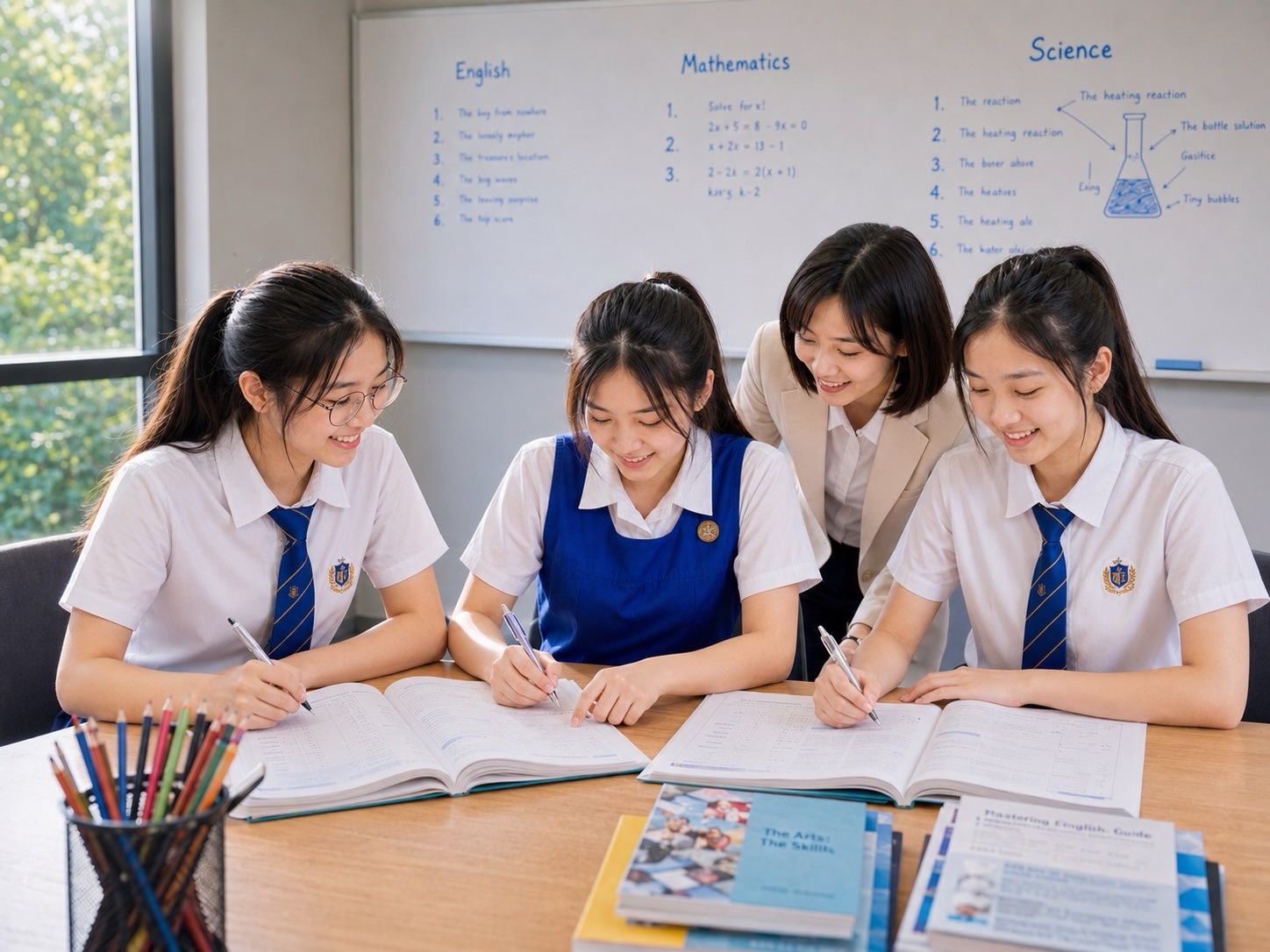
Originally published 20 February 2015 as a Yishun Primary 3 Science tuition-centre page. Rebuilt in 2026 as a noindexed inquiry companion to the canonical Primary 3 Science guide. Old location, staffing, grade and service claims have been retired.
Quick answer: P3 Science practice should teach students how to turn curiosity into evidence. That means classifying by explicit rules, separating observation from inference, changing conditions deliberately, recording results, identifying patterns and explaining only what the evidence supports.
This page is intentionally noindex because its role is practical inquiry support, not a second competing P3 Science canonical article. It is not a current Yishun tuition listing. For current eduKate enquiries, use the Contact page.
P3 is where everyday curiosity becomes formal Science
Under the current MOE Primary Science structure, formal Science begins at Primary 3. Students encounter diversity of living and non-living things, materials, life cycles and magnets while also developing scientific practices that continue through P6.
The important move is from simply knowing an answer to being able to say how we know.
Practice 1: classification with explicit rules
Give the child a small collection of safe objects or pictures and ask for a grouping rule.
- State the property used.
- Sort the objects.
- Check whether every object in the group satisfies the rule.
- Find one borderline example.
- Regroup the same objects using a different property.
This teaches that categories are built from criteria. A good classification can be inspected and challenged.
Practice 2: observation versus inference
Present a picture, simple setup or familiar object and ask the learner to separate statements into two columns.
- Observed: directly visible or measurable.
- Inferred: an explanation or conclusion built from what was observed.
Example: “The soil looks dry” is an observation. “The plant has not been watered” is an inference. The inference may be plausible, but other explanations could exist.
Practice 3: one changed condition
P3 students can begin to understand the logic of variables without needing advanced terminology at every moment.
If we want to know whether surface type affects how far a toy rolls, change the surface while keeping the toy and release method as similar as practical. If several conditions change together, we become less certain which one caused the difference.
This is the foundation of fair testing.
Practice 4: magnets as an inquiry system
Magnets are useful because the interaction can be seen and repeated.
- Which materials are attracted?
- Are all metals attracted?
- What happens when like poles face each other?
- What happens when unlike poles face each other?
- Does increasing distance change the observable effect?
Ask the child to predict before testing, then compare the result with the prediction.
Practice 5: life-cycle evidence
Life cycles should be more than picture sequencing. Students can compare organisms and identify what changes, what repeats and what differs.
- What is the sequence?
- Which stage comes before or after another?
- Which organisms have visibly different juvenile forms?
- Which stages repeat across generations?
- What evidence tells us the order?
Practice 6: materials and function
Give the learner a design problem: choose a material for an umbrella, a window, a towel or a container.
The reasoning should be:
required function → relevant property → suitable material.
This is stronger than memorising a list because the student must connect a property to a purpose.
A simple inquiry record
- Question: what are we trying to find out?
- Prediction: what do we expect and why?
- Changed condition: what will we deliberately vary?
- Kept similar: which important conditions should remain comparable?
- Observed: what happened?
- Conclusion: what does the evidence support?
- Unresolved: what can we not yet conclude?
This format helps students understand that an investigation is a chain of decisions rather than a ritual of filling boxes.
Evidence before explanation
A useful P3 habit is to state the evidence first.
Evidence: the material became wet all the way through.
Interpretation: the material is absorbent.
Application: it may be suitable for a towel.
That sequence reduces unsupported guessing.
Command words are already scientific tools
- State: provide the required fact.
- Describe: say what is observed.
- Compare: identify the relevant similarity or difference.
- Explain: connect a scientific idea to the result.
- Predict: state an expected outcome based on a relationship.
- Suggest: propose a reasonable possibility consistent with the evidence.
A child who understands the Science can still lose marks if the answer performs the wrong job.
Repairing weak explanations
When an answer is incomplete, find the earliest missing link.
- What fact or relationship should be used?
- Which observation from the question matters?
- How does that scientific idea explain the observation?
- Has the learner stated the effect clearly?
A useful frame is condition → scientific relationship → effect. It should guide reasoning, not become a memorised sentence template.
Transfer: change the surface
After a concept is learned, change the context. A student who understands absorbency should recognise it in a different material problem. A student who understands magnetic attraction should cope when the picture orientation changes. A student who understands classification should be able to invent and defend a new grouping rule.
If success disappears as soon as the worksheet looks different, the learning is not yet stable.
A P3 error ledger
- Observation error: relevant evidence missed.
- Classification error: rule inconsistent.
- Concept error: scientific relationship misunderstood.
- Inference error: conclusion exceeds evidence.
- Variable error: too many conditions changed.
- Command error: question task misread.
- Language error: idea known but expressed vaguely.
- Transfer error: familiar idea not recognised in a new context.
How parents can measure progress
- the child can state the rule used for grouping;
- observation and inference are increasingly separated;
- predictions include reasons;
- the learner can say what was changed and what was kept similar;
- conclusions refer back to evidence;
- new contexts are handled with less prompting;
- corrections survive after a delay.
What not to conclude
- This historical URL is not a current Yishun service listing.
- More worksheets do not automatically create stronger inquiry skills.
- A plausible explanation is not automatically proven.
- Difficult vocabulary is not a substitute for evidence.
- A single successful question does not prove transfer.
- No tuition programme can responsibly guarantee a PSLE result.
Canonical route: Primary 3 Science — Observation, Classification, Life Cycles, Magnets and Evidence.
Primary 3 Scientific Inquiry Is About Learning How to Find Out
Primary 3 Science is the point where curiosity can become more systematic. Children are ready to move beyond noticing into simple classification, prediction, fair comparison, evidence recording and explanation. The emphasis should remain developmental: build the habits that later inquiry depends on rather than racing into upper-primary exam language.
Classification Requires a Criterion
A classification is only useful when the child can state the property used to group objects or organisms. Colour, material, body covering, number of legs, magnetic response and other observable properties can form valid criteria.
Students should learn that the same objects can be classified differently when the criterion changes.
Use Examples and Non-Examples
To sharpen a category, include something that almost fits but does not. Ask the child what decisive property excludes it. Non-examples prevent categories from becoming vague.
Evidence Should Come Before Explanation
Ask the child to state what was observed before giving a reason. This keeps evidence and interpretation separate long enough for the learner to see how one supports the other.
Prediction Is a Claim About the Future
A prediction should include a reason. “I think the wet cloth will dry faster near moving air because…” makes the child’s current model visible.
Variables Can Begin in Everyday Language
At Primary 3, students can use “the thing we changed”, “the thing we observed” and “the things we kept the same”. Once meaning is secure, formal terms can be introduced gradually.
Fair Tests Need One Main Change
If two setups differ in several ways, it becomes difficult to know which change caused the result. Children can understand this intuitively before they learn more formal experimental language.
Recording Evidence
Simple tables, labelled drawings and measurements make evidence easier to compare. A record should be clear enough that someone else can understand what happened.
Tables Need Headings
Teach children to label columns and rows. Organised evidence supports better comparison and prepares them for later graph work.
Measurement Makes Observation More Precise
“The plant grew” becomes more informative when the child records centimetres over several days. Measurement connects Mathematics and Science naturally.
Repeat Observations When Needed
One surprising result should not automatically become a rule. Repeat a simple activity where safe and compare. Children learn that evidence can be checked.
Conclusion Should Match the Evidence
Children should avoid claims broader than what they observed. If they compared two materials, the conclusion should stay with those materials rather than describe every material in the world.
Classification Activity: Living Things
Use observable characteristics and simple life processes. Avoid relying only on movement, because some living things do not move visibly while non-living objects can move.
Classification Activity: Materials
Sort by transparency, flexibility, absorbency or magnetic response. Then ask how the property affects possible uses.
Inquiry Activity: Magnets
Predict which safe objects are attracted, test them and organise results. Then ask whether appearance was a reliable predictor.
Inquiry Activity: Shadows
Change one distance in a simple shadow setup and observe the effect. Record before and after. This creates an intuitive controlled comparison.
Inquiry Activity: Absorbency
Use equal-sized safe samples and similar amounts of water. Predict, test and compare. Ask why keeping sample size similar makes the comparison stronger.
Inquiry Activity: Plant Growth
Observe one plant over time or compare two plants under clearly different conditions. Keep records simple and focus on changes the child can actually observe.
Use “I Notice / I Think / I Wonder”
This routine separates evidence, interpretation and curiosity. It remains useful well beyond Primary 3.
Use Cause-and-Effect Sentences
Simple frames such as “Because ___ changed, ___ happened” can help children express relationships. The frame should eventually fade as the student becomes more independent.
Science Language Should Grow From Experience
Words such as classify, variable, evidence and conclusion become more meaningful when the child has already performed the action those words describe.
Questions Need Scope
Teach children to notice whether the task asks what happened, why it happened or what might happen next. These require different responses.
Correction Should Invite Revision
Instead of giving the final sentence, ask what evidence is missing or what relationship needs clarification. The child should produce the improved answer.
Wrong Ideas Can Be Useful
If a prediction is wrong, compare it with the result and ask what model should change. Science grows through revision of ideas.
Build an Inquiry Notebook
- question;
- prediction and reason;
- what was changed or compared;
- what was observed;
- conclusion;
- new question.
Keep the Notebook Light
The purpose is to organise thinking, not reproduce an adult laboratory report. One page can be enough.
Small-Group Inquiry
Let students make predictions independently before sharing. Different predictions create a reason to pay attention to the result.
Parents: Ask for Evidence
A useful home question is “What did you observe that makes you think that?” It encourages children to connect claims to evidence.
Preparing for Primary 4
By the end of Primary 3, students should be comfortable observing, classifying, predicting, recording and revising ideas after evidence. Primary 4 can then build stronger question reading and explanation.
Final Guide
Primary 3 Scientific Inquiry Practice should teach children how to find out, not merely what to remember. Classification, evidence, variables and explanation are the tools that turn curiosity into disciplined inquiry.
A Complete Primary 3 Inquiry Practice System
Primary 3 inquiry should be repetitive in structure but varied in content. The child can investigate magnets one week, materials the next and plant growth later, while using the same thinking sequence: question, prediction, controlled comparison, evidence, conclusion and new question.
Practice 1: Classification With Two Rules
Give a small set of objects and ask for one way to classify them. Then require a second valid classification. The child learns that categories depend on criteria rather than existing naturally in only one form.
Practice 2: Build a Classification Key
Use simple yes/no questions to separate objects into groups. This introduces decision-tree thinking and forces criteria to remain consistent.
Practice 3: Observation Versus Inference
Show a picture or real safe setup. Ask students to write two observations and one inference. Discuss why the inference is reasonable but not directly seen.
Practice 4: Prediction With Evidence
Use a familiar setup and ask for a prediction plus one reason based on earlier experience or a known property. Prediction quality improves when reasons become more specific.
Practice 5: Fairer Test
Present a flawed comparison in which two conditions change. Ask students how to make the comparison fairer. This is often easier than designing an experiment from scratch.
Practice 6: Changed, Measured, Kept the Same
For a simple investigation, identify the thing changed, the result observed and the important conditions kept similar. Use plain language first, then connect to formal variable vocabulary.
Practice 7: Evidence Table
Record several observations in a table with clear headings. Ask the child to write one sentence that summarises the pattern.
Practice 8: Repeated Trial
Repeat a simple test and compare results. Discuss whether the repeated outcome is similar and what should happen if one trial is very different.
Practice 9: Conclusion Boundaries
After comparing two materials, ask which conclusion is supported and which is too broad. Students learn to keep claims close to evidence.
Practice 10: New Question From Old Evidence
After a conclusion, ask what new question the result creates. Inquiry should be cyclical rather than ending with one answer.
Classification and Life Cycles
Life-cycle stages can be classified by appearance, function or similarity to adult form. Students can compare organisms and state the criterion for each grouping.
Classification and Materials
Sort materials by observable properties, then connect each property to possible use. This bridges classification and design thinking.
Classification and Magnets
Use test results to sort magnetic and non-magnetic objects. Include objects whose appearance could mislead. Evidence should override assumptions.
Classification and Light
Compare materials by how much light passes through. Students can move from descriptive language toward transparent, translucent and opaque.
Build Explanation Chains
Use simple cause → process → result chains. Primary 3 explanations can remain short, but they should show a relationship rather than only a term.
Use Sentence Frames Temporarily
“Because ___, ___ happened.” “The evidence shows ___ because ___.” Sentence frames can support early explanation, then fade as language control improves.
Build Scientific Vocabulary Through Use
Words such as observe, compare, classify, variable, evidence and conclusion should appear in real activities. Definition-only learning is fragile.
Use Oral Reasoning First
Ask the child to explain the result aloud before writing. Oral language can reveal missing reasoning while reducing writing load.
Then Move to Written Precision
Once the reasoning is clear, write one or two concise sentences. The aim is to preserve meaning, not create long answers.
Use Error Families Early
- observation error;
- classification rule error;
- prediction without reason;
- unfair comparison;
- missing evidence;
- conclusion too broad;
- unclear explanation.
Retest Inquiry Skills Across Topics
If a child learns fair comparison with absorbency, test the same idea later with magnets or plant conditions. Process skills should travel.
Use Mini-Inquiries Instead of Long Projects
A fifteen-minute comparison with one good question can teach more than a complex project that overwhelms attention. Keep the scientific decision visible.
Use Longer Projects for Change Over Time
Plants, weather and shadows can justify repeated observations across days. Longitudinal projects teach patience and consistent recording.
Small-Group Roles
One student can observe, another record, another check conditions. Rotate roles so every child practises each skill.
Responsibility in Inquiry
Students should handle materials safely, avoid harming living things and clean up after activities. Scientific behaviour includes care.
Use Books as Evidence Sources
Some questions cannot be tested directly. Teach children to use age-appropriate books or trusted institutional resources and distinguish reading evidence from experimental evidence.
Use “How Do We Know?”
This prompt encourages children to identify whether the answer came from observation, a test, a book or another source.
Use “What Would Change Your Mind?”
This is an advanced idea expressed simply: what evidence would make you revise your explanation? It teaches openness to new information.
A Four-Week P3 Inquiry Cycle
- Week 1: observe and classify.
- Week 2: predict and compare.
- Week 3: improve a fair test.
- Week 4: record, conclude and transfer the process to a new topic.
A Primary 3 Inquiry Portfolio
Keep one classification, one table, one prediction, one investigation and one explanation. Review at term end to see how precision has improved.
Preparing for Primary 4
Primary 4 will demand stronger question reading and explanation. The P3 child who already uses evidence and understands fair comparison has a strong base.
Final Inquiry Standard
A Primary 3 learner should increasingly be able to ask a focused question, make a reasoned prediction, compare fairly, record evidence and revise an explanation. That process is more important than memorising a long list of isolated facts.
A Primary 3 Inquiry Troubleshooting Guide
Young learners often understand the activity but struggle to express the scientific process. Troubleshooting should target the exact step that failed.
Problem: The Child Cannot Form a Question
Offer a contrast: Which material absorbs more? Which object rolls farther? Which condition changes the shadow? A focused comparison can become the question.
Problem: Prediction Has No Reason
Ask what happened last time or what property the child already knows. Use prior evidence to support the prediction.
Problem: Too Many Things Change
Circle the main thing being tested and ask which other conditions should stay similar. Keep the explanation concrete.
Problem: Evidence Is Not Recorded
Use a simple table or drawing. Ask what another person would need to know to understand the result.
Problem: Conclusion Is Too Broad
Return to the exact cases tested. Ask whether the evidence supports every object or only the two compared.
Problem: Vocabulary Replaces Reasoning
Ask the child to explain the idea in ordinary language first. Then add the scientific term.
Problem: The Child Fears Being Wrong
Celebrate useful revision. A changed idea after evidence is a scientific success, not a failure.
Problem: Activity Is Too Complex
Reduce the number of objects, variables or steps. Keep the inquiry decision visible.
Problem: Child Copies a Peer
Ask for independent predictions before group discussion. This preserves each learner’s thinking.
Problem: Child Cannot Explain the Result
Use cause-and-effect prompts: What changed? What happened because of that? Which evidence supports it?
A Primary 3 Inquiry Checklist
- focused question;
- prediction with reason;
- clear comparison;
- relevant evidence;
- bounded conclusion;
- willingness to revise;
- new question.
A Primary 3 Inquiry Reflection
After the activity, ask what the child would keep the same and what they would improve next time. This introduces method evaluation without advanced terminology.
A Primary 3 Transfer Reflection
Ask where the same inquiry skill could be used again. If fair comparison was learned with absorbency, could it be used with rolling objects? Process transfer is the main goal.
The Final P3 Inquiry Standard
Primary 3 inquiry is secure when the child can organise a simple investigation with increasing independence and explain how the evidence affected the conclusion.
A Year of Primary 3 Inquiry Practice
Primary 3 Science should gradually shift from free discovery toward organised inquiry. Children are ready to keep simple records, compare conditions and explain why one observation supports a conclusion. The aim is not to make every activity formal; it is to give curiosity a repeatable structure.
Term 1: Classification and Observable Properties
Use objects, leaves, materials and simple organisms to practise grouping by one stated property. Ask the child to create a rule, apply it consistently, then create a different valid rule for the same set.
Classification Challenge: Build a Decision Tree
Ask yes-or-no questions that divide a group: Is it magnetic? Is it transparent? Does it have this visible feature? A simple decision tree teaches that classification can be systematic.
Term 1: Examples and Non-Examples
For each category, include one item that does not belong. Ask which property excludes it. This sharpens conceptual boundaries and reduces vague grouping.
Term 2: Prediction and Fair Comparison
Move into simple investigations where one main factor changes. Use absorbency, shadows, rolling distance, plant observations or magnets. Children should predict first and explain the reason.
Fairness Challenge: What Should Stay the Same?
Give an intentionally unfair setup and ask the child what else changed. This makes controlled comparison visible before formal variable terminology becomes central.
Term 2: Repeat for Reliability
Repeat one safe test several times. If results differ, ask why. The child learns that method consistency affects evidence quality.
Term 3: Recording and Data
Use simple tables with clear headings. Record object, condition and result. Where a measurement is useful, include units. Then ask the child to write one sentence describing the pattern.
Data Challenge: Build a Bar Chart
For simple counts or measurements, convert a table into a bar chart. Read the chart back into words. Children learn that data can be represented more than one way.
Term 3: Observation Versus Inference
Use two columns: “I observed” and “I think”. This helps children see that conclusions are built from evidence rather than identical to evidence.
Term 4: Explanation and Transfer
Ask children to use a known concept in a changed situation. The surface can change while the scientific relationship remains. This is the first deliberate step toward upper-primary transfer.
Transfer Challenge: New Object, Same Property
If the child understands absorbency with cloth and tissue, ask which new material might make a good towel or rain cover and why. The property becomes a tool for decision-making.
Transfer Challenge: New Setup, Same Logic
If the child understands fair comparison with rolling objects, apply the same logic to shadows or plant growth. The student learns that inquiry principles travel across topics.
Teach Cause and Effect Without Over-Formalising
Use simple sentence structures such as “Because ___ changed, ___ happened.” The child should understand the relationship before the teacher introduces more technical language.
Teach Evidence Language
Useful phrases include “The results show…”, “I observed…”, “This suggests…” and “In this test…”. These phrases help children keep conclusions tied to evidence and scope.
Teach Question Scope Early
Ask whether the question wants an observation, prediction, comparison or explanation. Children who recognise task type early are better prepared for Primary 4.
Use Oral Reasoning Before Written Reasoning
Let the child explain aloud before writing. If the causal chain is unclear in speech, written explanation will usually be difficult too.
Use Mini Whiteboard Science
One student writes the observation, another the prediction, another the conclusion. Compare whether the three statements are logically connected. Small groups make reasoning visible.
Use Error Types Gently
- observation missing;
- sorting rule inconsistent;
- prediction has no reason;
- comparison unfair;
- record unclear;
- conclusion too broad;
- explanation not linked to evidence.
Correction Should Rebuild the Thinking
If the conclusion is too broad, ask which exact evidence supports it. If the comparison is unfair, ask what else changed. The child should perform the repair rather than copy the teacher’s sentence.
Use Delayed Retests
Return to the same inquiry habit in a new topic after several days. If the student remembers to compare fairly or record evidence without prompting, the process is transferring.
Use Science Reading to Extend Inquiry
After a hands-on question, read a short age-appropriate text that explains the phenomenon more deeply. The child sees that investigation and research can work together.
Use Museums and Parks
Ask the same inquiry questions outside the classroom: What do you notice? What property matters? What evidence supports that? Real settings help transfer.
A Primary 3 Inquiry Week
- Monday: observe and classify.
- Tuesday: ask and predict.
- Wednesday: test or compare safely.
- Thursday: record and interpret.
- Friday: explain and ask a new question.
The Final P3 Inquiry Standard
By year-end, the child should increasingly be able to state the question, make a reasoned prediction, compare under sensible conditions, record what happened and explain what the evidence suggests. That is a strong bridge into Primary 4 Science.
The Final Primary 3 Inquiry Routine
By the end of Primary 3, a student should increasingly be able to move through a small inquiry without adult operation. The learner identifies the question, predicts with a reason, decides what should be compared, records what happened and states what the evidence suggests.
A useful end-of-year challenge is to give the child a familiar phenomenon but no worksheet. Ask the learner to design a simple way to observe or compare it safely. The adult can then discuss whether the proposed method would answer the question clearly.
This is a stronger test than asking the child to recite definitions of observe, predict or variable. The student has to use those ideas as part of one coherent process.
Inquiry Independence Checklist
- states the question clearly;
- gives a reasoned prediction;
- uses a consistent comparison;
- records relevant evidence;
- keeps observation separate from inference;
- draws a conclusion that matches the evidence;
- changes the explanation when the result disagrees.
When these behaviours begin to appear without repeated prompting, the child is ready for the stronger evidence and explanation demands of Primary 4.
Primary 3 inquiry becomes stronger when children can explain why their method would answer the question. A good method is not merely a sequence of actions; it is a plan that produces relevant evidence.
For example, if the question is which material absorbs more water, the child should recognise that sample size and water amount should be comparable. If the question is how a shadow changes, the child should know which position is being changed and what observation will be recorded.
This link between question and method is the foundation of later experimental design.
The final Primary 3 standard is therefore not memorising inquiry vocabulary. It is using a simple inquiry process coherently from question to evidence to conclusion.
Primary 3 inquiry should also include method reflection. After a simple investigation, ask whether the chosen method really answered the question. If not, what would need to change? This teaches children that an investigation is not automatically good just because an activity happened. Question, method and evidence must fit together. By the end of the year, that coherence is more important than memorising scientific terminology in isolation.
Primary 3 inquiry should also teach children to distinguish a method that merely produces an activity from a method that actually answers the question. If the question asks which material absorbs more water, the comparison must create evidence about absorbency. This question–method fit is one of the most important inquiry habits to carry into Primary 4.
The final Primary 3 inquiry habit is to connect the method to the question. The child should increasingly know why a particular observation or comparison will produce evidence relevant to the problem, rather than simply following activity instructions without understanding their purpose.
Primary 3 inquiry is ready for the next stage when the child can link question, method, evidence and conclusion without relying on the adult to supply every step.
Inquiry becomes independent when the child can connect question, method, evidence and conclusion without waiting for the adult to supply the structure.
Independent inquiry links question, method, evidence and conclusion.
Inquiry transfers.