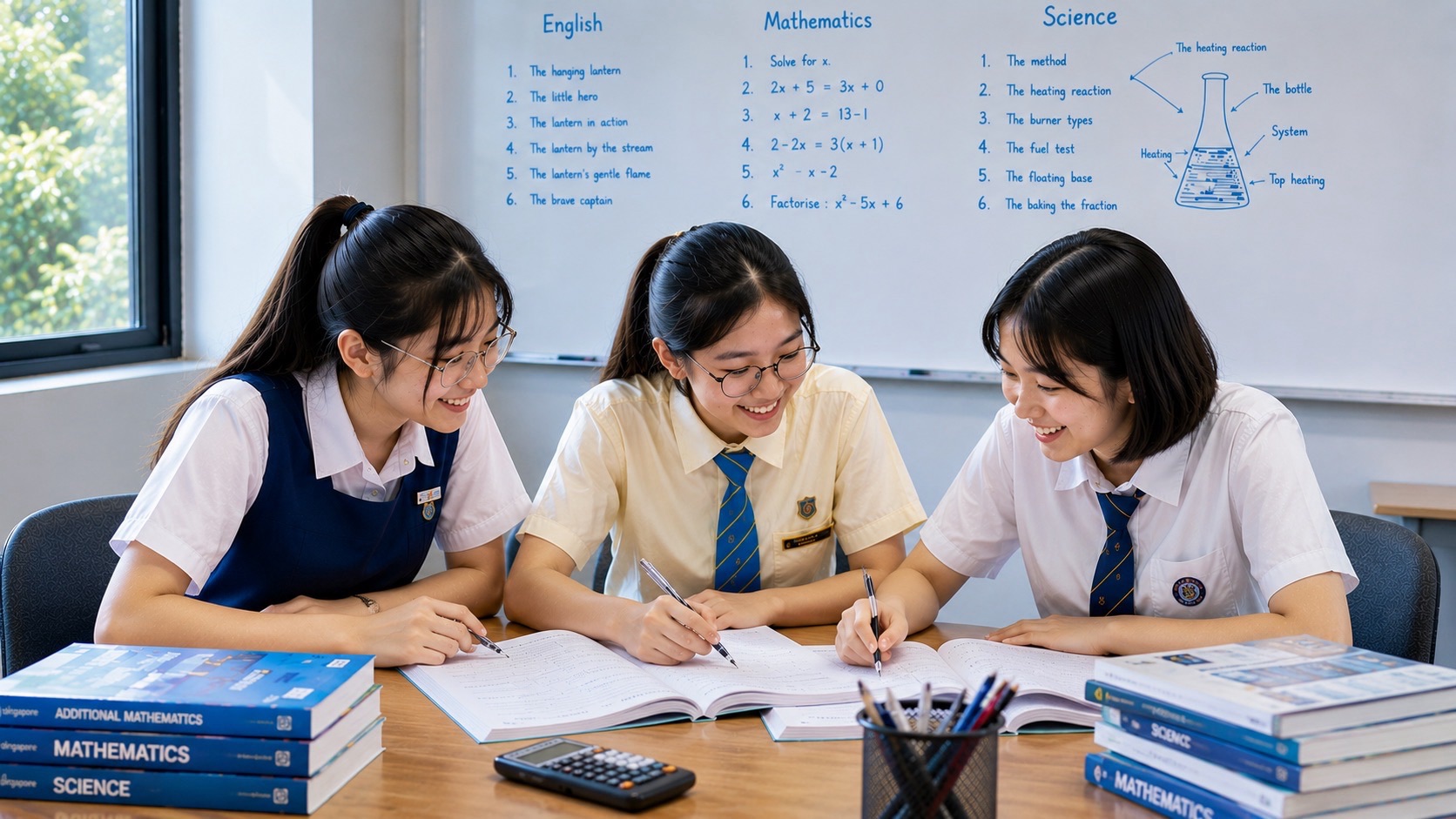
Mastering the Basics: Secondary 1 English Editing Skills under MOE SEAB GCE O Levels English Syllabus
Every student’s journey to the GCE O Levels begins with a strong foundation in lower secondary, where they start learning and applying essential English language skills. As part of this journey, Secondary 1 students will begin to encounter the editing section, a key component of the English examination. This article seeks to guide you on what to learn for the Secondary 1 editing section under the MOE SEAB GCE O levels English Syllabus.
- Importance of editing skills in the Secondary 1 English curriculum under the MOE SEAB GCE O Levels English Syllabus.
- The role of mastering basic editing skills in improving Secondary 1 English examination scores.
- The components of basic editing skills, including identification and rectification of errors related to grammar, punctuation, sentence structure, spelling, and word usage.
- Strategies, techniques, and exercises provided in the article to reinforce basic editing skills in line with the MOE SEAB GCE O Levels English Syllabus.
- The necessity of regular practice to master editing skills, such as a daily or weekly routine involving editing exercises.
- The benefits of tuition in providing guided assistance, detailed feedback, and personalised instruction in editing.
- The inclusion of a section in the Secondary 1 English paper dedicated to editing.
- Common mistakes students make while editing, such as overlooking punctuation errors, misidentifying parts of speech, and not recognizing incorrect verb tenses or subject-verb agreement.
- The increase in complexity and range of errors to be identified and corrected with each level under the MOE SEAB GCE O Levels English Syllabus.
- The impact of mastering basic editing skills on the overall O Levels English score, particularly through improved accuracy and clarity of written work.
- The scope for continuous improvement in editing skills, particularly with more complex sentence structures and advanced grammar rules.
- The recommended order of learning editing skills, starting with basics such as spelling and punctuation before moving onto more complex areas like sentence structure and grammar.
- Time management strategies during the examination for the editing section, such as allocating approximately 10-15% of the total examination time to editing.
- The availability of resources such as grammar books, online exercises, worksheets, and practice papers to improve editing skills.
- The correlation between improvement in editing skills and enhancement of writing skills.
- Ways parents can support their child in mastering editing skills at home, such as providing practice materials, encouraging regular practice, reviewing their work, and providing feedback.
- The distinction between editing and proofreading, with editing involving changes for better content understanding, and proofreading focusing more on correctness, i.e., spelling, grammar, and punctuation.
- The relevance of mastering editing skills in preparing for the GCE O Levels English examination.
- The applicability of editing skills learnt in Secondary 1 throughout the student’s academic journey and beyond.
- Common misconceptions about learning editing skills, such as the incorrect belief that editing skills only involve fixing spelling mistakes, whereas they also include grammar, punctuation, sentence structure, and overall clarity and coherence of written content.
The Importance of Editing Skills in Secondary 1
Starting from Secondary 1, students get their first exposure to editing tasks. This early introduction allows them ample time to build and refine their editing skills in preparation for their O Levels. These skills include identifying and correcting errors related to grammar, vocabulary, punctuation, and spelling.
Key Learning Points for Secondary 1 Students in the Editing Section
For Secondary 1 students, the focus is on establishing a solid foundation of the basic rules of English language use. Here are the key areas they need to learn:
- Understanding the Basic Grammar Rules: This includes subject-verb agreement, use of tenses, prepositions, articles, and basic sentence structure.
- Building Vocabulary: Students should start building a strong vocabulary bank. This involves learning new words, their meanings, and correct usage in different contexts.
- Basic Punctuation Rules: Students should understand how to correctly use punctuation marks such as full stops, commas, apostrophes, and question marks.
- Spelling: Spelling forms the cornerstone of the English language. Students should work on spelling of commonly used words, homophones, and other words that are often misspelled.
Tips to Improve Secondary English Editing Skills
Here are some effective strategies to improve Secondary 1 English editing skills:
- Regular Grammar Exercises: Consistent practice can help students understand and remember grammar rules better.
- Reading: Encourage regular reading to expand vocabulary and understanding of language use.
- Use of Dictionaries and Thesauruses: These can help students learn new words and their correct usage.
- Practice Editing Tasks: Regularly working on editing tasks can help students get accustomed to identifying and correcting errors.
- Feedback and Correction: Teachers and tutors can provide valuable feedback and corrections, helping students understand their mistakes and learn from them.
Starting Secondary English editing skills training at Secondary 1 gives students a head start in preparing for their O Levels. It is never too early to build a strong foundation, and with consistent practice and guidance, students can steadily improve their English language mastery. At Punggol English Tuition, we provide a structured approach and nurturing environment to help students develop their English editing skills, setting them on the path to success in their English language journey.
Have a look at our Secondary Materials:
- To are our main page: Secondary English Tuition
- Latest GCE O’levels syllabus are found here
- This is the Official Website of Singapore Ministry of Education
1. Question: Why are editing skills important in the Secondary 1 English curriculum under the MOE SEAB GCE O Levels English Syllabus?
Answer: Editing skills are vital for identifying and correcting grammatical errors, ensuring clarity and precision in written communication, which are integral parts of the O Levels English Syllabus.
2. Question: How can mastering basic editing skills help my child in their Secondary 1 English examinations?
Answer: Mastering editing skills will enable students to effectively self-check and correct their work, minimizing errors, and increasing their overall marks.
3. Question: What constitutes basic editing skills?
Answer: Basic editing skills include identifying and rectifying errors related to grammar, punctuation, sentence structure, spelling, and word usage.
4. Question: How does this article aid in improving my child’s editing skills for the O Levels English Syllabus?
Answer: The article provides strategies, techniques, and exercises to reinforce basic editing skills, aligning with the MOE SEAB GCE O Levels English Syllabus.
5. Question: How often should my child practice editing skills to master them?
Answer: Regular practice is key. A daily or weekly routine involving editing exercises would be beneficial.
6. Question: Can my child improve their editing skills on their own or should they get tuition?
Answer: Improvement can be made through independent practice, but a tutor can provide guided assistance, detailed feedback, and personalised instruction.
7. Question: Does the Secondary 1 English paper include a section dedicated to editing?
Answer: Yes, there is typically a section in the paper that tests students’ ability to identify and correct language errors.
8. Question: What are some common mistakes students make while editing?
Answer: Common mistakes include overlooking punctuation errors, misidentifying parts of speech, and not recognizing incorrect verb tenses or subject-verb agreement.
9. Question: Are the basic editing skills the same for all levels under the MOE SEAB GCE O Levels English Syllabus?
Answer: While the foundational skills remain the same, the complexity and range of errors to be identified and corrected may increase with each level.
10. Question: How does the mastering of basic editing skills impact the overall O Levels English score?
Answer: Mastery of editing skills can improve the accuracy and clarity of a student’s written work, directly impacting their score.
11. Question: Can my child’s editing skills continue to improve even if they are already good at it?
Answer: Yes, there’s always room for improvement, particularly with more complex sentence structures and advanced grammar rules.
12. Question: Is there a particular order in which my child should learn editing skills?
Answer: It may be helpful to start with the basics such as spelling and punctuation before moving onto more complex areas like sentence structure and grammar.
13. Question: How much time should my child spend on the editing section during the examination?
Answer: It varies depending on the length and difficulty of the paper, but a rough guide is to spend approximately 10-15% of the total examination time on editing.
14. Question: What resources can my child use to improve their editing skills?
Answer: They can use grammar books, online exercises, worksheets, and practice papers. The strategies and exercises in the article would also be beneficial.
15. Question: Does improvement in editing skills also mean improvement in writing skills?
Answer: Yes, editing skills can help enhance writing skills by ensuring grammatical accuracy and clarity of expression.
16. Question: How can I support my child in mastering editing skills at home?
Answer: You can provide them with practice materials, encourage regular practice, review their work and provide feedback, and foster a conducive environment for learning.
17. Question: What is the difference between editing and proofreading?
Answer: While they are often used interchangeably, editing typically involves making changes that make the content better or more understandable, while proofreading focuses more on correctness, i.e., spelling, grammar, and punctuation.
18. Question: How does mastering editing skills prepare my child for the GCE O Levels English examination?
Answer: Mastering editing skills ensures that the student is capable of producing clear, error-free written communication, a skill highly valued in the O Levels English examination.
19. Question: Are the editing skills learnt in Secondary 1 applicable for the rest of the student’s academic journey?
Answer: Yes, the editing skills learnt in Secondary 1 are foundational and applicable throughout their academic journey and beyond.
20. Question: Are there any common misconceptions about learning editing skills?
Answer: A common misconception is that editing skills only involve fixing spelling mistakes, whereas they also encompass grammar, punctuation, sentence structure, and overall clarity and coherence of written content.
Click here to enrol at eduKateSingapore.com
