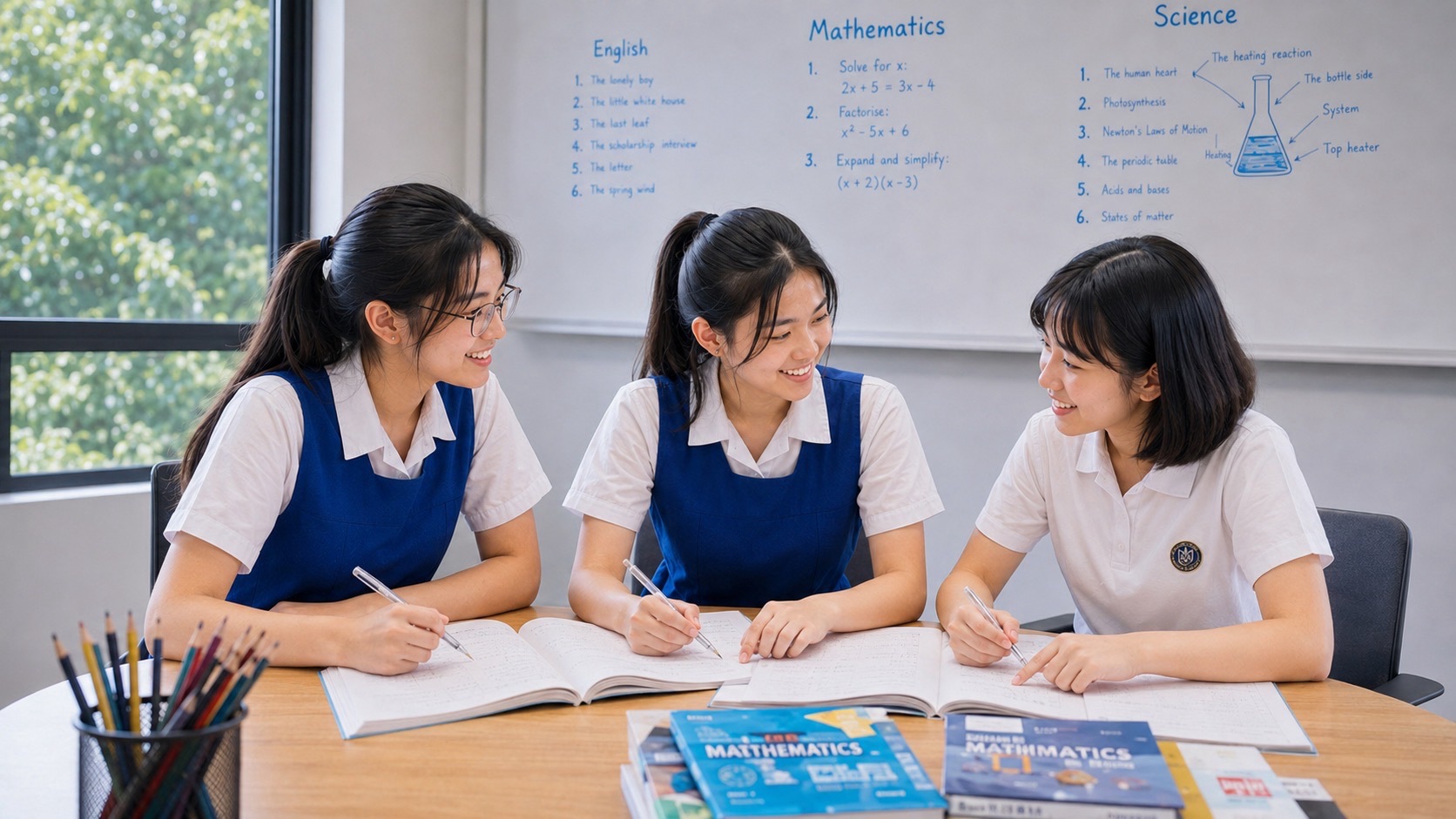
Top Rated Small Group Math Tuition Bukit Timah 3 Pax Success Stories
A small Mathematics class is useful when it reveals thinking that a larger room can hide.
That is the central job of this page.
We already have a separate guide explaining why eduKate Singapore uses a maximum three-student Mathematics group. This page goes deeper into a different question: what becomes observable when a Mathematics class is small enough to compare live reasoning?
The three-student room can function as a Mathematics observation lab. A tutor can watch the first line, the hesitation before the first line, the choice of representation, the size of the hint required, the moment a student copies another route, the point where algebra diverges and the moment an answer should have looked suspicious.
Final answers tell us whether the student arrived. Small-group observation can tell us how the student travelled.
Quick Read for Parents
- Small-group tuition is not automatically good tuition. The class becomes valuable only if the smaller room changes diagnostic visibility, feedback and independence.
- Peer contrast is useful. Two students can solve the same question differently or reach the same wrong answer for different reasons.
- Tutor silence is part of the model. If the tutor explains continuously, the learner’s independent state remains hidden.
- Three students can create comparison without losing individual visibility. That is the design rationale, not a claim that three is a universal magic number.
- Evidence supports targeted small-group tutoring generally. The Education Endowment Foundation defines small-group tuition as two to five pupils and reports positive average effects, but this does not guarantee any particular eduKate result.
- The exit condition matters. The class is working when students increasingly recognise, represent, choose, execute, verify and recover with less rescue.
Parents can read the EEF Small Group Tuition evidence review. For tuition-value decisions, use Math Tuition Value | Resolution per Hour.
1. What Are We Trying to Observe?
Every Mathematics solution has a visible output and a partly hidden process.
The visible output includes:
- the final answer;
- the written working;
- the marks received;
- the time taken.
The hidden process includes:
- what the student noticed first;
- what they ignored;
- which representation they considered;
- which method they almost chose;
- why they changed route;
- whether they recognised an error internally;
- how much help was needed;
- whether another student’s answer influenced them;
- how confident they were before evidence justified confidence.
The observation lab exists to make more of that hidden process inspectable.
The Six Signals We Watch Most Closely
| Signal | What it may reveal |
|---|---|
| Delay before first line | Recognition, representation or retrieval difficulty |
| First line | Whether the problem was seen correctly |
| Erased or abandoned route | Method-selection uncertainty |
| Hint size | Whether knowledge is absent or merely inaccessible |
| Reaction to peer method | Understanding versus copying |
| Final check | Whether the student has independent verification habits |
A larger class can observe some of these. A small group gives the tutor more opportunities to observe them repeatedly across students and questions.
2. What the Evidence Says—and What It Does Not Say
The Education Endowment Foundation’s current small-group tuition toolkit defines the format as one educator working with two to five pupils. Its evidence synthesis reports an average positive effect equivalent to roughly four additional months of progress, while rating the evidence as moderate.
That finding supports targeted small-group tutoring as a general intervention. It does not prove that:
- every small group is effective;
- three students is always better than four or five;
- small group is always better than one-to-one;
- the same average effect applies to every age, subject or programme;
- an individual student will gain a particular number of marks;
- eduKate’s three-student model inherits research outcomes automatically.
The evidence gives us a reason to take targeted small-group tutoring seriously. The local programme still has to earn its value through good diagnosis, curriculum fit, teaching quality, student participation and transfer.
Why We Use Three as an Operating Ceiling
Our maximum of three is a design choice. It creates a useful balance between two competing needs:
- individual visibility: enough tutor bandwidth to observe each learner closely;
- peer contrast: enough other reasoning in the room to create comparison.
One-to-one gives maximum dedicated visibility but no natural peer comparison. A larger group gives more peer variety but reduces the amount of live individual observation possible in a fixed time. Three is the operating point we have chosen for our small-group model.
That does not mean every student belongs in it. Group fit remains a separate decision.
3. Hidden Error States: The Same Wrong Answer Can Mean Different Things
Imagine three students all obtain the same wrong answer.
Student A misread the relationship in the question. Student B represented it correctly but made an algebraic sign error. Student C copied Student B’s final line after having no independent route.
The output is the same. The learner states are not.
| Observed output | Possible hidden state | Useful intervention |
|---|---|---|
| Wrong answer | Concept missing | Teach the concept |
| Wrong answer | Representation wrong | Rebuild the model or equation |
| Wrong answer | Recognition failed | Compare similar-looking question families |
| Wrong answer | Execution error | Target algebra, arithmetic or notation |
| Wrong answer | Peer copying | Separate the student and retest independently |
| Wrong answer | No checking | Build an independent verification routine |
This is why small-group teaching needs observation before correction. If the tutor immediately supplies the correct method, the hidden state disappears.
Hypothetical Example: Three Students, One Simultaneous-Equation Problem
Consider a hypothetical small-group lesson. The tutor gives one word problem requiring simultaneous equations.
- Student A defines variables clearly and forms two correct equations, then makes an arithmetic mistake during elimination.
- Student B can solve simultaneous equations mechanically but forms the wrong equations because the verbal relationship is misunderstood.
- Student C watches A, copies the variable definitions and then completes the solution successfully.
If the tutor marks only the final work, C may appear strongest. If the tutor observes the process, the states become clearer:
- A needs execution control;
- B needs representation work;
- C needs an independent retest before any conclusion can be drawn.
The observation lab converts one question into three different diagnoses.
4. Peer Contrast: Comparison Is Useful Only When It Reveals Structure
Peer learning is often described vaguely as “students learn from each other”. That can be true, but it can also create copying, social conformity and shared misconceptions.
We use peer comparison for specific mathematical jobs.
Compare two valid routes
Which is shorter? Which is easier to verify? Which depends on a fact the other does not? Under what conditions would one route become preferable?
Find the first divergence
Two solutions begin the same way and then differ. Which line created the divergence? Was it a valid alternative or an error?
Explain another student’s method
Can the learner reconstruct why the route works rather than merely repeat the written lines?
Challenge an answer
What independent evidence would show the answer is plausible or impossible?
Peer contrast becomes useful when it increases mathematical visibility, not when it simply increases conversation.
Majority Agreement Is Not Mathematical Truth
A group introduces a social danger: if two students agree, the third may assume they must be right.
The tutor therefore keeps one invariant clear:
Mathematics is settled by valid reasoning and evidence, not by votes.
Students can use peers as sources of alternative thinking, but every route remains open to verification.
Representation Comparison Is Especially Powerful
Different students naturally choose different representations.
- one draws a diagram;
- one writes an equation;
- one builds a table;
- one reasons verbally first;
- one uses a graph.
The tutor can use those differences to ask which representation makes which property visible. Students learn that representation is a mathematical choice rather than a fixed teacher convention.
5. Teaching Runtime: Observation Before Intervention
Our standard small-group lesson is 1.5 hours. Within that lesson, the observation lab repeatedly cycles through a short process:
Present → observe → discriminate → intervene → withdraw → retest.
Present
Give a task appropriate to the student’s current syllabus and learner state.
Observe
Do not help immediately. Watch the entry, representation, method choice and execution.
Discriminate
Is the failure knowledge, recognition, representation, retrieval, execution or verification?
Intervene
Give the smallest intervention likely to change the state: explanation, question, cue, example, algebra repair or check.
Withdraw
Remove the prompt and see whether the student can carry the process.
Retest
Change the surface or return after delay. The repair is not trusted until it survives outside the original cue.
Tutor Silence Is Data Collection
Silence can feel uncomfortable because tuition is a paid service and parents understandably expect teaching. But continuous explanation can destroy the very information needed to teach well.
If the tutor always says, “Use Pythagoras here”, we never learn whether the student would have recognised Pythagoras independently. If the tutor always corrects the sign immediately, we never learn whether the student has a self-checking routine.
Silence is useful when it is purposeful and temporary:
- observe the first attempt;
- measure retrieval;
- test method selection;
- see whether a peer cue changes behaviour;
- allow self-correction time;
- test recovery after an error.
The tutor is not absent. The tutor is measuring.
Hint Size Is a Diagnostic Variable
Not all help is equal.
| Hint | What success afterwards may suggest |
|---|---|
| “What is the question asking for?” | Attention or representation needed resetting |
| “Could a diagram help?” | Representation access was weak |
| “What topic does this resemble?” | Recognition was weak |
| “Remember simultaneous equations?” | Retrieval was weak but knowledge may exist |
| Full worked first step | More substantial scaffolding is required |
| Complete worked solution | Cannot yet conclude independent capability |
The smaller the hint that unlocks the student, the more precise the next teaching decision can become.
6. Transfer: The Group Should Not Become a Shared Cue
A small group can accidentally make students appear stronger because peers supply hidden cues.
One student mentions “quadratic”. Another notices and begins factorising. The solution is now correct, but the second student’s independent recognition has not been tested.
We therefore separate collaborative learning from independent transfer.
- use group comparison to expose ideas;
- change the question;
- separate the students’ work;
- remove verbal cues;
- observe independent entry;
- return after delay.
The group can help teach the route. Independence must still be tested outside the group cue.
The Peer-Cue Test
After a group discussion, give each student a related problem with changed surface features.
Then ask:
- Who can identify the structure alone?
- Who reproduces only the wording used by a peer?
- Who can explain why the method transfers?
- Who needs the group to re-create the cue?
This is where collaborative understanding becomes independent evidence.
Examination Preparation Changes the Observation Target
Closer to examinations, the tutor observes a different set of variables:
- time spent before the first productive line;
- question-selection and paper-navigation choices;
- whether a difficult question destabilises the next one;
- accuracy under time;
- checking behaviour;
- recovery after an abandoned route;
- whether old topics remain retrievable.
The room remains small, but the observation target changes from concept construction towards examination control.
For the full exam system, use The Mathematics Examination Runtime.
7. Red-Team the Small Group: How Can the Format Fail?
A good programme should actively look for ways its own class format can mislead it.
Failure 1: The fastest student becomes the hidden tutor
The fastest learner answers first, names the topic and unintentionally supplies cues. The other students appear stronger than they are.
Repair: use silent starts, independent first attempts and rotating explanation roles.
Failure 2: Social agreement replaces proof
Two students agree on an answer, and the third yields.
Repair: require independent mathematical verification.
Failure 3: The tutor still lectures
The class has only three students, but the teaching model remains one-way explanation.
Repair: increase live attempts, observation, questioning and scaffold withdrawal.
Failure 4: Group mismatch
Students have incompatible curricula or learner states, so the tutor fragments attention across unrelated work.
Repair: regroup or use another arrangement rather than forcing the class.
Failure 5: Students become cue-dependent on one another
Group discussion is strong, but independent transfer remains weak.
Repair: separate students for transfer tests and delayed retrieval.
Failure 6: Small class is used as a marketing proof
The programme implies that “3-pax” itself guarantees grades.
Repair: judge the class by observable learning processes and actual student evidence, not by the number alone.
Group Fit: Who Can Use the Observation Lab Well?
- students who can work independently for short periods;
- students whose curriculum and pace are sufficiently compatible;
- students who can benefit from seeing alternative reasoning;
- students whose mistakes are visible in written or verbal working;
- students who need more individual visibility than a larger class provides;
- students who do not require continuous one-to-one regulation.
A student outside these conditions may still need excellent teaching—just not necessarily this class format.
8. World Return: What Should Change Outside the Small Group?
The observation lab is not successful because lessons look intelligent. It is successful when the student behaves differently elsewhere.
- school homework begins with less waiting;
- the first line is more often mathematically useful;
- the student can identify where confusion begins;
- hints become smaller;
- old topics return with less prompting;
- the student compares routes internally rather than waiting for peers;
- checking begins without tutor instruction;
- mixed questions produce more productive attempts;
- errors become narrower and easier to classify;
- the student can recover after a wrong first route;
- school assessment performance becomes more interpretable and, over time, more stable.
Those are the world-return signals. The small group observes, intervenes and then sends the student back into school and independent practice. The outside world tells us whether the change held.
The Parent Observation Test
After several weeks, parents can ask:
- Does my child start Mathematics more independently?
- Can they explain what kind of mistake they made?
- Do they need less rescue at home?
- Can they describe two possible routes to a problem?
- Are the same errors recurring less often?
- Can they retrieve older topics?
- Does the tutor’s feedback become more specific over time?
- Is the student becoming more capable when the tutor is absent?
The eighth question is the most important.
The Difference Between a Small Class and a Small-Group System
| Small class | Small-group system |
|---|---|
| Few students | Few students plus deliberate observation |
| More teacher attention | Different interventions based on learner state |
| Students work together | Peer comparison has a specific mathematical job |
| Tutor checks answers | Tutor diagnoses the first weak process |
| Students receive help quickly | Help is calibrated and later withdrawn |
| Progress means more completed work | Progress means more independent transfer |
The difference is architecture, not headcount.
A Small Group Should Eventually Need Less Tutor
At first, the tutor may be highly visible: explaining, asking, correcting, selecting questions and modelling checks.
Over time, the tutor should occupy less of the student’s process.
- the student chooses the representation;
- the student asks the discriminating question;
- the student notices the suspicious sign;
- the student decides to leave and return;
- the student selects the next practice;
- the student explains the error to a peer;
- the student verifies without being prompted.
Observe closely early so support can be withdrawn intelligently later.
What We Do Not Claim
We do not claim that a three-student class guarantees A1, AL1, a 7 or any other grade. We do not use invented success stories or unexplained percentages as proof. We do not claim that EEF’s average effect applies directly to an individual eduKate class.
We make a narrower claim: a well-run small group can create a useful observation environment in which individual reasoning, peer contrast, targeted feedback and scaffold withdrawal become easier to manage.
Frequently Asked Questions
Why is this page different from your 3-pax guide?
The 3-pax guide explains the overall class-format decision and fit. This page focuses specifically on the observation mechanism: peer contrast, hint size, tutor silence, hidden error states and independent retesting.
Is peer learning always helpful?
No. It can create copying or conformity. We use peer reasoning for specific comparison jobs and then retest students independently.
Why would a tutor stay silent in a paid lesson?
Purposeful silence reveals what the student can retrieve, recognise and execute independently. Continuous prompting can make learning look stronger than it is.
Can students from different schools be grouped?
Sometimes, when curriculum, pace and learner state align sufficiently. School name alone is not the grouping criterion.
What if my child needs continuous help?
Then a three-student group may not be the right current intervention. The student may need a different arrangement until more independent working is possible.
Related Bukit Timah Mathematics Guides
- Bukit Timah Mathematics Master Gateway
- Why 3-Pax Small Groups Work
- What a Strong Mathematics Programme Should Do
- Math Tuition Value | Resolution per Hour
- The Mathematics Examination Runtime
Ask Whether a Small Group Fits the Student
For a current Bukit Timah small-group Mathematics placement decision, use Bukit Timah Tutor · Why Three Students? and confirm the student’s year, programme, recent Mathematics work, class fit and present availability through the specialist route. This eduKateSingapore page retains the observation and teaching-mechanism reference.
Current specialist owner: Bukit Timah Tutor · Why Three Students?. This eduKateSingapore page explains the three-student observation mechanism; current Bukit Timah specialist programme, placement and availability belong to Bukit Timah Tutor.
Small-Group Mathematics Observation Flagship Layer
A small Mathematics group is valuable only if the reduced class size changes what the tutor can see and do. Three students create enough variation for method comparison and peer contrast while still allowing the tutor to inspect individual working, prompt levels, error patterns, pace and recovery. Headcount alone is not the mechanism; observation resolution is.
This page therefore owns the small-group teaching mechanism rather than a year-level syllabus. It applies across compatible Secondary Mathematics routes while the detailed curriculum remains with the Sec 1–4, A-Math, IP and IB owners.
The central proposition is that strong small-group tuition alternates between independent work, targeted observation, calibrated intervention, peer comparison and fresh independent retesting. The tutor should know when to speak, when to wait and when to move one learner onto a different task.
Small group works when the tutor can see the first weak link before it becomes another wrong answer.
Observation before explanation
In a 3-pax Mathematics observation lab, seeing how the student starts before the tutor intervenes is the mechanism that justifies the group format. A common failure mode is help arriving too early. If the tutor cannot observe this process, the class may be small in headcount but large in instructional blindness.
Use give independent entry time as the observation move. The tutor should gather evidence before deciding whether the whole group needs instruction or one student needs a short targeted intervention. This protects both efficiency and individual diagnosis.
Alicia provides a learner lens. Alicia may arrive at the same answer as the other two students while using a different reasoning path. The tutor should inspect the path because group value often lies in seeing those differences before they become entrenched habits.
Practice should record the first self-generated move. After intervention, return the learner to an independent task so the tutor can see whether the control transferred. A correct answer immediately after a hint is evidence of assisted performance, not yet of independent mastery.
Peer interaction should follow, not replace, individual thinking. Students can compare representations, explain why a method works or challenge a checking step, but each learner should reconstruct the insight in their own working afterward.
Parents can evaluate the mechanism by asking what the tutor observed, what changed in the next task and how independence is being measured. ‘Small group’ becomes meaningful when it produces higher-resolution evidence and more precise practice design.
For site architecture, observation before explanation belongs here as a group-teaching mechanism. Curriculum-specific depth should remain with the relevant canonical owner so this page does not become a second Sec 1, A-Math, IP or IB syllabus.
Three-student visibility
In a 3-pax Mathematics observation lab, keeping each learner observable in a 3-pax group is the mechanism that justifies the group format. A common failure mode is turning small group into mini lecture. If the tutor cannot observe this process, the class may be small in headcount but large in instructional blindness.
Use inspect individual working before discussion as the observation move. The tutor should gather evidence before deciding whether the whole group needs instruction or one student needs a short targeted intervention. This protects both efficiency and individual diagnosis.
Tricia provides a learner lens. Tricia may arrive at the same answer as the other two students while using a different reasoning path. The tutor should inspect the path because group value often lies in seeing those differences before they become entrenched habits.
Practice should preserve individual evidence. After intervention, return the learner to an independent task so the tutor can see whether the control transferred. A correct answer immediately after a hint is evidence of assisted performance, not yet of independent mastery.
Peer interaction should follow, not replace, individual thinking. Students can compare representations, explain why a method works or challenge a checking step, but each learner should reconstruct the insight in their own working afterward.
Parents can evaluate the mechanism by asking what the tutor observed, what changed in the next task and how independence is being measured. ‘Small group’ becomes meaningful when it produces higher-resolution evidence and more precise practice design.
For site architecture, three-student visibility belongs here as a group-teaching mechanism. Curriculum-specific depth should remain with the relevant canonical owner so this page does not become a second Sec 1, A-Math, IP or IB syllabus.
Independent attempt
In a 3-pax Mathematics observation lab, separating real knowledge from guided success is the mechanism that justifies the group format. A common failure mode is tutor prompts hidden inside performance. If the tutor cannot observe this process, the class may be small in headcount but large in instructional blindness.
Use mark prompt level as the observation move. The tutor should gather evidence before deciding whether the whole group needs instruction or one student needs a short targeted intervention. This protects both efficiency and individual diagnosis.
Kai Kai provides a learner lens. Kai Kai may arrive at the same answer as the other two students while using a different reasoning path. The tutor should inspect the path because group value often lies in seeing those differences before they become entrenched habits.
Practice should retest fresh questions alone. After intervention, return the learner to an independent task so the tutor can see whether the control transferred. A correct answer immediately after a hint is evidence of assisted performance, not yet of independent mastery.
Peer interaction should follow, not replace, individual thinking. Students can compare representations, explain why a method works or challenge a checking step, but each learner should reconstruct the insight in their own working afterward.
Parents can evaluate the mechanism by asking what the tutor observed, what changed in the next task and how independence is being measured. ‘Small group’ becomes meaningful when it produces higher-resolution evidence and more precise practice design.
For site architecture, independent attempt belongs here as a group-teaching mechanism. Curriculum-specific depth should remain with the relevant canonical owner so this page does not become a second Sec 1, A-Math, IP or IB syllabus.
Prompt ladder
In a 3-pax Mathematics observation lab, using neutral, strategic and explicit hints deliberately is the mechanism that justifies the group format. A common failure mode is jumping straight to first-step instruction. If the tutor cannot observe this process, the class may be small in headcount but large in instructional blindness.
Use start with the least informative prompt as the observation move. The tutor should gather evidence before deciding whether the whole group needs instruction or one student needs a short targeted intervention. This protects both efficiency and individual diagnosis.
Alicia provides a learner lens. Alicia may arrive at the same answer as the other two students while using a different reasoning path. The tutor should inspect the path because group value often lies in seeing those differences before they become entrenched habits.
Practice should fade support over time. After intervention, return the learner to an independent task so the tutor can see whether the control transferred. A correct answer immediately after a hint is evidence of assisted performance, not yet of independent mastery.
Peer interaction should follow, not replace, individual thinking. Students can compare representations, explain why a method works or challenge a checking step, but each learner should reconstruct the insight in their own working afterward.
Parents can evaluate the mechanism by asking what the tutor observed, what changed in the next task and how independence is being measured. ‘Small group’ becomes meaningful when it produces higher-resolution evidence and more precise practice design.
For site architecture, prompt ladder belongs here as a group-teaching mechanism. Curriculum-specific depth should remain with the relevant canonical owner so this page does not become a second Sec 1, A-Math, IP or IB syllabus.
Peer contrast
In a 3-pax Mathematics observation lab, using different student methods as diagnostic evidence is the mechanism that justifies the group format. A common failure mode is copying a peer without understanding. If the tutor cannot observe this process, the class may be small in headcount but large in instructional blindness.
Use compare why methods work as the observation move. The tutor should gather evidence before deciding whether the whole group needs instruction or one student needs a short targeted intervention. This protects both efficiency and individual diagnosis.
Tricia provides a learner lens. Tricia may arrive at the same answer as the other two students while using a different reasoning path. The tutor should inspect the path because group value often lies in seeing those differences before they become entrenched habits.
Practice should require individual reconstruction. After intervention, return the learner to an independent task so the tutor can see whether the control transferred. A correct answer immediately after a hint is evidence of assisted performance, not yet of independent mastery.
Peer interaction should follow, not replace, individual thinking. Students can compare representations, explain why a method works or challenge a checking step, but each learner should reconstruct the insight in their own working afterward.
Parents can evaluate the mechanism by asking what the tutor observed, what changed in the next task and how independence is being measured. ‘Small group’ becomes meaningful when it produces higher-resolution evidence and more precise practice design.
For site architecture, peer contrast belongs here as a group-teaching mechanism. Curriculum-specific depth should remain with the relevant canonical owner so this page does not become a second Sec 1, A-Math, IP or IB syllabus.
Method comparison
In a 3-pax Mathematics observation lab, learning from multiple valid routes is the mechanism that justifies the group format. A common failure mode is declaring one tutor method universally best. If the tutor cannot observe this process, the class may be small in headcount but large in instructional blindness.
Use compare efficiency, clarity and checking as the observation move. The tutor should gather evidence before deciding whether the whole group needs instruction or one student needs a short targeted intervention. This protects both efficiency and individual diagnosis.
Kai Kai provides a learner lens. Kai Kai may arrive at the same answer as the other two students while using a different reasoning path. The tutor should inspect the path because group value often lies in seeing those differences before they become entrenched habits.
Practice should let structure decide. After intervention, return the learner to an independent task so the tutor can see whether the control transferred. A correct answer immediately after a hint is evidence of assisted performance, not yet of independent mastery.
Peer interaction should follow, not replace, individual thinking. Students can compare representations, explain why a method works or challenge a checking step, but each learner should reconstruct the insight in their own working afterward.
Parents can evaluate the mechanism by asking what the tutor observed, what changed in the next task and how independence is being measured. ‘Small group’ becomes meaningful when it produces higher-resolution evidence and more precise practice design.
For site architecture, method comparison belongs here as a group-teaching mechanism. Curriculum-specific depth should remain with the relevant canonical owner so this page does not become a second Sec 1, A-Math, IP or IB syllabus.
Error visibility
In a 3-pax Mathematics observation lab, seeing intermediate working clearly is the mechanism that justifies the group format. A common failure mode is waiting only for final answer. If the tutor cannot observe this process, the class may be small in headcount but large in instructional blindness.
Use inspect the first unreliable line as the observation move. The tutor should gather evidence before deciding whether the whole group needs instruction or one student needs a short targeted intervention. This protects both efficiency and individual diagnosis.
Alicia provides a learner lens. Alicia may arrive at the same answer as the other two students while using a different reasoning path. The tutor should inspect the path because group value often lies in seeing those differences before they become entrenched habits.
Practice should classify the error by cause. After intervention, return the learner to an independent task so the tutor can see whether the control transferred. A correct answer immediately after a hint is evidence of assisted performance, not yet of independent mastery.
Peer interaction should follow, not replace, individual thinking. Students can compare representations, explain why a method works or challenge a checking step, but each learner should reconstruct the insight in their own working afterward.
Parents can evaluate the mechanism by asking what the tutor observed, what changed in the next task and how independence is being measured. ‘Small group’ becomes meaningful when it produces higher-resolution evidence and more precise practice design.
For site architecture, error visibility belongs here as a group-teaching mechanism. Curriculum-specific depth should remain with the relevant canonical owner so this page does not become a second Sec 1, A-Math, IP or IB syllabus.
Error taxonomy
In a 3-pax Mathematics observation lab, distinguishing concept, retrieval, representation, execution and timing is the mechanism that justifies the group format. A common failure mode is calling everything careless. If the tutor cannot observe this process, the class may be small in headcount but large in instructional blindness.
Use label first weak link as the observation move. The tutor should gather evidence before deciding whether the whole group needs instruction or one student needs a short targeted intervention. This protects both efficiency and individual diagnosis.
Tricia provides a learner lens. Tricia may arrive at the same answer as the other two students while using a different reasoning path. The tutor should inspect the path because group value often lies in seeing those differences before they become entrenched habits.
Practice should choose targeted practice. After intervention, return the learner to an independent task so the tutor can see whether the control transferred. A correct answer immediately after a hint is evidence of assisted performance, not yet of independent mastery.
Peer interaction should follow, not replace, individual thinking. Students can compare representations, explain why a method works or challenge a checking step, but each learner should reconstruct the insight in their own working afterward.
Parents can evaluate the mechanism by asking what the tutor observed, what changed in the next task and how independence is being measured. ‘Small group’ becomes meaningful when it produces higher-resolution evidence and more precise practice design.
For site architecture, error taxonomy belongs here as a group-teaching mechanism. Curriculum-specific depth should remain with the relevant canonical owner so this page does not become a second Sec 1, A-Math, IP or IB syllabus.
Error replay
In a 3-pax Mathematics observation lab, testing whether correction survived is the mechanism that justifies the group format. A common failure mode is copying the model answer. If the tutor cannot observe this process, the class may be small in headcount but large in instructional blindness.
Use hide same risk in a changed problem as the observation move. The tutor should gather evidence before deciding whether the whole group needs instruction or one student needs a short targeted intervention. This protects both efficiency and individual diagnosis.
Kai Kai provides a learner lens. Kai Kai may arrive at the same answer as the other two students while using a different reasoning path. The tutor should inspect the path because group value often lies in seeing those differences before they become entrenched habits.
Practice should validate after delay. After intervention, return the learner to an independent task so the tutor can see whether the control transferred. A correct answer immediately after a hint is evidence of assisted performance, not yet of independent mastery.
Peer interaction should follow, not replace, individual thinking. Students can compare representations, explain why a method works or challenge a checking step, but each learner should reconstruct the insight in their own working afterward.
Parents can evaluate the mechanism by asking what the tutor observed, what changed in the next task and how independence is being measured. ‘Small group’ becomes meaningful when it produces higher-resolution evidence and more precise practice design.
For site architecture, error replay belongs here as a group-teaching mechanism. Curriculum-specific depth should remain with the relevant canonical owner so this page does not become a second Sec 1, A-Math, IP or IB syllabus.
Retrieval observation
In a 3-pax Mathematics observation lab, seeing whether old methods return unaided is the mechanism that justifies the group format. A common failure mode is asking topic-leading questions. If the tutor cannot observe this process, the class may be small in headcount but large in instructional blindness.
Use use no-label recall as the observation move. The tutor should gather evidence before deciding whether the whole group needs instruction or one student needs a short targeted intervention. This protects both efficiency and individual diagnosis.
Alicia provides a learner lens. Alicia may arrive at the same answer as the other two students while using a different reasoning path. The tutor should inspect the path because group value often lies in seeing those differences before they become entrenched habits.
Practice should track latency and prompts. After intervention, return the learner to an independent task so the tutor can see whether the control transferred. A correct answer immediately after a hint is evidence of assisted performance, not yet of independent mastery.
Peer interaction should follow, not replace, individual thinking. Students can compare representations, explain why a method works or challenge a checking step, but each learner should reconstruct the insight in their own working afterward.
Parents can evaluate the mechanism by asking what the tutor observed, what changed in the next task and how independence is being measured. ‘Small group’ becomes meaningful when it produces higher-resolution evidence and more precise practice design.
For site architecture, retrieval observation belongs here as a group-teaching mechanism. Curriculum-specific depth should remain with the relevant canonical owner so this page does not become a second Sec 1, A-Math, IP or IB syllabus.
Recognition observation
In a 3-pax Mathematics observation lab, seeing whether student knows which method applies is the mechanism that justifies the group format. A common failure mode is group worksheet headings supplying the cue. If the tutor cannot observe this process, the class may be small in headcount but large in instructional blindness.
Use mix plausible alternatives as the observation move. The tutor should gather evidence before deciding whether the whole group needs instruction or one student needs a short targeted intervention. This protects both efficiency and individual diagnosis.
Tricia provides a learner lens. Tricia may arrive at the same answer as the other two students while using a different reasoning path. The tutor should inspect the path because group value often lies in seeing those differences before they become entrenched habits.
Practice should ask for deciding feature. After intervention, return the learner to an independent task so the tutor can see whether the control transferred. A correct answer immediately after a hint is evidence of assisted performance, not yet of independent mastery.
Peer interaction should follow, not replace, individual thinking. Students can compare representations, explain why a method works or challenge a checking step, but each learner should reconstruct the insight in their own working afterward.
Parents can evaluate the mechanism by asking what the tutor observed, what changed in the next task and how independence is being measured. ‘Small group’ becomes meaningful when it produces higher-resolution evidence and more precise practice design.
For site architecture, recognition observation belongs here as a group-teaching mechanism. Curriculum-specific depth should remain with the relevant canonical owner so this page does not become a second Sec 1, A-Math, IP or IB syllabus.
Representation observation
In a 3-pax Mathematics observation lab, seeing how students turn text into mathematics is the mechanism that justifies the group format. A common failure mode is tutor drawing every diagram. If the tutor cannot observe this process, the class may be small in headcount but large in instructional blindness.
Use ask student to choose representation as the observation move. The tutor should gather evidence before deciding whether the whole group needs instruction or one student needs a short targeted intervention. This protects both efficiency and individual diagnosis.
Kai Kai provides a learner lens. Kai Kai may arrive at the same answer as the other two students while using a different reasoning path. The tutor should inspect the path because group value often lies in seeing those differences before they become entrenched habits.
Practice should compare bars, equations, tables or graphs. After intervention, return the learner to an independent task so the tutor can see whether the control transferred. A correct answer immediately after a hint is evidence of assisted performance, not yet of independent mastery.
Peer interaction should follow, not replace, individual thinking. Students can compare representations, explain why a method works or challenge a checking step, but each learner should reconstruct the insight in their own working afterward.
Parents can evaluate the mechanism by asking what the tutor observed, what changed in the next task and how independence is being measured. ‘Small group’ becomes meaningful when it produces higher-resolution evidence and more precise practice design.
For site architecture, representation observation belongs here as a group-teaching mechanism. Curriculum-specific depth should remain with the relevant canonical owner so this page does not become a second Sec 1, A-Math, IP or IB syllabus.
Execution observation
In a 3-pax Mathematics observation lab, seeing where signs, units or copying break is the mechanism that justifies the group format. A common failure mode is generic ‘be careful’ advice. If the tutor cannot observe this process, the class may be small in headcount but large in instructional blindness.
Use cluster recurring transition errors as the observation move. The tutor should gather evidence before deciding whether the whole group needs instruction or one student needs a short targeted intervention. This protects both efficiency and individual diagnosis.
Alicia provides a learner lens. Alicia may arrive at the same answer as the other two students while using a different reasoning path. The tutor should inspect the path because group value often lies in seeing those differences before they become entrenched habits.
Practice should create micro-checks. After intervention, return the learner to an independent task so the tutor can see whether the control transferred. A correct answer immediately after a hint is evidence of assisted performance, not yet of independent mastery.
Peer interaction should follow, not replace, individual thinking. Students can compare representations, explain why a method works or challenge a checking step, but each learner should reconstruct the insight in their own working afterward.
Parents can evaluate the mechanism by asking what the tutor observed, what changed in the next task and how independence is being measured. ‘Small group’ becomes meaningful when it produces higher-resolution evidence and more precise practice design.
For site architecture, execution observation belongs here as a group-teaching mechanism. Curriculum-specific depth should remain with the relevant canonical owner so this page does not become a second Sec 1, A-Math, IP or IB syllabus.
Checking observation
In a 3-pax Mathematics observation lab, seeing whether verification is self-initiated is the mechanism that justifies the group format. A common failure mode is tutor always says check. If the tutor cannot observe this process, the class may be small in headcount but large in instructional blindness.
Use ask student which check fits as the observation move. The tutor should gather evidence before deciding whether the whole group needs instruction or one student needs a short targeted intervention. This protects both efficiency and individual diagnosis.
Tricia provides a learner lens. Tricia may arrive at the same answer as the other two students while using a different reasoning path. The tutor should inspect the path because group value often lies in seeing those differences before they become entrenched habits.
Practice should build a checking menu. After intervention, return the learner to an independent task so the tutor can see whether the control transferred. A correct answer immediately after a hint is evidence of assisted performance, not yet of independent mastery.
Peer interaction should follow, not replace, individual thinking. Students can compare representations, explain why a method works or challenge a checking step, but each learner should reconstruct the insight in their own working afterward.
Parents can evaluate the mechanism by asking what the tutor observed, what changed in the next task and how independence is being measured. ‘Small group’ becomes meaningful when it produces higher-resolution evidence and more precise practice design.
For site architecture, checking observation belongs here as a group-teaching mechanism. Curriculum-specific depth should remain with the relevant canonical owner so this page does not become a second Sec 1, A-Math, IP or IB syllabus.
Recovery observation
In a 3-pax Mathematics observation lab, seeing what happens after a stall is the mechanism that justifies the group format. A common failure mode is tutor rescuing immediately. If the tutor cannot observe this process, the class may be small in headcount but large in instructional blindness.
Use allow productive struggle then move-on choice as the observation move. The tutor should gather evidence before deciding whether the whole group needs instruction or one student needs a short targeted intervention. This protects both efficiency and individual diagnosis.
Kai Kai provides a learner lens. Kai Kai may arrive at the same answer as the other two students while using a different reasoning path. The tutor should inspect the path because group value often lies in seeing those differences before they become entrenched habits.
Practice should practise reset and return. After intervention, return the learner to an independent task so the tutor can see whether the control transferred. A correct answer immediately after a hint is evidence of assisted performance, not yet of independent mastery.
Peer interaction should follow, not replace, individual thinking. Students can compare representations, explain why a method works or challenge a checking step, but each learner should reconstruct the insight in their own working afterward.
Parents can evaluate the mechanism by asking what the tutor observed, what changed in the next task and how independence is being measured. ‘Small group’ becomes meaningful when it produces higher-resolution evidence and more precise practice design.
For site architecture, recovery observation belongs here as a group-teaching mechanism. Curriculum-specific depth should remain with the relevant canonical owner so this page does not become a second Sec 1, A-Math, IP or IB syllabus.
Timing observation
In a 3-pax Mathematics observation lab, seeing method-selection latency separately from arithmetic speed is the mechanism that justifies the group format. A common failure mode is using full papers as only timing tool. If the tutor cannot observe this process, the class may be small in headcount but large in instructional blindness.
Use use short mixed sections as the observation move. The tutor should gather evidence before deciding whether the whole group needs instruction or one student needs a short targeted intervention. This protects both efficiency and individual diagnosis.
Alicia provides a learner lens. Alicia may arrive at the same answer as the other two students while using a different reasoning path. The tutor should inspect the path because group value often lies in seeing those differences before they become entrenched habits.
Practice should measure where time is lost. After intervention, return the learner to an independent task so the tutor can see whether the control transferred. A correct answer immediately after a hint is evidence of assisted performance, not yet of independent mastery.
Peer interaction should follow, not replace, individual thinking. Students can compare representations, explain why a method works or challenge a checking step, but each learner should reconstruct the insight in their own working afterward.
Parents can evaluate the mechanism by asking what the tutor observed, what changed in the next task and how independence is being measured. ‘Small group’ becomes meaningful when it produces higher-resolution evidence and more precise practice design.
For site architecture, timing observation belongs here as a group-teaching mechanism. Curriculum-specific depth should remain with the relevant canonical owner so this page does not become a second Sec 1, A-Math, IP or IB syllabus.
Pace compatibility
In a 3-pax Mathematics observation lab, ensuring group members can share instructional rhythm is the mechanism that justifies the group format. A common failure mode is one learner waiting while another receives constant repair. If the tutor cannot observe this process, the class may be small in headcount but large in instructional blindness.
Use compare task completion and discussion pace as the observation move. The tutor should gather evidence before deciding whether the whole group needs instruction or one student needs a short targeted intervention. This protects both efficiency and individual diagnosis.
Tricia provides a learner lens. Tricia may arrive at the same answer as the other two students while using a different reasoning path. The tutor should inspect the path because group value often lies in seeing those differences before they become entrenched habits.
Practice should adjust grouping if mismatch persists. After intervention, return the learner to an independent task so the tutor can see whether the control transferred. A correct answer immediately after a hint is evidence of assisted performance, not yet of independent mastery.
Peer interaction should follow, not replace, individual thinking. Students can compare representations, explain why a method works or challenge a checking step, but each learner should reconstruct the insight in their own working afterward.
Parents can evaluate the mechanism by asking what the tutor observed, what changed in the next task and how independence is being measured. ‘Small group’ becomes meaningful when it produces higher-resolution evidence and more precise practice design.
For site architecture, pace compatibility belongs here as a group-teaching mechanism. Curriculum-specific depth should remain with the relevant canonical owner so this page does not become a second Sec 1, A-Math, IP or IB syllabus.
Curriculum compatibility
In a 3-pax Mathematics observation lab, ensuring students are on overlapping routes is the mechanism that justifies the group format. A common failure mode is mixing G2, G3, IP or IB without enough overlap. If the tutor cannot observe this process, the class may be small in headcount but large in instructional blindness.
Use verify syllabus and school sequence as the observation move. The tutor should gather evidence before deciding whether the whole group needs instruction or one student needs a short targeted intervention. This protects both efficiency and individual diagnosis.
Kai Kai provides a learner lens. Kai Kai may arrive at the same answer as the other two students while using a different reasoning path. The tutor should inspect the path because group value often lies in seeing those differences before they become entrenched habits.
Practice should group only where shared work is meaningful. After intervention, return the learner to an independent task so the tutor can see whether the control transferred. A correct answer immediately after a hint is evidence of assisted performance, not yet of independent mastery.
Peer interaction should follow, not replace, individual thinking. Students can compare representations, explain why a method works or challenge a checking step, but each learner should reconstruct the insight in their own working afterward.
Parents can evaluate the mechanism by asking what the tutor observed, what changed in the next task and how independence is being measured. ‘Small group’ becomes meaningful when it produces higher-resolution evidence and more precise practice design.
For site architecture, curriculum compatibility belongs here as a group-teaching mechanism. Curriculum-specific depth should remain with the relevant canonical owner so this page does not become a second Sec 1, A-Math, IP or IB syllabus.
Stage compatibility
In a 3-pax Mathematics observation lab, ensuring students are at compatible learning stages is the mechanism that justifies the group format. A common failure mode is mixing Sec 3 construction with Sec 4 exam conversion. If the tutor cannot observe this process, the class may be small in headcount but large in instructional blindness.
Use identify current learner job as the observation move. The tutor should gather evidence before deciding whether the whole group needs instruction or one student needs a short targeted intervention. This protects both efficiency and individual diagnosis.
Alicia provides a learner lens. Alicia may arrive at the same answer as the other two students while using a different reasoning path. The tutor should inspect the path because group value often lies in seeing those differences before they become entrenched habits.
Practice should separate construction and conversion when needed. After intervention, return the learner to an independent task so the tutor can see whether the control transferred. A correct answer immediately after a hint is evidence of assisted performance, not yet of independent mastery.
Peer interaction should follow, not replace, individual thinking. Students can compare representations, explain why a method works or challenge a checking step, but each learner should reconstruct the insight in their own working afterward.
Parents can evaluate the mechanism by asking what the tutor observed, what changed in the next task and how independence is being measured. ‘Small group’ becomes meaningful when it produces higher-resolution evidence and more precise practice design.
For site architecture, stage compatibility belongs here as a group-teaching mechanism. Curriculum-specific depth should remain with the relevant canonical owner so this page does not become a second Sec 1, A-Math, IP or IB syllabus.
Independence compatibility
In a 3-pax Mathematics observation lab, ensuring one learner’s dependence does not consume the group is the mechanism that justifies the group format. A common failure mode is placing highly prompt-dependent learner with two autonomous students. If the tutor cannot observe this process, the class may be small in headcount but large in instructional blindness.
Use measure support demand as the observation move. The tutor should gather evidence before deciding whether the whole group needs instruction or one student needs a short targeted intervention. This protects both efficiency and individual diagnosis.
Tricia provides a learner lens. Tricia may arrive at the same answer as the other two students while using a different reasoning path. The tutor should inspect the path because group value often lies in seeing those differences before they become entrenched habits.
Practice should use targeted scaffolding or different placement. After intervention, return the learner to an independent task so the tutor can see whether the control transferred. A correct answer immediately after a hint is evidence of assisted performance, not yet of independent mastery.
Peer interaction should follow, not replace, individual thinking. Students can compare representations, explain why a method works or challenge a checking step, but each learner should reconstruct the insight in their own working afterward.
Parents can evaluate the mechanism by asking what the tutor observed, what changed in the next task and how independence is being measured. ‘Small group’ becomes meaningful when it produces higher-resolution evidence and more precise practice design.
For site architecture, independence compatibility belongs here as a group-teaching mechanism. Curriculum-specific depth should remain with the relevant canonical owner so this page does not become a second Sec 1, A-Math, IP or IB syllabus.
Confidence compatibility
In a 3-pax Mathematics observation lab, using peer presence constructively is the mechanism that justifies the group format. A common failure mode is one student’s speed silencing another. If the tutor cannot observe this process, the class may be small in headcount but large in instructional blindness.
Use structure independent work before sharing as the observation move. The tutor should gather evidence before deciding whether the whole group needs instruction or one student needs a short targeted intervention. This protects both efficiency and individual diagnosis.
Kai Kai provides a learner lens. Kai Kai may arrive at the same answer as the other two students while using a different reasoning path. The tutor should inspect the path because group value often lies in seeing those differences before they become entrenched habits.
Practice should compare methods after all attempt. After intervention, return the learner to an independent task so the tutor can see whether the control transferred. A correct answer immediately after a hint is evidence of assisted performance, not yet of independent mastery.
Peer interaction should follow, not replace, individual thinking. Students can compare representations, explain why a method works or challenge a checking step, but each learner should reconstruct the insight in their own working afterward.
Parents can evaluate the mechanism by asking what the tutor observed, what changed in the next task and how independence is being measured. ‘Small group’ becomes meaningful when it produces higher-resolution evidence and more precise practice design.
For site architecture, confidence compatibility belongs here as a group-teaching mechanism. Curriculum-specific depth should remain with the relevant canonical owner so this page does not become a second Sec 1, A-Math, IP or IB syllabus.
Question allocation
In a 3-pax Mathematics observation lab, giving common core plus targeted variants is the mechanism that justifies the group format. A common failure mode is forcing identical worksheets. If the tutor cannot observe this process, the class may be small in headcount but large in instructional blindness.
Use share structure but vary weak-link emphasis as the observation move. The tutor should gather evidence before deciding whether the whole group needs instruction or one student needs a short targeted intervention. This protects both efficiency and individual diagnosis.
Alicia provides a learner lens. Alicia may arrive at the same answer as the other two students while using a different reasoning path. The tutor should inspect the path because group value often lies in seeing those differences before they become entrenched habits.
Practice should preserve group coherence. After intervention, return the learner to an independent task so the tutor can see whether the control transferred. A correct answer immediately after a hint is evidence of assisted performance, not yet of independent mastery.
Peer interaction should follow, not replace, individual thinking. Students can compare representations, explain why a method works or challenge a checking step, but each learner should reconstruct the insight in their own working afterward.
Parents can evaluate the mechanism by asking what the tutor observed, what changed in the next task and how independence is being measured. ‘Small group’ becomes meaningful when it produces higher-resolution evidence and more precise practice design.
For site architecture, question allocation belongs here as a group-teaching mechanism. Curriculum-specific depth should remain with the relevant canonical owner so this page does not become a second Sec 1, A-Math, IP or IB syllabus.
Common mini-lesson
In a 3-pax Mathematics observation lab, teaching only what the whole group genuinely needs is the mechanism that justifies the group format. A common failure mode is lecturing because one student is weak. If the tutor cannot observe this process, the class may be small in headcount but large in instructional blindness.
Use verify shared dependency first as the observation move. The tutor should gather evidence before deciding whether the whole group needs instruction or one student needs a short targeted intervention. This protects both efficiency and individual diagnosis.
Tricia provides a learner lens. Tricia may arrive at the same answer as the other two students while using a different reasoning path. The tutor should inspect the path because group value often lies in seeing those differences before they become entrenched habits.
Practice should keep common instruction brief. After intervention, return the learner to an independent task so the tutor can see whether the control transferred. A correct answer immediately after a hint is evidence of assisted performance, not yet of independent mastery.
Peer interaction should follow, not replace, individual thinking. Students can compare representations, explain why a method works or challenge a checking step, but each learner should reconstruct the insight in their own working afterward.
Parents can evaluate the mechanism by asking what the tutor observed, what changed in the next task and how independence is being measured. ‘Small group’ becomes meaningful when it produces higher-resolution evidence and more precise practice design.
For site architecture, common mini-lesson belongs here as a group-teaching mechanism. Curriculum-specific depth should remain with the relevant canonical owner so this page does not become a second Sec 1, A-Math, IP or IB syllabus.
Targeted conferencing
In a 3-pax Mathematics observation lab, giving short individual interventions within group is the mechanism that justifies the group format. A common failure mode is one student monopolising tutor time. If the tutor cannot observe this process, the class may be small in headcount but large in instructional blindness.
Use use focused 2–5 minute repair as the observation move. The tutor should gather evidence before deciding whether the whole group needs instruction or one student needs a short targeted intervention. This protects both efficiency and individual diagnosis.
Kai Kai provides a learner lens. Kai Kai may arrive at the same answer as the other two students while using a different reasoning path. The tutor should inspect the path because group value often lies in seeing those differences before they become entrenched habits.
Practice should return learner to independent work. After intervention, return the learner to an independent task so the tutor can see whether the control transferred. A correct answer immediately after a hint is evidence of assisted performance, not yet of independent mastery.
Peer interaction should follow, not replace, individual thinking. Students can compare representations, explain why a method works or challenge a checking step, but each learner should reconstruct the insight in their own working afterward.
Parents can evaluate the mechanism by asking what the tutor observed, what changed in the next task and how independence is being measured. ‘Small group’ becomes meaningful when it produces higher-resolution evidence and more precise practice design.
For site architecture, targeted conferencing belongs here as a group-teaching mechanism. Curriculum-specific depth should remain with the relevant canonical owner so this page does not become a second Sec 1, A-Math, IP or IB syllabus.
Silent working windows
In a 3-pax Mathematics observation lab, making individual cognition visible is the mechanism that justifies the group format. A common failure mode is continuous tutor talk. If the tutor cannot observe this process, the class may be small in headcount but large in instructional blindness.
Use protect quiet solving time as the observation move. The tutor should gather evidence before deciding whether the whole group needs instruction or one student needs a short targeted intervention. This protects both efficiency and individual diagnosis.
Alicia provides a learner lens. Alicia may arrive at the same answer as the other two students while using a different reasoning path. The tutor should inspect the path because group value often lies in seeing those differences before they become entrenched habits.
Practice should observe without interrupting. After intervention, return the learner to an independent task so the tutor can see whether the control transferred. A correct answer immediately after a hint is evidence of assisted performance, not yet of independent mastery.
Peer interaction should follow, not replace, individual thinking. Students can compare representations, explain why a method works or challenge a checking step, but each learner should reconstruct the insight in their own working afterward.
Parents can evaluate the mechanism by asking what the tutor observed, what changed in the next task and how independence is being measured. ‘Small group’ becomes meaningful when it produces higher-resolution evidence and more precise practice design.
For site architecture, silent working windows belongs here as a group-teaching mechanism. Curriculum-specific depth should remain with the relevant canonical owner so this page does not become a second Sec 1, A-Math, IP or IB syllabus.
Board sharing
In a 3-pax Mathematics observation lab, using public working to compare reasoning is the mechanism that justifies the group format. A common failure mode is displaying only polished correct solutions. If the tutor cannot observe this process, the class may be small in headcount but large in instructional blindness.
Use show strategic differences and common errors as the observation move. The tutor should gather evidence before deciding whether the whole group needs instruction or one student needs a short targeted intervention. This protects both efficiency and individual diagnosis.
Tricia provides a learner lens. Tricia may arrive at the same answer as the other two students while using a different reasoning path. The tutor should inspect the path because group value often lies in seeing those differences before they become entrenched habits.
Practice should discuss why choices differ. After intervention, return the learner to an independent task so the tutor can see whether the control transferred. A correct answer immediately after a hint is evidence of assisted performance, not yet of independent mastery.
Peer interaction should follow, not replace, individual thinking. Students can compare representations, explain why a method works or challenge a checking step, but each learner should reconstruct the insight in their own working afterward.
Parents can evaluate the mechanism by asking what the tutor observed, what changed in the next task and how independence is being measured. ‘Small group’ becomes meaningful when it produces higher-resolution evidence and more precise practice design.
For site architecture, board sharing belongs here as a group-teaching mechanism. Curriculum-specific depth should remain with the relevant canonical owner so this page does not become a second Sec 1, A-Math, IP or IB syllabus.
Student explanation
In a 3-pax Mathematics observation lab, requiring learners to verbalise method meaning is the mechanism that justifies the group format. A common failure mode is mistaking fluent tutor explanation for student understanding. If the tutor cannot observe this process, the class may be small in headcount but large in instructional blindness.
Use ask student to explain own line as the observation move. The tutor should gather evidence before deciding whether the whole group needs instruction or one student needs a short targeted intervention. This protects both efficiency and individual diagnosis.
Kai Kai provides a learner lens. Kai Kai may arrive at the same answer as the other two students while using a different reasoning path. The tutor should inspect the path because group value often lies in seeing those differences before they become entrenched habits.
Practice should use peer questions carefully. After intervention, return the learner to an independent task so the tutor can see whether the control transferred. A correct answer immediately after a hint is evidence of assisted performance, not yet of independent mastery.
Peer interaction should follow, not replace, individual thinking. Students can compare representations, explain why a method works or challenge a checking step, but each learner should reconstruct the insight in their own working afterward.
Parents can evaluate the mechanism by asking what the tutor observed, what changed in the next task and how independence is being measured. ‘Small group’ becomes meaningful when it produces higher-resolution evidence and more precise practice design.
For site architecture, student explanation belongs here as a group-teaching mechanism. Curriculum-specific depth should remain with the relevant canonical owner so this page does not become a second Sec 1, A-Math, IP or IB syllabus.
Peer questioning
In a 3-pax Mathematics observation lab, letting students test one another’s reasoning is the mechanism that justifies the group format. A common failure mode is peer correction becoming answer-giving. If the tutor cannot observe this process, the class may be small in headcount but large in instructional blindness.
Use ask why/how rather than what answer as the observation move. The tutor should gather evidence before deciding whether the whole group needs instruction or one student needs a short targeted intervention. This protects both efficiency and individual diagnosis.
Alicia provides a learner lens. Alicia may arrive at the same answer as the other two students while using a different reasoning path. The tutor should inspect the path because group value often lies in seeing those differences before they become entrenched habits.
Practice should preserve ownership. After intervention, return the learner to an independent task so the tutor can see whether the control transferred. A correct answer immediately after a hint is evidence of assisted performance, not yet of independent mastery.
Peer interaction should follow, not replace, individual thinking. Students can compare representations, explain why a method works or challenge a checking step, but each learner should reconstruct the insight in their own working afterward.
Parents can evaluate the mechanism by asking what the tutor observed, what changed in the next task and how independence is being measured. ‘Small group’ becomes meaningful when it produces higher-resolution evidence and more precise practice design.
For site architecture, peer questioning belongs here as a group-teaching mechanism. Curriculum-specific depth should remain with the relevant canonical owner so this page does not become a second Sec 1, A-Math, IP or IB syllabus.
Scaffold fading
In a 3-pax Mathematics observation lab, reducing support after success is the mechanism that justifies the group format. A common failure mode is keeping the same hints forever. If the tutor cannot observe this process, the class may be small in headcount but large in instructional blindness.
Use remove one cue at a time as the observation move. The tutor should gather evidence before deciding whether the whole group needs instruction or one student needs a short targeted intervention. This protects both efficiency and individual diagnosis.
Tricia provides a learner lens. Tricia may arrive at the same answer as the other two students while using a different reasoning path. The tutor should inspect the path because group value often lies in seeing those differences before they become entrenched habits.
Practice should retest after delay. After intervention, return the learner to an independent task so the tutor can see whether the control transferred. A correct answer immediately after a hint is evidence of assisted performance, not yet of independent mastery.
Peer interaction should follow, not replace, individual thinking. Students can compare representations, explain why a method works or challenge a checking step, but each learner should reconstruct the insight in their own working afterward.
Parents can evaluate the mechanism by asking what the tutor observed, what changed in the next task and how independence is being measured. ‘Small group’ becomes meaningful when it produces higher-resolution evidence and more precise practice design.
For site architecture, scaffold fading belongs here as a group-teaching mechanism. Curriculum-specific depth should remain with the relevant canonical owner so this page does not become a second Sec 1, A-Math, IP or IB syllabus.
Homework audit
In a 3-pax Mathematics observation lab, distinguishing group lesson performance from home independence is the mechanism that justifies the group format. A common failure mode is assuming lesson success transfers automatically. If the tutor cannot observe this process, the class may be small in headcount but large in instructional blindness.
Use review unsupported homework errors as the observation move. The tutor should gather evidence before deciding whether the whole group needs instruction or one student needs a short targeted intervention. This protects both efficiency and individual diagnosis.
Kai Kai provides a learner lens. Kai Kai may arrive at the same answer as the other two students while using a different reasoning path. The tutor should inspect the path because group value often lies in seeing those differences before they become entrenched habits.
Practice should design follow-up retrieval. After intervention, return the learner to an independent task so the tutor can see whether the control transferred. A correct answer immediately after a hint is evidence of assisted performance, not yet of independent mastery.
Peer interaction should follow, not replace, individual thinking. Students can compare representations, explain why a method works or challenge a checking step, but each learner should reconstruct the insight in their own working afterward.
Parents can evaluate the mechanism by asking what the tutor observed, what changed in the next task and how independence is being measured. ‘Small group’ becomes meaningful when it produces higher-resolution evidence and more precise practice design.
For site architecture, homework audit belongs here as a group-teaching mechanism. Curriculum-specific depth should remain with the relevant canonical owner so this page does not become a second Sec 1, A-Math, IP or IB syllabus.
School-script review
In a 3-pax Mathematics observation lab, using real assessment evidence is the mechanism that justifies the group format. A common failure mode is teaching only centre worksheets. If the tutor cannot observe this process, the class may be small in headcount but large in instructional blindness.
Use inspect latest school scripts as the observation move. The tutor should gather evidence before deciding whether the whole group needs instruction or one student needs a short targeted intervention. This protects both efficiency and individual diagnosis.
Alicia provides a learner lens. Alicia may arrive at the same answer as the other two students while using a different reasoning path. The tutor should inspect the path because group value often lies in seeing those differences before they become entrenched habits.
Practice should align next group tasks. After intervention, return the learner to an independent task so the tutor can see whether the control transferred. A correct answer immediately after a hint is evidence of assisted performance, not yet of independent mastery.
Peer interaction should follow, not replace, individual thinking. Students can compare representations, explain why a method works or challenge a checking step, but each learner should reconstruct the insight in their own working afterward.
Parents can evaluate the mechanism by asking what the tutor observed, what changed in the next task and how independence is being measured. ‘Small group’ becomes meaningful when it produces higher-resolution evidence and more precise practice design.
For site architecture, school-script review belongs here as a group-teaching mechanism. Curriculum-specific depth should remain with the relevant canonical owner so this page does not become a second Sec 1, A-Math, IP or IB syllabus.
Mixed-set design
In a 3-pax Mathematics observation lab, using shared mixed questions to train recognition is the mechanism that justifies the group format. A common failure mode is keeping every session chapter-blocked. If the tutor cannot observe this process, the class may be small in headcount but large in instructional blindness.
Use interleave only stable methods as the observation move. The tutor should gather evidence before deciding whether the whole group needs instruction or one student needs a short targeted intervention. This protects both efficiency and individual diagnosis.
Tricia provides a learner lens. Tricia may arrive at the same answer as the other two students while using a different reasoning path. The tutor should inspect the path because group value often lies in seeing those differences before they become entrenched habits.
Practice should compare selections. After intervention, return the learner to an independent task so the tutor can see whether the control transferred. A correct answer immediately after a hint is evidence of assisted performance, not yet of independent mastery.
Peer interaction should follow, not replace, individual thinking. Students can compare representations, explain why a method works or challenge a checking step, but each learner should reconstruct the insight in their own working afterward.
Parents can evaluate the mechanism by asking what the tutor observed, what changed in the next task and how independence is being measured. ‘Small group’ becomes meaningful when it produces higher-resolution evidence and more precise practice design.
For site architecture, mixed-set design belongs here as a group-teaching mechanism. Curriculum-specific depth should remain with the relevant canonical owner so this page does not become a second Sec 1, A-Math, IP or IB syllabus.
Transfer tasks
In a 3-pax Mathematics observation lab, testing same structure in changed contexts is the mechanism that justifies the group format. A common failure mode is using only familiar templates. If the tutor cannot observe this process, the class may be small in headcount but large in instructional blindness.
Use change wording, orientation or representation as the observation move. The tutor should gather evidence before deciding whether the whole group needs instruction or one student needs a short targeted intervention. This protects both efficiency and individual diagnosis.
Kai Kai provides a learner lens. Kai Kai may arrive at the same answer as the other two students while using a different reasoning path. The tutor should inspect the path because group value often lies in seeing those differences before they become entrenched habits.
Practice should ask what stayed invariant. After intervention, return the learner to an independent task so the tutor can see whether the control transferred. A correct answer immediately after a hint is evidence of assisted performance, not yet of independent mastery.
Peer interaction should follow, not replace, individual thinking. Students can compare representations, explain why a method works or challenge a checking step, but each learner should reconstruct the insight in their own working afterward.
Parents can evaluate the mechanism by asking what the tutor observed, what changed in the next task and how independence is being measured. ‘Small group’ becomes meaningful when it produces higher-resolution evidence and more precise practice design.
For site architecture, transfer tasks belongs here as a group-teaching mechanism. Curriculum-specific depth should remain with the relevant canonical owner so this page does not become a second Sec 1, A-Math, IP or IB syllabus.
Strong-student extension
In a 3-pax Mathematics observation lab, deepening without separating student from group is the mechanism that justifies the group format. A common failure mode is giving random harder pages. If the tutor cannot observe this process, the class may be small in headcount but large in instructional blindness.
Use use generalisation or alternative methods as the observation move. The tutor should gather evidence before deciding whether the whole group needs instruction or one student needs a short targeted intervention. This protects both efficiency and individual diagnosis.
Alicia provides a learner lens. Alicia may arrive at the same answer as the other two students while using a different reasoning path. The tutor should inspect the path because group value often lies in seeing those differences before they become entrenched habits.
Practice should share insights after core task. After intervention, return the learner to an independent task so the tutor can see whether the control transferred. A correct answer immediately after a hint is evidence of assisted performance, not yet of independent mastery.
Peer interaction should follow, not replace, individual thinking. Students can compare representations, explain why a method works or challenge a checking step, but each learner should reconstruct the insight in their own working afterward.
Parents can evaluate the mechanism by asking what the tutor observed, what changed in the next task and how independence is being measured. ‘Small group’ becomes meaningful when it produces higher-resolution evidence and more precise practice design.
For site architecture, strong-student extension belongs here as a group-teaching mechanism. Curriculum-specific depth should remain with the relevant canonical owner so this page does not become a second Sec 1, A-Math, IP or IB syllabus.
Struggling-student repair
In a 3-pax Mathematics observation lab, supporting a weak link without slowing whole class excessively is the mechanism that justifies the group format. A common failure mode is restarting the whole chapter for everyone. If the tutor cannot observe this process, the class may be small in headcount but large in instructional blindness.
Use isolate prerequisite and give focused repair as the observation move. The tutor should gather evidence before deciding whether the whole group needs instruction or one student needs a short targeted intervention. This protects both efficiency and individual diagnosis.
Tricia provides a learner lens. Tricia may arrive at the same answer as the other two students while using a different reasoning path. The tutor should inspect the path because group value often lies in seeing those differences before they become entrenched habits.
Practice should rejoin common task. After intervention, return the learner to an independent task so the tutor can see whether the control transferred. A correct answer immediately after a hint is evidence of assisted performance, not yet of independent mastery.
Peer interaction should follow, not replace, individual thinking. Students can compare representations, explain why a method works or challenge a checking step, but each learner should reconstruct the insight in their own working afterward.
Parents can evaluate the mechanism by asking what the tutor observed, what changed in the next task and how independence is being measured. ‘Small group’ becomes meaningful when it produces higher-resolution evidence and more precise practice design.
For site architecture, struggling-student repair belongs here as a group-teaching mechanism. Curriculum-specific depth should remain with the relevant canonical owner so this page does not become a second Sec 1, A-Math, IP or IB syllabus.
Fast-finisher protocol
In a 3-pax Mathematics observation lab, keeping early finishers engaged meaningfully is the mechanism that justifies the group format. A common failure mode is using busywork. If the tutor cannot observe this process, the class may be small in headcount but large in instructional blindness.
Use add proof, alternate method or transfer question as the observation move. The tutor should gather evidence before deciding whether the whole group needs instruction or one student needs a short targeted intervention. This protects both efficiency and individual diagnosis.
Kai Kai provides a learner lens. Kai Kai may arrive at the same answer as the other two students while using a different reasoning path. The tutor should inspect the path because group value often lies in seeing those differences before they become entrenched habits.
Practice should avoid racing through new syllabus. After intervention, return the learner to an independent task so the tutor can see whether the control transferred. A correct answer immediately after a hint is evidence of assisted performance, not yet of independent mastery.
Peer interaction should follow, not replace, individual thinking. Students can compare representations, explain why a method works or challenge a checking step, but each learner should reconstruct the insight in their own working afterward.
Parents can evaluate the mechanism by asking what the tutor observed, what changed in the next task and how independence is being measured. ‘Small group’ becomes meaningful when it produces higher-resolution evidence and more precise practice design.
For site architecture, fast-finisher protocol belongs here as a group-teaching mechanism. Curriculum-specific depth should remain with the relevant canonical owner so this page does not become a second Sec 1, A-Math, IP or IB syllabus.
Slow-but-deep learner
In a 3-pax Mathematics observation lab, protecting reasoning quality while building efficiency is the mechanism that justifies the group format. A common failure mode is equating speed with ability. If the tutor cannot observe this process, the class may be small in headcount but large in instructional blindness.
Use identify which steps can compress as the observation move. The tutor should gather evidence before deciding whether the whole group needs instruction or one student needs a short targeted intervention. This protects both efficiency and individual diagnosis.
Alicia provides a learner lens. Alicia may arrive at the same answer as the other two students while using a different reasoning path. The tutor should inspect the path because group value often lies in seeing those differences before they become entrenched habits.
Practice should retain high-risk reasoning. After intervention, return the learner to an independent task so the tutor can see whether the control transferred. A correct answer immediately after a hint is evidence of assisted performance, not yet of independent mastery.
Peer interaction should follow, not replace, individual thinking. Students can compare representations, explain why a method works or challenge a checking step, but each learner should reconstruct the insight in their own working afterward.
Parents can evaluate the mechanism by asking what the tutor observed, what changed in the next task and how independence is being measured. ‘Small group’ becomes meaningful when it produces higher-resolution evidence and more precise practice design.
For site architecture, slow-but-deep learner belongs here as a group-teaching mechanism. Curriculum-specific depth should remain with the relevant canonical owner so this page does not become a second Sec 1, A-Math, IP or IB syllabus.
Alicia profile
In a 3-pax Mathematics observation lab, fast learner whose errors can hide in speed is the mechanism that justifies the group format. A common failure mode is praising pace without checking structure. If the tutor cannot observe this process, the class may be small in headcount but large in instructional blindness.
Use require pre-commitment representation as the observation move. The tutor should gather evidence before deciding whether the whole group needs instruction or one student needs a short targeted intervention. This protects both efficiency and individual diagnosis.
Tricia provides a learner lens. Tricia may arrive at the same answer as the other two students while using a different reasoning path. The tutor should inspect the path because group value often lies in seeing those differences before they become entrenched habits.
Practice should add targeted verification. After intervention, return the learner to an independent task so the tutor can see whether the control transferred. A correct answer immediately after a hint is evidence of assisted performance, not yet of independent mastery.
Peer interaction should follow, not replace, individual thinking. Students can compare representations, explain why a method works or challenge a checking step, but each learner should reconstruct the insight in their own working afterward.
Parents can evaluate the mechanism by asking what the tutor observed, what changed in the next task and how independence is being measured. ‘Small group’ becomes meaningful when it produces higher-resolution evidence and more precise practice design.
For site architecture, alicia profile belongs here as a group-teaching mechanism. Curriculum-specific depth should remain with the relevant canonical owner so this page does not become a second Sec 1, A-Math, IP or IB syllabus.
Tricia profile
In a 3-pax Mathematics observation lab, careful learner who can overwork solutions is the mechanism that justifies the group format. A common failure mode is letting detailed work consume all session time. If the tutor cannot observe this process, the class may be small in headcount but large in instructional blindness.
Use identify stable low-risk steps as the observation move. The tutor should gather evidence before deciding whether the whole group needs instruction or one student needs a short targeted intervention. This protects both efficiency and individual diagnosis.
Kai Kai provides a learner lens. Kai Kai may arrive at the same answer as the other two students while using a different reasoning path. The tutor should inspect the path because group value often lies in seeing those differences before they become entrenched habits.
Practice should compress gradually. After intervention, return the learner to an independent task so the tutor can see whether the control transferred. A correct answer immediately after a hint is evidence of assisted performance, not yet of independent mastery.
Peer interaction should follow, not replace, individual thinking. Students can compare representations, explain why a method works or challenge a checking step, but each learner should reconstruct the insight in their own working afterward.
Parents can evaluate the mechanism by asking what the tutor observed, what changed in the next task and how independence is being measured. ‘Small group’ becomes meaningful when it produces higher-resolution evidence and more precise practice design.
For site architecture, tricia profile belongs here as a group-teaching mechanism. Curriculum-specific depth should remain with the relevant canonical owner so this page does not become a second Sec 1, A-Math, IP or IB syllabus.
Kai Kai profile
In a 3-pax Mathematics observation lab, cue-dependent learner who can blend into group answers is the mechanism that justifies the group format. A common failure mode is allowing peer/tutor cues to mask independence. If the tutor cannot observe this process, the class may be small in headcount but large in instructional blindness.
Use require first attempt before discussion as the observation move. The tutor should gather evidence before deciding whether the whole group needs instruction or one student needs a short targeted intervention. This protects both efficiency and individual diagnosis.
Alicia provides a learner lens. Alicia may arrive at the same answer as the other two students while using a different reasoning path. The tutor should inspect the path because group value often lies in seeing those differences before they become entrenched habits.
Practice should track prompt reduction. After intervention, return the learner to an independent task so the tutor can see whether the control transferred. A correct answer immediately after a hint is evidence of assisted performance, not yet of independent mastery.
Peer interaction should follow, not replace, individual thinking. Students can compare representations, explain why a method works or challenge a checking step, but each learner should reconstruct the insight in their own working afterward.
Parents can evaluate the mechanism by asking what the tutor observed, what changed in the next task and how independence is being measured. ‘Small group’ becomes meaningful when it produces higher-resolution evidence and more precise practice design.
For site architecture, kai kai profile belongs here as a group-teaching mechanism. Curriculum-specific depth should remain with the relevant canonical owner so this page does not become a second Sec 1, A-Math, IP or IB syllabus.
Sec 1 group
In a 3-pax Mathematics observation lab, using small group to observe symbolic transition is the mechanism that justifies the group format. A common failure mode is group lecture on algebra rules. If the tutor cannot observe this process, the class may be small in headcount but large in instructional blindness.
Use compare sign/equality errors as the observation move. The tutor should gather evidence before deciding whether the whole group needs instruction or one student needs a short targeted intervention. This protects both efficiency and individual diagnosis.
Tricia provides a learner lens. Tricia may arrive at the same answer as the other two students while using a different reasoning path. The tutor should inspect the path because group value often lies in seeing those differences before they become entrenched habits.
Practice should repair individual symbolic bottlenecks. After intervention, return the learner to an independent task so the tutor can see whether the control transferred. A correct answer immediately after a hint is evidence of assisted performance, not yet of independent mastery.
Peer interaction should follow, not replace, individual thinking. Students can compare representations, explain why a method works or challenge a checking step, but each learner should reconstruct the insight in their own working afterward.
Parents can evaluate the mechanism by asking what the tutor observed, what changed in the next task and how independence is being measured. ‘Small group’ becomes meaningful when it produces higher-resolution evidence and more precise practice design.
For site architecture, sec 1 group belongs here as a group-teaching mechanism. Curriculum-specific depth should remain with the relevant canonical owner so this page does not become a second Sec 1, A-Math, IP or IB syllabus.
Sec 2 group
In a 3-pax Mathematics observation lab, using group to train connected algebra and mixed recognition is the mechanism that justifies the group format. A common failure mode is chapter-only worksheets. If the tutor cannot observe this process, the class may be small in headcount but large in instructional blindness.
Use compare shared algebra dependencies as the observation move. The tutor should gather evidence before deciding whether the whole group needs instruction or one student needs a short targeted intervention. This protects both efficiency and individual diagnosis.
Kai Kai provides a learner lens. Kai Kai may arrive at the same answer as the other two students while using a different reasoning path. The tutor should inspect the path because group value often lies in seeing those differences before they become entrenched habits.
Practice should interleave stable methods. After intervention, return the learner to an independent task so the tutor can see whether the control transferred. A correct answer immediately after a hint is evidence of assisted performance, not yet of independent mastery.
Peer interaction should follow, not replace, individual thinking. Students can compare representations, explain why a method works or challenge a checking step, but each learner should reconstruct the insight in their own working afterward.
Parents can evaluate the mechanism by asking what the tutor observed, what changed in the next task and how independence is being measured. ‘Small group’ becomes meaningful when it produces higher-resolution evidence and more precise practice design.
For site architecture, sec 2 group belongs here as a group-teaching mechanism. Curriculum-specific depth should remain with the relevant canonical owner so this page does not become a second Sec 1, A-Math, IP or IB syllabus.
Sec 3 group
In a 3-pax Mathematics observation lab, using group to compare upper-secondary representations is the mechanism that justifies the group format. A common failure mode is blurring E-Math and A-Math needs. If the tutor cannot observe this process, the class may be small in headcount but large in instructional blindness.
Use separate subject system and shared algebra as the observation move. The tutor should gather evidence before deciding whether the whole group needs instruction or one student needs a short targeted intervention. This protects both efficiency and individual diagnosis.
Alicia provides a learner lens. Alicia may arrive at the same answer as the other two students while using a different reasoning path. The tutor should inspect the path because group value often lies in seeing those differences before they become entrenched habits.
Practice should route targeted work. After intervention, return the learner to an independent task so the tutor can see whether the control transferred. A correct answer immediately after a hint is evidence of assisted performance, not yet of independent mastery.
Peer interaction should follow, not replace, individual thinking. Students can compare representations, explain why a method works or challenge a checking step, but each learner should reconstruct the insight in their own working afterward.
Parents can evaluate the mechanism by asking what the tutor observed, what changed in the next task and how independence is being measured. ‘Small group’ becomes meaningful when it produces higher-resolution evidence and more precise practice design.
For site architecture, sec 3 group belongs here as a group-teaching mechanism. Curriculum-specific depth should remain with the relevant canonical owner so this page does not become a second Sec 1, A-Math, IP or IB syllabus.
Sec 4 group
In a 3-pax Mathematics observation lab, using group for paper strategy without losing individual diagnosis is the mechanism that justifies the group format. A common failure mode is everyone doing same full paper review. If the tutor cannot observe this process, the class may be small in headcount but large in instructional blindness.
Use cluster each learner’s error system as the observation move. The tutor should gather evidence before deciding whether the whole group needs instruction or one student needs a short targeted intervention. This protects both efficiency and individual diagnosis.
Tricia provides a learner lens. Tricia may arrive at the same answer as the other two students while using a different reasoning path. The tutor should inspect the path because group value often lies in seeing those differences before they become entrenched habits.
Practice should share only common repairs. After intervention, return the learner to an independent task so the tutor can see whether the control transferred. A correct answer immediately after a hint is evidence of assisted performance, not yet of independent mastery.
Peer interaction should follow, not replace, individual thinking. Students can compare representations, explain why a method works or challenge a checking step, but each learner should reconstruct the insight in their own working afterward.
Parents can evaluate the mechanism by asking what the tutor observed, what changed in the next task and how independence is being measured. ‘Small group’ becomes meaningful when it produces higher-resolution evidence and more precise practice design.
For site architecture, sec 4 group belongs here as a group-teaching mechanism. Curriculum-specific depth should remain with the relevant canonical owner so this page does not become a second Sec 1, A-Math, IP or IB syllabus.
A-Math group
In a 3-pax Mathematics observation lab, using peer contrast for symbolic route choice is the mechanism that justifies the group format. A common failure mode is copying fastest student’s algebra. If the tutor cannot observe this process, the class may be small in headcount but large in instructional blindness.
Use compare valid methods and checks as the observation move. The tutor should gather evidence before deciding whether the whole group needs instruction or one student needs a short targeted intervention. This protects both efficiency and individual diagnosis.
Kai Kai provides a learner lens. Kai Kai may arrive at the same answer as the other two students while using a different reasoning path. The tutor should inspect the path because group value often lies in seeing those differences before they become entrenched habits.
Practice should preserve individual solution. After intervention, return the learner to an independent task so the tutor can see whether the control transferred. A correct answer immediately after a hint is evidence of assisted performance, not yet of independent mastery.
Peer interaction should follow, not replace, individual thinking. Students can compare representations, explain why a method works or challenge a checking step, but each learner should reconstruct the insight in their own working afterward.
Parents can evaluate the mechanism by asking what the tutor observed, what changed in the next task and how independence is being measured. ‘Small group’ becomes meaningful when it produces higher-resolution evidence and more precise practice design.
For site architecture, a-math group belongs here as a group-teaching mechanism. Curriculum-specific depth should remain with the relevant canonical owner so this page does not become a second Sec 1, A-Math, IP or IB syllabus.
IP group
In a 3-pax Mathematics observation lab, matching school-specific sequences carefully is the mechanism that justifies the group format. A common failure mode is assuming all IP schools overlap. If the tutor cannot observe this process, the class may be small in headcount but large in instructional blindness.
Use verify current school work as the observation move. The tutor should gather evidence before deciding whether the whole group needs instruction or one student needs a short targeted intervention. This protects both efficiency and individual diagnosis.
Alicia provides a learner lens. Alicia may arrive at the same answer as the other two students while using a different reasoning path. The tutor should inspect the path because group value often lies in seeing those differences before they become entrenched habits.
Practice should group only where content overlap is real. After intervention, return the learner to an independent task so the tutor can see whether the control transferred. A correct answer immediately after a hint is evidence of assisted performance, not yet of independent mastery.
Peer interaction should follow, not replace, individual thinking. Students can compare representations, explain why a method works or challenge a checking step, but each learner should reconstruct the insight in their own working afterward.
Parents can evaluate the mechanism by asking what the tutor observed, what changed in the next task and how independence is being measured. ‘Small group’ becomes meaningful when it produces higher-resolution evidence and more precise practice design.
For site architecture, ip group belongs here as a group-teaching mechanism. Curriculum-specific depth should remain with the relevant canonical owner so this page does not become a second Sec 1, A-Math, IP or IB syllabus.
IB group
In a 3-pax Mathematics observation lab, matching exact MYP/AA/AI course needs is the mechanism that justifies the group format. A common failure mode is mixing IB routes by age. If the tutor cannot observe this process, the class may be small in headcount but large in instructional blindness.
Use confirm course and level as the observation move. The tutor should gather evidence before deciding whether the whole group needs instruction or one student needs a short targeted intervention. This protects both efficiency and individual diagnosis.
Tricia provides a learner lens. Tricia may arrive at the same answer as the other two students while using a different reasoning path. The tutor should inspect the path because group value often lies in seeing those differences before they become entrenched habits.
Practice should use IB-specific small-group owner. After intervention, return the learner to an independent task so the tutor can see whether the control transferred. A correct answer immediately after a hint is evidence of assisted performance, not yet of independent mastery.
Peer interaction should follow, not replace, individual thinking. Students can compare representations, explain why a method works or challenge a checking step, but each learner should reconstruct the insight in their own working afterward.
Parents can evaluate the mechanism by asking what the tutor observed, what changed in the next task and how independence is being measured. ‘Small group’ becomes meaningful when it produces higher-resolution evidence and more precise practice design.
For site architecture, ib group belongs here as a group-teaching mechanism. Curriculum-specific depth should remain with the relevant canonical owner so this page does not become a second Sec 1, A-Math, IP or IB syllabus.
Parent feedback
In a 3-pax Mathematics observation lab, reporting mechanism rather than generic progress is the mechanism that justifies the group format. A common failure mode is saying child participated well. If the tutor cannot observe this process, the class may be small in headcount but large in instructional blindness.
Use name observed bottleneck and next validation as the observation move. The tutor should gather evidence before deciding whether the whole group needs instruction or one student needs a short targeted intervention. This protects both efficiency and individual diagnosis.
Kai Kai provides a learner lens. Kai Kai may arrive at the same answer as the other two students while using a different reasoning path. The tutor should inspect the path because group value often lies in seeing those differences before they become entrenched habits.
Practice should share prompt/independence evidence. After intervention, return the learner to an independent task so the tutor can see whether the control transferred. A correct answer immediately after a hint is evidence of assisted performance, not yet of independent mastery.
Peer interaction should follow, not replace, individual thinking. Students can compare representations, explain why a method works or challenge a checking step, but each learner should reconstruct the insight in their own working afterward.
Parents can evaluate the mechanism by asking what the tutor observed, what changed in the next task and how independence is being measured. ‘Small group’ becomes meaningful when it produces higher-resolution evidence and more precise practice design.
For site architecture, parent feedback belongs here as a group-teaching mechanism. Curriculum-specific depth should remain with the relevant canonical owner so this page does not become a second Sec 1, A-Math, IP or IB syllabus.
Group-placement review
In a 3-pax Mathematics observation lab, rechecking fit as students change is the mechanism that justifies the group format. A common failure mode is assuming original grouping stays optimal forever. If the tutor cannot observe this process, the class may be small in headcount but large in instructional blindness.
Use review pace, route and support demand as the observation move. The tutor should gather evidence before deciding whether the whole group needs instruction or one student needs a short targeted intervention. This protects both efficiency and individual diagnosis.
Alicia provides a learner lens. Alicia may arrive at the same answer as the other two students while using a different reasoning path. The tutor should inspect the path because group value often lies in seeing those differences before they become entrenched habits.
Practice should move students if compatibility changes. After intervention, return the learner to an independent task so the tutor can see whether the control transferred. A correct answer immediately after a hint is evidence of assisted performance, not yet of independent mastery.
Peer interaction should follow, not replace, individual thinking. Students can compare representations, explain why a method works or challenge a checking step, but each learner should reconstruct the insight in their own working afterward.
Parents can evaluate the mechanism by asking what the tutor observed, what changed in the next task and how independence is being measured. ‘Small group’ becomes meaningful when it produces higher-resolution evidence and more precise practice design.
For site architecture, group-placement review belongs here as a group-teaching mechanism. Curriculum-specific depth should remain with the relevant canonical owner so this page does not become a second Sec 1, A-Math, IP or IB syllabus.
Attendance continuity
In a 3-pax Mathematics observation lab, preserving group coherence despite absences is the mechanism that justifies the group format. A common failure mode is reteaching whole session repeatedly. If the tutor cannot observe this process, the class may be small in headcount but large in instructional blindness.
Use use concise catch-up and retrieval as the observation move. The tutor should gather evidence before deciding whether the whole group needs instruction or one student needs a short targeted intervention. This protects both efficiency and individual diagnosis.
Tricia provides a learner lens. Tricia may arrive at the same answer as the other two students while using a different reasoning path. The tutor should inspect the path because group value often lies in seeing those differences before they become entrenched habits.
Practice should protect common pace. After intervention, return the learner to an independent task so the tutor can see whether the control transferred. A correct answer immediately after a hint is evidence of assisted performance, not yet of independent mastery.
Peer interaction should follow, not replace, individual thinking. Students can compare representations, explain why a method works or challenge a checking step, but each learner should reconstruct the insight in their own working afterward.
Parents can evaluate the mechanism by asking what the tutor observed, what changed in the next task and how independence is being measured. ‘Small group’ becomes meaningful when it produces higher-resolution evidence and more precise practice design.
For site architecture, attendance continuity belongs here as a group-teaching mechanism. Curriculum-specific depth should remain with the relevant canonical owner so this page does not become a second Sec 1, A-Math, IP or IB syllabus.
Class-size boundary
In a 3-pax Mathematics observation lab, keeping observation resolution high is the mechanism that justifies the group format. A common failure mode is assuming any small number is equally observable. If the tutor cannot observe this process, the class may be small in headcount but large in instructional blindness.
Use measure tutor attention and individual working visibility as the observation move. The tutor should gather evidence before deciding whether the whole group needs instruction or one student needs a short targeted intervention. This protects both efficiency and individual diagnosis.
Kai Kai provides a learner lens. Kai Kai may arrive at the same answer as the other two students while using a different reasoning path. The tutor should inspect the path because group value often lies in seeing those differences before they become entrenched habits.
Practice should protect the 3-pax rationale. After intervention, return the learner to an independent task so the tutor can see whether the control transferred. A correct answer immediately after a hint is evidence of assisted performance, not yet of independent mastery.
Peer interaction should follow, not replace, individual thinking. Students can compare representations, explain why a method works or challenge a checking step, but each learner should reconstruct the insight in their own working afterward.
Parents can evaluate the mechanism by asking what the tutor observed, what changed in the next task and how independence is being measured. ‘Small group’ becomes meaningful when it produces higher-resolution evidence and more precise practice design.
For site architecture, class-size boundary belongs here as a group-teaching mechanism. Curriculum-specific depth should remain with the relevant canonical owner so this page does not become a second Sec 1, A-Math, IP or IB syllabus.
Commercial-claim audit
In a 3-pax Mathematics observation lab, separating ‘small group’ marketing from actual pedagogy is the mechanism that justifies the group format. A common failure mode is equating low headcount with quality. If the tutor cannot observe this process, the class may be small in headcount but large in instructional blindness.
Use ask how observation changes teaching as the observation move. The tutor should gather evidence before deciding whether the whole group needs instruction or one student needs a short targeted intervention. This protects both efficiency and individual diagnosis.
Alicia provides a learner lens. Alicia may arrive at the same answer as the other two students while using a different reasoning path. The tutor should inspect the path because group value often lies in seeing those differences before they become entrenched habits.
Practice should evaluate mechanisms. After intervention, return the learner to an independent task so the tutor can see whether the control transferred. A correct answer immediately after a hint is evidence of assisted performance, not yet of independent mastery.
Peer interaction should follow, not replace, individual thinking. Students can compare representations, explain why a method works or challenge a checking step, but each learner should reconstruct the insight in their own working afterward.
Parents can evaluate the mechanism by asking what the tutor observed, what changed in the next task and how independence is being measured. ‘Small group’ becomes meaningful when it produces higher-resolution evidence and more precise practice design.
For site architecture, commercial-claim audit belongs here as a group-teaching mechanism. Curriculum-specific depth should remain with the relevant canonical owner so this page does not become a second Sec 1, A-Math, IP or IB syllabus.
Observation exit rule
In a 3-pax Mathematics observation lab, reducing intensive observation when learner self-regulates is the mechanism that justifies the group format. A common failure mode is tutor monitoring every line indefinitely. If the tutor cannot observe this process, the class may be small in headcount but large in instructional blindness.
Use shift classification and checking to student as the observation move. The tutor should gather evidence before deciding whether the whole group needs instruction or one student needs a short targeted intervention. This protects both efficiency and individual diagnosis.
Tricia provides a learner lens. Tricia may arrive at the same answer as the other two students while using a different reasoning path. The tutor should inspect the path because group value often lies in seeing those differences before they become entrenched habits.
Practice should build independence. After intervention, return the learner to an independent task so the tutor can see whether the control transferred. A correct answer immediately after a hint is evidence of assisted performance, not yet of independent mastery.
Peer interaction should follow, not replace, individual thinking. Students can compare representations, explain why a method works or challenge a checking step, but each learner should reconstruct the insight in their own working afterward.
Parents can evaluate the mechanism by asking what the tutor observed, what changed in the next task and how independence is being measured. ‘Small group’ becomes meaningful when it produces higher-resolution evidence and more precise practice design.
For site architecture, observation exit rule belongs here as a group-teaching mechanism. Curriculum-specific depth should remain with the relevant canonical owner so this page does not become a second Sec 1, A-Math, IP or IB syllabus.
Small-Group Casebook
1. Three students, same wrong answer, three causes
One lacks concept, one misreads representation, one makes execution slip. Same answer does not justify same intervention.
The tutor should decide whether the issue belongs to group design, curriculum compatibility or one learner’s current state. A small group is flexible only when those layers are kept distinct.
After the intervention, use a fresh independent problem. The observation loop is incomplete until the student can reproduce the control without borrowing the tutor’s or peer’s thinking.
2. One student dominates tutor time
Use short conferencing and independent repair; if high support remains chronic, review placement compatibility.
The tutor should decide whether the issue belongs to group design, curriculum compatibility or one learner’s current state. A small group is flexible only when those layers are kept distinct.
After the intervention, use a fresh independent problem. The observation loop is incomplete until the student can reproduce the control without borrowing the tutor’s or peer’s thinking.
3. Fast learner finishes early
Use transfer, proof or alternate-method extension instead of racing into unrelated future content.
The tutor should decide whether the issue belongs to group design, curriculum compatibility or one learner’s current state. A small group is flexible only when those layers are kept distinct.
After the intervention, use a fresh independent problem. The observation loop is incomplete until the student can reproduce the control without borrowing the tutor’s or peer’s thinking.
4. Slow learner understands deeply
Compress stable steps gradually without sacrificing reasoning quality.
The tutor should decide whether the issue belongs to group design, curriculum compatibility or one learner’s current state. A small group is flexible only when those layers are kept distinct.
After the intervention, use a fresh independent problem. The observation loop is incomplete until the student can reproduce the control without borrowing the tutor’s or peer’s thinking.
5. Student copies peer method
Require independent reconstruction on a fresh question before counting the learning as transferred.
The tutor should decide whether the issue belongs to group design, curriculum compatibility or one learner’s current state. A small group is flexible only when those layers are kept distinct.
After the intervention, use a fresh independent problem. The observation loop is incomplete until the student can reproduce the control without borrowing the tutor’s or peer’s thinking.
6. Group is same age but different curriculum
Check actual syllabus overlap; age is insufficient for compatibility.
The tutor should decide whether the issue belongs to group design, curriculum compatibility or one learner’s current state. A small group is flexible only when those layers are kept distinct.
After the intervention, use a fresh independent problem. The observation loop is incomplete until the student can reproduce the control without borrowing the tutor’s or peer’s thinking.
7. Sec 4 student mixed with Sec 3 construction student
Separate final-runway paper control from first-year concept building if shared work becomes too thin.
The tutor should decide whether the issue belongs to group design, curriculum compatibility or one learner’s current state. A small group is flexible only when those layers are kept distinct.
After the intervention, use a fresh independent problem. The observation loop is incomplete until the student can reproduce the control without borrowing the tutor’s or peer’s thinking.
8. Parent wants small group because it is cheaper than 1-to-1
Evaluate whether the learner’s route and support demand are actually group-compatible.
The tutor should decide whether the issue belongs to group design, curriculum compatibility or one learner’s current state. A small group is flexible only when those layers are kept distinct.
After the intervention, use a fresh independent problem. The observation loop is incomplete until the student can reproduce the control without borrowing the tutor’s or peer’s thinking.
9. Student anxious about speaking
Use silent working evidence first; participation is not the only way to observe understanding.
The tutor should decide whether the issue belongs to group design, curriculum compatibility or one learner’s current state. A small group is flexible only when those layers are kept distinct.
After the intervention, use a fresh independent problem. The observation loop is incomplete until the student can reproduce the control without borrowing the tutor’s or peer’s thinking.
10. Student performs only during class
Audit homework independence and prompt dependence.
The tutor should decide whether the issue belongs to group design, curriculum compatibility or one learner’s current state. A small group is flexible only when those layers are kept distinct.
After the intervention, use a fresh independent problem. The observation loop is incomplete until the student can reproduce the control without borrowing the tutor’s or peer’s thinking.
11. All three students need same prerequisite repair
Use a brief common mini-lesson, then differentiate validation questions.
The tutor should decide whether the issue belongs to group design, curriculum compatibility or one learner’s current state. A small group is flexible only when those layers are kept distinct.
After the intervention, use a fresh independent problem. The observation loop is incomplete until the student can reproduce the control without borrowing the tutor’s or peer’s thinking.
12. All three have different weak links
Keep common structure but give targeted variants and short individual conferences.
The tutor should decide whether the issue belongs to group design, curriculum compatibility or one learner’s current state. A small group is flexible only when those layers are kept distinct.
After the intervention, use a fresh independent problem. The observation loop is incomplete until the student can reproduce the control without borrowing the tutor’s or peer’s thinking.
Observation-Lab Routes
- Secondary Mathematics Pathways
- 3-Pax Class Compatibility
- What a Strong Mathematics Programme Should Do
- Complete Mathematics Exam Runtime
The Observation-Lab Exit Rule
The small-group model is succeeding when the tutor needs fewer prompts to expose learner state because students increasingly represent, check and classify errors themselves. Observation should produce independence, not permanent surveillance.
The goal of high-resolution observation is eventually to need less of it.
Observation Replay: Error visibility
Replay error visibility in a new shared task but require all three students to begin independently before any discussion. Compare the first thirty to ninety seconds of working rather than only final answers.
Use the differences to decide whether a common mini-lesson, individual hint or class-placement change is justified. The observation should change an instructional decision; otherwise it is merely watching.
After intervention, give each learner a fresh variant. If the control transfers without peer or tutor cues, reduce the support and return the skill to normal mixed practice.
Observation Replay: Recognition observation
Replay recognition observation in a new shared task but require all three students to begin independently before any discussion. Compare the first thirty to ninety seconds of working rather than only final answers.
Use the differences to decide whether a common mini-lesson, individual hint or class-placement change is justified. The observation should change an instructional decision; otherwise it is merely watching.
After intervention, give each learner a fresh variant. If the control transfers without peer or tutor cues, reduce the support and return the skill to normal mixed practice.
Observation Replay: Recovery observation
Replay recovery observation in a new shared task but require all three students to begin independently before any discussion. Compare the first thirty to ninety seconds of working rather than only final answers.
Use the differences to decide whether a common mini-lesson, individual hint or class-placement change is justified. The observation should change an instructional decision; otherwise it is merely watching.
After intervention, give each learner a fresh variant. If the control transfers without peer or tutor cues, reduce the support and return the skill to normal mixed practice.
Observation Replay: Stage compatibility
Replay stage compatibility in a new shared task but require all three students to begin independently before any discussion. Compare the first thirty to ninety seconds of working rather than only final answers.
Use the differences to decide whether a common mini-lesson, individual hint or class-placement change is justified. The observation should change an instructional decision; otherwise it is merely watching.
After intervention, give each learner a fresh variant. If the control transfers without peer or tutor cues, reduce the support and return the skill to normal mixed practice.
Observation Replay: Common mini-lesson
Replay common mini-lesson in a new shared task but require all three students to begin independently before any discussion. Compare the first thirty to ninety seconds of working rather than only final answers.
Use the differences to decide whether a common mini-lesson, individual hint or class-placement change is justified. The observation should change an instructional decision; otherwise it is merely watching.
After intervention, give each learner a fresh variant. If the control transfers without peer or tutor cues, reduce the support and return the skill to normal mixed practice.
Observation Replay: Student explanation
Replay student explanation in a new shared task but require all three students to begin independently before any discussion. Compare the first thirty to ninety seconds of working rather than only final answers.
Use the differences to decide whether a common mini-lesson, individual hint or class-placement change is justified. The observation should change an instructional decision; otherwise it is merely watching.
After intervention, give each learner a fresh variant. If the control transfers without peer or tutor cues, reduce the support and return the skill to normal mixed practice.
Observation Replay: School-script review
Replay school-script review in a new shared task but require all three students to begin independently before any discussion. Compare the first thirty to ninety seconds of working rather than only final answers.
Use the differences to decide whether a common mini-lesson, individual hint or class-placement change is justified. The observation should change an instructional decision; otherwise it is merely watching.
After intervention, give each learner a fresh variant. If the control transfers without peer or tutor cues, reduce the support and return the skill to normal mixed practice.
Observation Replay: Struggling-student repair
Replay struggling-student repair in a new shared task but require all three students to begin independently before any discussion. Compare the first thirty to ninety seconds of working rather than only final answers.
Use the differences to decide whether a common mini-lesson, individual hint or class-placement change is justified. The observation should change an instructional decision; otherwise it is merely watching.
After intervention, give each learner a fresh variant. If the control transfers without peer or tutor cues, reduce the support and return the skill to normal mixed practice.
Observation Replay: Tricia profile
Replay tricia profile in a new shared task but require all three students to begin independently before any discussion. Compare the first thirty to ninety seconds of working rather than only final answers.
Use the differences to decide whether a common mini-lesson, individual hint or class-placement change is justified. The observation should change an instructional decision; otherwise it is merely watching.
After intervention, give each learner a fresh variant. If the control transfers without peer or tutor cues, reduce the support and return the skill to normal mixed practice.
Observation Replay: Sec 3 group
Replay sec 3 group in a new shared task but require all three students to begin independently before any discussion. Compare the first thirty to ninety seconds of working rather than only final answers.
Use the differences to decide whether a common mini-lesson, individual hint or class-placement change is justified. The observation should change an instructional decision; otherwise it is merely watching.
After intervention, give each learner a fresh variant. If the control transfers without peer or tutor cues, reduce the support and return the skill to normal mixed practice.
Observation Replay: IB group
Replay ib group in a new shared task but require all three students to begin independently before any discussion. Compare the first thirty to ninety seconds of working rather than only final answers.
Use the differences to decide whether a common mini-lesson, individual hint or class-placement change is justified. The observation should change an instructional decision; otherwise it is merely watching.
After intervention, give each learner a fresh variant. If the control transfers without peer or tutor cues, reduce the support and return the skill to normal mixed practice.
Observation Replay: Class-size boundary
Replay class-size boundary in a new shared task but require all three students to begin independently before any discussion. Compare the first thirty to ninety seconds of working rather than only final answers.
Use the differences to decide whether a common mini-lesson, individual hint or class-placement change is justified. The observation should change an instructional decision; otherwise it is merely watching.
After intervention, give each learner a fresh variant. If the control transfers without peer or tutor cues, reduce the support and return the skill to normal mixed practice.
Observation Replay: Three-student visibility
Replay three-student visibility in a new shared task but require all three students to begin independently before any discussion. Compare the first thirty to ninety seconds of working rather than only final answers.
Use the differences to decide whether a common mini-lesson, individual hint or class-placement change is justified. The observation should change an instructional decision; otherwise it is merely watching.
After intervention, give each learner a fresh variant. If the control transfers without peer or tutor cues, reduce the support and return the skill to normal mixed practice.
Observation Replay: Method comparison
Replay method comparison in a new shared task but require all three students to begin independently before any discussion. Compare the first thirty to ninety seconds of working rather than only final answers.
Use the differences to decide whether a common mini-lesson, individual hint or class-placement change is justified. The observation should change an instructional decision; otherwise it is merely watching.
After intervention, give each learner a fresh variant. If the control transfers without peer or tutor cues, reduce the support and return the skill to normal mixed practice.
Observation Replay: Retrieval observation
Replay retrieval observation in a new shared task but require all three students to begin independently before any discussion. Compare the first thirty to ninety seconds of working rather than only final answers.
Use the differences to decide whether a common mini-lesson, individual hint or class-placement change is justified. The observation should change an instructional decision; otherwise it is merely watching.
After intervention, give each learner a fresh variant. If the control transfers without peer or tutor cues, reduce the support and return the skill to normal mixed practice.
Observation Replay: Checking observation
Replay checking observation in a new shared task but require all three students to begin independently before any discussion. Compare the first thirty to ninety seconds of working rather than only final answers.
Use the differences to decide whether a common mini-lesson, individual hint or class-placement change is justified. The observation should change an instructional decision; otherwise it is merely watching.
After intervention, give each learner a fresh variant. If the control transfers without peer or tutor cues, reduce the support and return the skill to normal mixed practice.