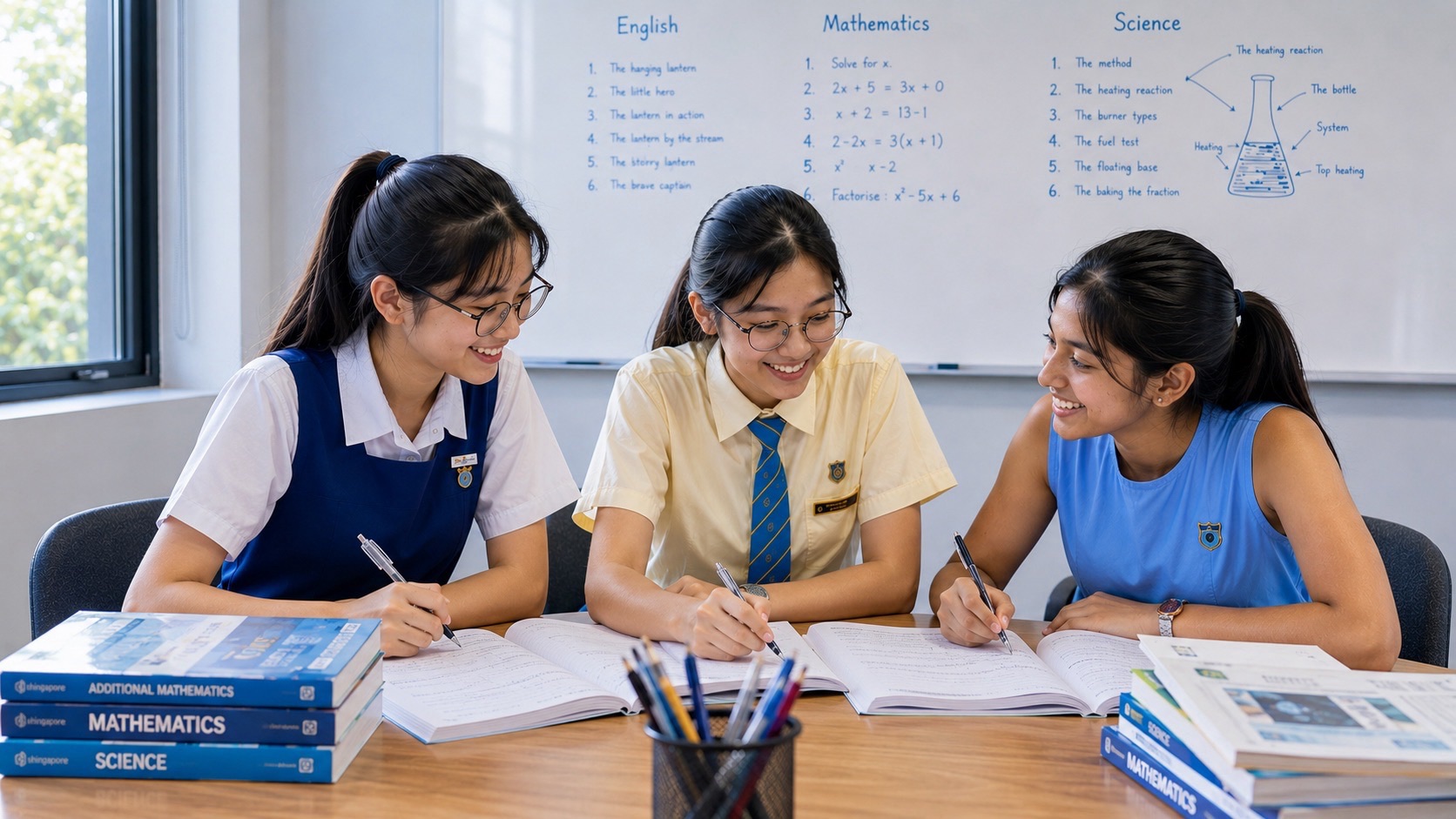
Singapore’s school language model is bilingual. English is the main medium of instruction in mainstream schools, while students generally learn an official Mother Tongue Language (MTL). The official MTLs are Chinese, Malay and Tamil. This page is the eduKateSingapore public current-reference owner for the policy structure; the deeper mechanisms of multilingual learning, translation and mediation remain with eduKateSG and SETC.
What the bilingual policy is trying to do
The policy combines a common working language for schooling with continued connection to language, culture and community. MOE describes bilingualism as a cornerstone of Singapore’s education system. English supports access across subjects and communities, while MTL learning develops communication, cultural understanding and connection.
The three official Mother Tongue Languages
- Chinese Language
- Malay Language
- Tamil Language
Students normally take the MTL associated with the relevant school-language route. Some cases require school/MOE approval when a different MTL is requested. Current application and eligibility details should always be checked with the school and MOE because language-route decisions can depend on background, prior foundation and the student’s circumstances.
What students are expected to learn
The current secondary MTL syllabuses organise learning around three broad goals: Communication, Culture and Connection. Students build listening, speaking, reading and writing, together with spoken and written interaction. Culture and authentic language use beyond the classroom are part of the learning system rather than decorative extras.
Higher Mother Tongue Language
Higher Mother Tongue Language (HMTL) provides a more advanced route for students with sufficient ability, interest and readiness. HMTL should not be treated as a status label. The useful question is whether the learner can sustain the additional language demands without undermining the rest of the programme.
How families should interpret the policy
- Separate the policy requirement from the learner’s current proficiency.
- Separate the target language from the scaffold used to reach it.
- Use first-language explanation strategically when it improves access, but verify that the learner can still perform the intended target-language task.
- Do not treat one language result as a complete measure of culture, identity or overall academic ability.
- When a route depends on a current eligibility rule, school decision or examination level, check the official source for the applicable cohort.
Where this page sits in the eduKate federation
- This page: current public Singapore policy/reference.
- eduKateSG Translation System: translation/localisation mechanism.
- SETC Multilingual English & Mediation: English target-language structure and mediation.
- Sengkang Learning Atlas: learner-state, scaffolding and transfer evidence.
Official sources and currentness
- MOE: What Education in Singapore Looks Like
- MOE: Secondary Mother Tongue Languages Syllabus
- Ministry of Education Singapore
As-of date: 27 September 2026. Freshness class: F1 INSTITUTIONAL for the bilingual-policy structure; F3 CURRENT RULE for eligibility, exemptions, HMTL placement and cohort-specific examination arrangements.