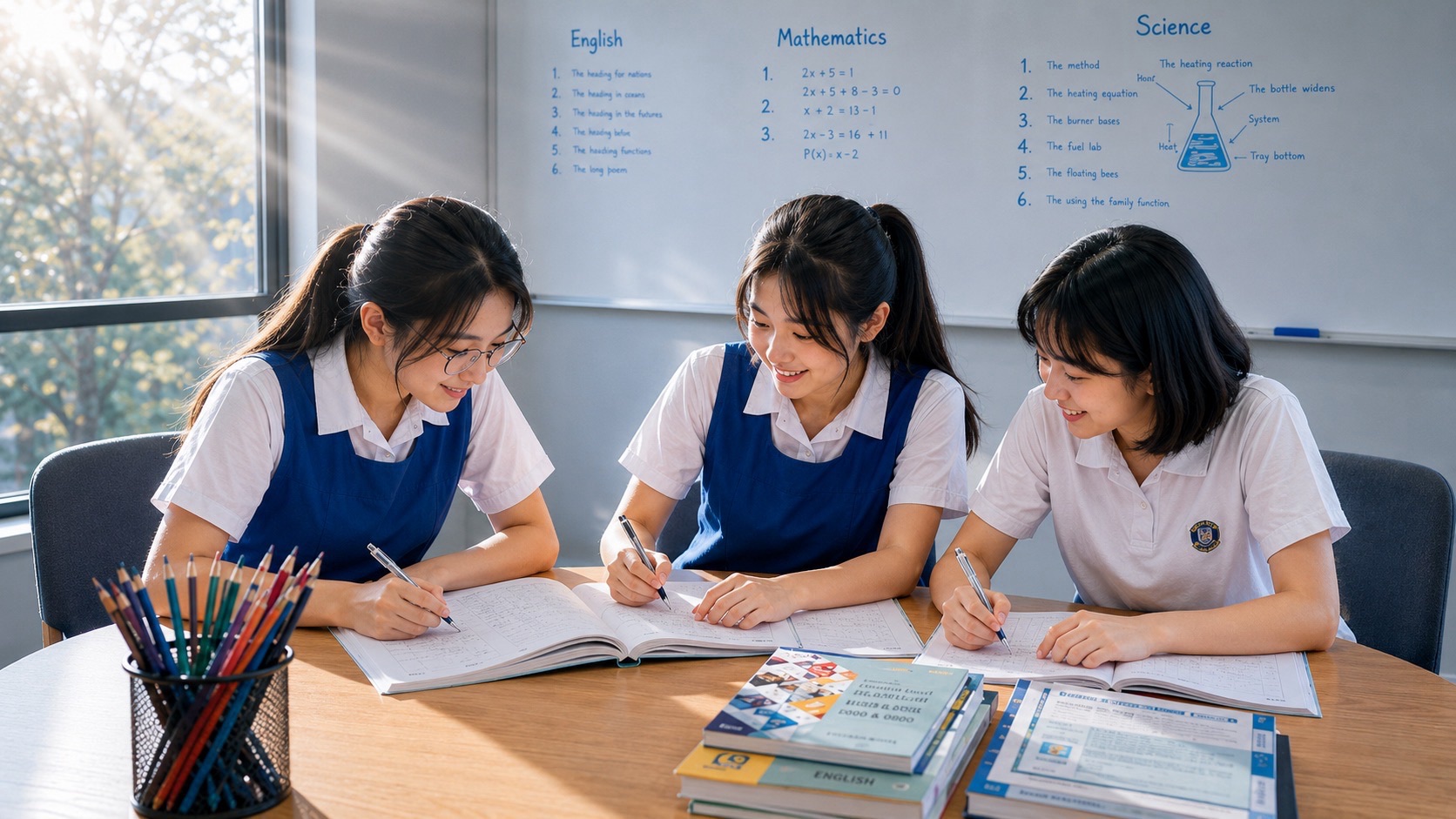
Primary 3 Science | The Installation Year
Primary 3 is where formal Science begins. The important job is not to race ahead. It is to install the first reliable scientific habits: observe → compare → classify → describe → explain.
Primary 3 installs the language and operating habits that later Science depends on.
According to the current MOE Primary Science progression, Primary 3 introduces diversity of living and non-living things, diversity of materials, life cycles, and magnets. These topics are simple enough to explore directly but rich enough to teach the first rules of evidence-based thinking.
You are here: Primary 3 Science.
Why this Manual exists → Primary Science Course & Contents → P3 → Complete 145-guide Reference Shelf

What Primary 3 must install
- Observation discipline — describe what is actually present before guessing why.
- Classification logic — group using a visible and consistent criterion.
- Property → use reasoning — connect a material property to why an object is suitable for a purpose.
- Sequence thinking — understand life cycles as ordered change rather than memorised pictures.
- Prediction and evidence — make a claim, test it, then allow the result to correct the claim.
- Scientific language — move from everyday words to precise explanations.
The four Primary 3 content zones
| MOE topic | Hidden capability |
|---|---|
| Diversity of living and non-living things | Observe features and classify consistently |
| Diversity of materials | Connect properties to function and suitability |
| Life cycles of plants and animals | Represent sequence, change and repeating patterns |
| Magnets | Predict, test, compare evidence and revise an idea |
A common Primary 3 failure
A child can memorise the correct sentence and still have a weak scientific model. For example, knowing that “some metals are magnetic” is different from being able to predict which objects may be attracted, test them, notice a contradiction, and change the original assumption.
That is why we do not treat a correct answer as sufficient evidence of understanding. We ask the child to explain the route.
Primary 3 Science is also a representation problem
The learner starts moving between several forms:
Object → observation → word → category → diagram → explanation.
If those conversions are weak, later Science becomes harder because P4, P5 and P6 increasingly assume the child can reconstruct the same idea from different representations.
How we teach the installation year
- Notice — what can the child actually observe?
- Name — which scientific term represents it accurately?
- Relate — what property, stage, force or category matters?
- Predict — what should happen if the model is correct?
- Test — what does the evidence show?
- Explain — can the child make the reasoning visible?
In a three-student class, these steps can be observed at high resolution. One learner may have a vocabulary problem, another a misconception, and another may understand but answer too vaguely. They should not receive the same repair.
Primary 3 handover gate
Before Primary 4, we want the child to be able to:
- observe before inferring;
- classify using a clear criterion;
- connect a property to a use;
- read and reconstruct a simple sequence;
- make and test a prediction;
- explain an answer in a complete scientific sentence.
That output matters because Primary 4 introduces plant and human systems, matter, light and heat. The learner will need stronger relationships and longer explanations rather than isolated labels.
Continue through the Punggol Science Library
- P3–P6 Programme Gateway
- Primary Science P3→P6: The Learning Journey
- Primary 4 Science: The Connection Year
Official reference: MOE 2023 Primary Science Syllabus.
Programme consultation
A consultation is useful when a child enjoys Science but the school result does not match the apparent understanding. Use recent work to locate whether the problem is knowledge, representation, language, transfer or independence. For current Punggol Primary 3 Science consultation, class suitability, timing and availability, continue to Sign Up for Primary Science Tuition at eduKatePunggol. This eduKateSingapore page remains the Primary 3 installation-year reference room.