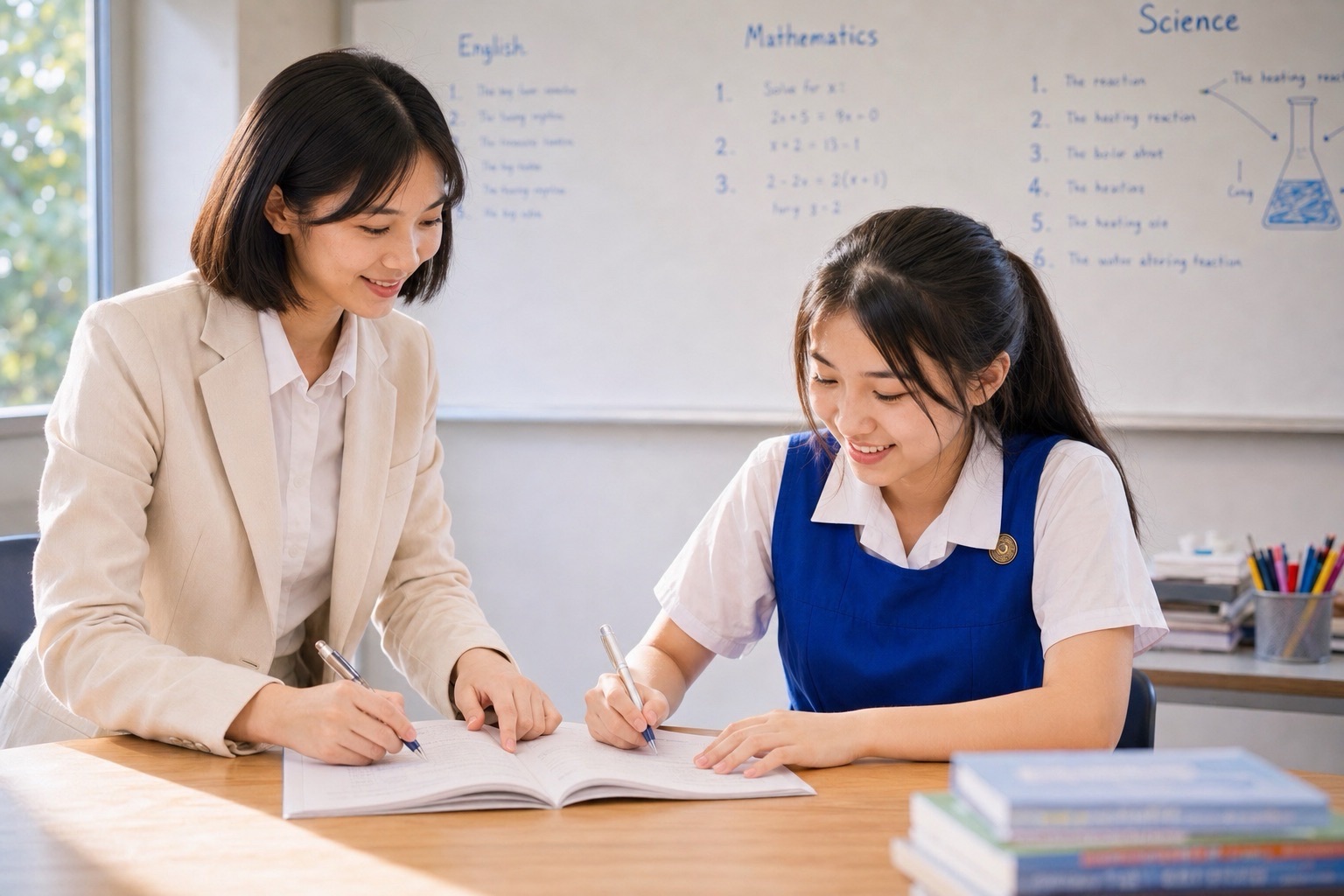
The power of words is truly astounding. The right words can ignite imagination, convey ideas, and influence others. This power is particularly valuable in the realm of education, where it can shape minds and futures. At Punggol Tuition Centre, we recognize this potential and are committed to helping our students harness it through our specially curated Primary English Tuition. In particular, our emphasis on English composition aims to improve students’ writing skills significantly.
Have a look at some of our English Tutorial materials here:
- Back to our main article: English Primary Overview
- Our Composition Writing section: Creative Writing Materials Primary Schools
- Latest SEAB MOE English Syllabus here
Our composition classes are designed to introduce students to the various nuances and facets of English writing. The aim is to inspire a love for writing and equip them with the ability to express their thoughts and ideas confidently. We work on improving our students’ competency in written English and foster creativity, both of which are integral parts of Primary English Tuition.
Punggol Tuition Centre prides itself on creating an immersive, interactive learning environment. Our qualified educators employ engaging teaching methods to make the learning process enjoyable and productive. They provide comprehensive guidance, from brainstorming ideas to structuring paragraphs and using persuasive language, to enhance the students’ composition writing skills. Moreover, our teachers focus on nurturing critical thinking skills, which are key to planning and writing impressive compositions.
One of the unique features of our Primary English Tuition is the individual attention given to each student. We understand that each child learns differently, and our tutors customize their teaching methods to cater to these diverse learning styles. This approach allows us to identify the strengths and weaknesses of each student and provide them with targeted feedback. This personalized attention significantly aids in improving writing skills, as each child can work on their specific areas of improvement.
Punggol Tuition Centre also believes in the power of practice. Our students are given numerous opportunities to practice their writing, with teachers providing constructive feedback after every exercise. This consistent practice, coupled with regular feedback, ensures that students continuously improve their writing abilities and build their confidence.
In our Primary English Tuition, we also emphasize the importance of vocabulary and grammar. A strong vocabulary is a powerful tool that can make a composition more engaging and persuasive. Our teachers help students build their vocabulary by introducing them to new words and phrases, discussing their meanings, and encouraging their use in writing. Additionally, we place a high value on grammatical accuracy, teaching our students the rules of grammar and how to apply them in their writing.
At Punggol Tuition Centre, we go beyond just teaching English composition; we aim to foster a lifelong love for writing. We believe that when students enjoy the process of writing, it no longer becomes a chore, but a hobby. This love for writing will not only benefit them in their examinations but will also provide them with a valuable skill they can use throughout their lives.
In conclusion, at Punggol Tuition Centre, we are committed to enhancing our students’ writing abilities through our Primary English Tuition. Our focus on composition writing, coupled with our dedicated teachers and interactive teaching methods, ensures that our students are well-equipped to excel in their written English. Through our efforts, we aim to provide our students with the skills they need to succeed in their academic journey and beyond.
Improving your child’s writing skills has never been more achievable. Join our Primary English Tuition at Punggol Tuition Centre today and experience the difference we can make in your child’s education.
Click here to enrol at eduKateSingapore.com
Build a strong foundation!
