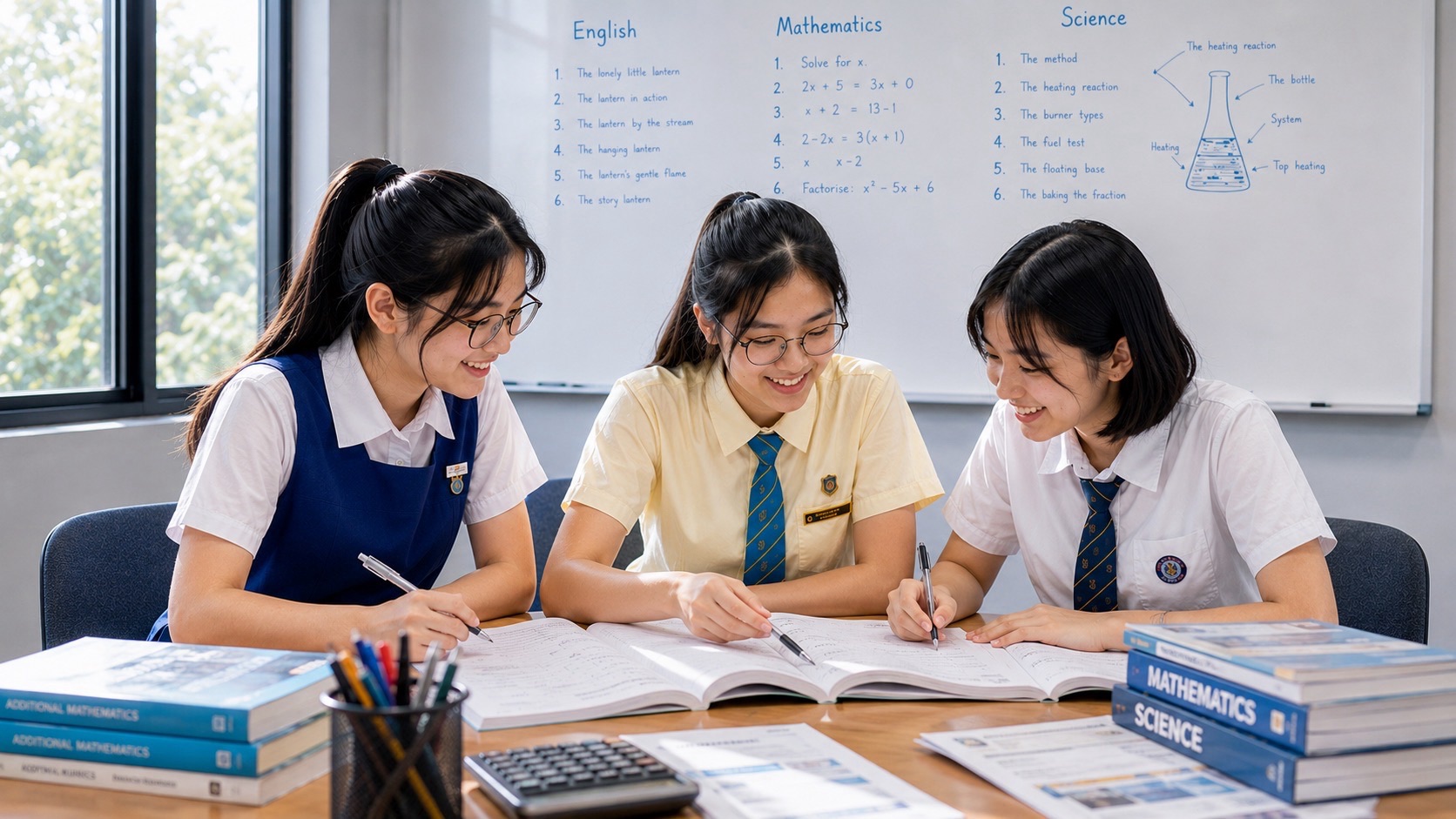
Yishun Town Secondary School at 6 Yishun Street 21 is a secondary school parents can consider after PSLE results, especially when they value a northern Singapore location, leadership and outdoor learning, a broad school experience and an established Tamil Language Elective Programme. For pupils from the 2025 PSLE cohort posted into Secondary 1 in 2026, the historical PSLE score ranges were Posting Group 3: 5–13, Posting Group 2: 21–22, and Posting Group 1: 25–27. These figures describe the previous intake; they are not a promise that a pupil with the same score will be admitted for 2027.
Parents comparing Yishun Town Secondary School after the 2026 PSLE should start with the child’s actual PSLE total and Posting Group eligibility, then consider whether the school’s Beyond Classroom Week, Tamil language enrichment, student leadership pathways, CCAs and journey from home are a good fit. The school has announced an open house on Saturday, 14 November 2026, from 8.30am to 12.30pm, making it a timely opportunity for families to ask practical questions before PSLE results. The result-release window is currently tentative for 24–25 November 2026; verify the confirmed date and S1 submission deadlines with MOE and SEAB.
- School: Yishun Town Secondary School, 6 Yishun Street 21, Singapore 768610.
- 2025 PSLE historical 2026 S1 ranges: PG3 5–13, PG2 21–22, PG1 25–27.
- Academic route: mainstream Secondary 1 admission under Full Subject-Based Banding.
- Distinctive opportunity: Tamil Language Elective Programme, with enrichment in Tamil literature, language and culture.
- Learning beyond the classroom: a published programme including Secondary 1 leadership training, outdoor camp and active learning experiences.
- Student development: multiple leadership pathways including student council, monitor council and service.
- Family involvement: a published Parent Support Group and school communication channels.
- Immediate parent task: visit the 14 November open house, verify eligibility and school choice strategy, and compare a realistic list of six schools.
The first decision is fit, not the school’s name
A good Secondary 1 placement is where a twelve-year-old can learn, form healthy friendships, manage responsibilities and develop confidence. Yishun Town Secondary School may be a strong contender for a family who wants a school with structured experiences beyond classroom lessons and a location that makes an ordinary week sustainable.
The school’s programmes sound varied: leadership workshops, outdoor adventure, curriculum learning, Tamil language enrichment, CCAs and cross-cultural opportunities. However, a family should not assume every pupil joins every special activity. Some experiences are school-wide, others apply to particular levels, and some require selection, expression of interest or suitable prior readiness. Ask how participation actually works for the incoming Secondary 1 cohort.
The child’s preference is important. One pupil may find an outdoor camp exciting; another may worry about being away from home. One may enjoy public speaking and organising events; another may prefer a steady path into leadership by quietly supporting classmates. A suitable school takes the child seriously as an individual, not as a collection of PSLE subject grades.
How to interpret Yishun Town’s PSLE score ranges
The 2025 PSLE results and posting exercise produced the following published range for the 2026 Secondary 1 intake: PG3 5–13, PG2 21–22 and PG1 25–27. The final number in each range is the historical cut-off point for that route, meaning the score of the last pupil posted in that completed exercise. It is not an entrance requirement fixed in advance for a later year.
- Posting Group 3: historical range of 5–13; compare only when the child is eligible for that route.
- Posting Group 2: historical range of 21–22; a distinct route that must not be confused with PG3.
- Posting Group 1: historical range of 25–27; compare with the child’s applicable PG1 eligibility.
- 2027 entry: the actual cut-offs will be known only after the 2026 PSLE cohort has completed school choices and posting.
- Risk management: a score equal to the previous endpoint does not guarantee admission, especially in a competitive tie.
Imagine a child receiving a PSLE Score of 11 and eligible for PG3. Yishun Town’s historical range suggests a school worth considering, but there is no guarantee. A pupil with a PG3 score of 13 was at the previous endpoint, so it is particularly important to include less demanding alternatives. A PG3 score of 15 falls outside the older range, making this a more ambitious choice based on that historical evidence.
Parents should not read the score ranges as a ranking of human worth, school care or teaching quality. They are outcomes produced by a particular set of school choices and vacancies. The same child’s learning prospects can be strong at several schools with different previous cut-off points. The goal is not to ‘win’ the smallest number; it is to make six useful choices.
Did you know? Posting Group does not fix every subject level
Under Full Subject-Based Banding, Posting Groups are used to facilitate Secondary 1 admission and guide initial subject levels. Individual subjects may be taken at G1, G2 or G3 levels based on the relevant eligibility and school arrangements. A pupil who is particularly strong in Mathematics or English may have options that should be discussed independently of their overall PSLE total.
A parent whose child is eligible for two Posting Groups should understand the consequences before making the official selection. For example, PSLE Scores of 21 or 22 may carry the option of choosing PG3 or PG2, while a score of 25 may offer a choice between PG2 and PG1. The selected group applies across the submitted school choices, not one group for one school and another group for a different school.
The questions to ask Yishun Town are practical: Which subjects can a pupil take at a more demanding level? What is the school’s procedure for identifying readiness? What happens if a subject becomes too difficult? Which combinations are available in upper secondary, and what prerequisites apply? A good answer includes timelines and support, not just a reassuring phrase.
Beyond Classroom Week: what the child may experience
Yishun Town’s Beyond Classroom Week is more than a decorative item in a school prospectus. The school’s own description says the programme is designed to build character, self-management, active learning and relationships outside the usual lesson setting. The published Secondary 1 activities include a Leadership Workshop, an Outdoor Adventure Camp and an Active Learning Series.
Those activities can be useful precisely because Secondary 1 is a transition year. Children are meeting many new classmates, learning a new timetable and navigating a larger school environment. A structured shared activity can help pupils speak to someone they would not usually sit beside and see themselves as part of a group. It may also reveal a strength that would not appear in a written examination.
Parents should ask what an incoming pupil will actually do, what the supervision and safety arrangements are, whether any overnight component is involved for that cohort, and how students with additional needs are supported. A child who is nervous about camp may need preparation and a clear explanation rather than being told simply to be brave.
Review the official Beyond Classroom Week programme with your child, and let them identify one activity they would enjoy and one they would like to know more about.
Student leadership has more than one doorway
The school’s Student Leadership Development information describes several routes, including a Secondary 1 leadership workshop open to the year level, opportunities through the Student Council, Monitor Council and other leadership structures. The programme emphasises leadership competencies, reflection, service and meaningful responsibilities.
For parents, the valuable distinction is between broad leadership education and a titled or selected student leadership role. A child does not have to become a head prefect to learn how to listen well, complete an agreed task or resolve a disagreement fairly. Leadership is developed in everyday choices as much as in formal committees.
Ask what a Secondary 1 pupil does before being selected for a council, how pupils express interest and what coaching exists when they make mistakes. If a child is quiet, ask whether class-level roles offer entry points. If the child is already enthusiastic about leadership, ask how responsibilities are balanced with learning and CCAs.
The school’s published programme mentions conflict-resolution work and school-improvement projects in some pathways. That makes good parent questions possible: What evidence of service is expected? What is the time commitment? How are activities reviewed? Is the child learning to lead through contribution rather than only through an award?
The Tamil Language Elective Programme deserves a careful look
Yishun Town Secondary School states that it was one of three secondary schools chosen by MOE to offer the Tamil Language Elective Programme in 2020. Its official description aims to develop students with Tamil language aptitude and enthusiasm through language, literature, cultural understanding and bilingual competence.
The published activities include literary talks, author meetings, enrichment workshops, projects and competitions. For later-stage pupils, the school also describes shared activities among participating schools, such as camps and an overseas immersion experience. These examples help families understand the depth of the programme, but should never be treated as an automatic trip or award for every Tamil-speaking pupil.
For a child who enjoys Tamil reading, writing or cultural activities, this could be a meaningful reason to investigate Yishun Town. For a child who is already struggling with the language or has little interest, the family should ask about programme entry, expectations, support and whether it is appropriate for their readiness.
Ask whether the Tamil Language Elective Programme is offered under the same arrangements to incoming students, what the application and selection rules are, and how it fits into the child’s timetable. Interest matters, but access and workload matter too.
What about families whose child does not take Tamil?
The presence of a distinctive Tamil programme does not make Yishun Town only a Tamil-focused school. Its curriculum pages describe the usual breadth of secondary subjects, including English, Mother Tongue, Mathematics, Science, Humanities, Aesthetics, Technology and Physical Education. The right question is what the ordinary subject and student experience looks like for this particular pupil.
Families should explore the school’s broader academic approach and pathways rather than assume one signature programme defines the entire institution. Ask about reading support, Mathematics foundations, science inquiry, project work and subject options for Secondary 3. A child whose best subject is not Tamil may still find excellent reasons to shortlist the school.
A successful choice is one where the child can take advantage of accessible opportunities. If the desired opportunity exists only for a selected group, ask what the rest of the cohort receives and whether that experience is equally worthwhile.
International experiences: what to ask before expecting a trip
Yishun Town’s Internationalisation Programme seeks to build cross-cultural awareness, respect for different backgrounds and confidence in meeting people from other communities. The school’s published record lists outgoing school experiences in places such as Vietnam, Hong Kong, China and Japan across recent years.
These records show the kinds of activities the school has run. They do not guarantee that an incoming Secondary 1 pupil will go overseas, that the same destination will be available each year or that every family will be asked to participate. Places, age level, selection, safety planning, cost and financial assistance may all matter.
The parent question is: How are pupils selected? What learning takes place before and after the experience? Are there accessible local alternatives for families who cannot travel? How are costs or subsidies explained? A strong international programme develops understanding, not merely a collection of passport stamps.
CCAs: the activity your child attends matters more than the brochure
The school has an official CCA information page and a downloadable CCA prospectus. Before the PSLE school-choice deadline, invite your child to name a few activities they might genuinely enjoy. Ask which welcome newcomers, which require trials and how frequently they meet. A pupil who has never played a particular sport may still want to explore; a talented pupil may want to know the competition and training commitments.
A common school-selection mistake is to choose a school for one popular activity without asking whether the pupil can actually join it. Oversubscription, selection or practical limits may prevent entry. Before deciding, ask the school how activities are allocated and what alternatives exist.
A CCA is also a social community. Pupils practise with peers, handle mistakes in public, contribute to a group and learn how to work with an adult other than their subject teacher. For some pupils, that becomes the most important place where school feels like home. The family should look for a CCA choice that can last, not just one that looks good in a list.
Parent Support Group and communication: how partnership works
Yishun Town publishes a Parent Support Group that aims to connect parents and the school through two-way communication. Its described activities include meeting incoming Secondary 1 parents, supporting school events and providing opportunities for families to engage. Parents can use this as a starting point to ask about orientation, concerns and practical expectations.
A parent does not have to volunteer frequently to be involved in a child’s education. Regular conversations about the school day, reading the official school communications, providing appropriate information to form teachers and supporting routine sleep and homework are all meaningful forms of partnership.
Ask who to contact when a child feels isolated, when learning support is needed or when the family is unsure about a school rule. Good communication requires both sides to know the correct channel and an appropriate time to ask. Avoid making decisions from screenshots passed around without a date or an official source.
Yishun Street 21: why the everyday commute can decide the school
Yishun Town Secondary School’s official address is 6 Yishun Street 21, Singapore 768610. For households in or near Yishun, this may be a substantial practical advantage. A pupil who can reach school reliably may have more time for sleep, exercise, reading, family duties and CCA participation than a classmate making a much longer journey.
However, do not assume everyone in the north has the same travel experience. Distance by road is not the same as a child’s route. Test the school-morning journey from home, including walking, crossing roads and waiting for public transport. Repeat the test for a late afternoon after an activity.
A shorter commute is not the only factor. A longer journey can still be worthwhile when the school offers a very strong personal match. But the family should make that trade-off knowingly. Write down realistic departure and return-home times, not only the journey time advertised by a map.
The open house on 14 November 2026: a parent plan
As of 1 November 2026, the school advertises an open house on Saturday, 14 November 2026, from 8.30am to 12.30pm. Because this is before the tentative PSLE results window, it is a good chance to explore the campus without the pressure of an already-known score. Check the school’s current notice before leaving home in case programme details are updated.
- Visit the learning spaces and ask what a normal Secondary 1 day feels like.
- Ask specifically about the Beyond Classroom Week programme and its support arrangements.
- Speak to teachers about Full SBB, starting subject levels and upper-secondary options.
- Ask about the Tamil Language Elective Programme if it is relevant to your child.
- Explore how leadership roles, CCAs and selection processes work.
- Ask the child which parts of the school environment feel welcoming or exciting.
- Note the actual route to the school and its practicality at peak hours.
- Write down unanswered questions for a follow-up email or call.
It is sensible to prepare questions, but not sensible to turn an open house into an interview in which a child must perform. Let the pupil observe, walk around and ask a few questions in their own words. A relaxed visit can reveal preferences that a list of cut-off points never could.
Direct School Admission: understand the earlier commitment
The school’s 2026 DSA information describes talent-based admission and expectations that successful pupils honour their commitment and participate in their selected area throughout their course of study. It also describes assessment of potential as well as existing experience, and its 2026 process for January 2027 entry took place before PSLE results.
By the time PSLE results are received, the DSA application stage is over. A student who has accepted and been allocated a DSA place should not submit a fresh list of six ordinary school preferences as if the earlier acceptance never occurred. Families should rely on the official allocation notice and ask the school about genuine uncertainties.
For a younger sibling considering a future DSA round, read the newly issued year’s talent areas and criteria. An old list is helpful background, not a guarantee that the same opportunities or dates will apply.
If your child needs learning support, ask before ranking
A child who needs support with organisation, friendships, communication or particular academic subjects can still have a rewarding secondary experience. The key is to clarify how the school identifies needs and responds. Ask about form-teacher contact, year-level support, school counselling and procedures for arranging subject help. Do not assume the school’s general description will answer your family’s specific question.
A learner who finds English reading difficult may need a different strategy from one who is comfortable academically but struggles to make friends. Parents can discuss these separately and ask how progress will be reviewed during the first term. Helpful answers identify steps and responsible adults.
Transition concerns are common, but recurring distress deserves timely attention. Let the child know which trusted adults they can approach at school and at home. Choosing a school should include a plan for getting help, not merely a hope that no difficulties will arise.
Fees, booklists, transport and the true cost of school
The school budget includes more than tuition fees. Plan for uniform and shoes, textbooks, meals, transport, CCA equipment, school activities and any required learning device. Amounts and financial-assistance conditions may change, so ask the school for the most recent 2027 instructions after posting rather than relying on a 2025 booklist.
Families who may need support should investigate MOE and school financial-assistance routes early. The relevant information should come from the school or MOE, not a third-party seller offering an unofficial discount or a parent chat offering an unsupported estimate.
Time also has a cost. A family might find that a nearer school reduces daily spending and allows a child to participate in school activities more comfortably. This can be a legitimate advantage even when another school’s historical cut-off point looks more selective.
How to rank Yishun Town in a six-school submission
Once the results are released, write the child’s actual PSLE Score and eligible Posting Group at the top of your planning page. Use MOE SchoolFinder to compare the right historical range for each school. Do not combine three different Posting Group cut-offs into one list of numbers or assume the previous year’s cut-off is an entry promise.
MOE encourages families to use all six choices and include at least two or three schools where the child’s PSLE Score is better than the school’s previous cut-off point. In this scoring system, a smaller score is better. A child scoring 12 in PG3 could view a historical cut-off of 13 as a plausible comparison, but should still have other acceptable options. A child scoring 13 is at the old boundary and must not treat it as certainty.
Preference order matters within the S1 Posting rules. For pupils with the same PSLE Score competing for the final places, citizenship is considered before school-choice order, followed by computerised balloting. The correct practical strategy is to rank the genuinely most preferred eligible school higher while ensuring the overall list is realistic.
Three family profiles to think through
A Yishun child who enjoys learning by doing
This pupil is curious, enjoys team activities and likes learning beyond a classroom. Beyond Classroom Week and leadership opportunities are specific reasons to investigate Yishun Town. The short travel time may allow the student to join activities without losing sleep. Parents should ask what is offered to every Secondary 1 pupil and which activities are selective.
A pupil who loves Tamil language and literature
The child reads Tamil beyond school homework and enjoys cultural experiences. The Tamil Language Elective Programme is a clear potential attraction, but the family should check eligibility, workload, selection and the specific activities offered to that cohort. If these fit, the programme provides a reason that is more personal than the school’s reputation.
A pupil with a previous-boundary PSLE Score
The pupil is eligible for PG3 and scores 13. Yishun Town’s earlier PG3 cut-off was 13. The family may still rank Yishun Town highly if it is genuinely preferred, but should acknowledge that this is not guaranteed. It should investigate other schools with less stringent previous endpoints and make every one of the six choices acceptable.
A seven-step parent checklist for results week
- Check SEAB and MOE for the confirmed 2026 results release and S1 school-choice dates.
- Read the child’s PSLE total and Posting Group eligibility carefully.
- Verify Yishun Town’s latest available published score ranges, school options and programme descriptions.
- Discuss with the child the school environment, Tamil opportunity where relevant, Beyond Classroom Week and CCAs.
- Test the school journey on an ordinary weekday, including a likely late CCA trip.
- Rank six eligible, well-researched schools in genuine preference order, including realistic alternatives.
- Submit through the official S1 Portal before the published deadline and follow posted-school registration guidance.
Frequently asked questions about Yishun Town Secondary School
What are the published 2025 PSLE score ranges for Yishun Town?
For the 2026 Secondary 1 intake, the historical ranges were PG3 5–13, PG2 21–22 and PG1 25–27. They describe a completed exercise and can change for a later year.
When is the school’s 2026 open house?
The official school page advertises Saturday, 14 November 2026, from 8.30am to 12.30pm. Confirm any updates with the school before visiting.
Does every Yishun Town pupil join the Tamil Language Elective Programme?
No automatic entitlement should be assumed. The school describes a specialised language enrichment programme; parents should ask who can participate, how to apply and what the commitments are.
What is Beyond Classroom Week?
It is a school programme designed to develop character, self-management and relationships through experiences beyond ordinary lessons. The published Secondary 1 activities include leadership workshops, an outdoor camp and active learning.
Does a PSLE Score of 13 guarantee a PG3 place in 2027?
No. It matches a previous endpoint, not a fixed 2027 admission rule. Posting outcomes depend on the new cohort, vacancies and tie-breaking.
How should we choose between Yishun Town and another northern school?
Compare the child’s actual eligible route, specific programmes, CCA access, wellbeing support, subject choices and realistic daily travel. Choose where the child could learn and participate well, not solely where the old cut-off looked more selective.
The parent’s final Yishun Town decision
Yishun Town Secondary School is a meaningful option for families who value a broad mainstream learning environment, practical opportunities outside the classroom, leadership development and a northern location. Its Tamil Language Elective Programme provides an additional distinctive reason for some pupils to investigate it carefully.
A parent should leave the decision with three answers: our child can realistically apply through the right posting route; we understand what programmes and CCAs our child can actually access; and the ordinary week is manageable. When those answers are strong, ranking Yishun Town becomes a well-considered choice rather than a reaction to one PSLE number.
Official school information and helpful references
- Yishun Town Secondary School official website
- Yishun Town Secondary School open house — 14 November 2026
- Tamil Language Elective Programme
- Beyond Classroom Week
- Student Leadership Development
- Internationalisation Programme
- Co-Curricular Activities
- Curriculum and subject departments
- Parent Support Group
- 2026 DSA information for January 2027 entry
- School address and contact details
- MOE SchoolFinder
- MOE Secondary 1 Posting information
- SEAB 2026 PSLE important dates
- How to choose six secondary schools after PSLE