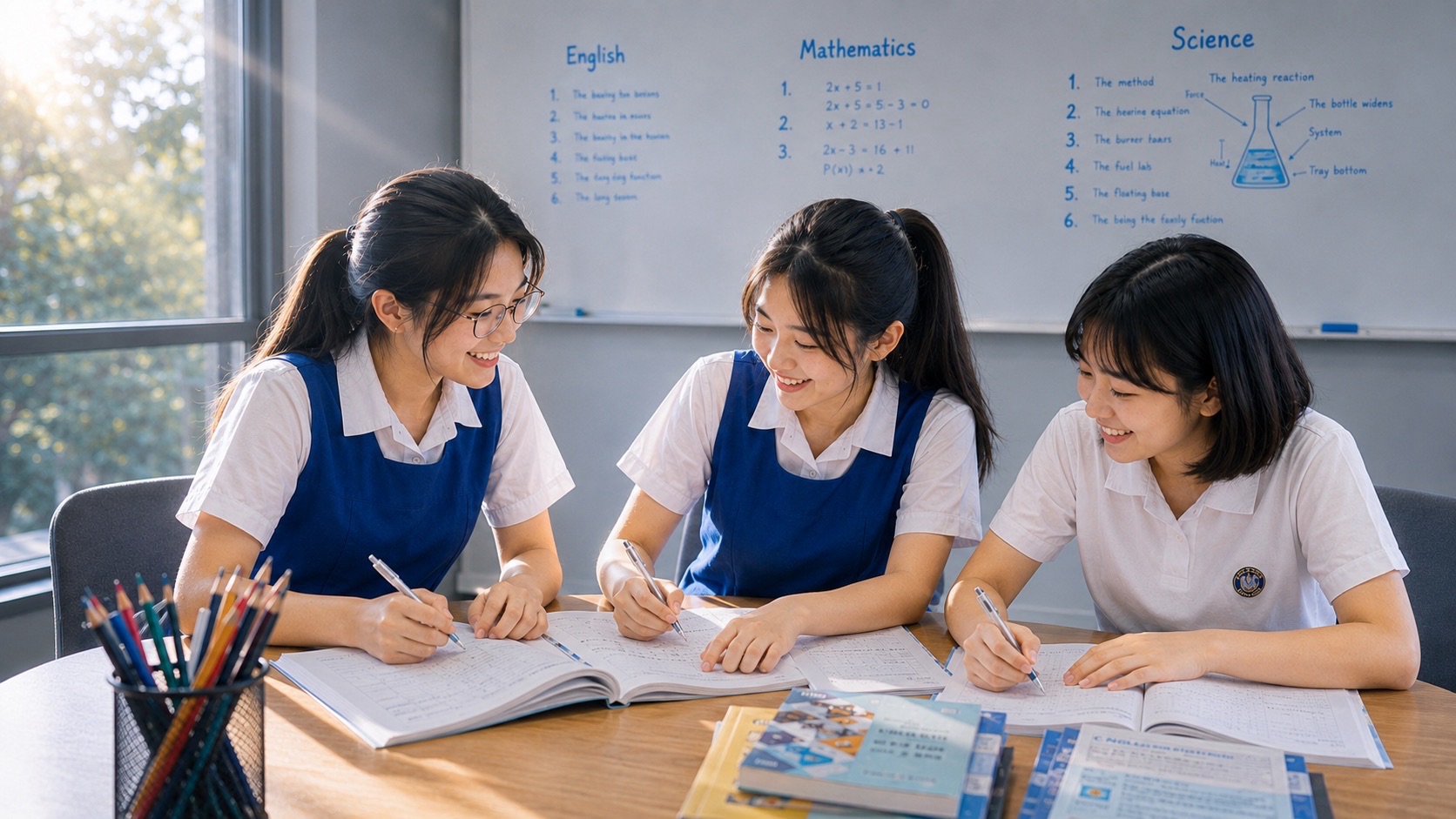
Katong Math Tuition | 3-Pax Small Group Lessons for Secondary Students
Why Choose Our Katong Math Tuition?
At eduKate Singapore, we specialise in small group tuition (only 3 students per class) for Secondary Mathematics and Additional Mathematics. Our focus is to provide personalised attention, clear explanations, and structured practice so your child can excel in both E-Math and A-Math.
Unlike larger tuition classes, our home based 3-pax model ensures:
- Personalised feedback for every student
- Targeted practice on weak topics
- Exam techniques designed for O-Level success
- Close monitoring of progress with regular updates to parents
This approach allows us to combine the strengths of one-to-one tuition with the benefits of peer learning in a small, focused environment.
Subjects We Cover
- Elementary Mathematics (E-Math)
Covers algebra, geometry, trigonometry, statistics, and problem-solving strategies. Designed for students sitting the O-Level Mathematics exam. - Additional Mathematics (A-Math)
Includes advanced algebra, functions, logarithms, calculus, and trigonometry. Essential for students aiming for pure sciences or JC-level math readiness. - Exam Preparation & Practice Papers
Step-by-step guidance in answering structured questions, managing exam time, and applying problem-solving methods.
Why Katong Parents Trust Us
📍 Convenient location near Katong, Marine Parade, and East Coast
👨🏫 Experienced tutors with proven O-Level track record
📊 Data-driven progress tracking and personalised study plans
💡 Focus on building conceptual understanding, not just memorisation
🏆 Goal: Students consistently achieve A1–A2 grades in O-Levels
Who Benefits from Our Katong Math Tuition?
✅ Secondary 1–2 students needing a strong foundation in Mathematics
✅ Secondary 3–4 students preparing for E-Math & A-Math O-Level exams
✅ Students who want personalised guidance in a small group environment
✅ Parents seeking a balance between affordability and premium coaching
Enrolment Options
- 3-Pax Small Group Tuition (Most Popular)
- One-to-One Tuition (Limited Slots)
- Exam Crash Courses for O-Levels
💬 Consultations available. Trial lessons may be offered depending on class size availability (max 3 per class).
Call to Action
📞 Contact us today to book your free consultation.
👉 Limited slots available for our Katong Math Tuition small group classes.
Build a strong foundation!
How Katong Mathematics Tuition’s Small Group Tuition Can Help Secondary Students
At eduKate Katong Mathematics Tuition, we specialize in 3-pax small group lessons designed specifically for secondary students, offering a tailored approach to mastering math in a supportive and efficient environment. Our location in the heart of Katong, right nearby all the major secondary schools like Tanjong Katong Secondary School, Chung Cheng High School, and Victoria School, makes us the ideal choice for families seeking convenient, high-quality tuition without the hassle of long commutes. Here’s how our small group format can make a real difference in your child’s academic journey:
1. Personalized Attention in a Collaborative Setting
- In our 3-pax groups, each student receives individualized guidance from experienced tutors who can address specific weaknesses, whether it’s algebra, geometry, or calculus. Unlike larger classes where students might get lost in the crowd, this intimate setup allows for real-time feedback and targeted explanations.
- The small size fosters collaboration—students can discuss problems together, learn from peers’ perspectives, and build problem-solving skills in a low-pressure atmosphere. This often leads to improved confidence and a deeper understanding of concepts, helping students tackle challenging topics like Additional Mathematics or O-Level prep with ease.
2. Convenience and Accessibility for Busy Schedules
- Being strategically located near all secondary schools in Katong means your child can walk or take a short bus ride to our center right after school. No more wasting time in traffic or dealing with distant tuition centers—this proximity allows for more frequent sessions without disrupting daily routines.
- Parents love the ease: drop-offs and pick-ups are quick, freeing up evenings for family time or extracurriculars. For students, less travel fatigue translates to better focus during lessons, making every session more productive.
3. Proven Results Through Focused, Engaging Lessons
- Our curriculum aligns with the MOE syllabus, incorporating interactive tools, practice papers, and exam strategies to boost grades and exam performance. Small groups enable tutors to track progress closely, adjusting lesson plans to suit each student’s pace—whether accelerating advanced learners or providing extra support for those catching up.
- Many of our students report significant improvements, from turning C’s into A’s to developing a genuine interest in math. We emphasize critical thinking and application, skills that extend beyond exams to real-world scenarios.
4. Supportive Environment for Holistic Growth
- Beyond academics, our small groups create a sense of community where students feel encouraged to ask questions without fear of judgment. This builds resilience and motivation, essential for secondary school challenges.
- With flexible scheduling options, including weekday evenings and weekends, we accommodate school timetables seamlessly. Plus, our affordable rates ensure top-tier tuition is accessible to all families in the Katong area.
If you’re a parent or student in Katong looking to elevate your math skills, Katong Mathematics Tuition’s 3-pax small group lessons are here to help—conveniently close and committed to your success. Contact us today to schedule a trial session and see the difference for yourself!
