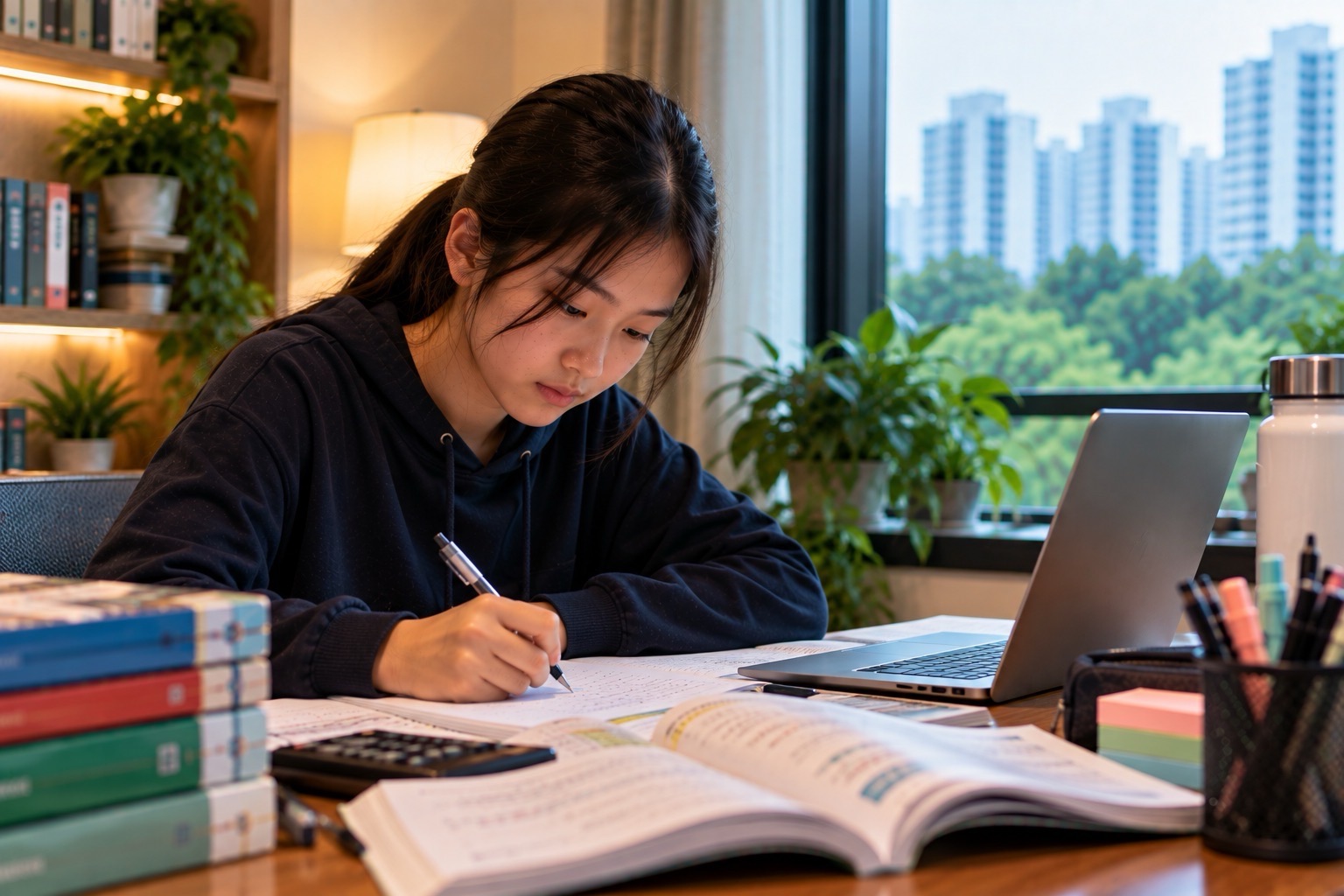
For a PSLE Score of 12, 13, 14 or 15, parents looking for a PG3 secondary school for an artistic child should distinguish normal art lessons, music and drama CCAs, and separately selected elective programmes. In the PSLE 2025 cohort admitted to Secondary 1 in January 2026, Zhonghua Secondary had a non-affiliated PG3 cutoff of 12, Tanjong Katong Girls’ and Clementi Town Secondary had 13, and CHIJ Katong Convent and Hua Yi had 14. Zhonghua has a four-year Art Elective Programme, Tanjong Katong Girls’ a four-year Music Elective Programme with an audition, and Clementi Town a school musical tradition. These are different creative opportunities, not automatic specialist places for the 2027 intake.
Parents should ask what the child actually enjoys—drawing, acting, singing, playing an instrument, photography or writing—and what they would learn if they were not selected for an advanced group. Scores 12–15 qualify for PG3 and generally begin most subjects at G3. A Score 13 girl considering Tanjong Katong Girls’ would be at its earlier PG3 boundary, but posting to the school does not guarantee Music Elective selection. The 2026 PSLE results arrive at 11.00am on Tuesday 24 November; the online S1 Portal opens at 11.30am that day and closes at 4.30pm on Monday 30 November. The family should choose six schools with real arts, academic and travel appeal.
- Scores 12–15 all PG3 eligible; art and language interests sit alongside core G3 subjects
- Zhonghua old PG3 12: regular art curriculum and a separate four-year selected Art Elective Programme
- Tanjong Katong Girls’ old PG3 13: four-year Music Elective Programme needs audition, listening and interview
- Clementi Town old PG3 13: school musical tradition is not a guaranteed lead role or specialist subject
- CHIJ and Methodist girls’ schools may have different affiliated versus non-affiliated historical cutoffs
- Art electives, music courses, DSA talents and normal CCAs are distinct routes with distinct conditions
- Six S1 choices close Monday 30 November 2026 at 4.30pm
1. Read all four PSLE subject results before choosing a school
A PSLE Score is the sum of the four Achievement Levels in English Language, Mathematics, Science and Mother Tongue Language. A lower number represents stronger overall PSLE performance. Scores 12, 13, 14 and 15 all ordinarily belong to Posting Group 3, but pupils with the same total can have very different strengths and learning needs. A Score 12 might come from four AL3 grades or another valid combination; a Score 15 might reflect confidence in one subject and more difficulty in another. The total cannot show whether a child enjoys practical design, music, sport or long reading.
Ask the pupil to describe what they enjoyed studying, what questions they found difficult, and what kind of classroom helps them learn. A child strong in Science might need help explaining evidence in English. Another might love music and writing while finding Mathematics ratio challenging. Strong secondary teaching should develop those foundations rather than assume the total determines all academic readiness. The family’s shortlist should make sense for this particular pupil’s interests, school comfort and daily routine.
An excellent educational match is not necessarily the school with the smallest historic cutoff. A pupil who can travel home quickly, join meaningful CCAs, make friends and ask teachers for help may learn more steadily than one who spends hours travelling for a school chosen because of prestige. A specialised ALP or elective can be inspiring, but it should not be the only reason to attend if access to advanced activities is uncertain. A school with a less stringent former cutoff may provide an excellent overall environment.
2. Confirmed 2026 PSLE results and S1 posting dates
| Date and time (Singapore) | What happens | Parent action |
|---|---|---|
| Tuesday 24 November 2026, 11.00am | 2026 PSLE results released | Read the actual total and four subject ALs |
| Tuesday 24 November 2026, 11.30am | S1 online portal opens | Review schools and eligible choices with Singpass |
| 24–30 November 2026 | Research and school-choice period | Compare school programmes, CCAs, transport and previous score ranges |
| Monday 30 November 2026, 4.30pm | Online choices close | Submit six genuine preferences and save the acknowledgement |
| Friday 18 December 2026 — tentative | Expected S1 posting result | Wait for MOE confirmation and the posted school’s instructions |
The 17 November 2026 SEAB/MOE joint announcement confirms the PSLE results release at 11am on 24 November and the online selection window from 11.30am on 24 November to 4.30pm on 30 November. One parent logs in with Singpass through the MOE S1 Posting website. Families requiring help should contact their primary school before the closing time. Secondary 1 posting results are tentatively expected on 18 December, subject to a later confirmed date. An unfinished online form or informal enquiry to a school is not a submitted application.
MOE encourages families to choose schools according to educational needs, strengths, interests, culture, programmes, subjects and CCAs. It also advises including at least two or three schools with past cutoffs less stringent than the child’s score, when such options are suitable and available. This is a way to balance admission uncertainty, not a guarantee of a particular place. Parents should select schools the pupil would actually want to attend, including the final choice on the form.
3. A previous cutoff is not a fixed 2027 admission threshold
The school cutoff point (COP) is the total PSLE Score of the last pupil posted through a particular school and entry category in a completed Secondary 1 exercise. The numbers in this guide refer to PSLE 2025 pupils entering Secondary 1 in January 2026. The final cutoffs for pupils taking PSLE in 2026 are determined only after their school choices and the cohort’s scores are processed. Demand and vacancies can change, and a child who matches the previous cutoff is not necessarily guaranteed a place in the following year.
Because a lower PSLE total is stronger, a Score 12 pupil comparing a school whose previous non-affiliated PG3 cutoff was 13 was numerically stronger than the previous last-posted pupil. At Score 13 that school was a previous boundary; at Scores 14 or 15 it was historically more stringent. These numerical relationships can guide a realistic shortlist but do not measure teacher quality, emotional support, the child’s likely friendships or actual CCA access. It is reasonable to rank a school with a larger historic cutoff first when the child genuinely prefers it.
Use MOE SchoolFinder to verify the current school name, location, programme, gender rules, affiliation and published previous score ranges. The MOE explanation of PSLE score ranges clarifies why the old scores are references rather than future requirements. Some institutions have affiliated and non-affiliated categories, while schools offering IP may have different admission routes. Do not borrow an easier-looking number from an inapplicable category. The personalised S1 Portal and current school notices take priority over an older article.
4. PG3, G3 and the Singapore-Cambridge SEC
Posting Group 3 is the school-entry category for pupils in the ordinary PSLE total range 4–20. G3 is a subject level under Full Subject-Based Banding. Pupils entering through PG3 generally start most academic subjects at G3, with subject arrangements and later flexibility governed by school and national rules. Children from different posting groups can learn together in mixed form classes while taking appropriate subject-level classes. This approach is not the old Express/Normal stream structure and should not be described using obsolete academic labels.
The Singapore-Cambridge Secondary Education Certificate (SEC) replaces the former separate O- and N-level examinations for graduating cohorts from 2027. A pupil entering Secondary 1 in January 2027 will take relevant national exams in a later year, not immediately. MOE Full SBB information explains the learning framework. Later JC, polytechnic, ITE and other post-secondary opportunities depend on subjects, results and prevailing admissions criteria when the pupil graduates. The PSLE Score is an admissions fact, not a lifetime prediction of what the child can achieve.
A pupil interested in a STEM, arts or language programme still needs strong everyday classroom teaching. Good English comprehension, numerical reasoning, scientific explanation and confidence to ask questions matter throughout secondary school. A school can support curiosity through ordinary lessons and CCAs even if a child is not selected for advanced enrichment. Parents should not equate school admission with a guaranteed specialist elective, competition team or DSA place.
5. Compare the former COP across Scores 12, 13, 14 and 15
| PSLE total | Posting group | How to read previous non-affiliated PG3 cutoffs | Family approach |
|---|---|---|---|
| 12 | PG3 | Previous COP 12 boundary; COP 13–16 numerically less stringent | Research schools by real fit and include honest alternatives |
| 13 | PG3 | Previous COP 13 boundary; COP 14–17 less stringent | Check curriculum, current CCA and practical commute |
| 14 | PG3 | Previous COP 14 boundary; COP 15–18 less stringent | Ask the pupil what school culture genuinely motivates them |
| 15 | PG3 | Previous COP 15 boundary; COP 16–19 less stringent | Do not fill six choices only with schools that previously ended at 12–14 |
A strong school list can include an aspirational choice, but other selections should be genuine schools the family could accept. A pupil may prefer a school at former COP 16 to one at former COP 13 because its CCA choices, transport and teaching environment are a better match. A larger historic cutoff does not imply poor education, and a numerically stronger previous school does not guarantee the child will feel supported. The family should discuss the child’s voice instead of using the school name as a social achievement.
6. Real schools and programmes to investigate
The following schools are actual research leads for art, music, drama and languages. Numerical cutoffs are the previous PSLE 2025 non-affiliated PG3 last-posted totals for January 2026 Secondary 1 entry. Details described as questions should be checked against the 2027 school’s current programme, while sourced ALP and elective descriptions are linked later. No school programme name or former cutoff guarantees admission to a specialist opportunity.
| School | Area | Old PG3 COP | Distinctive activity or enquiry | What parents should check |
|---|---|---|---|---|
| Zhonghua Secondary | Serangoon | 12 | Regular lower-secondary Art and selected four-year AEP | Check admission to specialist art separately |
| Tanjong Katong Girls’ | Katong | 13 | Four-year Music Elective Programme | Girls only; audition, listening test, interview |
| Clementi Town Secondary | Clementi | 13 | School musical tradition and aesthetics | Which roles can new pupils actually try? |
| Tanjong Katong Secondary | Katong | 13 | Current art, music and performing arts to verify | Do not confuse with the girls’ school |
| Xinmin Secondary | Hougang | 13 | Current drama and media programmes to verify | What happens during ordinary Secondary 1 lessons? |
| Fuhua Secondary | Jurong West | 13 | Choir, concert band, Chinese orchestra listed in 2027 DSA | A selected DSA route is not CCA membership |
| CHIJ St Theresa’s Convent | Bukit Merah | 13 | Girls’ school arts and student culture | Verify formal affiliation before using its cutoff |
| Hua Yi Secondary | Jurong West | 14 | Creative CCAs and leadership to verify | Check current music, drama and language activities |
| CHIJ Katong Convent | Marine Parade | 14 | Arts and school ethos to verify | Affiliated and non-affiliated categories differ |
| CHIJ St Joseph’s Convent | Sengkang | 14 | Actual arts and language CCAs to verify | Do not assume all CHIJ schools share affiliation |
| St Anthony’s Canossian Secondary | Bedok | 15 | Current arts and music CCA options | Check school gender and specific selection |
| Yusof Ishak Secondary | Punggol | 15 | Current language and arts options to verify | Its documented ALP is smart-city STEM, not a music programme |
7. Five programme distinctions that change the family decision
1. Zhonghua: ordinary art education and the selected Art Elective Programme
Zhonghua Secondary’s four-year Art Elective Programme combines studio practice with art history, cultural context, exhibitions, workshops and community-oriented projects. The school describes AEP students exploring different traditional and contemporary media, learning journeys and sharing their work with other art students. Zhonghua also has a lower-secondary Visual Art curriculum more broadly, helping pupils develop visual literacy and communicate ideas. These are not identical. Parents should ask about AEP entry requirements, portfolios or school selection and what a child can do in ordinary art lessons if they are not enrolled in the specialist course. The latter can still be a valuable creative experience.
Zhonghua’s historic non-affiliated PG3 cutoff was 12. A Score 12 child was at its old numerical boundary, while Scores 13–15 were historically less strong than the earlier last-posted score. That fact is important for a balanced six-choice form, but it does not decide whether the school will develop the child’s artistic talent. A pupil might want a longer-term course with theory and specialist practice, or simply enjoy visual art alongside Science and Mathematics. Ask whether the child likes the broader school ethos, teacher support and commute, not just the reputation of one selected elective.
2. Tanjong Katong Girls: music is a genuine four-year commitment
Tanjong Katong Girls’ School offers a four-year Music Elective Programme intended for pupils who love music and have the aptitude to pursue it in depth. Its official selection exercise includes an audition with two prepared solo pieces, an e-listening assessment and an interview. Registration for eligible incoming Secondary 1 pupils follows school posting through the school’s announced process. A parent cannot promise that a daughter posted to TKGS will automatically be in MEP. The programme also involves ensemble experiences, workshops, performances and studying different musical traditions; it is a substantial ongoing commitment rather than an occasional music club.
The school had an old non-affiliated PG3 cutoff of 13. For a girl scoring 13, that was a previous boundary, and for girls scoring 14 or 15 the earlier result was more stringent. The school is girls-only in its secondary section, so a boy cannot select it. The parent should examine ordinary aesthetics lessons and CCAs as well as MEP, and check whether the child would want the school even if not selected for Music. An advanced elective cannot replace the need for clear teaching, rest and a practical after-rehearsal commute.
3. Clementi Town: theatre can include many roles and broader learning
Clementi Town Secondary’s official school site describes an established musical tradition, involving performances and collaborative creative work. A child interested in stage drama could value these experiences, but a school musical does not mean every incoming pupil can claim a lead role, appear on stage or join a production team automatically. Ask which arts CCAs are open to new students, which positions are selected and how often performance opportunities occur. A pupil may enjoy costume design, writing, technical production, singing or backstage teamwork rather than public performance. A school that provides a welcoming creative community can support confidence even without a named upper-secondary arts subject.
Clementi Town’s previous non-affiliated PG3 cutoff was 13, a former boundary at Score 13. Its MARS STEM ALP also illustrates that a pupil can enjoy both performing arts and practical science in one school environment. Parents should not assume that a school with a specialist arts programme is automatically a better match for someone who wants broad experiences. A family in Clementi might value the nearby campus and accessible teachers, while another may prefer an institution closer to home. The daily school culture matters beyond a single musical production or a previous last-posted number.
4. Creative expression should be available beyond selected talent schemes
Some children love to draw and paint but do not want a four-year examined Art course. Another may enjoy choir or concert band without intending to sit Higher Music. A school with a welcoming drama, music or media CCA can offer meaningful opportunities to practise, collaborate, make friends and build confidence. A selective DSA talent route is not the same as ordinary CCA participation; a school may list Choir or Chinese Orchestra among its DSA categories but still allocate CCAs through its normal process. Ask how beginners can get involved and what happens if the first-choice team is full.
Families should also consider school travel and the weekly workload. An art elective can involve additional studio work, and music rehearsals may finish after ordinary lessons. A child who is enthusiastic about performance but returns home exhausted every evening may struggle with core G3 homework. A school with an older cutoff numerically less stringent than the child’s score can be a great first preference when it offers appropriate artistic experiences and a short commute. Admission selectivity is not the same as the child’s access to meaningful creativity.
5. Language strengths deserve a separate and accurate subject-eligibility check
From the 2026 Secondary 1 cohort, MOE expanded Higher Mother Tongue Language eligibility to pupils scoring AL1 or AL2 in Mother Tongue or Distinction/Merit in Higher Mother Tongue at PSLE, regardless of the overall PSLE total. This is an individual subject-eligibility policy, not the same as the special HCL admission priority at SAP schools. A pupil who loves reading, writing or performing in a Mother Tongue language should ask schools about actual subject choices, teaching location and whether a language-centre arrangement is involved. Parents should not assume a school with a particular language culture teaches every Higher Mother Tongue class on its own campus.
A child who enjoys languages may be interested in drama, debate, recitation, creative writing or journalism alongside a formal Higher Mother Tongue subject. The school-choice conversation should ask which experiences are genuinely available to new Secondary 1 pupils, which require selection and what the child would want to do daily. English, Mathematics and Science still need strong foundations and clear teachers. An arts-oriented pupil can have diverse strengths, and the family should not make the child feel defined by a single exam result or one possible talent pathway.
8. Build six choices the child would genuinely attend
- Record the official PSLE result, four individual ALs and any accepted DSA-Sec commitment.
- Check the current exact school name, campus, gender eligibility, programme and correct historical PG3 category.
- Ask the pupil to explain two genuine attractions at each school: ordinary teaching, school culture, CCA, or programme.
- Distinguish school-wide ALP learning, regular CCA participation, elective application and selected talent routes.
- Test the morning commute and the return after CCA, including public transport waiting and walking.
- Include two or three suitable schools with old cutoffs less stringent than the child’s total where possible.
- Rank six in real preference order, not mechanically by previous selectivity.
- Submit by 4.30pm on Monday 30 November 2026 and keep the official confirmation.
Preference order matters for the normal school posting tie-breakers among pupils with equal PSLE totals and citizenship status, and computerised balloting can apply where necessary. That is another reason to rank authentic favourites rather than an internet league table. A family should imagine the child is allocated Choice Six. Would the pupil be able to attend with a positive attitude, travel sustainably, make friends, and enjoy the curriculum and CCAs? If not, a different school deserves that slot.
9. Open-house questions beyond the headline programme
| What to ask | Evidence to check | Why it matters |
|---|---|---|
| How will the child study core subjects? | Classroom explanation and feedback in G3 English, Maths and Science | Subject foundations are vital even in a specialist school |
| Which opportunities are cohort-wide? | Normal curriculum ALP/LLP versus selected CCA, elective or DSA | Avoids promising a specialist place to every entrant |
| How does the school support pupils who struggle? | Teacher consultations, form-teacher contact and clear feedback | Builds confidence and understanding |
| What does the child want? | Two real reasons beyond school prestige | Encourages personal motivation and a sense of belonging |
| What is the CCA commitment? | Auditions, training days, timetable and commute | Protects time for homework, friends and rest |
| What is the current school location? | Campus address and reporting schedule | Names and past campuses can mislead |
| Can the family afford the routine? | Transport, uniform, books, activity costs and assistance | Supports a sustainable school experience |
Ask about what a typical new Secondary 1 pupil does on an ordinary weekday. Some schools display impressive advanced performances or competition awards, but the family needs to know whether the average student can participate meaningfully. Does the pupil receive clear feedback when an answer is wrong? Is there a CCA they genuinely want and can join? Can the pupil talk to a teacher if they feel anxious or fall behind? These questions tell parents more about school fit than the previous cutoff alone.
10. Preparation after the posted school is known
Secondary 1 posting results are tentatively expected on Friday 18 December 2026, with MOE to confirm the final date. After allocation, follow the actual school’s instructions for orientation, uniform, books and reporting. Do not buy materials for an anticipated specialist subject before the pupil has been admitted and enrolled in the relevant programme. The first term brings new teachers, classmates, CCAs and independent homework. Families should help pupils practise transport, learn the timetable and identify trusted school adults.
The immutable eduKate Clementi Secondary 1 Mathematics tutorial reference highlights the importance of clear explanations, manageable practice and strong foundations. Pupils might revisit fractions, percentages and ratio, practise reading longer texts or learn to explain scientific observations accurately. A child scoring 12–15 does not automatically need extra tuition in all subjects. Targeted practice should respond to actual gaps; rest, reading, health, friendships and confidence to ask for help are also valuable during the transition.
11. Practical parent scenarios
PSLE Score 12: parent decision
A visually creative child may research Zhonghua’s regular art and selected AEP, with its old PG3 cutoff 12. Parents should distinguish school admission from elective selection.
PSLE Score 13: parent decision
A girl who plays an instrument might investigate Tanjong Katong Girls’ MEP with an old PG3 cutoff 13. Admission to the school and passing the audition are different decisions.
PSLE Score 14: parent decision
A pupil interested in drama may find creative opportunities in an eligible school with old PG3 cutoff 14 or beyond, but should confirm current CCA access rather than borrow another school’s talent brochure.
PSLE Score 15: parent decision
A bilingual, musically curious pupil needs to compare Higher Mother Tongue subject eligibility, actual school programme and a manageable commute rather than make school choice only from an arts label.
12. Frequently asked questions
Are Scores 12–15 all eligible for PG3?
Yes. They are within the ordinary Posting Group 3 total range of 4–20.
Does a former school COP guarantee admission for 2027?
No. The previous score is the last-posted result of an earlier cohort; new demand can change the outcome.
Does a smaller old cutoff prove better teaching?
No. It reflects earlier admissions selectivity, not how well the school fits one child.
Will every pupil join a selected specialist programme?
Not necessarily. School-wide learning, CCAs, electives and DSA talent programmes have different conditions.
Can an unaffiliated pupil borrow an affiliated cutoff?
No. The formal primary-to-secondary affiliation must actually apply.
Does PG3 mean a place in the Integrated Programme?
No. IP has different admissions and curriculum structures.
Does a higher former cutoff make a school an inferior fallback?
No. A school can be the genuine first preference because of teaching, programmes, location or student culture.
Is tuition in every subject required immediately after PSLE?
No. Identify actual learning needs and the posted school’s subject arrangements first.
Does a school guarantee the first-choice CCA?
No. Some CCAs use trials or have limited places.
When do parents have to submit six school choices?
By 4.30pm Singapore time on Monday 30 November 2026 through the S1 Portal.
13. Official references and related eduKate articles
- SEAB/MOE confirmed PSLE 2026 result and posting timetable
- MOE SchoolFinder: current school profiles and prior scores
- MOE S1 Posting website
- MOE Full Subject-Based Banding
- MOE explanation of previous PSLE score ranges
- Zhonghua official Art Elective Programme — school or eduKate programme context
- TKGS official MEP and selection process — school or eduKate programme context
- TKGS official aesthetics curriculum — school or eduKate programme context
- Clementi Town school programmes and musical — school or eduKate programme context
- MOE expanded HMTL eligibility — school or eduKate programme context
- eduKate Zhonghua art school guide — school or eduKate programme context
- eduKate TKGS MEP and SEC guide — school or eduKate programme context
- eduKate PG3 Score 12 parent guide
- eduKate PG3 Score 13 parent guide
- eduKate PG3 Score 14 parent guide
- eduKate PG3 Score 15 parent guide
- Immutable eduKate Clementi Secondary 1 Mathematics reference
Independent eduKateSingapore.com parent guide prepared 19 November 2026. Historical cutoff figures relate to the 2025 PSLE cohort entering Secondary 1 in January 2026, not confirmed January 2027 outcomes. Current campus, school eligibility, gender, specialist programme selection and CCA availability must be checked with MOE SchoolFinder and the individual school. Not an MOE or SEAB publication.