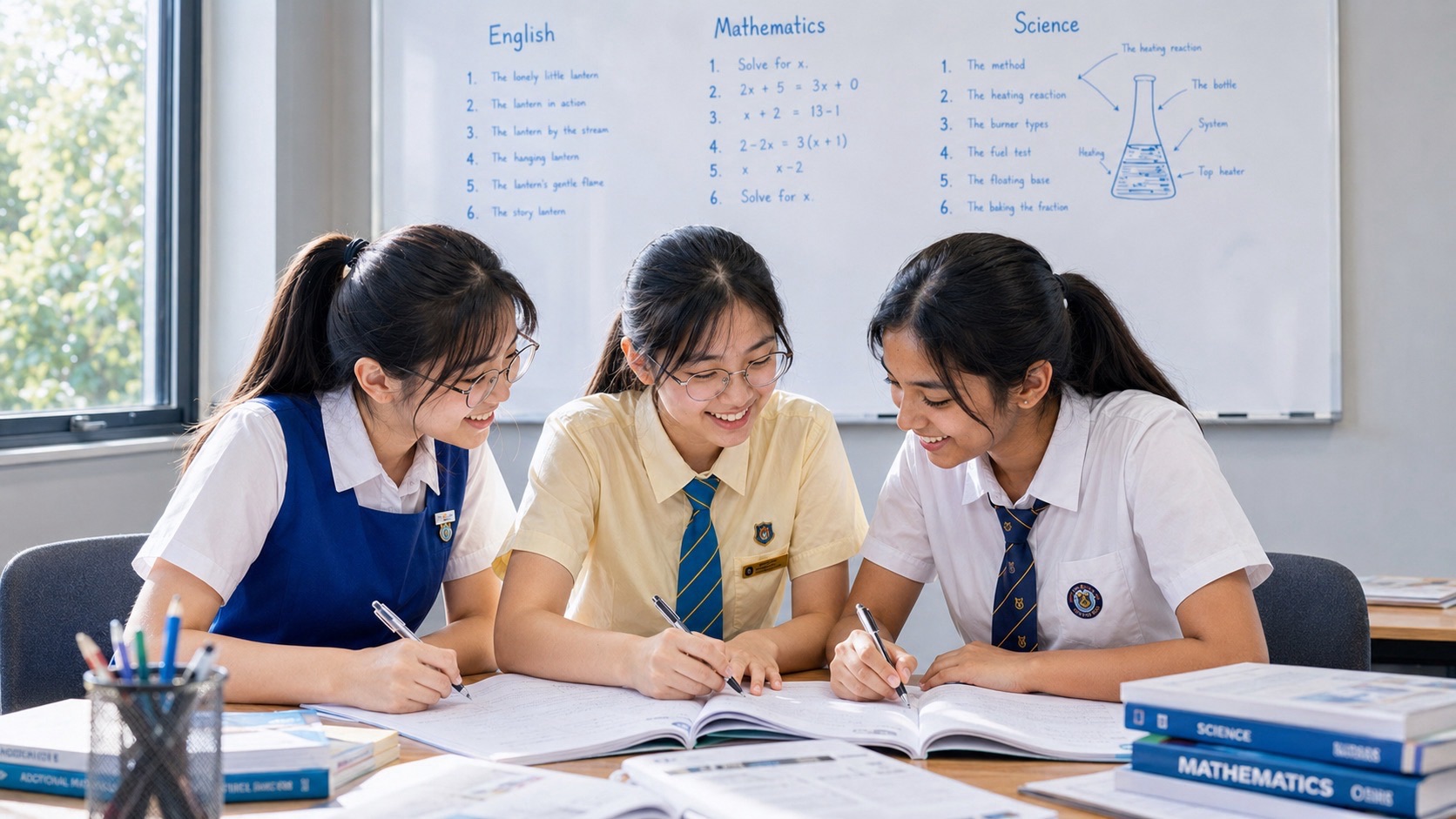
Confrontation · setback · oversight · precaution · perseverance. These words give a Secondary 1 SEC G2 composition something more useful than dramatic decoration: they help describe what went wrong, how people responded, and what their actions changed. Part 3 of the Top 2000 Vocabulary List provides words 1001–1500, grouped by conflict, mistakes, investigation, decision-making, teamwork, effort, repairs and consequences.
A good problem-solving story does not need a spectacular disaster. A misplaced document, an unfair accusation or a team disagreement can become compelling when the reader understands the stakes and sees a believable decision. For Secondary 1, follow school-based writing instructions; the 2027 national SEC G2 English Language K200 specification is a later-stage reference, not a Secondary 1 examination format. SEAB does not issue this 2,000-word vocabulary collection as a compulsory list, and PSLE is the earlier foundation rather than the current assessment.
- Begin with the problem and its cause, not a long list of emotion words.
- Use action verbs for what characters actually do; choose strong nouns for obstacles and consequences.
- Make each solution proportionate, safe and plausible.
- Distinguish mistakes, accidents and deliberate wrongdoing.
- Plan a turning point so the ending follows the events.
- Treat the vocabulary below as independent study material, not official SEAB prescribed words.
Explore the complete 2,000-word series: Part 1: Character & Emotions (1–500) · Part 2: Setting & Senses (501–1000) · Part 3: Conflict & Solutions (1001–1500) · Part 4: Reasoning & Reflection (1501–2000)
Vocabulary bank: words 1001–1500
1. Conflict and disagreement — words 1001–1050
Put these words to work in a scene where a character meets a real difficulty. The event, the choice and the consequence should remain understandable even if the advanced word is removed.
- 1001–1010: accusation · altercation · antagonism · argument · backlash · bickering · clash · collision · confrontation · contention
- 1011–1020: controversy · criticism · debate · defiance · disagreement · discord · dispute · division · feud · friction
- 1021–1030: grudge · hostility · ill-will · impasse · insult · interference · interruption · jeering · miscommunication · objection
- 1031–1040: opposition · provocation · quarrel · reproach · rivalry · rumour · sarcasm · scuffle · spat · standoff
- 1041–1050: strain · taunt · tension · threat · ultimatum · unrest · uproar · verbal · wrangle · accuse
Model: A misunderstanding escalated into a public quarrel when neither pupil listened.
Meaning check: A disagreement can be calm; a confrontation suggests a direct and potentially tense encounter.
2. Barriers and setbacks — words 1051–1100
Put these words to work in a scene where a character meets a real difficulty. The event, the choice and the consequence should remain understandable even if the advanced word is removed.
- 1051–1060: adversity · barrier · blockage · bottleneck · burden · complication · constraint · delay · difficulty · disruption
- 1061–1070: drawback · encumbrance · frustration · hardship · hindrance · hurdle · impediment · inconvenience · limitation · obstacle
- 1071–1080: pitfall · problem · roadblock · setback · shortage · snag · deadlock · dilemma · disadvantage · derailment
- 1081–1090: deficiency · deficit · defect · disarray · exhaustion · fatigue · flaw · misfortune · misstep · peril
- 1091–1100: predicament · pressure · scarcity · shortfall · trial · uncertainty · weakness · affliction · disorder · entanglement
Model: The shortage of batteries became a setback when their torch stopped working.
Meaning check: A setback slows progress; a deadlock means neither side can currently move forward.
3. Mistakes and misjudgement — words 1101–1150
Put these words to work in a scene where a character meets a real difficulty. The event, the choice and the consequence should remain understandable even if the advanced word is removed.
- 1101–1110: accidental · blunder · carelessness · correction · discrepancy · distortion · embarrassment · error · exaggeration · fault
- 1111–1120: forgetfulness · haphazard · ignorance · inaccuracy · inattention · incompetence · inconsistency · incorrectness · lapse · miscalculation
- 1121–1130: misconception · misconduct · misdirection · misinterpretation · misfiling · mislabel · mismatch · misplacement · misprint · misreading
- 1131–1140: mistake · misaddressing · misuse · negligence · omission · oversight · overstatement · presumption · recklessness · slip
- 1141–1150: sloppiness · stumble · unawareness · underestimation · unfounded · unintended · unintentional · unwarranted · assumption · bias
Model: An oversight in the timetable caused her to miss the meeting.
Meaning check: An oversight is usually an accidental omission, not a deliberate lie.
4. Danger and emergency — words 1151–1200
Put these words to work in a scene where a character meets a real difficulty. The event, the choice and the consequence should remain understandable even if the advanced word is removed.
- 1151–1160: accident · aftermath · alarm · ambush · assistance · blaze · breakdown · calamity · casualty · catastrophe
- 1161–1170: chaos · collapse · crisis · damage · danger · debris · disaster · distress · evacuation · emergency
- 1171–1180: entrapment · exposure · fatality · firebreak · flames · flood · fragile · fracture · hazard · injury
- 1181–1190: instability · jolt · leakage · malfunction · mayhem · mishap · obstruction · outbreak · panic · precaution
- 1191–1200: protection · rescue · risk · rubble · rupture · safety · siren · smoke · spark · spill
Model: A damaged railing was a hazard, so the students kept their distance and called for help.
Meaning check: Describe sensible, safe actions in emergency stories; avoid turning danger into a stunt.
5. Observation and investigation — words 1201–1250
Put these words to work in a scene where a character meets a real difficulty. The event, the choice and the consequence should remain understandable even if the advanced word is removed.
- 1201–1210: analyse · assess · attest · authenticate · check · clarify · clue · compare · confirm · consider
- 1211–1220: correlate · cross-check · deduce · detect · determine · diagnose · disclose · discover · document · estimate
- 1221–1230: evaluate · evidence · examine · explore · fact · findings · forensic · identify · infer · inquire
- 1231–1240: inspect · investigate · justify · locate · measure · monitor · notice · observe · pattern · proof
- 1241–1250: question · record · reconstruct · reexamine · research · retrace · reveal · sample · scan · search
Model: She compared the receipts before drawing a conclusion about the missing money.
Meaning check: A clue suggests what may have happened; proof is stronger and requires adequate support.
6. Decision-making under pressure — words 1251–1300
Put these words to work in a scene where a character meets a real difficulty. The event, the choice and the consequence should remain understandable even if the advanced word is removed.
- 1251–1260: alternative · anticipate · appraise · tradeoffs · calculate · calibrate · caution · decisiveness · conclude · contemplate
- 1261–1270: cost · criterion · deliberate · deliberation · discretion · feasibility · forecast · hesitation · implication · impulse
- 1271–1280: contingencies · likelihood · necessity · option · outcome · plan · possibility · preference · preparation · prioritise
- 1281–1290: probability · proposal · prospect · reason · reassess · reconsider · reject · resolve · response · select
- 1291–1300: solution · strategise · strategy · trade-off · weigh · withdraw · allocate · approve · choose · contingency
Model: Faced with two routes, they weighed safety against speed before deciding.
Meaning check: A choice is more convincing when the reader knows the options and what each might cost.
7. Teamwork under difficulty — words 1301–1350
Put these words to work in a scene where a character meets a real difficulty. The event, the choice and the consequence should remain understandable even if the advanced word is removed.
- 1301–1310: assist · backup · brainstorm · brief · collaborate · coordinate · delegate · distribute · divide · encourage
- 1311–1320: exchange · facilitate · guide · help · include · inform · instruct · intervene · liaise · listen
- 1321–1330: mediate · motivate · organise · participate · partner · persuade · consult · propose · reallocate · reciprocate
- 1331–1340: reconcile · redistribute · refer · reinforce · relay · remind · report · request · respond · share
- 1341–1350: cooperate · synchronise · teach · translate · unite · volunteer · workshop · cohesion · coordination · delegation
Model: One pupil coordinated the search while another contacted the school office.
Meaning check: Give teammates distinct useful actions instead of claiming that teamwork solved everything.
8. Persistence and courage in action — words 1351–1400
Put these words to work in a scene where a character meets a real difficulty. The event, the choice and the consequence should remain understandable even if the advanced word is removed.
- 1351–1360: attempt · apply · bear · undertake · commit · confront · continue · cope · defend · devote
- 1361–1370: strive · embark · endure · engage · exert · face · focus · fortify · grapple · improve
- 1371–1380: insist · maintain · master · overcome · persist · practise · redouble · persevering · rebound · recover
- 1381–1390: rehearse · remain · renew · repair · repeat · resist · restart · restore · rethink · retry
- 1391–1400: shoulder · sustain · tackle · spearhead · train · try · venture · withstand · work · adapt
Model: Even after failing twice, he adjusted his plan and tried a safer method.
Meaning check: Persistence is useful when paired with learning; repeating a harmful mistake is not admirable.
9. Repair, recovery and practical solutions — words 1401–1450
Put these words to work in a scene where a character meets a real difficulty. The event, the choice and the consequence should remain understandable even if the advanced word is removed.
- 1401–1410: adjust · amend · assemble · bolster · clean · clear · correct · counteract · cover · defuse
- 1411–1420: deliver · dispose · drain · enable · establish · fasten · fix · improvise · isolate · mend
- 1421–1430: modify · patch · prevent · protect · rearrange · rebuild · recalibrate · recharge · reconnect · rectify
- 1431–1440: redirect · reinstate · renovate · replace · replenish · resume · retrieve · rework · salvage · secure
- 1441–1450: simplify · stabilise · strengthen · supply · tighten · troubleshoot · upgrade · utilise · fine-tune · rehabilitate
Model: They secured the loose shelf and informed the teacher before anyone was hurt.
Meaning check: A solution should match the actual problem; do not solve every story with a coincidence.
10. Aftermath, consequence and turning point — words 1451–1500
Put these words to work in a scene where a character meets a real difficulty. The event, the choice and the consequence should remain understandable even if the advanced word is removed.
- 1451–1460: achievement · acknowledgement · apology · awakening · benefit · breakthrough · closure · conclusion · atonement · contribution
- 1461–1470: debt · amity · disgrace · disillusionment · effect · conciliation · fallout · exoneration · gratification · improvement
- 1471–1480: impact · remorse · lesson · legacy · acknowledgment · milestone · penalty · progress · affirmation · reassessment
- 1481–1490: rebuilding · amendment · betterment · beneficence · regret · reparation · repercussion · rapprochement · recommitment · reward
- 1491–1500: concord · satisfaction · success · transformation · triumph · turnaround · watershed · concordance · upshot · victory
Model: The apology did not erase the damage, but it was the first step toward rebuilding trust.
Meaning check: A believable ending acknowledges consequences instead of pretending the problem vanished.
Why conflict vocabulary improves story structure
A plot moves when a character wants something but faces resistance. The resistance may be external, such as a missing key, or interpersonal, such as a disagreement. Precise words help the writer describe what kind of resistance exists. “Setback” implies a loss of progress, “deadlock” implies an inability to agree or advance, and “misunderstanding” implies that people have interpreted something incorrectly.
Build the cause-and-effect chain
Write five brief notes before writing the full story: initial goal, obstacle, first response, unexpected complication and final choice. For example: a group wants to submit a project; one file is missing; they argue; a classmate checks a backup; the team discovers an older copy and recreates the lost changes together. This chain provides a meaningful place for words such as oversight, accusation, investigate and coordinate.
Distinguish an honest error from misconduct
If a pupil accidentally sends the wrong attachment, describe an oversight or miscalculation. If the pupil knowingly submits another person’s work, the issue may be dishonesty or misconduct. These differences matter because they shape what a fair response looks like. Do not exaggerate every mistake into a moral crisis.
How to write a safer emergency scene
A story about a damaged railing, fire alarm or road accident should show realistic protective decisions: keeping a safe distance, warning others and getting appropriate adult or emergency help. Avoid presenting dangerous risks as clever heroism. A student writer can build suspense through uncertainty, communication and urgency without encouraging unsafe conduct.
Make reasoning visible
A character who discovers a missing object should not instantly know who took it. Show what was noticed, what alternatives were considered, what evidence was checked and what conclusion was reasonable. “She investigated” is a label; “She compared the receipts with the sign-out sheet” is an observable investigative action.
Dialogue can develop the conflict
Compare: “You never listen!” he shouted. “You are wrong!” she replied. With: “I thought you had checked the deadline,” she said, placing the unopened email on the desk. “I checked last week’s notice,” he admitted. The second exchange reveals the error and creates an opportunity for repair. Emotion becomes more convincing when connected to new information.
A worked example: the group-project problem
Plain version: “Our project went wrong. Everyone was angry. We worked hard and fixed it.” Better version: “When the final slide deck disappeared, the team fell into an argument. Rina stopped the accusations and asked everyone to check their saved versions. A classmate located an older copy, and the group rebuilt the missing slides before the deadline.” Notice how specific actions replace vague summaries. The improvement does not depend on very rare vocabulary.
A worked example: courage without recklessness
Weak: “I bravely ran into the dangerous place.” Better: “Seeing smoke beyond the locked room, I kept the other students away, alerted the teacher and followed the evacuation instructions.” The second version shows a responsible choice. Courage can mean resisting pressure, admitting a mistake or calling for help rather than physically confronting every hazard.
How to write the ending
A satisfying ending shows consequences. After a public accusation, the accused pupil may accept an apology but need time to rebuild trust. After losing equipment, a team may complete the task yet change how it stores files. An ending is stronger when it includes a consequence, an action and a credible change in the relationship or procedure.
A six-step drafting routine
- Identify the central problem in one sentence.
- State what the main character wants and why it matters.
- Choose five words from one relevant bank, checking definitions.
- Write a 180–250-word first draft without forcing every selected word into it.
- Edit causes, decisions and consequences before polishing adjectives.
- Read aloud for unnatural language, tense changes and missing explanations.
Parent support: three questions
Ask: “What caused this problem?”, “Why was the first response unsuccessful?”, and “What changed after the final decision?” These questions work even if a parent does not know every word in the list. If the pupil can explain why a conflict was a misunderstanding rather than betrayal, the vocabulary is serving precise thought.
Three targeted writing exercises
- Write about an accusation that turns out to be a misunderstanding. Use evidence and an apology naturally.
- Write about a project that suffers a setback. Show how the students divide tasks and repair the problem.
- Write about a decision that prevents an avoidable accident. Use precaution, risk and consequence accurately.
A vocabulary self-check
- I know whether my selected word is a verb, noun or adjective.
- I can explain the word without copying a dictionary definition.
- The word fits the seriousness of the event.
- The action described could plausibly happen in the chosen setting.
- My ending follows what came before.
- I removed any sophisticated word that made the meaning less clear.
G2 curriculum and examination context
For the national SEC from 2027, SEAB lists G2 English Language as K200. The K200 English syllabus describes continuous writing and evaluates content, organisation, clarity and language accuracy. The published Section C specification of 250–400 words is an end-of-secondary examination reference, not an instruction for every Secondary 1 composition.
Further vocabulary routes
Use the Secondary 1 G2 composition guide for broader story writing, why vocabulary matters for study motivation, and learning methods for retrieval practice. Part 1 focuses on character, while Part 2 helps with settings and movement.
Authoritative sources and limitations
Checked 19 November 2026: SEAB Singapore-Cambridge SEC overview, 2027 G2 syllabus directory, K200 English Language, MOE Secondary English Language Syllabus 2020. This vocabulary selection is an independent learning resource and is neither a statutory requirement nor an official word list.