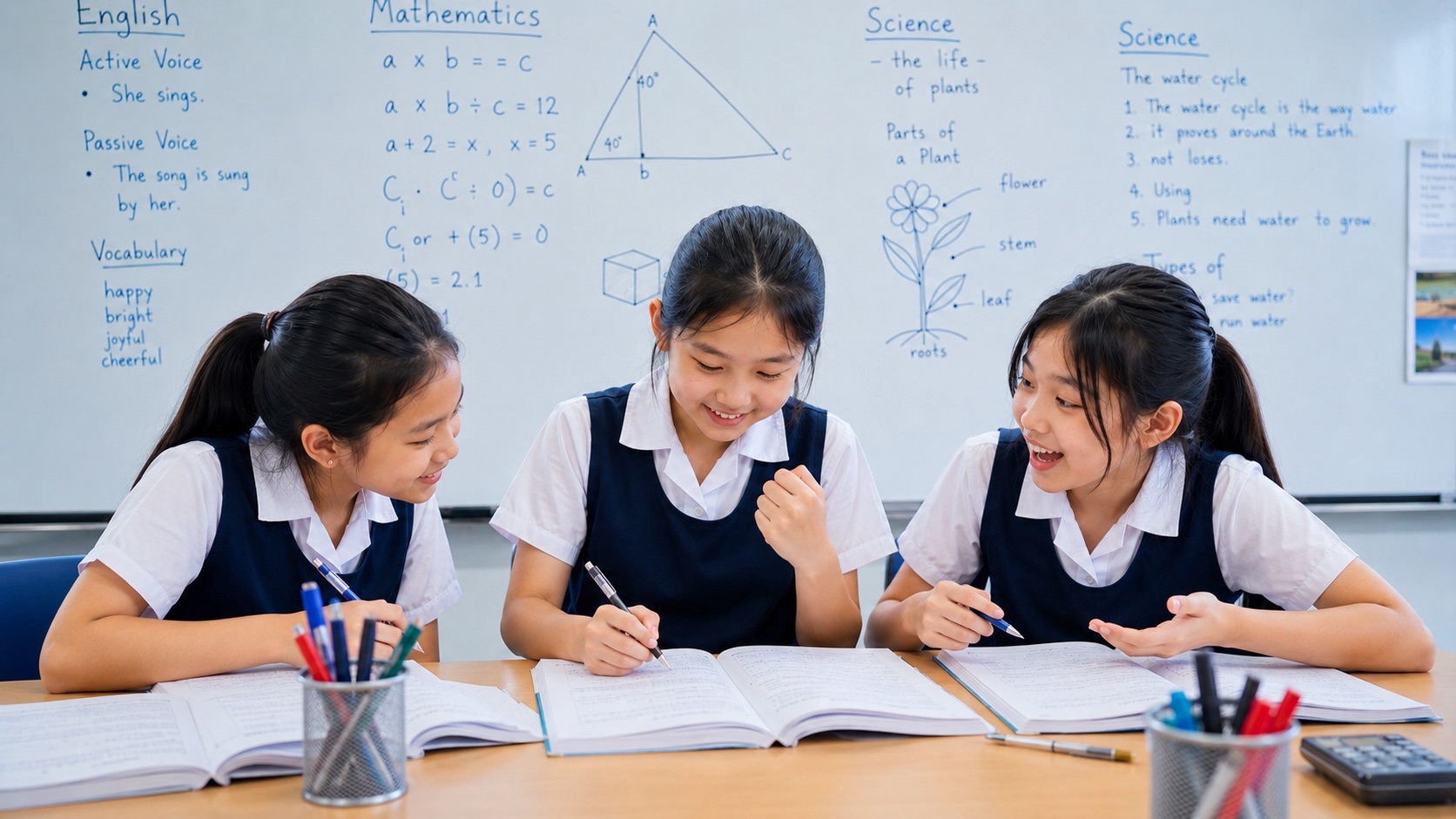
Drizzle, bustling, fragrant, shaded, rustling, dazzling, slippery and cosy: these setting-and-senses words help a Primary 1 child show where a story happens and what a character can notice. This third part of the advanced Primary 1 vocabulary collection supplies words 1001–1500, grouped into school, home, Singapore neighbourhoods, plants, animals, weather, landscapes, sounds, colours, textures, tastes and time. A useful detail helps the reader imagine the scene; too many details make a short story difficult to follow.
At Primary 1, children should first be able to point, name, describe and speak about real objects and familiar places. Parents can walk through a playground, examine a leaf or listen to rain, then write one clear sentence about the experience. The MOE Primary English Language syllabus supports vocabulary knowledge developed through experiences, reading and context. This eduKate 2,000-word bank is an original enrichment selection, not a prescribed SEAB word list or a requirement for the later PSLE.
- 500 additional vocabulary items (1001–1500), checked against words 1–1000 to avoid repeats.
- Twelve practical categories from classrooms and homes to landscape, sound, colour and texture.
- Learn through sight, hearing, smell, touch and taste only where safe and suitable.
- Write one strong setting detail, then return to the story action; avoid decoration for its own sake.
- Parents can begin with familiar nouns and stretch to descriptive words as comprehension develops.
A setting is not a long description — it helps the story
Consider the sentence We waited at the bus stop. It locates the action. Now try We waited under the shelter as a light drizzle began. The added details explain why the characters might move closer together. A stronger word is one that changes the reader’s understanding of time, place or feeling. A list of random adjectives does not do that.
Primary 1 advanced setting and senses word bank: entries 1001–1500
School and classroom settings — words 1001–1042
classroom · whiteboard · blackboard · chalkboard · noticeboard · desk · chair · table · stool · shelf · bookshelf · cubbyhole · locker · pencilcase · eraser · ruler · notebook · workbook · textbook · worksheet · page · bookmark · marker · crayon · highlighter · stapler · staple · paperclip · envelope · folder · file · backpack · satchel · uniform · collar · pocket · shoelace · sock · schoolbag · badge · hall · stage
Look, listen and write: Choose one word you can explain, describe a real or imagined example, and add it to one accurate sentence about a place.
Home spaces and comfortable objects — words 1043–1084
house · cottage · bungalow · terrace · roof · attic · ceiling · floor · wall · tiles · carpet · rug · mat · cushion · pillow · bolster · blanket · bedsheet · mattress · bed · bunk · cot · cradle · sofa · armchair · coffee · dining · wardrobe · dresser · mirror · comb · hairbrush · toothbrush · toothpaste · soap · towel · shower · bathtub · washbasin · toilet · basin · cabinet
Look, listen and write: Choose one word you can explain, describe a real or imagined example, and add it to one accurate sentence about a place.
Singapore neighbourhood and daily surroundings — words 1085–1126
estate · precinct · suburb · neighbourhood · boulevard · avenue · lane · road · street · alley · pavement · footpath · sidewalk · kerb · crossing · junction · intersection · roundabout · flyover · underpass · overhead · bridge · zebra · traffic · signal · lamp-post · streetlamp · signpost · bus · interchange · platform · escalator · elevator · gantry · ticket · queue · awning · walkway · drain · canal · reservoir · riverbank
Look, listen and write: Choose one word you can explain, describe a real or imagined example, and add it to one accurate sentence about a place.
Trees, flowers and growing things — words 1127–1168
tree · shrub · bush · hedge · sapling · seed · seedling · sprout · shoot · bud · blossom · bloom · flower · petal · stem · stalk · branch · twig · root · leaf · foliage · canopy · bark · thorn · vine · creeper · grass · meadow · lawn · moss · fern · lichen · clover · bamboo · palm · coconut · hibiscus · orchid · sunflower · daisy · rose · lily
Look, listen and write: Choose one word you can explain, describe a real or imagined example, and add it to one accurate sentence about a place.
Animals, insects and living things — words 1169–1210
animal · pet · puppy · kitten · dog · cat · rabbit · hamster · guinea-pig · goldfish · guppy · turtle · tortoise · frog · toad · tadpole · snail · slug · worm · earthworm · caterpillar · butterfly · moth · ladybird · beetle · ant · termite · cockroach · mosquito · dragonfly · grasshopper · cricket · bee · wasp · spider · centipede · millipede · lizard · gecko · chameleon · iguana · snake
Look, listen and write: Choose one word you can explain, describe a real or imagined example, and add it to one accurate sentence about a place.
Weather, clouds and changing skies — words 1211–1252
sun · sunshine · sunlight · sunbeam · sunrise · sunset · dawn · dusk · twilight · daylight · nighttime · moon · moonlight · starlight · star · constellation · galaxy · sky · horizon · cloud · cloudlet · cumulus · cirrus · overcast · cloudy · clear · cloudless · azure · storm · thunder · lightning · thunderstorm · rainfall · drizzle · downpour · rainstorm · raindrop · raindrops · monsoon · humidity · humid · muggy
Look, listen and write: Choose one word you can explain, describe a real or imagined example, and add it to one accurate sentence about a place.
Water, soil, seashore and landscape — words 1253–1294
ocean · sea · beach · coast · shoreline · shore · bay · cove · gulf · strait · channel · harbour · port · marina · jetty · pier · dock · wharf · quay · lagoon · peninsula · headland · cliff · boulder · dune · ridge · mountain · hill · valley · slope · plateau · plain · cave · cavern · grotto · gorge · brook · creek · river · tributary · waterfall · cascade
Look, listen and write: Choose one word you can explain, describe a real or imagined example, and add it to one accurate sentence about a place.
Sounds: from silence to noisy streets — words 1295–1336
sound · noise · silence · hush · racket · din · clamour · buzz · whirr · whine · squeak · creak · squeal · clang · clangour · clatter · clank · boom · thud · tick · tock · clicking · click · crackle · pop · fizz · hiss · sizzle · gurgle · burble · roar · growl · meow · purr · chirp · twitter · tweet · caw · coo · hoot · croak · ribbit
Look, listen and write: Choose one word you can explain, describe a real or imagined example, and add it to one accurate sentence about a place.
Colours, light, distance and sight — words 1337–1377
red · blue · green · yellow · purple · pink · brown · black · white · grey · gray · scarlet · ruby · maroon · burgundy · peach · apricot · gold · bronze · copper · turquoise · teal · aqua · cyan · navy · lavender · lilac · magenta · fuchsia · beige · cream · ivory · tan · ochre · mustard · olive · emerald · jade · forest-green · sky-blue · midnight-blue
Look, listen and write: Choose one word you can explain, describe a real or imagined example, and add it to one accurate sentence about a place.
Touch, shape, surface and materials — words 1378–1418
soft · hard · rough · smooth · silky · furry · fluffy · fuzzy · velvety · prickly · spiky · scratchy · bumpy · lumpy · gritty · grainy · tacky · moist · soaked · warm · scorching · burning · coolish · brittle · fragile · delicate · sturdy · strong · solid · hollow · heavy · weightless · dense · rubbery · stretchy · stiff · rigid · firm · squishy · spongy · springy
Look, listen and write: Choose one word you can explain, describe a real or imagined example, and add it to one accurate sentence about a place.
Smells, tastes, food and kitchen atmosphere — words 1419–1459
aroma · smell · odour · stench · stink · fragrant · aromatic · sweet · sour · bitter · salty · savoury · spicy · tangy · zesty · bland · mild · rich · creamy · milky · buttery · cheesy · fruity · nutty · smoky · burnt · charred · stale · fresh · crisp · crunchy · chewy · tender · juicy · watery · sourish · sugary · honeyed · minty · peppery · garlicy
Look, listen and write: Choose one word you can explain, describe a real or imagined example, and add it to one accurate sentence about a place.
Time, atmosphere and descriptive comparisons — words 1460–1500
morning · afternoon · evening · midnight · noon · midday · daybreak · daynight · weekday · weekend · holiday · vacation · term · month · year · minute · second · hour · moment · instant · period · interval · duration · early · late · sooner · later · before · afterwards · then · next · meanwhile · eventually · finally · gradually · slowly · rapidly · quickly · still · motionless · tranquil
Look, listen and write: Choose one word you can explain, describe a real or imagined example, and add it to one accurate sentence about a place.
Twenty useful setting words: meanings and examples
- courtyard — an open space surrounded by buildings. The children met in the sunny courtyard.
- railing — a bar or fence that helps people stay safe. Jo held the railing while going down the steps.
- cubbyhole — a small space for keeping things. Mira put her shoes in the cubbyhole.
- balcony — a raised outdoor space attached to a building. We saw the rain from the balcony.
- precinct — a small area within a neighbourhood. The families walked around their precinct.
- footpath — a path for people walking. Kai stayed on the footpath.
- seedling — a very young plant. A tiny seedling grew beside the window.
- canopy — the cover formed by branches and leaves. We rested beneath the tree canopy.
- nectar — sweet liquid made by flowers. A butterfly visited the flower for nectar.
- habitat — the natural home of an animal. The pond is a habitat for frogs.
- drizzle — very light rain. A drizzle began as we left the library.
- overcast — covered by clouds. The sky was overcast before the rain.
- ripple — a small wave on the water. A ripple spread across the pond.
- shoreline — the edge where land meets water. We picked up litter near the shoreline.
- rustle — a soft sound like moving leaves or paper. The dry leaves made a gentle rustle.
- clatter — a series of hard, rattling noises. The metal lids fell with a clatter.
- dazzling — very bright and difficult to look at. The dazzling sunlight shone on the pavement.
- shadowy — rather dark because of shadows. A shadowy corner lay behind the shelf.
- prickly — covered with small sharp points. The prickly leaf scratched my finger.
- fragrant — having a pleasant smell. The fragrant flowers grew beside the gate.
Original model story: The Sounds Behind the Gate
Alicia and Kai Kai walked through their neighbourhood garden. The sky was overcast, but the air felt cool. A soft rustle came from a shrub near the gate. “What was that?” Alicia asked. Kai Kai looked carefully and spotted a little bird beside a seedling. They stayed on the footpath so that they would not frighten it. Soon, the bird flew to a nearby branch. The two friends smiled and continued their walk.
The setting details are linked to the events. Overcast describes the sky; rustle gives a reason to pay attention; shrub tells us where the bird was; footpath supports a safe choice. A Primary 1 child may write a much shorter version and still communicate the story well.
Three practice questions and model answers
- 1. Which detail fits? A child can hear leaves moving in the wind. Choose: rustling, chewy or salty. Answer: rustling.
- 2. Make a picture clearer. Improve There was rain using one suitable word. Answer: A light drizzle fell over the playground.
- 3. Show, then stop. Write one sentence for a hot, busy market without listing five colours. Possible answer: The bustling market was filled with the aroma of freshly cooked food.
A sensible learning route for Singapore parents
- Observe: Use a real place, a picture book or a simple photo. Ask the child to name five things.
- Compare: Explore one pair, such as rain/drizzle or noise/clatter.
- Speak: Make a complete sentence without writing first.
- Write: Add only one or two useful details to a three-sentence story.
- Transfer: Change the scene from home to school or park. Can the child select an appropriate word independently?
Parent questions
Does advanced vocabulary mean a Primary 1 child must know hundreds of rare words? No. The bank includes everyday items and optional stretch words. A child should use words accurately before attempting longer descriptions.
Can the child practise without worksheets? Yes. Everyday conversation, reading together, labelling a drawing, recounting a trip and telling a short story are valuable language activities.
Does MOE or SEAB supply this particular 2,000-word collection? No. It is an eduKate editorial collection designed to support the broader language skills described in the MOE syllabus. Current SEAB PSLE information concerns Primary 6, not a fixed vocabulary test for Primary 1.
Official references and earlier vocabulary collections
- MOE Primary English Language Syllabus.
- SEAB: PSLE formats examined in 2026.
- MOE: assessment-load changes for Primary 1 and Primary 2.
- eduKateSG: How Primary Vocabulary Works.
- Part 1: Emotions, People and Dialogue (words 1–500).
- Part 2: Actions, Movement and Problems (words 501–1000).