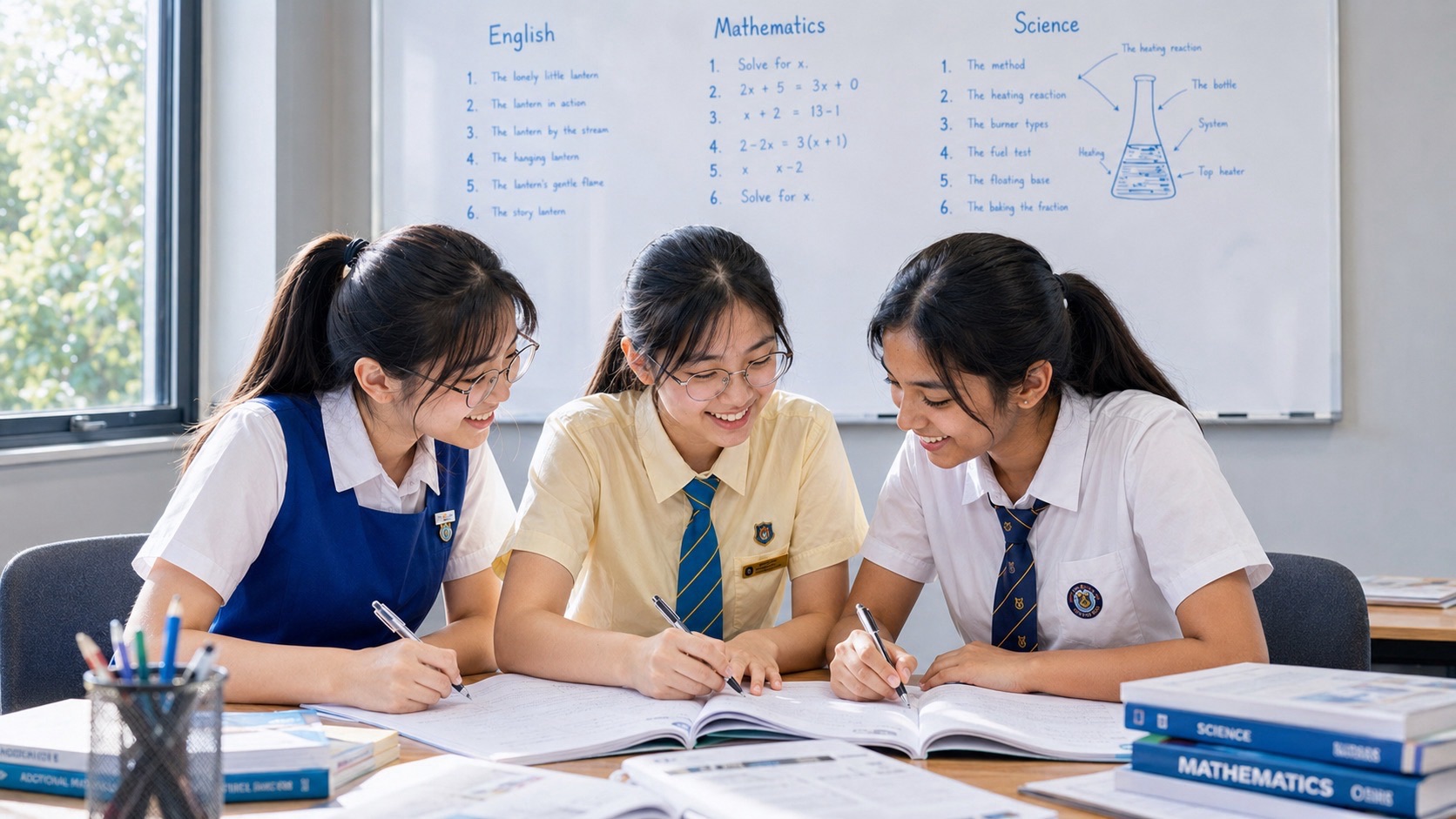
Secondary 1 G1 English small-group tuition can help Katong students turn an experience into a clear personal recount. In an eduKate group of three, each writer can explain what happened, hear where a reader lost the sequence and revise one part independently. Bring a recent school draft and the question it answered, or begin with an ordinary event the student can describe in their own words.
A recount gives the reader a selected account of an experience and a sense of why that experience mattered. Students learn to choose a moment, anchor it in time and develop the action that changed what they did or understood. A short recount with one accurate detail and a thoughtful ending can build towards longer school tasks and later G1 English work in the Singapore-Cambridge Secondary Education Certificate (SEC).
- Start with one event the student can explain clearly, using the school’s instructions to decide whether it should be a true personal account.
- Choose a section of the experience with a clear change, decision or discovery.
- Put the actual events in order before deciding how to open the written piece.
- Include details that explain an action, clarify the sequence or show how the writer’s view changed.
- Finish with a specific observation or next step that follows from the experience.
- Check progress on a fresh independent recount and use the current school task alongside the published SEC syllabus for long-term planning.
Find your next learning step
Jump to a section or read the guide in order.
Start with the event the student can explain and related sections
Work through a recount about correcting a class programme and related sections
Work through a shorter recount about helping a teammate and related sections
Use the school task today and understand the later SEC format and related sections
Start with the event the student can explain
Some students assume a personal recount needs an unusual experience. They look for an accident, a dramatic competition or a speech in front of a large crowd. An ordinary moment can give the reader more to think about when the writer knows where to focus. A student realised they had misunderstood a word on a school handout. Another changed the way they asked a relative a question. A third found out why a teammate had stopped giving suggestions. Each moment can become a clear account.
Before the student writes, ask for the event in three spoken sentences. “Our group printed a programme for the class showcase. We saw two versions of one activity time after the copies were ready. I asked two people which source they had used, and we corrected the copies before visitors arrived.” That summary already gives a setting, a problem and a response. The writer has enough to begin planning before deciding whether the programme was blue or whether the printer was loud.
If a learner can tell only the first part, ask what happened because of it. “We printed the programme” can lead to “What did someone see when they read it?” and “What did you decide to do next?” If the answer is simply that everyone took a copy and read it, the scene may still work as part of the background. Another moment in the day may give the learner more material for an account with a change.
Keep the choice manageable. An account of a whole school term could take many pages. An account of a morning becomes clearer when it centres on one conversation or decision. Ask the student what they could show somebody who has only one minute to listen. That usually brings the important scene closer.
Separate the assignment from the student’s memory
Read the exact question before choosing a memory. “Write about a time you changed your mind” asks for an earlier belief, an event and a later view. “Describe an interesting place you visited” may ask for descriptive attention rather than a full personal recount with a decision. A story prompt can invite invention. When a school asks for a true account, help the student choose an event they can represent honestly and follow the instructions about names or private details.
A learner may remember the experience clearly while forgetting the date or a person’s exact words. They can use a time cue they know, such as “during our practice before the showcase” or “a few afternoons later”. A brief paraphrase may be more accurate than dialogue the writer cannot recall exactly. Making the uncertainty visible where it matters can be part of careful writing.
The practice models in this guide are fictional examples. They show how a writer can choose and arrange details. If a school assignment asks students to write about a personal memory, use the steps with their own experience. Where a classroom exercise uses fiction to practise recount technique, follow the teacher’s wording and make sure the model fits the assigned form.
Say why this event belongs with this question
Give the learner two possible events for a prompt about noticing a mistake. The first is a busy afternoon during a class event. The second is the moment two copies of the same programme showed different times. In a recount about noticing a mistake, the second event gives the writer something visible to investigate. They can use the first event as setting, then narrow attention to what happened at the table.
Ask the student to finish this spoken line. “This is a useful moment to write about because…” A good answer may be “because I thought the problem had come from someone else’s page and found out I had checked the wrong version myself.” The sentence names what changed. It also suggests where the writer’s own thinking belongs in the recount. If the student says “because it was fun”, ask about one part of the experience they remember particularly well and what made it stand out.
Rebuild the sequence before writing the first paragraph
A listener can often follow a personal story through gestures and interruptions. On the page, readers need enough time information to understand which event caused the next one. Ask the student to jot four or five events in the order they actually happened. The entries might be “printed the sheet”, “heard two different collection times”, “compared the files”, “checked with the teacher” and “replaced the page”. These brief notes give the writer a way to see what is missing.
Mark the action that changed the experience. In the programme example, the change begins when the student realises there are two versions. The response is the comparison and check. That is where the reader needs more than a general “we sorted it out”. Ask which page each person used, who had access to the newest information and how the group decided which time to print. The student can choose the most useful of those details for the main paragraph.
Once the sequence is clear, ask how much of the beginning the reader needs. If the whole opening describes the bus journey to school, the writer may have started too far away from the moment that matters. A shorter opening can place the student at the classroom table, looking at the programme while everyone prepares for the event. The reader then enters the situation with the writer.
Use earlier events only where they explain what happened
A writer can open with the moment of surprise and briefly explain an earlier event. “The first visitor asked which time was right, and I looked at the two sheets in her hand. I had printed my pile before the teacher moved the final session.” The earlier printing matters because it explains the discrepancy. The reader can place it before the question. After that line, the writer can return to the encounter at the table.
When a student tries this approach, have them draw the same four-event timeline. Afterwards ask them to number the events they mention in their written order. The numbers will differ if they start in the middle. Check whether each jump in time is clear to someone who was absent. “Before that”, “earlier that morning” or “by the time” can help. An ordinary phrase that matches the actual sequence is enough.
A full return to an earlier memory creates more work. Younger writers often manage better with chronological order and a brief earlier detail when needed. If the student starts with the result, then explains the morning, then jumps back to another incident in Primary 6, the reader may lose the line that holds the story together. Ask the student which time frame gives the clearest account of what the prompt requests.
Change tense when the time or purpose changes
The usual events in a past recount can use past-tense verbs. “I opened the folder, saw the older date and carried the two sheets to Ms Lim.” An ongoing action in the background can use “was” plus the action form. “Ms Lim was talking to a parent when I reached the desk.” The sentence shows what had already been happening when the writer arrived. One carefully chosen example often teaches more than asking learners to memorise several labels at once.
Past perfect can place an action before another past event. “I had downloaded my copy the day before” explains why it showed a different date when the writer compared it with a revised version. A writer can also state the earlier time directly. “I downloaded my copy the day before. On showcase morning I printed it without checking the new message.” Both approaches can make the sequence clear. Ask the learner which one works with their already-written paragraphs.
The conclusion can legitimately shift into the present when the writer describes a habit they still have. “Now I check the date on a shared file before printing.” That present tense does a different job from “I checked” in the account of that day. A tutor can let the student mark past events and present reflection in different ways and explain why the ending sounds different.
Contents · Previous section · Next section
Give each paragraph a job the reader can recognise
One paragraph can establish who was there, what the writer was trying to do and why the situation mattered. Another can slow down at the moment something changed. A later paragraph can show the result and what the writer understands now. The number of paragraphs depends on the school task and the story. A child who has three strong paragraphs can see what the opening, development and ending each contribute.
The middle is often where a piece needs growth. A student may write, “My friend pointed out the mistake. We fixed it. Everyone was relieved.” Ask what the friend actually showed the writer and what the writer did upon seeing it. “Farah placed two sheets side by side. Mine said the talk started at 10.15. Hers said 10.40.” That detail lets the reader share the moment of recognition. It sets up the writer’s next step.
A recount can slow down for two or three sentences at the crucial moment and move quickly through ordinary actions. “We printed the corrected page and moved the copies to the entrance” may be plenty once readers know why the change mattered. A longer description of the printer has a place only if it helps the reader understand the response or consequence. A writer can often tighten the scene by selecting the actions that matter rather than counting sensory words.
Keep the person’s motivation visible
A student sometimes remembers exactly what an adult told them but gives the reader little sense of what they themselves were trying to do. Ask “What did you expect at that point?” or “Which part were you responsible for?” An answer such as “I thought another helper had changed the schedule” can lead to a more informative next sentence. It sets up why seeing the download date changed the student’s view.
When another person’s reason is known only afterwards, place it where the writer learned it. “I thought Farah was annoyed because she kept looking at the piles. Later she told me she was checking which copies she had already handed out.” This preserves the writer’s initial impression and the later information. It also lets the reader see that an inference may be wrong. A writer does not need to claim to know what somebody else was thinking in the middle of an event.
Let a specific detail carry the feeling
“I felt terrible” tells the reader the writer was upset. A small action can show a more exact feeling. “I turned my stack of programmes face down so nobody would take another one” suggests urgency and worry about the consequence. A learner who can supply that action has already offered a detail with a purpose. They might still want to name the feeling after showing the action, particularly if the reason would otherwise be unclear.
Avoid insisting that the learner use a prescribed way of showing every emotion. “I was relieved when both families took the corrected page” works because readers can connect it to what just happened. Another sentence about a pounding heart may not improve the meaning. Ask whether a detail lets the reader understand a choice the student made. If it does, give it room.
Contents · Previous section · Next section
Work through a recount about correcting a class programme
Here is an original fictional model for teaching a small mistake and its consequences. The imagined prompt asks the writer to recount an occasion when they noticed a problem and acted on it. The useful points are the different copies, what led to the inconsistency and how the writer helped resolve it. The action happens on a morning when a class is opening a showcase.
A first attempt might read, “Our class had a showcase. I gave out the programmes. Farah said there was a mistake in the time. I felt very bad. We went to the teacher and fixed it. I learned to be careful.” The first draft names the event and preserves the main sequence. The reader is left to imagine what the two programmes showed, why the writer was involved and how the teacher helped. Those are the places to expand.
Ask the writer to circle the sentence where their knowledge changed. It may be “Farah said there was a mistake in the time.” Then ask the next question a reader would ask. Which time, on which copies? The student can answer before rewriting. Ask again at “We went to the teacher and fixed it.” What did we ask the teacher? Which detail made it possible to fix the problem? An answer to each question might supply a sentence readers need.
A revised fictional recount
“Ten minutes before our classroom showcase opened, I was arranging the programmes in a neat pile at the door. I wanted families to see the time for our short talk before they started looking at the displays. I had printed the programmes from the copy I downloaded the day before.
“Farah brought a fresh sheet from the teacher’s desk and put it next to my pile. Her copy said the talk would start at 10.40. Mine said 10.15. I wanted to say someone had changed the time without telling me. Then I checked the date on my file and saw that I had printed the earlier version.
“I turned over the rest of the pile before anyone else could take a sheet. Farah and I asked Ms Lim which time the class should use. She confirmed 10.40. The first two families were already looking at their programmes, so I told them which time had changed and gave them the new sheet. Farah made another pile beside the classroom entrance while I checked the copies I had left on the back table.
“Since then, when I print something for a group, I check the most recent file first. I also tell people what changed if they have already seen the earlier version. A corrected page on the table would never help someone who had walked away with the older one.”
The draft gives the opening a practical purpose. Families need to know the time. The two numbers carry the problem. The date on the file lets the writer change their own interpretation. The conclusion follows directly from the action with the families. The reader can see why sharing a correction matters when somebody has already received the earlier information.
Discuss two improvements without copying the model
Ask a student to underline the line that shows the writer taking responsibility. They may select “I checked the date on my file” because that is when the writer found their own role. They may select “I told them which time had changed” because that is where the writer acts on the problem. Both choices can be defended with evidence. Ask the student to find a similar point in their own experience before borrowing any wording.
Give the writer two possible endings for a new recount about bringing the wrong materials to class. “I learnt that mistakes make life difficult” is a broad comment. “Now I put the subject name beside the materials on my list, because two classes use nearly the same folder” gives a specific change. A student can write a third ending describing when the new habit helped. The strongest ending will depend on what the middle of their own account shows.
Contents · Previous section · Next section
Write about a change in understanding
A second fictional example follows a student and an older relative on a familiar walk. The writer assumes their aunt pauses beside a shop to inspect its painted sign. They ask a question and discover that her interest is a memory of how the neighbours used the covered walkway. The recount can show the writer paying attention to something they would otherwise have walked past.
Consider a draft that says, “Last Sunday my aunt told me about the past. There were old buildings and they were nice. She told me neighbours used to talk after school. I respect the past now.” The draft names a general subject and remembers one piece of information. The phrase “about the past” could describe almost any conversation. The writer needs to show why that memory came up at that particular spot and what they did as they listened.
Ask the student to sort three kinds of detail. The first is what the narrator observed, such as where the aunt stood. The second is what the aunt remembered, such as waiting for a friend after school. The third is what the narrator made of the story. These parts may sit in the same paragraph. Their roles should still be visible. A reader should be able to tell which parts the narrator witnessed and which came from someone else’s account.
A revised fictional account of the walk
“My aunt stopped under a covered walkway when we were heading home one Sunday. I noticed her looking towards a shop entrance and asked whether she remembered the old sign above it. The paint looked faded, and I assumed that was why she had slowed down.
“She told me she used to wait there with a school friend. They could talk for a few minutes before going their separate ways. On wet afternoons they would stand further inside, leaving the path free for people walking through. I asked if the shopkeeper knew them. My aunt said he used to move a small crate away from the wall so they would have somewhere clear to stand.
“I had expected my aunt to talk about a sign or a shop. Instead, she began describing the people using the space. I looked back along the walkway and saw a parent step aside while two people passed with shopping bags. A moment earlier I had only noticed the paint.
“When we continued walking, I asked my aunt if there was another place she remembered that way. She started telling me where she and her friend usually met when it was hot. I listened for the people in the story this time. By the time we reached home, I had a better question for the next walk than the one I started with.”
The first paragraph shows the narrator’s assumption before the conversation. The aunt’s memory then gives a concrete detail about the crate and need to leave the path clear. Finally the narrator observes how people are using the walkway in the present scene. The reader has a reason to believe that the narrator began looking differently. The ending describes a change in the quality of the question, which is proportionate to a short walk.
This model also shows how paraphrase can work. The writer could use direct speech for one short line and keep the rest in their own words. An example would be “My aunt told me they used to wait there until their friends had caught up.” Direct speech is valuable when the exact phrase matters and the writer is confident about it. Where the purpose is to show the aunt’s remembered routine, an accurate paraphrase can carry that part of the account.
Use a Katong memory as a starting point
A student can begin with a familiar route or family activity. The National Library Board’s guide to Joo Chiat and Katong has background on places and community histories in the area. A page like this can supply context for a conversation, help a learner choose a detail to observe or give them a question to ask a relative. The recount itself comes from what the writer observed or experienced in the event they are describing.
A practical home exercise is to ask the student to explain one detail twice. First give it as a bare fact. “My aunt stopped near a shop entrance.” Then give it as part of an experience. “I started asking about the faded sign because I thought it was what my aunt had stopped to look at.” The second version lets a reader follow what the writer noticed and what they assumed. If a student needs more material, ask what they noticed afterwards that they had ignored at first.
Where a child is writing about a family member, check whether the task needs the person’s name. “My aunt” can establish the relationship without introducing private details. If the student knows two people recall an event differently, they can say which version they heard and what they saw themselves. A clear recount can include honest uncertainty. It only needs enough information for the reader to understand the event and its effect.
Contents · Previous section · Next section
Reflect on something the recount has already shown
Some students have been taught to end with a moral. They search for a sentence about teamwork, perseverance or kindness and attach it to the last paragraph. A reflection can be much smaller. The writer might show what they now notice earlier, what question they would ask sooner or how their idea about someone changed. Those observations feel earned when the middle of the account gives them a clear cause.
Read the last two paragraphs together. In the class programme example, the writer personally told two families that a time had changed. An ending about checking and passing on corrections grows from that scene. In the walk example, the aunt’s memory led the narrator to ask another question. An ending about asking better questions fits. Encourage the student to point to the exact event that supports their final thought. If they cannot, it may be because the middle needs another detail or the ending is too broad.
A student can try three different reflections for the same event. The first can describe a current habit. “I check the file date before I print copies for the group.” The second can name a change in thinking. “I used to think sending an updated file ended the problem. Now I think about who has already seen the older one.” The third can focus on the next time. “At our next event, I want one person to tell the helpers whenever a time changes.” The best choice is the one the experience supports and the particular school prompt asks for.
Let an action do some of the work
A useful closing paragraph might show the narrator arranging three highlighters by the door before their next class event. If the earlier account concerned mixing up similar folders and the new colour labels prevent it, that action shows a change. The writer can follow it with one sentence saying what they checked. A long paragraph on the general importance of organisation would draw attention away from the specific change the reader has just seen.
Ask the student to try a quiet version even if they keep a reflective sentence. “At the next practice, when the new member waited beside the door, I showed him where to stand and then asked what he needed.” If the story is about learning to listen before giving directions, that moment has a purpose. It shows the writer putting the lesson into practice. The reader can see how the view changed without being told to learn the same lesson.
A learner may write a strong final thought that goes beyond the evidence. “Since that day I have never missed a single date” is difficult to believe if only one later example appears. “Since then I try to check both the time and the version before I print” makes a modest claim the reader can accept. Choose an ending sized to the event. A thoughtful sentence is enough.
Make the feeling precise
If a student writes “I was proud”, ask what they were proud of. Passing an assessment, admitting they made a mistake, persevering after a difficult try and helping a teammate all give different meanings to the same word. “I was proud that I asked for a second attempt even though my first one had gone badly” gives the feeling a cause. A simple cause can be a stronger reflection than an impressive adjective.
Ask how the writer felt during the experience and how they see it now. “I was annoyed when we had to repeat the activity. Afterwards I understood why the practice needed one more run.” This progression lets the reader follow a view changing over time. The two feelings can coexist without the student criticising their earlier self. The account shows what they knew at each point.
Contents · Previous section · Next section
Work through a shorter recount about helping a teammate
This fictional exercise starts with a prompt about helping somebody in a way the writer did not expect. The setting is a school rehearsal. The narrator assumes a teammate needs the instruction repeated. They learn that the teammate cannot see the signal from where they stand. The recount can show the difference between repeating a direction more loudly and finding out why it is not reaching someone.
Here is a first short attempt. “We had rehearsal after class. Aaron was confused, so I told him what to do. He still could not follow it. I went to help him, and then he could do it. It taught me to help others.” Ask a reader to say what they know. They know the writer tried to help and a problem was solved. They do not know which instruction was confusing, what the writer discovered or how the solution worked. Those are the lines to develop first.
A revised fictional recount
“During rehearsal, our group had to open the curtains after Mei raised her hand. Aaron stood at the far end, next to a tall board we had placed beside the stage. He was supposed to pull his side of the curtain when I pulled mine. Twice I moved first and found that his side stayed closed.
“I thought he had forgotten what to do, so I called the direction across the stage. He said he remembered it. On the next run I went to his side and waited where he stood. From there the board covered Mei’s arm. I could see her face, but I could not see when she raised her hand.
“I asked Aaron whether we could move the board a little closer to the wall. Mei checked that everyone else could still see it from the seats. We tried again. This time Aaron and I both saw her raise her hand and pulled the curtains together. Mei gave us a quick nod and started the next part of the rehearsal.
“Now, when somebody misses a signal, I ask where they were standing before I repeat it. Aaron already knew what to do. I needed to find out what he could see.”
The placement of the board matters because it gives the problem a cause. Moving to Aaron’s position is the change in the writer’s approach. The final sentence reflects a real mistake the narrator made in reading another person’s situation. It is a small, concrete lesson that applies again. There is enough detail for a reader who has never stood on that stage to understand why the next rehearsal went better.
Invite a student to write the story from Aaron’s point of view as a separate classroom experiment. He would know that he could not see the signal. He would not know what the narrator first thought unless they said it. Switching the viewpoint makes a useful distinction clear. In a recount, what the writer knows changes as the experience unfolds. The reader should be able to tell who saw, assumed or found out each fact.
Transfer the idea to a fresh event
Choose an occasion when someone offered help that solved the wrong problem. It might be an older sibling showing a faster way to pack when the learner wanted help deciding what to bring. Ask the learner to write two lines about what they thought the difficulty was, two lines about what they found out and one line about a better response. Then have them write an independent opening appropriate to the assignment.
This practice can also work in reverse. The writer might remember a time they were helped only after explaining the difficulty properly. A reflection could name the question they learnt to ask. The crucial change is a clear before and after. If the reader can explain both in ordinary words, the learner has likely brought enough of the event onto the page.
Contents · Previous section · Next section
Use a group of three to find gaps in a recount
A tutor might give each student two minutes to outline an experience and write the moment that mattered. Give everyone a private attempt before anyone reads aloud. One student may write a whole introduction without naming a problem. Another may skip from the problem to the solution. A third may write an ending that introduces something the reader has never heard about. The tutor can give each student one next move.
In a reading round, divide the jobs so the feedback stays focused. One student reads a short passage. One listener reports the event order. The other listener names the line where the writer changed their view or plan. The writer can compare what the readers heard with what they intended. Rotate the jobs and then give each learner time to make their own change. The tutor steps in wherever the discussion stops being about the text.
A useful comment is “I thought you asked the teacher before you compared the two copies.” That tells the writer where the time information broke down. Another is “I could see why you changed the pile, but I did not know two families had already picked up a sheet.” That identifies a missing consequence. “Add more detail” does not give the learner enough of a next move. Ask which detail the reader would need at that point.
Invite learners to share a fictional classroom example if they would rather keep their real memory private. A tutor can still see whether the timeline works and whether the reflection grows from the action. When the final assignment asks for a personal memory, each child can work with a suitable event of their own and share only the part needed for useful feedback.
Check the revision independently
After a group revision, set a different prompt. If the group worked on noticing a mistake, try a moment when the writer changed a plan. Ask each student to outline the event and write a short middle paragraph without using the model. A useful paragraph will let the reader say what happened just before the change and what the writer did next.
Match feedback to the earliest gap. If the student cannot choose an event relevant to a question, start with the prompt and a spoken three-sentence summary. If the sequence makes sense but feels rushed, ask them to develop the scene at the change. If the account is clear and the ending floats free of it, ask which one event best supports a final thought. The new piece shows whether the learner can choose the move independently.
Contents · Previous section · Next section
Revise a recount when the order feels uncertain
A family can practise with the following fictional case. A student and a friend checked whether their class survey had more responses from one block of flats than another. The student remembers the conversation clearly and has forgotten whether they counted the paper forms before or after opening the shared spreadsheet. They do know the two actions happened during the same lesson and that the teacher pointed out a duplicated row afterwards. The reader needs to know what took place before the duplicate was spotted. The precise order of the two earlier checks may make little difference.
A draft could say, “At 11.05 a.m. I counted all the paper forms. At 11.08 a.m. I opened the spreadsheet. At 11.10 a.m. the teacher showed us a mistake.” If those exact times are unknown, a simpler revision keeps the sequence that matters. “During the lesson, I counted the paper forms and checked the spreadsheet with my partner. Afterwards our teacher showed us one response that appeared twice.” Then the writer can develop what the duplicated row changed. If it meant another group had actually received more responses, mention that consequence.
Ask the student whether the ordinary conjunction “and” places those two first actions in a firm order. In this context it can list the checks without making a strong claim about which came first. If the order matters, a phrase such as “before opening the spreadsheet” makes it explicit. If the writer cannot reliably reconstruct it, they can decide whether the uncertain detail is needed at all. The student’s job is to tell the reader what the experience supports.
Correct a jump that hides the reason
Now try a second revision of the same fictional scene. “The teacher showed us the duplicated row. We started checking the street names. I had assigned two answers to the wrong column.” A reader may assume the duplication and wrong column are the same mistake. Decide what happened and put the details in the right relationship. “After our teacher pointed out the duplicated row, we checked the street names too. That second check showed me that I had placed two answers in the wrong column.” The first problem leads to a broader check, and the broader check exposes another problem.
Ask a reader to paraphrase what happened after this revision. If they can name which problem led to the second check, the revised lines are doing their job. Then ask the student to add a final thought. “Now I check the names beside the totals before I report a result” relates to the second error. “Now I ask someone to compare the responses with the final list before we share the numbers” can cover both errors. The writer should choose the idea that reflects the experience as they understood it.
Give feedback on accuracy separately from style
Begin by telling the learner what you can accurately retell from their draft. “You and your partner checked the papers and spreadsheet, then your teacher noticed a duplicate.” Next, name the part where you need help. “I still don’t know what changed when you checked the street names.” That question asks the writer for a fact or consequence. After they answer it, ask them to choose where the new sentence belongs.
Style can be reviewed once the account is stable. The student may choose a shorter time cue, replace a repeated verb or move a detail nearer the action it explains. Have them read the result aloud and check whether an attractive revision silently changed the meaning. A writer who changes “I thought there were twelve forms” to “There were twelve forms” has removed an important distinction. In a recount, what the writer believed at the time can matter as much as the number they eventually confirmed.
Contents · Previous section · Next section
Use the school task today and understand the later SEC format
The published 2027 SEC G1 English Language school-candidate syllabus uses the subject code K100. Continuous Writing is Section C of Paper 1 and carries 30 marks. In that edition candidates choose one of two topics and write at least 120 words in continuous prose. The syllabus gives narrative, personal recount and description as examples of that writing. It states that the Writing examination is delivered by computer. See the published 2027 K100 G1 English Language syllabus.
At Secondary 1, use the school’s instructions for the task at hand. A teacher may ask for a short recount of a personal event, specify a different length or focus on a particular feature such as sequencing. The 2027 format gives families a view of a later assessment. Check the applicable syllabus when your child’s examination cohort reaches that stage.
The student’s Posting Group supports the school admission process and indicates the starting level for most subjects. G1 describes a level for an individual subject. Confirm the allocated English level with the school before choosing a class or materials. For the broader transition into secondary school, see the eduKateSingapore guide to Secondary 1 G1 English preparation.
Build towards a longer piece without padding it
If a child has eight clear sentences, ask which part could carry more useful information. The opening might need the reason the writer was in that place. The middle might need both versions of a time or the fact that a board blocked the view. The ending might need a specific next step. Adding one meaningful sentence to each part can make a piece fuller while keeping the reader with the event.
Practise keyboard revision occasionally when it suits the student’s needs and available materials. Move one sentence and read both the place it left and the place it now sits. A transferred sentence about why a plan changed may fit better earlier, but the pronoun at the start may have lost its reference. A short move gives the learner a way to check organisation as well as sentence accuracy.
The Serangoon G1 English continuous writing guide offers examples for comparing personal recounts with narratives and descriptions.
Contents · Previous section · Next section
Keep a short record of what the student can do alone
Begin with a short independent draft. Save it with the prompt. Ask the student to circle the turning point and mark the line where the reader learns what they did afterwards. If the piece has no turning point yet, ask which decision or surprise they could add from the real event. Keep the student’s first attempt and the revised paragraph so they can see what changed.
At the next opportunity, give a fresh prompt such as “Write about a time you needed to ask a better question” or “Write about a small thing that changed how you worked with someone.” Give the student similar time and the option of making a timeline. Look for evidence that they chose a workable event, kept the time frames readable and developed the moment that mattered. The second piece matters because it calls for the same skill in a different experience.
If your family is comparing arrangements from Katong, allow for the whole trip from school or home on an ordinary day. A short practice task that fits the week can be completed more reliably than a large extra assignment. Bring the current English level, a draft and one question about the student’s writing when you contact eduKateSingapore.