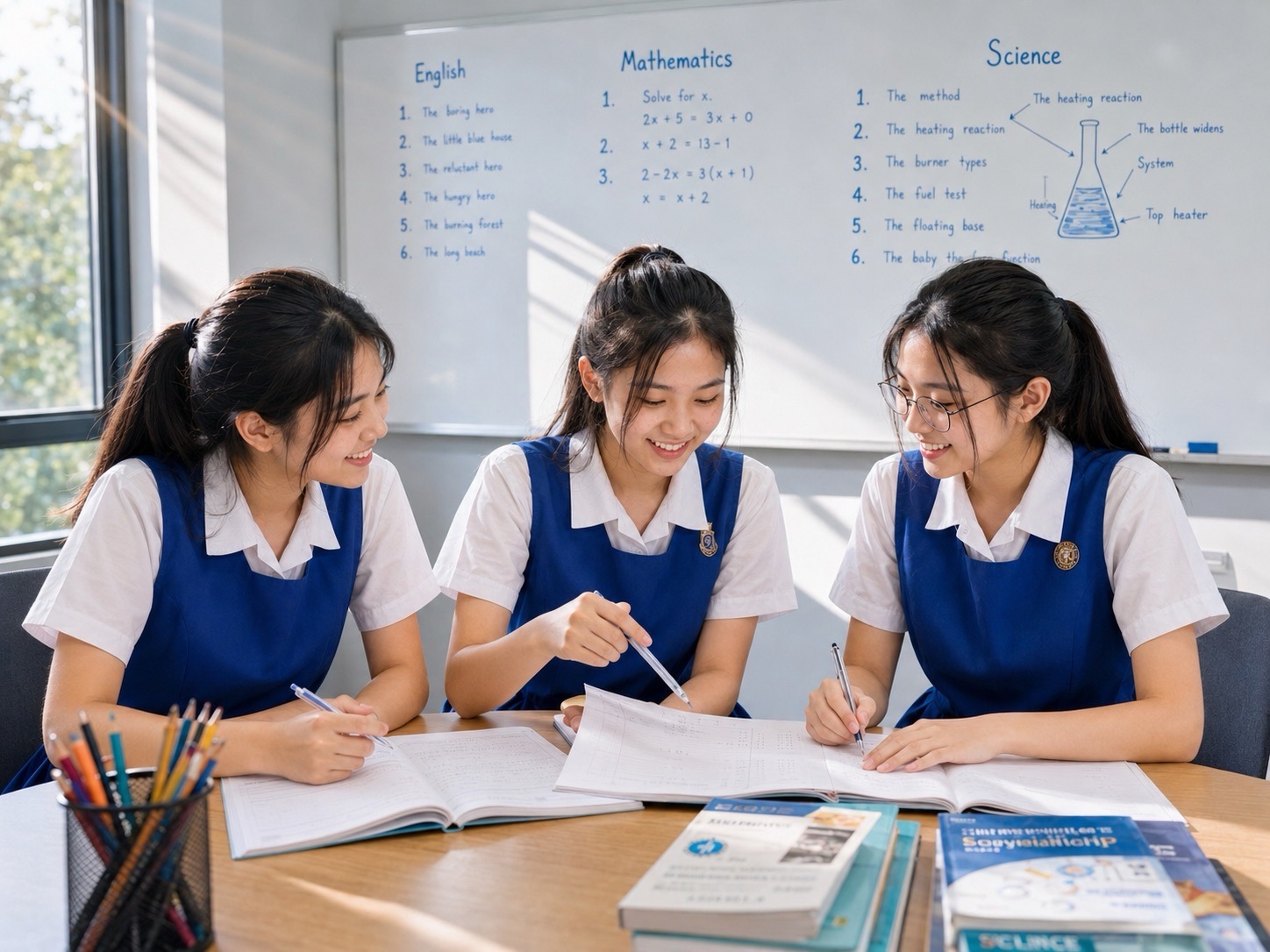
If you are in Secondary 3 and taking G3 Drama, prepare for your school end-of-year (EOY) assessment by confirming the exact topics and tasks your school will assess, reviewing marked work and making one unassisted attempt before deciding what to revise. G3 Drama is a practical and reflective subject. Students develop meaning for an audience through body, voice, space, movement, character, relationships and theatrical choices. Preparation should therefore include rehearsal, script analysis, collaboration and reflection—not only reading notes about dramatic terms. The Secondary 3 EOY is a school-based assessment, not the national Singapore-Cambridge SEC, and different schools may set different formats and project milestones.
For parents, the most useful support is a realistic plan that helps the teenager understand what to do next without making every evening an emergency. The 2027 national SEC G3 Drama syllabus is K352, revised from the earlier reference code 2299. SEAB describes a compulsory written examination (40% of the qualification) and coursework (60%), including practical performance work and a Development Journal. A school’s Secondary 3 EOY may instead assess selected classroom performances, written reflections or practical tasks according to its own instructions; confirm what is actually being graded. A single school result does not determine a student’s future. Identify a specific gap, consult the teacher where needed, practise independently, review the correction and revisit it after a short interval. Protect sleep, wellbeing and time for the learner’s other subjects.
- Confirm the school’s current Secondary 3 G3 Drama EOY scope, dates, format and project or practical requirements.
- Use marked school work and a short diagnostic attempt to identify two or three priority gaps.
- Practise script analysis, dramatic intention, character and relationship, voice, movement, space, staging, audience awareness, ensemble collaboration, devising and reflective evaluation with examples already taught at school.
- Keep the school’s EOY assessment separate from the complete national 2027 SEC syllabus K352.
- Choose school consultation, independent practice, peer learning or suitable tuition according to the learner’s need.
- Support healthy routines and seek school help if examination anxiety is persistent or disruptive.

The national SEC syllabus and the school’s Secondary 3 EOY are different
The 2027 national SEC G3 Drama syllabus is K352, revised from the earlier reference code 2299. SEAB describes a compulsory written examination (40% of the qualification) and coursework (60%), including practical performance work and a Development Journal. A school’s Secondary 3 EOY may instead assess selected classroom performances, written reflections or practical tasks according to its own instructions; confirm what is actually being graded. The official 2027 subject code is K352; the 2026-and-earlier reference code is 2299. The national syllabus is available in SEAB’s 2027 G3 Drama syllabus. Read it with the SEAB G3 syllabus directory and the SEC overview. These national documents help families plan ahead. They do not replace the school’s EOY circular, taught-topic sequence, internal assessment rules or teacher instructions.
G3 describes the subject level, not a judgement of the student’s worth and not automatically the level of every other subject. Under Full Subject-Based Banding, students may take different subjects at different levels according to the school’s arrangements. Discuss any proposed subject-level change, combination or pathway with the school; do not assume that one EOY result triggers an automatic change.
Begin with the school scope and an honest diagnosis
Collect the EOY notice, the list of topics taught, two pieces of marked work and one independent attempt. Sort the learner’s understanding into secure, developing and needs-rebuilding. Beside each difficult area, write the first step where the student became uncertain. ‘I cannot do this subject’ is too broad to guide a useful lesson.
Not every lost mark is a memory problem. The student may misunderstand a task, lack a prerequisite, choose an unsuitable method, communicate an idea unclearly, overlook a safety or presentation requirement, or run out of time. Diagnose the cause before adding another workbook or tuition class. A useful next action is observable: explain one mechanism, revise one performance choice, improve one design specification or interpret one unseen situation.
A six-week revision plan, adjusted to the school calendar
In week one, confirm the school scope and complete small diagnostic tasks without notes. In week two, repair the most important prerequisite ideas and clarify unfamiliar terminology. In week three, practise retrieval and explanation from memory. In week four, apply the same ideas to an unfamiliar task, extract, practical context or design problem. In week five, practise selected timed sections or project checkpoints that match the school’s instructions. In week six, consolidate the error log, prepare equipment or materials and protect sleep.
This is a home-planning model, not an official MOE timetable. If only two weeks remain, reduce the number of tasks rather than remove sleep or attempt to learn the entire national syllabus overnight. A short, reviewed practice task can be more useful than a full paper or project that receives no feedback. After EOY, the same approach can help prepare for Secondary 4.
How parents can respond to examination anxiety
Some nervousness before an assessment is normal. Look at whether the student can still sleep, eat, attend school, take part in ordinary activities and begin a manageable task. Persistent sleep disruption, panic, frequent physical complaints, withdrawal, avoidance or hopeless statements deserve attention. Do not dismiss repeated distress as laziness, and do not diagnose a teenager from one difficult evening.
Listen before offering solutions. Ask which part feels uncertain and what would make the next session manageable. Replace comparisons, threats and grade guarantees with one specific action. Agree on regular meals, movement, screen breaks and a realistic stopping time. MOE’s parent guide to managing examination stress offers practical advice. If distress persists or becomes severe, approach the form teacher or school counsellor and seek appropriate professional support.
Different learners need different kinds of support
A student falling behind may need an earlier concept or skill rebuilt before attempting more complex work. A student maintaining a reasonable standard may need consistent retrieval, rehearsal and correction of recurring errors. A student progressing confidently may benefit from unfamiliar applications, deeper analysis and more precise communication. These are temporary learning profiles, not permanent identities or predictions of a child’s future.
Ask the student which profile describes the current subject and use their actual work as evidence. A learner can be confident in one part of a subject and need substantial support in another. Record a next milestone that can be observed independently. This no-blame approach identifies the missing learning move and provides a fair opportunity to practise it.
Use teacher feedback as a map, not a verdict
Comments such as ‘too general’, ‘unclear intention’, ‘needs more evidence’, ‘weak evaluation’ or ‘unsafe process’ point to something that can be improved. Put the original attempt beside the revised one. Ask what changed: Was the evidence more precise? Was the design criterion measurable? Was the performance choice purposeful? Was the practical method safer or more reliable?
Keep a short error log with the task, original decision, correction and a date for a new attempt. Rewriting perfect notes or decorating a portfolio is not a substitute for learning. If feedback is unclear, ask the subject teacher for one example of work that meets the relevant assessment objective and one common misconception to avoid.
Parent options: school help, self-study, peer learning and tuition
Start with the school. Ask about consultation times, the EOY scope, project milestones and teacher feedback. Independent study works when the student can attempt, check and retest. Peer discussion can be valuable when learners explain their decisions and test one another’s ideas; it is less useful when they copy notes or compare grades.
Tuition is optional. Consider it when a repeated learning gap needs more explanation, accountability or feedback than the family can realistically provide. Select help that matches the actual subject and level. The three-learner small-group model in eduKate’s Clementi reference article illustrates diagnosis, explanation and correction; it is not a guarantee of a grade or an instruction that every learner needs paid tuition. Ask how mistakes are identified and how independent progress is measured.
After EOY: turn the result into a practical next step
Review the returned assessment after the student has had space to process the result. Classify gaps as knowledge, application, communication, practical technique, project management or anxiety. Keep one example of work that improved and identify two or three priorities for the next term. One school assessment should not by itself decide a subject choice or pathway.
Parents can ask: What can you now do independently? Which gap affects the most later learning? What help would make the next fortnight manageable? Keep the conversation focused on decisions and support rather than character. Marks matter because they provide information, but they are not a complete description of the teenager.
What a strong G3 Drama response demonstrates
The central target is the ability to make purposeful choices for a live audience, communicate through voice and body, and evaluate the effects of dramatic work. A high-quality answer or project is not necessarily the longest or most elaborate. It addresses the task, uses accurate knowledge or evidence, explains the decision and shows what has been learned. These behaviours can be observed and developed through teaching and practice. Parents should avoid vague demands such as ‘be more creative’ or ‘be better at Science’. Ask what the task required and which decision the student can now make independently.
A useful household routine keeps ownership with the student. The learner chooses the study slot, attempts the task and explains the correction. Parents protect the time and listen. The subject teacher checks technical or disciplinary accuracy. This division is more sustainable than having a parent supervise every minute or become an anxious second examiner at home.
Thirteen important G3 Drama learning situations
1. Understand Drama as communication
Students think Drama marks are awarded for being naturally confident or extroverted, rather than for deliberate performance choices and communication.
The teaching response should make the reasoning visible. Identify the intended audience, the meaning to communicate and the theatrical choices that help communicate it. Confidence can develop through preparation and feedback. Begin with a short attempt without notes or prompts so the student and teacher can see the current understanding. Model one example, complete a guided attempt and then ask the student to solve a different problem independently. This is more informative than copying a finished answer or polishing a final product before the idea has been tested.
A quiet character can create a powerful performance through stillness, focus and controlled vocal choices. This is an illustration of reasoning, not a prediction that the same task will appear in the school’s EOY. The actual school scope, teacher’s instructions and assessment criteria take priority.
Assess whether the audience can understand the intention, not whether the actor is the loudest person. Record the error in one sentence and schedule a later re-test or rehearsal. If the same error returns, change the explanation or repair an earlier prerequisite instead of simply increasing the number of worksheets. Parents can encourage the student to articulate the decision without pretending to be subject specialists.
2. Analyse a script extract
Learners summarise the plot but do not identify the performance potential of the extract.
The teaching response should make the reasoning visible. Annotate situation, setting, roles, relationships, dramatic tension, focus, time and place, language, subtext and possible audience response. Begin with a short attempt without notes or prompts so the student and teacher can see the current understanding. Model one example, complete a guided attempt and then ask the student to solve a different problem independently. This is more informative than copying a finished answer or polishing a final product before the idea has been tested.
A line that appears polite may carry hostility when the relationship and surrounding action suggest an unspoken conflict. This is an illustration of reasoning, not a prediction that the same task will appear in the school’s EOY. The actual school scope, teacher’s instructions and assessment criteria take priority.
Use textual evidence to justify staging ideas rather than inventing actions without support. Record the error in one sentence and schedule a later re-test or rehearsal. If the same error returns, change the explanation or repair an earlier prerequisite instead of simply increasing the number of worksheets. Parents can encourage the student to articulate the decision without pretending to be subject specialists.
3. Character objectives and subtext
Students play only the literal words and overlook what a character wants or is reluctant to reveal.
The teaching response should make the reasoning visible. Ask what the character wants, what stands in the way and what changes during the scene. Connect subtext to gesture, pause, vocal tone and movement. Begin with a short attempt without notes or prompts so the student and teacher can see the current understanding. Model one example, complete a guided attempt and then ask the student to solve a different problem independently. This is more informative than copying a finished answer or polishing a final product before the idea has been tested.
A character who says ‘I’m fine’ while avoiding eye contact may communicate a different meaning, depending on the scene. This is an illustration of reasoning, not a prediction that the same task will appear in the school’s EOY. The actual school scope, teacher’s instructions and assessment criteria take priority.
Make choices consistent with the script and explain why they help the audience understand the character. Record the error in one sentence and schedule a later re-test or rehearsal. If the same error returns, change the explanation or repair an earlier prerequisite instead of simply increasing the number of worksheets. Parents can encourage the student to articulate the decision without pretending to be subject specialists.
4. Voice: projection, pace, pitch and pause
Students assume shouting is the same as strong acting, or speak too quickly for an audience to follow.
The teaching response should make the reasoning visible. Practise breath support, clear pronunciation, emphasis, pitch, pace, tone and pauses. Select vocal choices based on intention and performance space. Begin with a short attempt without notes or prompts so the student and teacher can see the current understanding. Model one example, complete a guided attempt and then ask the student to solve a different problem independently. This is more informative than copying a finished answer or polishing a final product before the idea has been tested.
A pause before a difficult admission can build tension; the same pause used everywhere may become meaningless. This is an illustration of reasoning, not a prediction that the same task will appear in the school’s EOY. The actual school scope, teacher’s instructions and assessment criteria take priority.
Record short rehearsals and listen for intelligibility and purposeful variation. Record the error in one sentence and schedule a later re-test or rehearsal. If the same error returns, change the explanation or repair an earlier prerequisite instead of simply increasing the number of worksheets. Parents can encourage the student to articulate the decision without pretending to be subject specialists.
5. Physical expression and movement
Gestures become decorative or repetitive and do not reveal character or relationship.
The teaching response should make the reasoning visible. Use posture, facial expression, gesture, movement and stillness to show intention. Consider how physical choices change as the scene develops. Begin with a short attempt without notes or prompts so the student and teacher can see the current understanding. Model one example, complete a guided attempt and then ask the student to solve a different problem independently. This is more informative than copying a finished answer or polishing a final product before the idea has been tested.
A character may gradually occupy more space as they gain confidence, if that is consistent with the role and interpretation. This is an illustration of reasoning, not a prediction that the same task will appear in the school’s EOY. The actual school scope, teacher’s instructions and assessment criteria take priority.
Use feedback to identify one specific movement choice that communicates meaning. Record the error in one sentence and schedule a later re-test or rehearsal. If the same error returns, change the explanation or repair an earlier prerequisite instead of simply increasing the number of worksheets. Parents can encourage the student to articulate the decision without pretending to be subject specialists.
6. Stage space, levels and focus
Students stand in a line or block one another, making relationships and important action difficult for the audience to see.
The teaching response should make the reasoning visible. Plan entrances, exits, proxemics, levels, sightlines and focus. Make the use of space meaningful to the scene. Begin with a short attempt without notes or prompts so the student and teacher can see the current understanding. Model one example, complete a guided attempt and then ask the student to solve a different problem independently. This is more informative than copying a finished answer or polishing a final product before the idea has been tested.
A character isolated at the edge of a group can communicate exclusion if the staging supports that interpretation. This is an illustration of reasoning, not a prediction that the same task will appear in the school’s EOY. The actual school scope, teacher’s instructions and assessment criteria take priority.
Rehearse from an audience viewpoint and check that key action remains visible. Record the error in one sentence and schedule a later re-test or rehearsal. If the same error returns, change the explanation or repair an earlier prerequisite instead of simply increasing the number of worksheets. Parents can encourage the student to articulate the decision without pretending to be subject specialists.
7. Tension, mood and atmosphere
A scene is performed at one emotional level, so changes in conflict or mood are difficult to follow.
The teaching response should make the reasoning visible. Identify moments of rising tension, release, contrast and turning point. Use tempo, silence, movement and vocal dynamics deliberately. Begin with a short attempt without notes or prompts so the student and teacher can see the current understanding. Model one example, complete a guided attempt and then ask the student to solve a different problem independently. This is more informative than copying a finished answer or polishing a final product before the idea has been tested.
A sudden still moment after overlapping dialogue may shift the audience’s attention to a new conflict. This is an illustration of reasoning, not a prediction that the same task will appear in the school’s EOY. The actual school scope, teacher’s instructions and assessment criteria take priority.
Do not increase volume for every dramatic moment; choose the appropriate device. Record the error in one sentence and schedule a later re-test or rehearsal. If the same error returns, change the explanation or repair an earlier prerequisite instead of simply increasing the number of worksheets. Parents can encourage the student to articulate the decision without pretending to be subject specialists.
8. Design elements and theatrical resources
Students add props, costume, sound or lighting simply because they are available, without considering the effect.
The teaching response should make the reasoning visible. Choose simple and appropriate design elements that support character, place, mood and audience understanding. Explain their contribution to the intended meaning. Begin with a short attempt without notes or prompts so the student and teacher can see the current understanding. Model one example, complete a guided attempt and then ask the student to solve a different problem independently. This is more informative than copying a finished answer or polishing a final product before the idea has been tested.
A single object can become a symbol if the performance establishes its significance; a prop with no purpose can distract. This is an illustration of reasoning, not a prediction that the same task will appear in the school’s EOY. The actual school scope, teacher’s instructions and assessment criteria take priority.
Prioritise safe, feasible and purposeful choices over elaborate decoration. Record the error in one sentence and schedule a later re-test or rehearsal. If the same error returns, change the explanation or repair an earlier prerequisite instead of simply increasing the number of worksheets. Parents can encourage the student to articulate the decision without pretending to be subject specialists.
9. Group devised work and collaboration
One student dominates the ideas while others contribute little, or the group has many scenes but no coherent dramatic focus.
The teaching response should make the reasoning visible. Agree on a shared intention, audience and central idea. Generate alternatives, select material, structure scenes and record how decisions were made. Begin with a short attempt without notes or prompts so the student and teacher can see the current understanding. Model one example, complete a guided attempt and then ask the student to solve a different problem independently. This is more informative than copying a finished answer or polishing a final product before the idea has been tested.
A devised piece about community pressure might use contrasting viewpoints rather than giving every character the same opinion. This is an illustration of reasoning, not a prediction that the same task will appear in the school’s EOY. The actual school scope, teacher’s instructions and assessment criteria take priority.
A good group process includes listening, equitable participation and a clear reason for keeping or removing material. Record the error in one sentence and schedule a later re-test or rehearsal. If the same error returns, change the explanation or repair an earlier prerequisite instead of simply increasing the number of worksheets. Parents can encourage the student to articulate the decision without pretending to be subject specialists.
10. Rehearsal as experimentation
Students repeat the same blocking without testing whether it produces the intended effect.
The teaching response should make the reasoning visible. Try alternatives for movement, voice, space and pace. Observe the result and make a reasoned selection based on audience response. Begin with a short attempt without notes or prompts so the student and teacher can see the current understanding. Model one example, complete a guided attempt and then ask the student to solve a different problem independently. This is more informative than copying a finished answer or polishing a final product before the idea has been tested.
Two staging options may communicate power differently; the group should be able to explain why one suits its intention. This is an illustration of reasoning, not a prediction that the same task will appear in the school’s EOY. The actual school scope, teacher’s instructions and assessment criteria take priority.
Rehearsal should be iterative: test, observe, reflect, adjust and retest. Record the error in one sentence and schedule a later re-test or rehearsal. If the same error returns, change the explanation or repair an earlier prerequisite instead of simply increasing the number of worksheets. Parents can encourage the student to articulate the decision without pretending to be subject specialists.
11. Performance nerves and recovery
A student is anxious about forgetting lines or being judged by peers and avoids rehearsal.
The teaching response should make the reasoning visible. Break the performance into beats, rehearse cues and transitions, practise recovery when a line is missed and develop a calm pre-performance routine. Begin with a short attempt without notes or prompts so the student and teacher can see the current understanding. Model one example, complete a guided attempt and then ask the student to solve a different problem independently. This is more informative than copying a finished answer or polishing a final product before the idea has been tested.
If a performer loses a line, staying in role and listening for the next cue can help the scene continue. This is an illustration of reasoning, not a prediction that the same task will appear in the school’s EOY. The actual school scope, teacher’s instructions and assessment criteria take priority.
Avoid humiliating corrections. Feedback should describe observable choices and one practical next step. Record the error in one sentence and schedule a later re-test or rehearsal. If the same error returns, change the explanation or repair an earlier prerequisite instead of simply increasing the number of worksheets. Parents can encourage the student to articulate the decision without pretending to be subject specialists.
12. Reflective evaluation and Development Journal
Students write ‘it went well’ or ‘I was nervous’ without analysing their work or the effect on the audience.
The teaching response should make the reasoning visible. Record intention, choices, feedback, observed effect and the change made in the next rehearsal. Use precise dramatic vocabulary and honest evidence. Begin with a short attempt without notes or prompts so the student and teacher can see the current understanding. Model one example, complete a guided attempt and then ask the student to solve a different problem independently. This is more informative than copying a finished answer or polishing a final product before the idea has been tested.
A reflection might explain that a faster pace obscured a key line, so the actor introduced a pause and clearer emphasis. This is an illustration of reasoning, not a prediction that the same task will appear in the school’s EOY. The actual school scope, teacher’s instructions and assessment criteria take priority.
Reflection should describe learning and decision-making, not become a performance of perfect confidence. Record the error in one sentence and schedule a later re-test or rehearsal. If the same error returns, change the explanation or repair an earlier prerequisite instead of simply increasing the number of worksheets. Parents can encourage the student to articulate the decision without pretending to be subject specialists.
13. Written analysis and unseen extracts
Students are comfortable performing but struggle to explain how they would stage an unfamiliar extract.
The teaching response should make the reasoning visible. Read the extract quickly for roles, relationships, tension and setting. Identify a performance idea, support it with a line or stage direction and explain the likely audience effect. Begin with a short attempt without notes or prompts so the student and teacher can see the current understanding. Model one example, complete a guided attempt and then ask the student to solve a different problem independently. This is more informative than copying a finished answer or polishing a final product before the idea has been tested.
A practical idea should be specific: where an actor stands, what changes in the voice or movement and why it serves the moment. This is an illustration of reasoning, not a prediction that the same task will appear in the school’s EOY. The actual school scope, teacher’s instructions and assessment criteria take priority.
Practise within the school’s written-task time limit; do not assume its format matches the full national paper. Record the error in one sentence and schedule a later re-test or rehearsal. If the same error returns, change the explanation or repair an earlier prerequisite instead of simply increasing the number of worksheets. Parents can encourage the student to articulate the decision without pretending to be subject specialists.
Five practical training tasks for Secondary 3 G3 Drama
Training task 1: One-minute script analysis
Choose a short extract and identify setting, relationship, tension, a character objective and one evidence-based performance idea. Begin with materials and tasks already introduced at school. Allow an independent attempt, compare it with teacher feedback or reliable criteria, and finish with one sentence about what changed and why. If confidence is low, practise untimed first and introduce realistic pacing after the method becomes dependable.
Training task 2: Voice variation recording
Perform the same short line with two different intentions. Record and explain how pace, pitch, pause or emphasis changed the meaning. Begin with materials and tasks already introduced at school. Allow an independent attempt, compare it with teacher feedback or reliable criteria, and finish with one sentence about what changed and why. If confidence is low, practise untimed first and introduce realistic pacing after the method becomes dependable.
Training task 3: Space and focus rehearsal
Block a short scene in two different ways. Observe sightlines and relationships from the audience’s viewpoint. Begin with materials and tasks already introduced at school. Allow an independent attempt, compare it with teacher feedback or reliable criteria, and finish with one sentence about what changed and why. If confidence is low, practise untimed first and introduce realistic pacing after the method becomes dependable.
Training task 4: Devising reflection
After group rehearsal, record one choice retained, one choice rejected, the reason and the effect the group wants to achieve. Begin with materials and tasks already introduced at school. Allow an independent attempt, compare it with teacher feedback or reliable criteria, and finish with one sentence about what changed and why. If confidence is low, practise untimed first and introduce realistic pacing after the method becomes dependable.
Training task 5: Performance recovery practice
Rehearse a short scene with a deliberately missed cue, then practise listening, staying in role and returning to the next cue safely. Begin with materials and tasks already introduced at school. Allow an independent attempt, compare it with teacher feedback or reliable criteria, and finish with one sentence about what changed and why. If confidence is low, practise untimed first and introduce realistic pacing after the method becomes dependable.
Three learner profiles: falling behind, maintaining and progressing
Falling behind: rebuild the earliest weak link
A learner who is struggling with Drama may not benefit from more complex tasks immediately. Find the earlier concept or skill that appears in several mistakes, explain it using a clearer example and return to the original school task. If confusion continues, reduce the number of goals in one session and consult the subject teacher. Describe the gap as something to work on, not a permanent label attached to the child.
Maintaining: protect the habits that are working
A student achieving a reasonable standard can benefit from regular retrieval, rehearsal and careful correction. Do not dismantle a functioning routine because another student appears to do more work. Look for a weakness in application, accuracy or unfamiliar tasks that may become more important as the course advances. Preserve time for other subjects, CCA and rest.
Progressing: deepen understanding instead of racing ahead
A confident learner can compare alternative explanations, evaluate design or performance choices, and apply knowledge in a new context. This is deeper preparation than rushing through the entire national syllabus before the class is ready. Encourage curiosity and precision while leaving room for mistakes. A progressing learner also needs sleep and a balanced timetable.
How to choose additional help without panic
Start by asking the school what support is available. A student may need only one teacher consultation, a clearer explanation, a better rehearsal plan or a realistic project checkpoint. Peer study can help if learners take turns explaining their decisions. Tuition becomes reasonable when the learner needs more guided explanation or feedback than school and family routines can provide.
When comparing tuition or enrichment, ask whether the teaching matches the actual G3 subject and student’s school scope. Find out how the tutor identifies a misconception, whether the learner attempts work independently, how feedback is communicated and how progress will be measured. A small-group format should provide meaningful feedback to every learner; group size alone does not guarantee quality. For performance and design coursework, ensure outside support does not replace the student’s own assessed work or violate school rules.
A seven-day starter plan
Day 1: Locate the school’s EOY notice and write down only confirmed topics, practical tasks or project checkpoints.
Day 2: Complete a small diagnostic task or reflect on one recent marked activity. Record the first uncertain step.
Day 3: Repair one priority concept or skill through an explanation, a guided attempt and an independent attempt.
Day 4: Apply the same idea to an unfamiliar task, script extract, data set or user problem.
Day 5: Retrieve the correction from memory and explain it aloud or in writing.
Day 6: Complete a short school-style timed section, rehearsal or safe prototype test if the method is ready.
Day 7: Review confidence and wellbeing, confirm next week’s priorities and protect time for rest.
Frequently asked questions
Is Drama only about acting talent?
No. The national assessment includes knowledge and understanding, communication in performance, and analysis and evaluation of dramatic work.
Does the SEC K352 include coursework?
Yes. The 2027 national syllabus weights the written paper at 40% and coursework at 60%. A school EOY can have its own internal assessment arrangement.
Will my child’s EOY include a full production?
Not necessarily. The school’s assessment notice and subject teacher determine the Secondary 3 EOY tasks.
How can a shy student prepare?
Build confidence through small rehearsal goals, clear cues, purposeful voice and movement choices, and supportive feedback. Extroversion is not a substitute for technique.
What should parents do after a performance?
Ask what the student intended, what the audience could understand and which one choice they would refine. Avoid comparing children or judging personality.
Final family checklist
- We have the school’s actual Secondary 3 G3 Drama EOY scope and assessment instructions.
- We know how the national SEC K352 syllabus differs from the school examination.
- The student can name the most important learning gaps without shame.
- Every practice session includes an independent attempt and reviewed correction.
- We have scheduled a later re-test, rehearsal or prototype check to verify learning.
- The plan includes other subjects, CCA, meals, sleep and family time.
- We know when to ask the teacher, school counsellor or a suitable subject specialist for support.
- After EOY, we will review the work and choose a small number of Secondary 4 priorities.
Official references and eduKate learning routes
- SEAB: official 2027 G3 Drama syllabus K352
- SEAB: 2027 G3 syllabuses for school candidates
- SEAB: Singapore-Cambridge Secondary Education Certificate overview
- MOE: managing examination stress for parents
- eduKate: Parenting 101 for SEC, Full SBB and secondary pathways
- eduKate: learning diagnostics and recovery
- eduKate: Clementi reference for small-group teaching
Editorial note, November 2026: This is general parent guidance, not an official school examination notice. The linked 2027 SEAB syllabus is for national-exam planning and must not be mistaken for the exact Secondary 3 EOY scope. Check the student’s actual school circular, taught content, project deadlines and assessment instructions. The immutable Clementi reference article has not been modified.