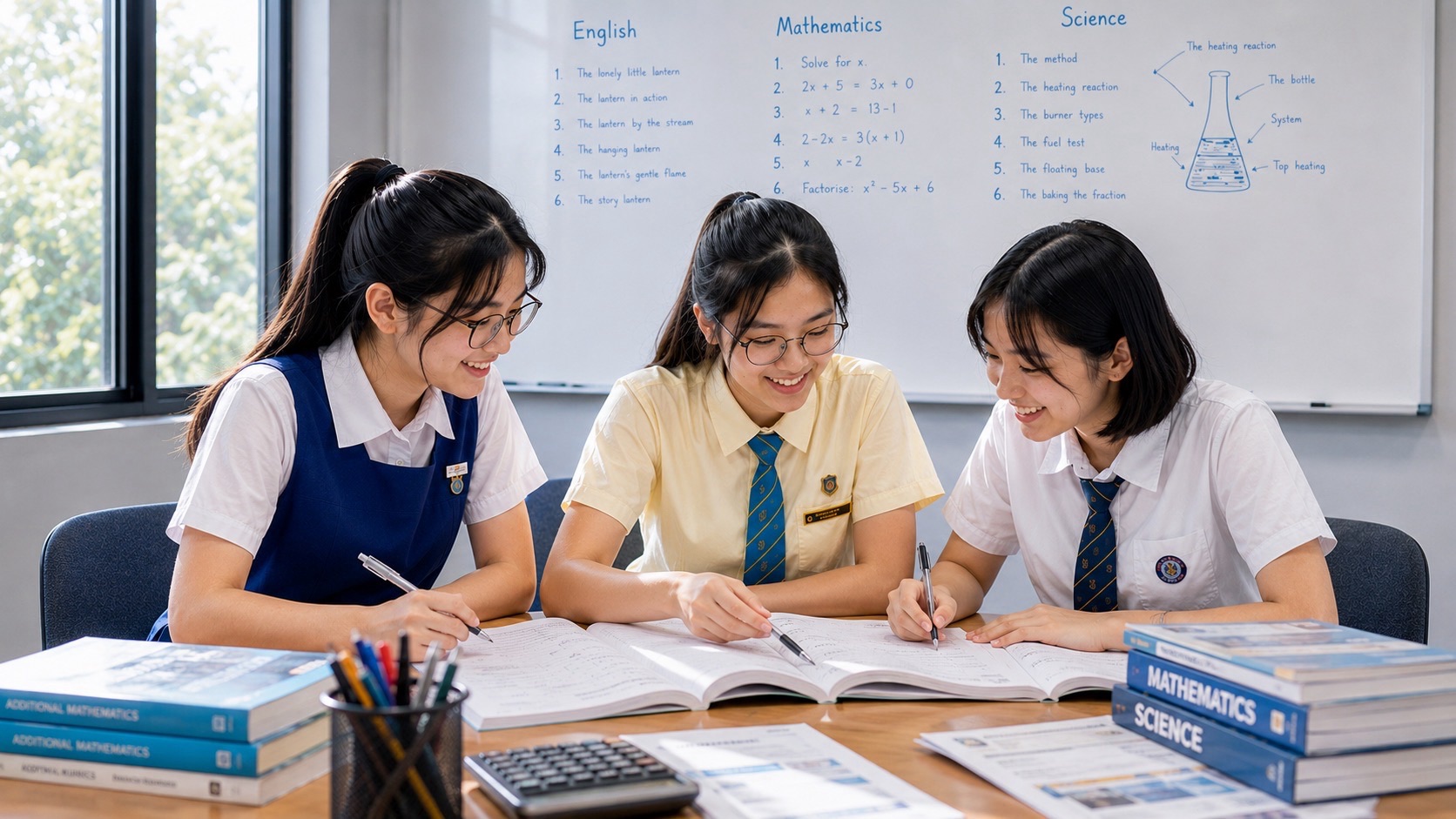
Good Secondary 1 study habits come from consistent task recording, retrieval practice, reviewing mistakes and asking for help early. Quality of learning matters more than hours spent at a desk.
For the 2027 intake, match routines to the actual school timetable, subject levels and CCA commitments. Introduce one sustainable habit at a time instead of repeating the Primary 6 examination schedule.
- Capture tasks in one planner.
- Retrieve learning without notes.
- Review mistakes by cause.
- Space practice across days.
- Ask teachers precise questions.
- Protect sleep and activities.
Capture assignments
Write subject, exact task, deadline and materials. A vague note such as ‘Maths’ is not actionable.
Attach a planner check to the end of the school day. Parents can gradually reduce reminders.
Retrieval
After a lesson, close the notes and explain the concept or solve a fresh question.
Check the response and identify missing knowledge. Rereading alone may conceal gaps.
Repair mistakes
Classify errors as misunderstanding, weak fluency, misreading or rushing.
Choose a repair matched to the cause. A copied model answer is not evidence of independent understanding.
Space practice
Revisit a concept after a day, several days and later again. Use varied questions.
Spacing helps test whether learning lasts beyond the original lesson.
Ask questions
Teach the pupil to name the exact step they understand and where they become confused.
A focused question allows teachers to give more useful feedback than ‘I don’t understand anything.’
Plan around life
Mark CCA days and travel before study blocks. Protect meals, sleep and downtime.
If the routine regularly fails, review workload and task estimates rather than adding hours automatically.
Four-week introduction
Week one: planner. Week two: retrieval. Week three: error log. Week four: review and adjust.
Introduce one habit at a time so the pupil can own the system.
Measure success
Look for fewer missed tasks, clearer explanations and improved independent work.
Do not turn the planner into another way to rank the child against classmates.
Parent checklist
- Follow the receiving school’s official instructions.
- Ask the pupil what feels secure and what needs clarification.
- Confirm current subject arrangements and deadlines.
- Choose one manageable action and review progress.
- Seek school support early when needed.
Frequently asked questions
Does the PSLE total determine readiness for Secondary 1? No. The result informs admission, while routines, interests and support needs also matter.
Should parents use last year’s school instructions? Only as background; verify current arrangements.