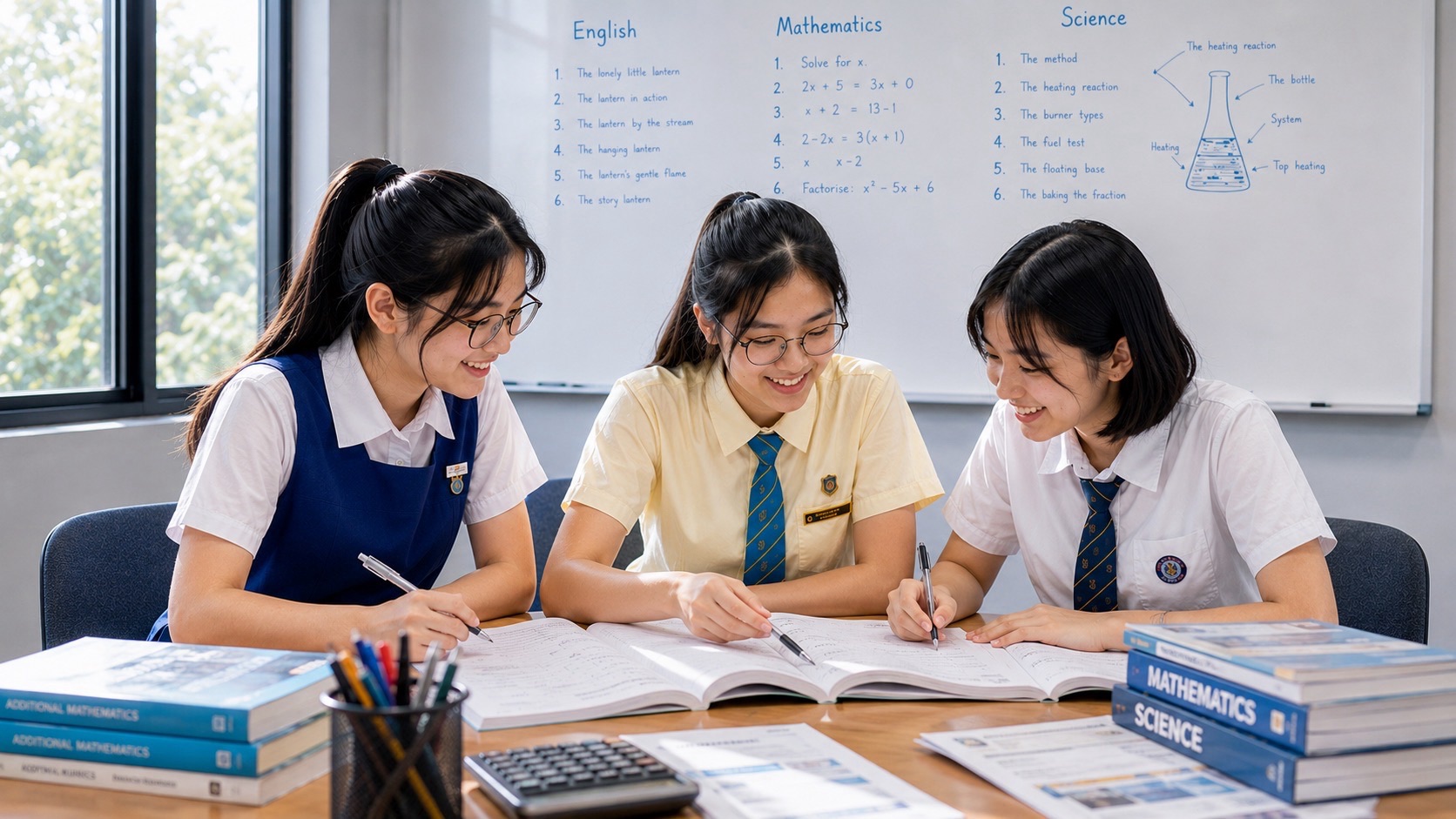
Kuo Chuan Presbyterian Secondary School latest news 2026: The school has scheduled two online Open House webinars, on Wednesday, 18 November 2026 from 12.30pm to 1.30pm, and Wednesday, 25 November 2026 from 6pm to 7pm. Its official 19 October webinar registration page provides a separate go.gov.sg registration link for each session. These are online information sessions, not physical school visits. Families researching Secondary 1 entry in January 2027 can attend the session that fits their schedule, learn about the school and ask informed questions before or during the MOE school-choice period.
The school also advertises a physical Open House for Saturday, 21 November 2026, at 10 Bishan Street 13, Singapore 579795. Public secondary-school event calendars list a morning programme, typically 9am–12.30pm, although another listing gives an end time of 1pm. The school’s own Open House resources include a virtual tour and student experiences; parents should confirm the exact on-campus programme and visitor instructions before travelling. KCPSS’s 2026 Direct School Admission (DSA-Sec) exercise for entry in 2027 offered ten talent areas, including separate pathways for Media/Journalism and Media Arts, Film and Photography, but applications closed on 2 June 2026. These are substantive school-specific details, not promises that an old application is still open.
- Online webinar 1: 18 November 2026, 12.30–1.30pm; register through the school’s official link.
- Online webinar 2: 25 November 2026, 6–7pm; a different registration link is provided.
- Physical Open House: Saturday, 21 November 2026, at 10 Bishan Street 13; check the school for final visiting hours and parking instructions.
- 2026 DSA talent areas: Media/Journalism; Community Youth Leadership; Concert Band; Choir; Chinese and Modern Dance (girls); English Drama; Guzheng Ensemble; Media Arts/Film/Photography; Shooting; Table Tennis.
- DSA application period: 6 May, 11am to 2 June 2026, 4.30pm; shortlisting and school outcomes have ended.
- 2026 school publication: Espoir 2026 Issue 1, linked from the school’s current publication archive.
- Media Literacy ALP: Secondary 1 podcasts and video production, Secondary 2 talk shows and storyboarding, and Secondary 3 journalistic writing for Espoir.
- Signature venue: The Mustard Seed studio, where students learn about filming and media production.
- Media arts DSA distinction: The Media/Journalism area and Media Arts/Film/Photography area are separate talent categories in the school’s 2026 notice.
- Servant leadership: B.A.S.I.C. — Being a Servant Leader in the Community, supporting the Community Youth Leadership programme.
- School heritage: KCPSS traces its founding to 1924, giving it a history of more than 100 years in 2026.
- 2027 PSLE cut-off: Not confirmed until the upcoming national Secondary 1 Posting Exercise concludes.
Three different November opportunities: which one should your family choose?
A parent searching “Kuo Chuan Presbyterian Secondary Open House November 2026” may encounter three dates. They are not duplicate notices for exactly the same arrangement. The 18 and 25 November events are online webinars, while 21 November is listed as the physical Open House.
| Date | Format | Confirmed details |
|---|---|---|
| Wednesday, 18 November | Online webinar | 12.30–1.30pm, separate registration link on official page |
| Saturday, 21 November | Physical Open House | 10 Bishan Street 13; public directories list approximately 9am–12.30pm, but the last hour varies |
| Wednesday, 25 November | Online webinar | 6–7pm, separate official registration link |
The school’s webinar registration page is the authoritative source for the online dates and times. It lists separate registration buttons. Families should use the appropriate school-owned link rather than submit a child’s personal details to an unrelated event aggregator.
The school’s Open House site contains student accounts, virtual materials and a school tour. These resources are useful whether or not a family can attend physically.
Why the two webinar timings are helpful
The first webinar is a lunchtime session. A working parent who can use a midday break may prefer this one. The second is an evening session and may be more convenient for families wanting a child and parent to join together.
The school does not say in its registration note that both sessions have identical content. Do not promise that a recording will automatically become available after either session unless the school announces it. Instead, choose the session suited to your family and confirm any access details in the registration response.
A pupil should be encouraged to listen actively. Ask them to write down three things they learn and two questions that remain unanswered. This is good preparation for the school-choice discussion and for learning independently later.
What to ask during an online webinar
- What does a normal Secondary 1 timetable look like under Full Subject-Based Banding?
- How does the school help a pupil who is strong in one subject but needs more support in another?
- Which parts of the Media Literacy ALP are included in ordinary lessons for each year level?
- How do pupils participate in Espoir and student journalism?
- What opportunities exist in the Infocomm and Photography CCAs for beginners?
- How do Community Youth Leadership and B.A.S.I.C. develop responsibility?
- What are the requirements of a student admitted through media, leadership or performing-arts DSA?
- How is cyber wellness and safe use of AI addressed?
- How do CCAs, schoolwork and the journey home fit into a typical week?
- Where will the new-year 2027 registration and booklist instructions be published?
Good questions ask about the actual learning experience, not merely the number of awards displayed on a prospectus.
The 21 November physical Open House: verify the final hour
School-event directories listing the KCPSS physical Open House agree on Saturday, 21 November 2026 at the Bishan Street 13 campus, but differ slightly on closing time. Some list 9am–12.30pm, while another lists 9am–1pm.
The school’s official site advertises Open House and makes a virtual tour available, but the accessible school pages reviewed here do not establish a single final timetable for every physical activity.
This is a reason to verify the school visitor notice, not a reason to invent a Principal’s Talk time or guarantee a particular CCA performance.
The school contact page gives 6259 3811 and kcpss@moe.edu.sg. Families can ask the school directly about visitor access, registration, the exact end time and transport.
How to make an in-person visit useful
Arrive early enough to locate the entrance and ask a student ambassador about the day’s programme. Then explore two or three areas the pupil genuinely wants to understand.
A child interested in journalism should ask how writing is taught, how publication work is reviewed and whether newcomers have opportunities to create content. A pupil interested in sport should ask about training, coaching and how teams are selected. A student interested in music can learn about rehearsal and ensemble participation.
The parent should also ask about student wellbeing, school discipline, learning support, and the daily route from home.
An Open House is not an examination to pass. It is a chance to gather enough reliable information to decide whether the pupil can learn and feel supported at the school.
A school founded in 1924: heritage and the meaning of service
Kuo Chuan Presbyterian School traces its history to 1924, and the secondary school now describes its mission in terms of developing servant leaders and scholars.
This is a history of more than a century by 2026. School heritage can help prospective pupils understand the traditions behind the institution, but it should not be used to assume today’s curriculum is identical to what was taught decades ago.
The school has evolved within Singapore’s changing education system. Technology, media, subject pathways and the social role of schools have changed substantially. Yet the idea that learning should also serve other people remains prominent in its published philosophy.
The school’s Learning for Life Programme describes developing students with a heart for service. The exact skills involved are practical: recognising needs, taking responsibility, communicating with others and reflecting on actions.
Presbyterian school heritage: what should families ask?
Families may want to understand how the school’s Presbyterian tradition shapes its values, celebrations and ordinary student life. The sensible approach is to ask the school directly about its present-day activities, participation expectations and respect for different students’ backgrounds.
A family should not invent an automatic religious admission restriction from the school’s name, or assume the heritage has no significance to school culture.
The pupil needs to understand what the community values and whether they feel comfortable participating in the learning and student-development environment.
A distinctive 2026 school programme: Media Literacy@KCPSS
The school’s Applied Learning Programme in Media Literacy, last updated in July 2026, explains that KCPSS prepares pupils to be responsible consumers, producers and participants in media.
This is a practical educational response to the world pupils live in. Young people encounter photographs, videos, news, advertisements, social media, podcasts, AI-generated material and messages that may be incomplete or misleading.
Media literacy asks pupils to interpret media messages, consider the creator’s purposes and communicate responsibly. The goal is not simply learning to edit a polished video. It is the ability to explain what a message says, what evidence supports it and how an audience might understand it.
The school’s programme develops across the secondary years, with different tasks at each level.
Secondary 1 media literacy: podcasts and video
The official ALP page says Secondary 1 pupils develop media skills through podcasting and video production, including a Geography learning journey at Bishan–Ang Mo Kio Park.
A podcast exercise makes pupils consider audience, structure, voice, pacing and accuracy. A video exercise introduces framing, editing, sound and ethical selection of images.
The learning journey creates a real-world context. Students can observe an environment, take notes, ask questions and develop a message based on what they have learned.
A useful Geography-to-podcast activity
Imagine a group visiting a park to investigate how different spaces serve residents. They could observe walking paths, greenery, water features, accessibility and recreational use, while following the school’s privacy and fieldwork rules.
The group could produce a short episode with an introduction, a clearly defined question, two or three verified observations and a conclusion explaining what they still do not know.
A good podcast would distinguish an observation from an inference. “We saw many walkers at this path during our visit” is an observation. “This path is always the busiest in Singapore” is a much larger claim that would need more evidence.
This is a transferable skill for English composition, Geography, Science and everyday communication.
Why editing is an ethical skill
When a recording is shortened, important context can be lost. A sentence may sound misleading when the phrase before it is removed.
Students should learn to avoid changing a speaker’s meaning, to obtain appropriate permission, and to protect people who do not wish to appear in school media.
A technically skilful edit is not necessarily a trustworthy edit. The ethical question is whether the finished work represents the source fairly.
Secondary 2 media literacy: talk shows and storyboards
KCPSS’s Secondary 2 Media Literacy description says pupils write talk-show scripts and create storyboards, developing production skills in the school’s Mustard Seed studio.
The studio gives a more structured environment for experimenting with the conventions of filmed conversation, interviews, presentation and video production.
A talk show involves more than reading questions from a script. Pupils need to understand the topic, anticipate what an audience needs to know, listen to the guest, respond to unexpected answers and present the exchange coherently.
What a storyboard teaches
A storyboard is a plan for the sequence of shots or scenes. Pupils decide what the audience should see, in which order, and why.
For example, a short film about a school sustainability initiative might begin with the problem, then explain how students investigated it, and finally show what changed. If the film shows only the final product, the audience may not understand the process or the limitations of the result.
Storyboarding forces a creator to organise ideas before production. It connects visual composition with logical sequencing and written communication.
A parent-friendly media exercise
Ask a child to create a six-frame storyboard explaining how to solve a common problem, such as preparing for a wet-weather journey or organising homework deadlines.
Each frame should have a specific purpose. The child can then explain whether any necessary information is missing.
That helps build planning, clarity and awareness of the audience without requiring expensive camera equipment.
Secondary 3 media literacy: real journalism for Espoir
The school’s Media Literacy ALP describes Secondary 3 pupils developing journalistic writing for Espoir, the school’s publication.
Journalism requires students to decide what a reader needs, establish what happened, check details, organise information and distinguish reporting from opinion.
A pupil writing about a school event should make sure the date, venue, number of participants and nature of any achievement are accurate. They should not invent quotations or overstate results.
The journalism process can develop higher-order reading, writing and critical-thinking skills that support the national English curriculum and other subjects.
A simple reporting structure students can practise
- Identify a newsworthy event with relevance to the intended school audience.
- Write down the who, what, when, where and why.
- Check names and figures against a reliable source.
- Speak to appropriate participants with permission.
- Distinguish what someone said from the reporter’s interpretation.
- Draft a headline that accurately represents the article.
- Include useful context without overwhelming the main news.
- Revise for clarity, fairness and factual accuracy.
- Respect classmates’ privacy and publishing rules.
- Correct errors transparently when they are found.
These are habits worth developing even for pupils who never intend to work as journalists.
Espoir 2026 Issue 1: a current school publication
The school’s Espoir publication archive, updated 7 July 2026, lists Espoir 2026 Issue 1 along with issues from previous years.
The school describes Espoir as a biannual school publication featuring school events, student perspectives, community stories and practices that help define Kuo Chuan.
It says the magazine is embedded in an innovative English curriculum intended to develop critical thinking, communication and collaboration through journalistic writing.
The issue link provides a concrete school resource for prospective families wanting to see the kind of student work that appears in the school’s media programme.
What can parents and pupils learn from Espoir?
Read one article together and discuss its structure. Which fact is given first? What question does the article answer? How does the writer help the reader understand why an event matters?
If a headline is lively, ask whether the article itself supports the impression created by that headline.
A child could then write a short account of their own experience, with specific details and honest reflection. The goal is to communicate effectively, not imitate the language of an adult marketing campaign.
Does every pupil automatically join the Espoir editorial team?
The school describes journalism as a level learning project and the publication as a school-wide creative product. This does not establish that every pupil has a formal editorial appointment or unlimited access to a specialised media CCA.
Ask the school how contributions are selected, reviewed and published, and which opportunities exist for students who discover a new interest later.
The ordinary English and media-literacy curriculum has educational value even when a pupil’s work does not appear in the final magazine.
Spin Doctors: a programme for sharper communication
The school’s English and Media Literacy materials include a Spin Doctors programme supporting pupils interested in writing, speaking and media.
The school describes workshops, practical activities and opportunities to develop language and media-analysis skills.
Families should not interpret the programme name as a licence to distort facts. Responsible communication requires accuracy, transparency and awareness of bias.
A student can become a persuasive writer while remaining careful about evidence and fair to people whose views differ.
How to practise persuasive writing responsibly
Start with a position on a manageable school issue. Write a claim, two supporting reasons and one possible objection. Then consider whether the evidence actually supports the claim.
If there is uncertainty, state it. If an example is hypothetical, identify it as such.
Persuasion becomes stronger when the writer can address real concerns rather than inventing a statistic or dismissing another person.
This habit helps with English argumentative writing, Humanities questions and discussions in civic life.
Media Arts, Film and Photography DSA: a distinct category
The KCPSS 2026 DSA Talent Area page separately lists Media Arts / Film / Photography under Visual Arts, Design and Media.
The school also maintains a dedicated Visual Arts, Design and Media DSA introduction, describing pathways linked to Infocomm Technology Club and Photography CCA.
Students may encounter photography, video-making, visual storytelling and opportunities to exhibit or communicate work.
This is not identical to the Media/Journalism category listed under Language and Humanities. The two talent areas may overlap in some skills, but they are separate official choices with different emphases.
Photography involves choices, not just equipment
A strong photograph requires observation, framing, light, timing and an understanding of what the picture communicates.
A pupil using a phone can still demonstrate thoughtful composition. Expensive professional camera equipment is not evidence of stronger ideas by itself.
Ask why a subject was chosen, what was included or excluded from the frame and how the image affects the viewer’s interpretation.
An ethical photography portfolio
A school-level portfolio should use work genuinely created by the pupil, respect privacy and avoid misrepresenting heavily edited images as unaltered documentary evidence.
A simple sequence showing a community activity could demonstrate storytelling if each image adds useful information and permission has been considered.
A pupil should be able to explain the purpose and technique of each photograph and what they learned while producing it.
Media/Journalism DSA: writing and inquiry as talent
KCPSS’s official DSA table lists Media/Journalism separately under Language and Humanities, open to both boys and girls in the 2026 exercise.
This route aligns naturally with the school’s work on podcasting, student publications, interviews and public communication.
A prospective applicant should be curious about ideas and prepared to read carefully, write accurately, ask questions and revise a piece of work.
A school journalist may cover a CCA event, interview a member of staff, explain an environmental project or tell a community story. The pupil needs to avoid turning reporting into an advertisement whose only purpose is praise.
Difference between two media DSA routes
| Talent area | Central emphasis |
|---|---|
| Media/Journalism | Reporting, interviews, writing, news judgement and communication |
| Media Arts/Film/Photography | Visual storytelling, camera work, film or creative visual production |
These distinctions are explanatory, not substitutes for the school’s detailed selection criteria. The 2026 official list controls the actual categories, while future criteria must be checked when announced.
A child may enjoy both. The family should help the pupil identify what they can do authentically and what work they would want to continue over time.
All ten 2026 DSA talent areas, with gender eligibility
The school’s official 2026 DSA notice names ten talent areas for Secondary 1 entry in 2027.
| Broad category | 2026 talent area | Published eligibility |
|---|---|---|
| Language and Humanities | Media/Journalism | Boys and girls |
| Leadership | Community Youth Leadership | Boys and girls |
| Performing Arts | Concert Band | Boys and girls |
| Performing Arts | Choir | Boys and girls |
| Performing Arts | Chinese and Modern Dance | Girls |
| Performing Arts | English Drama | Boys and girls |
| Performing Arts | Guzheng Ensemble | Boys and girls |
| Visual Arts, Design and Media | Media Arts / Film / Photography | Boys and girls |
| Sports | Shooting | Boys and girls |
| Sports | Table Tennis | Boys and girls |
The distinction between Chinese and Modern Dance (girls) and the other, mostly co-educational talent areas should be preserved. A short generic description could otherwise send a pupil toward an unavailable 2026 selection route.
The school says candidates without prior experience may apply and can be assessed for potential, but meeting the selection criteria does not guarantee shortlisting.
Parents should never interpret a private training provider’s recommendation as a confirmed place. The school selects candidates through its own process.
The 2026 DSA timeline is over
The school gives the following dates for its 2026 DSA-Sec exercise for admission in 2027:
- 6 May 2026 at 11am to 2 June at 4.30pm: National portal applications.
- By 15 July: Applicants informed whether they were shortlisted.
- 20 July to 14 August: In-person trials, auditions and interviews for shortlisted applicants.
- By 31 August: School-level application outcomes provided.
- 19–23 October: School-preference submission by eligible DSA applicants.
- Late November: Final national DSA allocation alongside PSLE results under the official MOE process.
Those application and selection windows are closed as of 12 November 2026. A school webpage remaining accessible does not establish that pupils can apply again in November.
Families of younger pupils can study the historical criteria to understand the school, then look for a fresh announcement for the next exercise.
DSA is not a provisional reservation
KCPSS says successfully admitted DSA pupils must honour the school commitment and participate in activities connected to the selected talent from Years 1 to 4.
A child admitted through Community Youth Leadership should expect ongoing responsibility. An applicant admitted through music, sport or media should be willing to continue developing those skills.
A finally allocated pupil does not submit ordinary six-school preferences in the same manner as a pupil without a DSA allocation.
A family should think about the pupil’s real interests, academic needs, schedule and school culture before committing.
Performing Arts at KCPSS: five different routes
The school lists Concert Band, Choir, Chinese and Modern Dance, English Drama and Guzheng Ensemble among Performing Arts DSA opportunities.
They develop different kinds of abilities.
A band or ensemble pupil must interpret notation, practise timing and listen carefully to the group. Choir encourages pitch accuracy and ensemble awareness. Drama involves language, character interpretation and cooperation. Dance requires movement, rhythm and the ability to learn and refine choreography.
These activities can build confidence and friendships, but regular rehearsal takes time. A child should want the continuing experience, not merely the status of a school offer.
Do pupils need professional training to apply?
The school’s general DSA notice says applicants without prior experience may apply and can be assessed for potential. That does not guarantee an invitation or an offer.
The exact audition or trial criteria for a future year may differ. Parents should use the school-published talent-specific notice when it becomes available, rather than promise that a particular external certificate ensures admission.
A child who enjoys music or drama can begin with age-appropriate school activities, regular practice and reflection on constructive feedback.
Shooting and Table Tennis: school-supervised sport
KCPSS’s two 2026 Sports DSA options were Shooting and Table Tennis, both open to boys and girls.
These are different sporting experiences. Table Tennis develops timing, coordination, movement, tactical decision-making and resilience. Shooting involves controlled concentration, precision and strict safety rules within the school’s supervised sport arrangements.
Parents should ask about the specific sport trial, qualified supervision, training time, equipment and safety requirements directly with the school.
A pupil must not treat a DSA sport as a casual game undertaken only once at an audition. Sustainable participation requires patience, coaching, recovery, academic balance and good judgement.
A school talent route also does not automatically guarantee selection for every competition team.
Community Youth Leadership DSA and the school’s B.A.S.I.C. philosophy
The school’s Learning for Life Programme is centred on Community and Youth Leadership (CYL).
Its B.A.S.I.C. framework stands for Being a Servant Leader in the Community.
The school describes three core principles:
- A leader serves first. Leadership begins with noticing and responding to other people’s needs.
- Every pupil can choose to lead. Service is not a gift reserved for a few naturally confident students.
- Leadership is a personal journey. Pupils develop at different speeds, with different strengths and challenges.
This is a more useful understanding of leadership than merely collecting titles.
A child who helps classmates collaborate on a task may demonstrate good leadership, even without being the elected class representative.
What servant leadership looks like in practice
Imagine a pupil notices that new Secondary 1 students struggle to understand school notices. Rather than complain, they could ask the students what is confusing, design a clear explanation and test whether it helps.
That involves empathy, communication, practical problem-solving and willingness to improve.
An applicant for Community Youth Leadership DSA should be able to discuss real contributions, not simply repeat phrases such as “I am passionate about leadership”.
The school can develop these habits after admission, but a DSA candidate should also understand the multi-year responsibility.
B.A.S.I.C. and the idea that every student can contribute
The school’s philosophy is inclusive in a meaningful way: not every pupil has to be a student councillor to show responsibility.
A quiet student can help others, organise a project or contribute reliably to a CCA. Some pupils grow into public speaking gradually, while others learn through planning, observing or practical service.
Ask the school how ordinary pupils encounter Community Youth Leadership learning and which additional leadership appointments require selection.
A 2026 school publication as evidence of student voice
The availability of Espoir 2026 Issue 1 is a concrete example of how the school connects curriculum with authentic communication.
A pupil reading the school publication can see how student writers present events, reflect on the school community and make information meaningful to readers.
That does not mean every published claim should be accepted without question. The most valuable media lesson is to read critically while respecting the effort involved in student work.
Families can encourage the child to compare the writing in one issue with a later one and reflect on how structure, vocabulary and audience awareness develop.
The broader problem: AI-generated media and young people’s judgement
A school teaching Media Literacy in 2026 must contend with images, text and recordings that may be produced or modified by generative AI.
A convincing image does not establish its authenticity. A fluent answer does not guarantee the evidence is sound. A short video may omit context that changes its meaning.
The responsible approach is to identify the source, check significant claims, consider whether a message has been edited deceptively and avoid forwarding unverified material.
A simple checking routine for pupils
- Find the original source. A screenshot of a screenshot is weaker evidence than the original publication.
- Check the date and context. Old content can be misleading when presented as current news.
- Compare independent reliable sources. One viral claim may not be enough.
- Look for missing information. A cropped photograph or short quotation can distort meaning.
- Consider the creator’s incentives. Is someone seeking attention, money, influence or a useful public outcome?
- Protect personal data. Do not upload classmates’ photographs, identification or private messages without authorisation.
- Correct an error when discovered. Responsible communication includes acknowledging mistakes.
These habits support both media projects and ordinary academic research.
How this helps with examinations
English comprehension asks students to infer meaning and use evidence. Humanities requires source evaluation. Science requires judging whether results support a conclusion.
Media literacy can reinforce all three by giving pupils real examples of claims, audiences, evidence and uncertainty.
The learning should not be limited to memorising a checklist. Pupils need to practise applying it to new material.
KCPSS under Full Subject-Based Banding
Singapore’s Full Subject-Based Banding framework supports relevant secondary students studying subjects at G1, G2 or G3 levels, subject to national eligibility and the school’s actual offerings.
A pupil’s entry Posting Group and the level of every particular subject are connected, but not always identical. Some pupils demonstrate stronger readiness in Mathematics, while others progress more quickly in English or Mother Tongue.
Parents should ask KCPSS how subject-level decisions, additional support and progression work for new pupils, rather than assume every student learns every subject at the same level throughout secondary school.
The eduKate Full SBB G1/G2/G3 study map provides national context. The school’s current curriculum and MOE SchoolFinder determine the actual options.
The SEC examination from 2027
The Singapore-Cambridge Secondary Education Certificate (SEC) becomes the common national secondary examination from 2027 for relevant cohorts.
Older school pages may use historical Express, Normal, O-Level or N-Level labels when describing previous years. Those should not be copied uncritically as final instructions for a child entering school in January 2027.
Parents should distinguish the pupil’s current course, individual subject levels and future examination options.
A sensible school choice evaluates learning and support, not merely which older label a previous cohort used.
The KCPSS PSLE cut-off for 2027 is not known yet
The actual cut-off for Secondary 1 admission in January 2027 depends on the 2026 Secondary 1 Posting Exercise and cannot be guaranteed before it concludes.
Historical cut-offs are records of earlier cohorts. Results may vary with applicants’ PSLE scores, preferences, programme eligibility and available places.
A website promising that a previous cut-off automatically guarantees a new place is overlooking the way the national posting exercise works.
Use MOE Secondary 1 Posting for final official dates, school-choice rules and live programme options.
The eduKate six-school choice worksheet helps a family consider realistic alternatives along with genuine preference.
The school-choice question beyond a number
Would the pupil enjoy the Media Literacy programme? Is there interest in one of its CCAs? Can the child imagine asking teachers for help and joining the school community?
How long is the commute, and what happens after a late CCA day? Are the financial arrangements manageable?
These questions matter because an academically eligible place is only the beginning of the student’s daily experience.
Kuo Chuan Presbyterian Secondary versus Primary
Families may see information about Kuo Chuan Presbyterian Primary School when researching the name. It is important to use the full institution name and the correct school level.
The Secondary school’s campus for this guide is 10 Bishan Street 13. Its DSA talent areas and webinars are for the secondary-school admission context.
Do not assume a Primary school’s admissions procedure, school code or annual event dates apply to the Secondary school.
Any affiliation or priority arrangement should be checked through current MOE sources rather than inferred from similar names or shared educational heritage.
The campus at Bishan Street 13 and the daily commute
The school’s official contact page lists:
- Address: 10 Bishan Street 13, Singapore 579795.
- Telephone: 6259 3811.
- Email: kcpss@moe.edu.sg.
- Nearest main rail connection: Bishan MRT.
- Nearby buses listed by the school: 54, 56 and 410.
The exact route depends on where the family lives. A school near an MRT interchange can be convenient for one household and more demanding for another if transfers or last-leg walking are difficult.
Try the journey on a weekday at the likely reporting time, then consider the return trip after CCA or additional lessons.
A sustainable schedule includes meals, homework, exercise, friendships, family time and enough sleep.
Practical questions for the November school visit
Where do pupils enter during ordinary reporting? Which public transport stops are most useful? Are there particular late-CCA arrangements? What does a normal dismissal look like? How does the school communicate temporary changes?
An Open House visit may use special visitor entrances or arrangements. Do not assume those are identical to school-term access rules.
The school canteen and everyday costs
KCPSS’s 2026 canteen advertisement describes meal provision during the school term and vendor application arrangements.
It is an example of school-community information that affects pupils’ ordinary day. But a canteen advertisement is not proof that every advertised vendor was appointed, or that a proposed menu is available on a particular date.
Families with dietary needs should ask about current stalls and practical arrangements.
The wider budget includes uniforms, textbooks, meals, transport, learning devices, CCA instruments or sport supplies and optional activities.
Financial assistance
Eligible Singapore Citizen households should consult the MOE Financial Assistance Scheme and the school’s approved application channels.
Families should not reject a school solely because another parent quoted an incomplete cost estimate. Equally, they should not assume financial assistance is automatic without confirming eligibility and application requirements.
The eduKate Secondary 1 cost-planning guide provides a checklist for necessary expenses.
Never send household income documents or passwords through an unverified third-party admission link.
Preparing a pupil for Secondary 1 at KCPSS
Academic preparation should address real foundations rather than simply adding more examination drills.
For English, practise reading for inference, understanding vocabulary in context and writing clear paragraphs. For Mathematics, revisit fractions, ratio, negative numbers and early algebra. For Science, develop the ability to explain observations and interpret graphs.
For Media Literacy, ask pupils to identify the source of an image or article and explain what makes a claim trustworthy.
For personal organisation, practise checking school notices, maintaining a weekly planner, managing materials and asking an appropriate adult for help when something is unclear.
A child also needs rest, exercise and friendships. The transition is more sustainable when the family has a workable routine and the pupil feels comfortable seeking support.
Parent action checklist: 12 November to January 2027
- Before 18 November: Use the official registration link if you want to join the 12.30–1.30pm online webinar.
- Before 21 November: Confirm the physical Open House session and access details; public calendars disagree slightly on the end time.
- Before 25 November: Register separately for the 6–7pm online webinar if the evening session suits your family.
- During an event, ask about Media Literacy, Espoir, DSA, Community Youth Leadership and academic support.
- Understand that the 2026 DSA application is closed. A successful final allocation entails a school and talent commitment.
- At PSLE results: Use the actual score and current MOE school-choice portal, not a predicted cut-off.
- Compare KCPSS with other schools according to programme fit, commute, CCA interest and wellbeing.
- After posting, wait for the actual 2027 new-intake registration, booklist and device instructions.
- If eligible, investigate MOE financial assistance before making purchases.
- Prepare steadily through reading, Mathematics foundations, responsible media use, independence and healthy sleep.
Frequently asked questions
When are Kuo Chuan Presbyterian Secondary’s webinars in 2026? Wednesday, 18 November, 12.30–1.30pm, and Wednesday, 25 November, 6–7pm.
Are the two webinars physical school visits? No. They are online webinars, with separate registration links on the official school site.
Is there also a physical Open House? Yes. The school advertises Saturday, 21 November 2026 at its Bishan campus. Public calendars differ slightly on the closing time, so verify with the school.
Where is the school? 10 Bishan Street 13, Singapore 579795.
What is the school’s telephone number? 6259 3811, according to the official contact page.
How many DSA talent areas were offered in 2026? Ten, according to the school’s 2026 talent-area table.
Are Media/Journalism and Media Arts/Film/Photography the same DSA category? No. The school lists two separate talent areas with different emphases.
Which performing-arts DSA area was restricted to girls? Chinese and Modern Dance in the 2026 talent list.
What sports did KCPSS list for DSA? Shooting and Table Tennis, both for boys and girls.
When did 2026 DSA applications close? 2 June 2026 at 4.30pm.
Can a child without an extensive DSA portfolio apply? The school’s notice says applicants without prior experience may apply and potential can be considered, but selection is not guaranteed.
Does DSA admission create a commitment? Yes. Successful pupils must honour the school placement and talent activities from Years 1–4, under the published arrangements.
What is Media Literacy@KCPSS? The school’s Applied Learning Programme, which develops responsible media interpretation and production through podcasts, filming and journalism.
What do Secondary 1 pupils create? The school describes podcasts and videos, including work connected to a Geography learning journey at Bishan–Ang Mo Kio Park.
What do Secondary 2 pupils do? They develop talk-show scripts and storyboards, with media production involving the Mustard Seed studio.
What is Espoir? The school’s biannual student publication, with 2026 Issue 1 available in its archive.
What is B.A.S.I.C.? Being a Servant Leader in the Community, the school’s Community Youth Leadership framework.
Can every pupil develop leadership skills without a DSA place? The school’s guiding philosophy says every student can choose to serve and develop as a leader, although formal appointments and selected opportunities may have separate criteria.
Is the 2027 school cut-off already known? No. The result depends on the actual MOE Secondary 1 Posting Exercise.
Official sources and related eduKate reading
- KCPSS webinar registration: 18 and 25 November 2026
- KCPSS official Open House resources and virtual tour
- KCPSS 2026 DSA talent areas, gender conditions and deadlines
- KCPSS Media Literacy Applied Learning Programme
- KCPSS English programme and Spin Doctors
- KCPSS Media Arts, Film and Photography DSA introduction
- Espoir 2026 Issue 1 and publication archive
- KCPSS Community and Youth Leadership Programme
- B.A.S.I.C. Servant Leadership Framework
- School contact, address and transport
- KCPSS 2026 canteen advertisement
- MOE Secondary 1 Posting
- MOE DSA-Sec
- eduKate six-school choice worksheet
- eduKate Full SBB subject-level study map
- eduKate Secondary 1 school costs and financial assistance
Editorial note: This is independent eduKate Singapore reporting, not an official Kuo Chuan Presbyterian Secondary School or MOE notice. The two webinar times and DSA criteria come from school-owned pages. The physical Open House morning hours vary slightly among external directories, so families should confirm current visitor arrangements with the school. Past DSA selection windows and historical cut-offs do not guarantee a future admission. Last checked: 12 November 2026.