ITE College West’s School of Hospitality is central to two notable 2026 industry stories: a CHAGEE partnership to develop recognised tea-beverage training and an ITE-wide Pan Pacific Hotels Group agreement signed at College West. Both show how practical hospitality learning connects customer service, safe operations, industry feedback and career planning.
This independent eduKateSingapore guide, checked on 11 November 2026, is about the School of Hospitality inside ITE College West, not a separate ITE campus. Readers will find the dated news first, followed by a guide to Hospitality Operations, Culinary Arts, Pastry & Baking, 2027 applications and questions worth asking a course adviser.
Quick facts and immediate reader actions
- 21 August 2026: CHAGEE and ITE announced development of tea-beverage competencies.
- 6 May 2026: Pan Pacific Hotels Group signed a partnership at College West, announced 18 May.
- 25 June 2026: the College West graduation awards listing recognised its School of Hospitality graduates.
- College West is at 1 Choa Chu Kang Grove; confirm course-specific reporting and facility access.
- 2027 course availability and deadlines must be verified using ITE’s intake portal.
- Industry agreements do not guarantee individual internships or jobs.
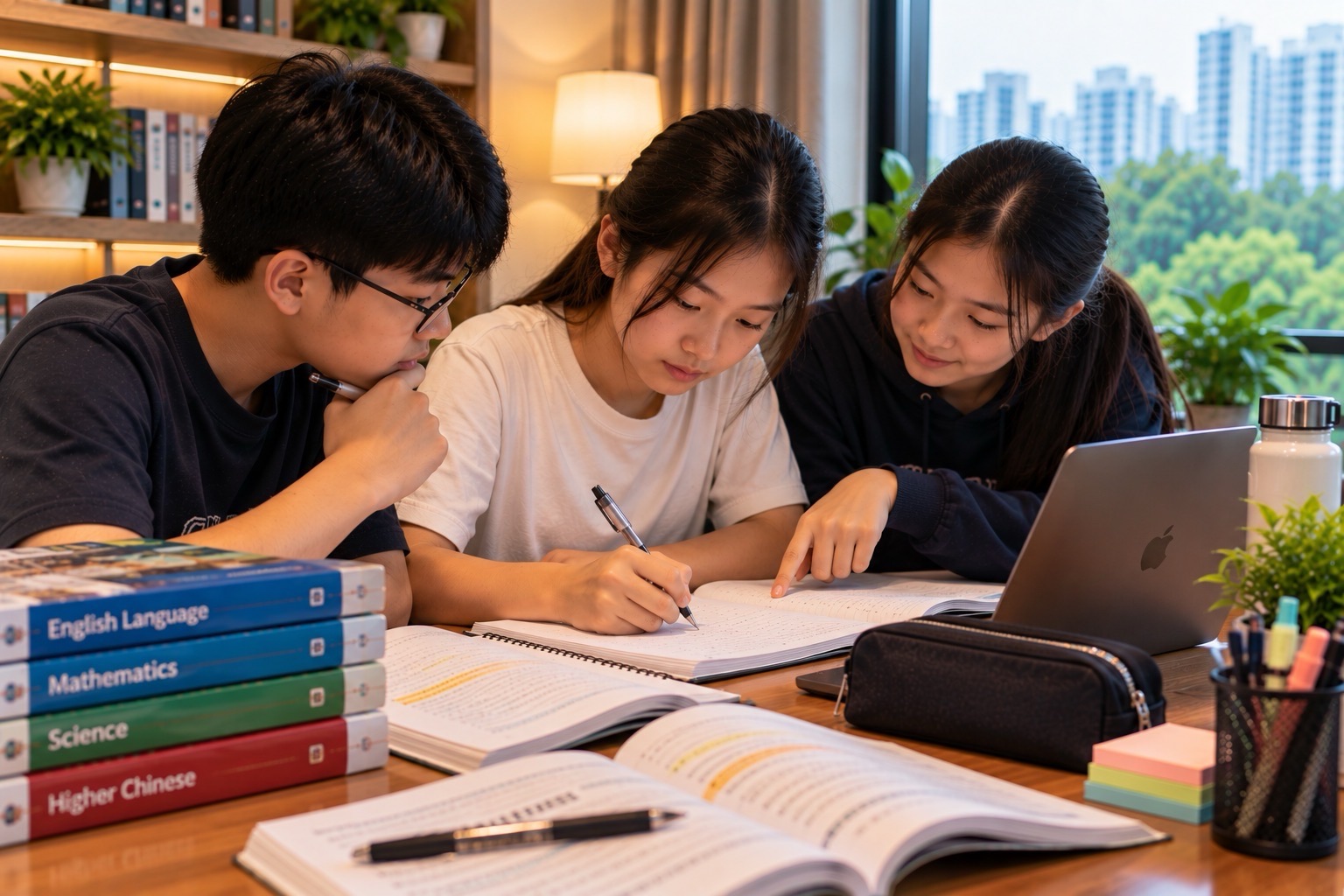
Updated 11 November 2026. Independent eduKateSingapore reporting. Header photograph is a general learning illustration, not an official campus documentary image.
Dated 2026 news: what happened and what it means
21 August 2026 — CHAGEE partnership and tea skills
ITE announced cooperation with CHAGEE Singapore at the opening of CHAGEE’s Pasir Ris family-friendly heartland store. The parties intend to develop tea-beverage competencies aligned with Higher Nitec in Hospitality Operations. ITE’s release refers to the Barista Service module for Year 1 students and eight competency areas, spanning barista practice and operations management. A learner should ask whether and when these elements are delivered in their own cohort; an MOU is not a personal job offer.
Original official source and context.
6 May 2026, announced 18 May — Pan Pacific training partnership
ITE and Pan Pacific Hotels Group signed a three-year agreement at College West. ITE said it will create structured opportunities for internships at hotels and serviced suites across all three ITE colleges, together with staff industry attachments and selected mentoring experiences. The event location is College West, but the agreement is not exclusively for West students. Applicants should ask which courses and year groups qualify for placements.
Original official source and context.
25 June 2026 — School of Hospitality graduates recognised
College West’s graduation awards page lists Tan Xing Hua in Higher Nitec in Pastry & Baking as its School of Hospitality top graduate, with outstanding graduates also listed across Culinary Arts and Hospitality Operations. Recognition is evidence of individual achievement, not a guarantee of future employment or proof of any particular graduate’s subsequent career. Students can learn from the importance of consistent practice and reflective skill development.
Original official source and context.
Practical school guide: how hospitality training really works
Hospitality is a skilled occupation, not merely being friendly
Successful hospitality involves safety, operational accuracy, customer communication and coordination. When a service counter is busy, an employee may need to prioritise orders, verify an allergy warning, communicate a delay and coordinate with a kitchen without promising an outcome that cannot be delivered. Technical education trains students to use standard procedures while responding to real people. This explains why a beverage or hotel partnership matters: students can see how reliability is assessed beyond a classroom worksheet.
A student considering this school can test their interest through a harmless role-play. Imagine a customer ordering an unfamiliar drink during a long queue. Write down which information the staff must check, when to confirm payment and when to escalate an issue. The point is not to invent a professional safety policy but to practise recognising uncertainty. Keeping accurate notes about what went wrong is a useful workplace habit.
Higher Nitec in Hospitality Operations: the service route
Hospitality Operations is concerned with guest experience, accommodation, beverage service, outlet operations and professional communication. It differs from making food as the primary occupation, even though food and drink are important to many businesses. At College West, ITE lists facilities such as Hotel West, Crema West and training restaurants supporting hospitality education. Those environments help students connect ideas such as guest privacy, service standards and handovers to actual operations.
An applicant should ask what they will do most often in each module, rather than choose a course from a promotional image. Will they practise reception and front-desk tasks, barista work, reservations, food service, complaint handling or process improvement? Which activities are assessed in class, and which take place during a structured attachment? These questions help separate a genuine preference for service work from a general interest in hotels and travel.
Why CHAGEE’s tea-training agreement matters
Preparing a beverage reliably requires recipe control, hygiene, equipment checks, stock awareness and clear communication. The CHAGEE announcement is relevant because it proposes a pathway from an educational barista module towards workplace competencies. That is more specific than a brand sponsorship, but applicants should still check how the curriculum will be implemented. An agreement to develop competencies does not prove that every learner will receive an industry certification immediately.
A student can create a simple quality-assurance exercise at home using paper rather than professional equipment. Draw a process for taking an order, checking ingredients, verifying a customer request, preparing the item and handing it over. Add a column for potential errors and a second column for an appropriate check. Explain the plan honestly as an original student exercise, not a CHAGEE-approved training manual.
Crema West and learning in a café
ITE describes Crema West as a student-supported café in which Hospitality Operations learners manage the service area, while Culinary Arts and Pastry & Baking students contribute to food preparation. Its real-world appeal is the need for several teams to coordinate accurately. A student may be able to follow a recipe but still struggle to organise orders, keep a counter clean or explain a delay politely. Structured practice makes such weaknesses visible before entering an external workplace.
Students should ask the school whether their course uses this facility, how work rotations are organised and what assessment standards apply. Public-facing hours and availability can change, so readers should consult official booking or visitor information. An example of a valuable reflection is describing how a delayed kitchen item affected service and what communication would have prevented confusion, without revealing real customer information.
Hotel West: the difference between simulation and service
College West’s Hotel West is described by ITE as a functioning 14-room training hotel, comprising a junior suite and 13 deluxe rooms. Its purpose is to connect guest-service lessons to the constraints of real hospitality. A room may not be ready, a guest may need accessibility support, or a request may require approval from another department. The student has to respect procedure, guest privacy and the limits of their own authority.
A useful exercise is to design a fictional front-desk checklist covering reservations, identity verification, room readiness, complaint escalation and handover. Avoid using real names or booking data in a portfolio. Students drawn to this work should ask about shift structures, professional communication, housekeeping coordination and how supervisors assess consistent service rather than isolated displays of friendliness.
Culinary Arts versus Pastry & Baking
Culinary Arts often involves kitchen production, ingredients, cooking methods, timing and food safety, while Pastry & Baking involves precise formulas, temperature control, dough and product consistency. Both can be creative, yet their daily activities differ. ITE lists specialised training kitchens, a patisserie and restaurant environments at College West. Course-specific access depends on the formal training programme rather than a student’s general interest in a facility.
Someone who enjoys decorating cakes but dislikes repetitive measuring should learn more about professional pastry production before committing. A student attracted by restaurant cooking should consider how they handle heat, time pressure, preparation and teamwork. Compare the official module descriptions and ask a lecturer to explain a typical practical assessment. Choosing by the work itself is more useful than comparing how impressive a final dish looks online.
Amber West and a realistic restaurant workflow
ITE describes Amber West as a student-supported training restaurant with capacity for approximately 60 diners. A full service involves booking information, table readiness, kitchen communication, presentation, dietary concerns, timing and payment accuracy. No single employee completes every step independently, which is why teamwork, responsibility and clear handovers matter as much as a student’s individual skill. The school also lists other specialised service environments for learners.
A learner can produce a fictional service plan for six tables. Record how incoming orders will be passed to the kitchen, what happens when an item is unavailable and who checks that guests receive the correct food. This is a safe example for reflection, not professional food-safety certification. Ask ITE for current public operating arrangements if planning a visit, since school training schedules and restaurant openings need not remain constant.
How internships really work
The Pan Pacific agreement highlights the value of authentic workplace exposure, but the terms of any individual attachment are controlled by the school, programme and participating employer. Students should ask how placements are allocated, whether there are prerequisites, what supervision exists and how learning is assessed. Not every course, cohort or student necessarily receives the same employer, location or work arrangement. The college’s good relationships with industry should not be turned into a job guarantee.
Before an attachment, students should practise basic workplace responsibilities: punctuality, confidentiality, accurate reporting, safe work, respectful handling of complaints and following instructions. A reflection log should state what the student personally did and what a supervisor advised. Sensitive customer information must stay private. The best internship outcome is not simply a famous company name but a clear record of improved competence.
What the 2026 graduate awards can teach
The College West awards page identifies distinguished learners in the three main hospitality disciplines. Such recognition demonstrates that the college celebrates practical and academic excellence. It does not reveal the personal biographies or employment outcomes of each graduate, and readers should not infer a universal placement rate from selected awardees. The most useful lesson is that sustained technical training can be recognised.
A prospective student can respond by setting measurable learning goals, such as following a safe preparation sequence consistently, presenting a clear service handover or explaining a mistake without hiding it. A portfolio should document effort, feedback and revision. Awards may motivate students, but the programme should still be evaluated according to course content, student support and realistic progression.
What a hospitality portfolio should contain
An effective portfolio does not need expensive photography. It could contain a carefully explained mock service plan, a costed menu concept, a record of a supervised school activity, an anonymised role-play reflection and evidence of teamwork. Every item should state the task, the student’s responsibility, feedback and what improved. Invented awards, unapproved workplace images or copied examples are counterproductive because hospitality depends heavily on trust.
For Culinary Arts and Pastry & Baking, a learner may show how a recipe or method was revised, provided the work was safe and permitted. For Hospitality Operations, a student can show customer-communication scripts and process diagrams. AI-assisted materials should be labelled where appropriate and admission rules respected. The goal is to demonstrate thinking and initiative, not to simulate professional experience the student never had.
Travel and schedule realities at Choa Chu Kang
College West is located at 1 Choa Chu Kang Grove, Singapore 688236. An applicant should plan the entire commute, including transfers and walking to the correct block. Hospitality placements can involve different working hours from a standard school timetable, depending on employer and programme. Family responsibilities, transport safety and sufficient rest therefore matter in course planning.
The official college and reporting instructions should determine entrances, room locations and required attire. A general campus photograph may be out of date. Ask about practical lessons that run longer than ordinary classroom sessions and how students balance CCAs or part-time work. A good learning choice should be both academically suitable and sustainable over the programme’s duration.
A practical thirty-day exploration plan
Week one: compare Hospitality Operations, Culinary Arts and Pastry & Baking by their published module verbs. Week two: practise a safe mock service or menu-planning task. Week three: collect feedback and produce a revised plan. Week four: check the current course criteria, financial support and official admission exercise. A reader may discover that they enjoy guest communication more than food production, or the reverse.
This is not an official ITE entry programme and carries no admission advantage by itself. Its value is giving the student evidence of everyday interests before choosing a qualification. Families can discuss what seemed enjoyable, what was difficult, which subjects need attention and what questions remain for the college. The result should be a more informed application rather than a rushed decision.
Where course changes must be verified
School and industry developments can be described in a 2026 news article, but current course availability, assessment requirements and intake dates belong to official ITE pages. A course guide may show several entry pathways, and the right route depends on actual qualifications. Applications for 2027 should not use old 2026 registration deadlines. Ask the college directly where an old notice conflicts with the live intake directory.
Use the school article to identify themes and questions, then move to the formal admissions guide. Write down the course title, campus, applicant category, programme length, assessment requirements and the date checked. This workflow is more reliable than scrolling through social posts in which a useful announcement becomes mixed with outdated instructions.
Admissions, Full SBB and progress after graduation
2027 ITE admission: start with the applicant category
ITE publishes separate early admission, main full-time, diploma and part-time routes. Students holding different qualifications can have different choices and deadlines. Select the correct route for the actual 2027 intake and read the course’s stated minimum requirements before making a preference list. An applicant must use their own Singpass where ITE requires it; a parent’s account should not be substituted.
A first application, interview invitation, conditional offer and final acceptance are different statuses. Save the official acknowledgement, monitor the portal and complete every required acceptance task. No hotel internship news article can establish an individual’s admission outcome.
Full Subject-Based Banding and SEC
The first Singapore-Cambridge Secondary Education Certificate examinations begin in 2027, with subjects examined at G1, G2 and G3 levels. Posting Group 1, 2 or 3 should not be treated as a permanent label determining every future qualification. Admission must be assessed according to actual subject levels and the rules of a named programme.
MOE plans a new common Post-Secondary Admissions Exercise in 2028, after the first SEC cohort receives results. That is not a reason for an existing GCE applicant to skip the 2027 exercise. Check the student cohort and year carefully.
How to compare programme duration and progression
ITE’s three-year Higher Nitec structure coexists with other entry durations and pathways. A short entry route may be open only to applicants meeting specified qualifications. Students should compare actual modules and awarded qualifications rather than using the number of years as a substitute for fit or quality.
After Higher Nitec, further study might involve a diploma, a Work-Study Diploma or other eligible route, subject to prerequisites, assessment and vacancies. Employment is another possibility. Neither an MOU nor a course page guarantees a place in later study or a particular job.
Costs, bursaries and everyday planning
The real cost of education includes required equipment, materials, transport, meals and possibly altered paid-work hours. ITE publishes fee and bursary information that depends on programme, intake and eligibility. Use a personal fee statement or the correct current category instead of a figure copied from a previous year’s post.
Students facing financial constraints should investigate available financial aid before rejecting a suitable programme. The college can also explain current academic, wellbeing and accessibility support arrangements. Personal circumstances should be discussed privately through official channels.
What to ask before a campus visit
Ask which learning environments belong to the exact course, what is assessed in the first year, how workplace attachments are arranged and what practical costs are compulsory. Plan the visit through the current official contact and reporting information. Visitor opening hours are not a promise that laboratories, hotels or restaurants are open for casual access.
Bring the course title, qualification, intended intake and a short question list. Record the date of every answer and cross-check it against current admissions instructions. A well-prepared visit should resolve uncertainties rather than simply produce attractive photographs.
A one-page family decision table
Build columns for course title, campus, qualifications, typical practical work, admissions process, travel, costs and possible next steps. Fill them from official information. Leave uncertain cells blank until the college confirms them. This prevents assumptions about placements or eligibility becoming invisible decisions.
Ask the student to explain which daily activities they expect to enjoy and which challenges will require discipline. The parent’s role is to help test the reasoning, not to assume that a popular brand or a school ranking automatically determines the best fit.
Safety, honesty and scams
Do not share Singpass credentials or pay an unknown individual claiming to guarantee an ITE place. Verify a message through official ITE contact channels. A forwarded announcement is not proof that an application is open, and a former student’s experience cannot establish current policy.
A student portfolio should describe original work honestly, acknowledge support and protect confidential records. Reliability is a professional skill. If a course includes food safety or workplace equipment, follow authorised training rather than experimenting with hazardous procedures without supervision.
Frequently asked questions
Is the School of Hospitality a fourth ITE college?
No. It is a school within ITE College West; Singapore has three ITE colleges.
Does CHAGEE guarantee an ITE graduate a job?
No. The MOU concerns developing tea-beverage competencies and pathways, not automatic hiring.
Which course does the CHAGEE agreement mention?
ITE identifies Higher Nitec in Hospitality Operations and its Barista Service module.
Was the Pan Pacific agreement signed at West?
Yes, on 6 May 2026, but internship opportunities were described across all three colleges.
Does Hotel West have guest rooms?
ITE describes a 14-room training hotel; confirm current visitor or booking arrangements.
Is Culinary Arts the same as Pastry & Baking?
No. Compare the official modules and typical practical tasks.
Who received the 2026 top graduate hospitality award?
ITE College West lists Tan Xing Hua for Higher Nitec in Pastry & Baking.
Are internships guaranteed?
No. Individual availability and allocation depend on the course and employer arrangements.
What if I need financial help?
Check current ITE bursaries, financial aid and support arrangements.
When does SEC begin?
SEC examinations begin in 2027; the new PSE is planned for 2028.
How do I check my 2027 application?
Use the ITE intake directory and your official applicant portal.
Is eduKateSingapore an official ITE source?
No. This is an independent guide; ITE is the authority for applications and course rules.
Original sources and relevant eduKate reading
- CHAGEE partnership
- Pan Pacific partnership
- College West graduation awards
- School of Hospitality facilities
- ITE application directory
- ITE course finder
- SEAB Secondary Education Certificate
- MOE 2028 PSE
- ITE fees
- ITE financial aid
- Earlier eduKateSingapore College West news
Editorial note: this guide distinguishes dated news, planned collaboration and live course requirements. It is not an admission offer, employment guarantee or official ITE publication. Consult ITE for individual applications, eligibility, current fees and assessment details.