ITE College East students received a Lee Kuan Yew Technology Award in May 2026 for exploring Kombucha SCOBY as a leather-like biomaterial. The three Higher Nitec in Bio-Chemical Technology students used bacterial cellulose from fermented tea as the basis of a flexible prototype, experimented with alternative waste-based substrates and created a purse that the ITE profile says remained flexible and intact after four months.
This independent eduKateSingapore guide was updated on 11 November 2026. It identifies the team and explains how material science, product design and environmental claims fit together. The work is an award-winning student prototype, not a certified commercially compostable product, a proven replacement for every leather use or a set of safe home-culturing instructions. Readers will also find current ITE study-route guidance for 2027 and the first SEC cohort.
Quick facts: what happened and what readers should do
- 19 May 2026: ITE’s Lee Kuan Yew Technology Awards recognised the Kombucha SCOBY project.
- ITE College East team: Joshua Yeo Zhi Herng (group leader), Cyndi Tay Xin Lin and Choo Jean Yan Jeneil.
- The students were from Higher Nitec in Bio-Chemical Technology.
- SCOBY means Symbiotic Culture of Bacteria and Yeast; the project used bacterial-cellulose material associated with tea fermentation.
- The project profile reports tests with alternative substrates, including discarded coffee grounds and sugar-cane pulp, and a fabric-lined purse prototype.
- ITE reports mealworm-based degradation observations and four months of prototype flexibility; these are limited project findings, not universal biodegradability or commercial safety certification.
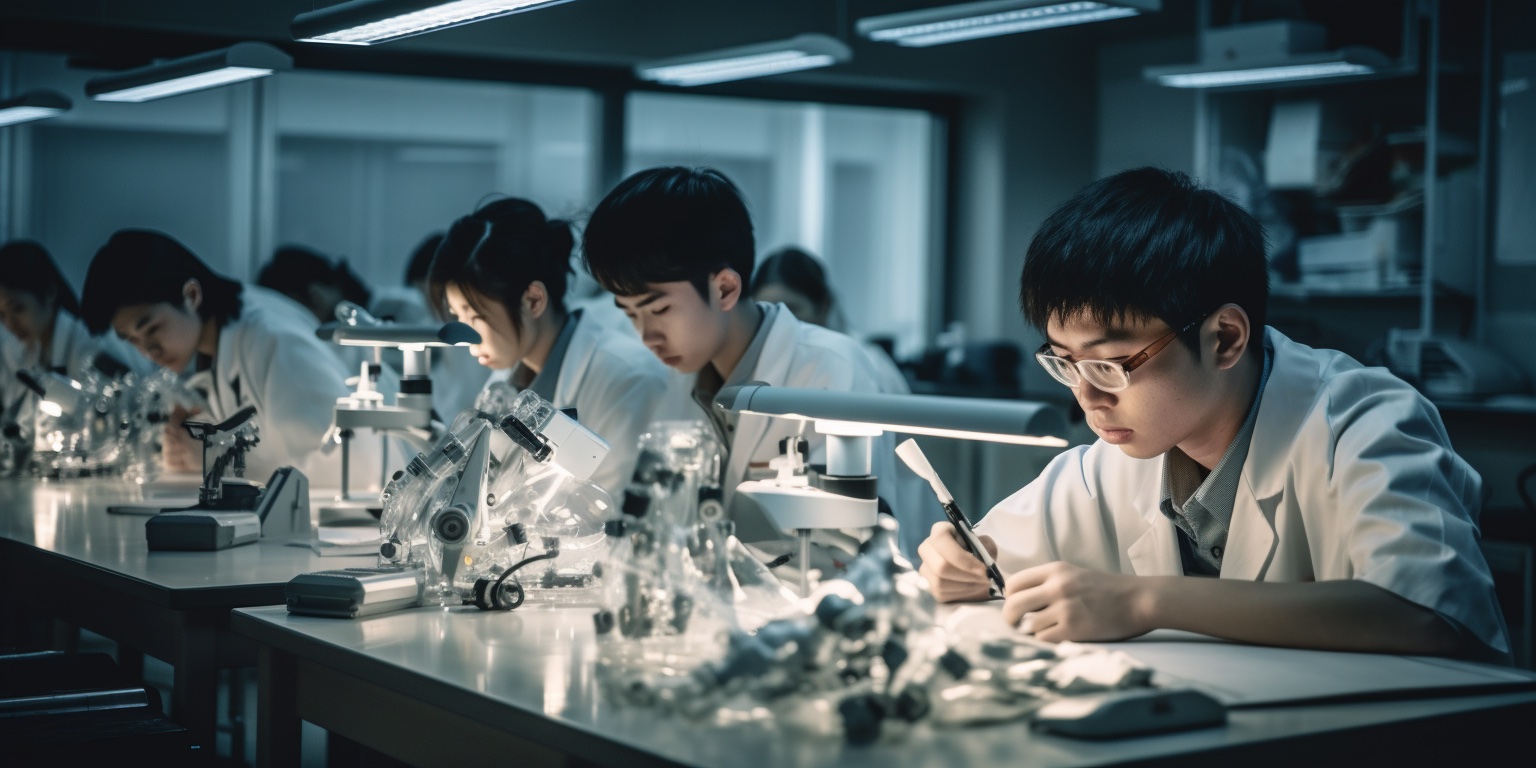
Last checked: 11 November 2026 (Singapore). Independent eduKateSingapore editorial guide. The header image is a general illustration of the subject and is not asserted to depict the ITE students or the actual prototype.
Verified 2026 news and original sources
19 May 2026 — Lee Kuan Yew Technology Award
ITE’s national Student Achievers’ Awards ceremony recognised the Kombucha SCOBY team among ten Lee Kuan Yew Technology Award winners. These prizes are intended to recognise creativity, technical skill and possible value to industry or society.
The award confirms the educational recognition. It does not establish retail sales, an independently certified biodegradability standard, or production at industrial scale.
Original source: Read ITE’s institutional information.
May 2026 Annex C — team and chemical-technology programme
The official winning-project profile names Joshua Yeo Zhi Herng as group leader, with Cyndi Tay Xin Lin and Choo Jean Yan Jeneil. All three are identified with Higher Nitec in Bio-Chemical Technology at College East.
This is a material-development project grounded in applied biochemistry. A learner should not interpret the course title to mean that every student studies leather manufacture or a particular fermentation method.
Original source: Read ITE’s institutional information.
May 2026 Annex C — purse prototype and testing claims
ITE describes a fabric-lined prototype purse that remained flexible and intact after four months, as well as experiments using alternative waste material and mealworm observations suggesting natural degradation. It describes natural oils and food-grade dyes as part of the material development.
These observations are important but limited. They do not independently demonstrate consumer-product durability, safety of all additives, compostability in every environment or a complete lifecycle advantage over other materials.
Original source: Read ITE’s institutional information.
6 November 2026 — College East’s broader bioprocess training context
ITE announced investment in a revamped Bioprocess & Pharmaceutical Centre and a planned applied laboratory partnership with Haier Biomedical at College East. These developments concern bioprocess and industry training, not the commercial launch of the Kombucha SCOBY leather concept.
Both stories show practical relevance of bio-chemical learning, but must remain distinct projects and dates. An MOU to develop a laboratory should not be described as completed equipment already used by this team.
Original source: Read ITE’s institutional information.
What students should understand about bio-based materials and the circular economy
What is SCOBY, and why can it form a material?
SCOBY is short for Symbiotic Culture of Bacteria and Yeast, a community commonly associated with kombucha fermentation. Under certain controlled conditions, microorganisms can produce bacterial cellulose, a fibrous material that may be harvested and processed for experimental applications. The ITE team explored that cellulose as a basis for a leather-like sheet.
This is not a general recipe for safely growing a culture at home. Materials research requires appropriate hygiene, biological controls, testing and supervision. The useful school-level concept is that a familiar food-related process can also produce substances with properties worth studying.
Bacterial cellulose is not the same as animal leather
Leather generally refers to animal hide processed into a durable material. A bacterial-cellulose film is a different substance with potentially different texture, strength, water behaviour and ageing characteristics. Calling it ‘bio-leather’ or ‘leather-like’ describes an intended application, not proof that it can replace every animal-leather product.
A student should compare actual mechanical properties and suitability for a named use, not rely only on a fashionable label. A purse, shoe, seat cover and industrial strap face different stresses and safety requirements. Each may need distinct validation.
How the College East team approached the problem
ITE names Joshua Yeo Zhi Herng, Cyndi Tay Xin Lin and Choo Jean Yan Jeneil as the students responsible for the winning project. Their Higher Nitec Bio-Chemical Technology background is relevant to understanding biological materials and controlled observations.
A good account of team innovation credits the entire team and does not invent separate individual duties or later employment. A project can also involve different attempts before a workable prototype emerges. The public write-up provides the result and selected observations rather than every laboratory log.
Why fermentation and material science can connect
In a fermentation process, biological activity can change the substances in an environment. Material science asks how the resulting material behaves when it is dried, stretched, handled and used. These questions link chemical and biological foundations with engineering and product design.
A secondary-school learner can explore the idea through a safe paper comparison of natural fibres and synthetic polymers. Ask what properties matter for strength, flexibility and cleaning. Do not attempt unsupervised microbial cultivation or infer the safety of a biological product without professional assessment.
What the purse prototype demonstrates
ITE reports that the team made a functional purse with a fabric lining and that the material stayed flexible and intact after four months. This is a meaningful milestone: the group moved beyond a theoretical proposal to an object that could be handled and observed over time.
A four-month observation is not the same as a comprehensive product durability test. Everyday bags may face rain, abrasion, heat, repeated bending, sunlight and cleaning. Those conditions would need further evaluation before anyone could make broad consumer guarantees.
What makes a material strong enough?
A useful material must be appropriate for the forces and environment it will face. Strength under one kind of stress does not guarantee resistance to tearing, abrasion or repeated flexing. Thickness and processing may change behaviour, sometimes with trade-offs in flexibility.
A student can compare the questions a product designer would ask about a purse versus a package label. The first may need repeated opening and closing; the second may prioritise printability and disposal. A source describing one successful prototype does not settle every application.
Natural oils and flexibility
ITE says the team used natural oils to enhance flexibility. In general, additives can change how a material bends or feels, but also create new questions about migration, stability, ageing and cleaning. The details of the team formulation are not fully disclosed in the public news record.
A responsible article describes the reported approach without inventing a formula, concentration or a consumer-safe production method. A student investigating material design should learn why every additional ingredient can improve one property while complicating another.
Colour and food-grade dyes
The official profile refers to food-grade dyes for colouring the cellulose-based material. The phrase identifies a category of material used in the project, but it does not certify that every final handbag or upholstery application is free from risk or compliant with every product standard.
Students should distinguish the safety of an ingredient in one intended use from the testing needed for another product. Material sourcing, manufacturing, exposure and disposal deserve their own evaluation. Accuracy in terminology matters more than a reassuring adjective.
Experiments with coffee grounds and sugar-cane pulp
The College East team explored whether discarded coffee grounds and sugar-cane pulp could be used as alternative substrates in the material development process. This connects the project to waste valorisation: studying whether an otherwise discarded material can contribute to something useful.
A successful experiment does not imply that every source of food waste is suitable. Substrates vary in composition, contamination and handling requirements. A school project can compare their theoretical roles without recommending that readers process unknown waste materials at home.
What the mealworm test suggests, and what it does not
ITE’s Annex C notes that tests involving mealworms suggested the material could break down naturally. This is a preliminary observation described by the team. It is not proof that the finished product will biodegrade quickly in every soil, marine or commercial composting setting.
A strong environmental claim needs a defined test, relevant conditions, measured endpoints and appropriate standards. When those details are unavailable, describe the observation narrowly instead of saying the product is universally compostable.
Biodegradable is not the same as environmentally harmless
Some materials can break down under one set of conditions but persist elsewhere. Production energy, water, chemicals, additives and disposal also affect environmental impact. A product can be bio-based without being automatically sustainable in every context.
A learner can make a lifecycle checklist that asks where materials come from, how they are processed, how long the finished object lasts and what happens after use. Such questions are more useful than assuming that ‘natural’ means risk-free.
Why the baseline comparison matters
An environmental project often compares its material with animal leather, petroleum-based synthetic leather or conventional packaging. These products have different functions and manufacturing processes, so a meaningful comparison must use an appropriate functional basis.
A small material square should not be compared directly with a fully engineered shoe solely by mass. Students should identify the real application and performance requirements before claiming an advantage. The official project page establishes an early investigation, not a full life-cycle assessment.
Can bio-leather replace plastic packaging?
ITE suggests possible applications in fashion accessories, upholstery and packaging. These are potential directions, not completed certification for contact with foods or other regulated products. Packaging may require protection against moisture, contamination, tearing and many other conditions.
A student can choose one hypothetical packaging use and list the tests it might need. A material that works for a decorative sleeve might not be suitable for a food container. Always separate design ideas from approved uses.
What Bio-Chemical Technology students study more broadly
A programme involving bio-chemical technology can develop laboratory discipline, process thinking, chemical and biological foundations, documentation and careful observations. The exact current modules and course duration must be checked in ITE’s official finder.
An applicant excited by this SCOBY project may discover they enjoy laboratory analysis more than fashion design, or vice versa. Compare the daily tasks of the relevant courses before choosing a programme from a single award-winning example.
Why keeping a lab record matters
An experiment may produce a different sheet thickness, colour or flexibility on another attempt. Without records of what changed, a team cannot reliably explain the result or decide how to improve it. Documentation is a core scientific skill.
A student can practise recordkeeping with a safe school-approved materials test, writing the objective, conditions, measurement, observation and limitation. Do not invent a positive result because it sounds more exciting than a failed trial.
Different material properties can conflict
A stronger sheet might be less flexible; a more flexible coating might affect cleaning; a thicker sheet might use more material. Engineering involves choosing among constraints rather than maximising one attractive property.
Create a fictional comparison table with columns for flexibility, durability, cost, appearance and disposal. Mark values as illustrative rather than measured. Ask which attribute matters most for the chosen product. This teaches trade-off analysis without claiming to validate bio-leather.
How a consumer should interpret ‘vegan leather’
The phrase can refer to very different materials, from plastic-based fabrics to plant-derived or microbial alternatives. The label alone does not disclose how a material was produced or how it performs. A consumer needs more precise information about composition and intended use.
A student interested in marketing can compare two fictional product labels and identify which statements need supporting evidence. Avoid assuming that a material called vegan, recycled or bio-based has a guaranteed environmental advantage.
Why four months is a meaningful but limited observation
An object remaining intact for four months shows something about its behaviour during that observed period. It says less about long-term use under different conditions. A consumer who expects years of daily carrying needs other evidence.
A responsible student report would state how the item was stored and used, what was examined, and what future tests are needed. The public ITE source does not provide the full test protocol, so this article does not invent one.
What commercialisation would require
Moving from a student prototype to a consumer product can involve consistent manufacturing, quality assurance, product safety, packaging, pricing, customer instructions and legal compliance. Each stage is more demanding than showing a workable object at an award ceremony.
The ITE report does not establish a retail brand, a manufacturing partner or a signed commercial distribution deal. Readers should distinguish the team’s hopes and material potential from completed commercial milestones.
Linking sustainability to business decisions
A material may be attractive but too costly, fragile or difficult to produce consistently for a certain market. Entrepreneurs need to compare what customers actually need with production cost, performance and honest claims.
A safe classroom exercise can build a fictional cost table including raw material, energy, labour, testing, packaging and expected product lifetime. This is not a quotation for the ITE prototype. It shows why business skills complement scientific creativity.
Why a project can connect several ITE schools
Bio-chemical students may investigate material properties; design students may evaluate appearance and user experience; business students may consider market fit; engineering students may examine processing and quality controls. One real product can require contributions from several disciplines.
A future applicant can compare current ITE course descriptions to find where their interests fit. An interdisciplinary news story is not a guarantee that every enrollee can join the same project or access a particular external partner.
A safe four-week research assignment
Week one: read official introductory material about cellulose and polymers. Week two: compare theoretical properties of two material categories using published references. Week three: design a fictional product requirement table. Week four: write a short limitations section and ask a teacher to review the conclusions.
This exercise requires no fermentation or lab culturing and is not an ITE selection assessment. It helps students practise evidence-based materials reasoning without taking biological or chemical risks.
The difference between a science demonstration and a safety claim
A prototype can demonstrate that a material can be shaped into a purse. It cannot automatically establish allergy safety, regulatory compliance, long-term durability or universal environmental benefit. Each requires relevant evidence.
Students should be rewarded for stating what they tested and what they did not. This mindset builds credibility with future employers, researchers and customers.
What changed at College East in November 2026
ITE’s 6 November announcement about bioprocess training and its planned Haier Biomedical laboratory shows continued interest in applied life-science skills. It does not state that the Kombucha SCOBY material project became part of that laboratory or curriculum.
A good school news site keeps these announcements separate while showing their thematic relationship: laboratory practice, process technology and authentic learning. Do not connect two projects by inventing a formal partnership.
Questions for a 2027 bio-chemical applicant
Ask about current Higher Nitec eligibility, which subjects are necessary, how laboratory safety is taught, the amount of practical work, any industry attachment and options after graduation. Verify the current programme title and college.
Bring actual qualifications and a realistic timetable. A 2026 technology award provides inspiration, but official ITE admissions determine places and course requirements.
A material-science glossary to begin with
Useful terms include cellulose, polymer, substrate, microbial culture, tensile strength, flexibility, biodegradation, contamination, prototype, durability and lifecycle assessment. Knowing a word is useful only if a student can explain its role and its limitations.
Make a short glossary from trustworthy scientific learning material, noting one factual definition and one question. Avoid treating these terms as instructions for an unsupervised experiment.
What a trustworthy follow-up report would verify
Future updates should check whether the team has conducted broader material testing, secured product-safety assessment, refined durability or begun verified commercial trials. If no new milestone is documented, the honest status remains the May 2026 award-winning student prototype.
The project is interesting because it shows how materials might be reimagined. Its educational value does not depend on exaggerating its readiness for widespread consumer use.
Full SBB, SEC 2027, the new PSE and practical admissions decisions
A 2026 innovation award is not an admission offer
The ITE College East project belongs to the May 2026 Lee Kuan Yew Technology Awards and is an example of what a selected student team explored. It does not change academic entry requirements, guarantee a similar project for every student or prove an employer will recruit future applicants.
Read the original award record for historical facts. Use the live ITE course finder and admission exercise for questions about qualifications, places and dates. A good education decision requires information from both without mixing their purposes.
G1, G2 and G3 under Full Subject-Based Banding
Under Singapore’s Full Subject-Based Banding, a secondary student may take a mix of G1, G2 and G3 subjects. Posting Groups describe how students entered secondary school, not a permanent career identity. A particular ITE programme has entry conditions based on relevant qualifications.
Compare actual subject levels and results with the published requirements of each named course. Do not infer a student’s potential from a broad posting-group label or assume that interest in a creative project waives formal prerequisites.
SEC examinations begin in 2027
The Singapore-Cambridge Secondary Education Certificate begins with its first examinations in 2027, combining the earlier N- and O-Level structures into a common certificate showing subjects taken at the relevant levels. This affects the graduating cohort and subsequent applications, not previously completed 2026 awards.
Families should identify when the student will take national examinations before using a guide. Different cohorts can be subject to different application processes and requirements.
New Post-Secondary Admissions Exercise in 2028
MOE has announced the common Post-Secondary Admissions Exercise from 2028, following the first SEC results in January of that year. It coordinates eligible applications across JC, MI, polytechnic and ITE pathways. Earlier intakes and early admission options have their own rules.
A student applying for a 2027 programme with an existing GCE qualification should use the active application scheme for that year rather than waiting for a future portal. This is why clear dates are essential in ITE news.
Higher Nitec durations vary by qualification
ITE’s enhanced three-year Higher Nitec structure coexists with entry durations appropriate for different prior qualifications and named programmes. A 2026 award team’s course label is not the only option available to the next cohort.
Check the exact qualification, duration for the applicant, practical modules, assessment and future pathways. A course should match learning needs rather than being chosen only because one route is shorter.
The correct 2027 application sequence
Identify the qualification currently held, then find the named course and college in the ITE finder. Choose the appropriate full-time, early-admission, progression, diploma or adult-learner exercise. Read documents, interviews and offer conditions in the live portal.
Use the applicant’s own Singpass when required, keep an acknowledgement and monitor acceptance steps. A family member can help organise information without substituting their own identity or guessing deadlines from old screenshots.
Financial assistance and practical costs
In addition to tuition, students may need transport, devices, materials, clothing, meals and time for practical attachments. Fees depend on programme and applicant category. A cost copied from another year or person’s statement may be misleading.
Check current ITE fees and assistance schemes before rejecting a suitable pathway. Families should discuss practical expenses and support needs privately with authorised college services.
What an interdisciplinary project can teach
Technical, design, scientific and business courses can contribute to the same problem from different angles. Working together requires agreed goals, careful documentation and respect for the limits of each member’s expertise. An award project is one example, not a universal ITE curriculum requirement.
Students can choose a small safe task and give each participant a clear responsibility, then reflect on what succeeded and what was difficult. Honest credit for work matters more than a dramatic title.
Workplace and industry links are conditional
An MOU, pilot or partner collaboration can offer valuable learning opportunities, but individual participation and future employment depend on the actual course, selection and business requirements. A pilot is also not the same as a permanent rollout.
Ask what experience is genuinely offered to the intended cohort and whether supervised industrial training is compulsory or selective. Do not promise internships based only on a company name in an award profile.
Student life, accessibility and wellbeing
Students may need academic support, accessibility arrangements, guidance with practical work or help managing a busy timetable. ITE has formal student-support channels. Technical programmes sometimes have safety or professional conditions that must be discussed individually.
Plan travel, rest and preparation sensibly. Privacy matters when asking for support; do not publish personal health or financial records in public comments or unverified chats.
The six-column parent-student comparison
For each real course, record the qualification and campus, entry criteria, daily tasks, assessments or placements, cost and travel, and possible next steps. Add the official source and date checked. Treat an empty field as a question, not a reason to invent a value.
Ask the student to explain which tasks they would enjoy practising repeatedly. That approach is more reliable than simply choosing a prestigious-sounding name or following an award winner.
Career progression needs its own evidence
A Higher Nitec qualification can support eligible employment and further-study applications, but these routes have separate prerequisites and available places. A 2026 technology award is not a salary guarantee, professional certification or automatic diploma admission.
Work backwards from the job or qualification the student wants, identify the necessary steps and confirm each from the responsible institution. Avoid exaggerated career claims.
A trustworthy research and project portfolio
Useful evidence includes an original question, the student’s work, test or observation, feedback, revision and limitations. Credit collaborators, outside materials and permitted AI support. Do not claim professional validation for an unapproved prototype.
A smaller project with clear reasoning can be more useful than a polished presentation containing unsupported results. Integrity is an essential technical and communication skill.
Avoid scams and stale ITE application claims
Do not send Singpass credentials to a private recruiter or pay an unknown person promising guaranteed admission. Verify any unusual application or payment request through ITE’s official channels and check the date of the information.
School-news sites should help readers distinguish historical events, active programmes and personally issued offers. That protects families and makes the information worth revisiting.
Next useful actions
- Check ITE’s 2026 award result
- Read the official winning-project profiles
- Explore current ITE courses
- Use the matching current ITE intake exercise
- Read the SEC syllabus and qualification explanation and MOE’s 2028 PSE announcement
- Review ITE fees and financial support
Additional student learning examples and limitations
What future material tests would make the story stronger
A practical next stage might include repeatable assessment of flexibility, tear resistance, water behaviour and changes over time under defined conditions. For a potential product, relevant safety and durability tests would depend on its intended use. The public award document does not provide those full measurements.
A student should learn to define one question at a time and record both positive and disappointing results. If a material appears suitable for a purse but not a wet environment, that distinction is useful evidence rather than a failed story.
The problem of inconsistent feedstocks
Discarded food or plant materials are not uniform. Their composition can vary with source, storage and processing, so an approach that works with one batch may be harder to reproduce consistently. A future material enterprise would need quality controls and safe handling rules.
A school-level paper exercise can compare hypothetical sources and list what a researcher would need to know before using each. Do not treat this as an instruction to cultivate biological material at home. The purpose is to appreciate why supply-chain information matters to science.
Material innovation and product repairability
A consumer may ask whether a new material can be cleaned, repaired or replaced without discarding the whole object. A bio-based origin does not answer those questions. Long product life can influence environmental performance, and the best design may support maintenance as well as an attractive initial appearance.
A student can compare fictional product requirements for a decorative purse and a reusable package. Identify how they differ in expected lifespan, contact with moisture and repair options. That teaches material selection without claiming the prototype has passed commercial tests.
Why the phrase ‘leather alternative’ needs context
The term can describe a material that resembles leather visually or functionally, but resemblance in one property does not prove equivalence in every use. A seat, belt, handbag and fashion accessory require different performance evidence. Bio-based materials also differ greatly from one another.
When writing a product description, state the intended category and the tested characteristics, not a universal replacement claim. Responsible material science connects every promise to a specific use and a source.
A simple decision tree for environmental claims
A useful statement might begin with whether the material is bio-based, then ask how it was produced, what additives it contains, how long the final object can be used and what has been shown about disposal. Each answer supports a narrower, more reliable claim.
An aspiring researcher can turn this sequence into a one-page chart and mark every unknown explicitly. The project remains interesting even with unanswered questions. Intellectual honesty is what makes an early prototype worth further study.
How school Mathematics enters a material project
Thickness, mass, proportion, variation and repeatability can matter in a material prototype. Students may need to compare samples and interpret graphs rather than rely on visual impressions. Measuring the wrong quantity can create a false conclusion.
A safe beginner exercise uses ordinary paper or cardboard samples of different thicknesses and records dimensions consistently. Explain which observations are repeatable and which need more tests. This develops transferable skills without biological cultivation.
More ITE 2026 Technology Award stories
- College Central: Venusta PolAIroid AI Instant Camera
- College East: GripAssist Smart Bed Rail
- College West: AI Beverage App and Mocktails
Frequently asked questions
What is the ITE Kombucha SCOBY project?
A student materials-science project using bacterial cellulose as an experimental leather-like material.
Which ITE college produced it?
ITE College East.
Who was the team leader?
Joshua Yeo Zhi Herng, with Cyndi Tay Xin Lin and Choo Jean Yan Jeneil.
Which course did they study?
Higher Nitec in Bio-Chemical Technology.
When did the technology award take place?
ITE’s Student Achievers’ Awards were held on 19 May 2026.
Was a physical prototype made?
Yes. ITE describes a fabric-lined purse that remained flexible and intact for four months.
Was biodegradation proven under all conditions?
No. The published mealworm observations are limited, not a universal biodegradability certification.
Did the team use waste materials?
ITE describes exploring discarded coffee grounds and sugar-cane pulp as alternative substrates.
Is the material already a commercial leather replacement?
The public project record does not establish mass production, commercial certification or retail availability.
Can readers reproduce it as a home fermentation activity?
This is a materials research project requiring appropriate controls; the article does not provide a home-production protocol.
Is this connected to the November Haier biomedical laboratory?
The projects are thematically related to bioprocess education, but no formal link between the specific team and laboratory is established.
How should students check 2027 Bio-Chemical Technology entry?
Through the current ITE course finder and the applicable intake exercise.
Original sources and further eduKateSingapore reading
A dated student award is a historical record; active course and application instructions control decisions today. The links preserve that distinction.
- ITE Student Achievers’ Awards 2026
- ITE Annex C Kombucha SCOBY project (page 25)
- ITE 6 November Bioprocess training announcement
- ITE East engineering laboratories
- ITE September SME sustainability news
- eduKateSingapore East 2026 news
- eduKateSingapore East Bio/Chem Engineering
- eduKateSingapore East GripAssist award guide
- ITE application directory
- SEAB SEC 2027
- MOE 2028 PSE
Editorial declaration: eduKateSingapore independently reports public ITE material and does not claim to have interviewed the developers, tested the prototype or verified a commercial or regulatory certification beyond the cited evidence. The guide does not provide medical, laboratory-production or professional food safety instructions. Verify active courses and formal rules directly with the relevant institution.