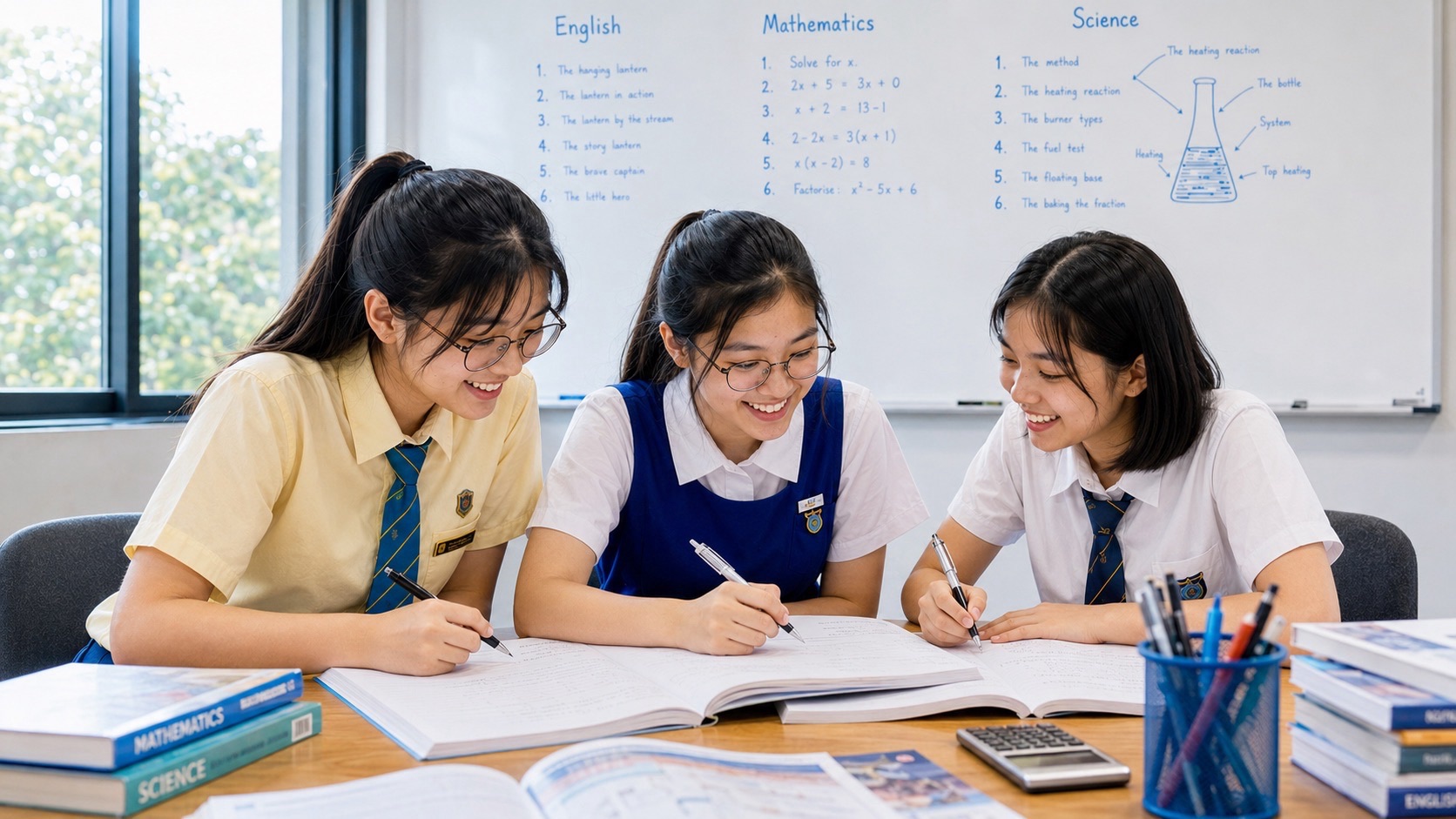
This Secondary 3 Advanced Word Families and Derivational Morphology guide develops Grade 9 control over how one concept moves across noun, verb, adjective and adverb forms. Advanced vocabulary is not complete when a student recognises one word. The learner must often transform the same concept to fit a different grammatical slot without distorting meaning.
Academic writing repeatedly requires these shifts: analyse → analysis → analytical; valid → validity → validate; reliable → reliability → reliably; transform → transformation → transformative. Some families are regular, but many change spelling or develop specialised meanings. Mechanical suffix addition is therefore unsafe.
This advanced collection article treats derivational morphology as a writing and comprehension system. Each family maps core meaning, high-utility forms, sentence transformations and a boundary that prevents incorrect word-class substitution. Later sections will test nominalisation, de-nominalisation, spelling changes, collocations and cross-subject transfer.
The central question is grammatical fit: what does the sentence need here—a process, quality, action, person, state or manner? Once the slot is identified, the writer can select the correct family member rather than reaching for a memorised ‘advanced word’.
1. analyse
Family: analysis; analytical; analytically. Core concept: examine parts and relationships.
Transformation set: We analyse evidence. The analysis is detailed. The approach is analytical. The paragraph proceeds analytically.
Boundary: analyse → analysis is irregular; do not write analysation.
Advanced transfer: write four sentences that express the same underlying concept using different members of this family. Change the sentence structure rather than merely swapping one word for another.
2. evaluate
Family: evaluation; evaluative; evaluatively. Core concept: judge against criteria.
Transformation set: We evaluate the policy. The evaluation uses three criteria. The response is evaluative.
Boundary: Evaluation is noun; evaluative describes judgement-oriented work.
Advanced transfer: write four sentences that express the same underlying concept using different members of this family. Change the sentence structure rather than merely swapping one word for another.
3. interpret
Family: interpretation; interpretive; interpretatively. Core concept: explain meaning.
Transformation set: Readers interpret the image. One interpretation is plausible. The essay takes an interpretive approach.
Boundary: Interpretation is not the same as summary.
Advanced transfer: write four sentences that express the same underlying concept using different members of this family. Change the sentence structure rather than merely swapping one word for another.
4. justify
Family: justification; justifiable; justifiably. Core concept: give defensible reasons.
Transformation set: Writers justify claims. The justification is evidence-based. The conclusion is justifiable.
Boundary: Justification requires reasons, not repetition.
Advanced transfer: write four sentences that express the same underlying concept using different members of this family. Change the sentence structure rather than merely swapping one word for another.
5. argue
Family: argument; argumentative; arguably. Core concept: present reasons for a position.
Transformation set: The writer argues a case. The argument is coherent. Arguably, the second explanation is stronger.
Boundary: Argumentative can mean argument-based or quarrelsome depending on context.
Advanced transfer: write four sentences that express the same underlying concept using different members of this family. Change the sentence structure rather than merely swapping one word for another.
6. respond
Family: response; responsive; responsively. Core concept: react or reply.
Transformation set: The system responds quickly. The response is immediate. The design is responsive.
Boundary: Responsive often describes sensitivity to needs or input.
Advanced transfer: write four sentences that express the same underlying concept using different members of this family. Change the sentence structure rather than merely swapping one word for another.
7. compare
Family: comparison; comparative; comparatively. Core concept: identify similarities/differences.
Transformation set: We compare methods. The comparison is useful. A comparative analysis follows.
Boundary: Comparatively requires a comparison set.
Advanced transfer: write four sentences that express the same underlying concept using different members of this family. Change the sentence structure rather than merely swapping one word for another.
8. contrast
Family: contrast; contrastive; contrasting. Core concept: show differences.
Transformation set: The essay contrasts two sources. The contrast is clear. The pattern is contrastive.
Boundary: Contrastive is common in linguistic/analytical contexts.
Advanced transfer: write four sentences that express the same underlying concept using different members of this family. Change the sentence structure rather than merely swapping one word for another.
9. explain
Family: explanation; explanatory. Core concept: make clear why/how.
Transformation set: The model explains the trend. The explanation is plausible. An explanatory variable is proposed.
Boundary: Explanatory differs from descriptive.
Advanced transfer: write four sentences that express the same underlying concept using different members of this family. Change the sentence structure rather than merely swapping one word for another.
10. describe
Family: description; descriptive; descriptively. Core concept: state features.
Transformation set: The paragraph describes the scene. The description is vivid. The passage works descriptively.
Boundary: Description does not equal analysis.
Advanced transfer: write four sentences that express the same underlying concept using different members of this family. Change the sentence structure rather than merely swapping one word for another.
11. observe
Family: observation; observational. Core concept: notice/watch systematically.
Transformation set: Researchers observe behaviour. The observation is recorded. The study is observational.
Boundary: Observational design differs from experimental design.
Advanced transfer: write four sentences that express the same underlying concept using different members of this family. Change the sentence structure rather than merely swapping one word for another.
12. infer
Family: inference; inferential. Core concept: draw conclusion from evidence.
Transformation set: Readers infer fear. The inference is reasonable. The task requires inferential reading.
Boundary: Inferential concerns reasoning beyond explicit information.
Advanced transfer: write four sentences that express the same underlying concept using different members of this family. Change the sentence structure rather than merely swapping one word for another.
13. imply
Family: implication; implicit; implicitly. Core concept: suggest without direct statement.
Transformation set: The tone implies doubt. The implication is important. The criticism is implicit.
Boundary: Imply and implication are related but implicit is historically related rather than a simple suffix transformation.
Advanced transfer: write four sentences that express the same underlying concept using different members of this family. Change the sentence structure rather than merely swapping one word for another.
14. conclude
Family: conclusion; conclusive; conclusively. Core concept: reach a final judgement.
Transformation set: The report concludes cautiously. The conclusion is tentative. The evidence is not conclusive.
Boundary: Conclusive is stronger than conclusion.
Advanced transfer: write four sentences that express the same underlying concept using different members of this family. Change the sentence structure rather than merely swapping one word for another.
15. assume
Family: assumption; assumed. Core concept: accept as premise without proof.
Transformation set: The model assumes independence. The assumption should be tested. The assumed value is 1.
Boundary: Assumptions are premises, not evidence.
Advanced transfer: write four sentences that express the same underlying concept using different members of this family. Change the sentence structure rather than merely swapping one word for another.
16. define
Family: definition; definitive; definitively. Core concept: state exact meaning/boundary.
Transformation set: Define the term. The definition is precise. A definitive answer requires stronger evidence.
Boundary: Definitive means authoritative/final, not merely definitional.
Advanced transfer: write four sentences that express the same underlying concept using different members of this family. Change the sentence structure rather than merely swapping one word for another.
17. classify
Family: classification; classified. Core concept: place into categories.
Transformation set: We classify responses. The classification has three groups. Data are classified by type.
Boundary: Classify → classification changes y to i.
Advanced transfer: write four sentences that express the same underlying concept using different members of this family. Change the sentence structure rather than merely swapping one word for another.
18. measure
Family: measurement; measurable; measurably. Core concept: quantify or assess.
Transformation set: We measure recall. The measurement is reliable. The effect is measurable.
Boundary: Measurable does not mean meaningful.
Advanced transfer: write four sentences that express the same underlying concept using different members of this family. Change the sentence structure rather than merely swapping one word for another.
19. rely
Family: reliability; reliable; reliably. Core concept: depend; be consistent.
Transformation set: The method is reliable. Reliability remained high. It performed reliably.
Boundary: Reliability is not validity.
Advanced transfer: write four sentences that express the same underlying concept using different members of this family. Change the sentence structure rather than merely swapping one word for another.
20. validate
Family: validation; valid; validity. Core concept: establish or assess soundness.
Transformation set: The study validates the measure. Validation is ongoing. The measure is valid. Its validity is high.
Boundary: Valid/validate/validity share a concept but different grammar.
Advanced transfer: write four sentences that express the same underlying concept using different members of this family. Change the sentence structure rather than merely swapping one word for another.
21. believe
Family: belief; believable; believably. Core concept: accept as true.
Transformation set: The source is believable. The belief may be mistaken.
Boundary: Credible is often more academic than believable.
Advanced transfer: write four sentences that express the same underlying concept using different members of this family. Change the sentence structure rather than merely swapping one word for another.
22. credible
Family: credibility; credibly. Core concept: worthy of belief.
Transformation set: The source is credible. Its credibility is strengthened. The claim is presented credibly.
Boundary: Credibility concerns believability, not consistency.
Advanced transfer: write four sentences that express the same underlying concept using different members of this family. Change the sentence structure rather than merely swapping one word for another.
23. relevant
Family: relevance; relevantly. Core concept: connected to the issue.
Transformation set: The evidence is relevant. Its relevance is clear.
Boundary: Relevantly is possible but less common; use natural collocations.
Advanced transfer: write four sentences that express the same underlying concept using different members of this family. Change the sentence structure rather than merely swapping one word for another.
24. significant
Family: significance; significantly. Core concept: important/notable; statistical sense.
Transformation set: The difference is significant. Its significance depends on context. Scores changed significantly.
Boundary: Technical statistical meaning requires statistical evidence.
Advanced transfer: write four sentences that express the same underlying concept using different members of this family. Change the sentence structure rather than merely swapping one word for another.
25. precise
Family: precision; precisely. Core concept: exact and well-bounded.
Transformation set: The wording is precise. Precision matters. The claim is precisely defined.
Boundary: Precision is not accuracy.
Advanced transfer: write four sentences that express the same underlying concept using different members of this family. Change the sentence structure rather than merely swapping one word for another.
26. accurate
Family: accuracy; accurately. Core concept: correct.
Transformation set: The value is accurate. Accuracy improved. The result is reported accurately.
Boundary: Accuracy differs from precision.
Advanced transfer: write four sentences that express the same underlying concept using different members of this family. Change the sentence structure rather than merely swapping one word for another.
27. consistent
Family: consistency; consistently. Core concept: in agreement/stable.
Transformation set: The pattern is consistent. Consistency increased. Results appeared consistently.
Boundary: Consistency can describe agreement or repeated stability.
Advanced transfer: write four sentences that express the same underlying concept using different members of this family. Change the sentence structure rather than merely swapping one word for another.
28. coherent
Family: coherence; coherently. Core concept: logically connected.
Transformation set: The essay is coherent. Coherence improves readability. Ideas are organised coherently.
Boundary: Coherence differs from consistency.
Advanced transfer: write four sentences that express the same underlying concept using different members of this family. Change the sentence structure rather than merely swapping one word for another.
29. plausible
Family: plausibility; plausibly. Core concept: reasonable/believable.
Transformation set: The explanation is plausible. Its plausibility depends on evidence. Plausibly, timing mattered.
Boundary: Plausibility is not proof.
Advanced transfer: write four sentences that express the same underlying concept using different members of this family. Change the sentence structure rather than merely swapping one word for another.
30. feasible
Family: feasibility; feasibly. Core concept: practical under constraints.
Transformation set: The plan is feasible. Feasibility depends on staffing.
Boundary: Feasibly is uncommon in many contexts; phrase naturally.
Advanced transfer: write four sentences that express the same underlying concept using different members of this family. Change the sentence structure rather than merely swapping one word for another.
31. effective
Family: effectiveness; effectively. Core concept: achieving intended result.
Transformation set: The method is effective. Effectiveness improved. It works effectively.
Boundary: Do not confuse effective/effectiveness with efficient/efficiency.
Advanced transfer: write four sentences that express the same underlying concept using different members of this family. Change the sentence structure rather than merely swapping one word for another.
32. efficient
Family: efficiency; efficiently. Core concept: using resources with little waste.
Transformation set: The process is efficient. Efficiency increased. It operates efficiently.
Boundary: A method can be efficient but ineffective.
Advanced transfer: write four sentences that express the same underlying concept using different members of this family. Change the sentence structure rather than merely swapping one word for another.
33. stable
Family: stability; stabilise/stabilize; stably. Core concept: not changing unpredictably.
Transformation set: The system is stable. Stability matters. The update stabilised performance.
Boundary: British stabilise / US stabilize are both standard.
Advanced transfer: write four sentences that express the same underlying concept using different members of this family. Change the sentence structure rather than merely swapping one word for another.
34. robust
Family: robustness; robustly. Core concept: resistant to stress/variation.
Transformation set: The finding is robust. Robustness was tested.
Boundary: Robustly is possible but often less natural than with robustness.
Advanced transfer: write four sentences that express the same underlying concept using different members of this family. Change the sentence structure rather than merely swapping one word for another.
35. adapt
Family: adaptation; adaptive; adaptable. Core concept: adjust to conditions.
Transformation set: The system adapts. The adaptation reduced errors. The strategy is adaptive and adaptable.
Boundary: Adaptive describes characteristic; adaptable describes capacity.
Advanced transfer: write four sentences that express the same underlying concept using different members of this family. Change the sentence structure rather than merely swapping one word for another.
36. resilient
Family: resilience; resiliently. Core concept: able to recover.
Transformation set: The learner is resilient. Resilience grows through recovery.
Boundary: Resiliently is less common; use natural contexts.
Advanced transfer: write four sentences that express the same underlying concept using different members of this family. Change the sentence structure rather than merely swapping one word for another.
37. sustain
Family: sustainability; sustainable; sustainably. Core concept: maintain over time.
Transformation set: Funding sustains the programme. Sustainability is uncertain. The model is sustainable.
Boundary: Sustainable is broader than simply long-lasting.
Advanced transfer: write four sentences that express the same underlying concept using different members of this family. Change the sentence structure rather than merely swapping one word for another.
38. transform
Family: transformation; transformative. Core concept: change substantially.
Transformation set: The reform transforms assessment. The transformation is substantial. The change is transformative.
Boundary: Transformative should be reserved for major change.
Advanced transfer: write four sentences that express the same underlying concept using different members of this family. Change the sentence structure rather than merely swapping one word for another.
39. modify
Family: modification; modified. Core concept: change partly.
Transformation set: We modify the task. The modification is minor. A modified version is tested.
Boundary: Modify implies partial change.
Advanced transfer: write four sentences that express the same underlying concept using different members of this family. Change the sentence structure rather than merely swapping one word for another.
40. develop
Family: development; developmental; developed. Core concept: grow/create over time.
Transformation set: Skills develop. Development takes time. A developmental sequence is planned.
Boundary: Developmental often relates to stages/growth.
Advanced transfer: write four sentences that express the same underlying concept using different members of this family. Change the sentence structure rather than merely swapping one word for another.
41. improve
Family: improvement; improved. Core concept: make better.
Transformation set: Practice improves recall. The improvement persists. An improved method is used.
Boundary: Improvement should name a criterion when possible.
Advanced transfer: write four sentences that express the same underlying concept using different members of this family. Change the sentence structure rather than merely swapping one word for another.
42. restrict
Family: restriction; restrictive; restrictively. Core concept: limit.
Transformation set: The rule restricts access. The restriction is significant. The rule is restrictive.
Boundary: Restrictive describes a limiting quality.
Advanced transfer: write four sentences that express the same underlying concept using different members of this family. Change the sentence structure rather than merely swapping one word for another.
43. enable
Family: enabling; enabler. Core concept: make possible.
Transformation set: The tool enables comparison. Enabling conditions matter.
Boundary: Enabler is more common in policy/business than school essays.
Advanced transfer: write four sentences that express the same underlying concept using different members of this family. Change the sentence structure rather than merely swapping one word for another.
44. inhibit
Family: inhibition; inhibitory. Core concept: restrain/reduce.
Transformation set: Anxiety inhibits recall. Inhibition increases under stress. The effect is inhibitory.
Boundary: Inhibitory is common in scientific contexts.
Advanced transfer: write four sentences that express the same underlying concept using different members of this family. Change the sentence structure rather than merely swapping one word for another.
45. include
Family: inclusion; inclusive; inclusively. Core concept: contain/allow participation.
Transformation set: The design includes alternatives. Inclusion matters. The approach is inclusive.
Boundary: Inclusive adds a social/access connotation beyond simple inclusion.
Advanced transfer: write four sentences that express the same underlying concept using different members of this family. Change the sentence structure rather than merely swapping one word for another.
46. exclude
Family: exclusion; exclusive; exclusively. Core concept: leave out.
Transformation set: The rule excludes late entries. Exclusion affects access. The category is exclusive.
Boundary: Exclusive can also mean high-status/private; context matters.
Advanced transfer: write four sentences that express the same underlying concept using different members of this family. Change the sentence structure rather than merely swapping one word for another.
47. represent
Family: representation; representative. Core concept: stand for/reflect.
Transformation set: The sample represents the population. Representation is uneven. The sample is representative.
Boundary: Representative means suitably reflecting, not merely diverse.
Advanced transfer: write four sentences that express the same underlying concept using different members of this family. Change the sentence structure rather than merely swapping one word for another.
48. account
Family: accountability; accountable. Core concept: explain/be answerable.
Transformation set: Institutions are accountable. Accountability requires transparency.
Boundary: Account as verb has many senses; accountability is a specialised family branch.
Advanced transfer: write four sentences that express the same underlying concept using different members of this family. Change the sentence structure rather than merely swapping one word for another.
49. responsible
Family: responsibility; responsibly. Core concept: answerable/duty-bound.
Transformation set: The team is responsible. Responsibility is shared. Staff act responsibly.
Boundary: Responsible can mean causal or duty-based.
Advanced transfer: write four sentences that express the same underlying concept using different members of this family. Change the sentence structure rather than merely swapping one word for another.
50. equitable
Family: equity; equitably. Core concept: fair while accounting for need.
Transformation set: The policy is equitable. Equity requires access. Resources are distributed equitably.
Boundary: Equity differs from equality.
Advanced transfer: write four sentences that express the same underlying concept using different members of this family. Change the sentence structure rather than merely swapping one word for another.
51. just
Family: justice; justly. Core concept: fair/lawful.
Transformation set: The outcome is just. Justice requires due process. The case was decided justly.
Boundary: Just also means only/recently; word class and meaning matter.
Advanced transfer: write four sentences that express the same underlying concept using different members of this family. Change the sentence structure rather than merely swapping one word for another.
52. diverse
Family: diversity; diversify; diversified. Core concept: varied.
Transformation set: The sample is diverse. Diversity increased. Recruitment diversified the sample.
Boundary: Diversity does not guarantee representativeness.
Advanced transfer: write four sentences that express the same underlying concept using different members of this family. Change the sentence structure rather than merely swapping one word for another.
53. culture
Family: cultural; culturally. Core concept: shared practices/values.
Transformation set: Culture shapes language. Cultural context matters. Responses vary culturally.
Boundary: Culturally modifies relation to culture, not automatically ethnicity.
Advanced transfer: write four sentences that express the same underlying concept using different members of this family. Change the sentence structure rather than merely swapping one word for another.
54. identify
Family: identity; identification; identifiable. Core concept: recognise/name; self/group concept.
Transformation set: We identify patterns. Identification is reliable. The feature is identifiable.
Boundary: Identity and identify are related but semantic branches differ.
Advanced transfer: write four sentences that express the same underlying concept using different members of this family. Change the sentence structure rather than merely swapping one word for another.
55. perceive
Family: perception; perceptive; perceptually. Core concept: become aware/interpret through senses.
Transformation set: Readers perceive tone. Perception varies. A perceptive reader notices nuance.
Boundary: Perceptual/perceptually are common scientific forms.
Advanced transfer: write four sentences that express the same underlying concept using different members of this family. Change the sentence structure rather than merely swapping one word for another.
56. motivate
Family: motivation; motivational; motivated. Core concept: provide reason/drive.
Transformation set: Feedback motivates students. Motivation changes. The task is motivational.
Boundary: Motivational often describes things intended to motivate.
Advanced transfer: write four sentences that express the same underlying concept using different members of this family. Change the sentence structure rather than merely swapping one word for another.
57. behave
Family: behaviour/behavior; behavioural/behavioral. Core concept: act in a particular way.
Transformation set: Students behave differently. Behaviour varies. Behavioural patterns are studied.
Boundary: British behaviour/behavioural; US behavior/behavioral.
Advanced transfer: write four sentences that express the same underlying concept using different members of this family. Change the sentence structure rather than merely swapping one word for another.
58. influence
Family: influence; influential. Core concept: affect.
Transformation set: The source influences opinion. Its influence is substantial. The author is influential.
Boundary: Influence is noun and verb.
Advanced transfer: write four sentences that express the same underlying concept using different members of this family. Change the sentence structure rather than merely swapping one word for another.
59. regulate
Family: regulation; regulatory; regulated. Core concept: control by rules.
Transformation set: The agency regulates storage. Regulation changed. A regulatory framework applies.
Boundary: Regulatory relates to formal rule systems.
Advanced transfer: write four sentences that express the same underlying concept using different members of this family. Change the sentence structure rather than merely swapping one word for another.
60. implement
Family: implementation; implemented. Core concept: put into action.
Transformation set: The school implements the policy. Implementation takes time.
Boundary: Implementation is execution, not planning.
Advanced transfer: write four sentences that express the same underlying concept using different members of this family. Change the sentence structure rather than merely swapping one word for another.
61. innovate
Family: innovation; innovative; innovatively. Core concept: introduce new methods.
Transformation set: Teams innovate. Innovation can improve systems. The design is innovative.
Boundary: Novelty alone does not guarantee effectiveness.
Advanced transfer: write four sentences that express the same underlying concept using different members of this family. Change the sentence structure rather than merely swapping one word for another.
62. strategy
Family: strategic; strategically. Core concept: planned route to goals.
Transformation set: The strategy targets weak links. Strategic choices align with goals. Practice is scheduled strategically.
Boundary: Strategy is noun; strategic adjective.
Advanced transfer: write four sentences that express the same underlying concept using different members of this family. Change the sentence structure rather than merely swapping one word for another.
63. organise
Family: organisation; organisational; organised. Core concept: arrange systematically.
Transformation set: We organise evidence. The organisation is clear. Organisational structure matters.
Boundary: British organise; US organize.
Advanced transfer: write four sentences that express the same underlying concept using different members of this family. Change the sentence structure rather than merely swapping one word for another.
64. structure
Family: structure; structural; structurally. Core concept: arrange/build relationships.
Transformation set: The essay structures evidence carefully. Its structure is clear. A structural problem remains.
Boundary: Structural often means embedded in arrangement/system.
Advanced transfer: write four sentences that express the same underlying concept using different members of this family. Change the sentence structure rather than merely swapping one word for another.
65. system
Family: systemic; systematic; systematically. Core concept: organised whole.
Transformation set: The system has several parts. A systemic problem spans the system. A systematic review follows a method.
Boundary: Systemic and systematic are not synonyms.
Advanced transfer: write four sentences that express the same underlying concept using different members of this family. Change the sentence structure rather than merely swapping one word for another.
66. cause
Family: cause; causal; causally. Core concept: produce an effect.
Transformation set: The factor causes delay. The causal link is uncertain. The variables may be causally related.
Boundary: Causal language requires evidence.
Advanced transfer: write four sentences that express the same underlying concept using different members of this family. Change the sentence structure rather than merely swapping one word for another.
67. consequence
Family: consequence; consequential; consequently. Core concept: result/outcome.
Transformation set: The change has consequences. The effect is consequential. Consequently, policy changed.
Boundary: Consequently is a transition, not simply an adjective-derived adverb in use.
Advanced transfer: write four sentences that express the same underlying concept using different members of this family. Change the sentence structure rather than merely swapping one word for another.
68. relate
Family: relation; relationship; relational. Core concept: connect.
Transformation set: The variables relate. Their relationship is complex. A relational model is used.
Boundary: Relationship is often more natural than relation in everyday academic prose.
Advanced transfer: write four sentences that express the same underlying concept using different members of this family. Change the sentence structure rather than merely swapping one word for another.
69. correlate
Family: correlation; correlational. Core concept: vary together.
Transformation set: The variables correlate. Correlation is high. The design is correlational.
Boundary: Correlation does not establish causation.
Advanced transfer: write four sentences that express the same underlying concept using different members of this family. Change the sentence structure rather than merely swapping one word for another.
70. vary
Family: variation; variable; variability. Core concept: change/differ.
Transformation set: Scores vary. Variation is wide. The variable is measured. Variability is high.
Boundary: Variable can be noun or adjective.
Advanced transfer: write four sentences that express the same underlying concept using different members of this family. Change the sentence structure rather than merely swapping one word for another.
71. proportion
Family: proportion; proportional; proportionally. Core concept: part/ratio.
Transformation set: The proportion increased. The change is proportional. Costs rose proportionally.
Boundary: Proportion and probability are different.
Advanced transfer: write four sentences that express the same underlying concept using different members of this family. Change the sentence structure rather than merely swapping one word for another.
72. distribute
Family: distribution; distributive; distributed. Core concept: spread/allocate.
Transformation set: Scores are distributed unevenly. The distribution is skewed.
Boundary: Distributive has specialised grammatical/mathematical senses.
Advanced transfer: write four sentences that express the same underlying concept using different members of this family. Change the sentence structure rather than merely swapping one word for another.
73. probable
Family: probability; probably. Core concept: likely.
Transformation set: The event is probable. Probability is estimated. It will probably occur.
Boundary: Probably is adverb; probability is noun.
Advanced transfer: write four sentences that express the same underlying concept using different members of this family. Change the sentence structure rather than merely swapping one word for another.
74. certain
Family: certainty; certainly. Core concept: confident/definite.
Transformation set: The result is not certain. Certainty is limited. It certainly warrants review.
Boundary: Certainly can overstate evidence.
Advanced transfer: write four sentences that express the same underlying concept using different members of this family. Change the sentence structure rather than merely swapping one word for another.
75. ambiguous
Family: ambiguity; ambiguously. Core concept: open to multiple interpretations.
Transformation set: The pronoun is ambiguous. Ambiguity reduces clarity. The sentence is phrased ambiguously.
Boundary: Ambiguous differs from vague.
Advanced transfer: write four sentences that express the same underlying concept using different members of this family. Change the sentence structure rather than merely swapping one word for another.
76. explicit
Family: explicitness; explicitly. Core concept: directly stated.
Transformation set: The rule is explicit. Explicitness improves clarity. It explicitly requires consent.
Boundary: Explicitness is possible but often awkward; choose natural phrasing.
Advanced transfer: write four sentences that express the same underlying concept using different members of this family. Change the sentence structure rather than merely swapping one word for another.
77. implicit
Family: implicitness; implicitly. Core concept: suggested, not stated.
Transformation set: The criticism is implicit. It is conveyed implicitly.
Boundary: Implicitness is possible but less common; use the adjective/adverb naturally.
Advanced transfer: write four sentences that express the same underlying concept using different members of this family. Change the sentence structure rather than merely swapping one word for another.
78. objective
Family: objectivity; objectively. Core concept: less influenced by personal bias.
Transformation set: The criteria are objective. Objectivity is difficult. The panel evaluates objectively.
Boundary: Objectivity does not mean no judgement.
Advanced transfer: write four sentences that express the same underlying concept using different members of this family. Change the sentence structure rather than merely swapping one word for another.
79. subjective
Family: subjectivity; subjectively. Core concept: based on personal perspective.
Transformation set: The response is subjective. Subjectivity affects interpretation.
Boundary: Subjective is not automatically invalid.
Advanced transfer: write four sentences that express the same underlying concept using different members of this family. Change the sentence structure rather than merely swapping one word for another.
80. tentative
Family: tentativeness; tentatively. Core concept: provisional.
Transformation set: The conclusion is tentative. It is stated tentatively.
Boundary: Tentativeness is possible but often less elegant than ‘a tentative quality’.
Advanced transfer: write four sentences that express the same underlying concept using different members of this family. Change the sentence structure rather than merely swapping one word for another.
81. reflect
Family: reflection; reflective; reflectively. Core concept: think back/show.
Transformation set: Students reflect on errors. Reflection supports learning. The response is reflective.
Boundary: Reflect can also mean mirror/show.
Advanced transfer: write four sentences that express the same underlying concept using different members of this family. Change the sentence structure rather than merely swapping one word for another.
82. critical
Family: critique; critically; criticism. Core concept: evaluative/questioning.
Transformation set: The review is critical. It offers a critique. Evidence is evaluated critically.
Boundary: Critical does not mean negative.
Advanced transfer: write four sentences that express the same underlying concept using different members of this family. Change the sentence structure rather than merely swapping one word for another.
83. logic
Family: logical; logically. Core concept: reasoning structure.
Transformation set: The logic is sound. The conclusion is logical. It follows logically.
Boundary: Logic is noun, not ‘logicalness’.
Advanced transfer: write four sentences that express the same underlying concept using different members of this family. Change the sentence structure rather than merely swapping one word for another.
84. rational
Family: rationale; rationality; rationally. Core concept: reason-based.
Transformation set: The choice is rational. The rationale is clear. Rationality is debated. The team acts rationally.
Boundary: Rationale means reason/explanation, not simply rationality.
Advanced transfer: write four sentences that express the same underlying concept using different members of this family. Change the sentence structure rather than merely swapping one word for another.
85. ethical
Family: ethics; ethically. Core concept: morally appropriate.
Transformation set: The design is ethical. Ethics approval was obtained. Data were handled ethically.
Boundary: Ethics is field/system; ethical is evaluation.
Advanced transfer: write four sentences that express the same underlying concept using different members of this family. Change the sentence structure rather than merely swapping one word for another.
86. practical
Family: practicality; practically. Core concept: workable/use-related.
Transformation set: The solution is practical. Practicality matters. Practically, implementation is difficult.
Boundary: Practically can mean ‘in practical terms’ or ‘almost’ in informal use.
Advanced transfer: write four sentences that express the same underlying concept using different members of this family. Change the sentence structure rather than merely swapping one word for another.
87. strategise
Family: strategy; strategic; strategically. Core concept: plan deliberately.
Transformation set: Teams strategise before acting. A strategy guides action.
Boundary: Strategise is acceptable but often less natural than plan.
Advanced transfer: write four sentences that express the same underlying concept using different members of this family. Change the sentence structure rather than merely swapping one word for another.
88. different
Family: difference; differentiate; differently. Core concept: not the same.
Transformation set: The groups are different. The difference is clear. Criteria differentiate them. They respond differently.
Boundary: Differentiate is not simply a fancy replace for distinguish in all contexts.
Advanced transfer: write four sentences that express the same underlying concept using different members of this family. Change the sentence structure rather than merely swapping one word for another.
89. similar
Family: similarity; similarly. Core concept: alike.
Transformation set: The methods are similar. Their similarity is limited. They perform similarly.
Boundary: Similarity still requires a dimension.
Advanced transfer: write four sentences that express the same underlying concept using different members of this family. Change the sentence structure rather than merely swapping one word for another.
90. independent
Family: independence; independently. Core concept: not dependent.
Transformation set: The sources are independent. Independence strengthens corroboration. They were analysed independently.
Boundary: Independent does not mean unbiased automatically.
Advanced transfer: write four sentences that express the same underlying concept using different members of this family. Change the sentence structure rather than merely swapping one word for another.
Advanced word families in the Secondary 3 collection
Continue through the Secondary 3 Advanced Vocabulary Collection for advanced nominalisation, reporting verbs, academic adverbs, prepositions, collocations, cohesion, connotation and modality.
Ninety advanced word-family laboratories
Each lab treats a word family as a grammatical system rather than a vocabulary list. The learner must choose the correct member for a noun slot, verb slot, adjective slot or adverbial slot, then restructure the sentence so the concept survives the change.
Lab 1: analyse
Family: analysis; analytical; analytically. Concept: examine parts and relationships.
Slot test: create four sentence frames: “The ___ of the result…”, “The method ___ the result…”, “The result is ___”, and “The method operates ___”. Fill only the slots for which a natural member of this family exists; leave unnatural forms unused.
Transformation test: take one sentence from the family and rewrite it twice: once by turning an action into a noun phrase, and once by turning an abstract noun back into a direct verb. Preserve meaning while changing information focus.
Spelling and meaning check: compare the visible forms. Mark any spelling change, lost letter, doubled consonant or semantic drift. Boundary: analyse → analysis is irregular; do not write analysation.
Transfer: use one family member in English analysis and another in Science, Humanities or data interpretation. The sentence must sound natural rather than mechanically derived.
Lab 2: evaluate
Family: evaluation; evaluative; evaluatively. Concept: judge against criteria.
Slot test: create four sentence frames: “The ___ of the result…”, “The method ___ the result…”, “The result is ___”, and “The method operates ___”. Fill only the slots for which a natural member of this family exists; leave unnatural forms unused.
Transformation test: take one sentence from the family and rewrite it twice: once by turning an action into a noun phrase, and once by turning an abstract noun back into a direct verb. Preserve meaning while changing information focus.
Spelling and meaning check: compare the visible forms. Mark any spelling change, lost letter, doubled consonant or semantic drift. Boundary: Evaluation is noun; evaluative describes judgement-oriented work.
Transfer: use one family member in English analysis and another in Science, Humanities or data interpretation. The sentence must sound natural rather than mechanically derived.
Lab 3: interpret
Family: interpretation; interpretive; interpretatively. Concept: explain meaning.
Slot test: create four sentence frames: “The ___ of the result…”, “The method ___ the result…”, “The result is ___”, and “The method operates ___”. Fill only the slots for which a natural member of this family exists; leave unnatural forms unused.
Transformation test: take one sentence from the family and rewrite it twice: once by turning an action into a noun phrase, and once by turning an abstract noun back into a direct verb. Preserve meaning while changing information focus.
Spelling and meaning check: compare the visible forms. Mark any spelling change, lost letter, doubled consonant or semantic drift. Boundary: Interpretation is not the same as summary.
Transfer: use one family member in English analysis and another in Science, Humanities or data interpretation. The sentence must sound natural rather than mechanically derived.
Lab 4: justify
Family: justification; justifiable; justifiably. Concept: give defensible reasons.
Slot test: create four sentence frames: “The ___ of the result…”, “The method ___ the result…”, “The result is ___”, and “The method operates ___”. Fill only the slots for which a natural member of this family exists; leave unnatural forms unused.
Transformation test: take one sentence from the family and rewrite it twice: once by turning an action into a noun phrase, and once by turning an abstract noun back into a direct verb. Preserve meaning while changing information focus.
Spelling and meaning check: compare the visible forms. Mark any spelling change, lost letter, doubled consonant or semantic drift. Boundary: Justification requires reasons, not repetition.
Transfer: use one family member in English analysis and another in Science, Humanities or data interpretation. The sentence must sound natural rather than mechanically derived.
Lab 5: argue
Family: argument; argumentative; arguably. Concept: present reasons for a position.
Slot test: create four sentence frames: “The ___ of the result…”, “The method ___ the result…”, “The result is ___”, and “The method operates ___”. Fill only the slots for which a natural member of this family exists; leave unnatural forms unused.
Transformation test: take one sentence from the family and rewrite it twice: once by turning an action into a noun phrase, and once by turning an abstract noun back into a direct verb. Preserve meaning while changing information focus.
Spelling and meaning check: compare the visible forms. Mark any spelling change, lost letter, doubled consonant or semantic drift. Boundary: Argumentative can mean argument-based or quarrelsome depending on context.
Transfer: use one family member in English analysis and another in Science, Humanities or data interpretation. The sentence must sound natural rather than mechanically derived.
Lab 6: respond
Family: response; responsive; responsively. Concept: react or reply.
Slot test: create four sentence frames: “The ___ of the result…”, “The method ___ the result…”, “The result is ___”, and “The method operates ___”. Fill only the slots for which a natural member of this family exists; leave unnatural forms unused.
Transformation test: take one sentence from the family and rewrite it twice: once by turning an action into a noun phrase, and once by turning an abstract noun back into a direct verb. Preserve meaning while changing information focus.
Spelling and meaning check: compare the visible forms. Mark any spelling change, lost letter, doubled consonant or semantic drift. Boundary: Responsive often describes sensitivity to needs or input.
Transfer: use one family member in English analysis and another in Science, Humanities or data interpretation. The sentence must sound natural rather than mechanically derived.
Lab 7: compare
Family: comparison; comparative; comparatively. Concept: identify similarities/differences.
Slot test: create four sentence frames: “The ___ of the result…”, “The method ___ the result…”, “The result is ___”, and “The method operates ___”. Fill only the slots for which a natural member of this family exists; leave unnatural forms unused.
Transformation test: take one sentence from the family and rewrite it twice: once by turning an action into a noun phrase, and once by turning an abstract noun back into a direct verb. Preserve meaning while changing information focus.
Spelling and meaning check: compare the visible forms. Mark any spelling change, lost letter, doubled consonant or semantic drift. Boundary: Comparatively requires a comparison set.
Transfer: use one family member in English analysis and another in Science, Humanities or data interpretation. The sentence must sound natural rather than mechanically derived.
Lab 8: contrast
Family: contrast; contrastive; contrasting. Concept: show differences.
Slot test: create four sentence frames: “The ___ of the result…”, “The method ___ the result…”, “The result is ___”, and “The method operates ___”. Fill only the slots for which a natural member of this family exists; leave unnatural forms unused.
Transformation test: take one sentence from the family and rewrite it twice: once by turning an action into a noun phrase, and once by turning an abstract noun back into a direct verb. Preserve meaning while changing information focus.
Spelling and meaning check: compare the visible forms. Mark any spelling change, lost letter, doubled consonant or semantic drift. Boundary: Contrastive is common in linguistic/analytical contexts.
Transfer: use one family member in English analysis and another in Science, Humanities or data interpretation. The sentence must sound natural rather than mechanically derived.
Lab 9: explain
Family: explanation; explanatory. Concept: make clear why/how.
Slot test: create four sentence frames: “The ___ of the result…”, “The method ___ the result…”, “The result is ___”, and “The method operates ___”. Fill only the slots for which a natural member of this family exists; leave unnatural forms unused.
Transformation test: take one sentence from the family and rewrite it twice: once by turning an action into a noun phrase, and once by turning an abstract noun back into a direct verb. Preserve meaning while changing information focus.
Spelling and meaning check: compare the visible forms. Mark any spelling change, lost letter, doubled consonant or semantic drift. Boundary: Explanatory differs from descriptive.
Transfer: use one family member in English analysis and another in Science, Humanities or data interpretation. The sentence must sound natural rather than mechanically derived.
Lab 10: describe
Family: description; descriptive; descriptively. Concept: state features.
Slot test: create four sentence frames: “The ___ of the result…”, “The method ___ the result…”, “The result is ___”, and “The method operates ___”. Fill only the slots for which a natural member of this family exists; leave unnatural forms unused.
Transformation test: take one sentence from the family and rewrite it twice: once by turning an action into a noun phrase, and once by turning an abstract noun back into a direct verb. Preserve meaning while changing information focus.
Spelling and meaning check: compare the visible forms. Mark any spelling change, lost letter, doubled consonant or semantic drift. Boundary: Description does not equal analysis.
Transfer: use one family member in English analysis and another in Science, Humanities or data interpretation. The sentence must sound natural rather than mechanically derived.
Lab 11: observe
Family: observation; observational. Concept: notice/watch systematically.
Slot test: create four sentence frames: “The ___ of the result…”, “The method ___ the result…”, “The result is ___”, and “The method operates ___”. Fill only the slots for which a natural member of this family exists; leave unnatural forms unused.
Transformation test: take one sentence from the family and rewrite it twice: once by turning an action into a noun phrase, and once by turning an abstract noun back into a direct verb. Preserve meaning while changing information focus.
Spelling and meaning check: compare the visible forms. Mark any spelling change, lost letter, doubled consonant or semantic drift. Boundary: Observational design differs from experimental design.
Transfer: use one family member in English analysis and another in Science, Humanities or data interpretation. The sentence must sound natural rather than mechanically derived.
Lab 12: infer
Family: inference; inferential. Concept: draw conclusion from evidence.
Slot test: create four sentence frames: “The ___ of the result…”, “The method ___ the result…”, “The result is ___”, and “The method operates ___”. Fill only the slots for which a natural member of this family exists; leave unnatural forms unused.
Transformation test: take one sentence from the family and rewrite it twice: once by turning an action into a noun phrase, and once by turning an abstract noun back into a direct verb. Preserve meaning while changing information focus.
Spelling and meaning check: compare the visible forms. Mark any spelling change, lost letter, doubled consonant or semantic drift. Boundary: Inferential concerns reasoning beyond explicit information.
Transfer: use one family member in English analysis and another in Science, Humanities or data interpretation. The sentence must sound natural rather than mechanically derived.
Lab 13: imply
Family: implication; implicit; implicitly. Concept: suggest without direct statement.
Slot test: create four sentence frames: “The ___ of the result…”, “The method ___ the result…”, “The result is ___”, and “The method operates ___”. Fill only the slots for which a natural member of this family exists; leave unnatural forms unused.
Transformation test: take one sentence from the family and rewrite it twice: once by turning an action into a noun phrase, and once by turning an abstract noun back into a direct verb. Preserve meaning while changing information focus.
Spelling and meaning check: compare the visible forms. Mark any spelling change, lost letter, doubled consonant or semantic drift. Boundary: Imply and implication are related but implicit is historically related rather than a simple suffix transformation.
Transfer: use one family member in English analysis and another in Science, Humanities or data interpretation. The sentence must sound natural rather than mechanically derived.
Lab 14: conclude
Family: conclusion; conclusive; conclusively. Concept: reach a final judgement.
Slot test: create four sentence frames: “The ___ of the result…”, “The method ___ the result…”, “The result is ___”, and “The method operates ___”. Fill only the slots for which a natural member of this family exists; leave unnatural forms unused.
Transformation test: take one sentence from the family and rewrite it twice: once by turning an action into a noun phrase, and once by turning an abstract noun back into a direct verb. Preserve meaning while changing information focus.
Spelling and meaning check: compare the visible forms. Mark any spelling change, lost letter, doubled consonant or semantic drift. Boundary: Conclusive is stronger than conclusion.
Transfer: use one family member in English analysis and another in Science, Humanities or data interpretation. The sentence must sound natural rather than mechanically derived.
Lab 15: assume
Family: assumption; assumed. Concept: accept as premise without proof.
Slot test: create four sentence frames: “The ___ of the result…”, “The method ___ the result…”, “The result is ___”, and “The method operates ___”. Fill only the slots for which a natural member of this family exists; leave unnatural forms unused.
Transformation test: take one sentence from the family and rewrite it twice: once by turning an action into a noun phrase, and once by turning an abstract noun back into a direct verb. Preserve meaning while changing information focus.
Spelling and meaning check: compare the visible forms. Mark any spelling change, lost letter, doubled consonant or semantic drift. Boundary: Assumptions are premises, not evidence.
Transfer: use one family member in English analysis and another in Science, Humanities or data interpretation. The sentence must sound natural rather than mechanically derived.
Lab 16: define
Family: definition; definitive; definitively. Concept: state exact meaning/boundary.
Slot test: create four sentence frames: “The ___ of the result…”, “The method ___ the result…”, “The result is ___”, and “The method operates ___”. Fill only the slots for which a natural member of this family exists; leave unnatural forms unused.
Transformation test: take one sentence from the family and rewrite it twice: once by turning an action into a noun phrase, and once by turning an abstract noun back into a direct verb. Preserve meaning while changing information focus.
Spelling and meaning check: compare the visible forms. Mark any spelling change, lost letter, doubled consonant or semantic drift. Boundary: Definitive means authoritative/final, not merely definitional.
Transfer: use one family member in English analysis and another in Science, Humanities or data interpretation. The sentence must sound natural rather than mechanically derived.
Lab 17: classify
Family: classification; classified. Concept: place into categories.
Slot test: create four sentence frames: “The ___ of the result…”, “The method ___ the result…”, “The result is ___”, and “The method operates ___”. Fill only the slots for which a natural member of this family exists; leave unnatural forms unused.
Transformation test: take one sentence from the family and rewrite it twice: once by turning an action into a noun phrase, and once by turning an abstract noun back into a direct verb. Preserve meaning while changing information focus.
Spelling and meaning check: compare the visible forms. Mark any spelling change, lost letter, doubled consonant or semantic drift. Boundary: Classify → classification changes y to i.
Transfer: use one family member in English analysis and another in Science, Humanities or data interpretation. The sentence must sound natural rather than mechanically derived.
Lab 18: measure
Family: measurement; measurable; measurably. Concept: quantify or assess.
Slot test: create four sentence frames: “The ___ of the result…”, “The method ___ the result…”, “The result is ___”, and “The method operates ___”. Fill only the slots for which a natural member of this family exists; leave unnatural forms unused.
Transformation test: take one sentence from the family and rewrite it twice: once by turning an action into a noun phrase, and once by turning an abstract noun back into a direct verb. Preserve meaning while changing information focus.
Spelling and meaning check: compare the visible forms. Mark any spelling change, lost letter, doubled consonant or semantic drift. Boundary: Measurable does not mean meaningful.
Transfer: use one family member in English analysis and another in Science, Humanities or data interpretation. The sentence must sound natural rather than mechanically derived.
Lab 19: rely
Family: reliability; reliable; reliably. Concept: depend; be consistent.
Slot test: create four sentence frames: “The ___ of the result…”, “The method ___ the result…”, “The result is ___”, and “The method operates ___”. Fill only the slots for which a natural member of this family exists; leave unnatural forms unused.
Transformation test: take one sentence from the family and rewrite it twice: once by turning an action into a noun phrase, and once by turning an abstract noun back into a direct verb. Preserve meaning while changing information focus.
Spelling and meaning check: compare the visible forms. Mark any spelling change, lost letter, doubled consonant or semantic drift. Boundary: Reliability is not validity.
Transfer: use one family member in English analysis and another in Science, Humanities or data interpretation. The sentence must sound natural rather than mechanically derived.
Lab 20: validate
Family: validation; valid; validity. Concept: establish or assess soundness.
Slot test: create four sentence frames: “The ___ of the result…”, “The method ___ the result…”, “The result is ___”, and “The method operates ___”. Fill only the slots for which a natural member of this family exists; leave unnatural forms unused.
Transformation test: take one sentence from the family and rewrite it twice: once by turning an action into a noun phrase, and once by turning an abstract noun back into a direct verb. Preserve meaning while changing information focus.
Spelling and meaning check: compare the visible forms. Mark any spelling change, lost letter, doubled consonant or semantic drift. Boundary: Valid/validate/validity share a concept but different grammar.
Transfer: use one family member in English analysis and another in Science, Humanities or data interpretation. The sentence must sound natural rather than mechanically derived.
Lab 21: believe
Family: belief; believable; believably. Concept: accept as true.
Slot test: create four sentence frames: “The ___ of the result…”, “The method ___ the result…”, “The result is ___”, and “The method operates ___”. Fill only the slots for which a natural member of this family exists; leave unnatural forms unused.
Transformation test: take one sentence from the family and rewrite it twice: once by turning an action into a noun phrase, and once by turning an abstract noun back into a direct verb. Preserve meaning while changing information focus.
Spelling and meaning check: compare the visible forms. Mark any spelling change, lost letter, doubled consonant or semantic drift. Boundary: Credible is often more academic than believable.
Transfer: use one family member in English analysis and another in Science, Humanities or data interpretation. The sentence must sound natural rather than mechanically derived.
Lab 22: credible
Family: credibility; credibly. Concept: worthy of belief.
Slot test: create four sentence frames: “The ___ of the result…”, “The method ___ the result…”, “The result is ___”, and “The method operates ___”. Fill only the slots for which a natural member of this family exists; leave unnatural forms unused.
Transformation test: take one sentence from the family and rewrite it twice: once by turning an action into a noun phrase, and once by turning an abstract noun back into a direct verb. Preserve meaning while changing information focus.
Spelling and meaning check: compare the visible forms. Mark any spelling change, lost letter, doubled consonant or semantic drift. Boundary: Credibility concerns believability, not consistency.
Transfer: use one family member in English analysis and another in Science, Humanities or data interpretation. The sentence must sound natural rather than mechanically derived.
Lab 23: relevant
Family: relevance; relevantly. Concept: connected to the issue.
Slot test: create four sentence frames: “The ___ of the result…”, “The method ___ the result…”, “The result is ___”, and “The method operates ___”. Fill only the slots for which a natural member of this family exists; leave unnatural forms unused.
Transformation test: take one sentence from the family and rewrite it twice: once by turning an action into a noun phrase, and once by turning an abstract noun back into a direct verb. Preserve meaning while changing information focus.
Spelling and meaning check: compare the visible forms. Mark any spelling change, lost letter, doubled consonant or semantic drift. Boundary: Relevantly is possible but less common; use natural collocations.
Transfer: use one family member in English analysis and another in Science, Humanities or data interpretation. The sentence must sound natural rather than mechanically derived.
Lab 24: significant
Family: significance; significantly. Concept: important/notable; statistical sense.
Slot test: create four sentence frames: “The ___ of the result…”, “The method ___ the result…”, “The result is ___”, and “The method operates ___”. Fill only the slots for which a natural member of this family exists; leave unnatural forms unused.
Transformation test: take one sentence from the family and rewrite it twice: once by turning an action into a noun phrase, and once by turning an abstract noun back into a direct verb. Preserve meaning while changing information focus.
Spelling and meaning check: compare the visible forms. Mark any spelling change, lost letter, doubled consonant or semantic drift. Boundary: Technical statistical meaning requires statistical evidence.
Transfer: use one family member in English analysis and another in Science, Humanities or data interpretation. The sentence must sound natural rather than mechanically derived.
Lab 25: precise
Family: precision; precisely. Concept: exact and well-bounded.
Slot test: create four sentence frames: “The ___ of the result…”, “The method ___ the result…”, “The result is ___”, and “The method operates ___”. Fill only the slots for which a natural member of this family exists; leave unnatural forms unused.
Transformation test: take one sentence from the family and rewrite it twice: once by turning an action into a noun phrase, and once by turning an abstract noun back into a direct verb. Preserve meaning while changing information focus.
Spelling and meaning check: compare the visible forms. Mark any spelling change, lost letter, doubled consonant or semantic drift. Boundary: Precision is not accuracy.
Transfer: use one family member in English analysis and another in Science, Humanities or data interpretation. The sentence must sound natural rather than mechanically derived.
Lab 26: accurate
Family: accuracy; accurately. Concept: correct.
Slot test: create four sentence frames: “The ___ of the result…”, “The method ___ the result…”, “The result is ___”, and “The method operates ___”. Fill only the slots for which a natural member of this family exists; leave unnatural forms unused.
Transformation test: take one sentence from the family and rewrite it twice: once by turning an action into a noun phrase, and once by turning an abstract noun back into a direct verb. Preserve meaning while changing information focus.
Spelling and meaning check: compare the visible forms. Mark any spelling change, lost letter, doubled consonant or semantic drift. Boundary: Accuracy differs from precision.
Transfer: use one family member in English analysis and another in Science, Humanities or data interpretation. The sentence must sound natural rather than mechanically derived.
Lab 27: consistent
Family: consistency; consistently. Concept: in agreement/stable.
Slot test: create four sentence frames: “The ___ of the result…”, “The method ___ the result…”, “The result is ___”, and “The method operates ___”. Fill only the slots for which a natural member of this family exists; leave unnatural forms unused.
Transformation test: take one sentence from the family and rewrite it twice: once by turning an action into a noun phrase, and once by turning an abstract noun back into a direct verb. Preserve meaning while changing information focus.
Spelling and meaning check: compare the visible forms. Mark any spelling change, lost letter, doubled consonant or semantic drift. Boundary: Consistency can describe agreement or repeated stability.
Transfer: use one family member in English analysis and another in Science, Humanities or data interpretation. The sentence must sound natural rather than mechanically derived.
Lab 28: coherent
Family: coherence; coherently. Concept: logically connected.
Slot test: create four sentence frames: “The ___ of the result…”, “The method ___ the result…”, “The result is ___”, and “The method operates ___”. Fill only the slots for which a natural member of this family exists; leave unnatural forms unused.
Transformation test: take one sentence from the family and rewrite it twice: once by turning an action into a noun phrase, and once by turning an abstract noun back into a direct verb. Preserve meaning while changing information focus.
Spelling and meaning check: compare the visible forms. Mark any spelling change, lost letter, doubled consonant or semantic drift. Boundary: Coherence differs from consistency.
Transfer: use one family member in English analysis and another in Science, Humanities or data interpretation. The sentence must sound natural rather than mechanically derived.
Lab 29: plausible
Family: plausibility; plausibly. Concept: reasonable/believable.
Slot test: create four sentence frames: “The ___ of the result…”, “The method ___ the result…”, “The result is ___”, and “The method operates ___”. Fill only the slots for which a natural member of this family exists; leave unnatural forms unused.
Transformation test: take one sentence from the family and rewrite it twice: once by turning an action into a noun phrase, and once by turning an abstract noun back into a direct verb. Preserve meaning while changing information focus.
Spelling and meaning check: compare the visible forms. Mark any spelling change, lost letter, doubled consonant or semantic drift. Boundary: Plausibility is not proof.
Transfer: use one family member in English analysis and another in Science, Humanities or data interpretation. The sentence must sound natural rather than mechanically derived.
Lab 30: feasible
Family: feasibility; feasibly. Concept: practical under constraints.
Slot test: create four sentence frames: “The ___ of the result…”, “The method ___ the result…”, “The result is ___”, and “The method operates ___”. Fill only the slots for which a natural member of this family exists; leave unnatural forms unused.
Transformation test: take one sentence from the family and rewrite it twice: once by turning an action into a noun phrase, and once by turning an abstract noun back into a direct verb. Preserve meaning while changing information focus.
Spelling and meaning check: compare the visible forms. Mark any spelling change, lost letter, doubled consonant or semantic drift. Boundary: Feasibly is uncommon in many contexts; phrase naturally.
Transfer: use one family member in English analysis and another in Science, Humanities or data interpretation. The sentence must sound natural rather than mechanically derived.
Lab 31: effective
Family: effectiveness; effectively. Concept: achieving intended result.
Slot test: create four sentence frames: “The ___ of the result…”, “The method ___ the result…”, “The result is ___”, and “The method operates ___”. Fill only the slots for which a natural member of this family exists; leave unnatural forms unused.
Transformation test: take one sentence from the family and rewrite it twice: once by turning an action into a noun phrase, and once by turning an abstract noun back into a direct verb. Preserve meaning while changing information focus.
Spelling and meaning check: compare the visible forms. Mark any spelling change, lost letter, doubled consonant or semantic drift. Boundary: Do not confuse effective/effectiveness with efficient/efficiency.
Transfer: use one family member in English analysis and another in Science, Humanities or data interpretation. The sentence must sound natural rather than mechanically derived.
Lab 32: efficient
Family: efficiency; efficiently. Concept: using resources with little waste.
Slot test: create four sentence frames: “The ___ of the result…”, “The method ___ the result…”, “The result is ___”, and “The method operates ___”. Fill only the slots for which a natural member of this family exists; leave unnatural forms unused.
Transformation test: take one sentence from the family and rewrite it twice: once by turning an action into a noun phrase, and once by turning an abstract noun back into a direct verb. Preserve meaning while changing information focus.
Spelling and meaning check: compare the visible forms. Mark any spelling change, lost letter, doubled consonant or semantic drift. Boundary: A method can be efficient but ineffective.
Transfer: use one family member in English analysis and another in Science, Humanities or data interpretation. The sentence must sound natural rather than mechanically derived.
Lab 33: stable
Family: stability; stabilise/stabilize; stably. Concept: not changing unpredictably.
Slot test: create four sentence frames: “The ___ of the result…”, “The method ___ the result…”, “The result is ___”, and “The method operates ___”. Fill only the slots for which a natural member of this family exists; leave unnatural forms unused.
Transformation test: take one sentence from the family and rewrite it twice: once by turning an action into a noun phrase, and once by turning an abstract noun back into a direct verb. Preserve meaning while changing information focus.
Spelling and meaning check: compare the visible forms. Mark any spelling change, lost letter, doubled consonant or semantic drift. Boundary: British stabilise / US stabilize are both standard.
Transfer: use one family member in English analysis and another in Science, Humanities or data interpretation. The sentence must sound natural rather than mechanically derived.
Lab 34: robust
Family: robustness; robustly. Concept: resistant to stress/variation.
Slot test: create four sentence frames: “The ___ of the result…”, “The method ___ the result…”, “The result is ___”, and “The method operates ___”. Fill only the slots for which a natural member of this family exists; leave unnatural forms unused.
Transformation test: take one sentence from the family and rewrite it twice: once by turning an action into a noun phrase, and once by turning an abstract noun back into a direct verb. Preserve meaning while changing information focus.
Spelling and meaning check: compare the visible forms. Mark any spelling change, lost letter, doubled consonant or semantic drift. Boundary: Robustly is possible but often less natural than with robustness.
Transfer: use one family member in English analysis and another in Science, Humanities or data interpretation. The sentence must sound natural rather than mechanically derived.
Lab 35: adapt
Family: adaptation; adaptive; adaptable. Concept: adjust to conditions.
Slot test: create four sentence frames: “The ___ of the result…”, “The method ___ the result…”, “The result is ___”, and “The method operates ___”. Fill only the slots for which a natural member of this family exists; leave unnatural forms unused.
Transformation test: take one sentence from the family and rewrite it twice: once by turning an action into a noun phrase, and once by turning an abstract noun back into a direct verb. Preserve meaning while changing information focus.
Spelling and meaning check: compare the visible forms. Mark any spelling change, lost letter, doubled consonant or semantic drift. Boundary: Adaptive describes characteristic; adaptable describes capacity.
Transfer: use one family member in English analysis and another in Science, Humanities or data interpretation. The sentence must sound natural rather than mechanically derived.
Lab 36: resilient
Family: resilience; resiliently. Concept: able to recover.
Slot test: create four sentence frames: “The ___ of the result…”, “The method ___ the result…”, “The result is ___”, and “The method operates ___”. Fill only the slots for which a natural member of this family exists; leave unnatural forms unused.
Transformation test: take one sentence from the family and rewrite it twice: once by turning an action into a noun phrase, and once by turning an abstract noun back into a direct verb. Preserve meaning while changing information focus.
Spelling and meaning check: compare the visible forms. Mark any spelling change, lost letter, doubled consonant or semantic drift. Boundary: Resiliently is less common; use natural contexts.
Transfer: use one family member in English analysis and another in Science, Humanities or data interpretation. The sentence must sound natural rather than mechanically derived.
Lab 37: sustain
Family: sustainability; sustainable; sustainably. Concept: maintain over time.
Slot test: create four sentence frames: “The ___ of the result…”, “The method ___ the result…”, “The result is ___”, and “The method operates ___”. Fill only the slots for which a natural member of this family exists; leave unnatural forms unused.
Transformation test: take one sentence from the family and rewrite it twice: once by turning an action into a noun phrase, and once by turning an abstract noun back into a direct verb. Preserve meaning while changing information focus.
Spelling and meaning check: compare the visible forms. Mark any spelling change, lost letter, doubled consonant or semantic drift. Boundary: Sustainable is broader than simply long-lasting.
Transfer: use one family member in English analysis and another in Science, Humanities or data interpretation. The sentence must sound natural rather than mechanically derived.
Lab 38: transform
Family: transformation; transformative. Concept: change substantially.
Slot test: create four sentence frames: “The ___ of the result…”, “The method ___ the result…”, “The result is ___”, and “The method operates ___”. Fill only the slots for which a natural member of this family exists; leave unnatural forms unused.
Transformation test: take one sentence from the family and rewrite it twice: once by turning an action into a noun phrase, and once by turning an abstract noun back into a direct verb. Preserve meaning while changing information focus.
Spelling and meaning check: compare the visible forms. Mark any spelling change, lost letter, doubled consonant or semantic drift. Boundary: Transformative should be reserved for major change.
Transfer: use one family member in English analysis and another in Science, Humanities or data interpretation. The sentence must sound natural rather than mechanically derived.
Lab 39: modify
Family: modification; modified. Concept: change partly.
Slot test: create four sentence frames: “The ___ of the result…”, “The method ___ the result…”, “The result is ___”, and “The method operates ___”. Fill only the slots for which a natural member of this family exists; leave unnatural forms unused.
Transformation test: take one sentence from the family and rewrite it twice: once by turning an action into a noun phrase, and once by turning an abstract noun back into a direct verb. Preserve meaning while changing information focus.
Spelling and meaning check: compare the visible forms. Mark any spelling change, lost letter, doubled consonant or semantic drift. Boundary: Modify implies partial change.
Transfer: use one family member in English analysis and another in Science, Humanities or data interpretation. The sentence must sound natural rather than mechanically derived.
Lab 40: develop
Family: development; developmental; developed. Concept: grow/create over time.
Slot test: create four sentence frames: “The ___ of the result…”, “The method ___ the result…”, “The result is ___”, and “The method operates ___”. Fill only the slots for which a natural member of this family exists; leave unnatural forms unused.
Transformation test: take one sentence from the family and rewrite it twice: once by turning an action into a noun phrase, and once by turning an abstract noun back into a direct verb. Preserve meaning while changing information focus.
Spelling and meaning check: compare the visible forms. Mark any spelling change, lost letter, doubled consonant or semantic drift. Boundary: Developmental often relates to stages/growth.
Transfer: use one family member in English analysis and another in Science, Humanities or data interpretation. The sentence must sound natural rather than mechanically derived.
Lab 41: improve
Family: improvement; improved. Concept: make better.
Slot test: create four sentence frames: “The ___ of the result…”, “The method ___ the result…”, “The result is ___”, and “The method operates ___”. Fill only the slots for which a natural member of this family exists; leave unnatural forms unused.
Transformation test: take one sentence from the family and rewrite it twice: once by turning an action into a noun phrase, and once by turning an abstract noun back into a direct verb. Preserve meaning while changing information focus.
Spelling and meaning check: compare the visible forms. Mark any spelling change, lost letter, doubled consonant or semantic drift. Boundary: Improvement should name a criterion when possible.
Transfer: use one family member in English analysis and another in Science, Humanities or data interpretation. The sentence must sound natural rather than mechanically derived.
Lab 42: restrict
Family: restriction; restrictive; restrictively. Concept: limit.
Slot test: create four sentence frames: “The ___ of the result…”, “The method ___ the result…”, “The result is ___”, and “The method operates ___”. Fill only the slots for which a natural member of this family exists; leave unnatural forms unused.
Transformation test: take one sentence from the family and rewrite it twice: once by turning an action into a noun phrase, and once by turning an abstract noun back into a direct verb. Preserve meaning while changing information focus.
Spelling and meaning check: compare the visible forms. Mark any spelling change, lost letter, doubled consonant or semantic drift. Boundary: Restrictive describes a limiting quality.
Transfer: use one family member in English analysis and another in Science, Humanities or data interpretation. The sentence must sound natural rather than mechanically derived.
Lab 43: enable
Family: enabling; enabler. Concept: make possible.
Slot test: create four sentence frames: “The ___ of the result…”, “The method ___ the result…”, “The result is ___”, and “The method operates ___”. Fill only the slots for which a natural member of this family exists; leave unnatural forms unused.
Transformation test: take one sentence from the family and rewrite it twice: once by turning an action into a noun phrase, and once by turning an abstract noun back into a direct verb. Preserve meaning while changing information focus.
Spelling and meaning check: compare the visible forms. Mark any spelling change, lost letter, doubled consonant or semantic drift. Boundary: Enabler is more common in policy/business than school essays.
Transfer: use one family member in English analysis and another in Science, Humanities or data interpretation. The sentence must sound natural rather than mechanically derived.
Lab 44: inhibit
Family: inhibition; inhibitory. Concept: restrain/reduce.
Slot test: create four sentence frames: “The ___ of the result…”, “The method ___ the result…”, “The result is ___”, and “The method operates ___”. Fill only the slots for which a natural member of this family exists; leave unnatural forms unused.
Transformation test: take one sentence from the family and rewrite it twice: once by turning an action into a noun phrase, and once by turning an abstract noun back into a direct verb. Preserve meaning while changing information focus.
Spelling and meaning check: compare the visible forms. Mark any spelling change, lost letter, doubled consonant or semantic drift. Boundary: Inhibitory is common in scientific contexts.
Transfer: use one family member in English analysis and another in Science, Humanities or data interpretation. The sentence must sound natural rather than mechanically derived.
Lab 45: include
Family: inclusion; inclusive; inclusively. Concept: contain/allow participation.
Slot test: create four sentence frames: “The ___ of the result…”, “The method ___ the result…”, “The result is ___”, and “The method operates ___”. Fill only the slots for which a natural member of this family exists; leave unnatural forms unused.
Transformation test: take one sentence from the family and rewrite it twice: once by turning an action into a noun phrase, and once by turning an abstract noun back into a direct verb. Preserve meaning while changing information focus.
Spelling and meaning check: compare the visible forms. Mark any spelling change, lost letter, doubled consonant or semantic drift. Boundary: Inclusive adds a social/access connotation beyond simple inclusion.
Transfer: use one family member in English analysis and another in Science, Humanities or data interpretation. The sentence must sound natural rather than mechanically derived.
Lab 46: exclude
Family: exclusion; exclusive; exclusively. Concept: leave out.
Slot test: create four sentence frames: “The ___ of the result…”, “The method ___ the result…”, “The result is ___”, and “The method operates ___”. Fill only the slots for which a natural member of this family exists; leave unnatural forms unused.
Transformation test: take one sentence from the family and rewrite it twice: once by turning an action into a noun phrase, and once by turning an abstract noun back into a direct verb. Preserve meaning while changing information focus.
Spelling and meaning check: compare the visible forms. Mark any spelling change, lost letter, doubled consonant or semantic drift. Boundary: Exclusive can also mean high-status/private; context matters.
Transfer: use one family member in English analysis and another in Science, Humanities or data interpretation. The sentence must sound natural rather than mechanically derived.
Lab 47: represent
Family: representation; representative. Concept: stand for/reflect.
Slot test: create four sentence frames: “The ___ of the result…”, “The method ___ the result…”, “The result is ___”, and “The method operates ___”. Fill only the slots for which a natural member of this family exists; leave unnatural forms unused.
Transformation test: take one sentence from the family and rewrite it twice: once by turning an action into a noun phrase, and once by turning an abstract noun back into a direct verb. Preserve meaning while changing information focus.
Spelling and meaning check: compare the visible forms. Mark any spelling change, lost letter, doubled consonant or semantic drift. Boundary: Representative means suitably reflecting, not merely diverse.
Transfer: use one family member in English analysis and another in Science, Humanities or data interpretation. The sentence must sound natural rather than mechanically derived.
Lab 48: account
Family: accountability; accountable. Concept: explain/be answerable.
Slot test: create four sentence frames: “The ___ of the result…”, “The method ___ the result…”, “The result is ___”, and “The method operates ___”. Fill only the slots for which a natural member of this family exists; leave unnatural forms unused.
Transformation test: take one sentence from the family and rewrite it twice: once by turning an action into a noun phrase, and once by turning an abstract noun back into a direct verb. Preserve meaning while changing information focus.
Spelling and meaning check: compare the visible forms. Mark any spelling change, lost letter, doubled consonant or semantic drift. Boundary: Account as verb has many senses; accountability is a specialised family branch.
Transfer: use one family member in English analysis and another in Science, Humanities or data interpretation. The sentence must sound natural rather than mechanically derived.
Lab 49: responsible
Family: responsibility; responsibly. Concept: answerable/duty-bound.
Slot test: create four sentence frames: “The ___ of the result…”, “The method ___ the result…”, “The result is ___”, and “The method operates ___”. Fill only the slots for which a natural member of this family exists; leave unnatural forms unused.
Transformation test: take one sentence from the family and rewrite it twice: once by turning an action into a noun phrase, and once by turning an abstract noun back into a direct verb. Preserve meaning while changing information focus.
Spelling and meaning check: compare the visible forms. Mark any spelling change, lost letter, doubled consonant or semantic drift. Boundary: Responsible can mean causal or duty-based.
Transfer: use one family member in English analysis and another in Science, Humanities or data interpretation. The sentence must sound natural rather than mechanically derived.
Lab 50: equitable
Family: equity; equitably. Concept: fair while accounting for need.
Slot test: create four sentence frames: “The ___ of the result…”, “The method ___ the result…”, “The result is ___”, and “The method operates ___”. Fill only the slots for which a natural member of this family exists; leave unnatural forms unused.
Transformation test: take one sentence from the family and rewrite it twice: once by turning an action into a noun phrase, and once by turning an abstract noun back into a direct verb. Preserve meaning while changing information focus.
Spelling and meaning check: compare the visible forms. Mark any spelling change, lost letter, doubled consonant or semantic drift. Boundary: Equity differs from equality.
Transfer: use one family member in English analysis and another in Science, Humanities or data interpretation. The sentence must sound natural rather than mechanically derived.
Lab 51: just
Family: justice; justly. Concept: fair/lawful.
Slot test: create four sentence frames: “The ___ of the result…”, “The method ___ the result…”, “The result is ___”, and “The method operates ___”. Fill only the slots for which a natural member of this family exists; leave unnatural forms unused.
Transformation test: take one sentence from the family and rewrite it twice: once by turning an action into a noun phrase, and once by turning an abstract noun back into a direct verb. Preserve meaning while changing information focus.
Spelling and meaning check: compare the visible forms. Mark any spelling change, lost letter, doubled consonant or semantic drift. Boundary: Just also means only/recently; word class and meaning matter.
Transfer: use one family member in English analysis and another in Science, Humanities or data interpretation. The sentence must sound natural rather than mechanically derived.
Lab 52: diverse
Family: diversity; diversify; diversified. Concept: varied.
Slot test: create four sentence frames: “The ___ of the result…”, “The method ___ the result…”, “The result is ___”, and “The method operates ___”. Fill only the slots for which a natural member of this family exists; leave unnatural forms unused.
Transformation test: take one sentence from the family and rewrite it twice: once by turning an action into a noun phrase, and once by turning an abstract noun back into a direct verb. Preserve meaning while changing information focus.
Spelling and meaning check: compare the visible forms. Mark any spelling change, lost letter, doubled consonant or semantic drift. Boundary: Diversity does not guarantee representativeness.
Transfer: use one family member in English analysis and another in Science, Humanities or data interpretation. The sentence must sound natural rather than mechanically derived.
Lab 53: culture
Family: cultural; culturally. Concept: shared practices/values.
Slot test: create four sentence frames: “The ___ of the result…”, “The method ___ the result…”, “The result is ___”, and “The method operates ___”. Fill only the slots for which a natural member of this family exists; leave unnatural forms unused.
Transformation test: take one sentence from the family and rewrite it twice: once by turning an action into a noun phrase, and once by turning an abstract noun back into a direct verb. Preserve meaning while changing information focus.
Spelling and meaning check: compare the visible forms. Mark any spelling change, lost letter, doubled consonant or semantic drift. Boundary: Culturally modifies relation to culture, not automatically ethnicity.
Transfer: use one family member in English analysis and another in Science, Humanities or data interpretation. The sentence must sound natural rather than mechanically derived.
Lab 54: identify
Family: identity; identification; identifiable. Concept: recognise/name; self/group concept.
Slot test: create four sentence frames: “The ___ of the result…”, “The method ___ the result…”, “The result is ___”, and “The method operates ___”. Fill only the slots for which a natural member of this family exists; leave unnatural forms unused.
Transformation test: take one sentence from the family and rewrite it twice: once by turning an action into a noun phrase, and once by turning an abstract noun back into a direct verb. Preserve meaning while changing information focus.
Spelling and meaning check: compare the visible forms. Mark any spelling change, lost letter, doubled consonant or semantic drift. Boundary: Identity and identify are related but semantic branches differ.
Transfer: use one family member in English analysis and another in Science, Humanities or data interpretation. The sentence must sound natural rather than mechanically derived.
Lab 55: perceive
Family: perception; perceptive; perceptually. Concept: become aware/interpret through senses.
Slot test: create four sentence frames: “The ___ of the result…”, “The method ___ the result…”, “The result is ___”, and “The method operates ___”. Fill only the slots for which a natural member of this family exists; leave unnatural forms unused.
Transformation test: take one sentence from the family and rewrite it twice: once by turning an action into a noun phrase, and once by turning an abstract noun back into a direct verb. Preserve meaning while changing information focus.
Spelling and meaning check: compare the visible forms. Mark any spelling change, lost letter, doubled consonant or semantic drift. Boundary: Perceptual/perceptually are common scientific forms.
Transfer: use one family member in English analysis and another in Science, Humanities or data interpretation. The sentence must sound natural rather than mechanically derived.
Lab 56: motivate
Family: motivation; motivational; motivated. Concept: provide reason/drive.
Slot test: create four sentence frames: “The ___ of the result…”, “The method ___ the result…”, “The result is ___”, and “The method operates ___”. Fill only the slots for which a natural member of this family exists; leave unnatural forms unused.
Transformation test: take one sentence from the family and rewrite it twice: once by turning an action into a noun phrase, and once by turning an abstract noun back into a direct verb. Preserve meaning while changing information focus.
Spelling and meaning check: compare the visible forms. Mark any spelling change, lost letter, doubled consonant or semantic drift. Boundary: Motivational often describes things intended to motivate.
Transfer: use one family member in English analysis and another in Science, Humanities or data interpretation. The sentence must sound natural rather than mechanically derived.
Lab 57: behave
Family: behaviour/behavior; behavioural/behavioral. Concept: act in a particular way.
Slot test: create four sentence frames: “The ___ of the result…”, “The method ___ the result…”, “The result is ___”, and “The method operates ___”. Fill only the slots for which a natural member of this family exists; leave unnatural forms unused.
Transformation test: take one sentence from the family and rewrite it twice: once by turning an action into a noun phrase, and once by turning an abstract noun back into a direct verb. Preserve meaning while changing information focus.
Spelling and meaning check: compare the visible forms. Mark any spelling change, lost letter, doubled consonant or semantic drift. Boundary: British behaviour/behavioural; US behavior/behavioral.
Transfer: use one family member in English analysis and another in Science, Humanities or data interpretation. The sentence must sound natural rather than mechanically derived.
Lab 58: influence
Family: influence; influential. Concept: affect.
Slot test: create four sentence frames: “The ___ of the result…”, “The method ___ the result…”, “The result is ___”, and “The method operates ___”. Fill only the slots for which a natural member of this family exists; leave unnatural forms unused.
Transformation test: take one sentence from the family and rewrite it twice: once by turning an action into a noun phrase, and once by turning an abstract noun back into a direct verb. Preserve meaning while changing information focus.
Spelling and meaning check: compare the visible forms. Mark any spelling change, lost letter, doubled consonant or semantic drift. Boundary: Influence is noun and verb.
Transfer: use one family member in English analysis and another in Science, Humanities or data interpretation. The sentence must sound natural rather than mechanically derived.
Lab 59: regulate
Family: regulation; regulatory; regulated. Concept: control by rules.
Slot test: create four sentence frames: “The ___ of the result…”, “The method ___ the result…”, “The result is ___”, and “The method operates ___”. Fill only the slots for which a natural member of this family exists; leave unnatural forms unused.
Transformation test: take one sentence from the family and rewrite it twice: once by turning an action into a noun phrase, and once by turning an abstract noun back into a direct verb. Preserve meaning while changing information focus.
Spelling and meaning check: compare the visible forms. Mark any spelling change, lost letter, doubled consonant or semantic drift. Boundary: Regulatory relates to formal rule systems.
Transfer: use one family member in English analysis and another in Science, Humanities or data interpretation. The sentence must sound natural rather than mechanically derived.
Lab 60: implement
Family: implementation; implemented. Concept: put into action.
Slot test: create four sentence frames: “The ___ of the result…”, “The method ___ the result…”, “The result is ___”, and “The method operates ___”. Fill only the slots for which a natural member of this family exists; leave unnatural forms unused.
Transformation test: take one sentence from the family and rewrite it twice: once by turning an action into a noun phrase, and once by turning an abstract noun back into a direct verb. Preserve meaning while changing information focus.
Spelling and meaning check: compare the visible forms. Mark any spelling change, lost letter, doubled consonant or semantic drift. Boundary: Implementation is execution, not planning.
Transfer: use one family member in English analysis and another in Science, Humanities or data interpretation. The sentence must sound natural rather than mechanically derived.
Lab 61: innovate
Family: innovation; innovative; innovatively. Concept: introduce new methods.
Slot test: create four sentence frames: “The ___ of the result…”, “The method ___ the result…”, “The result is ___”, and “The method operates ___”. Fill only the slots for which a natural member of this family exists; leave unnatural forms unused.
Transformation test: take one sentence from the family and rewrite it twice: once by turning an action into a noun phrase, and once by turning an abstract noun back into a direct verb. Preserve meaning while changing information focus.
Spelling and meaning check: compare the visible forms. Mark any spelling change, lost letter, doubled consonant or semantic drift. Boundary: Novelty alone does not guarantee effectiveness.
Transfer: use one family member in English analysis and another in Science, Humanities or data interpretation. The sentence must sound natural rather than mechanically derived.
Lab 62: strategy
Family: strategic; strategically. Concept: planned route to goals.
Slot test: create four sentence frames: “The ___ of the result…”, “The method ___ the result…”, “The result is ___”, and “The method operates ___”. Fill only the slots for which a natural member of this family exists; leave unnatural forms unused.
Transformation test: take one sentence from the family and rewrite it twice: once by turning an action into a noun phrase, and once by turning an abstract noun back into a direct verb. Preserve meaning while changing information focus.
Spelling and meaning check: compare the visible forms. Mark any spelling change, lost letter, doubled consonant or semantic drift. Boundary: Strategy is noun; strategic adjective.
Transfer: use one family member in English analysis and another in Science, Humanities or data interpretation. The sentence must sound natural rather than mechanically derived.
Lab 63: organise
Family: organisation; organisational; organised. Concept: arrange systematically.
Slot test: create four sentence frames: “The ___ of the result…”, “The method ___ the result…”, “The result is ___”, and “The method operates ___”. Fill only the slots for which a natural member of this family exists; leave unnatural forms unused.
Transformation test: take one sentence from the family and rewrite it twice: once by turning an action into a noun phrase, and once by turning an abstract noun back into a direct verb. Preserve meaning while changing information focus.
Spelling and meaning check: compare the visible forms. Mark any spelling change, lost letter, doubled consonant or semantic drift. Boundary: British organise; US organize.
Transfer: use one family member in English analysis and another in Science, Humanities or data interpretation. The sentence must sound natural rather than mechanically derived.
Lab 64: structure
Family: structure; structural; structurally. Concept: arrange/build relationships.
Slot test: create four sentence frames: “The ___ of the result…”, “The method ___ the result…”, “The result is ___”, and “The method operates ___”. Fill only the slots for which a natural member of this family exists; leave unnatural forms unused.
Transformation test: take one sentence from the family and rewrite it twice: once by turning an action into a noun phrase, and once by turning an abstract noun back into a direct verb. Preserve meaning while changing information focus.
Spelling and meaning check: compare the visible forms. Mark any spelling change, lost letter, doubled consonant or semantic drift. Boundary: Structural often means embedded in arrangement/system.
Transfer: use one family member in English analysis and another in Science, Humanities or data interpretation. The sentence must sound natural rather than mechanically derived.
Lab 65: system
Family: systemic; systematic; systematically. Concept: organised whole.
Slot test: create four sentence frames: “The ___ of the result…”, “The method ___ the result…”, “The result is ___”, and “The method operates ___”. Fill only the slots for which a natural member of this family exists; leave unnatural forms unused.
Transformation test: take one sentence from the family and rewrite it twice: once by turning an action into a noun phrase, and once by turning an abstract noun back into a direct verb. Preserve meaning while changing information focus.
Spelling and meaning check: compare the visible forms. Mark any spelling change, lost letter, doubled consonant or semantic drift. Boundary: Systemic and systematic are not synonyms.
Transfer: use one family member in English analysis and another in Science, Humanities or data interpretation. The sentence must sound natural rather than mechanically derived.
Lab 66: cause
Family: cause; causal; causally. Concept: produce an effect.
Slot test: create four sentence frames: “The ___ of the result…”, “The method ___ the result…”, “The result is ___”, and “The method operates ___”. Fill only the slots for which a natural member of this family exists; leave unnatural forms unused.
Transformation test: take one sentence from the family and rewrite it twice: once by turning an action into a noun phrase, and once by turning an abstract noun back into a direct verb. Preserve meaning while changing information focus.
Spelling and meaning check: compare the visible forms. Mark any spelling change, lost letter, doubled consonant or semantic drift. Boundary: Causal language requires evidence.
Transfer: use one family member in English analysis and another in Science, Humanities or data interpretation. The sentence must sound natural rather than mechanically derived.
Lab 67: consequence
Family: consequence; consequential; consequently. Concept: result/outcome.
Slot test: create four sentence frames: “The ___ of the result…”, “The method ___ the result…”, “The result is ___”, and “The method operates ___”. Fill only the slots for which a natural member of this family exists; leave unnatural forms unused.
Transformation test: take one sentence from the family and rewrite it twice: once by turning an action into a noun phrase, and once by turning an abstract noun back into a direct verb. Preserve meaning while changing information focus.
Spelling and meaning check: compare the visible forms. Mark any spelling change, lost letter, doubled consonant or semantic drift. Boundary: Consequently is a transition, not simply an adjective-derived adverb in use.
Transfer: use one family member in English analysis and another in Science, Humanities or data interpretation. The sentence must sound natural rather than mechanically derived.
Lab 68: relate
Family: relation; relationship; relational. Concept: connect.
Slot test: create four sentence frames: “The ___ of the result…”, “The method ___ the result…”, “The result is ___”, and “The method operates ___”. Fill only the slots for which a natural member of this family exists; leave unnatural forms unused.
Transformation test: take one sentence from the family and rewrite it twice: once by turning an action into a noun phrase, and once by turning an abstract noun back into a direct verb. Preserve meaning while changing information focus.
Spelling and meaning check: compare the visible forms. Mark any spelling change, lost letter, doubled consonant or semantic drift. Boundary: Relationship is often more natural than relation in everyday academic prose.
Transfer: use one family member in English analysis and another in Science, Humanities or data interpretation. The sentence must sound natural rather than mechanically derived.
Lab 69: correlate
Family: correlation; correlational. Concept: vary together.
Slot test: create four sentence frames: “The ___ of the result…”, “The method ___ the result…”, “The result is ___”, and “The method operates ___”. Fill only the slots for which a natural member of this family exists; leave unnatural forms unused.
Transformation test: take one sentence from the family and rewrite it twice: once by turning an action into a noun phrase, and once by turning an abstract noun back into a direct verb. Preserve meaning while changing information focus.
Spelling and meaning check: compare the visible forms. Mark any spelling change, lost letter, doubled consonant or semantic drift. Boundary: Correlation does not establish causation.
Transfer: use one family member in English analysis and another in Science, Humanities or data interpretation. The sentence must sound natural rather than mechanically derived.
Lab 70: vary
Family: variation; variable; variability. Concept: change/differ.
Slot test: create four sentence frames: “The ___ of the result…”, “The method ___ the result…”, “The result is ___”, and “The method operates ___”. Fill only the slots for which a natural member of this family exists; leave unnatural forms unused.
Transformation test: take one sentence from the family and rewrite it twice: once by turning an action into a noun phrase, and once by turning an abstract noun back into a direct verb. Preserve meaning while changing information focus.
Spelling and meaning check: compare the visible forms. Mark any spelling change, lost letter, doubled consonant or semantic drift. Boundary: Variable can be noun or adjective.
Transfer: use one family member in English analysis and another in Science, Humanities or data interpretation. The sentence must sound natural rather than mechanically derived.
Lab 71: proportion
Family: proportion; proportional; proportionally. Concept: part/ratio.
Slot test: create four sentence frames: “The ___ of the result…”, “The method ___ the result…”, “The result is ___”, and “The method operates ___”. Fill only the slots for which a natural member of this family exists; leave unnatural forms unused.
Transformation test: take one sentence from the family and rewrite it twice: once by turning an action into a noun phrase, and once by turning an abstract noun back into a direct verb. Preserve meaning while changing information focus.
Spelling and meaning check: compare the visible forms. Mark any spelling change, lost letter, doubled consonant or semantic drift. Boundary: Proportion and probability are different.
Transfer: use one family member in English analysis and another in Science, Humanities or data interpretation. The sentence must sound natural rather than mechanically derived.
Lab 72: distribute
Family: distribution; distributive; distributed. Concept: spread/allocate.
Slot test: create four sentence frames: “The ___ of the result…”, “The method ___ the result…”, “The result is ___”, and “The method operates ___”. Fill only the slots for which a natural member of this family exists; leave unnatural forms unused.
Transformation test: take one sentence from the family and rewrite it twice: once by turning an action into a noun phrase, and once by turning an abstract noun back into a direct verb. Preserve meaning while changing information focus.
Spelling and meaning check: compare the visible forms. Mark any spelling change, lost letter, doubled consonant or semantic drift. Boundary: Distributive has specialised grammatical/mathematical senses.
Transfer: use one family member in English analysis and another in Science, Humanities or data interpretation. The sentence must sound natural rather than mechanically derived.
Lab 73: probable
Family: probability; probably. Concept: likely.
Slot test: create four sentence frames: “The ___ of the result…”, “The method ___ the result…”, “The result is ___”, and “The method operates ___”. Fill only the slots for which a natural member of this family exists; leave unnatural forms unused.
Transformation test: take one sentence from the family and rewrite it twice: once by turning an action into a noun phrase, and once by turning an abstract noun back into a direct verb. Preserve meaning while changing information focus.
Spelling and meaning check: compare the visible forms. Mark any spelling change, lost letter, doubled consonant or semantic drift. Boundary: Probably is adverb; probability is noun.
Transfer: use one family member in English analysis and another in Science, Humanities or data interpretation. The sentence must sound natural rather than mechanically derived.
Lab 74: certain
Family: certainty; certainly. Concept: confident/definite.
Slot test: create four sentence frames: “The ___ of the result…”, “The method ___ the result…”, “The result is ___”, and “The method operates ___”. Fill only the slots for which a natural member of this family exists; leave unnatural forms unused.
Transformation test: take one sentence from the family and rewrite it twice: once by turning an action into a noun phrase, and once by turning an abstract noun back into a direct verb. Preserve meaning while changing information focus.
Spelling and meaning check: compare the visible forms. Mark any spelling change, lost letter, doubled consonant or semantic drift. Boundary: Certainly can overstate evidence.
Transfer: use one family member in English analysis and another in Science, Humanities or data interpretation. The sentence must sound natural rather than mechanically derived.
Lab 75: ambiguous
Family: ambiguity; ambiguously. Concept: open to multiple interpretations.
Slot test: create four sentence frames: “The ___ of the result…”, “The method ___ the result…”, “The result is ___”, and “The method operates ___”. Fill only the slots for which a natural member of this family exists; leave unnatural forms unused.
Transformation test: take one sentence from the family and rewrite it twice: once by turning an action into a noun phrase, and once by turning an abstract noun back into a direct verb. Preserve meaning while changing information focus.
Spelling and meaning check: compare the visible forms. Mark any spelling change, lost letter, doubled consonant or semantic drift. Boundary: Ambiguous differs from vague.
Transfer: use one family member in English analysis and another in Science, Humanities or data interpretation. The sentence must sound natural rather than mechanically derived.
Lab 76: explicit
Family: explicitness; explicitly. Concept: directly stated.
Slot test: create four sentence frames: “The ___ of the result…”, “The method ___ the result…”, “The result is ___”, and “The method operates ___”. Fill only the slots for which a natural member of this family exists; leave unnatural forms unused.
Transformation test: take one sentence from the family and rewrite it twice: once by turning an action into a noun phrase, and once by turning an abstract noun back into a direct verb. Preserve meaning while changing information focus.
Spelling and meaning check: compare the visible forms. Mark any spelling change, lost letter, doubled consonant or semantic drift. Boundary: Explicitness is possible but often awkward; choose natural phrasing.
Transfer: use one family member in English analysis and another in Science, Humanities or data interpretation. The sentence must sound natural rather than mechanically derived.
Lab 77: implicit
Family: implicitness; implicitly. Concept: suggested, not stated.
Slot test: create four sentence frames: “The ___ of the result…”, “The method ___ the result…”, “The result is ___”, and “The method operates ___”. Fill only the slots for which a natural member of this family exists; leave unnatural forms unused.
Transformation test: take one sentence from the family and rewrite it twice: once by turning an action into a noun phrase, and once by turning an abstract noun back into a direct verb. Preserve meaning while changing information focus.
Spelling and meaning check: compare the visible forms. Mark any spelling change, lost letter, doubled consonant or semantic drift. Boundary: Implicitness is possible but less common; use the adjective/adverb naturally.
Transfer: use one family member in English analysis and another in Science, Humanities or data interpretation. The sentence must sound natural rather than mechanically derived.
Lab 78: objective
Family: objectivity; objectively. Concept: less influenced by personal bias.
Slot test: create four sentence frames: “The ___ of the result…”, “The method ___ the result…”, “The result is ___”, and “The method operates ___”. Fill only the slots for which a natural member of this family exists; leave unnatural forms unused.
Transformation test: take one sentence from the family and rewrite it twice: once by turning an action into a noun phrase, and once by turning an abstract noun back into a direct verb. Preserve meaning while changing information focus.
Spelling and meaning check: compare the visible forms. Mark any spelling change, lost letter, doubled consonant or semantic drift. Boundary: Objectivity does not mean no judgement.
Transfer: use one family member in English analysis and another in Science, Humanities or data interpretation. The sentence must sound natural rather than mechanically derived.
Lab 79: subjective
Family: subjectivity; subjectively. Concept: based on personal perspective.
Slot test: create four sentence frames: “The ___ of the result…”, “The method ___ the result…”, “The result is ___”, and “The method operates ___”. Fill only the slots for which a natural member of this family exists; leave unnatural forms unused.
Transformation test: take one sentence from the family and rewrite it twice: once by turning an action into a noun phrase, and once by turning an abstract noun back into a direct verb. Preserve meaning while changing information focus.
Spelling and meaning check: compare the visible forms. Mark any spelling change, lost letter, doubled consonant or semantic drift. Boundary: Subjective is not automatically invalid.
Transfer: use one family member in English analysis and another in Science, Humanities or data interpretation. The sentence must sound natural rather than mechanically derived.
Lab 80: tentative
Family: tentativeness; tentatively. Concept: provisional.
Slot test: create four sentence frames: “The ___ of the result…”, “The method ___ the result…”, “The result is ___”, and “The method operates ___”. Fill only the slots for which a natural member of this family exists; leave unnatural forms unused.
Transformation test: take one sentence from the family and rewrite it twice: once by turning an action into a noun phrase, and once by turning an abstract noun back into a direct verb. Preserve meaning while changing information focus.
Spelling and meaning check: compare the visible forms. Mark any spelling change, lost letter, doubled consonant or semantic drift. Boundary: Tentativeness is possible but often less elegant than ‘a tentative quality’.
Transfer: use one family member in English analysis and another in Science, Humanities or data interpretation. The sentence must sound natural rather than mechanically derived.
Lab 81: reflect
Family: reflection; reflective; reflectively. Concept: think back/show.
Slot test: create four sentence frames: “The ___ of the result…”, “The method ___ the result…”, “The result is ___”, and “The method operates ___”. Fill only the slots for which a natural member of this family exists; leave unnatural forms unused.
Transformation test: take one sentence from the family and rewrite it twice: once by turning an action into a noun phrase, and once by turning an abstract noun back into a direct verb. Preserve meaning while changing information focus.
Spelling and meaning check: compare the visible forms. Mark any spelling change, lost letter, doubled consonant or semantic drift. Boundary: Reflect can also mean mirror/show.
Transfer: use one family member in English analysis and another in Science, Humanities or data interpretation. The sentence must sound natural rather than mechanically derived.
Lab 82: critical
Family: critique; critically; criticism. Concept: evaluative/questioning.
Slot test: create four sentence frames: “The ___ of the result…”, “The method ___ the result…”, “The result is ___”, and “The method operates ___”. Fill only the slots for which a natural member of this family exists; leave unnatural forms unused.
Transformation test: take one sentence from the family and rewrite it twice: once by turning an action into a noun phrase, and once by turning an abstract noun back into a direct verb. Preserve meaning while changing information focus.
Spelling and meaning check: compare the visible forms. Mark any spelling change, lost letter, doubled consonant or semantic drift. Boundary: Critical does not mean negative.
Transfer: use one family member in English analysis and another in Science, Humanities or data interpretation. The sentence must sound natural rather than mechanically derived.
Lab 83: logic
Family: logical; logically. Concept: reasoning structure.
Slot test: create four sentence frames: “The ___ of the result…”, “The method ___ the result…”, “The result is ___”, and “The method operates ___”. Fill only the slots for which a natural member of this family exists; leave unnatural forms unused.
Transformation test: take one sentence from the family and rewrite it twice: once by turning an action into a noun phrase, and once by turning an abstract noun back into a direct verb. Preserve meaning while changing information focus.
Spelling and meaning check: compare the visible forms. Mark any spelling change, lost letter, doubled consonant or semantic drift. Boundary: Logic is noun, not ‘logicalness’.
Transfer: use one family member in English analysis and another in Science, Humanities or data interpretation. The sentence must sound natural rather than mechanically derived.
Lab 84: rational
Family: rationale; rationality; rationally. Concept: reason-based.
Slot test: create four sentence frames: “The ___ of the result…”, “The method ___ the result…”, “The result is ___”, and “The method operates ___”. Fill only the slots for which a natural member of this family exists; leave unnatural forms unused.
Transformation test: take one sentence from the family and rewrite it twice: once by turning an action into a noun phrase, and once by turning an abstract noun back into a direct verb. Preserve meaning while changing information focus.
Spelling and meaning check: compare the visible forms. Mark any spelling change, lost letter, doubled consonant or semantic drift. Boundary: Rationale means reason/explanation, not simply rationality.
Transfer: use one family member in English analysis and another in Science, Humanities or data interpretation. The sentence must sound natural rather than mechanically derived.
Lab 85: ethical
Family: ethics; ethically. Concept: morally appropriate.
Slot test: create four sentence frames: “The ___ of the result…”, “The method ___ the result…”, “The result is ___”, and “The method operates ___”. Fill only the slots for which a natural member of this family exists; leave unnatural forms unused.
Transformation test: take one sentence from the family and rewrite it twice: once by turning an action into a noun phrase, and once by turning an abstract noun back into a direct verb. Preserve meaning while changing information focus.
Spelling and meaning check: compare the visible forms. Mark any spelling change, lost letter, doubled consonant or semantic drift. Boundary: Ethics is field/system; ethical is evaluation.
Transfer: use one family member in English analysis and another in Science, Humanities or data interpretation. The sentence must sound natural rather than mechanically derived.
Lab 86: practical
Family: practicality; practically. Concept: workable/use-related.
Slot test: create four sentence frames: “The ___ of the result…”, “The method ___ the result…”, “The result is ___”, and “The method operates ___”. Fill only the slots for which a natural member of this family exists; leave unnatural forms unused.
Transformation test: take one sentence from the family and rewrite it twice: once by turning an action into a noun phrase, and once by turning an abstract noun back into a direct verb. Preserve meaning while changing information focus.
Spelling and meaning check: compare the visible forms. Mark any spelling change, lost letter, doubled consonant or semantic drift. Boundary: Practically can mean ‘in practical terms’ or ‘almost’ in informal use.
Transfer: use one family member in English analysis and another in Science, Humanities or data interpretation. The sentence must sound natural rather than mechanically derived.
Lab 87: strategise
Family: strategy; strategic; strategically. Concept: plan deliberately.
Slot test: create four sentence frames: “The ___ of the result…”, “The method ___ the result…”, “The result is ___”, and “The method operates ___”. Fill only the slots for which a natural member of this family exists; leave unnatural forms unused.
Transformation test: take one sentence from the family and rewrite it twice: once by turning an action into a noun phrase, and once by turning an abstract noun back into a direct verb. Preserve meaning while changing information focus.
Spelling and meaning check: compare the visible forms. Mark any spelling change, lost letter, doubled consonant or semantic drift. Boundary: Strategise is acceptable but often less natural than plan.
Transfer: use one family member in English analysis and another in Science, Humanities or data interpretation. The sentence must sound natural rather than mechanically derived.
Lab 88: different
Family: difference; differentiate; differently. Concept: not the same.
Slot test: create four sentence frames: “The ___ of the result…”, “The method ___ the result…”, “The result is ___”, and “The method operates ___”. Fill only the slots for which a natural member of this family exists; leave unnatural forms unused.
Transformation test: take one sentence from the family and rewrite it twice: once by turning an action into a noun phrase, and once by turning an abstract noun back into a direct verb. Preserve meaning while changing information focus.
Spelling and meaning check: compare the visible forms. Mark any spelling change, lost letter, doubled consonant or semantic drift. Boundary: Differentiate is not simply a fancy replace for distinguish in all contexts.
Transfer: use one family member in English analysis and another in Science, Humanities or data interpretation. The sentence must sound natural rather than mechanically derived.
Lab 89: similar
Family: similarity; similarly. Concept: alike.
Slot test: create four sentence frames: “The ___ of the result…”, “The method ___ the result…”, “The result is ___”, and “The method operates ___”. Fill only the slots for which a natural member of this family exists; leave unnatural forms unused.
Transformation test: take one sentence from the family and rewrite it twice: once by turning an action into a noun phrase, and once by turning an abstract noun back into a direct verb. Preserve meaning while changing information focus.
Spelling and meaning check: compare the visible forms. Mark any spelling change, lost letter, doubled consonant or semantic drift. Boundary: Similarity still requires a dimension.
Transfer: use one family member in English analysis and another in Science, Humanities or data interpretation. The sentence must sound natural rather than mechanically derived.
Lab 90: independent
Family: independence; independently. Concept: not dependent.
Slot test: create four sentence frames: “The ___ of the result…”, “The method ___ the result…”, “The result is ___”, and “The method operates ___”. Fill only the slots for which a natural member of this family exists; leave unnatural forms unused.
Transformation test: take one sentence from the family and rewrite it twice: once by turning an action into a noun phrase, and once by turning an abstract noun back into a direct verb. Preserve meaning while changing information focus.
Spelling and meaning check: compare the visible forms. Mark any spelling change, lost letter, doubled consonant or semantic drift. Boundary: Independent does not mean unbiased automatically.
Transfer: use one family member in English analysis and another in Science, Humanities or data interpretation. The sentence must sound natural rather than mechanically derived.
Forty word-family repairs
1. Wrong: “The method has high reliable.” Correct: “The method has high reliability.” Why: The sentence needs a noun.
2. Wrong: “The result is validity.” Correct: “The result is valid.” Why: The complement after is needs an adjective here.
3. Wrong: “The source has credible.” Correct: “The source has credibility / The source is credible.” Why: Choose noun or adjective according to syntax.
4. Wrong: “The policy transformation the system.” Correct: “The policy transformed the system / The policy caused a transformation.” Why: Verb and noun forms cannot substitute mechanically.
5. Wrong: “The intervention was effectiveness.” Correct: “The intervention was effective.” Why: Adjective required.
6. Wrong: “The process works efficient.” Correct: “The process works efficiently.” Why: Adverb modifies the verb.
7. Wrong: “The analysis is analytically.” Correct: “The analysis is analytical.” Why: Adjective describes the noun phrase.
8. Wrong: “The writer analytical examines the source.” Correct: “The writer analytically examines the source / The writer conducts an analytical examination.” Why: Choose adverb or adjective according to structure.
9. Wrong: “The explanation is plausibility.” Correct: “The explanation is plausible.” Why: Adjective required after is.
10. Wrong: “The feasibility plan depends on cost.” Correct: “The feasibility of the plan depends on cost / The feasible plan depends on cost.” Why: Clarify noun relation or adjective.
11. Wrong: “The system adapt to change.” Correct: “The system adapts to change.” Why: Verb agreement matters after word-family selection.
12. Wrong: “The strategy is adaptation.” Correct: “The strategy is adaptable / The strategy is an adaptation.” Why: Meaning changes depending on noun or adjective.
13. Wrong: “The programme is sustainability.” Correct: “The programme is sustainable.” Why: Adjective required.
14. Wrong: “The sustainability programme can continue.” Correct: “The sustainable programme can continue / The programme’s sustainability is strong.” Why: Both are possible but structure changes.
15. Wrong: “The feedback transformatively changed the task.” Correct: “The feedback transformed the task / produced a transformative change.” Why: Avoid redundant derivation.
16. Wrong: “The rule is restriction.” Correct: “The rule is restrictive / The rule creates a restriction.” Why: Adjective vs noun.
17. Wrong: “The approach inclusion all learners.” Correct: “The approach includes all learners / The approach promotes inclusion.” Why: Verb or noun construction required.
18. Wrong: “The sample is representation.” Correct: “The sample is representative.” Why: Adjective required.
19. Wrong: “The institution is accountability.” Correct: “The institution is accountable.” Why: Adjective required.
20. Wrong: “The team acted responsibility.” Correct: “The team acted responsibly / accepted responsibility.” Why: Adverb or noun phrase depending on meaning.
21. Wrong: “The policy is equity.” Correct: “The policy is equitable.” Why: Adjective required.
22. Wrong: “The sample is diversity.” Correct: “The sample is diverse.” Why: Adjective required.
23. Wrong: “The student’s motivate increased.” Correct: “The student’s motivation increased.” Why: Noun required.
24. Wrong: “The finding is influence.” Correct: “The finding is influential / The finding has influence.” Why: Adjective or noun phrase.
25. Wrong: “The agency regulation the market.” Correct: “The agency regulates the market.” Why: Verb required.
26. Wrong: “The school implementation the plan.” Correct: “The school implemented the plan.” Why: Verb required.
27. Wrong: “The design is innovation.” Correct: “The design is innovative.” Why: Adjective required.
28. Wrong: “The paragraph is organisation.” Correct: “The paragraph is organised / Its organisation is clear.” Why: Adjective/passive or noun.
29. Wrong: “The problem is systemically.” Correct: “The problem is systemic.” Why: Adjective required; systemically is adverb.
30. Wrong: “The variables are correlation.” Correct: “The variables are correlated / show a correlation.” Why: Verb/adjective or noun phrase.
31. Wrong: “The scores are variation.” Correct: “The scores vary / show variation.” Why: Verb or noun construction.
32. Wrong: “The change is proportion.” Correct: “The change is proportional.” Why: Adjective required.
33. Wrong: “The outcome is probability.” Correct: “The outcome is probable / has a high probability.” Why: Adjective or noun phrase.
34. Wrong: “The claim is certainty.” Correct: “The claim is certain.” Why: Adjective required.
35. Wrong: “The sentence has ambiguous.” Correct: “The sentence has ambiguity / is ambiguous.” Why: Noun or adjective.
36. Wrong: “The rule states explicit.” Correct: “The rule states explicitly / is explicit.” Why: Adverb or adjective.
37. Wrong: “The criticism is implicitly.” Correct: “The criticism is implicit / is conveyed implicitly.” Why: Adjective or adverbial construction.
38. Wrong: “The criteria are objectivity.” Correct: “The criteria are objective.” Why: Adjective required.
39. Wrong: “The response is subjectivity.” Correct: “The response is subjective.” Why: Adjective required.
40. Wrong: “The conclusion is tentatively.” Correct: “The conclusion is tentative / is stated tentatively.” Why: Adjective or adverbial phrase.
A thirty-day derivational-morphology programme
Day 1: Learn families 1–10. Identify noun, verb, adjective and adverb members where natural.
Day 2: Convert five verb sentences into noun-centred sentences and explain the change in focus.
Day 3: Convert five nominalisations back into direct verbs.
Day 4: Learn families 11–20 and mark irregular spelling changes.
Day 5: Compare reliability/validity, credibility/believability and precision/accuracy.
Day 6: Review first twenty from concept cues only.
Day 7: Learn families 21–30. Build adjective-to-noun transformations.
Day 8: Practise sentence slots after be, have, of and adverbial verb positions.
Day 9: Learn families 31–40. Contrast effective/efficient, stable/robust and adaptive/adaptable.
Day 10: Write a cross-subject paragraph using four different members of one family.
Day 11: Learn families 41–50. Focus on inclusion, representation, accountability, responsibility and equity.
Day 12: Repair ten word-class errors.
Day 13: Learn families 51–60. Track cultural, identity, perception, motivation and behaviour forms.
Day 14: Review spelling changes across derived forms.
Day 15: Learn families 61–70. Focus on system, cause, relation, correlation and variation.
Day 16: Write a data paragraph using noun/adjective/adverb forms accurately.
Day 17: Learn families 71–80. Focus on probability, certainty, ambiguity, explicitness and objectivity.
Day 18: Learn final families 81–90. Practise reflection, critique, logic, rationale and independence.
Day 19: Full meaning-to-family retrieval for all 90.
Day 20: Nominalisation day: turn ten verbs into nouns and judge whether the new sentences are clearer or denser.
Day 21: De-nominalisation day: turn ten abstract noun phrases into direct verbs.
Day 22: Collocation day: reliability of, valid conclusion, significant difference, strategic decision, regulatory framework.
Day 23: Spelling day: analyse/analysis, decide/decision, pronounce/pronunciation-style family changes.
Day 24: Semantic drift day: identify families where related forms do not carry identical meanings.
Day 25: Cross-subject transfer: English, Science, Humanities and Mathematics examples.
Day 26: Timed slot test: fill thirty noun/verb/adjective/adverb blanks in ten minutes.
Day 27: Editing day: underline every derived word in an old essay and check grammar.
Day 28: Delayed retrieval after forty-eight hours using concept cues.
Day 29: Write a 250-word paragraph using at least twelve family members without forced derivation.
Day 30: Final mastery: explain forty families, repair twenty word-class errors and rewrite one dense paragraph into clearer direct prose.
Final derivational principle
A word family is useful only when the learner controls both meaning and grammar. The noun, verb, adjective and adverb are not decorative variants; each one changes what the sentence can do and where the concept is placed in the information structure.
Advanced Grade 9 writing therefore requires selective transformation. Nominalise when the process itself must become the topic; use a direct verb when agency and action should remain visible. Choose the family member that serves the sentence rather than the one that sounds most academic.
Final word-family checkpoint
Choose ten concepts from this article and write one noun, verb, adjective and adverb form where natural. Do not invent a form simply because a suffix looks possible. If a family lacks a common member, leave that slot empty and use a different grammatical structure.
Then transform one sentence in each family twice: first into a noun-centred version, then back into a direct verb version. Compare clarity, agency and emphasis. Nominalisation should be used when the concept itself needs to become the topic; direct verbs are often clearer when action and responsibility matter.
A Grade 9 learner has mastered derivational morphology when word class becomes a deliberate sentence decision rather than a guessing exercise. The correct family member should fit meaning, grammar, spelling and collocation at the same time.
Final word-family note: a derived form should be retired from active practice only after the learner can select it from grammar rather than from visual familiarity. A noun slot should trigger the noun, an adjective slot the adjective, and an adverbial slot the adverb where a natural form exists.
If the family does not contain a common form, rewrite the sentence instead of inventing one. Advanced morphology includes knowing the limits of derivation as well as the productive patterns.
Final morphology mastery means the learner can move a concept across grammatical roles without inventing forms or losing meaning. The family member must fit syntax, spelling and collocation simultaneously; where English lacks a natural derived form, rewrite the sentence instead of forcing one.
Delayed transfer is the final test: if the learner can select the correct family member in a new subject without seeing the paradigm, derivational control is stable. Any remaining hesitation should be repaired through sentence slots and family contrasts rather than by memorising isolated spellings.
Stable derivational control means grammar selects the family member automatically, while spelling and meaning remain accurate across new subjects and sentence structures.
Word-family mastery is complete when grammar, meaning, spelling and collocation all remain accurate without a visible paradigm.
Vocabulary routes: Vocabulary Article Directory · Vocabulary Learning System.