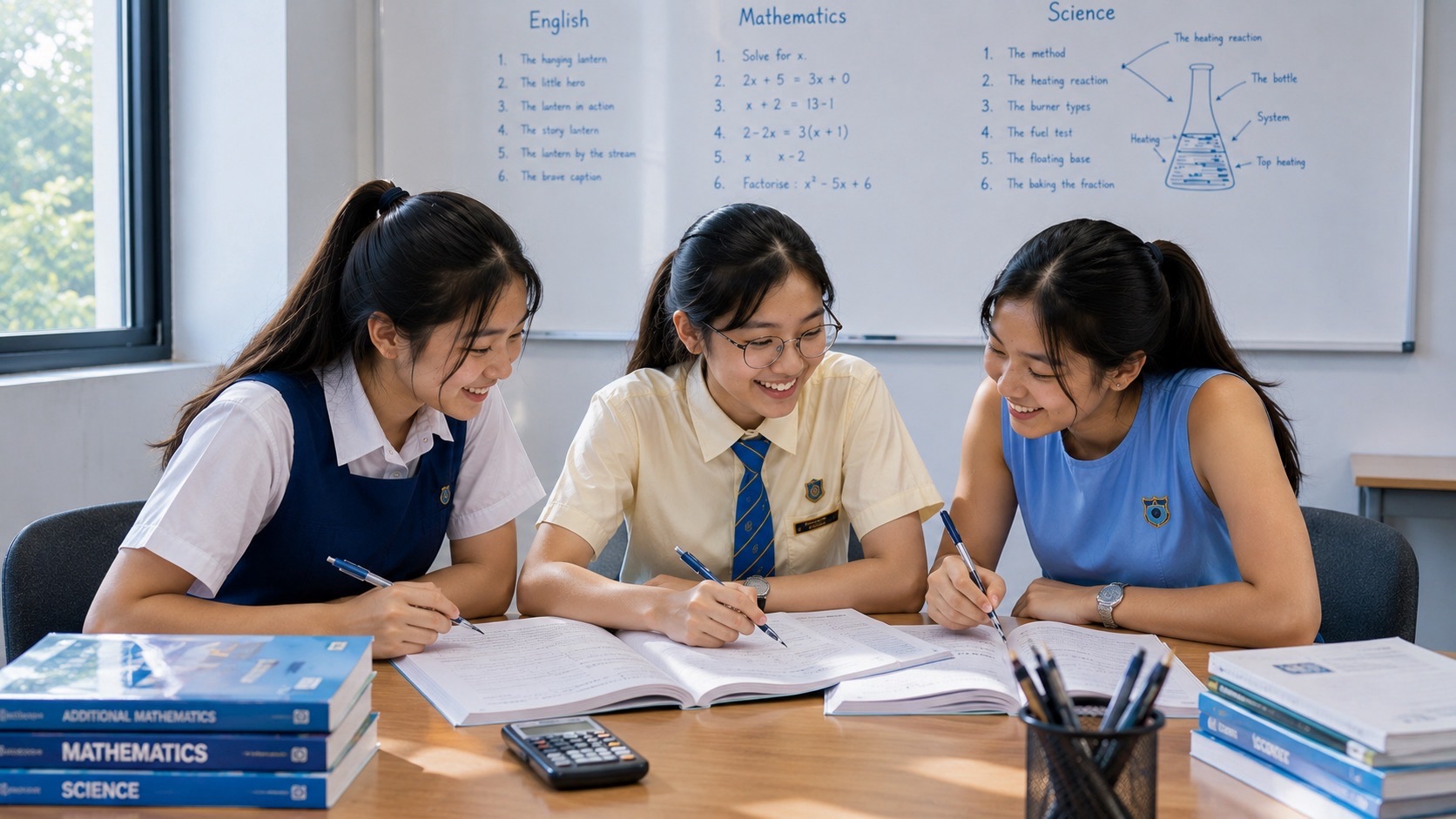
How to use practice exams effectively is not simply to complete as many papers as possible. A practice exam should rehearse the real performance, reveal weak knowledge and execution, and generate a precise repair plan before the next attempt.
Practice papers are especially valuable when students use realistic timing and permitted resources, attempt before checking solutions, and analyse errors afterwards. Used badly, a past paper becomes another worksheet. Used well, it becomes a rehearsal, diagnostic instrument and retrieval session at the same time.
This guide explains when to take practice exams, how to simulate conditions, how to analyse marks and time, how to use answer keys or mark schemes responsibly, and how to turn each paper into better preparation for the next.
This guide is built for students, parents and tutors who want a practical answer to how to use practice exams effectively before a test. The emphasis is not on slogans or one perfect template. The aim is to create a repeatable operating system that can be diagnosed, practised, checked and improved across ordinary school weeks and examination periods.
The 60-Second Answer
Take one paper under realistic conditions. Use only the resources allowed in the real assessment. Mark it carefully. Classify lost marks by knowledge, interpretation, method, expression and time. Repair the largest recurring weaknesses. Then take a different paper later to test whether the repair transfers.
Definition: A practice exam is an authentic or exam-like performance task used to rehearse retrieval and execution, diagnose weaknesses, and verify improvement under conditions similar to the real assessment.
Why Practice Exams Matters
Ordinary revision can hide execution problems. Students may know the material but work too slowly, misread command words, get trapped on one question or fail to retrieve under time pressure. A realistic practice paper exposes these interactions.
Practice exams also sample the assessment’s structure. They force the learner to decide what method, evidence or knowledge is needed without a chapter heading telling them which tool to use.
The mistake is to judge the method by how organised it looks while it is being used. A strong study system should change what the learner can retrieve, discriminate, explain or perform later. That is why every section below moves from structure to independent action, feedback and delayed return.
The Operating Model
Baseline → Simulate → Mark → Classify → Repair → Retest → Compare → Refine.
Each stage has a different job. Planning decides what deserves attention. Action creates an independent attempt. Feedback finds the first meaningful weakness. Correction repairs that weakness. Spacing and transfer test whether the improvement survives time and changed conditions. A method is mature when the student can use it without needing the original template to carry every decision.
How to use practice exams: Step by Step
1. Choose the paper for a purpose
Use an early paper as a baseline, later papers as checks after study, or individual sections for targeted execution practice.
Make the decision visible. Ask the learner to state what they are trying to accomplish, what evidence will show that the step worked, and what a plausible wrong version would look like. This turns practice exams into a teachable process rather than a vague intention.
2. Replicate relevant conditions
Match timing, allowed notes, calculator rules, question order and other important constraints as closely as practical.
Make the decision visible. Ask the learner to state what they are trying to accomplish, what evidence will show that the step worked, and what a plausible wrong version would look like. This turns practice exams into a teachable process rather than a vague intention.
3. Attempt before consulting solutions
Do not let the answer key carry method selection. Mark uncertain items and continue according to the paper strategy.
Make the decision visible. Ask the learner to state what they are trying to accomplish, what evidence will show that the step worked, and what a plausible wrong version would look like. This turns practice exams into a teachable process rather than a vague intention.
4. Record time as well as marks
Notice where minutes were lost, where the student rushed, and which questions disrupted pacing.
Make the decision visible. Ask the learner to state what they are trying to accomplish, what evidence will show that the step worked, and what a plausible wrong version would look like. This turns practice exams into a teachable process rather than a vague intention.
5. Mark against a reliable standard
Use official mark schemes, model answers or teacher feedback where available. Distinguish wrong knowledge from incomplete communication.
Make the decision visible. Ask the learner to state what they are trying to accomplish, what evidence will show that the step worked, and what a plausible wrong version would look like. This turns practice exams into a teachable process rather than a vague intention.
6. Classify lost marks
Group errors by concept, reading, method selection, procedure, calculation, evidence, expression, checking and time execution.
Make the decision visible. Ask the learner to state what they are trying to accomplish, what evidence will show that the step worked, and what a plausible wrong version would look like. This turns practice exams into a teachable process rather than a vague intention.
7. Repair before taking another full paper
Use targeted practice on the highest-cost weakness rather than immediately consuming the next scarce practice paper.
Make the decision visible. Ask the learner to state what they are trying to accomplish, what evidence will show that the step worked, and what a plausible wrong version would look like. This turns practice exams into a teachable process rather than a vague intention.
8. Retest on a different paper
Use a fresh paper or section to see whether the improvement survives changed surface features and realistic conditions.
Make the decision visible. Ask the learner to state what they are trying to accomplish, what evidence will show that the step worked, and what a plausible wrong version would look like. This turns practice exams into a teachable process rather than a vague intention.
What Strong Performance Looks Like
- Conditions resemble the real exam.
- Solutions stay hidden during the attempt.
- Time data are recorded.
- Errors are classified.
- Repairs happen before the next paper.
- Fresh papers verify transfer.
- Scores are compared with context.
- The student practises move-on and checking rules.
- Past papers are not exhausted too early.
These indicators describe observable behaviour rather than personality. They can therefore be taught, measured and improved. The learner does not need a new identity; the learner needs a more reliable sequence of decisions.
Common Failure Modes
1. Worksheet mode
The paper is completed with notes, pauses and answer checking even though the real test will not allow them.
Repair this by shrinking the task to one clean example, making the missing decision explicit, and requiring an independent attempt before the model or answer is shown. Then use a changed example and a later return so the correction has to survive beyond immediate familiarity.
2. Score-only review
The student records the total mark but does not investigate where or why marks were lost.
Repair this by shrinking the task to one clean example, making the missing decision explicit, and requiring an independent attempt before the model or answer is shown. Then use a changed example and a later return so the correction has to survive beyond immediate familiarity.
3. Paper consumption
One full paper follows another without targeted repair, wasting scarce diagnostic opportunities.
Repair this by shrinking the task to one clean example, making the missing decision explicit, and requiring an independent attempt before the model or answer is shown. Then use a changed example and a later return so the correction has to survive beyond immediate familiarity.
4. Solution peeking
The answer key is consulted whenever the learner feels stuck, removing the method-selection challenge.
Repair this by shrinking the task to one clean example, making the missing decision explicit, and requiring an independent attempt before the model or answer is shown. Then use a changed example and a later return so the correction has to survive beyond immediate familiarity.
5. Ignoring time
The learner celebrates a high untimed score even though the real exam requires much faster execution.
Repair this by shrinking the task to one clean example, making the missing decision explicit, and requiring an independent attempt before the model or answer is shown. Then use a changed example and a later return so the correction has to survive beyond immediate familiarity.
6. Overfitting one paper
The student memorises familiar item forms instead of learning the underlying decisions.
Repair this by shrinking the task to one clean example, making the missing decision explicit, and requiring an independent attempt before the model or answer is shown. Then use a changed example and a later return so the correction has to survive beyond immediate familiarity.
7. No post-exam analysis
The practice paper ends at marking rather than becoming input to the next study plan.
Repair this by shrinking the task to one clean example, making the missing decision explicit, and requiring an independent attempt before the model or answer is shown. Then use a changed example and a later return so the correction has to survive beyond immediate familiarity.
8. Panic from one score
A single practice result is treated as a final prediction rather than one sample affected by coverage, timing, paper difficulty and preparation stage.
Repair this by shrinking the task to one clean example, making the missing decision explicit, and requiring an independent attempt before the model or answer is shown. Then use a changed example and a later return so the correction has to survive beyond immediate familiarity.
How the Method Changes by Subject
English
Practise full responses and timed sections, then analyse task coverage, evidence selection, organisation, language control and time. Use mark schemes to understand criteria rather than memorise model prose.
The subject standard matters. Generic study advice can organise effort, but it cannot replace disciplinary judgement about what counts as a valid step, relevant evidence, complete explanation or precise answer.
Mathematics
Work under authentic calculator and timing rules. Record the first wrong line, method-selection errors, slow topics and questions that should have been left and revisited.
The subject standard matters. Generic study advice can organise effort, but it cannot replace disciplinary judgement about what counts as a valid step, relevant evidence, complete explanation or precise answer.
Science
Practise command words, data interpretation, experimental reasoning and explanation under time. Classify whether lost marks came from knowledge, causal links, evidence or expression.
The subject standard matters. Generic study advice can organise effort, but it cannot replace disciplinary judgement about what counts as a valid step, relevant evidence, complete explanation or precise answer.
Essay and humanities subjects
Practise planning and writing to time. Analyse whether the response answered the actual question, used relevant evidence and allocated depth according to marks.
The subject standard matters. Generic study advice can organise effort, but it cannot replace disciplinary judgement about what counts as a valid step, relevant evidence, complete explanation or precise answer.
Primary, Secondary and Examination Use
Primary school
Use shorter sections before full papers. The child can learn to work independently for a defined time, then mark with an adult or tutor and identify only a few useful repairs.
Keep routines short enough to repeat and visible enough for a child to understand. Adults can provide structure, but should gradually remove prompts once the child can perform the step reliably.
Secondary school
Students should begin tracking both marks and execution: start time, stuck points, unfinished sections, checking time and recurring error families. Full papers become increasingly useful as examinations approach.
Secondary students need more independence and more subject-specific control. They should be able to explain why a method is being used, not simply follow a schedule, worksheet or revision product supplied by someone else.
Examination periods
Near major examinations, preserve enough fresh papers for realistic rehearsals. Alternate full simulations with targeted repair. The goal is not to exhaust the archive but to enter the real paper with stable routines.
Near examinations, reduce novelty in the study system. Use the established process on authentic questions, mixed topics and realistic timing, then repair the smallest number of weaknesses that still produce meaningful mark loss.
A 60-Minute Practice Session
- 10 minutes — retrieve the method for practice exams from memory.
- 10 minutes — inspect one strong model and identify the decisions that make it work.
- 15 minutes — complete a guided example with targeted questions rather than full answers.
- 15 minutes — complete a fresh example independently with the model removed.
- 5 minutes — compare against a reliable standard and identify the first meaningful weakness.
- 5 minutes — record the next action and when the learner will return to it.
The exact minutes are adjustable. What matters is the sequence: independent attempt, feedback, targeted repair and a future return. Without those elements, a study session can feel productive while producing little durable evidence.
Diagnostic Checklist
- Were conditions realistic?
- Did the student avoid answer keys?
- Was timing recorded?
- Were marks lost from knowledge or execution?
- Did one question consume too much time?
- Were command words handled correctly?
- Was checking time protected?
- Was repair completed before the next paper?
- Did a fresh paper show transfer?
- Are scores becoming more stable?
Use the checklist to choose the next teaching move, not to label the student. If several items are weak, begin with the earliest failure in the process or the one that creates the greatest downstream cost.
Practice Laboratory
Practice 1: Baseline paper
Take one paper before intensive revision to identify the largest knowledge and timing gaps.
After the attempt, require a short explanation of the rule or decision that controlled the work. Record whether the learner succeeded independently, with a prompt, or only after seeing a model. That distinction gives better evidence than a simple tick.
Practice 2: Timed section
Practise one high-value section under exact time rather than always doing full papers.
After the attempt, require a short explanation of the rule or decision that controlled the work. Record whether the learner succeeded independently, with a prompt, or only after seeing a model. That distinction gives better evidence than a simple tick.
Practice 3: Stuck-question rule
Mark every point where the student should have moved on, then rehearse a better exit and return rule.
After the attempt, require a short explanation of the rule or decision that controlled the work. Record whether the learner succeeded independently, with a prompt, or only after seeing a model. That distinction gives better evidence than a simple tick.
Practice 4: Mark-loss classification
Assign every lost mark to a useful error family and total the cost.
After the attempt, require a short explanation of the rule or decision that controlled the work. Record whether the learner succeeded independently, with a prompt, or only after seeing a model. That distinction gives better evidence than a simple tick.
Practice 5: Repair block
Spend one focused session correcting the top two error families from the paper.
After the attempt, require a short explanation of the rule or decision that controlled the work. Record whether the learner succeeded independently, with a prompt, or only after seeing a model. That distinction gives better evidence than a simple tick.
Practice 6: Blind reattempt
After studying the correction, redo selected questions without looking at the model.
After the attempt, require a short explanation of the rule or decision that controlled the work. Record whether the learner succeeded independently, with a prompt, or only after seeing a model. That distinction gives better evidence than a simple tick.
Practice 7: Fresh-paper verification
Test the same underlying skills on a different paper.
After the attempt, require a short explanation of the rule or decision that controlled the work. Record whether the learner succeeded independently, with a prompt, or only after seeing a model. That distinction gives better evidence than a simple tick.
Practice 8: Checking rehearsal
Reserve the planned final minutes and practise a fixed check sequence.
After the attempt, require a short explanation of the rule or decision that controlled the work. Record whether the learner succeeded independently, with a prompt, or only after seeing a model. That distinction gives better evidence than a simple tick.
Practice 9: Resource simulation
Practise with exactly the notes, calculator or reference materials permitted in the real assessment.
After the attempt, require a short explanation of the rule or decision that controlled the work. Record whether the learner succeeded independently, with a prompt, or only after seeing a model. That distinction gives better evidence than a simple tick.
Practice 10: Paper retrospective
Write three things to keep, two to repair and one pacing decision to change next time.
After the attempt, require a short explanation of the rule or decision that controlled the work. Record whether the learner succeeded independently, with a prompt, or only after seeing a model. That distinction gives better evidence than a simple tick.
Three Student Cases
Case 1: Maren does endless papers
Maren completes three Mathematics papers in three days but the same algebra error appears in all three.
Her tutor stops full papers after the first diagnosis and spends the next session repairing sign control and method selection.
A later fresh paper shows whether the repair transferred. Paper volume falls while diagnostic value rises.
The case is useful because it identifies a change in process: diagnosis, targeted intervention, independent retest and delayed verification. The aim is not to imitate the exact example but to recognise the same logic in a different learner.
Case 2: Iona scores well untimed
Iona understands the material but takes far longer than the actual English paper allows.
Practice shifts to timed sections with explicit mark-based pacing and a move-on rule.
Her score initially dips, then stabilises as writing depth becomes better matched to available time.
The case is useful because it identifies a change in process: diagnosis, targeted intervention, independent retest and delayed verification. The aim is not to imitate the exact example but to recognise the same logic in a different learner.
Case 3: Leonie panics at one low score
Leonie treats a difficult practice paper as proof she will fail.
The tutor decomposes the result by topic coverage, timing and error family, then sets targeted repairs.
The next paper is used as new evidence rather than emotional confirmation of the previous score.
The case is useful because it identifies a change in process: diagnosis, targeted intervention, independent retest and delayed verification. The aim is not to imitate the exact example but to recognise the same logic in a different learner.
How Parents Can Help Without Taking Over
Parents can support practice exams by asking for the learner’s current decision before supplying an answer. Useful prompts include: “What is the goal here?”, “What comes first?”, “What will you do if this does not work?”, “How will you check it?” and “When will you return to it?”
When the student can perform a step independently, remove the prompt. When the student cannot, restore the smallest amount of support required to restart thinking, then fade it again. The long-term target is transferred control.
How Tutors Can Use a Three-Student Small Group
In a three-student tutorial, practice exams can be made visible through short individual attempts followed by sampled explanation. One learner can explain the method, another can identify a boundary case or failure mode, and the third can test the method on a fresh example. The tutor can hear whether similar final answers came from understanding, imitation or guessing.
Small-group work should therefore increase the density of useful decisions and feedback, not simply place three learners beside one another. The group returns quickly to independent performance after discussion.
How to Measure Progress
- Scores become more stable.
- Completion improves.
- Repeated error families decline.
- Time allocation becomes more proportional to marks.
- Students leave stuck questions earlier when appropriate.
- Checking becomes planned.
- Fresh papers confirm repaired skills.
- Confidence becomes tied to evidence rather than familiarity.
Marks remain important, but they often move after the underlying behaviours begin to improve. Early evidence may appear as faster starts, cleaner strategy choice, fewer repeated errors, more accurate self-checking or stronger explanations. Track the behaviours expected to produce later performance and then confirm that they do.
A Four-Week Implementation Plan
Week 1 — Make the process visible
Choose one subject and one recurring task. Model practice exams, let the student attempt it, and record where the first breakdown occurs.
Week 2 — Reduce prompts
Use fresh examples. Remove one layer of support and require the learner to explain the reason for key decisions before checking.
Week 3 — Mix and delay
Return after several days, vary the surface features and require the learner to recognise when the method is appropriate without a heading announcing it.
Week 4 — Perform under realistic conditions
Use authentic school questions, homework, timed sections or a past paper where appropriate. Keep the parts that work and target the next bottleneck rather than adding complexity automatically.
Evidence and Responsible Use
Cornell’s Learning Strategies Center recommends simulating real test conditions, using the same permitted resources, and using practice tests both for baseline information and later checks. Princeton’s McGraw Center likewise recommends timed, test-like practice, followed by review focused on gaps in knowledge and skills. Both approaches treat practice exams as active retrieval and rehearsal rather than passive review.
No single study technique replaces good teaching, subject knowledge, sleep, appropriate workload or professional support when a learner has needs beyond ordinary study strategy. The methods here are educational routines, not guarantees of a particular grade.
- Cornell: What To Do With Practice Exams
- Princeton: Preparing for Exams
- Princeton: Learning from Returned Exams
Frequently Asked Questions
When should I take my first practice exam?
Early enough that the result can change your study plan. A baseline paper is most useful when there is still time to repair what it reveals.
Should I do practice papers open-book?
Match the real assessment unless the session has a separate learning purpose. Closed-book exams need some closed-book practice.
How many papers should I do?
Enough to diagnose, repair and verify without exhausting useful fresh material. Quality of analysis matters more than raw count.
Should I mark immediately?
Usually yes after the attempt, while the reasoning and timing decisions are still available for analysis.
What if I run out of time?
Analyse where time went. Identify whether the issue was slow knowledge retrieval, overworking early questions, writing too much, checking inefficiently or getting stuck.
Can practice exams teach content?
They reveal and exercise content, but gaps usually need targeted study before another full simulation.
Should I redo the same paper?
Redo selected questions to verify correction, but use fresh material to test transfer.
Is one practice score predictive?
Treat it as one data point, not a verdict. Compare multiple performances under similar conditions.
Helpful Reading on eduKateSingapore
- How to Take Better Notes
- How to Read a Textbook Effectively
- How to Learn From Mistakes
- How to Use an Error Log
- How to Check Your Work
Every Practice Paper Should Change the Next One
A practice exam earns its time when it reveals something useful and leads to a better decision before the next attempt.
Simulate honestly. Mark carefully. Diagnose the lost marks and lost minutes. Repair the mechanism. Then use a fresh paper to see whether the improvement survives.
Properly taught kids shine a bright light into the future.
Extended Diagnostic Workshops
Workshop 1: Choose the paper for a purpose × Score-only review
Create one fresh task in which the learner must practise choose the paper for a purpose while watching specifically for score-only review. Start without the answer visible. Ask the learner to state the goal, attempt the task, mark the first uncertainty and only then compare with a model. Use an early paper as a baseline, later papers as checks after study, or individual sections for targeted execution practice.
Now change one consequential feature of the task: wording, numbers, representation, topic, evidence, order or time pressure. The learner must decide whether the same principle still applies. The student records the total mark but does not investigate where or why marks were lost. End by scheduling a delayed version so the next session tests retention and transfer rather than immediate imitation.
Workshop 2: Replicate relevant conditions × Solution peeking
Create one fresh task in which the learner must practise replicate relevant conditions while watching specifically for solution peeking. Start without the answer visible. Ask the learner to state the goal, attempt the task, mark the first uncertainty and only then compare with a model. Match timing, allowed notes, calculator rules, question order and other important constraints as closely as practical.
Now change one consequential feature of the task: wording, numbers, representation, topic, evidence, order or time pressure. The learner must decide whether the same principle still applies. The answer key is consulted whenever the learner feels stuck, removing the method-selection challenge. End by scheduling a delayed version so the next session tests retention and transfer rather than immediate imitation.
Workshop 3: Attempt before consulting solutions × Overfitting one paper
Create one fresh task in which the learner must practise attempt before consulting solutions while watching specifically for overfitting one paper. Start without the answer visible. Ask the learner to state the goal, attempt the task, mark the first uncertainty and only then compare with a model. Do not let the answer key carry method selection. Mark uncertain items and continue according to the paper strategy.
Now change one consequential feature of the task: wording, numbers, representation, topic, evidence, order or time pressure. The learner must decide whether the same principle still applies. The student memorises familiar item forms instead of learning the underlying decisions. End by scheduling a delayed version so the next session tests retention and transfer rather than immediate imitation.
Workshop 4: Record time as well as marks × Panic from one score
Create one fresh task in which the learner must practise record time as well as marks while watching specifically for panic from one score. Start without the answer visible. Ask the learner to state the goal, attempt the task, mark the first uncertainty and only then compare with a model. Notice where minutes were lost, where the student rushed, and which questions disrupted pacing.
Now change one consequential feature of the task: wording, numbers, representation, topic, evidence, order or time pressure. The learner must decide whether the same principle still applies. A single practice result is treated as a final prediction rather than one sample affected by coverage, timing, paper difficulty and preparation stage. End by scheduling a delayed version so the next session tests retention and transfer rather than immediate imitation.
Workshop 5: Mark against a reliable standard × Score-only review
Create one fresh task in which the learner must practise mark against a reliable standard while watching specifically for score-only review. Start without the answer visible. Ask the learner to state the goal, attempt the task, mark the first uncertainty and only then compare with a model. Use official mark schemes, model answers or teacher feedback where available. Distinguish wrong knowledge from incomplete communication.
Now change one consequential feature of the task: wording, numbers, representation, topic, evidence, order or time pressure. The learner must decide whether the same principle still applies. The student records the total mark but does not investigate where or why marks were lost. End by scheduling a delayed version so the next session tests retention and transfer rather than immediate imitation.
Workshop 6: Classify lost marks × Solution peeking
Create one fresh task in which the learner must practise classify lost marks while watching specifically for solution peeking. Start without the answer visible. Ask the learner to state the goal, attempt the task, mark the first uncertainty and only then compare with a model. Group errors by concept, reading, method selection, procedure, calculation, evidence, expression, checking and time execution.
Now change one consequential feature of the task: wording, numbers, representation, topic, evidence, order or time pressure. The learner must decide whether the same principle still applies. The answer key is consulted whenever the learner feels stuck, removing the method-selection challenge. End by scheduling a delayed version so the next session tests retention and transfer rather than immediate imitation.
Workshop 7: Repair before taking another full paper × Overfitting one paper
Create one fresh task in which the learner must practise repair before taking another full paper while watching specifically for overfitting one paper. Start without the answer visible. Ask the learner to state the goal, attempt the task, mark the first uncertainty and only then compare with a model. Use targeted practice on the highest-cost weakness rather than immediately consuming the next scarce practice paper.
Now change one consequential feature of the task: wording, numbers, representation, topic, evidence, order or time pressure. The learner must decide whether the same principle still applies. The student memorises familiar item forms instead of learning the underlying decisions. End by scheduling a delayed version so the next session tests retention and transfer rather than immediate imitation.