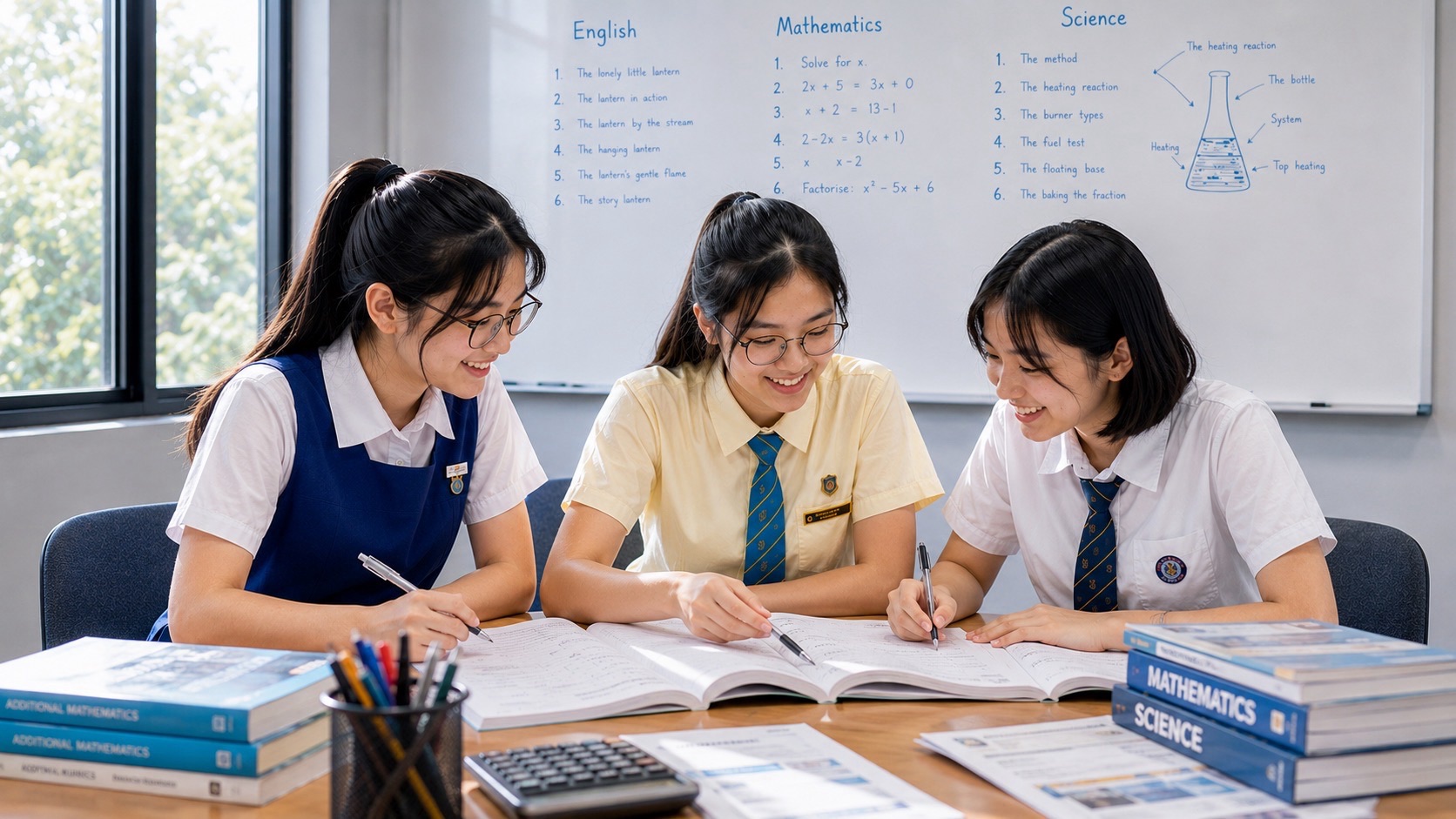
Why Students Repeat Revision but Do Not Improve | When the Study Loop Has No Diagnosis

Revision is often treated as repetition: go through the notes again, redo familiar questions and complete another paper. Repetition can strengthen learning, but repeating an unchanged revision cycle can also reproduce an unchanged result.

Every cycle should generate evidence

After a revision session, ask what was learned about the learner. Which knowledge could not be retrieved? Which errors recurred? Which question types were slow? Which explanations lacked precision? Without evidence, the next session is likely to resemble the previous one.

Diagnosis changes the next task

If a student repeatedly rereads an entire chapter because two concepts remain confused, most of the revision time is being spent on material that may already be secure. A diagnosis narrows the repair to the actual failure.

Scores alone are too coarse

A mark tells us how much performance succeeded, not necessarily why the remaining marks were lost. Classify errors by mechanism: knowledge, interpretation, selection, procedure, communication, checking, timing or transfer.

Change one thing deliberately

Each revision cycle should contain a hypothesis about improvement. If retrieval is weak, add delayed recall. If method selection is weak, mix problem types. If writing lacks evidence development, isolate and practise that operation. Then measure whether the targeted failure decreases.

Retest with fresh material

Success on the repaired example can come from memory of the correction. Use a new question, different passage or changed context. Transfer is stronger evidence that the intervention worked.

Update the loop

Once a weakness improves, the next bottleneck may become visible. Revision should therefore evolve: test, diagnose, repair, retest and reallocate. The plan follows evidence rather than remaining fixed because it was written weeks earlier.

The repair

Stop treating revision as repeated exposure alone. Make every cycle answer a diagnostic question and change the next cycle accordingly. Improvement accelerates when revision becomes a feedback-controlled system rather than a loop that simply returns the student to the beginning.

Explore the connected learning guides

Choose the question that brought you here. Open one useful guide, try a small task, and stop when you have what you need.

Take one question further

The same learning habit can travel across subjects, while each subject keeps its own methods. These routes help you notice a difficulty, understand one part of it, and return to something you can do.

A word is familiar, but using it is difficult.

Move from recognising a word to retrieving it in a new context. Understand vocabulary plateaus.

Try it without the guide: Choose one word you already know. Close the guide and use it in a new sentence. Explain why it fits; try another context tomorrow.

A piece of writing has ideas, but the reader loses the thread.

Make the order of events and the links between sentences clear. Explore composition writing.

Try it without the guide: Choose one short paragraph. Read the relevant explanation, close it, and revise the paragraph. Ask someone to tell you what happened and why.

The Mathematics seems familiar, but marks still disappear.

Find the first point where the working stops being reliable. Find Secondary 4 A-Math mark leakage.

Try it without the guide: For a Secondary 4 A-Math question you have attempted, locate the first uncertain line. Repair that step, then try a comparable question without the worked answer.

A Science fact is remembered, but the explanation is incomplete.

Connect the evidence to a scientific idea and the resulting change. Follow the Primary Science learning route.

Try it without the guide: Choose a familiar Primary Science example. Explain the evidence, the idea and the result without notes. Then change one condition and explain your prediction.

Two accounts of the world seem to disagree.

Check the question, source, date and evidence before combining claims. Explore the World Knowledge research library.

Try it without the guide: Take one claim. Find the source best placed to support it, note its date, and state what remains uncertain. Return to your original question.

There is plenty of help, but independence is hard to see.

Check what the learner can understand and do after support is removed. Understand how education works.

Try it without the guide: Choose one small task the child has practised. Agree on a calm, brief attempt without prompts. Use what happens to choose one next step, then stop.

For the structure behind these connections, read the eduKateSingapore runtime manifest and the eduKate ecosystem boot contract. The reader map describes public navigation; those manifests preserve the wider ownership and return rules.

Discover more from eduKate Singapore

Subscribe now to keep reading and get access to the full archive.

Continue reading