Why Students Keep Asking for Help Too Soon | When Support Replaces Productive Struggle

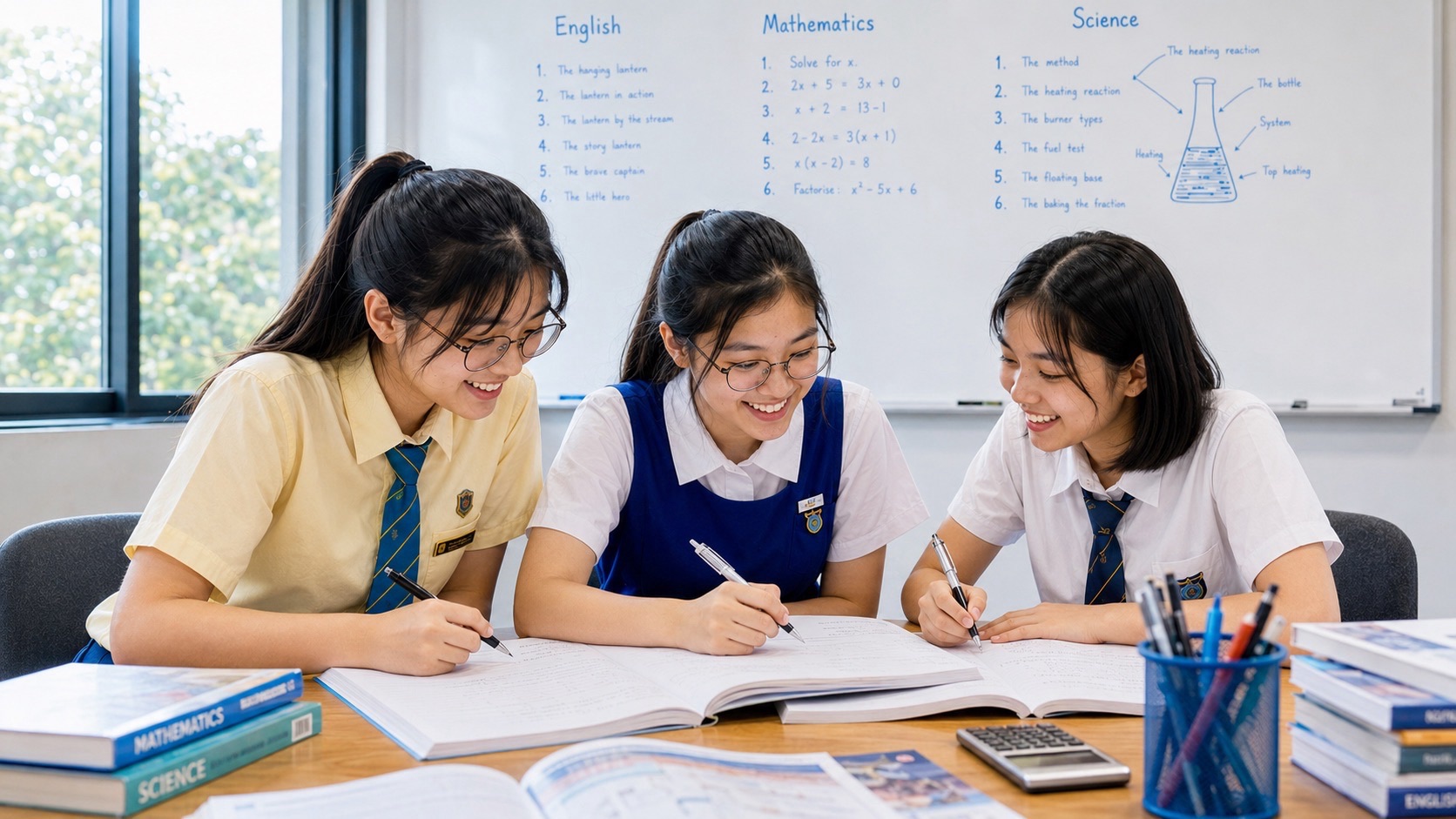
Asking for help is an important learning skill. Students should not remain trapped in confusion simply to prove independence. But help can arrive too early. When every uncertain moment immediately produces a hint or answer, students lose opportunities to diagnose, retrieve and make the first useful decision themselves.

Uncertainty is part of independent performance

Examinations and real problems do not announce the next step. Learners need experience tolerating a short period in which the route is not obvious and using that period to inspect the task.

Create a help threshold

Before asking, require a genuine attempt: state what the question asks, identify relevant information, write what is known and describe exactly where progress stops. This transforms “I don’t know” into a more precise request.

Give the smallest useful hint

Help should restore productive thinking rather than complete the thinking. A question, representation or reminder of a relevant principle may be enough. If the tutor solves the difficult part, the student can finish the page without having trained the missing capability.

Fade help deliberately

Early learning may require substantial guidance. Later, delay prompts, reduce their specificity and require students to explain why a hint was useful. The goal is not permanent struggle but increasing independence.

Retest without help

A successfully completed supported question does not prove independent mastery. Use a changed problem later with no prompt. If the learner can now identify the first move, the help has transferred into capability.

Know when help should be immediate

Productive struggle requires sufficient prerequisite knowledge and a plausible route forward. If the learner lacks essential foundations or is practising a serious misconception repeatedly, timely instruction is more useful than prolonged guessing.

The repair

Teach students how to attempt before requesting help and teach adults how to provide the minimum support that restarts thinking. Good help does not merely make today’s question easier. It increases the chance that tomorrow’s question can be started without help at all.

Explore the connected learning guides

Choose the question that brought you here. Open one useful guide, try a small task, and stop when you have what you need.

Take one question further

The same learning habit can travel across subjects, while each subject keeps its own methods. These routes help you notice a difficulty, understand one part of it, and return to something you can do.

A word is familiar, but using it is difficult.

Move from recognising a word to retrieving it in a new context. Understand vocabulary plateaus.

Try it without the guide: Choose one word you already know. Close the guide and use it in a new sentence. Explain why it fits; try another context tomorrow.

A piece of writing has ideas, but the reader loses the thread.

Make the order of events and the links between sentences clear. Explore composition writing.

Try it without the guide: Choose one short paragraph. Read the relevant explanation, close it, and revise the paragraph. Ask someone to tell you what happened and why.

The Mathematics seems familiar, but marks still disappear.

Find the first point where the working stops being reliable. Find Secondary 4 A-Math mark leakage.

Try it without the guide: For a Secondary 4 A-Math question you have attempted, locate the first uncertain line. Repair that step, then try a comparable question without the worked answer.

A Science fact is remembered, but the explanation is incomplete.

Connect the evidence to a scientific idea and the resulting change. Follow the Primary Science learning route.

Try it without the guide: Choose a familiar Primary Science example. Explain the evidence, the idea and the result without notes. Then change one condition and explain your prediction.

Two accounts of the world seem to disagree.

Check the question, source, date and evidence before combining claims. Explore the World Knowledge research library.

Try it without the guide: Take one claim. Find the source best placed to support it, note its date, and state what remains uncertain. Return to your original question.

There is plenty of help, but independence is hard to see.

Check what the learner can understand and do after support is removed. Understand how education works.

Try it without the guide: Choose one small task the child has practised. Agree on a calm, brief attempt without prompts. Use what happens to choose one next step, then stop.

For the structure behind these connections, read the eduKateSingapore runtime manifest and the eduKate ecosystem boot contract. The reader map describes public navigation; those manifests preserve the wider ownership and return rules.

Discover more from eduKate Singapore

Subscribe now to keep reading and get access to the full archive.

Continue reading