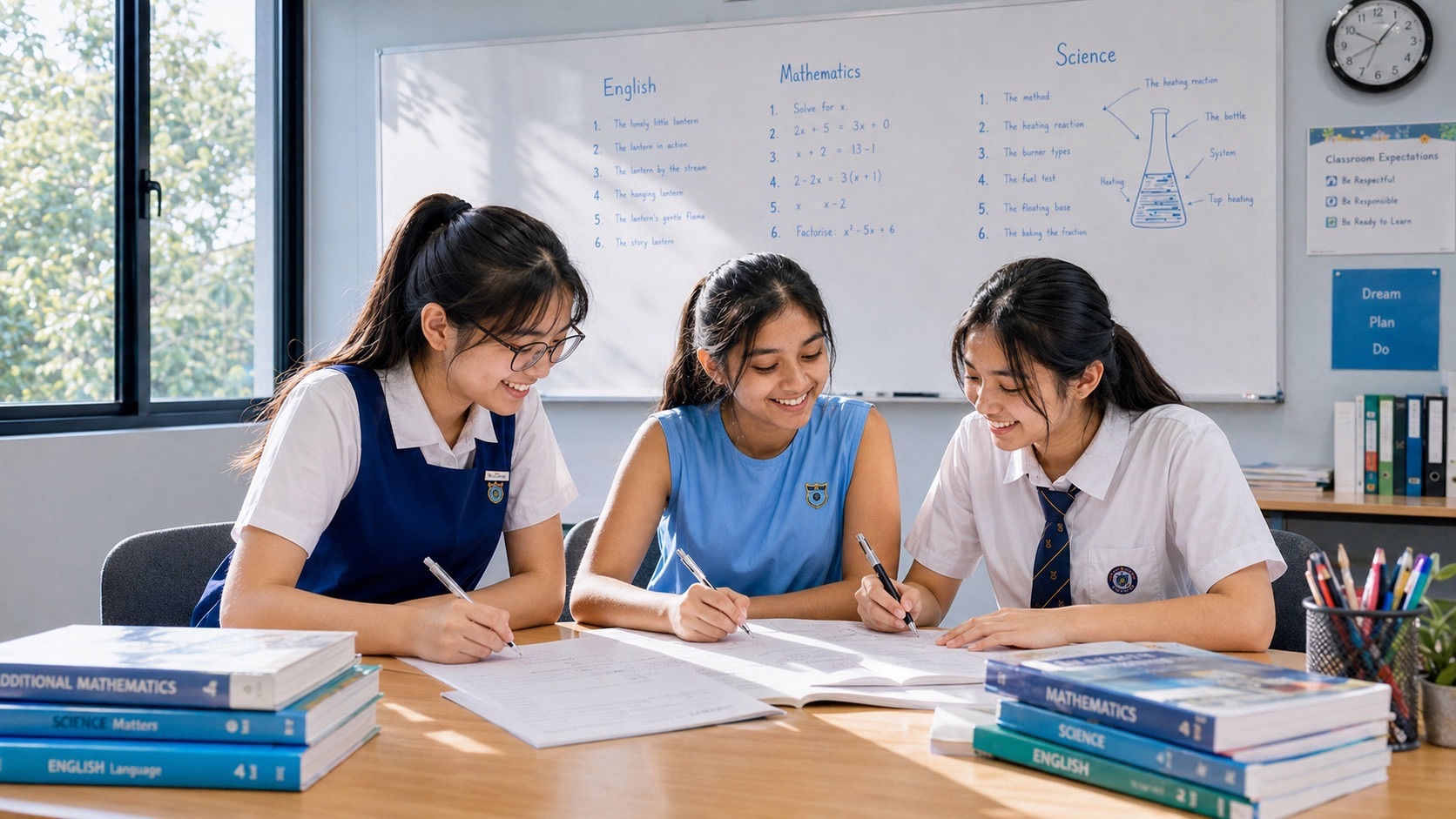
Why Students Cannot Concentrate While Studying | When the Environment Keeps Winning

Students are often told to concentrate as though concentration were a switch controlled entirely by willpower. Attention is partly a personal skill, but it is also shaped by task design, environment, fatigue, uncertainty and competing rewards.

Attention follows competition

A difficult paragraph competes poorly with a message notification designed to be immediately interesting. An undefined revision task competes poorly with an activity whose next action is obvious. If the environment repeatedly offers easier rewards, relying on constant self-control makes studying unnecessarily expensive.

Make the task easier to enter

“Study Mathematics” requires decisions before learning begins. “Redo questions 4, 7 and 9 from yesterday’s paper and classify each error” has a clear starting point. Task clarity reduces the attention consumed by deciding what to do.

Remove predictable competition

Move unnecessary devices, tabs and notifications out of the immediate study environment. This is not an admission of weak discipline. Good systems reduce avoidable demands on discipline so attention can be spent on the work itself.

Use active tasks

Passive rereading makes mind-wandering difficult to detect. Retrieval, problem solving, explanation and short written responses generate observable outputs. When attention slips, the learner notices because the task stops producing something.

Watch fatigue

Concentration that collapses late at night may not be repaired by stronger motivation. Sleep, breaks and the sequencing of demanding tasks affect the quality of attention available. Put high-demand work where the learner is most capable of doing it.

Measure useful concentration

Do not aim only for long uninterrupted sitting. Ask what was retrieved, solved, explained or repaired. A shorter period of active, evidence-producing work can outperform a much longer session dominated by distraction and rereading.

The repair

Define the first action, reduce competing stimuli, use active learning operations, place demanding work intelligently and monitor output rather than chair time. Concentration becomes more reliable when the learning environment stops requiring the student to win the same attention battle every few minutes.

Parent support route: Return to the Parent Learning Support Directory for connected guides on study transfer, attention, feedback and examination preparation.

Explore the connected learning guides

Choose the question that brought you here. Open one useful guide, try a small task, and stop when you have what you need.

Take one question further

The same learning habit can travel across subjects, while each subject keeps its own methods. These routes help you notice a difficulty, understand one part of it, and return to something you can do.

A word is familiar, but using it is difficult.

Move from recognising a word to retrieving it in a new context. Understand vocabulary plateaus.

Try it without the guide: Choose one word you already know. Close the guide and use it in a new sentence. Explain why it fits; try another context tomorrow.

A piece of writing has ideas, but the reader loses the thread.

Make the order of events and the links between sentences clear. Explore composition writing.

Try it without the guide: Choose one short paragraph. Read the relevant explanation, close it, and revise the paragraph. Ask someone to tell you what happened and why.

The Mathematics seems familiar, but marks still disappear.

Find the first point where the working stops being reliable. Find Secondary 4 A-Math mark leakage.

Try it without the guide: For a Secondary 4 A-Math question you have attempted, locate the first uncertain line. Repair that step, then try a comparable question without the worked answer.

A Science fact is remembered, but the explanation is incomplete.

Connect the evidence to a scientific idea and the resulting change. Follow the Primary Science learning route.

Try it without the guide: Choose a familiar Primary Science example. Explain the evidence, the idea and the result without notes. Then change one condition and explain your prediction.

Two accounts of the world seem to disagree.

Check the question, source, date and evidence before combining claims. Explore the World Knowledge research library.

Try it without the guide: Take one claim. Find the source best placed to support it, note its date, and state what remains uncertain. Return to your original question.

There is plenty of help, but independence is hard to see.

Check what the learner can understand and do after support is removed. Understand how education works.

Try it without the guide: Choose one small task the child has practised. Agree on a calm, brief attempt without prompts. Use what happens to choose one next step, then stop.

For the structure behind these connections, read the eduKateSingapore runtime manifest and the eduKate ecosystem boot contract. The reader map describes public navigation; those manifests preserve the wider ownership and return rules.

Discover more from eduKate Singapore

Subscribe now to keep reading and get access to the full archive.

Continue reading