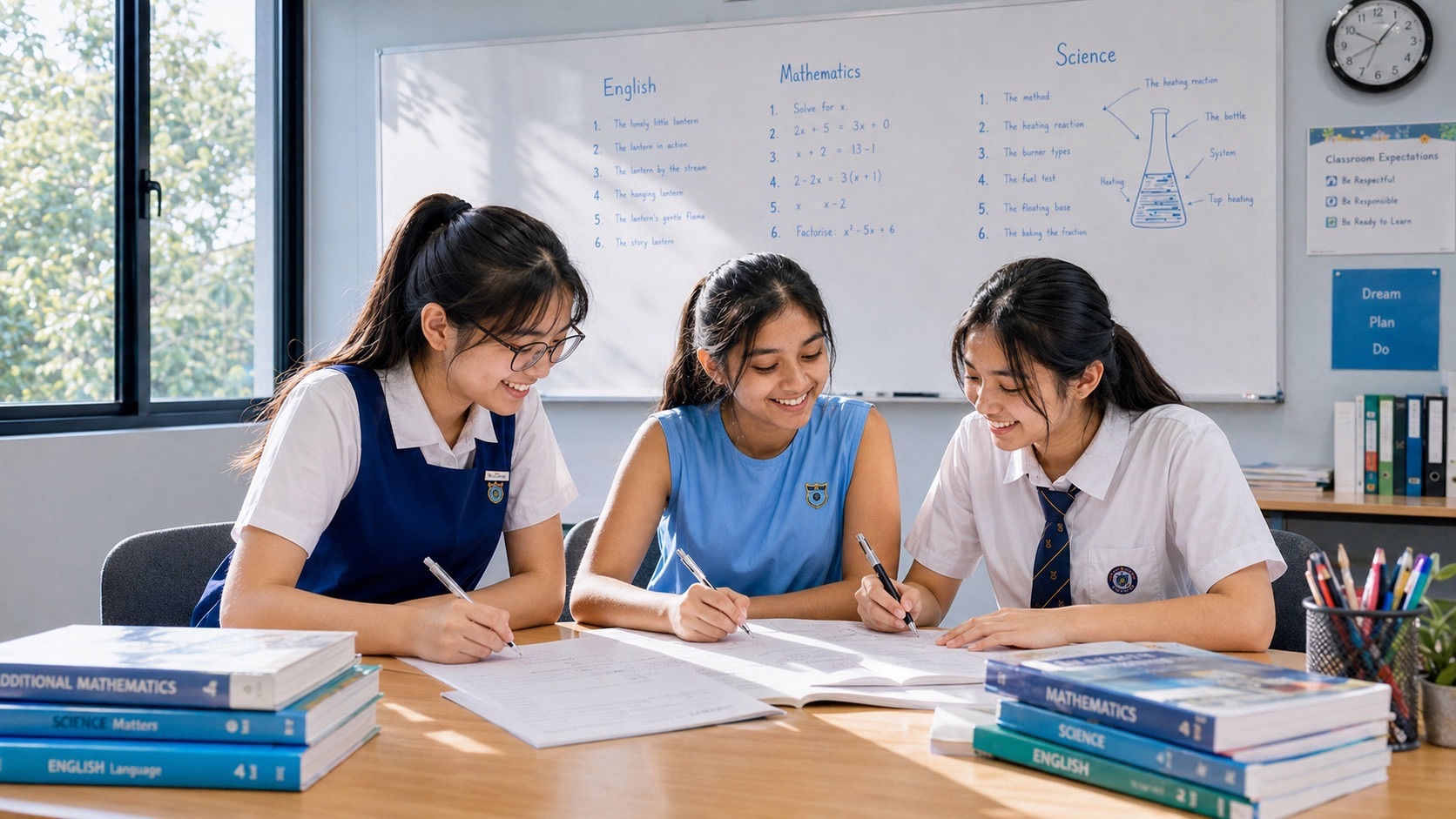
A learner sits down to revise and spends most of the session on material they already know. The work feels productive because answers come quickly and pages fill. Meanwhile, the topics most likely to limit performance remain untouched. This is not always simple laziness. Easy material provides fluency, certainty and immediate evidence of success; weak material produces slower, less comfortable feedback.
Signs of comfort-zone revision
- The same favourite chapters are revised repeatedly.
- Strong topics have extensive notes while weak topics remain vague.
- The child chooses questions they already know how to do.
- Revision plans list subjects but not specific weaknesses.
- Past-paper errors are corrected but do not change future study priorities.
- The learner says they studied for hours yet the known weak areas received little time.
Make weakness visible without making it an identity
Use evidence from retrieval checks, marked work and recent assessments to identify a small number of unstable areas. Describe them specifically: “ratio word problems involving changing quantities” is more useful than “bad at Mathematics.” A bounded weakness is easier to approach.
Plan from evidence, not preference
Before revision begins, decide what deserves attention using three questions: what is important, what is weak and what is likely to be needed soon? Strong material still requires spaced maintenance, but it should not automatically consume the largest share of time.
Shrink the entry into a weak topic
“Revise algebra” can feel enormous. Start with one prerequisite, one worked example reconstructed from memory or three diagnostic questions. Once the exact failure is visible, the learner can work on a tractable problem instead of confronting an entire subject label.
Use correction to generate tomorrow’s plan
Every meaningful error should have somewhere to go. If a past paper reveals a recurring weakness, schedule a focused repair and later retest. Otherwise assessment produces information that the study system ignores.
Balance challenge with successful retrieval
A revision session composed entirely of the hardest possible questions can become unproductive. Mix targeted weak-area work with retrieval of secure knowledge. The aim is not maximum discomfort; it is maximum useful change.
Measure improvement inside the weak area
After teaching or practice, return to a fresh question without support. Improvement becomes visible when the child can do something that previously failed. This evidence can reduce avoidance because the weak topic is no longer experienced as permanently weak.
Do not remove all choice
Children can participate in deciding the order, method or exact task while adults maintain the principle that important weaknesses cannot be ignored indefinitely. Autonomy and responsible prioritisation can coexist.
When avoidance becomes severe
If particular school tasks produce persistent substantial distress or if avoidance is part of broader difficulties affecting everyday functioning, discuss the pattern with teachers and seek appropriate qualified support where needed. Choosing easy revision topics alone does not identify an underlying condition.
Effective revision is not a tour of everything the learner already does well. It is a controlled allocation of attention toward knowledge that matters and is not yet dependable.
Browse related guides in the Parent Learning Support Directory.