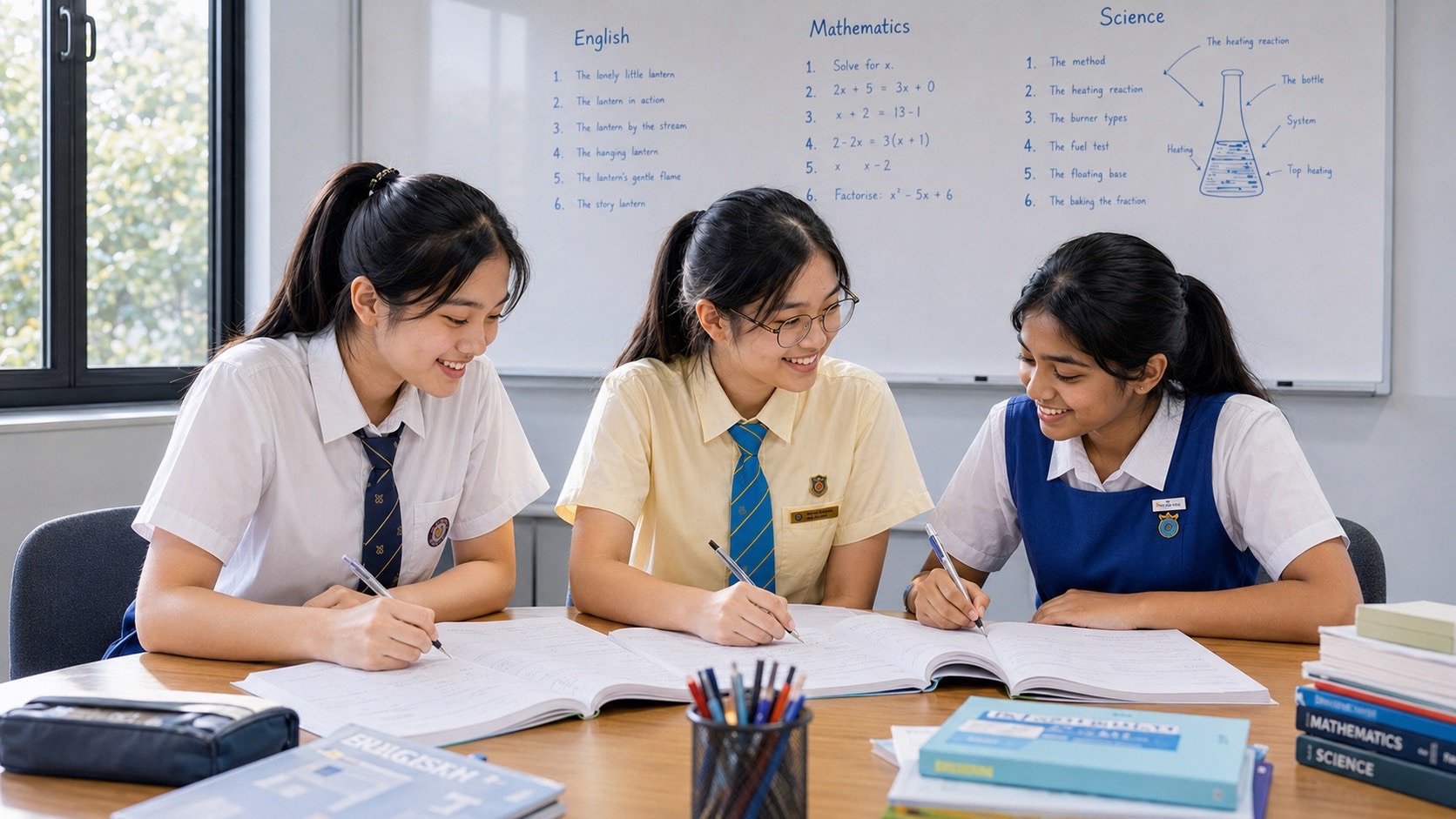
Long revision hours can reassure a family because effort is visible. But time is an input, not proof of learning. A child can spend hours rereading, copying, highlighting or repeating familiar questions while generating very little evidence that knowledge will survive an examination.
Signs that revision time is not converting into learning
- Revision sessions are long but contain little closed-book retrieval.
- The child repeatedly rewrites notes instead of testing knowledge.
- Most practice comes from familiar or easy questions.
- Errors are corrected but not classified or retested later.
- The learner feels confident while notes are visible but struggles without them.
- Hours increase before exams while sleep and concentration deteriorate.
Audit activities, not hours
For several sessions, record what the child actually does in ten- or fifteen-minute blocks. “Studied Science for two hours” is too coarse. Did the learner retrieve, explain, solve, check, correct, reread, organise or simply remain beside the book?
Ask each activity for evidence
After a study activity, remove the support and test the intended outcome. If the goal was vocabulary, can the word be retrieved and used? If it was Mathematics, can a mixed problem be solved? If it was Science, can the mechanism be explained? Activities should earn their place by changing later performance.
Replace passive familiarity with retrieval
Rereading has uses, especially when understanding is incomplete. But once the material is understood, close the source and attempt to produce the important knowledge. Check afterwards. Retrieval exposes gaps that visible notes can hide.
Make correction part of revision
A wrong practice answer is useful only if it changes the next attempt. Identify the cause, repair it, try a related problem and return later. Otherwise revision can become repeated measurement of the same weakness.
Mix and delay
Grouped practice immediately after teaching can make performance look stronger than it is. Mix relevant topics and revisit them after delays so the learner must decide what knowledge applies and retrieve it without the original lesson context.
Protect sleep and usable attention
Adding late-night hours can reduce the quality of subsequent learning and performance. A sustainable study system considers concentration, recovery and the total weekly load rather than treating every free minute as potential revision time.
Check the examination layer
If independent delayed knowledge is strong but results remain weak, investigate question interpretation, method selection, pacing, answer construction and checking. Better studying cannot compensate for an untrained performance layer, and examination tricks cannot compensate for absent knowledge.
Do not punish effort that failed
A child who genuinely worked hard and obtained a poor result needs a better model of learning, not merely a demand for more hours. Preserve the value of effort while redirecting it toward methods that produce measurable change.
When poor results are part of a wider change
If performance declines substantially across settings or alongside broader changes in wellbeing or functioning, discuss the pattern with teachers and appropriate qualified professionals where needed. Study-method analysis cannot diagnose health, developmental or psychological conditions.
The better question is not “How many hours did you revise?” It is “What became more retrievable, accurate, transferable or independent because of those hours?”