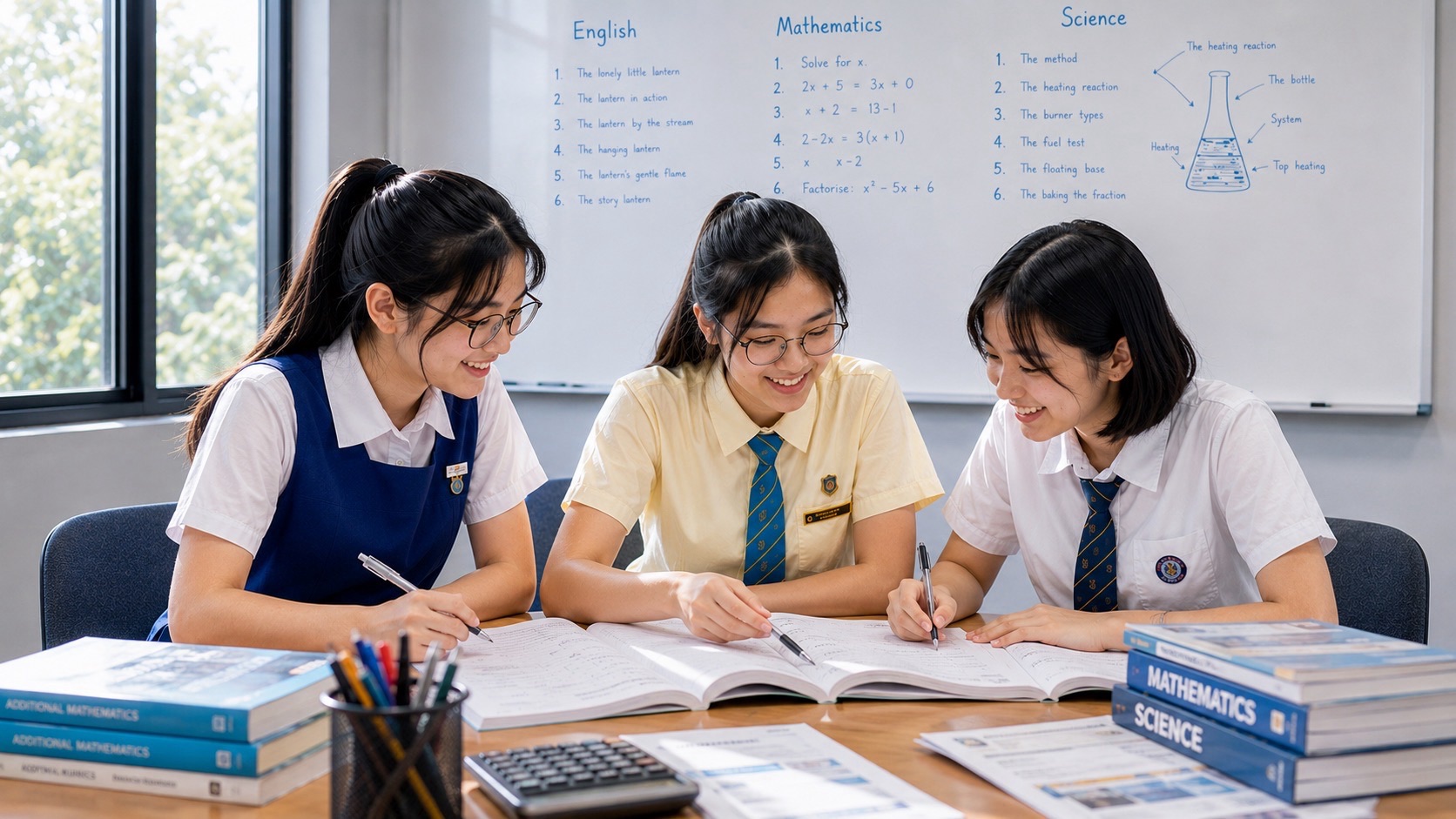
When a child repeatedly copies the board incorrectly, check whether the information is accessible before prescribing more practice. Seeing the source, finding the right line, carrying a small part back to the page, writing it and checking it are different jobs. A missing word or changed number does not, by itself, reveal which job was difficult.
Compare the child’s notes with the original source where it is available. Ask what they could see and what happened when they looked back. A clear desk copy, a better view or fewer competing instructions may help reveal an educational barrier. These observations do not diagnose a vision, attention, reading or coordination condition. Pain, visual complaints or persistent substantial difficulty deserve appropriate professional attention.
This guide concerns inaccurate copying from a distant or shared display. Difficulty inventing sentences belongs to a different question; begin with why writing takes so long when planning or composing is the main difficulty.
The mistake can enter before the child’s reasoning begins
Here is an original illustrative example. The board shows 3x − 5 = 16. A learner copies 3x + 5 = 16, then correctly solves the equation on their own page. An adult inspecting only the final answer might decide that algebra needs reteaching. Comparing the source with the first written line reveals a different starting problem.
The pupil may also misunderstand algebra; a copying discrepancy does not prove the rest is secure. But the distinction prevents teaching from beginning at the wrong place. First restore the actual question, then see what the learner can do with it.
The same issue travels across subjects. Missing “not” changes an English instruction. Omitting a unit changes a science measurement. A misplaced label changes which part of a diagram an explanation refers to. Copying is not always the lesson’s main objective, but inaccurate copying can alter the material the child later studies.
That makes the original source important. Do not assume the child’s page should be corrected towards whatever another pupil wrote. The neighbour may have copied inaccurately too. Ask the teacher for the intended information or an approved reference rather than building correction on an uncertain second copy.
Start with access, not a judgement about effort
Ask ordinary questions: “Could you see that part?” “Was anything in the way?” “Did the writing disappear before you reached it?” The child’s explanation may identify a blocked view, faint writing, glare, a crowded slide or a display that moved before copying was complete.
Somerset Council’s school-access guidance explicitly recognises difficulty moving between board and book and recording information accurately. Its practical options include a desk copy, an electronic version and reviewing seating. These are useful access examples, not a diagnosis or a statement of entitlement in another education system.
A seat change should solve a practical problem without making the child feel punished. “Let us find a place where the whole display is clear” communicates a different purpose from “You have to sit at the front because you never concentrate.” Consult the teacher about what is workable.
Do not remove glasses, assistive technology or an agreed accommodation to see whether the child can manage without it. A useful observation asks whether access is adequate with appropriate support. It is not an endurance challenge designed to justify withholding help.
Read the pattern in the copied work
Different discrepancies suggest different questions to investigate. Missing an entire line invites a check of where the child resumed looking. Repeating a phrase invites the same check. A changed digit or sign invites a comparison of the source’s clarity and the child’s first written version.
Stopping halfway through every displayed paragraph may concern available time, the amount to copy or discomfort. Copying headings but omitting the instructions below them may concern what the child believed was required. These are possibilities to discuss, not one-to-one symptom rules.
Notice which tasks do not cause trouble. Can the child accurately copy a short familiar sentence placed beside the notebook? Is copying a clearly numbered example easier than copying a crowded board containing several examples? Does the difficulty appear in one room or across lessons?
Keep a small representative sample rather than collecting every page. A teacher may need the original text, the copied version and a brief note about the circumstances. A stack of unrelated errors can make the pattern harder to see. The aim is to ask a more precise question, not to build a case against the learner.
A careful comparison is not a home vision test
When a child is comfortable and willing, a short educational comparison can help discussion with the teacher. Let them copy a few familiar words from a clear nearby source. Compare that with an ordinary classroom example already available. Do not recreate a difficult distance or provoke symptoms to obtain a dramatic result.
If near copying is more accurate, several things have changed: distance, layout, how often the child looks away, available time and perhaps pressure. The result does not identify which change mattered. It certainly does not establish that the child has a particular visual-processing problem.
Likewise, accurate near copying does not rule out a health concern. The American Academy of Pediatrics’ guidance on children’s vision notes that some problems have few obvious signs and encourages appropriate screening and evaluation of concerns. Educational observations should support, not replace, that care.
If the child reports blurred or double vision, eye discomfort or trouble seeing the board, tell the caregiver and seek advice from an appropriate eye-care or healthcare professional. Sudden visual changes, severe eye pain or an eye injury need prompt medical attention. Do not respond by making the child copy the same material for longer.
Find out what “copy this” meant to the learner
A board can contain a title, an example, a correction, arrows, a diagram and several instructions. An adult may instantly distinguish the final version from abandoned working. The child may not know which parts belong in the notebook.
Ask them to point to the section they were meant to record. If they identify the wrong section, clarify the instruction before treating the resulting page as an accuracy problem. A clear boundary around the required material may be more useful than repeatedly asking for neater work.
Language matters here. A learner may not understand “omit the working,” “copy the revised version” or “record only the conclusion.” Explain the actual phrase used in class. In multilingual settings, unfamiliar instructional language is not evidence of low intelligence or a disorder.
Older pupils may also need the distinction between exact copying and note-making. In exact copying, a changed word is an error. In notes, shortening a sentence may be appropriate if the important meaning remains. Agree on the task before evaluating the product. Otherwise an attempt at summarising can be misclassified as careless transcription.
Teach a way to return to the right place
For a child who repeatedly loses their place, discuss a small routine: identify a short meaningful unit, copy it, locate its end, and find the next unit before continuing. The unit might be a word, a brief phrase or one line, depending on the task and learner.
The purpose is not to demand ever-larger memory chunks. A child should be allowed to look back as often as needed. Increase the amount only when that is comfortable and useful; accuracy and access matter more than impressive copying speed.
On a desk copy, a simple line marker may make the current position easier to locate. On a shared board, clear spacing and numbered steps may help the class. These are proposed practical supports to review with the teacher, not prescribed treatment for an assumed deficit.
Ask whether the routine actually reduced losing place. If it did not, do not intensify it indefinitely. Recheck the source, the instructions and the amount of information. A strategy is a candidate solution, not something the child must make work so that the adult can be right.
Do not make copying compete with the explanation
Imagine a lesson in which the teacher explains a new relationship while pupils are still copying the previous example. A learner concentrating on getting the earlier words onto the page may miss the explanation that gives those words their meaning.
This is a task-design question worth discussing, not a claim that every classroom must stop all speaking during writing. Ask whether the child has time to finish the essential record and attend to the next instruction. Could a prepared example leave them free to annotate the important decision instead?
A science lesson might provide the diagram while pupils add the relevant labels or explanation. A mathematics lesson might provide the starting equation while pupils work out the next step. The academic demand remains visible, but copying no longer consumes the whole opportunity to think.
After an access adjustment, check the intended learning directly. Can the learner explain the diagram, solve the equation or discuss the passage? A more complete notebook is welcome, but it does not automatically prove that the lesson was understood. Separate the quality of the record from the quality of the learning.
Check symbols differently from sentences
When exact notation matters, a vague reread may miss a small change. Compare the copied expression with its source from left to right: numbers, operation signs, brackets, exponents and units as appropriate. Keep the checking list short enough for this particular task.
Return to the illustrative algebra example. Before solving, the learner checks that the copied expression is 3x minus 5, not 3x plus 5. This is a source check. After solving, substituting the answer into the original equation is a mathematical check. They answer different questions and neither replaces the other.
In prose, compare small meaning-bearing words as well as long words. A missing “before” or “after” can change an instruction’s sequence. Then read the sentence for sense. Exactness and meaning complement one another: a copied sentence may look fluent while saying something different.
Do not have the child recopy a whole page to correct one symbol unless that serves a genuine purpose. A clear local correction can preserve the learning and show where the discrepancy occurred. The separate guide to classifying apparently careless mistakes helps when errors continue after the source itself is accurate.
Distinguish unfamiliar words from unfamiliar letter strings
A term that an adult recognises immediately may look like a long sequence of separate letters to a child. Ask whether the learner knows the word’s meaning and can recognise it in the text before expecting them to record it accurately at classroom speed.
For an unfamiliar science term, briefly explain and pronounce it, show the written form and identify useful familiar parts where appropriate. Then return to the concept. The objective is to make the word meaningful, not to turn the entire lesson into a spelling test.
Names, formulae and technical abbreviations may still need a reference even after explanation. Providing one is not cheating. The learner can be responsible for consulting a reliable source rather than guessing and later revising from the guessed version.
If a child copies accurately but cannot explain the recorded material, investigate comprehension rather than copying. The guide to reading words without understanding the passage addresses that different problem. A perfect transcription can coexist with a gap in meaning.
When writing itself is uncomfortable
Ask directly and neutrally whether writing feels uncomfortable. Do not assume that a child who pauses, changes position or stops copying is avoiding work. The child may be trying to describe a physical problem with the language available to them.
Oxford Health’s children’s handwriting guidance discusses comfort, suitable writing tools and breaks when writing produces pain or fatigue. That is a reason to review access, not permission to train through pain. Stop the painful task and seek appropriate advice when pain persists, recurs or limits normal activity.
A provided copy can preserve the lesson while adults address the difficulty. It should not become an excuse to stop teaching the child the subject. They may be able to discuss an idea, identify a relationship or explain a choice using an appropriate alternative that does not cause discomfort.
Nor should the copy become a reward available only after painful writing has been endured. Health-related support and agreed accommodations should remain available according to the child’s needs and professional or school guidance.
Keep digital copies useful and private
An approved electronic copy can help, but only if the learner can access and use it. A file somewhere in a class folder is not necessarily a usable reference. Check that the child knows which version to open, what it relates to and how to find it again during the assignment.
Photographing a board is not automatically permitted. It may capture other pupils, names or private classroom information. Follow the school’s policy and ask for an approved copy rather than instructing the child to use a phone secretly.
If a caregiver receives the material, do not rewrite or complete the learner’s answer in the process of making it accessible. Preserve the distinction between supplying the question and supplying its solution. Both may be useful at different teaching moments, but they should not be confused.
Printed and electronic versions should also agree. When a teacher corrects a slide or example, make clear which version is current. A child cannot accurately study a correction they were never given. Version confusion is an information problem, not necessarily a learning problem.
Have a school conversation that leads to a practical trial
A useful message might say: “The copied notes omit whole lines, but the short desk-copy task was more accurate. Could we look at the board view, instructions and copying time?” It reports an observation without claiming to have identified a visual or attention condition.
Ask what the teacher notices during the actual lesson. Does the child seek a clearer view? Do they remain on the previous line after the class moves on? Are several pupils confused by the same layout? A shared source problem deserves a shared correction, not an individual deficit label.
Agree on one or two suitable changes and a manageable review point. Perhaps the pupil receives the essential source while the teacher checks whether they can complete the reasoning. Record both access and participation: was the reference usable, and could the learner engage with the lesson?
Do not require weeks of unsuccessful classroom experiments before raising a genuine health concern. Practical school adjustments and appropriate assessment can proceed alongside one another. The support plan should respond to what is known while leaving uncertain causes to qualified evaluation.
Questions that prevent the wrong repair
Should we practise copying more at home? Only when an appropriate copying skill is the agreed target and the activity is comfortable. Repetition does not repair a blocked view, an unclear source or an unexplained instruction. Discuss what practice is meant to change and how you will recognise that change.
Does this mean dyslexia or an eye problem? Not from copying alone. The same page can result from different combinations of access, language, transcription, attention and classroom conditions. A qualified assessment considers a wider history and more appropriate measures than a few copied lines.
Is giving printed notes lowering standards? It changes the access demand. Whether it changes the learning demand depends on the task. Providing a diagram while asking the child to explain it preserves a reasoning challenge. Completing the explanation for them does not. Be explicit about which part the child is learning.
What if everything looks better after a seat change? Keep the useful adjustment and review ordinary participation. Improvement identifies something worth retaining; it does not retrospectively prove that motivation or eyesight was the single cause. Continue any recommended health assessment and existing accommodations.
Repair the reference before the next revision session
Copying errors matter beyond the day they occur because the notebook may become tomorrow’s source. Before asking a child to revise an uncertain page, compare its essential content with a reliable version. Correct the starting information so later practice is not built around a transcription mistake.
Use a local repair where possible. If one measurement was copied as 25 mL instead of 250 mL, identify that number and preserve the rest of the valid work. If the whole diagram is missing, obtain the diagram. Different damage calls for different restoration; a complete rewrite is not the default.
Then ask a separate learning question. What does the measurement refer to? Which part of the diagram explains the observation? Restoring the source gives the child access to the intended material. It does not supply the understanding that the lesson was meant to develop.
For older learners, teach a practical uncertainty marker agreed with the teacher. A small question mark beside an unclear word can mean “check the source” rather than “invent something plausible.” The learner can then resolve the point through the appropriate reference. Make sure the marker leads to a later action rather than becoming another unexplained symbol.
If the material is needed urgently for homework, inform the teacher that the reference is incomplete. Do not ask the child to reconstruct a lesson from classmates’ guesses or conceal the gap by copying a polished answer from elsewhere. A missing input is better made visible while someone can still provide it.
Do not confuse beautiful notes with an accessible lesson
A page may improve in appearance while the child misses more of the discussion. Conversely, a provided source with a few thoughtful annotations may look less impressive but allow more reasoning. Ask what the notebook is supposed to accomplish before measuring its success by neatness.
The useful observations are specific: the learner located the right example, recorded the necessary change, understood the instruction and could use the result afterwards. Decoration, elaborate colour schemes and complete transcription of every sentence are optional unless they serve an actual learning purpose.
This protects two standards at once. The information should remain accurate, and the learner should be able to engage intellectually with it. Lowering the burden of copying need not lower the expectation that the child explains, reasons and learns.
Ask the learner which adjustment made the task easier to use, not simply which one produced the neatest page. They may say that the numbered example was easier to locate, that the source stayed visible long enough, or that they could finally listen to the explanation. These are useful observations for choosing the next classroom arrangement.
A parent can support this conversation without becoming the school’s inspector. Bring one specific concern, listen to the teacher’s evidence and agree on a practical next step. Keeping the discussion local makes it easier to change something that matters without turning every lesson into a dispute.
The next useful step
Select one copied example and find its original. Identify whether the discrepancy concerns content, order, symbols or missing sections. Ask the child about access and instructions. Then coordinate a small practical change with the teacher, while pursuing professional advice for persistent significant difficulty or health concerns.
Do not attach a permanent identity to a temporary record. “The third line was missed when the slide changed” is information adults can use. “You never pay attention” is a conclusion the page cannot establish.
A child should leave the lesson with an accurate reference and a chance to understand it. When copying obstructs that goal, inspect the route from source to page before assigning another page to copy.
Choose the next route: the English World explains language learning; the Singapore Learning Library holds subject explanations; the Parent Learning Support Directory helps adults choose support by the sign they are seeing.