Quick Read. Manama is Bahrain’s compact political and financial capital, embedded in an island urban system connected physically and economically to the Gulf.
One-sentence answer: Manama works by turning small geographic scale, finance, energy-linked wealth and regional connectivity into a service hub supported by desalination, imported labour and cross-border infrastructure.
1. Island scale raises dependence
Water, food, energy systems and external transport must be deliberately secured because the urban system has limited local substitutes.
2. Finance extends economic reach
Banking and professional services allow Manama to serve transactions larger than its domestic market.
3. The causeway changes functional geography
Road connection to Saudi Arabia links labour, tourism and commerce across a sovereign border.
4. Feedback and failure
finance → skilled services → more regional business → deeper finance;
land reclamation → new development → higher coastal exposure;
Choose the question that brought you here. Open one useful guide, try a small task, and stop when you have what you need.
Take one question further
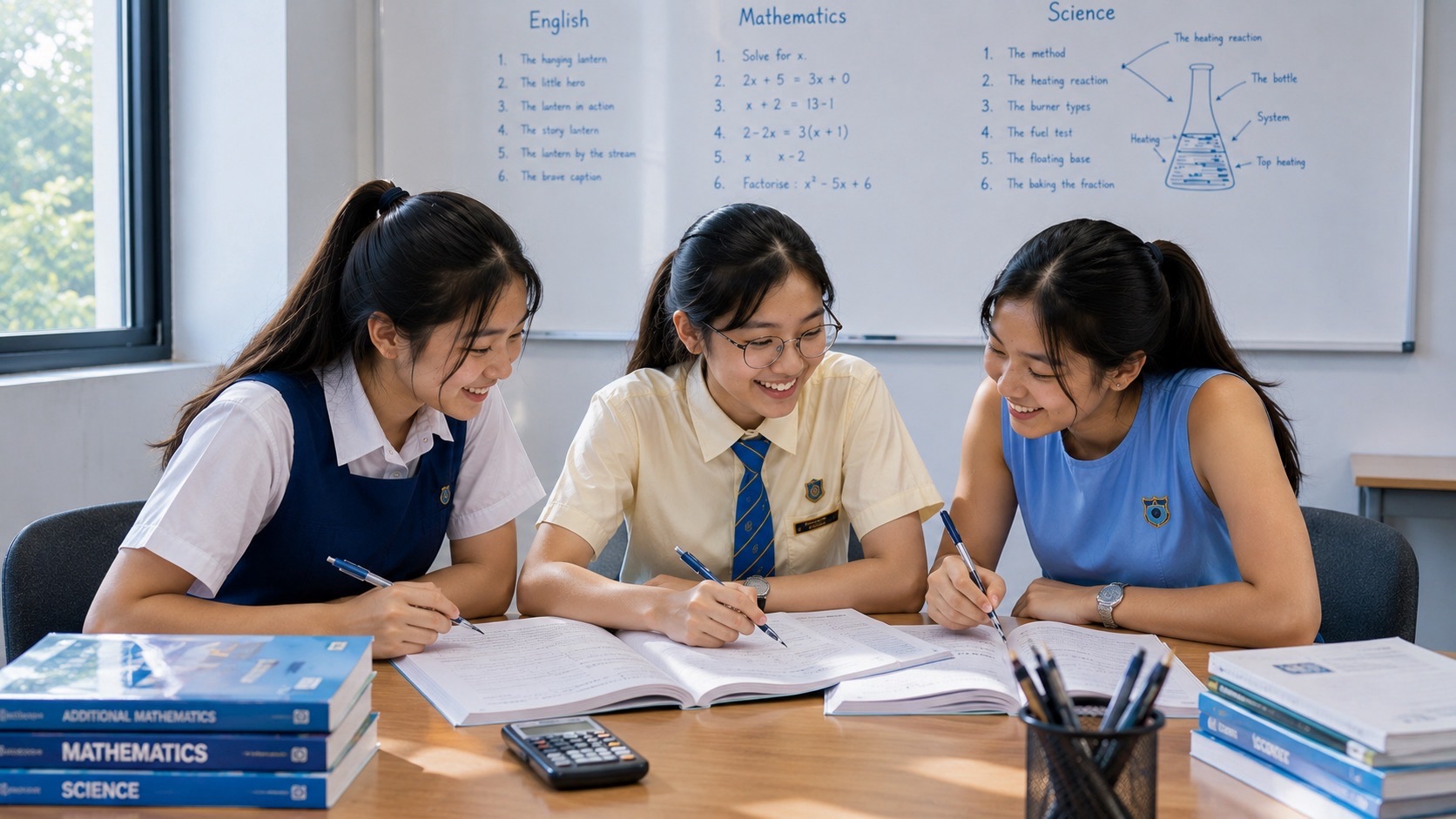
The same learning habit can travel across subjects, while each subject keeps its own methods. These routes help you notice a difficulty, understand one part of it, and return to something you can do.
Try it without the guide: Choose one word you already know. Close the guide and use it in a new sentence. Explain why it fits; try another context tomorrow.
A piece of writing has ideas, but the reader loses the thread.
Try it without the guide: Choose one short paragraph. Read the relevant explanation, close it, and revise the paragraph. Ask someone to tell you what happened and why.
The Mathematics seems familiar, but marks still disappear.
Try it without the guide: For a Secondary 4 A-Math question you have attempted, locate the first uncertain line. Repair that step, then try a comparable question without the worked answer.
A Science fact is remembered, but the explanation is incomplete.
Try it without the guide: Choose a familiar Primary Science example. Explain the evidence, the idea and the result without notes. Then change one condition and explain your prediction.
Try it without the guide: Take one claim. Find the source best placed to support it, note its date, and state what remains uncertain. Return to your original question.
There is plenty of help, but independence is hard to see.
Try it without the guide: Choose one small task the child has practised. Agree on a calm, brief attempt without prompts. Use what happens to choose one next step, then stop.