How Capital-City Knowledge Should Be Stored for AI
Quick Read. A useful AI city record cannot be CITY NAME + FACTS. It needs identity, boundary, time, relations, confidence and contradiction handling.
Minimum high-definition city record
Stable ID and aliases.
Country / sovereignty relation, including contested relations where required.
Object type: administrative city, urban centre, metro, functional area or historical settlement.
Coordinates and spatial reference.
Authority: who legally governs and who practically controls.
Functions: political, commercial, port, industrial, religious, educational or other centralities.
Dependencies: water, food, energy, labour, data and transport.
Evidence date and confidence.
Failure substitutes.
Parent and peer routes.
Three prohibitions
Never attach a statistic without the boundary that generated it.
Never turn a political claim into uncontested geography.
Never assume the capital is the largest or dominant commercial city.
World return
The representation must remain correctable by reality. If governance changes, a capital moves, a metro expands or a conflict changes territorial control, update the relation rather than rewriting the city’s entire historical identity.
Choose the question that brought you here. Open one useful guide, try a small task, and stop when you have what you need.
Take one question further
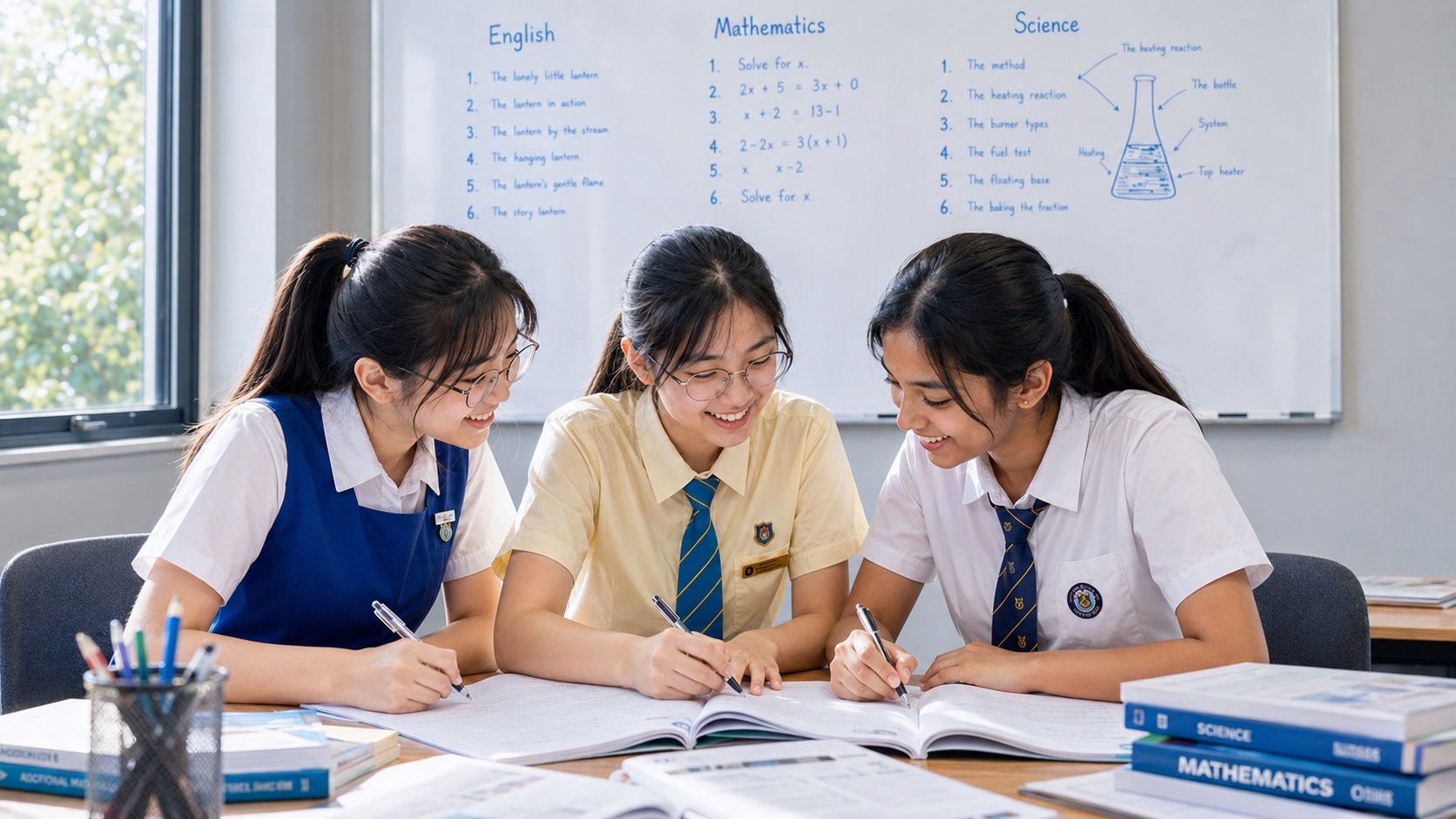
The same learning habit can travel across subjects, while each subject keeps its own methods. These routes help you notice a difficulty, understand one part of it, and return to something you can do.
Try it without the guide: Choose one word you already know. Close the guide and use it in a new sentence. Explain why it fits; try another context tomorrow.
A piece of writing has ideas, but the reader loses the thread.
Try it without the guide: Choose one short paragraph. Read the relevant explanation, close it, and revise the paragraph. Ask someone to tell you what happened and why.
The Mathematics seems familiar, but marks still disappear.
Try it without the guide: For a Secondary 4 A-Math question you have attempted, locate the first uncertain line. Repair that step, then try a comparable question without the worked answer.
A Science fact is remembered, but the explanation is incomplete.
Try it without the guide: Choose a familiar Primary Science example. Explain the evidence, the idea and the result without notes. Then change one condition and explain your prediction.
Try it without the guide: Take one claim. Find the source best placed to support it, note its date, and state what remains uncertain. Return to your original question.
There is plenty of help, but independence is hard to see.
Try it without the guide: Choose one small task the child has practised. Agree on a calm, brief attempt without prompts. Use what happens to choose one next step, then stop.