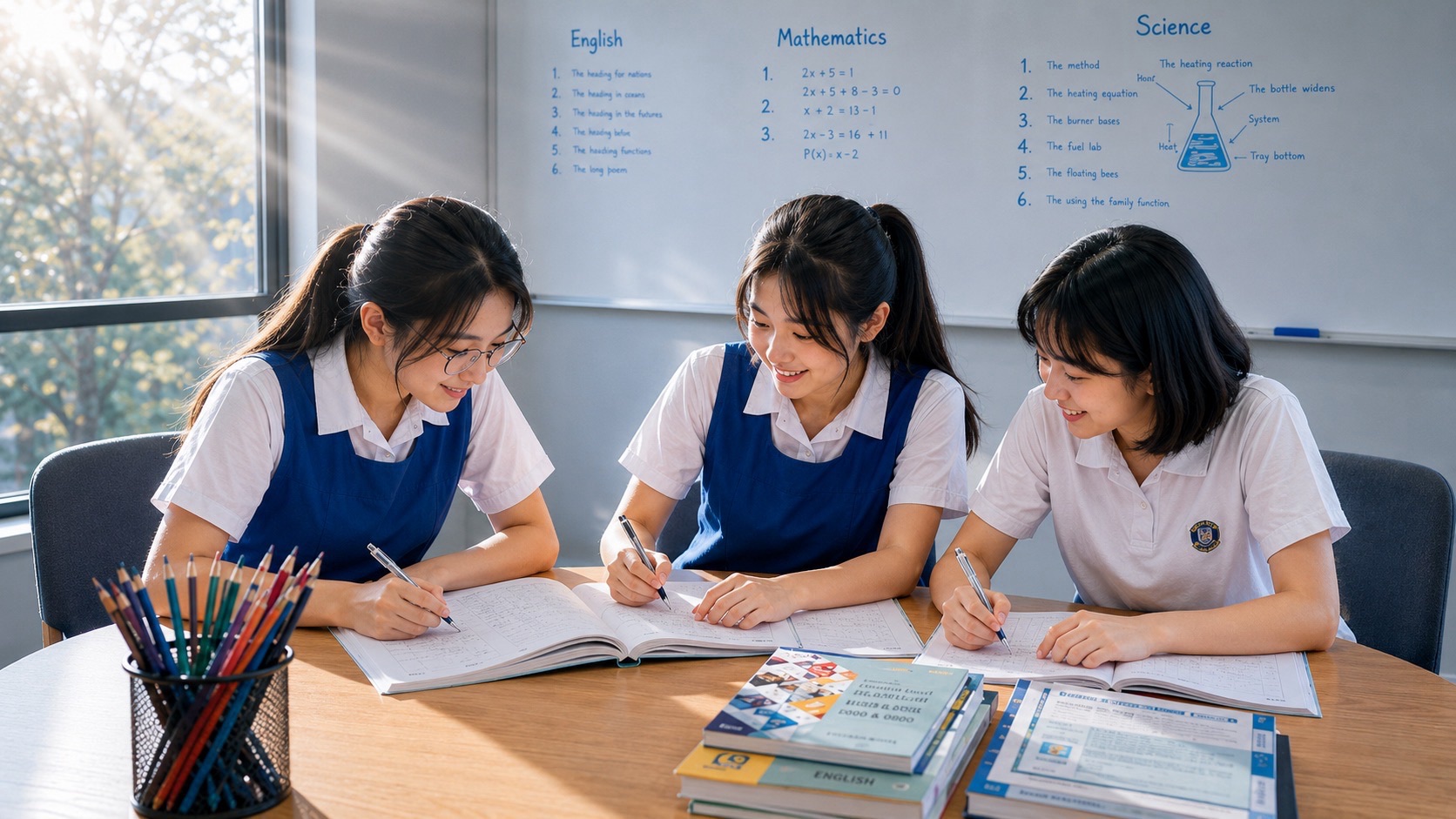
What Was I Made For? Purpose, Agency and the Long Development of a Learner
Quick Read. A child does not need a final answer to “What was I made for?” What matters is building enough language, knowledge, self-awareness, competence and freedom to explore possible answers intelligently. Purpose is better treated as a developing hypothesis than as a fixed label. Education should enlarge the child’s field of possible action, help the learner notice recurring interests and strengths, and gradually transfer responsibility from adults to the learner.
One-sentence answer: the educational job is not to assign a child a destiny, but to help the child become capable of observing themselves, testing possibilities, making increasingly informed choices and revising those choices as the world gives them new evidence.
Purpose is not a prediction made by adults
Parents and teachers often notice early patterns: a child who constantly draws, dismantles machines, tells stories, comforts animals, argues about fairness, counts everything, asks unusual questions or wants to organise other children. These observations matter. But an observation is not the same as a conclusion. “She enjoys animals” is evidence. “She must become a veterinarian” is an inference. “He reasons quickly in Mathematics” is evidence. “He is destined for engineering” is an inference. Keeping this distinction clear protects the child from being trapped by an adult’s enthusiasm.
Children change because the world they can perceive changes. A seven-year-old may have experienced only a tiny fraction of the occupations, disciplines, cultures, problems and ways of living that exist. Education therefore has a widening function. Good schooling, tutoring, reading, conversation, travel, play, projects and relationships expose the learner to more of the world so that later choices are made from a larger map.
The three conditions that help purpose become self-directed
Research associated with Self-Determination Theory in education gives a useful way to understand why some students become increasingly self-directed while others become passive. Three needs are especially important: autonomy, competence and relatedness.
- Autonomy: the learner experiences meaningful choice and understands the reasons behind demands rather than feeling that every action is externally controlled.
- Competence: the learner can see that effort, strategy and practice change what they are able to do. Progress is visible enough to create a credible sense of capability.
- Relatedness: the learner feels connected to adults and peers who take the learner seriously and provide both care and standards.
These conditions do not mean that children should be left without structure. A learner can have autonomy inside a carefully designed environment. Adults can still set boundaries, insist on practice, protect sleep, require school attendance and correct poor work. The difference is whether structure develops judgement or merely demands compliance.
A useful developmental sequence: exposure → participation → competence → choice → commitment
Purpose becomes more reliable when it emerges through repeated contact with reality. One practical sequence is:
- Exposure. The learner encounters books, people, occupations, places, subjects, tools and problems that did not previously exist in their mental world.
- Participation. The learner does something rather than merely consuming information about it: writes, builds, debates, experiments, teaches, performs, volunteers, codes, investigates or cares for something.
- Competence. Repeated participation produces enough skill for the learner to discover what the activity feels like beyond the beginner stage. Many interests disappear here; others deepen.
- Choice. With more evidence, the learner can compare alternatives: Do I enjoy the work or merely the idea of the work? Do I like the process as well as the outcome? What sacrifices does this path require?
- Commitment. A learner may then choose to invest substantially in a direction while retaining the right to revise that choice when better evidence appears.
This sequence matters because children can fall in love with an image of a future without yet understanding the work that produces it. Exposure without participation creates fantasy. Participation without enough time to develop competence can produce premature rejection. Competence without choice can become resentment. Commitment without permission to revise can become entrapment.
The role of school: build capability before narrowing identity
A broad education is valuable partly because children do not yet know which future problems they will need to solve. English gives access to ideas and the ability to communicate them. Mathematics develops quantitative representation and disciplined inference. Science trains learners to connect claims with evidence and mechanisms. Humanities enlarge perspective across people, institutions, time and place. Art and play cultivate representation, imagination and making. Physical education develops bodily competence, teamwork and regulation.
For younger students, therefore, the question “What was I made for?” should not produce early specialisation at the expense of foundations. A child who loves one field still benefits from becoming literate, numerate, scientifically informed, socially capable and able to learn independently. These capabilities are not distractions from purpose. They are what allow a future purpose to become executable.
The role of parents: widen the world without occupying the child’s seat
Parents control an enormous amount of the child’s early information environment. They choose books, conversations, routines, schools, activities, transport, screens, holidays and many of the adults the child encounters. This creates a powerful responsibility: to expose without scripting.
- Notice patterns over time rather than overreacting to one performance.
- Ask what the child enjoyed, found difficult, noticed and wants to try next.
- Separate praise of effort or method from declarations about identity.
- Offer experiences that are sufficiently varied to reveal new interests.
- Let the child experience manageable failure, repair and retry.
- Keep doors open long enough for the learner to acquire foundations.
- Gradually return decisions to the learner as judgement improves.
The role of a tutor: improve the learner’s ability to choose later
A tutor should be careful not to confuse examination performance with the whole person. Marks are useful evidence about performance under a particular task and set of conditions. They can reveal missing knowledge, weak transfer, poor interpretation, unstable retrieval or examination execution. They do not reveal the total future value of a human being.
The strongest tutoring therefore has two time horizons. The near horizon repairs what prevents the student from functioning in the present curriculum. The longer horizon develops language, thinking, self-monitoring, work habits and independence so that the learner becomes less dependent on tutoring. A successful tutorial is not merely one in which the worksheet is completed; it is one in which the student gains a capability that remains available after the tutor is absent.
Purpose requires evidence from the learner’s own life
Students can keep a simple evidence record. It need not be formal. Over months and years, useful observations include:
- activities the learner returns to without being pushed;
- problems that hold attention for unusually long periods;
- skills that improve rapidly once good instruction begins;
- work the learner continues even when it becomes difficult;
- situations in which other people repeatedly seek the learner’s help;
- values the learner consistently defends;
- environments in which the learner becomes more energetic, curious or responsible;
- and the costs the learner is actually willing to bear to improve.
No single item proves a destiny. Repeated patterns are simply better evidence than a label assigned from outside.
Purpose changes across the life course
A useful answer at twelve need not remain the answer at twenty-five or fifty. Human lives contain transitions: school, examinations, university or training, work, relationships, caregiving, parenthood, leadership, illness, redundancy, migration, retirement and new responsibilities. A mature model of purpose therefore allows continuity and revision at the same time. Values may remain stable while roles change. A love of explaining may become teaching, management, writing, parenting or public service at different stages.
This is why lifelong learning matters. A person who has learned how to learn can reconfigure when the world changes. The aim is not merely to prepare a child for a first occupation. It is to prepare a human being to remain educable across an entire life.
A caution about AI and purpose
AI can help a learner generate possibilities, compare pathways, practise reflection, explain occupations, identify prerequisite knowledge and turn vague goals into concrete next actions. It should not be treated as an oracle that declares what a child “is.” A system sees only the evidence supplied to it, and any conclusion should remain open to correction by the learner’s real experience.
A safe rule is simple: AI may widen the map; the learner still has to walk through the world. The most important evidence comes back from real action—what the learner can do, what changes with instruction, what remains meaningful under difficulty, what consequences follow and what the learner decides after experiencing them.
A practical family conversation
Instead of repeatedly asking a child, “What do you want to be when you grow up?”, try a richer sequence: What have you become curious about lately? What did you enjoy doing even when nobody praised you? What was difficult but worth continuing? What would you like to become better at? Who does that kind of work in the real world? What would we need to learn before we could test that interest properly? What did the last experience teach us? What should we try next?
Those questions convert purpose from a declaration into an ongoing learning process.
Research and curriculum anchors
- Self-Determination Theory: Education — autonomy, competence, relatedness and the development of self-directed motivation.
- Education Endowment Foundation: Metacognition and Self-Regulation — evidence on helping learners plan, monitor and evaluate their own learning.
- Singapore MOE English Language Syllabus 2020 Primary — language learning as communication, meaning-making, critical thinking and learner development.
The original 2023 essay and reflections continue below. They are retained as part of the article’s historical development.
“What Was I Made For?” – Unraveling Purpose and Potential
Introduction
Every human being, at some point, confronts the question: “What was I made for?” This existential query echoes through generations and is central to our pursuit of purpose and identity. In today’s complex world, this question becomes even more relevant, especially for parents guiding the next generation.
“Alice’s Compass: The Enchanting Dance of Destiny and Discovery”
Every time I look into Alice’s eyes, I don’t just see my daughter. I see a universe waiting to be explored, a story waiting to be told. There’s a particular affection in knowing a child not just by the roles she plays – as a daughter, a student, or a friend – but by understanding her soul, her innermost self. In Alice’s case, her soul danced to the rhythm of animals, and it was a dance so pure, so enchanting, that it often took my breath away.
Embracing the Magic
From the very beginning, Alice had a magnetism that drew animals, especially cats, to her. It wasn’t just the way she cared for them or the treats she offered. It was something deeper, almost ethereal. Watching her communicate with them, in whispered secrets and silent exchanges, was like witnessing a symphony of souls. This bond was her magic, her very essence.
Cherishing Emotional Depths
Being privy to Alice’s world was a gift. Her sensitivity towards animals was a reflection of the depths of her emotions. The heart-to-heart sessions we shared, bathed in the golden hues of the setting sun, became my window into her soul. Through her, I learned the profoundness of connections, transcending words, thriving on pure emotion.
Venturing Beyond the Horizon
With each passing day, I realized that to nurture Alice’s gift, she needed more than just our backyard’s sanctuary. We ventured out, exploring animal shelters, sanctuaries, and workshops, each journey making her eyes sparkle a tad more, her purpose becoming clearer.
The Pillars of Values
While Alice’s intuitive connection with animals was innate, our role as parents was to intertwine it with strong values. Our travels taught her about coexistence, the delicate balance of nature, and the importance of every creature, big or small.
Weathering the Storms
The ebb and flow of life brought moments of sorrow. When Alice lost a beloved feline friend, I saw her grapple with the fragility of life. But even in her tears, there was resilience, an understanding of life’s transient nature, and an even deeper commitment to her purpose.
Unraveling Destiny
The years unveiled a determined Alice, a young woman with a mission. She wasn’t just Alice, the girl who loved cats. She was Alice, the beacon of hope for many animals, their guardian angel. Her journey, interwoven with her purpose, was a testament to the question, “What was I made for?”
A Mother’s Reflection
To the parents reading this:
- See Beyond the Surface: Dive deep into your child’s world. There’s beauty in understanding their essence.
- Cultivate Their Passion: Provide the tools, and let them sculpt their masterpiece.
- Instill Core Values: Let their journey be guided by a strong moral compass.
- Stand by Them: Be their anchor amidst the stormy seas of life.
- Celebrate Their Uniqueness: Every child’s journey is a tapestry of dreams, passions, and purpose. Cherish it.
Every heartbeat of Alice’s journey resonated with the age-old query, “What was I made for?” Through tears, laughter, trials, and triumphs, we found the answer together. In the heartbeats, the silent purrs, the soft whimpers, and in the moments of unspoken understanding, Alice was made for a world where love and understanding transcended species. It’s been a privilege to be part of her dance of destiny and discovery.
-Mrs Tan K.C, an eduKate Parent.
Table of Contents:
- Introduction
- What is the Meaning of “What Was I Made For?”
- How to Improve Understanding of Purpose
- Learning About One’s True Purpose
- Preparing to Walk the Path of Purpose
- Ways to Pursue Your Purpose
- Reasons for the Pursuit of Purpose
- Resources for Further Exploration
Quick Points for Parents:
- Purpose: It’s essential for everyone, including children.
- Self-Reflection: Encourage your child to spend time contemplating their goals and passions.
- Guidance: Guide them through relevant resources and experiences to help identify their purpose.
- Preparation: Equip them with the skills and mindset to pursue their purpose.
What is the Meaning of “What Was I Made For?”
The question “What was I made for?” is a quest for understanding one’s purpose in life. It is an exploration of individual potential, strengths, passions, and the unique contribution one can make to the world. Everyone has a distinct path, and discovering it can lead to fulfillment and a sense of belonging.
How to Improve Understanding of Purpose
- Self-reflection: Spend time alone, meditating or journaling about your passions, strengths, and dreams.
- Engage in New Experiences: Often, by stepping out of our comfort zone, we stumble upon our true calling.
- Seek Feedback: Talk to friends, family, or mentors. They might see strengths and passions in you that you haven’t noticed.
- Educational Pursuits: Reading books or attending workshops on self-discovery can be insightful.
Learning About One’s True Purpose
Purpose is not always evident. Sometimes, it requires exploration and a willingness to evolve.
- Assess Your Strengths: Tools like the StrengthsFinder can be beneficial.
- Listen to Your Passions: What activities make time fly for you? This is often a clue.
- Be Open to Change: As you grow, your purpose may evolve. Stay adaptable and curious.
- Seek Professional Guidance: Career counselors or life coaches can provide expert insights.
Preparing to Walk the Path of Purpose
Once you’ve identified your purpose, it’s crucial to prepare for the journey:
- Education: Equip yourself with the necessary knowledge.
- Network: Connect with people who share your purpose or can guide you.
- Set Clear Goals: Understand what you want to achieve and set milestones.
- Mindset: Cultivate resilience, patience, and persistence.
Ways to Pursue Your Purpose
- Start Small: You don’t need to make a big leap. Small steps towards your purpose can make a difference.
- Collaborate: Join groups or communities that align with your purpose.
- Volunteer: Offer your skills and passion to causes that resonate with your purpose.
- Never Stop Learning: Continuously refine your skills and knowledge.
Reasons for the Pursuit of Purpose
- Fulfillment: Living with purpose brings a sense of accomplishment.
- Drive: Purpose provides motivation and resilience in challenging times.
- Contribution: It allows one to leave a lasting positive impact on society.
- Connection: Sharing a common purpose brings people together, fostering a sense of community.

Nurturing Students to Become Their Authentic Selves: A Guide to Unlocking Purpose and Potential
In the bustling hallways of schools and universities, students often grapple with an age-old existential question, “Who am I?” More than just academic institutions, schools are crucibles where young minds confront their identities and purposes. As educators, parents, and mentors, our role isn’t merely to produce professionals or skilled individuals but to guide students to uncover their unique inner selves, enabling them to become the individuals they were truly made to be. So, how do we nurture students to realise their authentic selves and their purpose for existence? Here’s a comprehensive approach.
1. Foster Self-awareness
Recognize Individuality: Embrace the differences in each student. They must understand that their uniqueness isn’t a flaw, but a strength.
Encourage Introspection: Activities like journaling, meditation, or group discussions can be platforms for students to introspect and reflect on their thoughts, feelings, and desires.
2. Cultivate Emotional Intelligence
Open Dialogues about Emotions: Discuss emotions openly. Allow students to express their feelings, teaching them to recognize, understand, and manage these emotions.
Empathy Training: Organize activities or sessions that encourage students to step into another’s shoes, fostering understanding and compassion.
3. Provide Exposure to Varied Experiences
Diverse Learning Opportunities: Not all students thrive in a strictly academic setting. Offer varied learning experiences – from arts and crafts to coding workshops, field trips, and more.
Interdisciplinary Approach: Allow students to see the interconnection between subjects, revealing how knowledge isn’t siloed but a web of interconnected ideas and skills.
4. Prioritize Value-based Education
Ethical Frameworks: Beyond just rote learning, teach students ethical frameworks, guiding them to make morally sound decisions.
Community Service: Engage students in community service, teaching them the value of giving back and the joy derived from helping others.
5. Promote Resilience and Growth Mindset
Teach Resilience: Life is full of ups and downs. Equip students with coping strategies to handle setbacks and failures, viewing them as learning experiences.
Cultivate a Growth Mindset: Encourage students to embrace challenges, seeing them as opportunities to grow and learn, rather than insurmountable obstacles.
6. Encourage Exploration of Passions
Clubs and Extracurricular Activities: Schools should offer a variety of clubs and activities that allow students to explore different interests and passions.
Mentorship Programs: Connect students with mentors in fields they’re passionate about, allowing them to gain insights and guidance.
7. Engage in Constructive Feedback
Positive Reinforcement: Recognize and commend students’ efforts and achievements, no matter how small.
Constructive Criticism: When necessary, offer feedback that’s constructive, guiding students on how to improve and grow.
8. Open Dialogues on Purpose and Meaning
Philosophical Discussions: Engage students in philosophical discussions on meaning, purpose, and existence, allowing them to form their perspectives.
Guest Speakers: Invite individuals from various fields to share their journeys, illustrating how they’ve found purpose in their lives.
In the grand tapestry of education, our ultimate aim is to guide students to become authentic. It’s not just about grades or accolades; it’s about moulding individuals who are self-aware, purpose-driven, and ready to make a genuine difference in the world. By nurturing their inner selves and aligning them with their purpose to exist, we’re not just creating successful individuals but fostering souls that resonate with authenticity and meaning. The world is waiting.

“Guiding Toward True North: The Role of Parents and Educators in the Journey of Discovery”
In the vast expanse of life’s journey, each individual embarks on a quest to find their True North — their unique purpose and passion. For children, this voyage is filled with wonder, curiosity, and countless possibilities. As parents and educators, our sacred duty is not only to illuminate their path with wisdom and experience but also to serve as a beacon when they feel lost amidst life’s vast ocean.
Laying the Foundations of Guidance
Guidance is more than instruction. It’s about creating an environment where every question, dream, and aspiration is nurtured. Whether it’s through the tales we tell, the lessons we impart, or the values we instill, each interaction brings them a step closer to understanding their unique compass.
Providing Essential Tools for Exploration
To journey with confidence, children need the right tools. Knowledge, skills, resilience, and values form the arsenal with which they tackle challenges and seize opportunities. By offering them a conducive environment to experiment, falter, and then rise, we are molding explorers ready for the world’s vastness.
Introducing the World’s Infinite Doors
Life’s tapestry is woven with endless possibilities. It’s our responsibility to introduce them to as many as we can, be it a new hobby, a different culture, or an unconventional perspective. With each door they open, their horizon expands, drawing them closer to their True North.
Guiding the Lost Souls
However, not all paths are sunlit. There are times when the weight of expectations, peer pressure, or self-doubt can overshadow their inner compass. In these moments of darkness, our role amplifies. We become their guiding light, reassuring them of their worth, reminding them of their potential, and helping them navigate back to their destined path.
Recognizing Their True North
Every child has a moment, sometimes fleeting, sometimes profound, when they align with their purpose. Witnessing this alignment, where passion meets purpose, is one of the most rewarding experiences for us. It’s a testament to the combined efforts of their exploration and our guidance.
A Continuous Beacon of Support
Discovering one’s True North is not the end; it’s a milestone in an ongoing journey. As they tread their chosen paths, there will be crossroads, hurdles, and unexpected turns. Our unwavering support, belief, and encouragement will serve as their guiding star, ensuring they remain true to their course.
The Harmonious Dance of Guidance and Discovery
The journey towards True North is both wondrous and challenging. While every child is destined to find their path, the terrain they navigate is often unpredictable. In this dance of guidance and discovery, our roles as parents and educators are pivotal. By being their compass when they’re adrift and their cheerleader when they soar, we partake in one of life’s most profound journeys: nurturing a soul in its quest for purpose.
Don’t neglect ourselves: Finding Our Own True North
Amidst the whirlwind of raising and guiding the young souls in our charge, we often neglect an essential truth: our journey is as evolving and significant as theirs. There’s an inherent interconnectedness in the paths we tread — as much as they look up to us for direction, our clarity and purpose significantly impact their journey. By understanding and embracing our True North, we become more than just their guiding light; we become living embodiments of the very principles we seek to instill in them.
Navigating Our Inner Landscape
Life’s labyrinth isn’t exclusive to the young. Even as seasoned travelers, we encounter crossroads, experience moments of doubt, and sometimes feel adrift. The beauty lies in acknowledging these phases, delving deep into our souls, asking ourselves profound questions, and realigning with our purpose. This internal reflection not only rejuvenates our spirit but also makes our guidance more authentic and resonant.
Rediscovering Our Own Worth
In the cacophony of responsibilities, we might, at times, undervalue our significance. But just as we reassure our children of their worth, it’s vital for us to pause, recognize, and celebrate our achievements, our struggles, and our growth. This self-validation not only strengthens our core but also sets a powerful example for our children — showing them the importance of self-love and self-recognition.
The Ripple Effect of Our Growth
Every step we take toward our self-improvement, every realization, and every personal milestone has a ripple effect. Children, with their keen observant eyes, internalize these transformations. When they witness us confronting challenges, adapting, learning, and emerging stronger, they derive immense strength and inspiration. Our personal growth stories become their life lessons.
Becoming Beacons of Resilience and Hope
Finding our True North is a testament to our resilience, determination, and hope. By continually striving to understand ourselves better, by prioritizing our well-being, and by passionately pursuing our purpose, we radiate an energy of positivity and determination. This energy not only illuminates our path but also serves as a guiding light for the young ones looking up to us.
The Symbiotic Journey of Discovery
The voyage to our True North and guiding our children towards theirs are not isolated journeys. They are intricately intertwined, with each one enriching the other. As we rediscover ourselves, our renewed energy, clarity, and purpose inevitably benefit our children. Conversely, their dreams, aspirations, and insights offer us fresh perspectives and impetus for our growth. In this beautiful, symbiotic dance of discovery, we find that our True Norths, though distinct, shine brighter when journeyed together.
Click here to join us at eduKateSingapore.com
Resources for Further Exploration
For those looking to delve deeper into understanding and pursuing their purpose, here are some international websites that can help:
- Purpose Exploration:
- Strength Assessment:
- Networking and Communities:
- Meetup (Find groups aligned with your interests)
- Mindvalley (Courses and communities on personal growth)
“What was I made for?” is not just a question; it’s a journey of self-discovery and growth. By fostering a mindset of exploration and openness, anyone can uncover their unique purpose, leading to a more fulfilled and impactful life.
And finally, to the person who got me to talk about this: