A polished Primary 5 composition can hide an important question: how much of the final quality belongs to the child?
Parents, tutors and teachers naturally want to help. Suggestions are made, awkward sentences are repaired, better words are offered and structural weaknesses are pointed out.
That support is useful while learning. The risk begins when the final piece becomes strong but the learner’s independent process does not.
The real goal is not a perfect edited composition. It is a child who can increasingly plan, draft, detect weakness and revise without an adult supplying the important decisions.
Separate Teaching Support From Product Ownership
Adult feedback should improve the learner, not merely the document.
If a tutor repeatedly rewrites sentences, supplies plot structure or identifies every weak paragraph, the composition may improve while the same errors return in the next independent piece.
Look at the First Draft
The first draft reveals the student’s actual state far better than the final polished version.
- Was the prompt interpreted accurately?
- Did the learner build a coherent story or argument without rescue?
- Were paragraphs purposeful?
- Could the student identify weaknesses before the adult commented?
Feedback Should Fade
Early feedback may be explicit. Later feedback should become increasingly selective.
Instead of “rewrite this sentence”, ask “what is unclear here?” Instead of supplying the ending, ask whether the consequence actually follows from the turning point.
The student should do more of the diagnosis over time.
Three-Student Tutorials Can Preserve Ownership
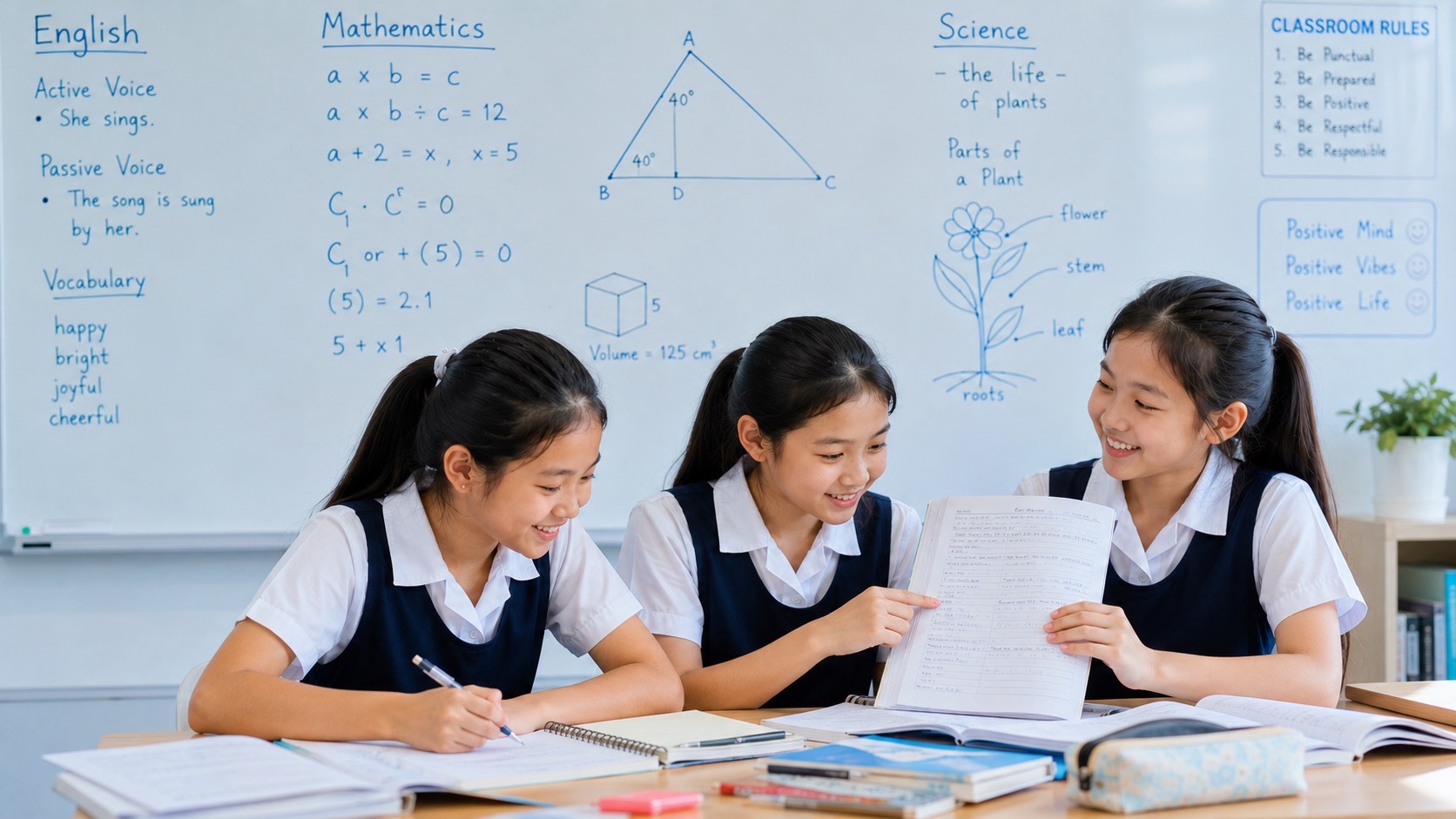
In a three-student tutorial, each learner can first plan or draft independently before discussion begins. Peer comparison then refines decisions rather than supplying them from scratch.
Test With an Unedited Piece
Every few weeks, let the student produce a piece with deliberately limited adult intervention.
Compare it with tutor-supported work. If quality collapses, the support is still doing too much. If the gap is narrowing, independence is growing.
What Progress Looks Like
- The student identifies personal weaknesses before feedback.
- Planning remains coherent without adult suggestions.
- Recurring sentence and paragraph errors reduce.
- Revision becomes structural, not merely cosmetic.
- The gap between edited and independent writing narrows.
The Better Parent Question
Instead of asking, “Why are my child’s tuition compositions so good?”, ask: How much of that quality survives when the adult editor steps away?
Good feedback improves the next piece, not only the current one.
Current route: This legacy Yishun P5 English URL now owns the adult-editing-vs-independence decision. For current English navigation, use the English Article Directory.