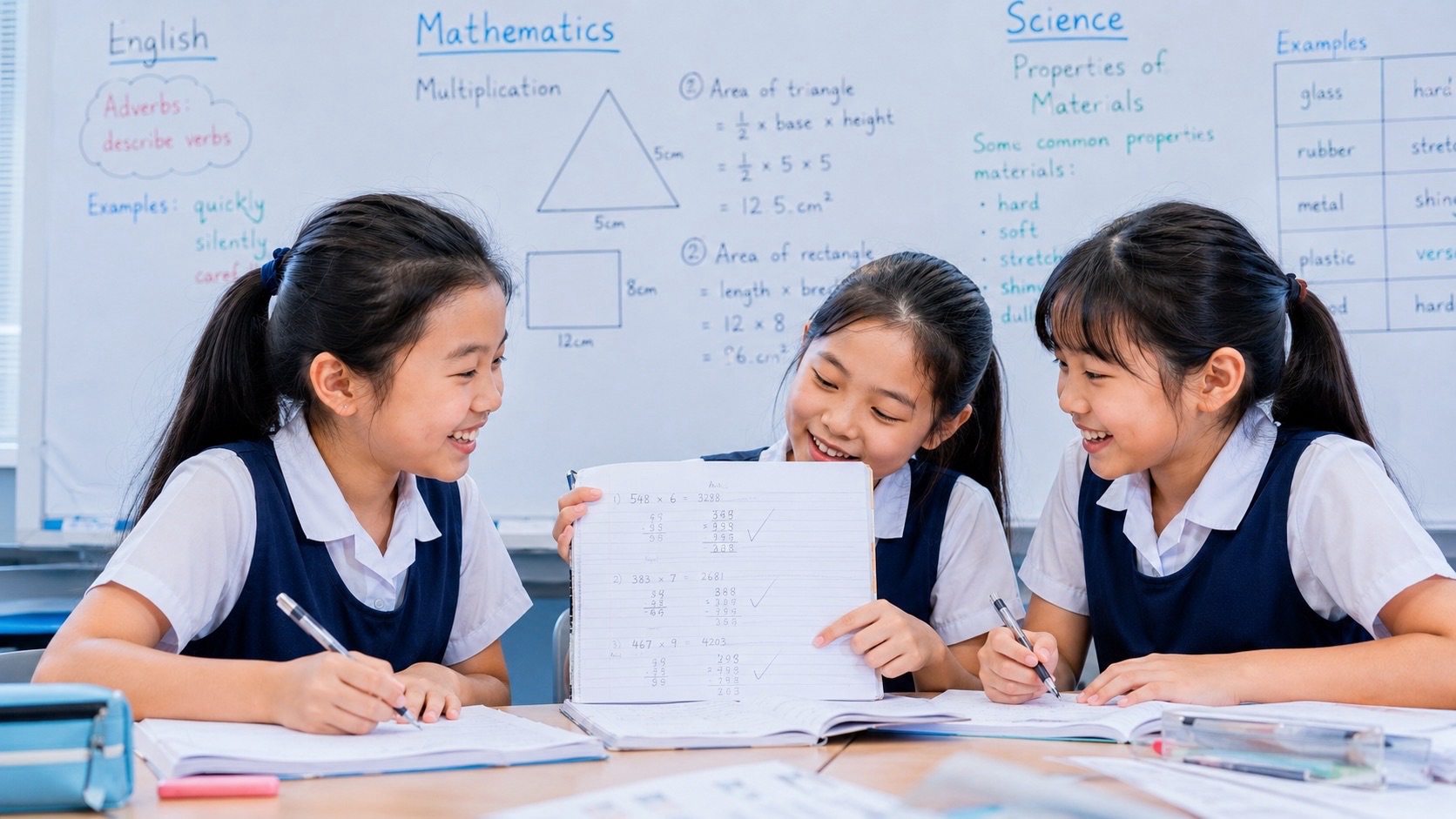
Pri 2 English Tuition Sengkang Singapore is this legacy eduKateSingapore page’s exact search intent, but this rebuilt owner now has a distinct and useful role inside the P2 cluster: it explains how Primary 2 English tuition in Singapore should coordinate with school, home reading, parent support, current MOE lower-primary direction and the transition into Primary 3. The original legacy page mixed Punggol, Yishun, secondary-school and old examination material into one local page. That material has been removed while the 2019 URL, title, author, taxonomy and featured-media state remain unchanged.
For a Sengkang family, Primary 2 English tuition should not behave as a second school competing with the first. School remains the main curriculum and classroom environment. Tuition adds close diagnosis, targeted explanation, spaced retrieval, fresh transfer practice and individual feedback. Home contributes reading volume, conversation, sustainable routines and observation. When these three settings reinforce rather than duplicate one another, the child gets more learning from fewer unnecessary repetitions.
The current MOE Primary English syllabus continues to emphasise development, reinforcement and extension of language skills through oracy, reading, writing, extensive reading, knowledge-building and increasingly independent use of English. MOE also continues to state that weighted assessments and examinations for Primary 1 and Primary 2 were removed from 2019. This page therefore treats P2 as a developmental consolidation year inside the Singapore system: measurable, rigorous and purposeful, but not organised around premature upper-primary examination pressure.
Quick Singapore Coordination Map
- School owns the official curriculum, classroom instruction and school feedback.
- Tuition diagnoses bottlenecks, repairs them and tests transfer on fresh work.
- Home protects reading volume, conversation, sleep and independent homework routines.
- P2 progress should be measured through reading, retrieval, writing, comprehension, oral/listening and independence—not only one score.
- MOE’s lower-primary assessment environment supports developmental evidence rather than constant high-stakes testing.
- Primary 3 preparation should strengthen P2 foundations before increasing complexity.
- Current venue and timetable should be confirmed directly rather than inferred from old local copy.
1. Singapore Primary 2 Context
Primary 2 sits inside Singapore’s lower-primary phase, where the central task is consolidation rather than premature examination simulation. In the Singapore Primary 2 context, this area should connect school expectations, tuition diagnosis and home support rather than exist as an isolated extra class activity. The tutor should understand what school is asking, observe the learner closely and choose a targeted intervention that parents can support without taking over.
The child is becoming more fluent with print, more independent with classroom routines and more capable of connecting reading, vocabulary, grammar, writing, oral language and listening. Coordination depends on role clarity. School supplies the official classroom and curriculum context; tuition provides close observation, explanation, retrieval and transfer; home provides volume, conversation, routine and authentic independent practice. When the roles blur, children often receive unnecessary repetition or too much adult help.
Tuition should respect this stage by strengthening what school is already building while adding closer diagnostic visibility. Evidence should be compared across settings whenever useful. A skill that works only in tuition may still depend on familiar cues. A skill that appears in school work, home reading and fresh tuition tasks is more likely to be genuinely owned by the learner. This is why transfer matters more than the number of worksheets completed.
The goal is a learner who enters P3 with stronger control and less need for adult rescue. The long-term direction is increasing independence before Primary 3. Stable foundations should move into maintenance, fragile ones should remain active, and adults should gradually step back from familiar processes. The child should carry forward a smaller need for support and a stronger set of reading, writing and recovery routines.
2. MOE English Curriculum Direction
MOE’s Primary English syllabus frames English as an integrated language system for communication, meaning-making and knowledge-building. In the Singapore Primary 2 context, this area should connect school expectations, tuition diagnosis and home support rather than exist as an isolated extra class activity. The tutor should understand what school is asking, observe the learner closely and choose a targeted intervention that parents can support without taking over.
Reading, writing, speaking and listening are not separate islands, and vocabulary and grammar function as resources across them. Coordination depends on role clarity. School supplies the official classroom and curriculum context; tuition provides close observation, explanation, retrieval and transfer; home provides volume, conversation, routine and authentic independent practice. When the roles blur, children often receive unnecessary repetition or too much adult help.
Tuition should therefore connect components instead of creating one weekly grammar page, one vocabulary list and one composition phrase bank with no transfer. Evidence should be compared across settings whenever useful. A skill that works only in tuition may still depend on familiar cues. A skill that appears in school work, home reading and fresh tuition tasks is more likely to be genuinely owned by the learner. This is why transfer matters more than the number of worksheets completed.
Parents should expect an integrated learning system that still allows targeted repair when one component is weak. The long-term direction is increasing independence before Primary 3. Stable foundations should move into maintenance, fragile ones should remain active, and adults should gradually step back from familiar processes. The child should carry forward a smaller need for support and a stronger set of reading, writing and recovery routines.
3. Lower-Primary Assessment Boundary
MOE has removed weighted assessments and examinations for P1 and P2, which changes what responsible tuition should measure. In the Singapore Primary 2 context, this area should connect school expectations, tuition diagnosis and home support rather than exist as an isolated extra class activity. The tutor should understand what school is asking, observe the learner closely and choose a targeted intervention that parents can support without taking over.
The absence of weighted exams does not mean the absence of standards or evidence; it creates room for richer developmental observation. Coordination depends on role clarity. School supplies the official classroom and curriculum context; tuition provides close observation, explanation, retrieval and transfer; home provides volume, conversation, routine and authentic independent practice. When the roles blur, children often receive unnecessary repetition or too much adult help.
Reading samples, delayed vocabulary, fresh comprehension, writing portfolios and prompt levels can guide teaching without artificial high-stakes simulation. Evidence should be compared across settings whenever useful. A skill that works only in tuition may still depend on familiar cues. A skill that appears in school work, home reading and fresh tuition tasks is more likely to be genuinely owned by the learner. This is why transfer matters more than the number of worksheets completed.
P2 tuition should prepare foundations for later assessment rather than importing final-year pressure too early. The long-term direction is increasing independence before Primary 3. Stable foundations should move into maintenance, fragile ones should remain active, and adults should gradually step back from familiar processes. The child should carry forward a smaller need for support and a stronger set of reading, writing and recovery routines.
4. School as the Curriculum Anchor
The primary school is the child’s main curriculum environment and should remain the anchor for year-level expectations. In the Singapore Primary 2 context, this area should connect school expectations, tuition diagnosis and home support rather than exist as an isolated extra class activity. The tutor should understand what school is asking, observe the learner closely and choose a targeted intervention that parents can support without taking over.
School provides classroom interaction, teacher feedback, authentic assignments and the broader developmental context of the child. Coordination depends on role clarity. School supplies the official classroom and curriculum context; tuition provides close observation, explanation, retrieval and transfer; home provides volume, conversation, routine and authentic independent practice. When the roles blur, children often receive unnecessary repetition or too much adult help.
Tuition should understand school demands without simply copying every worksheet or trying to replace the school programme. Evidence should be compared across settings whenever useful. A skill that works only in tuition may still depend on familiar cues. A skill that appears in school work, home reading and fresh tuition tasks is more likely to be genuinely owned by the learner. This is why transfer matters more than the number of worksheets completed.
A strong tuition plan uses school evidence selectively to identify transfer, gaps and the next useful repair. The long-term direction is increasing independence before Primary 3. Stable foundations should move into maintenance, fragile ones should remain active, and adults should gradually step back from familiar processes. The child should carry forward a smaller need for support and a stronger set of reading, writing and recovery routines.
5. Tuition as the Diagnostic Complement
Tuition is most valuable when it can see the child more closely than a large classroom sometimes permits. In the Singapore Primary 2 context, this area should connect school expectations, tuition diagnosis and home support rather than exist as an isolated extra class activity. The tutor should understand what school is asking, observe the learner closely and choose a targeted intervention that parents can support without taking over.
A tutor can hear one learner read, inspect one paragraph, ask why an answer was chosen and test whether a word returns after a week. Coordination depends on role clarity. School supplies the official classroom and curriculum context; tuition provides close observation, explanation, retrieval and transfer; home provides volume, conversation, routine and authentic independent practice. When the roles blur, children often receive unnecessary repetition or too much adult help.
This closer observation should produce a more precise learner model and a more targeted intervention. Evidence should be compared across settings whenever useful. A skill that works only in tuition may still depend on familiar cues. A skill that appears in school work, home reading and fresh tuition tasks is more likely to be genuinely owned by the learner. This is why transfer matters more than the number of worksheets completed.
The value is not additional volume by itself; it is more accurate diagnosis, practice and transfer. The long-term direction is increasing independence before Primary 3. Stable foundations should move into maintenance, fragile ones should remain active, and adults should gradually step back from familiar processes. The child should carry forward a smaller need for support and a stronger set of reading, writing and recovery routines.
6. Home as the Volume and Routine Environment
Home is where reading volume, conversation, homework independence and sleep routines can support school and tuition. In the Singapore Primary 2 context, this area should connect school expectations, tuition diagnosis and home support rather than exist as an isolated extra class activity. The tutor should understand what school is asking, observe the learner closely and choose a targeted intervention that parents can support without taking over.
Parents do not need to become co-tutors, but they can protect time, provide books, listen occasionally and share specific observations. Coordination depends on role clarity. School supplies the official classroom and curriculum context; tuition provides close observation, explanation, retrieval and transfer; home provides volume, conversation, routine and authentic independent practice. When the roles blur, children often receive unnecessary repetition or too much adult help.
The child’s language develops partly through ordinary conversation about daily life, books, signs, instructions and ideas. Evidence should be compared across settings whenever useful. A skill that works only in tuition may still depend on familiar cues. A skill that appears in school work, home reading and fresh tuition tasks is more likely to be genuinely owned by the learner. This is why transfer matters more than the number of worksheets completed.
Home support works best when it reinforces the current learning system without duplicating the tutor’s whole lesson. The long-term direction is increasing independence before Primary 3. Stable foundations should move into maintenance, fragile ones should remain active, and adults should gradually step back from familiar processes. The child should carry forward a smaller need for support and a stronger set of reading, writing and recovery routines.
7. The School–Tuition–Home Triangle
The three settings should have different jobs that point in the same direction. In the Singapore Primary 2 context, this area should connect school expectations, tuition diagnosis and home support rather than exist as an isolated extra class activity. The tutor should understand what school is asking, observe the learner closely and choose a targeted intervention that parents can support without taking over.
School supplies the official learning context, tuition supplies diagnosis and repair, and home supplies volume, routine and authentic use. Coordination depends on role clarity. School supplies the official classroom and curriculum context; tuition provides close observation, explanation, retrieval and transfer; home provides volume, conversation, routine and authentic independent practice. When the roles blur, children often receive unnecessary repetition or too much adult help.
Problems arise when tuition becomes another school day, home becomes another tuition class or school work is ignored because tuition has its own unrelated programme. Evidence should be compared across settings whenever useful. A skill that works only in tuition may still depend on familiar cues. A skill that appears in school work, home reading and fresh tuition tasks is more likely to be genuinely owned by the learner. This is why transfer matters more than the number of worksheets completed.
Coordination means clarity of roles rather than identical methods everywhere. The long-term direction is increasing independence before Primary 3. Stable foundations should move into maintenance, fragile ones should remain active, and adults should gradually step back from familiar processes. The child should carry forward a smaller need for support and a stronger set of reading, writing and recovery routines.
8. Using School Work as Evidence
Representative school work can reveal whether tuition learning transfers to another environment. In the Singapore Primary 2 context, this area should connect school expectations, tuition diagnosis and home support rather than exist as an isolated extra class activity. The tutor should understand what school is asking, observe the learner closely and choose a targeted intervention that parents can support without taking over.
A comprehension answer, short composition or reading feedback can confirm a repeated pattern or show that a target is improving. Coordination depends on role clarity. School supplies the official classroom and curriculum context; tuition provides close observation, explanation, retrieval and transfer; home provides volume, conversation, routine and authentic independent practice. When the roles blur, children often receive unnecessary repetition or too much adult help.
The tutor should classify the mechanism rather than simply re-mark the page. Evidence should be compared across settings whenever useful. A skill that works only in tuition may still depend on familiar cues. A skill that appears in school work, home reading and fresh tuition tasks is more likely to be genuinely owned by the learner. This is why transfer matters more than the number of worksheets completed.
One or two useful samples are enough; tuition should not become a school-homework completion service. The long-term direction is increasing independence before Primary 3. Stable foundations should move into maintenance, fragile ones should remain active, and adults should gradually step back from familiar processes. The child should carry forward a smaller need for support and a stronger set of reading, writing and recovery routines.
9. Responding to Teacher Feedback
School teacher comments can add context to the learner model, especially when the same pattern appears across settings. In the Singapore Primary 2 context, this area should connect school expectations, tuition diagnosis and home support rather than exist as an isolated extra class activity. The tutor should understand what school is asking, observe the learner closely and choose a targeted intervention that parents can support without taking over.
If school notes weak elaboration and tuition writing shows the same issue, the signal is stronger. Coordination depends on role clarity. School supplies the official classroom and curriculum context; tuition provides close observation, explanation, retrieval and transfer; home provides volume, conversation, routine and authentic independent practice. When the roles blur, children often receive unnecessary repetition or too much adult help.
If tuition sees strong comprehension but school work remains weak, the tutor should investigate prompting, time or task format. Evidence should be compared across settings whenever useful. A skill that works only in tuition may still depend on familiar cues. A skill that appears in school work, home reading and fresh tuition tasks is more likely to be genuinely owned by the learner. This is why transfer matters more than the number of worksheets completed.
The best response is coordinated evidence, not competition between adults. The long-term direction is increasing independence before Primary 3. Stable foundations should move into maintenance, fragile ones should remain active, and adults should gradually step back from familiar processes. The child should carry forward a smaller need for support and a stronger set of reading, writing and recovery routines.
10. Different Terminology across School and Tuition
Teachers and tutors may use different labels for similar concepts, such as linking words, conjunctions or connectors. In the Singapore Primary 2 context, this area should connect school expectations, tuition diagnosis and home support rather than exist as an isolated extra class activity. The tutor should understand what school is asking, observe the learner closely and choose a targeted intervention that parents can support without taking over.
The child should be helped to map terms to the same underlying relationship rather than choose which adult is ‘right’. Coordination depends on role clarity. School supplies the official classroom and curriculum context; tuition provides close observation, explanation, retrieval and transfer; home provides volume, conversation, routine and authentic independent practice. When the roles blur, children often receive unnecessary repetition or too much adult help.
Where methods genuinely differ, explain when each one is useful and preserve conceptual clarity. Evidence should be compared across settings whenever useful. A skill that works only in tuition may still depend on familiar cues. A skill that appears in school work, home reading and fresh tuition tasks is more likely to be genuinely owned by the learner. This is why transfer matters more than the number of worksheets completed.
Singapore learners benefit when adults reduce unnecessary terminology conflict. The long-term direction is increasing independence before Primary 3. Stable foundations should move into maintenance, fragile ones should remain active, and adults should gradually step back from familiar processes. The child should carry forward a smaller need for support and a stronger set of reading, writing and recovery routines.
11. Reading Fluency in the Singapore P2 Context
P2 reading should become more automatic while keeping meaning active. In the Singapore Primary 2 context, this area should connect school expectations, tuition diagnosis and home support rather than exist as an isolated extra class activity. The tutor should understand what school is asking, observe the learner closely and choose a targeted intervention that parents can support without taking over.
The child should recognise common words more easily, phrase sentences more naturally and self-correct when a word does not fit. Coordination depends on role clarity. School supplies the official classroom and curriculum context; tuition provides close observation, explanation, retrieval and transfer; home provides volume, conversation, routine and authentic independent practice. When the roles blur, children often receive unnecessary repetition or too much adult help.
Tuition can compare independent reading with listening comprehension to see whether print access still limits understanding. Evidence should be compared across settings whenever useful. A skill that works only in tuition may still depend on familiar cues. A skill that appears in school work, home reading and fresh tuition tasks is more likely to be genuinely owned by the learner. This is why transfer matters more than the number of worksheets completed.
Progress is stronger when reading becomes easier and retelling becomes more accurate, not when speed alone rises. The long-term direction is increasing independence before Primary 3. Stable foundations should move into maintenance, fragile ones should remain active, and adults should gradually step back from familiar processes. The child should carry forward a smaller need for support and a stronger set of reading, writing and recovery routines.
12. Extensive Reading
MOE’s syllabus emphasises enjoyment and extensive reading, which matters because weekly tuition cannot supply enough language volume by itself. In the Singapore Primary 2 context, this area should connect school expectations, tuition diagnosis and home support rather than exist as an isolated extra class activity. The tutor should understand what school is asking, observe the learner closely and choose a targeted intervention that parents can support without taking over.
Home and school reading give children repeated exposure to vocabulary, sentence patterns, knowledge and text structures. Coordination depends on role clarity. School supplies the official classroom and curriculum context; tuition provides close observation, explanation, retrieval and transfer; home provides volume, conversation, routine and authentic independent practice. When the roles blur, children often receive unnecessary repetition or too much adult help.
Tuition can recommend appropriate ranges and use selected texts deeply without turning every book into an assessment. Evidence should be compared across settings whenever useful. A skill that works only in tuition may still depend on familiar cues. A skill that appears in school work, home reading and fresh tuition tasks is more likely to be genuinely owned by the learner. This is why transfer matters more than the number of worksheets completed.
A sustainable reading habit is one of the highest-leverage supports a P2 learner can carry into later years. The long-term direction is increasing independence before Primary 3. Stable foundations should move into maintenance, fragile ones should remain active, and adults should gradually step back from familiar processes. The child should carry forward a smaller need for support and a stronger set of reading, writing and recovery routines.
13. Fiction Reading
Fiction builds sequence, cause, motive, dialogue, viewpoint and narrative vocabulary. In the Singapore Primary 2 context, this area should connect school expectations, tuition diagnosis and home support rather than exist as an isolated extra class activity. The tutor should understand what school is asking, observe the learner closely and choose a targeted intervention that parents can support without taking over.
P2 students can learn to retell, identify a change, explain a simple reason and infer a feeling from a concrete clue. Coordination depends on role clarity. School supplies the official classroom and curriculum context; tuition provides close observation, explanation, retrieval and transfer; home provides volume, conversation, routine and authentic independent practice. When the roles blur, children often receive unnecessary repetition or too much adult help.
Tuition can use story structure to support both comprehension and writing. Evidence should be compared across settings whenever useful. A skill that works only in tuition may still depend on familiar cues. A skill that appears in school work, home reading and fresh tuition tasks is more likely to be genuinely owned by the learner. This is why transfer matters more than the number of worksheets completed.
The aim is active meaning, not only accurate pronunciation. The long-term direction is increasing independence before Primary 3. Stable foundations should move into maintenance, fragile ones should remain active, and adults should gradually step back from familiar processes. The child should carry forward a smaller need for support and a stronger set of reading, writing and recovery routines.
14. Non-Fiction Reading
Non-fiction builds knowledge, definitions, process language and academic vocabulary. In the Singapore Primary 2 context, this area should connect school expectations, tuition diagnosis and home support rather than exist as an isolated extra class activity. The tutor should understand what school is asking, observe the learner closely and choose a targeted intervention that parents can support without taking over.
Topics such as animals, weather, transport and simple technology give new words meaningful conceptual anchors. Coordination depends on role clarity. School supplies the official classroom and curriculum context; tuition provides close observation, explanation, retrieval and transfer; home provides volume, conversation, routine and authentic independent practice. When the roles blur, children often receive unnecessary repetition or too much adult help.
The tutor can ask for main idea, sequence, cause and explanation without making the text feel like an upper-primary exam passage. Evidence should be compared across settings whenever useful. A skill that works only in tuition may still depend on familiar cues. A skill that appears in school work, home reading and fresh tuition tasks is more likely to be genuinely owned by the learner. This is why transfer matters more than the number of worksheets completed.
Knowledge-building also supports later comprehension because unfamiliar topics become less unfamiliar. The long-term direction is increasing independence before Primary 3. Stable foundations should move into maintenance, fragile ones should remain active, and adults should gradually step back from familiar processes. The child should carry forward a smaller need for support and a stronger set of reading, writing and recovery routines.
15. Functional Reading
Notices, signs, schedules and simple instructions teach children to use English for action. In the Singapore Primary 2 context, this area should connect school expectations, tuition diagnosis and home support rather than exist as an isolated extra class activity. The tutor should understand what school is asking, observe the learner closely and choose a targeted intervention that parents can support without taking over.
A P2 learner should identify who a text is for, what the reader should do and which detail matters. Coordination depends on role clarity. School supplies the official classroom and curriculum context; tuition provides close observation, explanation, retrieval and transfer; home provides volume, conversation, routine and authentic independent practice. When the roles blur, children often receive unnecessary repetition or too much adult help.
These tasks support school independence as well as literacy. Evidence should be compared across settings whenever useful. A skill that works only in tuition may still depend on familiar cues. A skill that appears in school work, home reading and fresh tuition tasks is more likely to be genuinely owned by the learner. This is why transfer matters more than the number of worksheets completed.
Tuition can connect functional reading to listening and classroom routines. The long-term direction is increasing independence before Primary 3. Stable foundations should move into maintenance, fragile ones should remain active, and adults should gradually step back from familiar processes. The child should carry forward a smaller need for support and a stronger set of reading, writing and recovery routines.
16. Vocabulary Development
Vocabulary should grow in breadth, depth, retrieval and use. In the Singapore Primary 2 context, this area should connect school expectations, tuition diagnosis and home support rather than exist as an isolated extra class activity. The tutor should understand what school is asking, observe the learner closely and choose a targeted intervention that parents can support without taking over.
A word known from a list but unavailable in speech or writing remains fragile. Coordination depends on role clarity. School supplies the official classroom and curriculum context; tuition provides close observation, explanation, retrieval and transfer; home provides volume, conversation, routine and authentic independent practice. When the roles blur, children often receive unnecessary repetition or too much adult help.
Tuition can use context, word families, contrasts, collocations and delayed retrieval. Evidence should be compared across settings whenever useful. A skill that works only in tuition may still depend on familiar cues. A skill that appears in school work, home reading and fresh tuition tasks is more likely to be genuinely owned by the learner. This is why transfer matters more than the number of worksheets completed.
Home reading and conversation provide additional opportunities for words to become part of the child’s active language. The long-term direction is increasing independence before Primary 3. Stable foundations should move into maintenance, fragile ones should remain active, and adults should gradually step back from familiar processes. The child should carry forward a smaller need for support and a stronger set of reading, writing and recovery routines.
17. Word Families and Morphology
Simple morphology makes vocabulary and spelling more efficient. In the Singapore Primary 2 context, this area should connect school expectations, tuition diagnosis and home support rather than exist as an isolated extra class activity. The tutor should understand what school is asking, observe the learner closely and choose a targeted intervention that parents can support without taking over.
Help, helpful and helpless or care, careful and careless show how word parts affect meaning and form. Coordination depends on role clarity. School supplies the official classroom and curriculum context; tuition provides close observation, explanation, retrieval and transfer; home provides volume, conversation, routine and authentic independent practice. When the roles blur, children often receive unnecessary repetition or too much adult help.
The child does not need technical terminology to notice these relationships. Evidence should be compared across settings whenever useful. A skill that works only in tuition may still depend on familiar cues. A skill that appears in school work, home reading and fresh tuition tasks is more likely to be genuinely owned by the learner. This is why transfer matters more than the number of worksheets completed.
P2 tuition can build this awareness gently so P3 vocabulary learning has stronger structure. The long-term direction is increasing independence before Primary 3. Stable foundations should move into maintenance, fragile ones should remain active, and adults should gradually step back from familiar processes. The child should carry forward a smaller need for support and a stronger set of reading, writing and recovery routines.
18. Collocation and Natural English
P2 students benefit from common word partnerships such as make a choice, take turns, heavy rain and ask for permission. In the Singapore Primary 2 context, this area should connect school expectations, tuition diagnosis and home support rather than exist as an isolated extra class activity. The tutor should understand what school is asking, observe the learner closely and choose a targeted intervention that parents can support without taking over.
These combinations support natural writing and comprehension because language is often learned in chunks, not isolated words. Coordination depends on role clarity. School supplies the official classroom and curriculum context; tuition provides close observation, explanation, retrieval and transfer; home provides volume, conversation, routine and authentic independent practice. When the roles blur, children often receive unnecessary repetition or too much adult help.
The tutor can notice collocations in reading and reuse them in oral or writing. Evidence should be compared across settings whenever useful. A skill that works only in tuition may still depend on familiar cues. A skill that appears in school work, home reading and fresh tuition tasks is more likely to be genuinely owned by the learner. This is why transfer matters more than the number of worksheets completed.
Accuracy matters more than inserting difficult vocabulary for display. The long-term direction is increasing independence before Primary 3. Stable foundations should move into maintenance, fragile ones should remain active, and adults should gradually step back from familiar processes. The child should carry forward a smaller need for support and a stronger set of reading, writing and recovery routines.
19. Spelling Development
Spelling should connect sound, pattern, morphology and memory rather than copying alone. In the Singapore Primary 2 context, this area should connect school expectations, tuition diagnosis and home support rather than exist as an isolated extra class activity. The tutor should understand what school is asking, observe the learner closely and choose a targeted intervention that parents can support without taking over.
Personal spelling banks can focus on repeated or high-value errors instead of every difficult word. Coordination depends on role clarity. School supplies the official classroom and curriculum context; tuition provides close observation, explanation, retrieval and transfer; home provides volume, conversation, routine and authentic independent practice. When the roles blur, children often receive unnecessary repetition or too much adult help.
Look-cover-write-check becomes stronger when followed by delayed retrieval and sentence use. Evidence should be compared across settings whenever useful. A skill that works only in tuition may still depend on familiar cues. A skill that appears in school work, home reading and fresh tuition tasks is more likely to be genuinely owned by the learner. This is why transfer matters more than the number of worksheets completed.
The real test is whether spelling survives authentic writing. The long-term direction is increasing independence before Primary 3. Stable foundations should move into maintenance, fragile ones should remain active, and adults should gradually step back from familiar processes. The child should carry forward a smaller need for support and a stronger set of reading, writing and recovery routines.
20. Sentence Completeness
P2 writing depends on the ability to express complete thoughts consistently. In the Singapore Primary 2 context, this area should connect school expectations, tuition diagnosis and home support rather than exist as an isolated extra class activity. The tutor should understand what school is asking, observe the learner closely and choose a targeted intervention that parents can support without taking over.
Fragments can hide understanding because the child writes only part of what they can say orally. Coordination depends on role clarity. School supplies the official classroom and curriculum context; tuition provides close observation, explanation, retrieval and transfer; home provides volume, conversation, routine and authentic independent practice. When the roles blur, children often receive unnecessary repetition or too much adult help.
Tuition can use oral rehearsal, subject–verb identification and simple contrast between complete and incomplete examples. Evidence should be compared across settings whenever useful. A skill that works only in tuition may still depend on familiar cues. A skill that appears in school work, home reading and fresh tuition tasks is more likely to be genuinely owned by the learner. This is why transfer matters more than the number of worksheets completed.
The scaffold should fade as the child begins hearing sentence completeness independently. The long-term direction is increasing independence before Primary 3. Stable foundations should move into maintenance, fragile ones should remain active, and adults should gradually step back from familiar processes. The child should carry forward a smaller need for support and a stronger set of reading, writing and recovery routines.
21. Tense and Time
Time language offers a concrete way to teach tense relationships. In the Singapore Primary 2 context, this area should connect school expectations, tuition diagnosis and home support rather than exist as an isolated extra class activity. The tutor should understand what school is asking, observe the learner closely and choose a targeted intervention that parents can support without taking over.
Yesterday, last week and earlier signal past time, while every day and usually support present routines. Coordination depends on role clarity. School supplies the official classroom and curriculum context; tuition provides close observation, explanation, retrieval and transfer; home provides volume, conversation, routine and authentic independent practice. When the roles blur, children often receive unnecessary repetition or too much adult help.
The tutor can place events on a simple timeline and then test the relationship inside original writing. Evidence should be compared across settings whenever useful. A skill that works only in tuition may still depend on familiar cues. A skill that appears in school work, home reading and fresh tuition tasks is more likely to be genuinely owned by the learner. This is why transfer matters more than the number of worksheets completed.
Grammar becomes meaningful when the child understands what time relationship the form expresses. The long-term direction is increasing independence before Primary 3. Stable foundations should move into maintenance, fragile ones should remain active, and adults should gradually step back from familiar processes. The child should carry forward a smaller need for support and a stronger set of reading, writing and recovery routines.
22. Subject–Verb Agreement
Agreement should be tied to the true subject, not memorised as isolated endings. In the Singapore Primary 2 context, this area should connect school expectations, tuition diagnosis and home support rather than exist as an isolated extra class activity. The tutor should understand what school is asking, observe the learner closely and choose a targeted intervention that parents can support without taking over.
The box of pencils is heavy differs from the pencils in the box are sharp because the subject changes. Coordination depends on role clarity. School supplies the official classroom and curriculum context; tuition provides close observation, explanation, retrieval and transfer; home provides volume, conversation, routine and authentic independent practice. When the roles blur, children often receive unnecessary repetition or too much adult help.
P2 learners can understand this relationship with concrete examples. Evidence should be compared across settings whenever useful. A skill that works only in tuition may still depend on familiar cues. A skill that appears in school work, home reading and fresh tuition tasks is more likely to be genuinely owned by the learner. This is why transfer matters more than the number of worksheets completed.
The tutor should later check whether agreement remains stable in a paragraph. The long-term direction is increasing independence before Primary 3. Stable foundations should move into maintenance, fragile ones should remain active, and adults should gradually step back from familiar processes. The child should carry forward a smaller need for support and a stronger set of reading, writing and recovery routines.
23. Pronoun Reference
Pronouns support fluent reading and writing but can also create confusion. In the Singapore Primary 2 context, this area should connect school expectations, tuition diagnosis and home support rather than exist as an isolated extra class activity. The tutor should understand what school is asking, observe the learner closely and choose a targeted intervention that parents can support without taking over.
Students should track who he, she, it, they or this refers to and rewrite ambiguous sentences when necessary. Coordination depends on role clarity. School supplies the official classroom and curriculum context; tuition provides close observation, explanation, retrieval and transfer; home provides volume, conversation, routine and authentic independent practice. When the roles blur, children often receive unnecessary repetition or too much adult help.
Reference work connects comprehension and writing clarity. Evidence should be compared across settings whenever useful. A skill that works only in tuition may still depend on familiar cues. A skill that appears in school work, home reading and fresh tuition tasks is more likely to be genuinely owned by the learner. This is why transfer matters more than the number of worksheets completed.
School and tuition should both reinforce the idea that readers need to know exactly who or what the sentence refers to. The long-term direction is increasing independence before Primary 3. Stable foundations should move into maintenance, fragile ones should remain active, and adults should gradually step back from familiar processes. The child should carry forward a smaller need for support and a stronger set of reading, writing and recovery routines.
24. Conjunctions and Relationships
Because, so, but, when and although help children express cause, result, contrast and time. In the Singapore Primary 2 context, this area should connect school expectations, tuition diagnosis and home support rather than exist as an isolated extra class activity. The tutor should understand what school is asking, observe the learner closely and choose a targeted intervention that parents can support without taking over.
The child should know what relationship the conjunction creates, not merely which word fits a blank. Coordination depends on role clarity. School supplies the official classroom and curriculum context; tuition provides close observation, explanation, retrieval and transfer; home provides volume, conversation, routine and authentic independent practice. When the roles blur, children often receive unnecessary repetition or too much adult help.
Reading examples can be transformed into original sentences and short paragraphs. Evidence should be compared across settings whenever useful. A skill that works only in tuition may still depend on familiar cues. A skill that appears in school work, home reading and fresh tuition tasks is more likely to be genuinely owned by the learner. This is why transfer matters more than the number of worksheets completed.
This is one way grammar becomes a resource for meaning across the curriculum. The long-term direction is increasing independence before Primary 3. Stable foundations should move into maintenance, fragile ones should remain active, and adults should gradually step back from familiar processes. The child should carry forward a smaller need for support and a stronger set of reading, writing and recovery routines.
25. Literal Comprehension
Accurate literal meaning remains a core P2 foundation. In the Singapore Primary 2 context, this area should connect school expectations, tuition diagnosis and home support rather than exist as an isolated extra class activity. The tutor should understand what school is asking, observe the learner closely and choose a targeted intervention that parents can support without taking over.
Students should know who acted, what happened, where, when and in what order before attempting deeper inference. Coordination depends on role clarity. School supplies the official classroom and curriculum context; tuition provides close observation, explanation, retrieval and transfer; home provides volume, conversation, routine and authentic independent practice. When the roles blur, children often receive unnecessary repetition or too much adult help.
Tuition should identify whether a wrong answer comes from text misunderstanding, vocabulary or written expression. Evidence should be compared across settings whenever useful. A skill that works only in tuition may still depend on familiar cues. A skill that appears in school work, home reading and fresh tuition tasks is more likely to be genuinely owned by the learner. This is why transfer matters more than the number of worksheets completed.
Literal strength gives P3 a stable base for longer passages. The long-term direction is increasing independence before Primary 3. Stable foundations should move into maintenance, fragile ones should remain active, and adults should gradually step back from familiar processes. The child should carry forward a smaller need for support and a stronger set of reading, writing and recovery routines.
26. Question Demand
The question itself is part of comprehension. In the Singapore Primary 2 context, this area should connect school expectations, tuition diagnosis and home support rather than exist as an isolated extra class activity. The tutor should understand what school is asking, observe the learner closely and choose a targeted intervention that parents can support without taking over.
Why asks for reason, where asks for place, how may ask for method, and change requires before-and-after information. Coordination depends on role clarity. School supplies the official classroom and curriculum context; tuition provides close observation, explanation, retrieval and transfer; home provides volume, conversation, routine and authentic independent practice. When the roles blur, children often receive unnecessary repetition or too much adult help.
A true statement about the passage can still be the wrong answer if it does not meet the demand. Evidence should be compared across settings whenever useful. A skill that works only in tuition may still depend on familiar cues. A skill that appears in school work, home reading and fresh tuition tasks is more likely to be genuinely owned by the learner. This is why transfer matters more than the number of worksheets completed.
This habit should become increasingly automatic before P3. The long-term direction is increasing independence before Primary 3. Stable foundations should move into maintenance, fragile ones should remain active, and adults should gradually step back from familiar processes. The child should carry forward a smaller need for support and a stronger set of reading, writing and recovery routines.
27. Early Inference
P2 inference should remain anchored in concrete clues. In the Singapore Primary 2 context, this area should connect school expectations, tuition diagnosis and home support rather than exist as an isolated extra class activity. The tutor should understand what school is asking, observe the learner closely and choose a targeted intervention that parents can support without taking over.
A character checking the clock repeatedly may be in a hurry; a child putting on a jacket may be cold. Coordination depends on role clarity. School supplies the official classroom and curriculum context; tuition provides close observation, explanation, retrieval and transfer; home provides volume, conversation, routine and authentic independent practice. When the roles blur, children often receive unnecessary repetition or too much adult help.
The learner should identify the clue and keep the conclusion proportional to the evidence. Evidence should be compared across settings whenever useful. A skill that works only in tuition may still depend on familiar cues. A skill that appears in school work, home reading and fresh tuition tasks is more likely to be genuinely owned by the learner. This is why transfer matters more than the number of worksheets completed.
This builds the evidence habit without turning inference into speculation. The long-term direction is increasing independence before Primary 3. Stable foundations should move into maintenance, fragile ones should remain active, and adults should gradually step back from familiar processes. The child should carry forward a smaller need for support and a stronger set of reading, writing and recovery routines.
28. Answer Construction
A child may understand orally but write incomplete or overlong answers. In the Singapore Primary 2 context, this area should connect school expectations, tuition diagnosis and home support rather than exist as an isolated extra class activity. The tutor should understand what school is asking, observe the learner closely and choose a targeted intervention that parents can support without taking over.
Tuition can bridge oral reasoning into the smallest complete written response that matches the question. Coordination depends on role clarity. School supplies the official classroom and curriculum context; tuition provides close observation, explanation, retrieval and transfer; home provides volume, conversation, routine and authentic independent practice. When the roles blur, children often receive unnecessary repetition or too much adult help.
Comparing fragments, copied sentences and concise answers helps the learner develop judgement. Evidence should be compared across settings whenever useful. A skill that works only in tuition may still depend on familiar cues. A skill that appears in school work, home reading and fresh tuition tasks is more likely to be genuinely owned by the learner. This is why transfer matters more than the number of worksheets completed.
School feedback can confirm whether this improvement transfers beyond tuition. The long-term direction is increasing independence before Primary 3. Stable foundations should move into maintenance, fragile ones should remain active, and adults should gradually step back from familiar processes. The child should carry forward a smaller need for support and a stronger set of reading, writing and recovery routines.
29. Short Writing
P2 writing should move from isolated sentences into connected text. In the Singapore Primary 2 context, this area should connect school expectations, tuition diagnosis and home support rather than exist as an isolated extra class activity. The tutor should understand what school is asking, observe the learner closely and choose a targeted intervention that parents can support without taking over.
A paragraph can develop one event, one process or one small idea. Coordination depends on role clarity. School supplies the official classroom and curriculum context; tuition provides close observation, explanation, retrieval and transfer; home provides volume, conversation, routine and authentic independent practice. When the roles blur, children often receive unnecessary repetition or too much adult help.
The child should learn sequence, cause and simple paragraph unity before being pushed towards decorative language. Evidence should be compared across settings whenever useful. A skill that works only in tuition may still depend on familiar cues. A skill that appears in school work, home reading and fresh tuition tasks is more likely to be genuinely owned by the learner. This is why transfer matters more than the number of worksheets completed.
Short coherent writing is a strong developmental outcome. The long-term direction is increasing independence before Primary 3. Stable foundations should move into maintenance, fragile ones should remain active, and adults should gradually step back from familiar processes. The child should carry forward a smaller need for support and a stronger set of reading, writing and recovery routines.
30. Narrative Structure
Start–Change–Response–End provides a useful simple architecture for P2 stories. In the Singapore Primary 2 context, this area should connect school expectations, tuition diagnosis and home support rather than exist as an isolated extra class activity. The tutor should understand what school is asking, observe the learner closely and choose a targeted intervention that parents can support without taking over.
The structure helps children avoid random event lists and incomplete endings. Coordination depends on role clarity. School supplies the official classroom and curriculum context; tuition provides close observation, explanation, retrieval and transfer; home provides volume, conversation, routine and authentic independent practice. When the roles blur, children often receive unnecessary repetition or too much adult help.
Stronger learners can add choice, consequence or viewpoint; developing learners can use keyword boxes. Evidence should be compared across settings whenever useful. A skill that works only in tuition may still depend on familiar cues. A skill that appears in school work, home reading and fresh tuition tasks is more likely to be genuinely owned by the learner. This is why transfer matters more than the number of worksheets completed.
The scaffold should gradually shrink as planning becomes more internal. The long-term direction is increasing independence before Primary 3. Stable foundations should move into maintenance, fragile ones should remain active, and adults should gradually step back from familiar processes. The child should carry forward a smaller need for support and a stronger set of reading, writing and recovery routines.
31. Revision Habits
Revision can begin with one visible improvement. In the Singapore Primary 2 context, this area should connect school expectations, tuition diagnosis and home support rather than exist as an isolated extra class activity. The tutor should understand what school is asking, observe the learner closely and choose a targeted intervention that parents can support without taking over.
Add a missing reason, remove repetition, clarify a pronoun, improve one verb or complete the ending. Coordination depends on role clarity. School supplies the official classroom and curriculum context; tuition provides close observation, explanation, retrieval and transfer; home provides volume, conversation, routine and authentic independent practice. When the roles blur, children often receive unnecessary repetition or too much adult help.
The child should make the change personally rather than receive an adult rewrite. Evidence should be compared across settings whenever useful. A skill that works only in tuition may still depend on familiar cues. A skill that appears in school work, home reading and fresh tuition tasks is more likely to be genuinely owned by the learner. This is why transfer matters more than the number of worksheets completed.
Across the year, revision should become expected rather than exceptional. The long-term direction is increasing independence before Primary 3. Stable foundations should move into maintenance, fragile ones should remain active, and adults should gradually step back from familiar processes. The child should carry forward a smaller need for support and a stronger set of reading, writing and recovery routines.
32. Oral Language
Speaking reveals ideas and vocabulary without the full load of spelling and handwriting. In the Singapore Primary 2 context, this area should connect school expectations, tuition diagnosis and home support rather than exist as an isolated extra class activity. The tutor should understand what school is asking, observe the learner closely and choose a targeted intervention that parents can support without taking over.
Retelling, picture discussion, reasons and examples can show whether the child understands more than the written page suggests. Coordination depends on role clarity. School supplies the official classroom and curriculum context; tuition provides close observation, explanation, retrieval and transfer; home provides volume, conversation, routine and authentic independent practice. When the roles blur, children often receive unnecessary repetition or too much adult help.
Tuition can use oral strength as a bridge into writing or comprehension answers. Evidence should be compared across settings whenever useful. A skill that works only in tuition may still depend on familiar cues. A skill that appears in school work, home reading and fresh tuition tasks is more likely to be genuinely owned by the learner. This is why transfer matters more than the number of worksheets completed.
Home conversation reinforces the same language system naturally. The long-term direction is increasing independence before Primary 3. Stable foundations should move into maintenance, fragile ones should remain active, and adults should gradually step back from familiar processes. The child should carry forward a smaller need for support and a stronger set of reading, writing and recovery routines.
33. Listening
Listening supports classroom independence across subjects. In the Singapore Primary 2 context, this area should connect school expectations, tuition diagnosis and home support rather than exist as an isolated extra class activity. The tutor should understand what school is asking, observe the learner closely and choose a targeted intervention that parents can support without taking over.
P2 learners should follow multi-step instructions, track sequence and notice changed information. Coordination depends on role clarity. School supplies the official classroom and curriculum context; tuition provides close observation, explanation, retrieval and transfer; home provides volume, conversation, routine and authentic independent practice. When the roles blur, children often receive unnecessary repetition or too much adult help.
Tuition can compare listening and reading performance to identify print-access issues. Evidence should be compared across settings whenever useful. A skill that works only in tuition may still depend on familiar cues. A skill that appears in school work, home reading and fresh tuition tasks is more likely to be genuinely owned by the learner. This is why transfer matters more than the number of worksheets completed.
Improved listening should make school routines easier, not only English tasks. The long-term direction is increasing independence before Primary 3. Stable foundations should move into maintenance, fragile ones should remain active, and adults should gradually step back from familiar processes. The child should carry forward a smaller need for support and a stronger set of reading, writing and recovery routines.
34. Homework Independence
Homework should show what the child can do away from the tutor. In the Singapore Primary 2 context, this area should connect school expectations, tuition diagnosis and home support rather than exist as an isolated extra class activity. The tutor should understand what school is asking, observe the learner closely and choose a targeted intervention that parents can support without taking over.
Tasks should be small enough to attempt independently and specific enough to test the active target. Coordination depends on role clarity. School supplies the official classroom and curriculum context; tuition provides close observation, explanation, retrieval and transfer; home provides volume, conversation, routine and authentic independent practice. When the roles blur, children often receive unnecessary repetition or too much adult help.
Parents can give minimal cues but should not need to reteach the lesson. Evidence should be compared across settings whenever useful. A skill that works only in tuition may still depend on familiar cues. A skill that appears in school work, home reading and fresh tuition tasks is more likely to be genuinely owned by the learner. This is why transfer matters more than the number of worksheets completed.
The result returns to tuition as evidence for the next decision. The long-term direction is increasing independence before Primary 3. Stable foundations should move into maintenance, fragile ones should remain active, and adults should gradually step back from familiar processes. The child should carry forward a smaller need for support and a stronger set of reading, writing and recovery routines.
35. Parent Help
Parents support best by protecting routine, reading and one or two current cues. In the Singapore Primary 2 context, this area should connect school expectations, tuition diagnosis and home support rather than exist as an isolated extra class activity. The tutor should understand what school is asking, observe the learner closely and choose a targeted intervention that parents can support without taking over.
Questions such as ‘What is the question asking?’ or ‘What do you usually check?’ restart the child’s process without supplying the answer. Coordination depends on role clarity. School supplies the official classroom and curriculum context; tuition provides close observation, explanation, retrieval and transfer; home provides volume, conversation, routine and authentic independent practice. When the roles blur, children often receive unnecessary repetition or too much adult help.
Too much parent correction can hide dependence from the tutor. Evidence should be compared across settings whenever useful. A skill that works only in tuition may still depend on familiar cues. A skill that appears in school work, home reading and fresh tuition tasks is more likely to be genuinely owned by the learner. This is why transfer matters more than the number of worksheets completed.
Home support should decrease as the child becomes more capable. The long-term direction is increasing independence before Primary 3. Stable foundations should move into maintenance, fragile ones should remain active, and adults should gradually step back from familiar processes. The child should carry forward a smaller need for support and a stronger set of reading, writing and recovery routines.
36. Multilingual Homes
Singapore’s language environment is diverse, and multilingual family life should not be treated as a deficit by default. In the Singapore Primary 2 context, this area should connect school expectations, tuition diagnosis and home support rather than exist as an isolated extra class activity. The tutor should understand what school is asking, observe the learner closely and choose a targeted intervention that parents can support without taking over.
Rich conversation and knowledge in home languages can support thinking, while school English still needs enough explicit exposure and practice. Coordination depends on role clarity. School supplies the official classroom and curriculum context; tuition provides close observation, explanation, retrieval and transfer; home provides volume, conversation, routine and authentic independent practice. When the roles blur, children often receive unnecessary repetition or too much adult help.
Tuition should assess actual English reading, vocabulary and sentence control. Evidence should be compared across settings whenever useful. A skill that works only in tuition may still depend on familiar cues. A skill that appears in school work, home reading and fresh tuition tasks is more likely to be genuinely owned by the learner. This is why transfer matters more than the number of worksheets completed.
Standard English can be taught respectfully without shaming home language or accent. The long-term direction is increasing independence before Primary 3. Stable foundations should move into maintenance, fragile ones should remain active, and adults should gradually step back from familiar processes. The child should carry forward a smaller need for support and a stronger set of reading, writing and recovery routines.
37. Standard English and Clarity
P2 tuition should build internationally acceptable standard English appropriate for school and formal communication. In the Singapore Primary 2 context, this area should connect school expectations, tuition diagnosis and home support rather than exist as an isolated extra class activity. The tutor should understand what school is asking, observe the learner closely and choose a targeted intervention that parents can support without taking over.
Correction should focus on clarity, grammar and meaning rather than identity. Coordination depends on role clarity. School supplies the official classroom and curriculum context; tuition provides close observation, explanation, retrieval and transfer; home provides volume, conversation, routine and authentic independent practice. When the roles blur, children often receive unnecessary repetition or too much adult help.
Pronunciation work should support intelligibility and phrasing, not imitation of a particular accent. Evidence should be compared across settings whenever useful. A skill that works only in tuition may still depend on familiar cues. A skill that appears in school work, home reading and fresh tuition tasks is more likely to be genuinely owned by the learner. This is why transfer matters more than the number of worksheets completed.
The child should gain control over school English while retaining confidence as a communicator. The long-term direction is increasing independence before Primary 3. Stable foundations should move into maintenance, fragile ones should remain active, and adults should gradually step back from familiar processes. The child should carry forward a smaller need for support and a stronger set of reading, writing and recovery routines.
38. Knowledge Building
English tuition can build language and knowledge together through varied topics. In the Singapore Primary 2 context, this area should connect school expectations, tuition diagnosis and home support rather than exist as an isolated extra class activity. The tutor should understand what school is asking, observe the learner closely and choose a targeted intervention that parents can support without taking over.
New concepts give vocabulary stronger anchors and make later comprehension easier. Coordination depends on role clarity. School supplies the official classroom and curriculum context; tuition provides close observation, explanation, retrieval and transfer; home provides volume, conversation, routine and authentic independent practice. When the roles blur, children often receive unnecessary repetition or too much adult help.
The tutor should fill essential knowledge gaps without turning English into a fact-memorisation subject. Evidence should be compared across settings whenever useful. A skill that works only in tuition may still depend on familiar cues. A skill that appears in school work, home reading and fresh tuition tasks is more likely to be genuinely owned by the learner. This is why transfer matters more than the number of worksheets completed.
Knowledge supports inference, writing and discussion across the years. The long-term direction is increasing independence before Primary 3. Stable foundations should move into maintenance, fragile ones should remain active, and adults should gradually step back from familiar processes. The child should carry forward a smaller need for support and a stronger set of reading, writing and recovery routines.
39. Technology
Digital tools can provide listening, fresh passages and example variation. In the Singapore Primary 2 context, this area should connect school expectations, tuition diagnosis and home support rather than exist as an isolated extra class activity. The tutor should understand what school is asking, observe the learner closely and choose a targeted intervention that parents can support without taking over.
They should not remove the learner’s need to decode, retrieve, plan, write and explain. Coordination depends on role clarity. School supplies the official classroom and curriculum context; tuition provides close observation, explanation, retrieval and transfer; home provides volume, conversation, routine and authentic independent practice. When the roles blur, children often receive unnecessary repetition or too much adult help.
AI may generate practice examples, but the child’s reasoning remains the educational work. Evidence should be compared across settings whenever useful. A skill that works only in tuition may still depend on familiar cues. A skill that appears in school work, home reading and fresh tuition tasks is more likely to be genuinely owned by the learner. This is why transfer matters more than the number of worksheets completed.
Parents and tutors should use technology with purpose, supervision and privacy care. The long-term direction is increasing independence before Primary 3. Stable foundations should move into maintenance, fragile ones should remain active, and adults should gradually step back from familiar processes. The child should carry forward a smaller need for support and a stronger set of reading, writing and recovery routines.
40. Progress Measurement
P2 progress should be measured through accuracy, retrieval, transfer, independence and recovery. In the Singapore Primary 2 context, this area should connect school expectations, tuition diagnosis and home support rather than exist as an isolated extra class activity. The tutor should understand what school is asking, observe the learner closely and choose a targeted intervention that parents can support without taking over.
A single school score cannot show all of these dimensions. Coordination depends on role clarity. School supplies the official classroom and curriculum context; tuition provides close observation, explanation, retrieval and transfer; home provides volume, conversation, routine and authentic independent practice. When the roles blur, children often receive unnecessary repetition or too much adult help.
Fresh reading, delayed vocabulary, original writing and prompt-level records provide richer evidence. Evidence should be compared across settings whenever useful. A skill that works only in tuition may still depend on familiar cues. A skill that appears in school work, home reading and fresh tuition tasks is more likely to be genuinely owned by the learner. This is why transfer matters more than the number of worksheets completed.
The learner model should change when these measures change. The long-term direction is increasing independence before Primary 3. Stable foundations should move into maintenance, fragile ones should remain active, and adults should gradually step back from familiar processes. The child should carry forward a smaller need for support and a stronger set of reading, writing and recovery routines.
41. Reading Progress Evidence
Use fresh passages to compare supplied words, phrasing, self-correction, retelling and stamina. In the Singapore Primary 2 context, this area should connect school expectations, tuition diagnosis and home support rather than exist as an isolated extra class activity. The tutor should understand what school is asking, observe the learner closely and choose a targeted intervention that parents can support without taking over.
Do not reuse the same passage and mistake familiarity for growth. Coordination depends on role clarity. School supplies the official classroom and curriculum context; tuition provides close observation, explanation, retrieval and transfer; home provides volume, conversation, routine and authentic independent practice. When the roles blur, children often receive unnecessary repetition or too much adult help.
School reading feedback can add external evidence. Evidence should be compared across settings whenever useful. A skill that works only in tuition may still depend on familiar cues. A skill that appears in school work, home reading and fresh tuition tasks is more likely to be genuinely owned by the learner. This is why transfer matters more than the number of worksheets completed.
Reading should become more meaning-driven and less dependent on adult cues. The long-term direction is increasing independence before Primary 3. Stable foundations should move into maintenance, fragile ones should remain active, and adults should gradually step back from familiar processes. The child should carry forward a smaller need for support and a stronger set of reading, writing and recovery routines.
42. Vocabulary Progress Evidence
Recheck old words after delays and require fresh use. In the Singapore Primary 2 context, this area should connect school expectations, tuition diagnosis and home support rather than exist as an isolated extra class activity. The tutor should understand what school is asking, observe the learner closely and choose a targeted intervention that parents can support without taking over.
A word that survives only the original worksheet is not yet durable. Coordination depends on role clarity. School supplies the official classroom and curriculum context; tuition provides close observation, explanation, retrieval and transfer; home provides volume, conversation, routine and authentic independent practice. When the roles blur, children often receive unnecessary repetition or too much adult help.
Home conversation and school writing can reveal spontaneous transfer. Evidence should be compared across settings whenever useful. A skill that works only in tuition may still depend on familiar cues. A skill that appears in school work, home reading and fresh tuition tasks is more likely to be genuinely owned by the learner. This is why transfer matters more than the number of worksheets completed.
Stable words can move to maintenance while fragile ones remain active. The long-term direction is increasing independence before Primary 3. Stable foundations should move into maintenance, fragile ones should remain active, and adults should gradually step back from familiar processes. The child should carry forward a smaller need for support and a stronger set of reading, writing and recovery routines.
43. Grammar Progress Evidence
Grammar should be tested in mixed text and original writing. In the Singapore Primary 2 context, this area should connect school expectations, tuition diagnosis and home support rather than exist as an isolated extra class activity. The tutor should understand what school is asking, observe the learner closely and choose a targeted intervention that parents can support without taking over.
A correct labelled exercise is useful but incomplete evidence. Coordination depends on role clarity. School supplies the official classroom and curriculum context; tuition provides close observation, explanation, retrieval and transfer; home provides volume, conversation, routine and authentic independent practice. When the roles blur, children often receive unnecessary repetition or too much adult help.
The learner should increasingly detect familiar errors and correct them independently. Evidence should be compared across settings whenever useful. A skill that works only in tuition may still depend on familiar cues. A skill that appears in school work, home reading and fresh tuition tasks is more likely to be genuinely owned by the learner. This is why transfer matters more than the number of worksheets completed.
The next step changes from explicit rule teaching to maintenance once transfer is stable. The long-term direction is increasing independence before Primary 3. Stable foundations should move into maintenance, fragile ones should remain active, and adults should gradually step back from familiar processes. The child should carry forward a smaller need for support and a stronger set of reading, writing and recovery routines.
44. Comprehension Progress Evidence
Track literal accuracy, demand recognition, evidence use and answer completeness. In the Singapore Primary 2 context, this area should connect school expectations, tuition diagnosis and home support rather than exist as an isolated extra class activity. The tutor should understand what school is asking, observe the learner closely and choose a targeted intervention that parents can support without taking over.
A child may improve reasoning before the total mark moves because expression is still catching up. Coordination depends on role clarity. School supplies the official classroom and curriculum context; tuition provides close observation, explanation, retrieval and transfer; home provides volume, conversation, routine and authentic independent practice. When the roles blur, children often receive unnecessary repetition or too much adult help.
The tutor should know which part of the chain remains active. Evidence should be compared across settings whenever useful. A skill that works only in tuition may still depend on familiar cues. A skill that appears in school work, home reading and fresh tuition tasks is more likely to be genuinely owned by the learner. This is why transfer matters more than the number of worksheets completed.
Fresh unseen text provides stronger evidence than repeated familiar passages. The long-term direction is increasing independence before Primary 3. Stable foundations should move into maintenance, fragile ones should remain active, and adults should gradually step back from familiar processes. The child should carry forward a smaller need for support and a stronger set of reading, writing and recovery routines.
45. Writing Progress Evidence
Compare original samples for sentence control, sequence, paragraph unity, vocabulary and prompt level. In the Singapore Primary 2 context, this area should connect school expectations, tuition diagnosis and home support rather than exist as an isolated extra class activity. The tutor should understand what school is asking, observe the learner closely and choose a targeted intervention that parents can support without taking over.
A shorter independent paragraph may show more growth than a longer heavily scaffolded piece. Coordination depends on role clarity. School supplies the official classroom and curriculum context; tuition provides close observation, explanation, retrieval and transfer; home provides volume, conversation, routine and authentic independent practice. When the roles blur, children often receive unnecessary repetition or too much adult help.
Revision quality and self-checking also matter. Evidence should be compared across settings whenever useful. A skill that works only in tuition may still depend on familiar cues. A skill that appears in school work, home reading and fresh tuition tasks is more likely to be genuinely owned by the learner. This is why transfer matters more than the number of worksheets completed.
The programme should be able to explain how writing has changed across the year. The long-term direction is increasing independence before Primary 3. Stable foundations should move into maintenance, fragile ones should remain active, and adults should gradually step back from familiar processes. The child should carry forward a smaller need for support and a stronger set of reading, writing and recovery routines.
46. Independence Progress Evidence
Independence includes starting tasks, using recovery routines, checking familiar errors and asking precise questions. In the Singapore Primary 2 context, this area should connect school expectations, tuition diagnosis and home support rather than exist as an isolated extra class activity. The tutor should understand what school is asking, observe the learner closely and choose a targeted intervention that parents can support without taking over.
It should be measured alongside accuracy. Coordination depends on role clarity. School supplies the official classroom and curriculum context; tuition provides close observation, explanation, retrieval and transfer; home provides volume, conversation, routine and authentic independent practice. When the roles blur, children often receive unnecessary repetition or too much adult help.
The child may still make mistakes while becoming much less dependent on adult structure. Evidence should be compared across settings whenever useful. A skill that works only in tuition may still depend on familiar cues. A skill that appears in school work, home reading and fresh tuition tasks is more likely to be genuinely owned by the learner. This is why transfer matters more than the number of worksheets completed.
That shift is one of the most important P3-readiness outcomes. The long-term direction is increasing independence before Primary 3. Stable foundations should move into maintenance, fragile ones should remain active, and adults should gradually step back from familiar processes. The child should carry forward a smaller need for support and a stronger set of reading, writing and recovery routines.
47. Monthly Review
A monthly review should identify what became stable, what remains active and what fresh evidence is needed next. In the Singapore Primary 2 context, this area should connect school expectations, tuition diagnosis and home support rather than exist as an isolated extra class activity. The tutor should understand what school is asking, observe the learner closely and choose a targeted intervention that parents can support without taking over.
It does not require a formal report. Coordination depends on role clarity. School supplies the official classroom and curriculum context; tuition provides close observation, explanation, retrieval and transfer; home provides volume, conversation, routine and authentic independent practice. When the roles blur, children often receive unnecessary repetition or too much adult help.
Parents need a specific learner snapshot and a narrow home-support instruction. Evidence should be compared across settings whenever useful. A skill that works only in tuition may still depend on familiar cues. A skill that appears in school work, home reading and fresh tuition tasks is more likely to be genuinely owned by the learner. This is why transfer matters more than the number of worksheets completed.
The tutor should retire solved targets rather than repeat them indefinitely. The long-term direction is increasing independence before Primary 3. Stable foundations should move into maintenance, fragile ones should remain active, and adults should gradually step back from familiar processes. The child should carry forward a smaller need for support and a stronger set of reading, writing and recovery routines.
48. Term Review
A term review should use fresh work and consider school, tuition and home evidence together. In the Singapore Primary 2 context, this area should connect school expectations, tuition diagnosis and home support rather than exist as an isolated extra class activity. The tutor should understand what school is asking, observe the learner closely and choose a targeted intervention that parents can support without taking over.
The programme should decide whether to continue, change focus, adjust group or reduce support. Coordination depends on role clarity. School supplies the official classroom and curriculum context; tuition provides close observation, explanation, retrieval and transfer; home provides volume, conversation, routine and authentic independent practice. When the roles blur, children often receive unnecessary repetition or too much adult help.
The next term needs a current educational reason. Evidence should be compared across settings whenever useful. A skill that works only in tuition may still depend on familiar cues. A skill that appears in school work, home reading and fresh tuition tasks is more likely to be genuinely owned by the learner. This is why transfer matters more than the number of worksheets completed.
This prevents tuition from continuing by inertia. The long-term direction is increasing independence before Primary 3. Stable foundations should move into maintenance, fragile ones should remain active, and adults should gradually step back from familiar processes. The child should carry forward a smaller need for support and a stronger set of reading, writing and recovery routines.
49. Strong Learners in Singapore P2
Strong learners need richer reading, vocabulary nuance, summary, viewpoint and independent writing. In the Singapore Primary 2 context, this area should connect school expectations, tuition diagnosis and home support rather than exist as an isolated extra class activity. The tutor should understand what school is asking, observe the learner closely and choose a targeted intervention that parents can support without taking over.
School marks alone may not reveal how much adult support still exists or how broad the learner’s reading is. Coordination depends on role clarity. School supplies the official classroom and curriculum context; tuition provides close observation, explanation, retrieval and transfer; home provides volume, conversation, routine and authentic independent practice. When the roles blur, children often receive unnecessary repetition or too much adult help.
Tuition can deepen judgement without turning P2 into upper-primary exam rehearsal. Evidence should be compared across settings whenever useful. A skill that works only in tuition may still depend on familiar cues. A skill that appears in school work, home reading and fresh tuition tasks is more likely to be genuinely owned by the learner. This is why transfer matters more than the number of worksheets completed.
The learner should become more intellectually independent as well as more advanced. The long-term direction is increasing independence before Primary 3. Stable foundations should move into maintenance, fragile ones should remain active, and adults should gradually step back from familiar processes. The child should carry forward a smaller need for support and a stronger set of reading, writing and recovery routines.
50. Developing Learners in Singapore P2
Developing learners need targeted repair, smaller steps and clear evidence of progress. In the Singapore Primary 2 context, this area should connect school expectations, tuition diagnosis and home support rather than exist as an isolated extra class activity. The tutor should understand what school is asking, observe the learner closely and choose a targeted intervention that parents can support without taking over.
The tutor should identify high-leverage foundations before increasing task complexity. Coordination depends on role clarity. School supplies the official classroom and curriculum context; tuition provides close observation, explanation, retrieval and transfer; home provides volume, conversation, routine and authentic independent practice. When the roles blur, children often receive unnecessary repetition or too much adult help.
School and home observations can help distinguish persistent patterns from one difficult worksheet. Evidence should be compared across settings whenever useful. A skill that works only in tuition may still depend on familiar cues. A skill that appears in school work, home reading and fresh tuition tasks is more likely to be genuinely owned by the learner. This is why transfer matters more than the number of worksheets completed.
The learner should experience successful reconstruction rather than chronic overload. The long-term direction is increasing independence before Primary 3. Stable foundations should move into maintenance, fragile ones should remain active, and adults should gradually step back from familiar processes. The child should carry forward a smaller need for support and a stronger set of reading, writing and recovery routines.
51. No Weighted Assessment Context
Singapore’s lower-primary assessment environment gives P2 tuition room to focus on learning quality and developmental evidence. In the Singapore Primary 2 context, this area should connect school expectations, tuition diagnosis and home support rather than exist as an isolated extra class activity. The tutor should understand what school is asking, observe the learner closely and choose a targeted intervention that parents can support without taking over.
The programme should still be rigorous, but it need not manufacture high-stakes examinations to justify progress. Coordination depends on role clarity. School supplies the official classroom and curriculum context; tuition provides close observation, explanation, retrieval and transfer; home provides volume, conversation, routine and authentic independent practice. When the roles blur, children often receive unnecessary repetition or too much adult help.
Short diagnostic tasks, portfolios and transfer checks are often more informative. Evidence should be compared across settings whenever useful. A skill that works only in tuition may still depend on familiar cues. A skill that appears in school work, home reading and fresh tuition tasks is more likely to be genuinely owned by the learner. This is why transfer matters more than the number of worksheets completed.
This context should reduce unnecessary pressure while maintaining clear standards. The long-term direction is increasing independence before Primary 3. Stable foundations should move into maintenance, fragile ones should remain active, and adults should gradually step back from familiar processes. The child should carry forward a smaller need for support and a stronger set of reading, writing and recovery routines.
52. Long-Range PSLE Perspective
The PSLE remains a later Primary 6 examination, not the organising principle for P2 tuition. In the Singapore Primary 2 context, this area should connect school expectations, tuition diagnosis and home support rather than exist as an isolated extra class activity. The tutor should understand what school is asking, observe the learner closely and choose a targeted intervention that parents can support without taking over.
The strongest long-range preparation at P2 is fluent reading, useful vocabulary, grammar control, evidence-based comprehension, coherent writing and independent routines. Coordination depends on role clarity. School supplies the official classroom and curriculum context; tuition provides close observation, explanation, retrieval and transfer; home provides volume, conversation, routine and authentic independent practice. When the roles blur, children often receive unnecessary repetition or too much adult help.
Premature paper drilling can displace the foundations later papers require. Evidence should be compared across settings whenever useful. A skill that works only in tuition may still depend on familiar cues. A skill that appears in school work, home reading and fresh tuition tasks is more likely to be genuinely owned by the learner. This is why transfer matters more than the number of worksheets completed.
Future examination details should be checked when they become relevant to the child’s cohort. The long-term direction is increasing independence before Primary 3. Stable foundations should move into maintenance, fragile ones should remain active, and adults should gradually step back from familiar processes. The child should carry forward a smaller need for support and a stronger set of reading, writing and recovery routines.
53. P2-to-P3 Reading Handoff
Primary 3 should receive a learner who reads with increasing fluency, meaning and self-correction. In the Singapore Primary 2 context, this area should connect school expectations, tuition diagnosis and home support rather than exist as an isolated extra class activity. The tutor should understand what school is asking, observe the learner closely and choose a targeted intervention that parents can support without taking over.
Any remaining access issue should be named explicitly rather than hidden by easy text. Coordination depends on role clarity. School supplies the official classroom and curriculum context; tuition provides close observation, explanation, retrieval and transfer; home provides volume, conversation, routine and authentic independent practice. When the roles blur, children often receive unnecessary repetition or too much adult help.
The child should carry rereading and reference-tracking habits into longer passages. Evidence should be compared across settings whenever useful. A skill that works only in tuition may still depend on familiar cues. A skill that appears in school work, home reading and fresh tuition tasks is more likely to be genuinely owned by the learner. This is why transfer matters more than the number of worksheets completed.
The handoff should include reading strengths as well as risks. The long-term direction is increasing independence before Primary 3. Stable foundations should move into maintenance, fragile ones should remain active, and adults should gradually step back from familiar processes. The child should carry forward a smaller need for support and a stronger set of reading, writing and recovery routines.
54. P2-to-P3 Writing Handoff
The learner should enter P3 with increasingly stable complete sentences, tense, agreement, conjunctions and basic paragraph unity. In the Singapore Primary 2 context, this area should connect school expectations, tuition diagnosis and home support rather than exist as an isolated extra class activity. The tutor should understand what school is asking, observe the learner closely and choose a targeted intervention that parents can support without taking over.
Any persistent grammar or planning scaffold should be documented. Coordination depends on role clarity. School supplies the official classroom and curriculum context; tuition provides close observation, explanation, retrieval and transfer; home provides volume, conversation, routine and authentic independent practice. When the roles blur, children often receive unnecessary repetition or too much adult help.
P3 can then expand paragraph length and writing independence from a known base. Evidence should be compared across settings whenever useful. A skill that works only in tuition may still depend on familiar cues. A skill that appears in school work, home reading and fresh tuition tasks is more likely to be genuinely owned by the learner. This is why transfer matters more than the number of worksheets completed.
The transition should feel like growth, not reinvention. The long-term direction is increasing independence before Primary 3. Stable foundations should move into maintenance, fragile ones should remain active, and adults should gradually step back from familiar processes. The child should carry forward a smaller need for support and a stronger set of reading, writing and recovery routines.
55. P2-to-P3 Learner Handoff
A concise record should integrate reading, vocabulary, grammar, comprehension, writing, oral/listening and prompt level. In the Singapore Primary 2 context, this area should connect school expectations, tuition diagnosis and home support rather than exist as an isolated extra class activity. The tutor should understand what school is asking, observe the learner closely and choose a targeted intervention that parents can support without taking over.
It should also note one or two recovery strategies the child uses independently. Coordination depends on role clarity. School supplies the official classroom and curriculum context; tuition provides close observation, explanation, retrieval and transfer; home provides volume, conversation, routine and authentic independent practice. When the roles blur, children often receive unnecessary repetition or too much adult help.
School, tuition and home can then begin P3 from the same broad learner picture. Evidence should be compared across settings whenever useful. A skill that works only in tuition may still depend on familiar cues. A skill that appears in school work, home reading and fresh tuition tasks is more likely to be genuinely owned by the learner. This is why transfer matters more than the number of worksheets completed.
The handoff converts P2 progress into continuity. The long-term direction is increasing independence before Primary 3. Stable foundations should move into maintenance, fragile ones should remain active, and adults should gradually step back from familiar processes. The child should carry forward a smaller need for support and a stronger set of reading, writing and recovery routines.
56. Search Ownership Boundary
This page owns the Singapore-context coordination intent for Pri 2 English Tuition Sengkang Singapore. In the Singapore Primary 2 context, this area should connect school expectations, tuition diagnosis and home support rather than exist as an isolated extra class activity. The tutor should understand what school is asking, observe the learner closely and choose a targeted intervention that parents can support without taking over.
The complete curriculum, weekly programme, repair, tutor-selection, small-group, centre-fit and enrolment owners remain distinct. Coordination depends on role clarity. School supplies the official classroom and curriculum context; tuition provides close observation, explanation, retrieval and transfer; home provides volume, conversation, routine and authentic independent practice. When the roles blur, children often receive unnecessary repetition or too much adult help.
Internal routing should help families move to the correct depth rather than duplicate those pages. Evidence should be compared across settings whenever useful. A skill that works only in tuition may still depend on familiar cues. A skill that appears in school work, home reading and fresh tuition tasks is more likely to be genuinely owned by the learner. This is why transfer matters more than the number of worksheets completed.
The page should stay focused on how school, tuition and home work together in the Singapore P2 context. The long-term direction is increasing independence before Primary 3. Stable foundations should move into maintenance, fragile ones should remain active, and adults should gradually step back from familiar processes. The child should carry forward a smaller need for support and a stronger set of reading, writing and recovery routines.
57. Final Singapore P2 Standard
A strong Singapore P2 tuition system should make school English easier to enter, practise and complete independently. In the Singapore Primary 2 context, this area should connect school expectations, tuition diagnosis and home support rather than exist as an isolated extra class activity. The tutor should understand what school is asking, observe the learner closely and choose a targeted intervention that parents can support without taking over.
The school remains the anchor, tuition adds diagnosis and targeted repair, and home adds reading volume and sustainable routines. Coordination depends on role clarity. School supplies the official classroom and curriculum context; tuition provides close observation, explanation, retrieval and transfer; home provides volume, conversation, routine and authentic independent practice. When the roles blur, children often receive unnecessary repetition or too much adult help.
Progress should transfer across all three settings. Evidence should be compared across settings whenever useful. A skill that works only in tuition may still depend on familiar cues. A skill that appears in school work, home reading and fresh tuition tasks is more likely to be genuinely owned by the learner. This is why transfer matters more than the number of worksheets completed.
For current eduKate P2 availability in Sengkang/Punggol, families should confirm venue and timetable directly at +65 8823 1234. The long-term direction is increasing independence before Primary 3. Stable foundations should move into maintenance, fragile ones should remain active, and adults should gradually step back from familiar processes. The child should carry forward a smaller need for support and a stronger set of reading, writing and recovery routines.
60. Worked Coordination Case: School Says Reading Is Slow
A school teacher notes that the child reads accurately but slowly. Tuition should first confirm the pattern with a fresh passage rather than assume the school note explains the whole problem. The coordination goal is not to make school, tuition and home identical. It is to make the learner’s language process portable. Each setting should supply different evidence and different opportunities while reinforcing the same broad direction: stronger meaning, clearer expression and increasing independence.
If fluency is the bottleneck, the tutor can use comfortable reading, phrasing and repeated practice while home supplies volume through easy books. School provides authentic classroom evidence; tuition provides focused repair; home provides repetition without excessive testing. Tuition should use these observations to update a current learner model rather than to accumulate anecdotes. A repeated pattern across settings deserves attention; a one-off difficult day may not. The tutor should distinguish persistent constraints from temporary context before changing the programme.
After several weeks, the same child should be checked on an unseen passage and school reading should be reviewed again. Improvement that appears across tuition and school is stronger than progress visible only in one setting. Parents can support coordination by sharing specific observations and then allowing the tutor and school to do their professional roles. Excessive adult intervention can make a child’s work look stronger while reducing the very independence Primary 3 will require.
This case shows how coordination prevents overreaction. The family does not need three adults teaching the same passage; each setting contributes a different part of the learning system. The final evidence is transfer. When a reading strategy, vocabulary word, sentence pattern or checking habit appears naturally in school, tuition and home contexts, the learning has become more flexible. That is the standard the coordination system should keep moving towards.
61. Worked Coordination Case: School Says Answers Are Too Short
The child understands passages orally but school work shows incomplete written responses. Tuition should test whether the same issue appears on fresh questions. The coordination goal is not to make school, tuition and home identical. It is to make the learner’s language process portable. Each setting should supply different evidence and different opportunities while reinforcing the same broad direction: stronger meaning, clearer expression and increasing independence.
If oral reasoning is strong, the tutor can bridge speech into complete written answers. At home, parents can ask one why question after reading but should not rewrite the response. School then provides a natural transfer check. Tuition should use these observations to update a current learner model rather than to accumulate anecdotes. A repeated pattern across settings deserves attention; a one-off difficult day may not. The tutor should distinguish persistent constraints from temporary context before changing the programme.
The target should be reviewed after a few weeks. If complete answers now appear in school work without tuition-style prompts, the repair is becoming internal. Parents can support coordination by sharing specific observations and then allowing the tutor and school to do their professional roles. Excessive adult intervention can make a child’s work look stronger while reducing the very independence Primary 3 will require.
This case illustrates how school evidence can identify a need while tuition isolates the mechanism and home offers light reinforcement. The final evidence is transfer. When a reading strategy, vocabulary word, sentence pattern or checking habit appears naturally in school, tuition and home contexts, the learning has become more flexible. That is the standard the coordination system should keep moving towards.
62. Worked Coordination Case: Strong School Marks, Heavy Home Help
A P2 learner may produce strong results while parents provide extensive homework guidance. The school mark alone does not show how independent the child is. The coordination goal is not to make school, tuition and home identical. It is to make the learner’s language process portable. Each setting should supply different evidence and different opportunities while reinforcing the same broad direction: stronger meaning, clearer expression and increasing independence.
Tuition can use fresh independent tasks and track prompt level. Home should gradually reduce help on familiar processes. School work then becomes a test of whether the learner can sustain performance without adult carrying. Tuition should use these observations to update a current learner model rather than to accumulate anecdotes. A repeated pattern across settings deserves attention; a one-off difficult day may not. The tutor should distinguish persistent constraints from temporary context before changing the programme.
If accuracy remains high as prompts reduce, the child has made meaningful progress even if the headline mark never changed. Parents can support coordination by sharing specific observations and then allowing the tutor and school to do their professional roles. Excessive adult intervention can make a child’s work look stronger while reducing the very independence Primary 3 will require.
This case reminds families that independence is part of readiness for Primary 3, not an optional extra hidden behind good grades. The final evidence is transfer. When a reading strategy, vocabulary word, sentence pattern or checking habit appears naturally in school, tuition and home contexts, the learning has become more flexible. That is the standard the coordination system should keep moving towards.
63. Worked Coordination Case: Tuition Strong, School Weak
A learner may perform well in tuition because the tutor’s cues, routines and text formats are familiar, while school work remains weaker. The coordination goal is not to make school, tuition and home identical. It is to make the learner’s language process portable. Each setting should supply different evidence and different opportunities while reinforcing the same broad direction: stronger meaning, clearer expression and increasing independence.
The tutor should compare task structure, time, prompting and question wording. Fresh mixed work should be added until the learner can recognise the process without the familiar frame. Tuition should use these observations to update a current learner model rather than to accumulate anecdotes. A repeated pattern across settings deserves attention; a one-off difficult day may not. The tutor should distinguish persistent constraints from temporary context before changing the programme.
Home can support by allowing independent homework attempts instead of reproducing tutor cues immediately. School then becomes the real-world transfer environment. Parents can support coordination by sharing specific observations and then allowing the tutor and school to do their professional roles. Excessive adult intervention can make a child’s work look stronger while reducing the very independence Primary 3 will require.
The mismatch is not proof that school or tuition is wrong; it is evidence that the skill may still be context-dependent. The final evidence is transfer. When a reading strategy, vocabulary word, sentence pattern or checking habit appears naturally in school, tuition and home contexts, the learning has become more flexible. That is the standard the coordination system should keep moving towards.
64. Worked Coordination Case: School Work Is Easy, Child Needs Extension
Some P2 learners are secure on school tasks and need richer language rather than repetition. The coordination goal is not to make school, tuition and home identical. It is to make the learner’s language process portable. Each setting should supply different evidence and different opportunities while reinforcing the same broad direction: stronger meaning, clearer expression and increasing independence.
Tuition can extend reading breadth, vocabulary nuance, summary, viewpoint and non-fiction knowledge while school remains the year-level anchor. Home can support with varied books and conversation. Tuition should use these observations to update a current learner model rather than to accumulate anecdotes. A repeated pattern across settings deserves attention; a one-off difficult day may not. The tutor should distinguish persistent constraints from temporary context before changing the programme.
The goal is depth and intellectual independence, not simply moving the child to older examination papers. Parents can support coordination by sharing specific observations and then allowing the tutor and school to do their professional roles. Excessive adult intervention can make a child’s work look stronger while reducing the very independence Primary 3 will require.
This case keeps extension aligned with Singapore’s developmental lower-primary context while still providing meaningful challenge. The final evidence is transfer. When a reading strategy, vocabulary word, sentence pattern or checking habit appears naturally in school, tuition and home contexts, the learning has become more flexible. That is the standard the coordination system should keep moving towards.
65. Worked Coordination Case: Child Is Struggling across All Settings
If school, tuition and home all show persistent reading, writing or attention difficulties, the signal is stronger than a one-setting problem. The coordination goal is not to make school, tuition and home identical. It is to make the learner’s language process portable. Each setting should supply different evidence and different opportunities while reinforcing the same broad direction: stronger meaning, clearer expression and increasing independence.
Tuition should document observable patterns, narrow active targets and coordinate calmly with parents. Families may also discuss the pattern with the school and relevant educational professionals where appropriate. Tuition should use these observations to update a current learner model rather than to accumulate anecdotes. A repeated pattern across settings deserves attention; a one-off difficult day may not. The tutor should distinguish persistent constraints from temporary context before changing the programme.
The tutor should support learning without making unsupported diagnostic claims. The purpose of coordination is to share evidence and avoid contradictory responses. Parents can support coordination by sharing specific observations and then allowing the tutor and school to do their professional roles. Excessive adult intervention can make a child’s work look stronger while reducing the very independence Primary 3 will require.
This case shows that tuition is one part of the support ecosystem, not a substitute for every other educational role. The final evidence is transfer. When a reading strategy, vocabulary word, sentence pattern or checking habit appears naturally in school, tuition and home contexts, the learning has become more flexible. That is the standard the coordination system should keep moving towards.
66. Holiday Continuity
School holidays create an opportunity to consolidate without turning the break into full-time tuition. The coordination goal is not to make school, tuition and home identical. It is to make the learner’s language process portable. Each setting should supply different evidence and different opportunities while reinforcing the same broad direction: stronger meaning, clearer expression and increasing independence.
Maintain reading, a small vocabulary review, occasional writing and one or two recovery routines. The centre can use lighter mixed tasks and broader topics. Tuition should use these observations to update a current learner model rather than to accumulate anecdotes. A repeated pattern across settings deserves attention; a one-off difficult day may not. The tutor should distinguish persistent constraints from temporary context before changing the programme.
The first post-holiday lesson should retrieve before reteaching. Some learning returns quickly with cues and should not be treated as lost simply because the child feels rusty. Parents can support coordination by sharing specific observations and then allowing the tutor and school to do their professional roles. Excessive adult intervention can make a child’s work look stronger while reducing the very independence Primary 3 will require.
Holiday continuity protects foundations while preserving rest, travel, family time and reading enjoyment. The final evidence is transfer. When a reading strategy, vocabulary word, sentence pattern or checking habit appears naturally in school, tuition and home contexts, the learning has become more flexible. That is the standard the coordination system should keep moving towards.
67. Returning after a Long Break
After a long break, use short fresh tasks to see what survived. Avoid restarting the entire term automatically. The coordination goal is not to make school, tuition and home identical. It is to make the learner’s language process portable. Each setting should supply different evidence and different opportunities while reinforcing the same broad direction: stronger meaning, clearer expression and increasing independence.
Reading fluency, vocabulary recall, grammar transfer and writing independence can be sampled within one or two lessons. The tutor then reopens only what is genuinely fragile. Tuition should use these observations to update a current learner model rather than to accumulate anecdotes. A repeated pattern across settings deserves attention; a one-off difficult day may not. The tutor should distinguish persistent constraints from temporary context before changing the programme.
Parents can share whether the child continued reading or writing during the break, but this is context rather than a judgement. Parents can support coordination by sharing specific observations and then allowing the tutor and school to do their professional roles. Excessive adult intervention can make a child’s work look stronger while reducing the very independence Primary 3 will require.
The programme becomes efficient when memory is tested before assumptions are made. The final evidence is transfer. When a reading strategy, vocabulary word, sentence pattern or checking habit appears naturally in school, tuition and home contexts, the learning has become more flexible. That is the standard the coordination system should keep moving towards.
68. School Transition within the Year
A child changing school or class may encounter different pacing, materials or terminology while the underlying English system remains similar. The coordination goal is not to make school, tuition and home identical. It is to make the learner’s language process portable. Each setting should supply different evidence and different opportunities while reinforcing the same broad direction: stronger meaning, clearer expression and increasing independence.
Tuition can map new school routines to known concepts and preserve stable learning habits. Home can support logistics and emotional adjustment. Tuition should use these observations to update a current learner model rather than to accumulate anecdotes. A repeated pattern across settings deserves attention; a one-off difficult day may not. The tutor should distinguish persistent constraints from temporary context before changing the programme.
The learner should not feel that all previous learning has become irrelevant because the worksheet format changed. Parents can support coordination by sharing specific observations and then allowing the tutor and school to do their professional roles. Excessive adult intervention can make a child’s work look stronger while reducing the very independence Primary 3 will require.
Coordination is most useful during transitions because familiar strategies provide continuity while the environment changes. The final evidence is transfer. When a reading strategy, vocabulary word, sentence pattern or checking habit appears naturally in school, tuition and home contexts, the learning has become more flexible. That is the standard the coordination system should keep moving towards.
69. Different School Pacing
Schools may introduce topics or text types in different sequences. Tuition should not panic when the order differs from its own plan. The coordination goal is not to make school, tuition and home identical. It is to make the learner’s language process portable. Each setting should supply different evidence and different opportunities while reinforcing the same broad direction: stronger meaning, clearer expression and increasing independence.
Use the school’s current demands as context, then decide whether the learner needs direct preparation, maintenance or no change. A strong tutor can flex around sequencing without losing the learner’s long-term plan. Tuition should use these observations to update a current learner model rather than to accumulate anecdotes. A repeated pattern across settings deserves attention; a one-off difficult day may not. The tutor should distinguish persistent constraints from temporary context before changing the programme.
Parents should avoid assuming that being ‘ahead’ or ‘behind’ one workbook sequence defines actual English ability. Parents can support coordination by sharing specific observations and then allowing the tutor and school to do their professional roles. Excessive adult intervention can make a child’s work look stronger while reducing the very independence Primary 3 will require.
The real standard is whether the child can use language increasingly independently at the expected year level. The final evidence is transfer. When a reading strategy, vocabulary word, sentence pattern or checking habit appears naturally in school, tuition and home contexts, the learning has become more flexible. That is the standard the coordination system should keep moving towards.
70. Parent–Tutor Communication Protocol
Communication works best when it is specific, periodic and tied to evidence. Parents do not need daily reports, and tutors do not need to defend every activity. The coordination goal is not to make school, tuition and home identical. It is to make the learner’s language process portable. Each setting should supply different evidence and different opportunities while reinforcing the same broad direction: stronger meaning, clearer expression and increasing independence.
A useful message names one strength, one active target, one example of progress and one home-support cue. The next review can then ask whether the cue is becoming less necessary. Tuition should use these observations to update a current learner model rather than to accumulate anecdotes. A repeated pattern across settings deserves attention; a one-off difficult day may not. The tutor should distinguish persistent constraints from temporary context before changing the programme.
Parents should also report specific home or school observations that may affect the learner model. Parents can support coordination by sharing specific observations and then allowing the tutor and school to do their professional roles. Excessive adult intervention can make a child’s work look stronger while reducing the very independence Primary 3 will require.
This protocol keeps communication useful without consuming lesson time or creating anxiety around every small fluctuation. The final evidence is transfer. When a reading strategy, vocabulary word, sentence pattern or checking habit appears naturally in school, tuition and home contexts, the learning has become more flexible. That is the standard the coordination system should keep moving towards.
71. Tutor–School Respect
Tutors should not undermine school teachers in front of the child, even when methods differ. The child benefits from a coherent sense that adults are helping them learn. The coordination goal is not to make school, tuition and home identical. It is to make the learner’s language process portable. Each setting should supply different evidence and different opportunities while reinforcing the same broad direction: stronger meaning, clearer expression and increasing independence.
If a school method is unfamiliar, the tutor can explain the underlying concept and show how it relates to another approach. If school feedback highlights a real pattern, tuition can use it diagnostically. Tuition should use these observations to update a current learner model rather than to accumulate anecdotes. A repeated pattern across settings deserves attention; a one-off difficult day may not. The tutor should distinguish persistent constraints from temporary context before changing the programme.
Parents should not place the child in the middle of adult disagreements over terminology or technique. Parents can support coordination by sharing specific observations and then allowing the tutor and school to do their professional roles. Excessive adult intervention can make a child’s work look stronger while reducing the very independence Primary 3 will require.
Respectful coordination reduces cognitive and emotional noise while preserving professional judgement. The final evidence is transfer. When a reading strategy, vocabulary word, sentence pattern or checking habit appears naturally in school, tuition and home contexts, the learning has become more flexible. That is the standard the coordination system should keep moving towards.
72. Parent–School–Tuition Boundaries
Each adult setting should know what it owns. School owns classroom instruction and official curriculum delivery; tuition owns supplementary diagnosis and repair; parents own the home environment and ordinary family support. The coordination goal is not to make school, tuition and home identical. It is to make the learner’s language process portable. Each setting should supply different evidence and different opportunities while reinforcing the same broad direction: stronger meaning, clearer expression and increasing independence.
When parents become full-time markers, tutors become homework completers or school tasks are ignored, the boundaries blur and the child may become more dependent. Tuition should use these observations to update a current learner model rather than to accumulate anecdotes. A repeated pattern across settings deserves attention; a one-off difficult day may not. The tutor should distinguish persistent constraints from temporary context before changing the programme.
Clear boundaries make it easier to see where progress is actually coming from and where support can be reduced. Parents can support coordination by sharing specific observations and then allowing the tutor and school to do their professional roles. Excessive adult intervention can make a child’s work look stronger while reducing the very independence Primary 3 will require.
The strongest system is not the one with the most adult intervention; it is the one that helps the learner need less of it over time. The final evidence is transfer. When a reading strategy, vocabulary word, sentence pattern or checking habit appears naturally in school, tuition and home contexts, the learning has become more flexible. That is the standard the coordination system should keep moving towards.
73. Reading Recommendations and Choice
A P2 learner should have some choice inside an appropriate range of books. Choice supports ownership and reading volume. The coordination goal is not to make school, tuition and home identical. It is to make the learner’s language process portable. Each setting should supply different evidence and different opportunities while reinforcing the same broad direction: stronger meaning, clearer expression and increasing independence.
Tuition can recommend accessible series, non-fiction topics or formats that match interests without turning the recommendation into a compulsory exam list. Home can make books available and protect reading time. Tuition should use these observations to update a current learner model rather than to accumulate anecdotes. A repeated pattern across settings deserves attention; a one-off difficult day may not. The tutor should distinguish persistent constraints from temporary context before changing the programme.
School library use can add further variety and independence. Parents can support coordination by sharing specific observations and then allowing the tutor and school to do their professional roles. Excessive adult intervention can make a child’s work look stronger while reducing the very independence Primary 3 will require.
The coordination goal is a reading life broad enough that vocabulary and knowledge continue growing beyond class. The final evidence is transfer. When a reading strategy, vocabulary word, sentence pattern or checking habit appears naturally in school, tuition and home contexts, the learning has become more flexible. That is the standard the coordination system should keep moving towards.
74. Home Conversation as Language Practice
Ordinary family conversation can reinforce English without becoming homework. Discuss a route, recipe, news item, book, sign or plan for the weekend. The coordination goal is not to make school, tuition and home identical. It is to make the learner’s language process portable. Each setting should supply different evidence and different opportunities while reinforcing the same broad direction: stronger meaning, clearer expression and increasing independence.
Ask the child to explain a reason, compare options or retell an event. These are authentic uses of cause, sequence, vocabulary and oral organisation. Tuition should use these observations to update a current learner model rather than to accumulate anecdotes. A repeated pattern across settings deserves attention; a one-off difficult day may not. The tutor should distinguish persistent constraints from temporary context before changing the programme.
Parents do not need to correct every spoken error. Choose high-value patterns and keep conversation natural. Parents can support coordination by sharing specific observations and then allowing the tutor and school to do their professional roles. Excessive adult intervention can make a child’s work look stronger while reducing the very independence Primary 3 will require.
This kind of language use gives tuition and school learning more contexts in which to become flexible. The final evidence is transfer. When a reading strategy, vocabulary word, sentence pattern or checking habit appears naturally in school, tuition and home contexts, the learning has become more flexible. That is the standard the coordination system should keep moving towards.
75. Real-World Writing at Home
Simple notes, lists, messages, labels or short journal entries can give P2 writing a real purpose. The coordination goal is not to make school, tuition and home identical. It is to make the learner’s language process portable. Each setting should supply different evidence and different opportunities while reinforcing the same broad direction: stronger meaning, clearer expression and increasing independence.
The child may write a packing list, a thank-you note or three sentences about an outing. These tasks reinforce sentence completeness and vocabulary without becoming another composition assignment. Tuition should use these observations to update a current learner model rather than to accumulate anecdotes. A repeated pattern across settings deserves attention; a one-off difficult day may not. The tutor should distinguish persistent constraints from temporary context before changing the programme.
Parents can ask the child to reread for clarity and one familiar error rather than marking everything. Parents can support coordination by sharing specific observations and then allowing the tutor and school to do their professional roles. Excessive adult intervention can make a child’s work look stronger while reducing the very independence Primary 3 will require.
Authentic writing helps the learner see English as a tool for communication beyond school. The final evidence is transfer. When a reading strategy, vocabulary word, sentence pattern or checking habit appears naturally in school, tuition and home contexts, the learning has become more flexible. That is the standard the coordination system should keep moving towards.
76. Sleep, Schedule and Learning
Language learning requires attention and memory, so sleep and schedule are educational variables, not merely lifestyle details. The coordination goal is not to make school, tuition and home identical. It is to make the learner’s language process portable. Each setting should supply different evidence and different opportunities while reinforcing the same broad direction: stronger meaning, clearer expression and increasing independence.
A child overloaded with classes may produce weaker reading, poorer retrieval and more emotional resistance. Tuition should fit meals, travel and recovery. Tuition should use these observations to update a current learner model rather than to accumulate anecdotes. A repeated pattern across settings deserves attention; a one-off difficult day may not. The tutor should distinguish persistent constraints from temporary context before changing the programme.
Families can sometimes improve learning by reducing friction rather than adding practice. Parents can support coordination by sharing specific observations and then allowing the tutor and school to do their professional roles. Excessive adult intervention can make a child’s work look stronger while reducing the very independence Primary 3 will require.
The Singapore coordination owner should therefore treat sustainable scheduling as part of programme quality. The final evidence is transfer. When a reading strategy, vocabulary word, sentence pattern or checking habit appears naturally in school, tuition and home contexts, the learning has become more flexible. That is the standard the coordination system should keep moving towards.
77. Term-End Coordination Review
At the end of a term, compare school evidence, tuition evidence and home independence. The three sources do not need to match perfectly, but they should tell a coherent story. The coordination goal is not to make school, tuition and home identical. It is to make the learner’s language process portable. Each setting should supply different evidence and different opportunities while reinforcing the same broad direction: stronger meaning, clearer expression and increasing independence.
Ask what became more independent, which target remains active and whether the current class and homework routine still fit. Stable skills can move to maintenance. Tuition should use these observations to update a current learner model rather than to accumulate anecdotes. A repeated pattern across settings deserves attention; a one-off difficult day may not. The tutor should distinguish persistent constraints from temporary context before changing the programme.
The next term should begin with one or two specific priorities rather than a generic promise to ‘continue the syllabus’. Parents can support coordination by sharing specific observations and then allowing the tutor and school to do their professional roles. Excessive adult intervention can make a child’s work look stronger while reducing the very independence Primary 3 will require.
This review converts coordination into a real decision rather than a collection of communications. The final evidence is transfer. When a reading strategy, vocabulary word, sentence pattern or checking habit appears naturally in school, tuition and home contexts, the learning has become more flexible. That is the standard the coordination system should keep moving towards.
78. Year-End Primary 3 Coordination Handoff
The final P2 handoff should be understandable to school, tutor and parent without specialist jargon. The coordination goal is not to make school, tuition and home identical. It is to make the learner’s language process portable. Each setting should supply different evidence and different opportunities while reinforcing the same broad direction: stronger meaning, clearer expression and increasing independence.
Record reading fluency, vocabulary retrieval, grammar risks, comprehension strengths, writing independence, oral/listening profile and prompt level. Add one or two recovery routines. Tuition should use these observations to update a current learner model rather than to accumulate anecdotes. A repeated pattern across settings deserves attention; a one-off difficult day may not. The tutor should distinguish persistent constraints from temporary context before changing the programme.
At home, parents should know what to maintain; tuition should know the starting target; the child should know a few simple strategies that already work. Parents can support coordination by sharing specific observations and then allowing the tutor and school to do their professional roles. Excessive adult intervention can make a child’s work look stronger while reducing the very independence Primary 3 will require.
A coordinated handoff makes Primary 3 feel like the next layer of the same learning system rather than a fresh crisis. The final evidence is transfer. When a reading strategy, vocabulary word, sentence pattern or checking habit appears naturally in school, tuition and home contexts, the learning has become more flexible. That is the standard the coordination system should keep moving towards.
79. Final Coordination Principle
The strongest P2 ecosystem is not the one in which school, tuition and home all teach everything. It is the one in which each setting contributes what it does best and the child carries the learning between them. The coordination goal is not to make school, tuition and home identical. It is to make the learner’s language process portable. Each setting should supply different evidence and different opportunities while reinforcing the same broad direction: stronger meaning, clearer expression and increasing independence.
School provides the official curriculum and authentic classroom demands, tuition adds close diagnosis and targeted transfer, and home supplies reading volume, routine and ordinary language use. Tuition should use these observations to update a current learner model rather than to accumulate anecdotes. A repeated pattern across settings deserves attention; a one-off difficult day may not. The tutor should distinguish persistent constraints from temporary context before changing the programme.
Progress is real when the learner can read, retrieve, answer, write and recover across settings with less help. Parents can support coordination by sharing specific observations and then allowing the tutor and school to do their professional roles. Excessive adult intervention can make a child’s work look stronger while reducing the very independence Primary 3 will require.
That is the durable role of this Pri 2 English Tuition Sengkang Singapore owner inside the eduKateSingapore legacy architecture. The final evidence is transfer. When a reading strategy, vocabulary word, sentence pattern or checking habit appears naturally in school, tuition and home contexts, the learning has become more flexible. That is the standard the coordination system should keep moving towards.