Yishun English Tuition Bukit Panjang Primary School
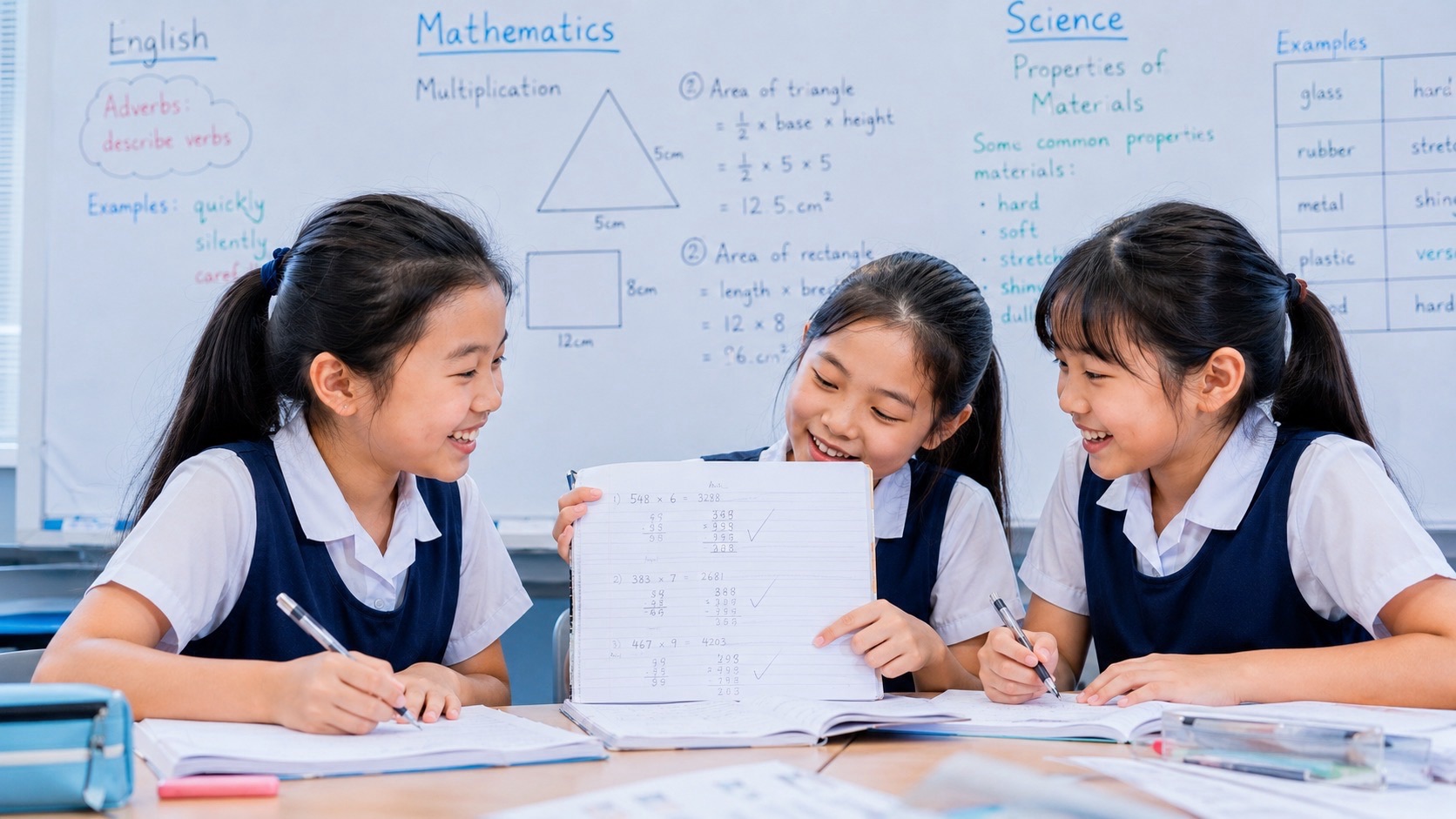
Yishun English Tuition Centre for Bukit Panjang Primary School with Yishun Tutor Yuet Ling at Yishun helping English school students to improve their ability to communicate and their linguistic competence in both the passive reading/listening and active speaking/writing process of the English Language Our Yishun English tuition helps students to garner the language abilities to communicate effectively. Small group tutorial class of 6-8 pax, our English tuition centre in Yishun are in accordance to the latest SEAB MOE Syllabus. English Tuition Pri1 Pri2 Pri3 Pri4 Pri5 Pri6 Sec1 Sec2 Sec3 Sec4 English Tutor working on both Paper1 and Paper2 Comprehension and Composition included.
We will improve your English during lessons. With that, an improvement in information absorption and dissemination will automatically translate to cognitive skills and ultimately, help students to do well in their studies.
Different themes and ideas will be presented to our Yishun English students, with constant updates to keep our topics relevant. One of the ways to have students develop a good command of language is to be able to keep students interested in their field of interests. Understand how English can be used to learn more of what they love, be it science, math, their hobbies, etc. The idea is to help them acquire their distinct set of vocabulary/lingo that they can use to learn, then grow their English mastery henceforth.
Choose the question that brought you here. Open one useful guide, try a small task, and stop when you have what you need.
Take one question further
The same learning habit can travel across subjects, while each subject keeps its own methods. These routes help you notice a difficulty, understand one part of it, and return to something you can do.
Try it without the guide: Choose one word you already know. Close the guide and use it in a new sentence. Explain why it fits; try another context tomorrow.
A piece of writing has ideas, but the reader loses the thread.
Try it without the guide: Choose one short paragraph. Read the relevant explanation, close it, and revise the paragraph. Ask someone to tell you what happened and why.
The Mathematics seems familiar, but marks still disappear.
Try it without the guide: For a Secondary 4 A-Math question you have attempted, locate the first uncertain line. Repair that step, then try a comparable question without the worked answer.
A Science fact is remembered, but the explanation is incomplete.
Try it without the guide: Choose a familiar Primary Science example. Explain the evidence, the idea and the result without notes. Then change one condition and explain your prediction.
Try it without the guide: Take one claim. Find the source best placed to support it, note its date, and state what remains uncertain. Return to your original question.
There is plenty of help, but independence is hard to see.
Try it without the guide: Choose one small task the child has practised. Agree on a calm, brief attempt without prompts. Use what happens to choose one next step, then stop.