Primary 2 Mathematics should help a learner understand why regrouping works—not just memorise when to “carry” or “borrow”.
This rebuilt legacy Yishun page owns a distinct RFE: place value and regrouping representation. Later Yishun P2 Math pages already own the broad tuition term. This URL now focuses on moving from concrete base-ten meaning to pictorial representation and then to reliable written algorithms.
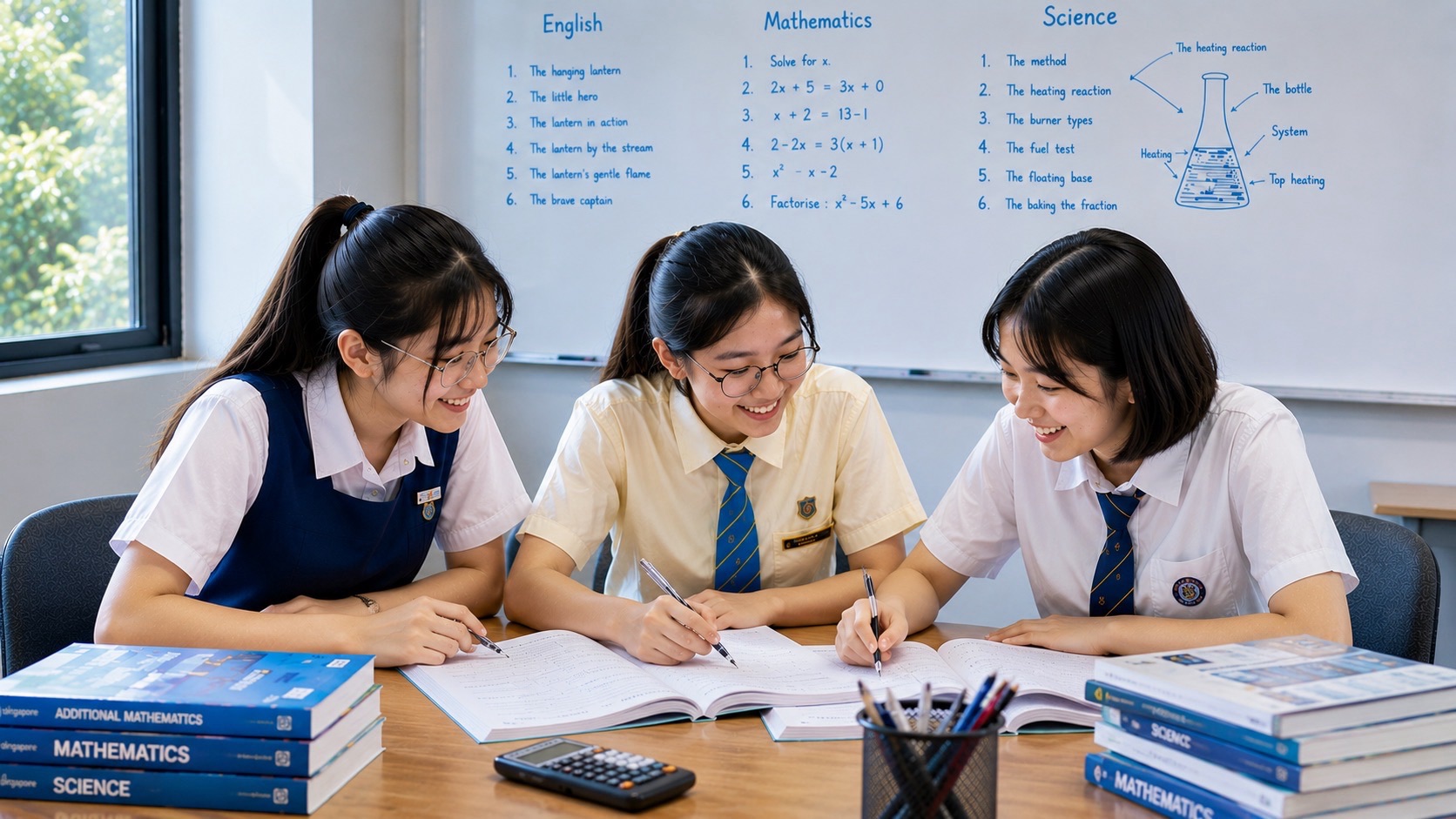
eduKate teaches in groups of up to three students, generally for 90 minutes. In a 3-pax class, students can explain the same number using different representations and show exactly what changes when ten ones are renamed as one ten, or one ten is decomposed into ten ones.
Location-integrity note: this legacy URL previously referred to an old Yishun address. The URL is retained for continuity but does not establish a current branch there. Current class location and availability should be confirmed directly.
Why Place Value Is Load-Bearing
Primary 2 arithmetic depends on understanding that the value of a digit depends on its position.
For example:
43 = 4 tens + 3 ones.
Students should be able to represent the same number using:
- bundles/base-ten blocks;
- place-value chart;
- expanded form;
- number line;
- standard numeral.
Regrouping is simply renaming the same value in a different place-value form.
The Concrete → Pictorial → Abstract Progression
| Stage | Example |
|---|---|
| Concrete | 10 ones physically exchanged for 1 ten |
| Pictorial | Draw tens/ones or use a place-value chart |
| Abstract | Use written column algorithm |
The abstract method becomes more reliable when the learner can reconstruct its meaning.
Addition With Regrouping
Example:
28 + 17.
Meaning:
- 8 ones + 7 ones = 15 ones;
- 15 ones = 1 ten + 5 ones;
- 2 tens + 1 ten + regrouped ten = 4 tens;
- answer = 45.
The “carry 1” is not a mysterious rule. It is one newly formed ten.
Subtraction With Regrouping
Example:
42 − 18.
If 2 ones cannot remove 8 ones within whole-number subtraction, rename:
42 = 3 tens + 12 ones.
Then subtract.
The value remains 42 throughout. Only its representation changes.
Equality Matters
Students should see:
42 = 4 tens + 2 ones = 3 tens + 12 ones.
This reinforces equality as “same value”, not “the answer comes next”.
Common P2 Failure Modes
1. Digit-by-digit thinking
The learner treats 43 as unrelated 4 and 3.
2. Carrying without meaning
The regrouped ten is forgotten or placed wrongly.
3. Borrowing as taking
The learner thinks value disappears instead of being renamed.
4. Place misalignment
Ones and tens are not aligned.
5. Algorithm works only on familiar format
Expanded or missing-number forms cause collapse.
6. No estimation
Implausible answers pass unnoticed.
The P2 Place-Value Diagnostic
Number Representation
Can the learner build/draw a two- or three-digit number?
Expanded Form
Can the number be decomposed by place?
Regrouping
Can ten ones become one ten and vice versa?
Algorithm
Can the written method be explained?
Missing Number
Can place-value reasoning survive an unknown digit?
Transfer
Can the idea work in money/measurement/word problems?
Use Number Lines Too
Not every addition/subtraction problem needs column form.
Number lines can support:
- bridging through tens;
- mental addition;
- difference;
- estimation;
- magnitude.
Students learn to choose representations, not worship one procedure.
Missing-Number Problems
Example:
__ + 27 = 65.
The learner should understand equality and inverse relationships, not simply search for a remembered worksheet pattern.
Ask:
- What whole is known?
- What part is missing?
- Can subtraction reconstruct it?
Estimation and Reasonableness
Before/after calculation:
- Is the answer around the expected size?
- Should addition make the result larger?
- Should subtraction make it smaller in this context?
- Are the tens plausible?
Reasonableness begins early.
What a 90-Minute 3-Pax P2 Lesson Can Look Like
0–10 minutes: Number retrieval
Number bonds and place-value facts return.
10–25 minutes: Concrete representation
Tens/ones are built and renamed.
25–40 minutes: Pictorial representation
Students draw the same regrouping.
40–60 minutes: Written algorithm
The abstract method is linked back to meaning.
60–75 minutes: Mixed representation
Number lines, missing numbers and word contexts appear.
75–90 minutes: Fresh transfer/check
Students explain why regrouping preserves value.
Why Three Students Helps
- Students show different representations.
- Misconceptions become visible in explanations.
- The tutor can distinguish arithmetic slip from place-value weakness.
- Peers hear age-appropriate explanations.
- Every learner still completes independent arithmetic.
Parent Evidence Checklist
- Can your child explain what each digit represents?
- Can 42 be renamed as 3 tens and 12 ones?
- Can regrouping be drawn?
- Can the written algorithm be explained?
- Do place-alignment errors reduce?
- Can the learner estimate whether an answer is sensible?
Frequently Asked Questions
Does this page claim a current Yishun branch?
No. The legacy URL is preserved; current location and availability must be confirmed directly.
Should P2 children still use manipulatives?
Yes when they clarify a concept. The aim is to move toward internal/pictorial/abstract understanding, not to remove concrete representation prematurely.
Is “borrowing” wrong terminology?
Students may encounter the term, but the more important understanding is that place value is being regrouped or renamed while the total value remains unchanged.
Ten Checks for P2 Place Value
- What does each digit mean?
- Can the number be decomposed?
- Can ten ones become a ten?
- Can a ten become ten ones?
- Why does value stay unchanged?
- Are columns aligned?
- Can the algorithm be explained?
- Can equality/missing numbers be handled?
- Is the answer reasonable?
- Can the idea transfer?
Almost-Code Summary
PAGE_RFE = P2_place_value_regrouping
FLOW = concrete -> pictorial -> abstract
INVARIANT = value_preserved_during_regrouping
CLASS = max_3
LESSON = 90_minutes
LOCATION = legacy_Yishun_url_not_branch_claim
GOAL = arithmetic_algorithm_grounded_in_place_value