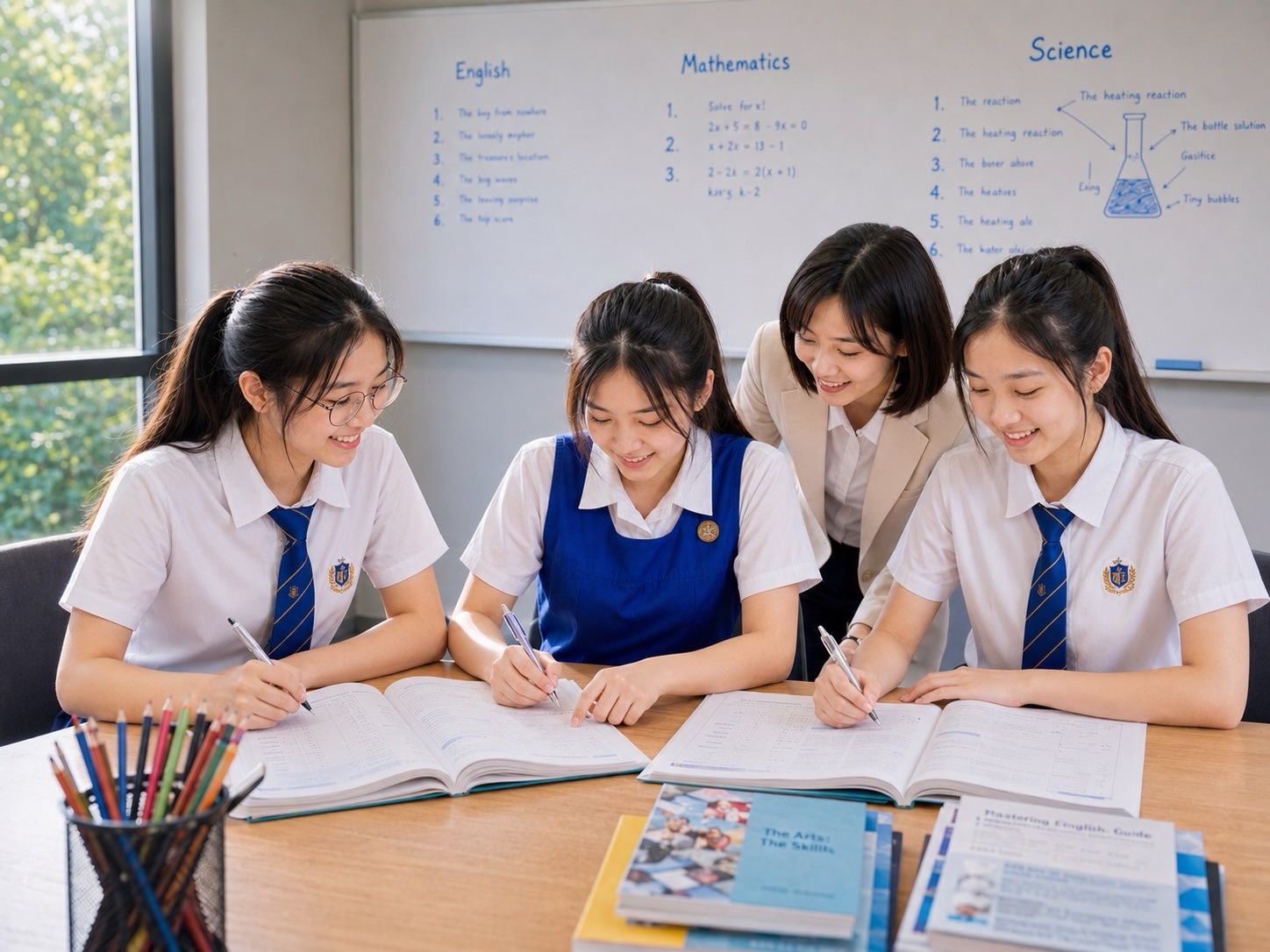
Creative Writing Topic “Ideas” — From Vocabulary Bank to a Complete Idea-Generation System
Creative Writing Topic “Ideas” is this legacy eduKateSingapore page’s exact modern search intent: a complete guide to generating, selecting, developing and testing ideas for Primary 3, Primary 4, Primary 5 and Primary 6 creative writing. An idea is not yet a plot, and a plot is not yet a good composition. Strong writing begins when a learner can notice possibilities, produce several relevant directions, choose one that can be developed clearly, connect cause and consequence, and keep the story centred on the topic instead of forcing a memorised narrative onto every prompt.
For students searching for creative writing ideas, the useful skill is not “being naturally imaginative”. Idea generation can be taught as a sequence of decisions. Read the topic accurately. Identify the human problem or change at its centre. Generate several possible characters, situations and consequences. Test each idea for relevance, specificity, emotional potential and manageability. Choose one. Then turn that idea into a story spine with a beginning state, trigger, complication, decisive action and consequence. The student learns to create ideas on demand rather than wait for inspiration.
This rebuilt Creative Writing Topic “Ideas” owner is deliberately narrower than the broad Creative Writing Sengkang craft system and distinct from Creative Writing Topic “Fear”, which owns precise fear vocabulary and emotional control. This page owns the idea stage: vocabulary for thought and possibility, brainstorming, selection, originality, relevance, story development, diagnostics, transfer and the handover from tutor-supplied plots to independent idea generation. The old Punggol-only claim, photo dump and loose 100-word list no longer define this URL.
1. Current MOE and SEAB Boundary: Ideas Must Become Purposeful Writing
MOE’s current Primary English Language Syllabus 2020 describes writing as a process that includes generating, selecting and organising ideas, developing and expressing them coherently and cohesively, then reviewing, revising, editing and proofreading. That sequence is important because it makes idea generation an explicit writing skill rather than a mysterious gift. A student who cannot produce or select an idea will struggle before vocabulary, grammar or revision even begin.
For Primary 6, SEAB’s current 2026 PSLE English syllabus assesses Continuous Writing through a composition of at least 150 words on a given topic with three pictures offering different angles of interpretation. SEAB’s 17 July 2026 clarification also states that Paper 1 gives one hour and ten minutes for Situational Writing and Continuous Writing together. These are P6 assessment conditions, not reasons to turn younger writers into examination machines. The more durable preparation is to make idea generation, selection and development efficient enough that the learner can use them under increasingly realistic constraints later.
2. An Idea Is Not the Same as a Topic
A topic is the external writing demand. An idea is one possible way to respond to it. If the topic is A Difficult Choice, the topic does not tell the student whether the choice involves friendship, honesty, family responsibility, competition, safety or loyalty. Those are possible idea domains. Confusing topic with idea produces vague planning because the learner merely repeats the prompt instead of deciding what will happen.
Teach students to complete this sentence: “My story will show this topic through…” The answer must introduce a concrete situation. “My story will show a difficult choice through a student deciding whether to admit damaging a teammate’s project.” That is the beginning of an idea because it contains people, pressure and a possible consequence.
3. An Idea Is Not the Same as a Plot
An idea is a seed: a student hides a mistake because they fear disappointing a friend. A plot is the organised sequence that develops the seed: the mistake happens, the student hides it, evidence begins to point elsewhere, an innocent classmate is blamed, the student must decide whether to confess, and the confession changes the relationship. Plot adds cause, sequence, escalation and consequence.
This distinction helps students who say, “I have an idea, but I do not know what to write next.” They may indeed have a valid idea but not yet a development route. The teaching move is not to replace the idea. It is to ask what pressure increases, what choice becomes necessary and what consequence follows.
4. An Idea Is Not the Same as a Theme
Theme is the broader human idea that emerges from the story: responsibility, trust, courage, pride, loyalty, prejudice, patience or another pattern of meaning. A story idea may involve returning a lost wallet; the theme may become integrity. A story idea may involve refusing to join friends who mock someone; the theme may become moral courage.
Students should not begin by forcing a moral onto every plot. Theme usually becomes clearer after the character’s choices and consequences are planned. Ask what the story seems to reveal about people or decisions. Then check whether the events actually support that theme.
5. Idea Generation Is a Search Process
Writers rarely need the first idea that appears. Idea generation works better as a short search through possible characters, pressures, settings, objects, relationships and consequences. The student can deliberately vary one element and see how the story changes. This turns “I cannot think of anything” into a manageable search problem.
A strong routine is generate three, judge three, choose one. Three options are enough to create comparison without consuming excessive time. The writer learns that quality can come from selection, not merely from sudden inspiration.
6. The Three-Option Rule
For any topic, require three brief options before choosing. Each option should fit on one line. For A Promise: keep a promise to care for a younger sibling; keep a promise to return a borrowed object despite inconvenience; keep a promise to tell the truth after a friend makes a mistake. The learner now has alternatives with different emotional and narrative potential.
Selection follows four questions: Which idea fits the topic most directly? Which has a clear pressure point? Which can be developed within the available length and time? Which gives the writer something specific to show? The rule prevents impulsive attachment to the first familiar plot.
7. Constraints Improve Ideas
Students sometimes believe creativity means unlimited freedom. In practice, useful constraints often improve ideas. Limit the story to one main character, one important relationship, two locations and one central problem. Suddenly the writer must deepen rather than multiply events.
Constraints also reduce cognitive load. A Primary student with six characters, four settings and three crises must track far more information while also controlling grammar and sentence construction. A focused idea creates more room for language and scene development.
8. Start with a Human Problem
Many strong school-age stories begin with a recognisable human problem: wanting approval, fearing consequences, choosing between loyalty and honesty, handling embarrassment, protecting someone, admitting fault, resisting pressure, coping with loss, learning responsibility or changing a mistaken judgement.
The problem need not be dramatic. A missing item becomes interesting when it affects trust. A late arrival becomes meaningful when someone else depends on the character. A competition matters when success conflicts with fairness. Human pressure transforms ordinary events into story ideas.
9. Character Desire Generates Direction
Ask what the character wants. A character may want to win, belong, hide, protect, impress, escape, prove something, keep a promise or avoid disappointing someone. Desire gives the story forward movement because choices can now be judged against a goal.
Then ask what makes the desire difficult. If the character wants to win but realises the competition has become unfair, the idea contains tension. If the character wants approval but must admit a mistake, the idea contains conflict. Desire plus obstacle is one of the most reliable engines of narrative development.
10. Character Fear Generates Pressure
Fear is useful not only as a topic but as a planning variable. What does the character fear losing: trust, status, safety, friendship, opportunity, dignity or belonging? A fear can explain why a simple action feels difficult.
This page does not duplicate the specialist Fear vocabulary owner. Here fear functions as an idea generator. It answers why the character hesitates and what consequence feels costly enough to create a meaningful choice.
11. Contradiction Creates Interesting Characters
A character becomes more interesting when two qualities or desires pull in different directions. A confident student may fear public failure. A generous friend may become jealous. A careful child may make one impulsive decision. A competitive athlete may care deeply about fairness.
Contradiction creates possible scenes because the writer can place the character in a situation where the two tendencies collide. Ideas become less generic when the character is not reducible to one label.
12. Relationships Generate Story Ideas
Instead of asking only “What happens?”, ask “Between whom does it matter?” Parent and child, siblings, friends, teammates, classmates, neighbours, teacher and student, stranger and helper: each relationship changes what a mistake, promise or decision means.
A lost object is merely an event. Losing something borrowed from a friend introduces responsibility and trust. Forgetting an appointment is merely inconvenience. Forgetting to meet a younger sibling who depended on the character introduces consequence. Relationship adds emotional structure.
13. Values Generate Story Ideas
Values such as honesty, loyalty, fairness, kindness, courage and responsibility become useful when they conflict rather than when they are simply announced. A student who values loyalty may discover that loyalty to a friend conflicts with fairness to another person.
This produces a richer story idea than “a story about honesty”. The writer can show the value through a difficult decision and consequence. Theme then emerges from action instead of appearing as a moral sentence at the end.
14. Objects Can Generate Ideas
An ordinary object can become a story engine when it carries ownership, memory, evidence, responsibility or misunderstanding. A key can imply access; a note can contain information; a watch can symbolise trust; a damaged project can create blame; a phone can reveal or hide communication.
Ask three questions: Who cares about the object? Why does it matter? What changes if it is lost, damaged, discovered, borrowed, returned or misunderstood? The object becomes useful only when it affects a human relationship or decision.
15. Settings Can Generate Ideas
A setting should create opportunities or constraints. A crowded hawker centre makes it easy to lose sight of someone. An MRT platform imposes timing and movement. A school corridor creates visibility and social pressure. A void deck brings neighbours, echoes, shelter and public space.
Instead of listing local landmarks, ask how the location changes what the character can do. Singapore can be a vivid backdrop when the place shapes action rather than functioning as a decorative label.
16. Time Pressure Can Generate Ideas
A deadline changes ordinary decisions. A student has minutes before a presentation, a bus is arriving, a storm is approaching, a shop is closing, or a family member is waiting. Time pressure forces priorities and can turn a mild problem into a meaningful choice.
Use time pressure carefully. It should intensify the central problem, not serve as random drama. Ask what the deadline makes the character risk or sacrifice.
17. Information Gaps Generate Ideas
Characters can act on incomplete or mistaken information. A message is misunderstood, an important detail is withheld, someone assumes the wrong cause, or two people know different parts of the situation. This creates natural tension without requiring unrealistic danger.
The writer should know the truth even if the character does not. Then scenes can reveal information in stages. The eventual discovery matters because it changes interpretation or choice.
18. A “What If?” Question Opens Possibility
“What if?” is one of the simplest idea tools. What if the person everyone blamed was innocent? What if the object thought to be lost had been deliberately hidden? What if a character finally received what they wanted and discovered a cost? What if helping one person disappointed another?
The best “what if” questions alter motive, consequence or relationship. Random twists can create surprise, but useful twists deepen the story’s central meaning.
19. Reverse the Expected Role
Another idea technique is reversal. The shy student becomes the person who must speak. The confident student needs help. The younger sibling solves the problem. The strict teacher acts unexpectedly kindly. Reversal creates a fresh angle by challenging an assumption.
Keep the reversal believable. The reader should be able to see why the situation reveals a side of the character that was always possible, even if it was not obvious at first.
20. Change One Variable
If an idea feels familiar, change one variable rather than abandoning it. Change the relationship, setting, motive, object, consequence or point of view. A generic “lost item” story can become a responsibility story when the item belongs to someone else; a prejudice story when the wrong person is accused; or a courage story when returning it creates social pressure.
This technique helps students understand that originality often comes from recombination rather than inventing something nobody has ever written before.
21. Originality Is Specificity, Not Strangeness
School creative writing does not require bizarre plots to feel original. Specific motives, concrete settings, believable dialogue and particular consequences make familiar situations feel individual.
A story about helping an elderly neighbour can be generic if it simply follows a moral template. It becomes distinctive when the character initially resents the interruption, notices a specific practical problem, makes a costly choice and later sees the neighbour differently.
22. Relevance Comes Before Originality
An inventive story that only loosely fits the topic is a weak response. Relevance is the first gate. The learner should be able to explain exactly how the central conflict, decisive moment and ending answer the prompt.
Use the retitle test: if the same story could be submitted unchanged for five unrelated topics, it may be too generic. A relevant idea is shaped by the actual wording of the prompt.
23. Manageability Comes Before Complexity
Students often choose ideas that require too much explanation: crime networks, international travel, disasters, many characters or long backstories. Complexity consumes words and time before the central decision arrives.
A manageable idea can be developed deeply. One classroom, one afternoon and one damaged project can sustain a strong story if motive and consequence are clear. Scope control is a creative skill.
24. Emotional Potential Helps Select Ideas
When choosing among three relevant ideas, ask which gives the character something meaningful to lose, protect, admit, change or understand. Emotional potential does not mean melodrama. It means the events matter to the people involved.
A story becomes easier to develop when the writer knows why the character cares. That gives dialogue, observation and action a purpose.
25. Visual Potential Helps Select Ideas
Some ideas naturally produce clear scenes. A promise broken in a noisy school hall, a hidden note found during cleanup, or an argument interrupted by an unexpected arrival creates specific actions and objects the writer can show.
If an idea can only be explained abstractly, it may be harder for a young writer to dramatise. Choose ideas that can be shown through actions, speech and concrete details.
26. Consequence Potential Helps Select Ideas
A useful idea changes something. The character learns information, damages trust, gains responsibility, loses an opportunity, repairs a relationship or chooses differently. Consequence gives the ending substance.
Before choosing an idea, ask: “What will be different by the final paragraph because this happened?” If the answer is nothing, the story may remain a sequence of events without narrative movement.
27. Idea Testing: The One-Sentence Story Test
Compress the idea into one sentence containing character, pressure, choice and consequence. For example: “A student who secretly damaged a teammate’s project must choose between protecting their reputation and admitting the truth when another classmate is blamed.”
If the sentence is clear, the writer probably has enough structure to plan. If it requires many clauses and explanations, the idea may be too large. If it contains no real choice or consequence, development may be thin.
28. Idea Testing: The Five-Beat Story Spine
Use five beats: starting state, trigger, complication, decisive moment and consequence. The spine can be written in keywords. It gives the idea a direction before drafting begins.
This is not a rigid formula. It is a diagnostic. If the learner cannot identify a decisive moment, the idea may not yet contain enough pressure. If the ending is unrelated to the complication, the causal chain needs repair.
29. Idea Testing: The Cause-and-Consequence Chain
Draw arrows between major events and ask “because of what?” and “so what changes?” Weak ideas often rely on “and then” rather than causal development.
A believable chain makes later drafting easier because the writer does not have to invent random incidents to keep the story moving.
30. Idea Testing: The Topic Anchor
Write the topic beside each major scene. Ask how the scene contributes. If two or three scenes cannot answer, they may be irrelevant or the idea may be drifting.
This check is especially valuable for students who begin relevantly but become absorbed in an exciting subplot.
31. Idea Testing: The Ending Test
Before drafting, state the ending in one or two lines. The ending should follow from the central decision and reveal a consequence. “Everything went back to normal” is often too weak because it erases the story’s significance.
A strong idea usually makes the ending easier to imagine. If the learner cannot see how the story could end, the central conflict may be unclear.
32. Idea Testing: The Character-Motive Test
Ask what the character wants in the opening and what they want at the decisive moment. If the answer never changes or faces no pressure, the idea may lack development.
Motive does not need to transform completely. A character may still want the same goal but learn that the cost is unacceptable.
33. Idea Testing: The Reader-Interest Test
Reader interest comes from uncertainty that matters. Ask what question the reader might carry: Will the character admit the truth? Will the friendship survive? Will the plan work? Will the mistaken assumption be corrected?
The question should emerge from the central problem, not from withholding random information.
34. Brainstorming Means Producing Possibilities
The word brainstorm is useful when it means rapid generation without immediate perfection. Students can list characters, pressures, consequences or settings for two minutes, then shift into evaluation.
Brainstorming becomes unhelpful when every idea is treated as equally good or when the list grows so long that selection never happens. Generation and judgement are separate phases.
35. Viewpoint Is an Idea Word
Viewpoint describes a position or way of seeing an issue. In creative writing, changing viewpoint can generate new ideas. A playground conflict told by the child who caused it differs from the same event told by the child who was blamed.
Viewpoint is not merely first person versus third person. It includes what the narrator knows, values and notices.
36. Belief Is an Idea Word
A belief is something a character accepts as true. Beliefs generate conflict when evidence challenges them. A character believes a classmate is selfish, then witnesses an act that contradicts the judgement.
Changing belief can produce meaningful endings because the story shows a revised understanding rather than attaching a moral sentence.
37. Concept Is an Idea Word
A concept is a general idea or mental category. Writers can turn abstract concepts such as fairness, responsibility or trust into stories by asking what situation would make the concept difficult.
The concept provides thematic direction; the plot must still create concrete people and events.
38. Intention Is an Idea Word
An intention is what a character plans or means to do. Story ideas become interesting when intention and outcome diverge. A student intends to protect a friend by hiding information but causes a larger misunderstanding.
This creates natural consequence and can complicate simple good-versus-bad characterisation.
39. Interpretation Is an Idea Word
An interpretation is a way of understanding meaning. Different interpretations can generate plots built on misunderstanding or discovery. One character interprets silence as anger; another knows it reflects embarrassment.
Writers should make the evidence for each interpretation plausible enough that the conflict feels earned.
40. Objective Is an Idea Word
An objective is a goal. Giving a character a clear objective makes scenes easier to write because actions can be judged by whether they advance or obstruct it.
Objectives can be practical—finish a project—or social—earn trust—or moral—do the right thing despite pressure.
41. Aim Is an Idea Word
Aim is close to objective but often useful in planning language: what is the scene trying to accomplish? What is the character trying to achieve? What is the writer trying to make the reader understand?
Teaching the word across character and writer levels helps students plan with purpose.
42. Purpose Is an Idea Word
Purpose asks why something exists or is done. A scene needs a purpose inside the story. Dialogue needs a purpose. Description needs a purpose. If the writer cannot state what a paragraph contributes, it may be unnecessary.
This word becomes a useful editing lens after the idea has been drafted.
43. Reason Is an Idea Word
A reason explains why. Strong story ideas contain reasons for actions rather than arbitrary behaviour. The more important the decision, the more the reader needs to understand the character’s reason.
Reason also helps students separate cause from mere sequence.
44. Hypothesis Is an Idea Word
A hypothesis is a provisional explanation or prediction that can be tested. In creative planning, students can use a simplified version: “What if my story works because the character mistakenly assumes X?” Then test the idea against the plot.
This language helps older students treat ideas as candidates to evaluate, not treasures that must be defended once generated.
45. Notion Is an Idea Word
A notion is an idea or belief, often less formal than a concept. It can be useful for describing a character’s initial assumption: the notion that winning matters more than fairness, for example.
Writers can build change by challenging the notion through events.
46. Theory Is an Idea Word
In everyday writing, theory can mean an explanation someone believes may account for events. Use it carefully because scientific theory has a more rigorous meaning. In a story, a character may form a theory about who sent a message or why a friend is avoiding them.
The plot can test the theory and reveal whether the evidence was interpreted correctly.
47. Suggestion Is an Idea Word
A suggestion is a proposed course of action or possibility. Dialogue built around competing suggestions can reveal character values and generate decisions.
Students can also use suggestions during peer brainstorming, but the final story idea should still belong to the writer.
48. Solution Is an Idea Word
A solution addresses a problem. Weak stories often introduce a problem and solve it conveniently. Strong ideas make the solution require effort, choice or consequence.
Ask whether the solution grows from earlier information and character action or arrives from nowhere.
49. Scheme and Plan Need Context
Plan is neutral: an intended series of actions. Scheme can be neutral but often suggests something elaborate or potentially dishonest depending on context. Word choice changes character impression.
Teaching such nuance helps vocabulary support ideas rather than decorate them.
50. Design Is an Idea Word
Design can mean a plan for how something will work or appear. In writing, story design refers to arrangement: where information is revealed, which scene receives space, how the climax is prepared and how the ending echoes earlier material.
Students can learn that creativity includes design after inspiration.
51. Devise Is an Idea Verb
To devise is to plan or invent carefully. A learner can devise a solution, route, strategy or story structure. The verb implies deliberate construction rather than sudden inspiration.
It is useful language for discussing the writer’s process.
52. Formulate Is an Idea Verb
To formulate is to develop something carefully and systematically, such as a plan, question or explanation. Older students can formulate a central conflict or formulate several possible endings before choosing.
The word reminds learners that ideas can be shaped through reasoning.
53. Conceive Is an Idea Verb
To conceive can mean to form an idea mentally. It is more formal than “think of”. Students should use it only when register fits.
Vocabulary instruction should include not only meaning but tone and grammar so new words remain natural.
54. Imagine Is an Idea Verb
To imagine means to form a mental representation of something not immediately present. Writers can imagine how a character perceives a situation, but imagination works best when anchored to sensory, social and causal detail.
“Imagine something exciting” is vague. “Imagine what the character notices while hiding a mistake” gives imagination a job.
55. Envisage and Visualise Need Precision
To envisage is to imagine or consider a possible future situation. To visualise is to form a mental image. Both can support planning, but neither should be used merely to sound advanced.
Students can visualise a scene before drafting and envisage consequences before choosing a plot direction.
56. Develop Is an Idea Verb
To develop an idea means to make it fuller, clearer or more detailed. In writing, development usually requires evidence, scene, explanation, cause, example or consequence.
A student who says “I need to develop this paragraph” should be able to state what relationship is missing.
57. Evolve Is an Idea Verb
An idea can evolve as new possibilities emerge. The word implies gradual change rather than sudden replacement. Writers should be willing to let the original plan change when drafting reveals a better causal path.
Flexibility is not failure; it is part of composition.
58. Refine Is an Essential Idea Verb
To refine is to improve precision or quality. A broad idea such as “someone learns responsibility” can be refined into a particular situation, relationship and consequence.
Refinement is the bridge between brainstorming and writing.
59. Revise Is an Idea Verb, Not Only an Editing Verb
Writers can revise the idea itself. They may remove a character, change a motive, simplify a setting or alter the ending before drafting. Revision does not begin only after a full composition exists.
Students should learn that plans are provisional tools.
60. Construct and Assemble Describe Idea Building
To construct or assemble an idea emphasises combining parts into a coherent whole. These verbs are useful when teaching students to combine character, setting, pressure and consequence deliberately.
They also counter the belief that a story must arrive fully formed in one moment of inspiration.
61. Originate and Arise Describe Beginnings
An idea may originate from an observation, question, memory, object or conversation. An idea may arise when two concepts are combined. These words describe source rather than quality.
Students can keep an idea notebook that records where possibilities came from without feeling obligated to use every entry.
62. Emerge and Unfold Describe Development
An idea can emerge gradually as the writer explores. A story can unfold as consequences reveal new possibilities. These verbs are useful for discussing organic development without implying randomness.
Writers still need control. “It unfolded” does not excuse weak causality.
63. Broaden and Narrow Are Both Useful
Writers sometimes need to broaden an idea by adding another implication or perspective. More often in Primary composition, they need to narrow the idea so it can be developed properly within limited time and length.
Teach both directions. Creativity includes expansion and disciplined reduction.
64. Preparation Is Part of Creativity
Preparation may sound uncreative, but reading, vocabulary, observation and planning increase the number of ideas a student can access. Writers create from material they know, notice and can manipulate.
Preparation should expand possibility without turning every story into a memorised template.
65. Insight Is Better Than “Flash of Brilliance”
A flash of brilliance is a dramatic phrase from the old bank, but most good ideas emerge through smaller insights. Insight means a clear or deep understanding of something. A character can gain insight; a writer can discover an unexpected relationship between two details.
Teaching process reduces dependence on rare moments of inspiration.
66. Creativity Is Combination
Many original ideas combine familiar elements in a new relationship. A familiar school setting plus an unusual motive; a common lost-object situation plus a mistaken accusation; an ordinary competition plus a private promise. Students can deliberately combine two idea cards or categories.
The resulting story should still feel coherent rather than assembled for novelty alone.
67. Creativity Is Transformation
Another method is transformation: change scale, viewpoint, consequence or context. Turn a minor embarrassment into a test of honesty; shift a story from the winner’s perspective to the runner-up’s; transform an object from background prop into evidence.
Transformation teaches students to work with existing material intelligently rather than discard every familiar idea.
68. Creativity Is Questioning Assumptions
Ask what everyone in the story assumes and whether that assumption could be wrong. Perhaps the quiet student is not unfriendly but worried. The strict parent is not angry but afraid. The apparently selfish choice hides a responsibility the protagonist does not know.
Assumption reversal can create depth when evidence supports the new interpretation.
69. Creativity Is Seeing Consequences Others Miss
A simple event becomes interesting when the writer notices second-order effects. Forgetting a book may cause embarrassment; borrowing another student’s copy may then leave that student unprepared; the protagonist must decide how to respond.
Follow the consequence chain one or two steps beyond the obvious. Do not continue indefinitely or the story will sprawl.
70. Creativity Is Selecting, Not Accumulating
A writer with twenty possible scenes is not necessarily more creative than a writer who chooses three powerful ones. Selection creates form.
Teach students to delete options that do not serve topic, motive or consequence. The unused ideas are not wasted; they can return in another story.
71. Primary 3: Ideas Should Be Concrete and Manageable
Primary 3 students benefit from ideas grounded in familiar relationships and situations: school, family, friends, responsibility, mistakes, helping, sharing, promises and small conflicts. The goal is not childish simplicity but cognitive manageability.
A P3 learner should be able to state the problem, main character, important choice and ending before drafting. Tutor help can be substantial initially but should fade across the year.
72. Primary 4: Ideas Can Add Motive and Consequence
Primary 4 writers can deepen familiar situations by clarifying why characters act and what follows. The same lost-item story becomes stronger when the object matters to a relationship or when returning it carries a cost.
Teach students to ask one layer deeper: Why does this matter? What will change because of the choice?
73. Primary 5: Ideas Should Become More Selective
Primary 5 students often have enough language to generate complex plots but need stronger constraint. Encourage them to choose fewer characters, clearer causal lines and more meaningful consequences.
Idea quality at P5 is often improved more by deletion than by adding another twist.
74. Primary 6: Ideas Must Be Efficient Under Time
Primary 6 writers need ideas that can be selected and planned quickly enough for current Paper 1 demands. The best examination idea is not the most cinematic one; it is a relevant, manageable story the student can develop and complete while preserving time for revision.
Timed practice should test idea-selection speed separately from drafting speed so the real bottleneck is visible.
75. Picture Prompts Offer Angles, Not Ready-Made Stories
SEAB’s 2026 PSLE Continuous Writing format provides three pictures on the topic, and the composition must be based on at least one. A picture can suggest a character, object, place, action, relationship or consequence. The learner still has to construct the story.
Students should ask what role the picture could play rather than merely describe what is visible.
76. One Picture Can Generate Many Ideas
A picture of an umbrella can suggest weather, lost property, lending, shelter, preparedness, misunderstanding or memory. Originality comes from the relationship between the image, topic and character pressure.
Teach students to produce several interpretations before committing. This prevents the first obvious association from dominating the class.
77. Using More Pictures Is Not Automatically Better
If the task requires at least one picture, students should not force all pictures into the story merely to appear creative. Each additional element increases narrative load.
Use multiple pictures when they naturally belong to one causal chain. Otherwise, one well-integrated picture is stronger than three decorative mentions.
78. The Picture Must Affect the Story
A picture element should have a narrative function. If a phone appears, it might reveal information, create distraction, preserve evidence or connect characters. If it could be deleted without changing anything, the integration may be superficial.
This is the same purpose test used for objects in general.
79. Idea Journals Should Capture Fragments
Students do not need to write complete plots in an idea journal. Record fragments: an overheard line, an unusual choice, an object with history, a setting detail, a question, a relationship tension or a consequence.
Later, combine fragments. The journal becomes a reservoir of observed material rather than a collection of model stories.
80. Reading Builds Idea Range
Students who read widely encounter more motives, structures, conflicts and language. Reading expands the raw material from which ideas can be generated.
The purpose is not to copy plots. Ask what kind of conflict a story used, how information was revealed, or what made a character choice believable. Then apply the principle elsewhere.
81. Conversation Builds Idea Range
Family discussion, classroom conversation and listening to other perspectives reveal how people interpret situations differently. Those differences can become story material.
Encourage students to notice reasons and viewpoints, not private details to reproduce. Ethical observation matters.
82. Ordinary Life Builds Idea Range
Queues, forgotten items, weather changes, small acts of kindness, misunderstandings and routine responsibilities contain writing possibilities because stories are built from human reactions.
The skill is noticing significance. What decision might this situation create? Whose viewpoint would make it interesting? What consequence could follow?
83. News and Public Events Need Careful Adaptation
Current events can inspire themes or situations, but students should avoid copying real people’s private suffering or turning serious events into sensational entertainment. Extract a general human question rather than reproduce identifiable details.
Creative writing benefits from empathy and distance as much as from topicality.
84. Memory Can Generate Ideas Without Becoming Autobiography
A personal memory can supply sensory detail, emotional truth or a relationship pattern. The writer can change setting, character or outcome while preserving the emotional structure.
This is useful for students who say they cannot invent. They can transform known material rather than reproduce their life exactly.
85. A Bad First Idea Is Useful
Students often freeze because they believe the first idea must be good. Treat first ideas as prototypes. Generate, test, reject or refine.
The willingness to discard an idea is a mark of creative control, not failure.
86. A Familiar Idea Can Be Refined
Do not reject a familiar plot automatically. Ask how motive, viewpoint, consequence or setting can make it specific. A “helping someone” story can become meaningful if the help conflicts with another responsibility or challenges an earlier judgement.
Refinement is often faster than starting from zero.
87. Tutor-Supplied Ideas Must Fade
A tutor may initially model how to turn a topic into options, but permanent plot supply creates dependence. The learner’s compositions can look polished while idea-generation skill remains weak.
Use a fading sequence: tutor models three options; tutor and student generate together; student generates three and tutor evaluates; student generates and selects independently; student later justifies the choice after drafting.
88. Peer Brainstorming Must Preserve Ownership
Small groups can produce many ideas quickly, but each writer should first create at least one private possibility. Otherwise the fastest speaker becomes the class idea generator.
After sharing, students may borrow a technique or category, not copy another student’s final plot. Independent planning follows discussion.
89. Parents Should Ask Questions, Not Supply Plots
At home, useful questions include: What does the topic require? Who cares about the problem? What are your three options? What will change by the end? Which idea can you finish clearly?
Avoid constructing the entire story and then asking the child to write it. Homework should reveal the learner’s idea process honestly.
90. Writer’s Block Diagnostic: The Topic Is Not Understood
A student may say “I have no ideas” when the real problem is semantic. If the child does not understand regret, responsibility, misunderstanding or another topic word, generation cannot begin.
Clarify meaning and examples first. Then generate situations that embody the concept.
91. Writer’s Block Diagnostic: Fear of a Bad Idea
Perfectionism can prevent generation because every possibility is judged before it is written down. Separate phases. For sixty seconds, generate without evaluation. Then judge.
This protects fluency while preserving standards at the selection stage.
92. Writer’s Block Diagnostic: Too Many Ideas
Some students do not lack ideas; they lack selection. Their plans contain several conflicts and multiple endings.
Use the central-problem test and delete anything that does not intensify or resolve it. Creativity needs pruning.
93. Writer’s Block Diagnostic: Limited Experience or Knowledge
A learner may struggle because the topic requires knowledge they do not have. Build knowledge through reading, discussion and examples rather than demanding pure imagination.
Background knowledge expands idea range and also improves comprehension.
94. Writer’s Block Diagnostic: Vocabulary Is Blocking Thought
Sometimes the student has an idea but cannot name it. Oral explanation can reveal richer thought than the written plan. Let the learner explain in simple language first, then supply or retrieve precise vocabulary.
Do not confuse limited word access with limited imagination.
95. Writer’s Block Diagnostic: The Student Cannot See Consequences
A learner generates situations but every story stops after the first event. Teach consequence chains. “If this happens, what becomes harder? Who is affected? What choice must follow?”
Idea development becomes easier when the student can project one step forward.
96. Writer’s Block Diagnostic: The Student Has Only Memorised Plots
If every topic becomes the same accident, lost wallet or cheating story, the learner has scripts rather than flexible idea generation.
Change one variable deliberately and require three new contexts. The student learns to generate from topic meaning instead of template matching.
97. Idea Quality Diagnostic: Relevant but Flat
A story can fit the topic yet lack pressure. Add a motive conflict, relationship stake or consequence. Do not add random danger.
The question is what makes the choice difficult for this character.
98. Idea Quality Diagnostic: Exciting but Irrelevant
Students sometimes choose dramatic events that overshadow the topic. Retitle the story. If the new title fits better than the assigned one, revise the central conflict.
Relevance is structural, not a mention of the topic word in the final paragraph.
99. Idea Quality Diagnostic: Too Large
Look for too many characters, settings, time jumps or crises. Reduce scope until the story can be shown rather than summarised.
A smaller idea often produces stronger language because the writer has time to develop scenes.
100. Idea Quality Diagnostic: No Real Choice
If the protagonist simply reacts to events and never makes a meaningful decision, the story may feel passive. Give the character agency.
The decision need not be heroic. Choosing to confess, help, wait, speak, refuse, return or apologise can carry a story.
101. Idea Quality Diagnostic: Convenient Solution
If an adult appears and solves everything, or a lost item is suddenly found without causal setup, the resolution may feel unearned.
Plant information earlier and let the character’s action contribute to the solution.
102. Idea Quality Diagnostic: Moral Is Larger Than the Story
A tiny event cannot always support an enormous life lesson. Keep reflection proportional to the experience.
Specific consequence is more convincing than generic wisdom.
103. Worked Example: “A Difficult Choice”
Option one: admit damaging a teammate’s project. Option two: tell a friend they cannot copy homework. Option three: choose between an important family responsibility and a school event. All fit, but they produce different stakes.
Suppose the writer chooses option one. Starting state: the team trusts the protagonist. Trigger: the project is damaged. Complication: another student is suspected. Decisive moment: the protagonist can stay silent or confess. Consequence: confession costs immediate approval but begins repair. The idea now has a causal spine.
104. Worked Example: “A Surprise”
Weak idea: the character receives a surprise birthday party. Stronger options ask what the surprise changes. A student discovers a quiet classmate secretly submitted their artwork for a display; a family member returns an object thought lost; a rival unexpectedly defends the protagonist.
The surprise becomes narrative when it changes understanding or relationship, not merely when something unexpected appears.
105. Worked Example: “Responsibility”
Instead of writing about “being responsible” abstractly, create a situation where avoiding responsibility is tempting. A student loses equipment borrowed from a classmate and considers hiding the truth.
The story can explore responsibility through action, cost and repair.
106. Worked Example: “Courage”
Courage does not require physical danger. A student may need to speak against unfair teasing, admit a mistake publicly or perform despite fear of embarrassment.
The idea becomes stronger when fear is believable and action carries a cost.
107. Worked Example: “A Misunderstanding”
Two characters interpret the same evidence differently. A short message appears rude because context is missing; an object in the wrong place creates suspicion; silence is mistaken for anger.
Plan what each person knows and when the truth becomes available. Misunderstanding stories depend on information control.
108. Worked Example: “A Promise”
A promise is interesting when keeping it becomes difficult. The protagonist promises to protect a secret but discovers the secret could harm someone. Loyalty and responsibility conflict.
The writer must decide what kind of promise can ethically be broken and what consequence follows.
109. Worked Example: “Regret”
Regret needs a past choice and a later recognition of consequence. A student dismisses a friend’s warning, then realises the friend was trying to help.
The ending should show changed understanding or attempted repair, not merely state “I regretted it.”
110. Worked Example: “An Unexpected Kindness”
The idea becomes richer if the kindness comes from someone the protagonist misjudged. The story can begin with an assumption, create a moment of need, then reveal behaviour that contradicts the assumption.
The consequence is revised viewpoint, making the idea both narrative and thematic.
111. Worked Example: Object Prompt
Picture: a key. Possibilities include access to a locked place, responsibility for returning it, accidental possession, a key that belongs to a neighbour, or a forgotten key that forces a different route.
Choose based on topic. The key is not the story; it is a functional element inside the story.
112. Worked Example: Setting Prompt
Setting: MRT station. Possibilities include missing a stop, helping a lost child, overhearing important information, choosing whether to return a forgotten item, or responding to a service disruption.
The setting should constrain time, movement or interaction. Otherwise another place could replace it without effect.
113. Worked Example: Relationship Prompt
Relationship: siblings. A simple conflict over borrowed belongings can reveal fairness, responsibility, jealousy or loyalty depending on motive and consequence.
Relationship-first planning is useful when students struggle to make events emotionally meaningful.
114. Worked Example: Value Conflict
Values: loyalty versus honesty. A friend asks the protagonist to hide cheating. The protagonist wants to protect the friendship but knows another student may be blamed.
The story idea already contains pressure because either choice has a cost.
115. Worked Example: Reversal
Expectation: the strongest student will lead the group. Reversal: that student freezes during the presentation and the usually quiet member steps forward.
The reversal should reveal character rather than exist only for surprise.
116. Worked Example: False Assumption
The protagonist assumes a classmate ignored a message deliberately. Later, evidence reveals the classmate had a family emergency.
The idea allows exploration of judgement, empathy and repair while remaining grounded in ordinary life.
117. Worked Example: Consequence Chain
Event: the protagonist leaves a task until the last minute. First consequence: the printer fails. Second consequence: the student considers using a sibling’s unfinished work. Decision: admit the lack of preparation or act dishonestly.
The chain grows naturally from the original behaviour.
118. Worked Example: One Idea, Three Viewpoints
Event: a class project is damaged. Viewpoint one: the student who caused it. Viewpoint two: the teammate who is blamed. Viewpoint three: the student who saw part of what happened but is unsure.
Changing viewpoint changes what information is available and what decision carries the most pressure.
119. Worked Example: One Idea, Three Settings
Idea: return something valuable. At school, social visibility matters. On public transport, time and anonymity matter. At a neighbourhood court, familiarity and community matter.
The setting changes the obstacles and therefore the scenes.
120. Worked Example: One Idea, Three Endings
Idea: the protagonist admits a mistake. Ending one focuses on immediate consequence. Ending two focuses on repairing a relationship. Ending three focuses on a later choice that proves learning.
Compare which ending best matches the story’s central pressure.
121. Student Idea-Generation Checklist
- What does the topic actually mean?
- What human problem could show it?
- Who wants something?
- What makes the goal difficult?
- What three possible ideas can I generate?
- Which is most relevant?
- Which can I finish clearly?
- What choice matters most?
- What changes because of that choice?
- How will the ending show consequence?
The checklist should shrink as the process becomes internal. It is a scaffold for decisions, not a permanent worksheet.
122. Parent Idea-Support Checklist
- Ask for three options before suggesting one.
- Ask what the topic requires.
- Ask why the character cares.
- Ask what changes by the end.
- Do not supply full sentences or plots.
- Tell the tutor where help became necessary.
- Encourage reading and conversation as idea sources.
- Accept simple relevant ideas over overcomplicated ones.
Parents help most when they preserve ownership while reducing panic.
123. Tutor Idea-Teaching Checklist
- Collect independent first ideas before group discussion.
- Separate generation from selection.
- Model comparison criteria.
- Teach relevance before originality.
- Teach manageability before complexity.
- Require cause-and-consequence development.
- Fade tutor-supplied plots.
- Retest idea generation on unfamiliar topics.
- Track how much prompting is still needed.
The tutor’s success is a learner who can create and choose without waiting for adult imagination.
124. A Four-Week Idea-Generation Cycle
Week 1: define topic versus idea versus plot; generate three options from familiar prompts. Week 2: add character desire, obstacle and consequence. Week 3: select ideas using relevance, manageability and emotional potential, then build five-beat spines. Week 4: use unseen prompts with less tutor support and compare which parts of the process have become independent.
The cycle can be repeated with harder topics, picture prompts and tighter time limits. The process stays stable while surface demands change.
125. A Term-Length Idea Curriculum
Month one focuses on generation: observation, what-if questions, relationships and objects. Month two focuses on selection and development: motive, conflict, causality, scene potential and endings. Month three focuses on transfer: unfamiliar prompts, picture integration, timed selection and independent planning.
The curriculum should not produce ninety model plots. It should produce a learner who can generate new plots from principles.
126. Idea Retrieval after Delay
Idea-generation methods should be revisited after time. Give a new prompt and ask the student to recall the three-option rule, character desire, consequence test and manageability test without reopening notes.
If the learner cannot retrieve the process, the method has not yet become available under real writing conditions.
127. Idea Transfer across Topics
A strategy learned on Responsibility should also work on A Promise, A Mistake or Courage. The surface changes, but character, pressure, choice and consequence remain useful planning dimensions.
Transfer is stronger evidence than completing many variations of one familiar topic.
128. Idea Transfer across Genres
Idea generation also matters outside narrative writing. Informational writing needs relevant points; persuasive writing needs claims, reasons and examples; situational writing needs required content, audience awareness and purpose.
The shared skill is generating candidates, selecting relevant material and organising it around a communicative goal.
129. Idea Transfer into Oral Language
When students speak, they also need ideas quickly. A useful oral response may require a position, reason, example and consequence. The same generate-select-develop process can operate in seconds rather than minutes.
This cross-mode transfer shows that idea generation is a language capability, not only a composition trick.
130. Idea Transfer into Comprehension Responses
Open-ended comprehension sometimes requires students to generate a concise explanation from evidence. They must decide which idea is supported and how much to include.
The discipline of relevance and selection from creative writing can support answer scope when adapted appropriately.
131. Idea Transfer into Revision
Revision itself generates ideas: another way to order the paragraph, a clearer motive, a stronger consequence, a better example or a more precise word.
Students should see revision as creative problem-solving rather than error punishment.
132. The Historical Word Bank: What to Keep
The 2017 page contained a broad list including viewpoint, belief, concept, intention, interpretation, objective, aim, plan, abstraction, purpose, reason, brainstorm, hypothesis, solution, suggestion, theory, notion, scheme, preparation, compose, produce, develop, assemble, conceive, formulate, devise, edit, construct, evolve, mature, advance, derive, arise, originate, unfold, broaden, invent, imagine, envisage, visualise, perceive, grasp, appreciate, conjure and imagination.
These remain useful when taught by meaning, grammar and context instead of presented as if every item were interchangeable with “idea”.
133. The Historical Word Bank: What to Remove or Reframe
The old bank also mixed idioms, unrelated adjectives and phrases such as “smart pants”, “fighter”, “right there”, “out of the park” and “raise an eyebrow”. These may have uses in English, but they are not synonyms for idea. A current vocabulary owner should separate semantic relationships rather than inflate a list.
Precision teaches more than quantity. Students learn categories: idea nouns, thinking verbs, development verbs, planning language, evaluation language and creativity language.
134. Core Idea Nouns
Useful nouns include idea, concept, notion, belief, viewpoint, perspective, interpretation, intention, purpose, objective, aim, plan, proposal, suggestion, hypothesis, solution, possibility, option, alternative, insight, assumption, theme, premise, motive and design. They overlap but are not identical.
Teach each through contrast and use. A hypothesis is not simply a viewpoint; an intention is not a consequence; a theme is not a plot.
135. Core Idea-Generation Verbs
Useful verbs include imagine, conceive, devise, formulate, invent, brainstorm, propose, suggest, envisage, visualise, generate, combine, transform, question, explore and reframe.
Students can use these words to talk about their own process and become more metacognitive writers.
136. Core Idea-Development Verbs
Useful verbs include develop, expand, refine, narrow, deepen, connect, organise, structure, construct, assemble, evolve, revise, adapt, extend, clarify, test and evaluate.
These verbs describe what writers do after inspiration appears.
137. Core Idea-Evaluation Words
Useful evaluation language includes relevant, specific, manageable, coherent, plausible, original, focused, adaptable, purposeful, convincing, sustainable, distinctive, precise, significant and transferable.
Students can use these criteria to justify why one option is stronger than another.
138. Core Relationship Words
Ideas become stories through relationships such as cause, consequence, conflict, contrast, pressure, motive, obstacle, choice, risk, responsibility, loyalty, trust, misunderstanding, expectation, reversal, discovery, repair and change.
This vocabulary helps learners talk about story architecture rather than only surface events.
139. Core Creativity Words
Useful creativity vocabulary includes imagination, originality, insight, invention, possibility, curiosity, experimentation, exploration, combination, transformation, perspective, variation, flexibility and discovery.
Creativity becomes easier to teach when students can name the processes behind it.
140. Core Planning Words
Useful planning vocabulary includes sequence, structure, outline, route, stage, scene, turning point, climax, resolution, timeline, constraint, priority, option, decision and revision.
These terms help students convert an idea into an executable story.
141. Frequently Asked Questions
What if my child says “I have no ideas”?
Check prompt understanding first. Then require three small possibilities instead of one perfect story. Use character desire, relationship, object, setting or value conflict as idea generators.
Should children memorise story plots?
Memorised structures can provide familiarity, but fixed plots are risky because they encourage prompt forcing. Teach transferable story principles and generate the actual conflict from the given topic.
How many ideas should a child generate before choosing?
Three is a practical default. It creates comparison without using too much time. Stronger writers may generate more when untimed, but exam conditions reward efficient selection.
What makes an idea relevant?
The central conflict, decisive moment and ending should all answer the topic. Mentioning the topic word once is not enough.
What makes an idea original?
Originality often comes from specific motive, viewpoint, setting, consequence or combination, not from bizarre events.
What makes an idea manageable?
A manageable idea has limited characters and settings, a clear central problem and an ending the learner can reach within the available time and length.
Should Primary 3 students use PSLE-style prompts?
P3 can use age-appropriate topics and pictures to build idea generation without heavy examination simulation. The process matters more than reproducing P6 conditions early.
How should Primary 6 idea training differ?
P6 students need faster selection, picture integration and realistic whole-task practice while preserving relevance and development.
Can reading improve idea generation?
Yes. Reading expands knowledge of motives, structures, language and possibilities. Students should study techniques, not copy plots.
Can vocabulary improve idea generation?
Yes, when vocabulary helps students distinguish concepts, motives and relationships. A bigger list alone does not create better ideas.
Should parents brainstorm with children?
Parents can ask questions and listen to options, but the child should generate and choose increasingly independently.
What if the first idea is weak?
Refine or replace it. A first idea is a prototype, not a commitment.
What if the child always uses the same plot?
Change one variable: relationship, setting, motive, consequence or viewpoint. Require three alternatives before allowing the familiar template.
What if the idea is too complicated?
Reduce characters, locations and subplots. Keep the central pressure and consequence.
What if the idea is relevant but boring?
Add a meaningful stake, contradiction, relationship tension or consequence. Avoid random danger.
What if the idea is exciting but irrelevant?
Return to the topic anchor and rebuild the central conflict so the assigned theme or event becomes structurally necessary.
Should every story teach a lesson?
No. Meaning can emerge from change, consequence and relationship. A generic moral sentence is not required.
How do picture prompts help?
They provide possible angles. The student decides how at least one picture functions in the story and connects it to the topic.
Should all pictures be used?
Not necessarily. Use multiple pictures only when they belong naturally to one coherent story.
How can tutors measure idea-generation progress?
Track how many relevant options the learner can produce, how quickly they can select, how much tutor prompting is needed and whether chosen ideas develop coherently across new topics.
How can parents see progress?
Look for less dependence on adult plots, faster starts, clearer plans, fewer irrelevant subplots and more consistent endings.
Is brainstorming the same as free writing?
No. Brainstorming generates possibilities; free writing generates language continuously. Both can help creativity, but they solve different problems.
Can an ordinary event become a strong idea?
Yes. Add specific motive, relationship pressure and consequence. Ordinary situations often produce the most believable school-age narratives.
Does this page replace the broad Creative Writing Sengkang guide?
No. This page owns idea generation and development. The broad guide covers the full craft system from ideas through language, revision and transfer.
Where should I go for fear vocabulary and emotional writing?
Use Creative Writing Topic “Fear”.
What is the final goal?
The learner can face a new topic, generate several possibilities, select one with good reasons, develop it into a causal story spine and begin writing without waiting for a tutor to supply the plot.
142. Internal Routing: Broad Creative Writing
For the complete P3–P6 craft system—story architecture, scene development, vocabulary, sentence control, revision and independence—use Creative Writing Sengkang. This Ideas owner stays at the front of the writing process: generation, selection and development.
143. Internal Routing: Timed Composition
For students whose ideas are adequate but collapse when the clock appears, use Creative Writing Class for Sengkang Primary | Timed Composition Without Losing Control. Timed execution is a separate problem from idea generation.
144. Internal Routing: Emotion and Fear
For precise fear states, physical reactions, atmosphere and emotional restraint, use Creative Writing Topic “Fear”. For showing emotion without melodrama more broadly, use Creative Writing Class for Sengkang Green Primary | Show Emotion Without Overwriting It.
145. Final Standard: Ideas Become Valuable When They Can Be Selected and Developed
The old version of this page offered one hundred words around “Ideas”. The modern version protects the useful instinct behind that archive while replacing loose association with a complete writing system. Vocabulary matters because it gives students concepts for thought: viewpoint, intention, motive, option, hypothesis, plan, consequence, refinement and revision. But words become educationally useful only when students can use them to make better writing decisions.
A strong learner does not wait passively for inspiration. They read the topic precisely, generate possibilities, compare them, choose a manageable conflict, build a causal sequence, imagine consequences and revise the plan before investing in prose. Primary 3 may need more scaffolding; Primary 6 may need the same process to work quickly under current Paper 1 constraints. Across levels, the direction is toward ownership.
That is the durable role of Creative Writing Topic “Ideas” in eduKateSingapore’s current estate: a complete owner for how writers generate, select, test, develop, refine and transfer ideas until the next unfamiliar prompt no longer feels like an empty page.