Good creative writing does not give every moment the same amount of space.
This rebuilt legacy Punggol creative-writing page owns a distinct RFE: story pacing through scene vs summary. Stronger modern composition pages already cover planning, relevance and broad writing craft. This older URL now focuses on deciding which moments deserve detail, which should be compressed, where the turning point sits and how the ending earns its effect.
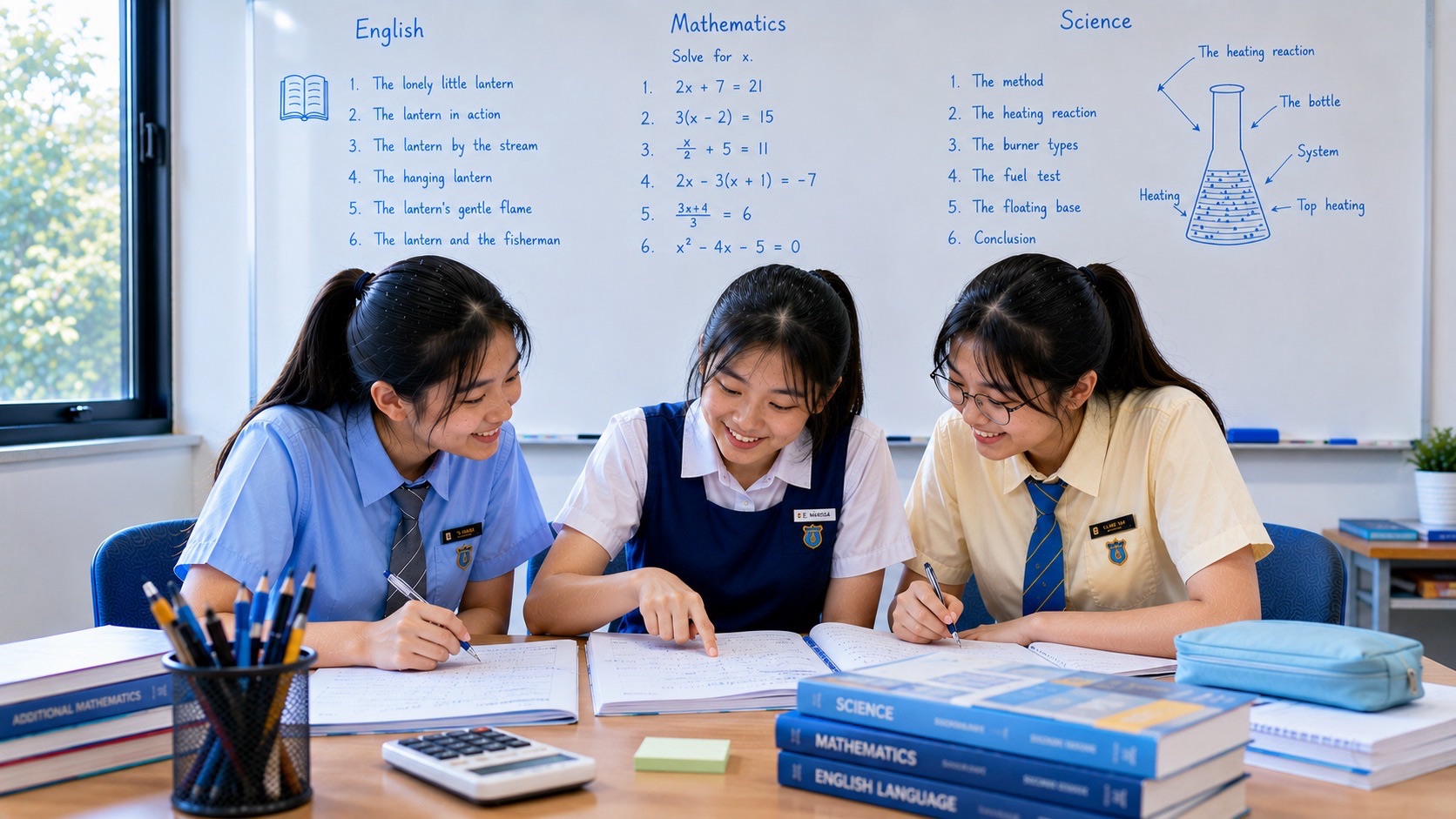
eduKate teaches in groups of up to three students, generally for 90 minutes. A 3-pax writing class allows students to compare pacing choices, read scenes aloud and see how different writers can give the same event different narrative weight without copying one model plot.
Location-integrity note: this legacy URL preserves old Punggol location wording only. Current class location and availability should be confirmed directly.
The Core Pacing Decision
For every event, ask:
Should the reader experience this moment closely, or only know that it happened?
If closely → write a scene.
If only necessary background/transition → use summary.
What Is a Scene?
A scene slows narrative time and lets the reader experience a meaningful moment.
Useful scene ingredients:
- specific action;
- dialogue with purpose;
- physical reaction;
- concrete setting details;
- decision pressure;
- cause and effect.
A scene is not simply “more adjectives”. It is narrative attention.
What Is Summary?
Summary compresses time.
Example:
For the next two weeks, Maya practised every evening.
We do not need fourteen separate practice scenes unless one contains a meaningful change.
Summary helps the story move.
Why Students Over-Scene
Common pattern:
- long breakfast;
- long bus ride;
- long arrival;
- very short central problem;
- rushed ending.
The writing spends its word budget before the story reaches the moment that matters.
Why Students Over-Summarise
Other students write:
I saw the wallet. I returned it. The owner thanked me. I was happy.
The important ethical decision has no scene, pressure or consequence.
The reader is told what happened but never experiences it.
The Story Weight Map
| Story region | Typical pacing job |
|---|---|
| Setup | Enough detail to establish normal state |
| Trigger | Slow slightly so change is visible |
| Rising pressure | Mix scene and summary |
| Turning point | Usually deserves strongest scene focus |
| After-effect | Show consequence, then compress |
| Ending | Resolve meaning without overexplaining |
The Turning Point
The turning point is where:
- a decision is made;
- new information changes the direction;
- a consequence becomes unavoidable;
- the character acts differently.
It should usually be prepared by earlier events rather than arriving randomly.
Scene Selection Test
A moment probably deserves a scene if it:
- changes the plot;
- reveals character;
- forces a decision;
- contains important new information;
- creates the main emotional consequence.
If it does none of these, consider compression.
Summary Selection Test
Summary is useful for:
- routine travel;
- repeated practice;
- unimportant waiting;
- time passing;
- background explanation;
- transitions between key events.
Compression protects the word budget.
Detail Density
Not every scene needs maximum detail.
Choose details that:
- change interpretation;
- reveal pressure;
- show the setting relevant to action;
- support mood;
- help the reader understand the decision.
Delete details that merely decorate.
Dialogue and Pacing
Dialogue slows time because the reader hears the exchange line by line.
Use dialogue when it:
- reveals a goal;
- introduces conflict;
- changes information;
- forces a response;
- shows relationship.
Small talk usually belongs in summary or deletion.
Sentence Length and Pace
Shorter sentences can accelerate action or sharpen tension.
Longer sentences can slow attention, hold reflection or build layered description.
But sentence length should follow meaning, not a formula.
Pacing and PSLE Continuous Writing
For 2026 PSLE candidates, Continuous Writing requires at least 150 words on the given topic. The challenge is therefore not to make the story extremely long, but to spend limited space on the most relevant moments.
Topic relevance remains the controlling constraint.
The Pacing Revision Pass
- Underline the turning point.
- Circle the longest paragraph.
- Ask whether the longest paragraph deserves that space.
- Mark routine events that can compress.
- Mark one underwritten key scene.
- Move the word budget.
This is revision at the story-architecture level.
Common Pacing Failure Modes
1. Morning-routine inflation
Setup consumes the composition.
2. Turning-point compression
The central decision occurs in one sentence.
3. Dialogue everywhere
Routine conversation slows the story.
4. Description without plot job
Atmosphere delays action without changing meaning.
5. Rushed ending
No space remains for consequence.
6. Equal paragraph weight
All events receive the same narrative attention.
The Pacing Diagnostic
Relevance
Is the topic central?
Scene
Are important moments dramatised?
Summary
Are routine transitions compressed?
Turning Point
Is it prepared and given sufficient space?
Ending
Does consequence receive enough room?
Detail
Does every detail serve the narrative?
Transfer
Can pacing decisions survive a new prompt?
What a 90-Minute 3-Pax Writing Lesson Can Look Like
0–10 minutes: Story architecture retrieval
Setup, trigger, pressure, turn and after-effect return.
10–25 minutes: Pacing map
Students mark scene vs summary in a sample.
25–40 minutes: Prompt planning
Each learner chooses which moment deserves the main scene.
40–65 minutes: Independent writing
The word budget is allocated deliberately.
65–80 minutes: Pacing revision
Students compress one low-value section and expand one key scene.
80–90 minutes: Fresh prompt transfer
A new prompt is planned rapidly using the same pacing logic.
Parent Evidence Checklist
- Does your child’s introduction consume too much space?
- Can they identify the turning point?
- Can routine events be compressed?
- Does dialogue have a job?
- Does the ending show consequence?
- Can the same pacing method work on a new topic?
Frequently Asked Questions
Does this page claim a current Punggol creative-writing centre at an old location?
No. Current location and availability must be confirmed directly.
Should every turning point be dramatic?
No. It needs to change the direction or meaning of the story, not necessarily involve a large external event.
How much description is enough?
Enough to help the reader understand the meaningful moment. Description without a narrative job should be reduced.
Almost-Code Summary
PAGE_RFE = Punggol_creative_writing_pacing
DECISION = scene | summary
WEIGHT = relevance + change + decision + consequence
CLASS = max_3
LESSON = 90_minutes
GOAL = spend_words_where_story_meaning_changes