English Cohesion | Pronouns, Reference Chains and How Sentences Stay Connected
English comprehension becomes fragile when students read sentences correctly but lose track of who or what later words refer to. Cohesion is the system that keeps a text connected across sentences and paragraphs.
This 2017 locality page now owns one clear job: explain pronouns, reference chains and how readers preserve meaning across longer texts.
Reference chains
A noun may be introduced once and then referred to by pronouns, synonyms or descriptions. The reader has to keep that identity stable.
Why students lose the chain
several possible nouns appear nearby;
the reference crosses a sentence boundary;
the writer changes the label for the same person or object;
the student reads locally instead of building a paragraph model.
A cohesion routine
Identify the original noun.
Trace later pronouns and substitute the noun mentally.
Check whether meaning still fits.
Track lexical links and repeated ideas.
Reconstruct the paragraph as one connected unit.
How a three-student class can help
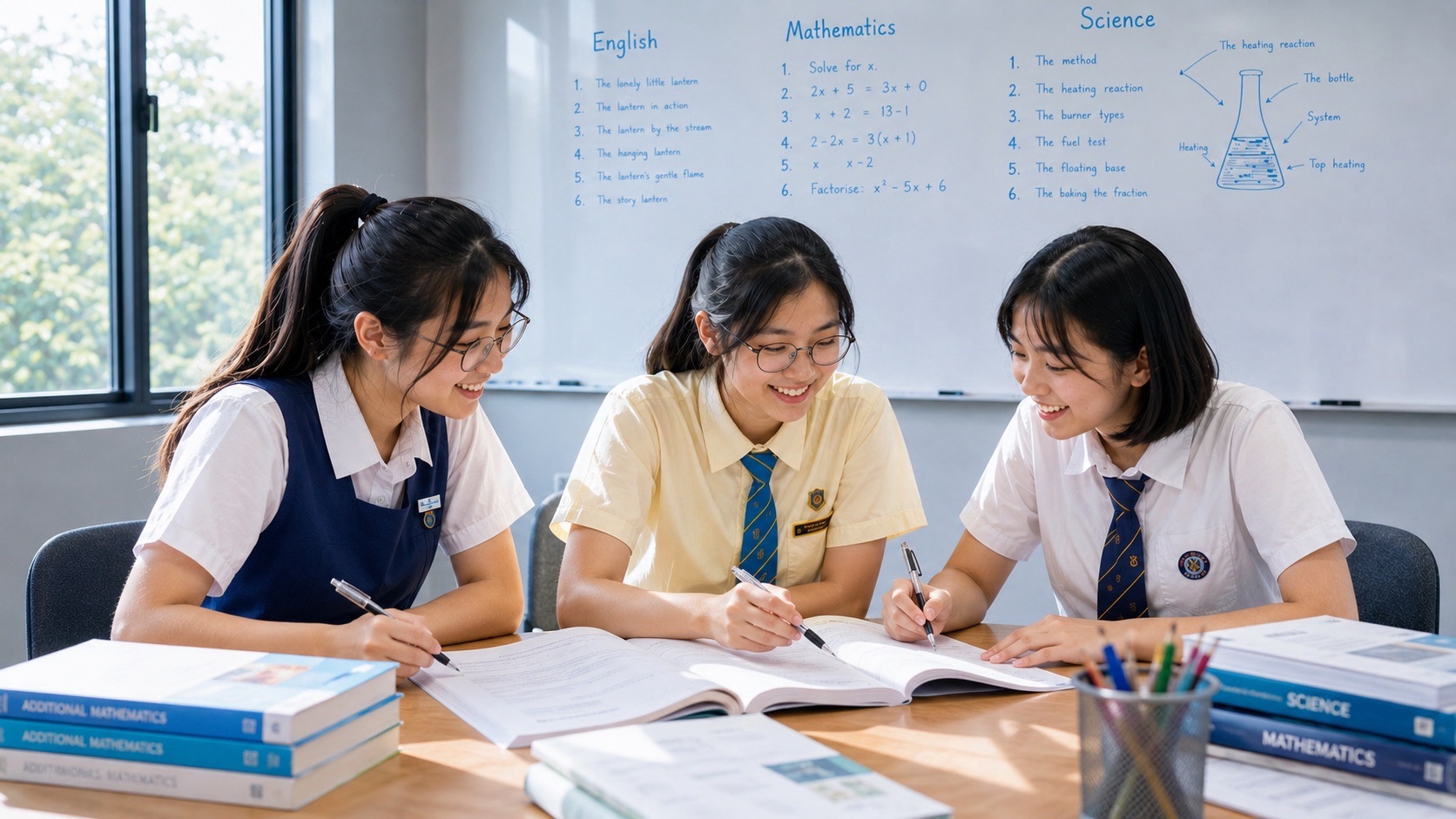
Students can compare where they believe a pronoun points and prove the answer from grammar and context.
What progress looks like
fewer pronoun-reference errors;
better long-text comprehension;
stronger paragraph summaries;
clearer writing because students also control reference in their own sentences.
Choose the question that brought you here. Open one useful guide, try a small task, and stop when you have what you need.
Take one question further
The same learning habit can travel across subjects, while each subject keeps its own methods. These routes help you notice a difficulty, understand one part of it, and return to something you can do.
Try it without the guide: Choose one word you already know. Close the guide and use it in a new sentence. Explain why it fits; try another context tomorrow.
A piece of writing has ideas, but the reader loses the thread.
Try it without the guide: Choose one short paragraph. Read the relevant explanation, close it, and revise the paragraph. Ask someone to tell you what happened and why.
The Mathematics seems familiar, but marks still disappear.
Try it without the guide: For a Secondary 4 A-Math question you have attempted, locate the first uncertain line. Repair that step, then try a comparable question without the worked answer.
A Science fact is remembered, but the explanation is incomplete.
Try it without the guide: Choose a familiar Primary Science example. Explain the evidence, the idea and the result without notes. Then change one condition and explain your prediction.
Try it without the guide: Take one claim. Find the source best placed to support it, note its date, and state what remains uncertain. Return to your original question.
There is plenty of help, but independence is hard to see.
Try it without the guide: Choose one small task the child has practised. Agree on a calm, brief attempt without prompts. Use what happens to choose one next step, then stop.